 Fundraising Fox
Ilya Sutskever
InvestorUnicorn founderCo-founder & Chief Scientist at OpenAI · Co-founder & CEO at Safe Superintelligence
Palo Alto, CA

Find your path to Ilya
2,022 people in our graph can introduce you to Ilya.
Each arrow is one introduction. Sign up to fill in the first one.
Ask Daniel Gross to introduce you to Ilya
You →Daniel · together at Safe Superintelligence (2024–2025) →Ilya
Ask Jamie Chen to introduce you to Ilya
You →Jamie · 11 people · together at OpenAI →Ilya
Sign up to find every way you can get introduced to Ilya
- Your email: the people you already email who know Ilya
- 2nd- and 3rd-degree connections: people you know who worked, studied or invested with Ilya
- Your LinkedIn: the connections who can make the intro for you
We rank every route by how warm it is, so you raise on warm intros instead of cold emails.
About
Ilya Sutskever co-authored AlexNet in 2012, the result that opened the deep-learning era, and spent the decade after it turning the same bet into sequence-to-sequence learning at Google Brain and then, as OpenAI's co-founder and chief scientist, into the GPT line. In 2024 he founded Safe Superintelligence, a lab with one objective and deliberately nothing to sell before it: about fifty people, $8 billion raised including up to $5 billion from NVIDIA, and a $32 billion valuation. A Fellow of the Royal Society with three consecutive NeurIPS Test of Time awards, he arrived in Israel from Nizhny Novgorod at five and did his PhD under Geoffrey Hinton.
Beyond investing
- Education
- Studied at the University of Toronto (BSc Mathematics 2005, MSc 2007, PhD Computer Science 2013), supervised by Geoffrey Hinton. Studied at University of Toronto (PhD, Computer Science) Studied at University of Toronto (BSc, Mathematics)
- Communities
- Fellow of the Royal Society, elected 2022.
- Awards
- AlexNet (2012): Co-created AlexNet with Alex Krizhevsky and Geoffrey Hinton — the convolutional network whose ImageNet result opened the deep-learning era. MIT Technology Review (2015): Named to the 35 Innovators Under 35 list. NeurIPS (2022): Test of Time Award in three consecutive years, for work whose influence outlasted the cycle it was published in. TIME (2023): Named among the 100 most influential people in AI in both years. University of Toronto (2025): Awarded an honorary doctorate by the university where he trained. National Academy of Sciences (2026): Received the Award for Industrial Application of Science — the first time it has gone to work in artificial intelligence.
- More
- Doctoral thesis 'Training Recurrent Neural Networks' (2013), supervised by Geoffrey Hinton. Co-author of AlexNet, sequence-to-sequence learning, and the AlphaGo paper; three consecutive NeurIPS Test of Time Awards (2022, 2023, 2024). Jerusalem (1991): Immigrated from Nizhny Novgorod to Israel with his family at the age of five; began taking Open University of Israel classes while still in eighth grade. Safe Superintelligence / NVIDIA (2026): NVIDIA announced a long-term strategic partnership in July 2026 including an investment of up to $5 billion, taking SSI's total funding to about $8 billion and increasing its compute by an order of magnitude on Vera Rubin systems.
From published sources — common ground for a warm intro.
Co-founder & Chief Scientist at OpenAI
Intro paths
In turn, Ilya can intro founders to OpenAI's investors below.
OpenAI's investors · 101



.jpeg)






























Co-founders at OpenAI


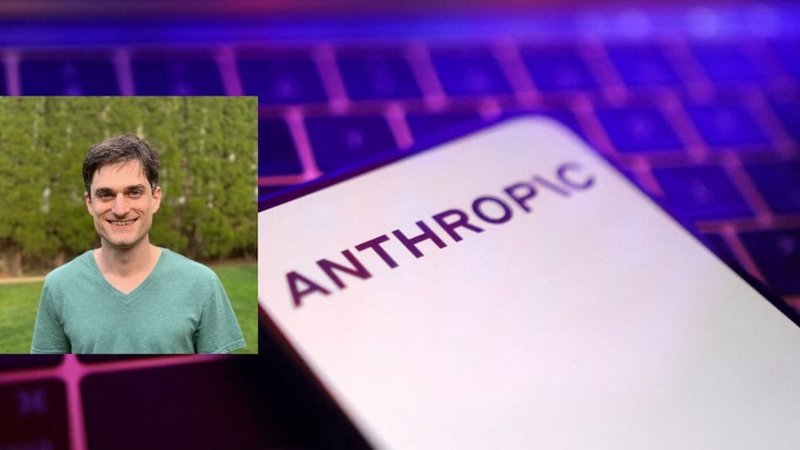
Co-founder & CEO at Safe Superintelligence
Intro paths
In turn, Ilya can intro founders to Safe Superintelligence's investors below.
Safe Superintelligence's investors · 7


Co-founders at Safe Superintelligence
Experience
- Safe Superintelligence IncCo-Founder and Chief Scientist at Safe Superintelligence Inccurrent2024 — present
- OpenAICo-Founder and Chief Scientist2018 — 2024
- OpenAICo-Founder and Research Director2016 — 2018
- GoogleResearch Scientist2013 — 2015
- DNNResearchCo-Founder2012 — 2013Toronto
- Stanford UniversityPostdoc2012
Skills & more
From Ilya's professional profile.
Investments
Per curated public sources.
Public positions
2023 · The OpenAI board
Days after the board he sat on removed Sam Altman, he said publicly that he deeply regretted his participation in the board's actions and never intended to harm OpenAI, and he signed the employee letter calling for Altman's return.
The clearest instance of a technical leader publicly reversing himself on a governance decision; it is also why he is rarely asked about governance without it coming up.
2024 · Founding SSI
Safe superintelligence is the most important technical problem of the age, and it needs a company whose business model, management and product cycle are all insulated from short-term commercial pressure.
The founding thesis, and the reason the company sells nothing.
2024 · The end of pre-training scaling
Compute keeps growing but data does not — there is only one internet — so the field has to find its successor to pre-training, whether that is agents, synthetic data or reasoning at inference time.
A rare public forecast from someone who set the previous decade's direction.
2026 · Compute as the constraint
SSI's partnership with NVIDIA is framed as removing the compute ceiling on its research rather than as a step toward a product.
Confirms that the no-product structure survived a $5 billion strategic investor.
Prediction record
Deep networks trained at scale would displace hand-engineered computer vision
Correct2012 · Years
AlexNet's ImageNet result was followed within three years by near-total adoption of deep learning across vision, speech and translation.
He was one of three authors, and Hinton's lab had been making the argument for years.
Scaling pre-training alone would stop being the frontier, and inference-time reasoning and agents would take over
Correct2024 · Years
Reasoning models and agentic systems became the dominant frontier-lab direction through 2025 and 2026.
Pre-training scale did not stop mattering; it stopped being the only lever.
Large neural networks may be 'slightly conscious'
Open2022 · Open
Contested at the time and still unresolved; widely read as a provocation about the limits of our vocabulary rather than a testable claim.
He has not restated it in the same terms since.
Controversies & responses
Where Ilya has drawn public criticism — with what happened, their response, and the criticism itself, side by side.
▶The removal and return of Sam Altman2023
- What happened
- As an OpenAI board member he supported the decision to remove Sam Altman as chief executive in November 2023. Altman returned within a week after nearly the entire staff signed a letter calling for it.
- The response
- Sutskever said publicly that he deeply regretted his participation, never intended to harm OpenAI, and signed the employee letter himself. He stepped down from the board and left the company in May 2024.
- The criticism
- The episode was widely read as a governance failure at OpenAI rather than as a judgement on his research work; Geoffrey Hinton later said publicly that he supported his former student's reasoning about safety.
- Where it stands
- Closed. He founded Safe Superintelligence the following month.
Investment themes
4 documented themes from Ilya's essays, talks and portfolio, grouped by what they say about founders.
▶AI & media4
Scale is the mechanism, not the accident2012
AlexNet's result was that a large enough network trained on enough data with enough compute would beat hand-engineered features. He has spent every subsequent role pushing the same claim further — sequence-to-sequence, GPT, and reasoning models are all the same bet made at a larger scale.
For founders: The compute and data question is not an implementation detail; it is the strategy.
A straight shot at superintelligence, with nothing to sell in between2024
SSI was founded on the premise that a lab with a single objective and no product roadmap can pursue safe superintelligence without the pull of quarterly releases. As the company puts it, its first product will be the safe superintelligence, and it will not do anything else until then.
For founders: Insulating research from commercial cadence is a fundable structure, not just an ideal.
Safety is a research problem, not a policy afterthought2023
He co-led OpenAI's Superalignment effort, which set out to solve the alignment of superhuman systems on a four-year clock and committed a fifth of the company's compute to it. The framing is that alignment needs the same scale of technical effort as capability.
For founders: Safety claims are judged by the research programme behind them.
The pre-training era ends; what comes next is uncertain2024
In his NeurIPS 2024 Test of Time talk he argued that data is the fossil fuel of AI — there is only one internet — and that the field will have to find what comes after scaling pre-training, naming agents, synthetic data and inference-time compute as candidates.
For founders: Betting a company on the continuation of the current scaling curve is a position, not a default.
Podcasts & interviews
featuring Ilya SutskeverOpenAI Co-founder Ilya Sutskever: Unimaginable, Unpredictable Future Driven By AI Advancements
Business Today
Ilya Sutskever Breaks Silence: The Wild Truth About AI's Future | OpenAI's Ex-Chief Scientist
Julia McCoy
No Priors Ep. 39 | With OpenAI Co-Founder & Chief Scientist Ilya Sutskever
No Priors: AI, Machine Learning, Tech, & Startups
Chat with OpenAI CEO and and Co-founder Sam Altman, and Chief Scientist Ilya Sutskever
TAUVOD
Ilya Sutskever (OpenAI Chief Scientist) — Why next-token prediction could surpass human intelligence
Dwarkesh Patel
Season 1 Ep. 22 OpenAI's Ilya Sutskever: The man who made AI work
The Robot Brains Podcast
Frequently asked questions
- Who is Ilya Sutskever?
- Ilya Sutskever co-authored AlexNet in 2012, the result that opened the deep-learning era, and spent the decade after it turning the same bet into sequence-to-sequence learning at Google Brain and then, as OpenAI's co-founder and chief scientist, into the GPT line. In 2024 he founded Safe Superintelligence, a lab with one objective and deliberately nothing to sell before it: about fifty people, $8 billion raised including up to $5 billion from NVIDIA, and a $32 billion valuation. A Fellow of the Royal Society with three consecutive NeurIPS Test of Time awards, he arrived in Israel from Nizhny Novgorod at five and did his PhD under Geoffrey Hinton.
- Where does Ilya Sutskever work?
- Ilya Sutskever is Co-founder & Chief Scientist of OpenAI and Co-founder & CEO at Safe Superintelligence.
- What companies did Ilya Sutskever found?
- Ilya Sutskever founded OpenAI, Safe Superintelligence.
- What companies has Ilya Sutskever invested in?
- Investments tracked here include Expo, Replicate, Rosebud AI, Sendwave, StratumAI.
- Where did Ilya Sutskever go to school?
- Ilya Sutskever studied at University of Toronto (PhD, Computer science); University of Toronto (Bachelor's degree, Mathematics); The Open University of Israel (Computer Science).
- What awards has Ilya Sutskever received?
- AlexNet (2012): Co-created AlexNet with Alex Krizhevsky and Geoffrey Hinton — the convolutional network whose ImageNet result opened the deep-learning era. MIT Technology Review (2015): Named to the 35 Innovators Under 35 list. NeurIPS (2022): Test of Time Award in three consecutive years, for work whose influence outlasted the cycle it was published in. TIME (2023): Named among the 100 most influential people in AI in both years. University of Toronto (2025): Awarded an honorary doctorate by the university where he trained. National Academy of Sciences (2026): Received the Award for Industrial Application of Science — the first time it has gone to work in artificial intelligence.
- What podcasts and interviews feature Ilya Sutskever?
- Tracked appearances include "OpenAI Co-founder Ilya Sutskever: Unimaginable, Unpredictable Future Driven By AI Advancements", "Ilya Sutskever Breaks Silence: The Wild Truth About AI's Future | OpenAI's Ex-Chief Scientist", "No Priors Ep. 39 | With OpenAI Co-Founder & Chief Scientist Ilya Sutskever", and 3 more.
Founder mafias
Stanford University mafia2,240
Also came through, then founded or led a company.


Google mafia1,682
Also came through, then founded or led a company.

OpenAI mafia115
Also came through, then founded or led a company.
The Open University of Israel mafia56
Also came through, then founded or led a company.
Same school
Also attended University of Toronto761
+ 755 more
Also attended The Open University of Israel104
+ 98 more
Shared employers
Also worked at Safe Superintelligence Inc1
Also worked at OpenAI204
+ 198 more
Also worked at Google2,000

+ 1,994 more
Also worked at Stanford University1,205

+ 1,199 more