 Fundraising Fox
David Sacks
InvestorFounderPartner at Craft Ventures · Board director at Roboflow · Board director at Schumpeter Enterprises · Board director at Vendr
San Francisco, CA
Writes $50K – $50M checks · typically $25M
FoundedYammer
Find your path to David
2,953 people in our graph share verified history with David — schools, employers, funds. One of them is your warm intro.
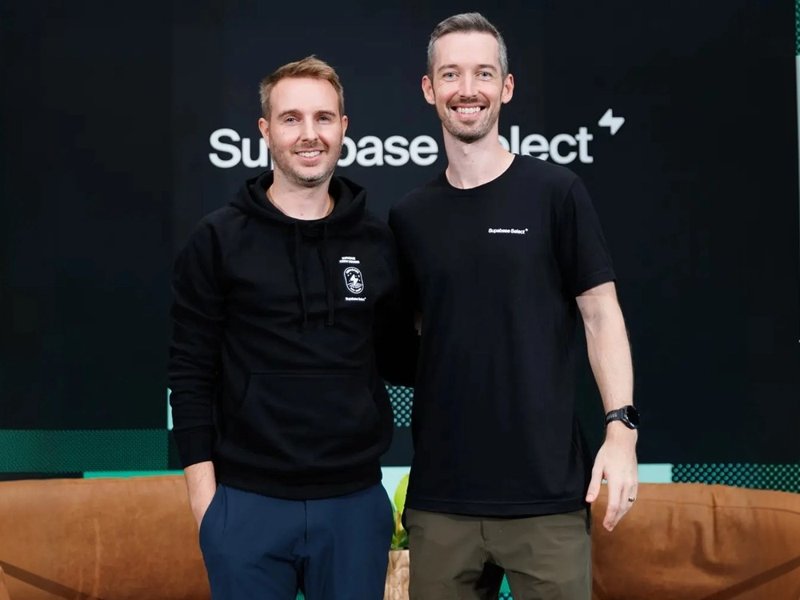
Photo: The White House, Public domain, via Wikimedia Commons ↗
About
David Sacks was PayPal's COO, founded Yammer and sold it to Microsoft for $1.2 billion, and co-founded Craft Ventures in 2017 to invest in SaaS and marketplace startups. He served as the White House AI and crypto czar from late 2024 until March 2026, when his special-government-employee term ended, and now co-chairs the President's Council of Advisors on Science and Technology while remaining a Craft partner. He is also a co-host of the All-In podcast.
Contact· published on David's own website
Invests in
AI & Machine LearningCrypto & Web3Developer ToolsEnterprise SoftwareFintechFuture of WorkMarketplacesSaaS
Beyond investing
- Founded
- Co-founded the venture firm Craft Ventures. Founded and served as CEO of Yammer. Founded the podcasting platform Callin. Sacks founded the genealogy website Geni.com in 2006. Sacks launched the podcast platform Callin in 2021, which was acquired by Rumble in 2023. Sacks co-founded the workspace chat and AI company Glue with Evan Owen in 2021.
- Education
- Studied at Stanford University (Bachelor's degree, Economics, 1994) Studied at University of Chicago Law School (Juris Doctor, 1998) Studied at Memphis University School Studied at Stanford University (BA, Economics)
- Charities
- Reviewed authoritative evidence did not establish a named David Sacks foundation, large attributable gifts or sustained nonprofit board role. Jacqueline's public family-office biography reports support for children's, academic, medical-research and arts organizations, but her work is not reassigned to him. Political giving is not philanthropy.
- Communities
- Sacks is a co-host of the All In podcast alongside Chamath Palihapitiya, Jason Calacanis, and David Friedberg. Sacks is a member of the so-called PayPal Mafia of former PayPal founders and early employees.
- Awards
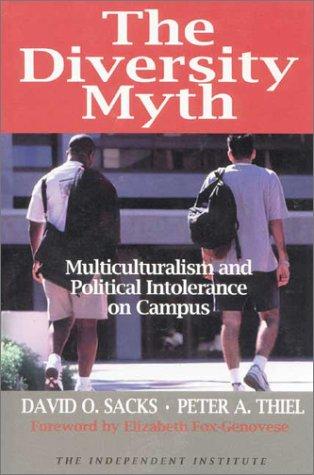
- The Independent Institute: Co-authored The Diversity Myth with Peter Thiel. TIME included Sacks in its 2025 list of influential people in AI. Forbes placed him No. 85 on the 2025 Midas List, citing SpaceX, and Craft announced another 2026 Midas appearance. These are editorial rankings, not audited investment returns or government honors.
- Hobbies
- Sacks financed and produced Jason Reitman's 2005/2006 political satire. The film received Golden Globe nominations for best musical-or-comedy picture and actor; nominations belong to the film and performance and should not be restated as two personal awards to Sacks.
- Family
- Sacks was born to a Jewish family in Cape Town, South Africa, and emigrated to Tennessee at age five; his father was an endocrinologist. Sacks married Jacqueline Tortorice in 2007 and has three children.
- More
- Sacks produced and financed the 2005 political satire film Thank You for Smoking, which was nominated for two Golden Globes. Sacks developed and produced the 2023 Salvador Dali biopic Daliland. All-In Podcast: Co-host. Reputable profiles report that Sacks was born May 25, 1972 in Cape Town to a Jewish family and moved to Tennessee at age five. He attended Memphis University School. His father was an endocrinologist; Sacks has cited a candy-factory-founder grandfather as an entrepreneurial influence. The reviewed record does not include a civil birth document. Sacks was associated with The Stanford Review and co-authored The Diversity Myth with Peter Thiel, attacking multiculturalism and political correctness at Stanford. Stanford's president publicly disputed related claims; the book is a polemical primary source, not neutral campus history. Sacks says PayPal found product-market fit by focusing on desperate eBay power sellers, productizing payment buttons and combining a product hook with referral and embedded distribution. Shared credit with Luke Nosek, Chad Hurley and the wider PayPal team is explicit. Craft and first-person histories attribute product/design, sales/marketing, business development, international, customer service, fraud operations and HR to his COO remit. SEC documentation confirms the COO title but does not independently allocate every team or product decision. Sacks says Yammer's quarterly operating cadence helped scale the company in four years to nearly 500 employees and $56 million annual sales. Other profiles round sales to about $60 million. These are founder-reported operating figures rather than audited standalone filings. Craft announced $712 million for Fund IV and $608 million for Growth II in November 2023, bringing reported assets under management to $3.3 billion. This is firm capital, not Sacks's personal wealth or deployable check size. Craft lists Sacks and Brian Murray as investors in its led 2017 Series A. Bird went public by SPAC in 2021, collapsed in market value, was delisted and filed Chapter 11 in December 2023. Sacks had left the board in December 2022. Bankruptcy is a company outcome; exact Craft write-off and Sacks economics are private. Sacks, Michael Kratsios and Marco Rubio were the named senior authors of the July 2025 plan, which proposed more than 90 actions under innovation, infrastructure and international-security pillars. Its deregulatory and anti-'woke AI' orientation drew both industry support and civil-society criticism. As working-group chair, Sacks oversaw recommendations on market structure, banking, stablecoins and a strategic digital-asset stockpile. Policy outcomes belong to the administration, agencies and Congress rather than to Sacks alone. White House counsel issued crypto and AI waivers under 18 U.S.C. §208 after disclosures and divestitures. The documents said covered residual interests were not substantial enough to compromise service and imposed restrictions on new interests and consultation. Ethics critics and lawmakers argued the structure still allowed policy work benefiting sectors in which Craft retained hundreds of positions; no reviewed source establishes a criminal conflict finding. On March 26, 2026 Sacks said he had used his 130 SGE days and ended the AI-and-crypto-czar role. He moved forward as PCAST co-chair, advising the president on a broader technology range. He is therefore a current public adviser but not a current White House special government employee or czar. Reporting documents donations or support involving Mitt Romney, Hillary Clinton, Robert F. Kennedy Jr., Ron DeSantis and Donald Trump. Sacks said after January 6 that Trump had disqualified himself, then hosted a major Trump fundraiser and spoke at the 2024 Republican convention. This is an evolution in public alignment, not proof of an undisclosed bargain. The podcast began during pandemic disruption of the hosts' poker game and evolved into a prominent technology, markets and politics show and summit franchise. Its informal debate format provides first-person views but is not a fact-checked institutional publication.
Mentioned above: the Stanford University mafia → · the PayPal mafia → · the University of Chicago Law School mafia → · the Craft Ventures mafia →
From David's own website — common ground for a warm intro.
Board director at RoboflowYC S20
Intro paths
Roboflow went through Y Combinator (Summer 2020) — David sits on its board, so any YC alum in your network can reach them through the company's founders.
Roboflow's group partner at YC was Brad Flora, Backing expeditions into the future — the partner who ran Roboflow's batch and knows the company first-hand. YC profile ↗
In turn, David can intro founders to Roboflow's investors below.
Roboflow's investors · 24










Co-founders at Roboflow


Board director at Schumpeter Enterprises
Intro paths
In turn, David can intro founders to Schumpeter Enterprises's investors below.
Schumpeter Enterprises's investors · 1
Board director at VendrYC S19
Intro paths
Vendr went through Y Combinator (Summer 2019) — David sits on its board, so any YC alum in your network can reach them through the company's founders.
Vendr's group partner at YC was Aaron Epstein, General Partner at Y Combinator — the partner who ran Vendr's batch and knows the company first-hand. YC profile ↗
In turn, David can intro founders to Vendr's investors below.
Vendr's investors · 14






Co-founders at Vendr

Experience
- Craft VenturesFounder/Partnercurrent2017 — present
- Producers Guild of AmericaProducercurrent2005 — present
- Yammer, Inc.Founder/CEO2008 — 2014
- PayPalCOO / Head of Product1999 — 2002


Skills & more
+12 more
Business StrategyMobile ApplicationsCloud ComputingOnline AdvertisingProduct DevelopmentSocial NetworkingBusiness DevelopmentWebinarsSaaSEnterprise SoftwareRuby on RailsObjective-CFrom David's professional profile.
Deals · 7

RoboflowBoard seat
via Craft Ventures · filed Aug 2024 · $40M raise

PearlBoard seat
via Craft Ventures · filed Jul 2024 · $80.3M raise
Orum Inc.Board seat
via Craft Ventures · filed Dec 2022 · $22M raise
Mango TechnologiesBoard seat
via Craft Ventures · filed Nov 2021 · $400M raise
Schumpeter EnterprisesBoard seat
via Craft Ventures · filed Jun 2021 · $13.3M raise

VantaLed round
via Craft Ventures · filed Nov 2022

VendrLed round
via Craft Ventures · filed Feb 2022
Attribution from SEC filings, press coverage, and firm rosters.
Other disclosed investments
Investor
15Five8090AddeparAdstageAffirmAffirm, Eventbrite, Houzz, Lyft, Opendoor, Postmates, Reddit and WishAgentsyncAirbnbAndurilAssembledBetterCompanyBirdBitGoBitwiseBloomThatBreezeworksCabalCabanaCallinCherryCircleClickUpCloud9CloudTrucksComparablyCopy.aiCraft Ventures broad AI, crypto, SaaS and marketplace portfolioCreated by HumansDatasemblyDelectableDivested AI and crypto-related holdingsdYdXEasyPostEight SleepEnteraEqualsEventbriteEzetapFacebookFellowFinFingerprintFirestormGetaroundGetFreshGlideGlueGrabCADGrid (formerly SaaSGrid)GustogyftHackeroneHarborHarmonic.aiHomeboundHouzzIndexInternalKeytoKloudlessKlueKnockLightning LabsLyftMetaMeta / FacebookMixpanelMode AnalyticsMoesifMTailorMyheritageNeyborlyNightingale SecurityOckamOpendoor TechnologiesOrumOwnzaPair TeamPalantir Technologies Inc.Peregrine Technologies GmbHPipePlanGridPocket ChangePocketListPostmatesProductboardQuartzyQuoQuoraRagieRagieRedditReplitResearchGateRumi.aiSaaSGridSandbox VRScotty LabsScratchpadScribdSecretSendwaveSentiLinkSet LabsSlackSofa LabsSourcegraphSpaceXSwarm TechnologiesThriveCashTrellis ResearchUberVerifiableViableVisorWAYVWizWoflowXX (formerly Twitter)X1XoomZenefits
Sources: the investor's own website · curated public sources · SEC Form D filings.
Public positions
He treats technology policy and technology investing as the same subject viewed from two chairs, and has argued consistently that American competitiveness in AI and digital assets is better served by permissive, clear rules than by precautionary restriction. That conviction is also the source of the criticism he attracts: the same positions that make him effective as an advocate make his retained investments contentious.
2026 · Government service
He said his time as AI and crypto czar had ended because he had used up the 130 days a special government employee is allowed, and that he would move to co-chairing the President's Council of Advisors on Science and Technology.
Sets the record straight on why the role ended and what replaced it.
2026 · Technology policy
He described the PCAST role as a wider remit than the czar job, covering AI, advanced semiconductors, quantum computing and nuclear power.
Signals the sectors he expects to influence next.
2025 · Conflicts of interest
Responding to a New York Times investigation, he said reporters had spent months looking for a conflict and published nothing of substance.
His own framing of the central criticism of his government tenure.
2025 · Crypto regulation
He supported federal stablecoin legislation as the route to bringing dollar-denominated digital assets into the regulated financial system.
The most concrete policy outcome associated with his tenure.
2024 · His 1996 book
He has said he is embarrassed by some of the views in The Diversity Myth and regrets writing them.
His own repudiation of a document that resurfaced when he entered government.
2023 · Banking / SVB
During the SVB collapse he publicly pressed for depositors to be made whole, arguing the alternative was systemic damage to the startup economy.
Grouped with the wider criticism of investors calling for a public backstop.
Prediction record
His stablecoin-legislation advocacy achieved its main objective during his tenure while other digital-asset bills stalled. The Zenefits rescue worked as a rescue and not as a recovery. His product-led-growth thesis was directionally right, though the industry settled on hybrid motions rather than the strong form.
Federal stablecoin legislation would pass and bring digital dollars into the regulated system
Correct2025 · Months
Stablecoin legislation advanced during his tenure; other digital-asset bills remained unfinished when he stepped down.
He was an advocate inside government, not a neutral forecaster.
Zenefits could be salvaged after its compliance failure
Correct2016 · Years
The company survived, restructured and was eventually absorbed into TriNet — a rescue rather than a recovery to its former valuation.
Outcome well short of the pre-crisis trajectory.
Product-led growth would displace sales-led motions as the default enterprise go-to-market
Correct2020 · Years
Self-serve adoption became a standard enterprise motion, though most large software companies now run hybrid models rather than pure PLG.
Directionally right; the strong form did not hold.
AI, advanced semiconductors, quantum computing and nuclear power are the technologies that will need policy attention next
Open2026 · Years
Unresolved.
Effectively a statement of his own agenda at PCAST.
Controversies & responses
Where David has drawn public criticism — with what happened, their response, and the criticism itself, side by side.
▶Conflicts of interest as AI and crypto czar2025
- What happened
- Serving as a special government employee while remaining a partner at Craft Ventures, he shaped AI and digital-asset policy while retaining investment exposure to both sectors. Reporting noted he divested around $200 million of crypto holdings and exited some large technology positions, but retained interests in hundreds of companies with AI products and a set of crypto positions. Craft's holding in BitGo, a digital-asset custodian serving stablecoin issuers, was cited alongside his support for stablecoin legislation.
- The response
- He rejected the claims, said he had followed the required divestment and ethics process, and characterised the main investigation as producing nothing of substance.
- The criticism
- Members of Congress led by Senator Elizabeth Warren and Representative Melanie Stansbury opened an ethics inquiry, and academic and press commentators argued the special-government-employee structure let him set policy in sectors he was invested in without the disclosure a full appointee would face.
- Where it stands
- He left the czar role in March 2026 at the 130-day limit and moved to co-chair PCAST, a advisory rather than executive position.
▶The Diversity Myth1996
- What happened
- As a Stanford undergraduate he co-wrote a book with Peter Thiel attacking multiculturalism and campus speech norms. Passages resurfaced when he was appointed to government.
- The response
- He has said he is embarrassed by some of the views and regrets writing them.
- The criticism
- Critics argued specific passages went well beyond a critique of campus politics.
- Where it stands
- Repudiated by the author.
▶Calls for an SVB depositor backstop2023
- What happened
- During the collapse of Silicon Valley Bank he was among the prominent investors publicly urging that uninsured depositors be made whole.
- The response
- He argued the startup economy's payroll systems were at systemic risk and that inaction would cause avoidable damage.
- The criticism
- Commentators characterised the episode as investors demanding a public rescue for private risk after years of arguing against intervention.
- Where it stands
- Regulators backstopped deposits; the argument about the precedent continues.
What founders say
No founder feedback on David Sacks yet.
Founder fit — who David backs
A strong fit is a B2B software or marketplace founder with a product already in market, clean operating metrics, and a distribution mechanic built into the product rather than bolted on. Regulated crypto infrastructure and dual-use defense companies are also in scope. He is unusually comfortable with businesses that need fixing, having run one himself.
Pre-product concept rounds, deep science without a commercial wedge, and anything whose value proposition depends on his government proximity. These are inferences from Craft's portfolio and his ethics exposure, not published exclusions.
How to pitch
Lead with the operating numbers — net revenue retention, burn multiple, magic number, payback — and expect them to be pulled apart. Show self-serve acquisition working before you present the enterprise sales plan. If you operate in a regulated sector, bring the compliance architecture, not a hope that the rules will change. Do not pitch access to policymakers as part of the opportunity.
As of August 2026 he co-chairs PCAST with a remit covering AI, advanced semiconductors, quantum computing and nuclear power, while remaining a general partner at Craft Ventures. Craft joined 8090's $135M Series A in 2026.
Editorial inference from David's portfolio, writing and public record — not a published mandate.
Investment themes
8 documented themes from David's essays, talks and portfolio, grouped by what they say about founders.
▶Founders & company building1
SaaS metrics as a discipline2017
Craft was built around operator-grade diagnosis of SaaS and marketplace businesses — burn multiple, magic number, net revenue retention — as the language of a pitch rather than an appendix to it.
For founders: Bring the operating metrics; expect them to be interrogated.
▶More themes6
Founders and operators make the best investors2017
Craft is explicitly staffed with former founders and senior operators who apply playbooks rather than pattern-matching from the outside.
For founders: Expect hands-on involvement, particularly on go-to-market.
Product-led growth as a distribution strategy2019
His public writing has been a consistent argument that distribution mechanics designed into the product beat sales-led motions bolted on afterwards.
For founders: Show how the product acquires its own users before you show the sales plan.
Turnaround as a discipline2016
Taking over Zenefits mid-crisis gave him a public case study in remediating compliance failure while keeping a business alive.
For founders: He is unusually comfortable with companies that need fixing rather than only scaling.
American technological leadership as policy2025
His government work framed AI and digital assets as strategic competitiveness questions, favouring a permissive regulatory posture and domestic build-out over precautionary restriction.
For founders: Regulatory strategy is a subject he engages with seriously and at first-hand.
Defense and dual-use technology2020
Craft's portfolio includes defense and dual-use companies, reflecting a view that national-security technology is an investable category rather than a political one.
For founders: Defense-adjacent companies get a serious hearing.
Media as political and commercial infrastructure2020
All-In turned four investors into a mass-audience media property, and he has treated that platform as a serious channel for policy argument.
For founders: His views are unusually well documented and unusually consequential.
▶Money, markets & macro1
Stablecoins need rules to scale2025
He backed federal stablecoin legislation as the route to institutional adoption of dollar-denominated digital assets.
For founders: Regulated crypto infrastructure is in scope; unregulated speculation is not the pitch.
Books by David Sacks
Podcasts & interviews
featuring David SacksE838: David Sacks Craft Ventures $350m raise, big Bird bet, VR, crypto, Yammer, Zenefits, investing
This Week in Startups
The Venture-Capital Populist
The Atlantic · theatlantic.com
White House AI Czar Sacks to Step Down, Moves to Advisory Role
Reuters · reuters.com
Trump AI Advisor David Sacks Defends Tech Investments
NPR · npr.org
TIME100 AI 2025: David Sacks
TIME · time.com
Craft Ventures' David Sacks talks Trump fundraiser in Silicon Valley
CNBC Television
6 more appearances
- David Sacks Is All-In on Donald Trump2024-06-05
- Axios' Dan Primack & Craft Ventures Co-founder & Partner David Sacks at Axios BFD: San Francisco2024-05-30
- The Craft of Venture Capital with David Sacks2024-01-01
- Bird Files for Bankruptcy2023-12-20
- Watch CNBC's full interview with Craft Ventures' David Sacks2023-11-10
- What the Future of SaaS Holds for 2024 with David Sacks, Founder & General Partner, Craft Ventures2023-09-13
Writing
All posts ↗Fund announcement explaining B2B software focus, early/growth vehicles, platform support and generative-AI opportunity.
Company-formation essay crediting Ethan Ruby and Teddy Ruby and explaining the internal-tool origin.
Primary investment memo on bottom-up adoption, freemium and collaboration software; announces Sacks's board role.
Introduces Net Burn divided by Net New ARR as a capital-efficiency diagnostic.
Sacks and Thiel defend the claims and method of The Diversity Myth in response to Stanford criticism.
Book co-authored with Peter Thiel; a polemical critique of Stanford multiculturalism and campus politics.
Colleagues at Craft Ventures
Network8

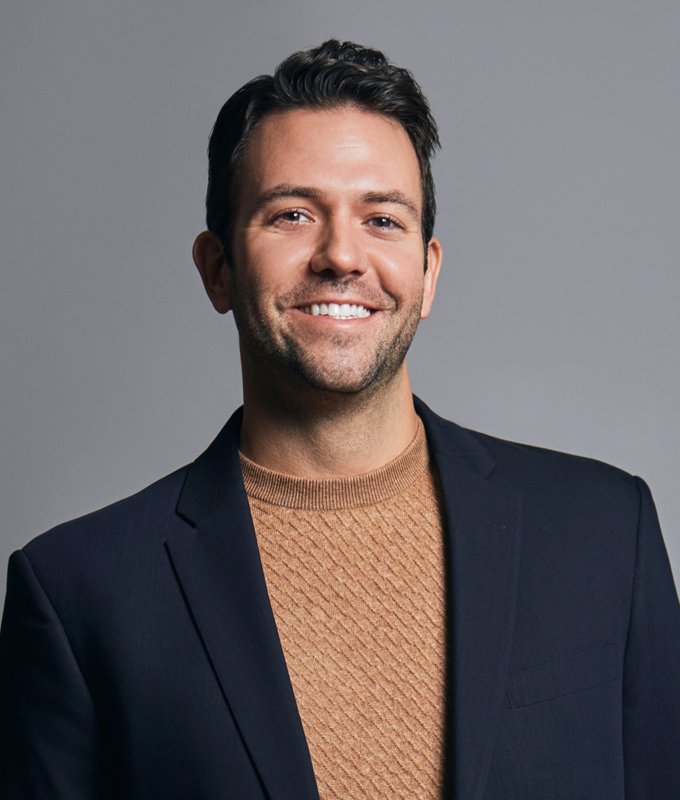
Investors connected to David in public investor directories — a warm-intro map.
Frequently asked questions
- What is David Sacks's verified current government status?
- As of August 26, 2026, he is no longer White House Special Advisor for AI and Crypto or a special government employee. That service ended March 26, 2026 after he used the 130 permitted workdays. He remains a presidential public adviser as co-chair of PCAST with Michael Kratsios.
- Is David Sacks still at Craft Ventures?
- Yes. Craft's current profile lists him as Partner and identifies him as the firm's founder; reporting on his March 2026 transition likewise says he remains a Craft partner.
- What did David Sacks study?
- He earned an economics bachelor's degree from Stanford in 1994 and a J.D. from the University of Chicago Law School in 1998.
- Was David Sacks a founder of PayPal?
- He joined Confinity in 1999, became PayPal's first product leader and then COO, and is part of the PayPal Mafia alumni network. He is often called the original or founding COO, but the reviewed SEC record identifies him as COO, not a legal co-founder, so this dossier does not call him a PayPal founder.
- What did he do at PayPal?
- He says he helped pivot the product from handheld transfers to emailing money and focusing on eBay sellers, while later running product/design, sales/marketing, business development, international, service, fraud and HR. The COO title is filing-confirmed; detailed credit is shared with the wider team.
- What companies did David Sacks found?
- He founded Geni; co-founded Yammer with Adam Pisoni, Craft Ventures with Bill Lee, Callin with Axel Ericsson, and SaaSGrid with Ethan and Teddy Ruby. He was Harbor's founding chairman, which is not treated here as proof of sole founder status.
- How successful was Yammer?
- Yammer grew to roughly 500 employees and $56-$60 million annual sales by founder-reported accounts. Microsoft agreed to buy it for $1.2 billion cash in 2012 and retained Sacks to lead the team. The acquisition price is not his personal payout.
- What happened at Zenefits?
- Sacks, already an investor and COO, became CEO in February 2016 after Parker Conrad resigned amid insurance-licensing and compliance failures. He acknowledged inadequate controls, appointed compliance leadership, self-reported, retrained staff and changed systems and governance. He announced a transition to chairman in December. Regulators imposed penalties, so the episode is both a turnaround and a governance failure.
- Which personal angel investments are strongly attributable to him?
- Craft's company pages or biography directly identify Meta/Facebook, SpaceX, Palantir, Uber, X/Twitter, Airbnb and Slack, plus a broader group including Affirm, Eventbrite, Houzz, Lyft, Opendoor, Postmates, Reddit and Wish. Many predate Craft; exact checks and returns are private.
- Which Craft investments are directly attributable to him?
- Strong records cover Bird with Brian Murray, Sourcegraph, ClickUp with Lainy Painter and Bryan Rosenblatt, Roboflow with Arra Malekzadeh, Harbor and SaaSGrid. This dossier does not assign every Craft portfolio company to Sacks.
- What is David Sacks's clearest failed investment?
- Bird. Sacks and Brian Murray are tagged on Craft's led Series A; Bird listed through a SPAC in 2021, suffered a severe value collapse, was delisted and filed Chapter 11 in December 2023. Sacks left its board a year before bankruptcy. Exact Craft and personal losses are undisclosed.
- What does David Sacks look for in SaaS?
- A sharp customer wedge, simple product hook, scalable distribution, bottom-up adoption, enterprise expansion, recurring revenue, high gross margins, sales-cycle efficiency and a low or improving Burn Multiple.
- How should a founder pitch David Sacks?
- Bring evidence of user pull, retention and expansion; ARR, gross margin, burn, Burn Multiple, sales-cycle and pipeline metrics; the distribution wedge; and a four-quarter operating cadence. Clarify which Craft partner and vehicle will invest, expected board involvement and conflict controls for policy-sensitive sectors.
- What did Sacks accomplish in the White House role?
- He co-authored the AI Action Plan, chaired the President's Working Group on Digital Asset Markets and advocated lighter regulation, infrastructure buildout, American AI exports, stablecoin and market-structure legislation and strategic digital-asset policy. Outcomes were shared with the president, agencies, Congress and co-authors.
Founder mafias
Stanford University mafia2,203
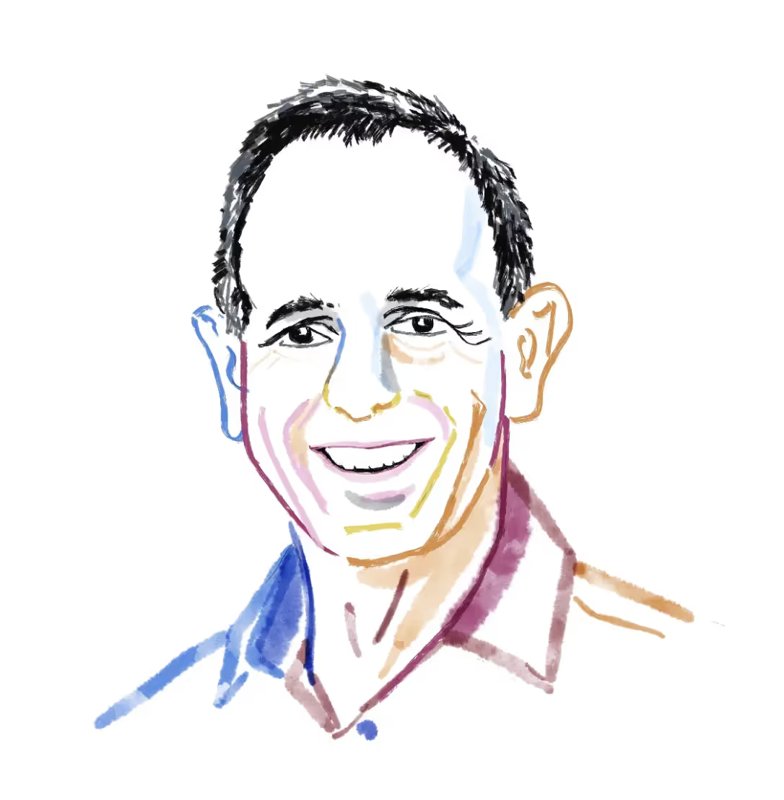
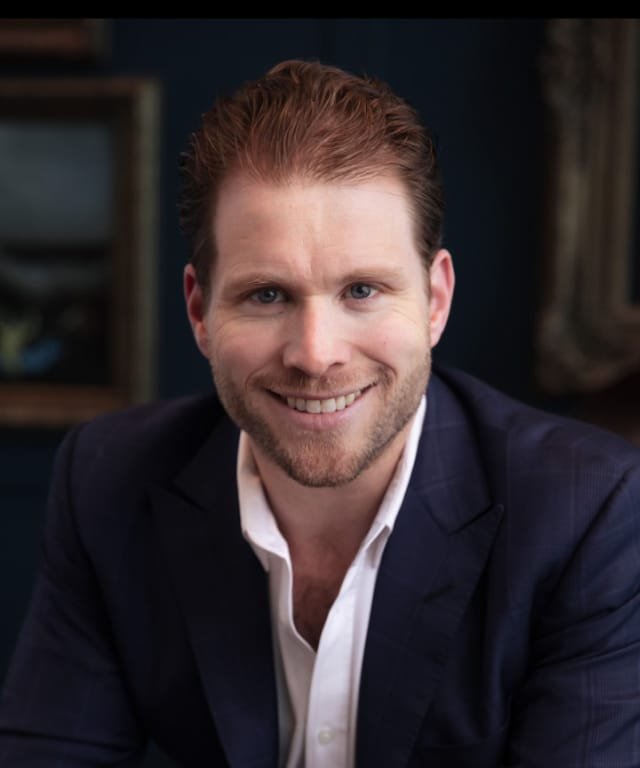
Also came through, then founded or led a company.




PayPal mafia127
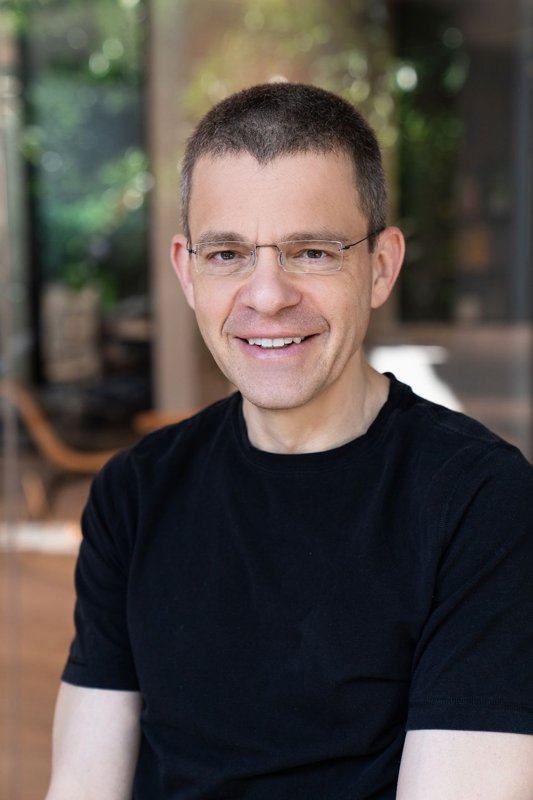
Also came through, then founded or led a company.

University of Chicago Law School mafia14
Also came through, then founded or led a company.



Craft Ventures mafia9
Also came through, then founded or led a company.
BitGo mafia7
Also came through, then founded or led a company.




Same school
Also attended Stanford University2,000


+ 1,994 more
Also attended University of Chicago Law School53


+ 47 more
Shared employers
Also worked at Producers Guild of America3
Also worked at Yammer, Inc.23

+ 17 more
Also worked at PayPal242

+ 236 more