 Fundraising Fox
OpenAI
Unicorn · $852BSan Francisco, US · Founded 2015 · 127 known investors
Find your way into OpenAI
Sign up to see every warm intro you have to OpenAI
- Paths you didn't know you had: your email and LinkedIn already hold routes to the OpenAI team. We find them for you
- 2nd- and 3rd-degree connections: the friend-of-a-friend routes that take hours to manually find through your inbox or LinkedIn
- Answers now, not in days: momentum is everything in a raise. Skip asking around whether someone knows someone
Days of research, done the moment you sign in, with every route ranked by how warm it is.
OpenAI is an AI research and deployment company focused on developing artificial general intelligence (AGI) with emphasis on safety and beneficial outcomes for humanity.
Also known as OpenAI · OpenAI Foundation · OpenAI Group PBC · OpenAI, Inc.
Founders & leadership




Investors · 127
How we know: 7BC Venture Capital's portfolio page · Not right? Tell us

How we know: A.Capital Ventures's portfolio page · the VCSheet dataset · acapital.com · Not right? Tell us
How we know: open dataset · 5k.vc investor directory · Not right? Tell us
How we know: Aliya Capital Partners's portfolio page · Not right? Tell us
How we know: Alpha Funds's portfolio page · Not right? Tell us
How we know: Alpha Wave Global's portfolio page · Not right? Tell us

How we know: a16z's portfolio · Wikidata · research · openai.com · open dataset · 5k.vc investor directory · Not right? Tell us
How we know: Anti's portfolio page · open dataset · 5k.vc investor directory · Not right? Tell us
.jpeg)
How we know: B Capital Group's portfolio page · Not right? Tell us
How we know: Banca Investis — Family Office's portfolio page · Not right? Tell us
How we know: the VCSheet dataset · Not right? Tell us


How we know: bondcap.com · open dataset · 5k.vc investor directory · Not right? Tell us
How we know: Cats.vc's portfolio page · Not right? Tell us

How we know: Coatue Management's portfolio page · the VCSheet dataset · deep research dossier: philippe-laffont · research · cnbc.com · open dataset · 5k.vc investor directory · Not right? Tell us

How we know: Cosmic Venture Partners's portfolio page · the VCSheet dataset · open dataset · 5k.vc investor directory · Not right? Tell us
How we know: cnbc.com · research · cnbc.com · Not right? Tell us
How we know: East Sunshine Ventures's portfolio page · Not right? Tell us
How we know: Eastlink Capital Partners's portfolio page · open dataset · 5k.vc investor directory · Not right? Tell us

How we know: Elad Gil's portfolio page · Not right? Tell us
How we know: Everybody Ventures's portfolio page · Not right? Tell us

How we know: Felicis Ventures's portfolio page · Not right? Tell us
How we know: Firebolt Ventures Management Company, Llc's portfolio page · Not right? Tell us

How we know: Firestreak Ventures's portfolio page · Not right? Tell us

How we know: Founders Fund's portfolio page · open dataset · 5k.vc investor directory · Not right? Tell us
How we know: Galdana Ventures's portfolio page · Not right? Tell us
How we know: Glynn Capital Management's portfolio page · Not right? Tell us

How we know: the VCSheet dataset · open dataset · 5k.vc investor directory · Not right? Tell us
How we know: GroveStreet's portfolio page · Not right? Tell us




How we know: research · openai.com · insightpartners.com · open dataset · 5k.vc investor directory · Not right? Tell us
How we know: K3V Ventures's portfolio page · Not right? Tell us
How we know: Khosla Ventures's portfolio page · Wikidata · the VCSheet dataset · khoslaventures.com · open dataset · 5k.vc investor directory · Not right? Tell us

How we know: Lakeside Capital's portfolio page · a partner's Signal profile · the VCSheet dataset · Not right? Tell us
How we know: Madrona Venture Group's portfolio page · open dataset · 5k.vc investor directory · Not right? Tell us
How we know: MarketX Ventures's portfolio page · Not right? Tell us
How we know: Maverick Ventures's portfolio page · the VCSheet dataset · Not right? Tell us
How we know: Mech Ventures's portfolio page · Not right? Tell us
How we know: Midlothian Angel Network's portfolio page · Not right? Tell us
How we know: Nearingpoint Venture Partners Inc.'s portfolio page · Not right? Tell us

How we know: Optic Capital's portfolio page · Not right? Tell us
How we know: Optimist Ventures's portfolio page · Not right? Tell us
How we know: Ossian Capital's portfolio page · Not right? Tell us

How we know: Redpoint Ventures's portfolio page · redpoint.com · open dataset · 5k.vc investor directory · Not right? Tell us

How we know: Rosecliff Ventures's portfolio page · the VCSheet dataset · open dataset · 5k.vc investor directory · Not right? Tell us

How we know: Sequoia Capital's portfolio page · Wikidata · the VCSheet dataset · research · openai.com · open dataset · 5k.vc investor directory · Not right? Tell us

How we know: SGH Capital's portfolio page · open dataset · 5k.vc investor directory · Not right? Tell us
How we know: visionfund.com · Not right? Tell us
How we know: Soma Capital's portfolio page · open dataset · 5k.vc investor directory · Not right? Tell us
How we know: SparkLabs Korea's portfolio page · Not right? Tell us

How we know: open dataset · 5k.vc investor directory · Not right? Tell us
How we know: SquareOne Capital's portfolio page · Not right? Tell us

How we know: Standard Capital's portfolio page · Not right? Tell us

How we know: SV Angel's portfolio page · open dataset · 5k.vc investor directory · Not right? Tell us
How we know: cnbc.com · research · cnbc.com · Not right? Tell us

How we know: cnbc.com · open dataset · 5k.vc investor directory · Not right? Tell us
How we know: Top Shelf Equity Funds C's portfolio page · Not right? Tell us

How we know: Type One Ventures's portfolio page · the VCSheet dataset · Not right? Tell us
How we know: Uncorrelated Ventures's portfolio page · Not right? Tell us
How we know: Valkyrie Ventures Management, Llc's portfolio page · Not right? Tell us
How we know: Varanium Capital Advisors's portfolio page · Not right? Tell us

How we know: the VCSheet dataset · Not right? Tell us
How we know: WAGMI Ventures's portfolio page · Not right? Tell us
How we know: Washington Harbour Partners's portfolio page · Not right? Tell us
How we know: Wisdom Ventures's portfolio page · Not right? Tell us

How we know: Y Combinator's portfolio page · Not right? Tell us
How we know: Z-Fellows's portfolio page · Not right? Tell us

How we know: press coverage · deep research dossier: brad-gerstner · research · cnbc.com · open dataset · 5k.vc investor directory · Not right? Tell us
How we know: research · openai.com · Not right? Tell us

How we know: the VCSheet dataset · Not right? Tell us
How we know: a partner's Signal profile · Not right? Tell us
How we know: open dataset · 5k.vc investor directory · Not right? Tell us
How we know: Wikidata · research · theverge.com · Not right? Tell us

How we know: cnbc.com · Not right? Tell us
How we know: open dataset · 5k.vc investor directory · Not right? Tell us
How we know: research · en.wikipedia.org · Not right? Tell us
How we know: Wikidata · cnbc.com · Not right? Tell us
How we know: the VCSheet dataset · research · openai.com · Not right? Tell us
How we know: research · openai.com · Not right? Tell us

How we know: Wikidata · press coverage · research · reuters.com · open dataset · 5k.vc investor directory · Not right? Tell us
How we know: funding news feeds · Not right? Tell us
How we know: research · openai.com · Not right? Tell us
Also in the syndicate · 22
Funding
SEC filings, press & company announcements$122B disclosed across 1 of 15 rounds · 2015–2026
- $122BraisedApr 2026 · 3 sourcesSource ↗
Source: company announcements and press reports — follow each round's link for the claim.
Valuation · disclosed
Disclosed eventsSource: SEC prospectus filings, and round valuations the company or its investors disclosed — follow each entry's link for the claim.
Company profile
researched Aug 2026OpenAI was founded on December 8, 2015 in Delaware as a nonprofit research lab, OpenAI, Inc., by Elon Musk, Sam Altman, Ilya Sutskever, Greg Brockman, Trevor Blackwell, Vicki Cheung, Andrej Karpathy, Durk Kingma, John Schulman, Pamela Vagata, and Wojciech Zaremba, with Musk and Altman as co-chairs. A total of $1 billion was pledged by Musk, Altman, Brockman, Reid Hoffman, Jessica Livingston, Peter Thiel, AWS and Infosys, though actual capital collected lagged far behind (only ~$133.2 million had been received by 2021 per tax filings). The founding charter committed OpenAI to ensuring AGI 'benefits all of humanity' and to open collaboration — a commitment later narrowed as OpenAI restricted access to its most capable models, citing competitive and safety concerns.
OpenAI's corporate structure evolved twice. In 2019, it converted from a pure nonprofit into a 'capped-profit' structure (profits capped at 100x investment for investors), creating OpenAI LP and OpenAI Global, LLC beneath the nonprofit, enabling it to raise venture capital and grant employee equity while the nonprofit retained ultimate control. Microsoft's first $1 billion investment came alongside this restructuring, tying OpenAI to Azure. In December 2024, OpenAI proposed converting the capped-profit arm into an uncapped Delaware public benefit corporation (PBC), free of nonprofit control — a move criticized by former employees and nonprofit watchdogs (the 'Not For Private Gain' letter) as removing governance safeguards. On October 28, 2025, after approval from the California and Delaware attorneys general, OpenAI completed this conversion: the for-profit arm became OpenAI Group PBC, and the nonprofit was renamed OpenAI Foundation, retaining a 26% equity stake (Microsoft: 27%; employees/investors: 47%). All PBC board members are appointed (and removable) by the Foundation board.
On the product side, OpenAI released GPT-2 (2019), GPT-3 and its API (2020), DALL-E (2021), and then ChatGPT in November 2022 — a free preview built on GPT-3.5 that became the fastest-growing consumer application in history, surpassing 100 million users within two months and catalyzing a broad 'AI boom' that prompted Google, Meta, and others to accelerate their own generative-AI efforts. GPT-4 followed in March 2023, then a wave of reasoning and agentic products: o1 and o3 (late 2024/2025), Operator and Deep Research agents (early 2025), GPT-5 (2025) and GPT-5.2 (December 2025), Sora video generation (Dec 2024, discontinued March 2026), ChatGPT Atlas browser (Oct 2025), and Codex/Agent Builder for developers.
Business model
Tiered model combining free consumer access, paid subscriptions (ChatGPT Plus/Pro/Team/Enterprise/Business), enterprise licensing, and usage-based API pricing for developers; increasingly diversifying into advertising, commerce, hardware (io/Jony Ive devices), and government contracting.
Consumer subscriptions (ChatGPT Plus $20/mo, Pro $200/mo, Team/Enterprise/Business tiers), API/usage-based compute pricing, enterprise licensing, and emerging advertising revenue within ChatGPT.
▸Full profile — profile (continued), go-to-market, ownership
Profile (continued)
The company's most consequential governance event was the November 2023 board crisis: on November 17, 2023, OpenAI's nonprofit board (Helen Toner, Ilya Sutskever, Adam D'Angelo, and Tasha McCauley) abruptly fired Sam Altman as CEO, citing a loss of confidence, and removed Greg Brockman as board chair. CTO Mira Murati became interim CEO, then was replaced by Emmett Shear after reinstatement talks stalled. Under pressure from investors (notably Microsoft and Thrive Capital) and after 738 of OpenAI's ~770 employees signed a letter threatening to resign and join Microsoft (where Nadella had offered to hire Altman and Brockman), the board reversed course. On November 21, 2023, Altman and Brockman returned, and a reconstituted board was formed with Bret Taylor as chairman and Larry Summers joining alongside D'Angelo. Reid Hoffman, notably, was not on the board at the time of the crisis — he had already resigned in March 2023, citing conflicts from his Greylock and Inflection AI activities.
Funding accelerated sharply after ChatGPT's launch. Microsoft's investment grew from $1B (2019) to $3B (through 2022) to a landmark $10B multi-year investment announced January 2023 (at a $29B valuation), eventually exceeding $13B total. OpenAI then closed a $6.6B round at a $157B valuation (Oct 2024, Microsoft/Nvidia/SoftBank), a record-setting $40B round at a $300B valuation led by SoftBank (March/April 2025), a $6.6B employee share sale at a $500B valuation (October 2025, making OpenAI the world's most valuable private company, surpassing SpaceX), a $110B round at a $730B valuation led by Amazon/SoftBank/Nvidia (February 2026, later extended to $120B in March 2026), and most recently $122B in committed capital at an $852B post-money valuation (April 2026). Alongside equity funding, OpenAI has signed enormous compute-supply commitments, including a $300B, five-year Oracle cloud contract, a since-cooled $100B Nvidia investment MOU, a multibillion-dollar AMD chip deal (with warrants for up to ~10% of AMD), the government-backed 'Stargate' infrastructure joint venture (with Oracle, SoftBank, and MGX, announced January 2025 at an estimated $500B), and a renegotiated Microsoft partnership (October 2025) including a $250B Azure purchase commitment. On June 8, 2026, OpenAI confirmed it had confidentially filed for an IPO with the SEC, with Altman suggesting a listing could occur within about a year.
Financially, OpenAI's annualized revenue grew from roughly $3.7B (2024) to $12B (mid-2025) to over $20B (per CFO Sarah Friar, January 2026), driven by ChatGPT subscriptions (20M+ paid subscribers by April 2025) and a rapidly growing enterprise base (~5 million business users by mid-2025). The company also reports very large losses and cash burn — an estimated $8-9B operating loss in 2025 and roughly $115B in projected spending through 2029 — reflecting massive compute infrastructure investment; OpenAI projects revenue near $200B by 2030 and cash-flow-positive operations by 2029.
Competitively, OpenAI's core rivals include Anthropic (founded 2021 by former OpenAI researchers including Dario Amodei), Google DeepMind (Gemini models), Meta AI (Llama models), xAI (Grok), and Mistral AI, alongside major cloud/AI infrastructure players like Microsoft (also a primary investor and partner) and Amazon. OpenAI has also pursued an active M&A strategy, acquiring io (Jony Ive's AI hardware startup, $6.5B, May 2025), Statsig ($1.1B, Sept 2025), Software Applications Inc. (Sky), Neptune, healthcare startup Torch (Jan 2026), Python tooling company Astral (March 2026), and media company TBPN (April 2026), among others, while facing an unsolicited $97.4B takeover bid for the nonprofit from a Musk-led investor group (rejected February 2025) and an ongoing Musk v. Altman lawsuit (jury ruled in OpenAI's favor in May 2026, though Musk is appealing).
Go-to-market
Individual consumers, developers/API customers, and enterprises across industries (finance, healthcare, government, education); reported ~5 million business users as of mid-2025.
Ownership
private — parent: OpenAI Foundation (nonprofit, 26% owner of OpenAI Group PBC as of Oct 2025 restructuring)
Compiled by commissioned research from 18 cited public sources — announcements, filings, and press listed under research sources below.
Key figures
latest reportedCompany-reported or press-reported figures, each dated to when it was claimed — not independently audited.
Founder mafia
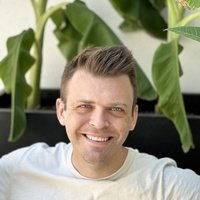
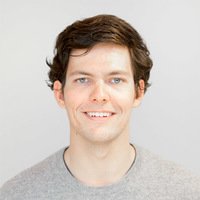
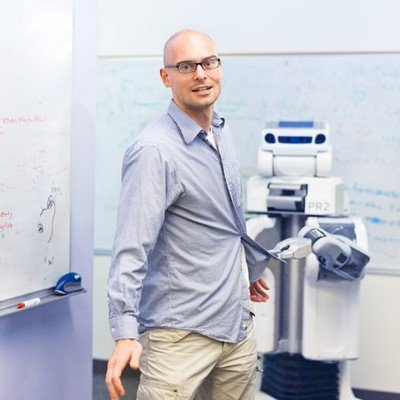
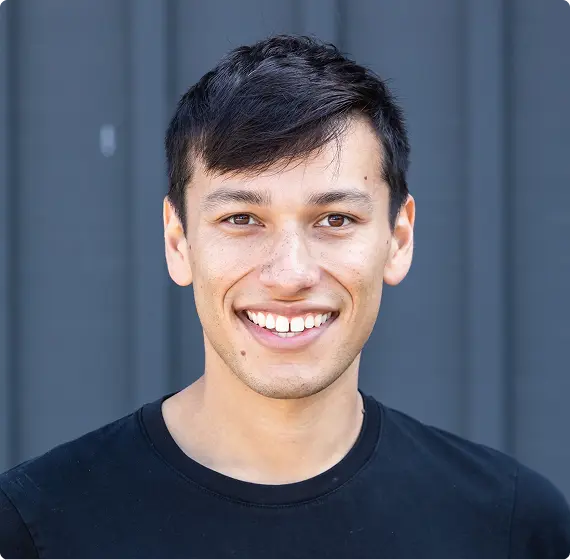
The OpenAI mafia →116 people who came through OpenAI went on to found or lead other companies.

Related companies · 4



Companies working in the same space as OpenAI.
Customers & partners
Named customers · 7
Relationships the company or its partners disclosed publicly — case studies, joint announcements, press.
Acquisitions · 4
Early investors' stakes continue via these dealsHiro provides automated security reviews for code and infrastructure, identifying vulnerabilities and generating customer-ready security documentation. The platform serves developers and engineering teams who need to pass customer security assessments.
io Products was a San Francisco AI-hardware startup co-founded by Jony Ive that developed screenless, AI-native consumer devices intended to move beyond smartphones.
Rockset provides a real-time analytics database with data indexing and querying capabilities for users, developers, and enterprises to access live information for AI applications. The company was acquired by OpenAI to power retrieval infrastructure across its products.
Leading AI research and product company
Timeline · 38
launches, deals, and filingsOpenAI confirmed it had filed confidentially for an IPO with the SEC; Altman told staff he expected a listing within about a year.
A federal jury ruled for OpenAI, Altman, Brockman, and Microsoft, finding Musk missed the statute-of-limitations deadline to sue; Musk's attorney said he would appeal.
OpenAI announced a $122 billion committed-capital round at an $852 billion post-money valuation.
OpenAI announced the close of a round totaling $122 billion in committed capital at an $852 billion post-money valuation, anchored by Amazon, NVIDIA and SoftBank, co-led by SoftBank with a16z, D. E. Shaw Ventures, MGX, TPG and accounts advised by T. Rowe Price Associates, with continued Microsoft participation. Over $3 billion came from individual investors via bank channels for the first time.
$122B source ↗
OpenAI announced it would be included in several exchange-traded funds managed by ARK Invest, broadening ownership of the still-private company ahead of a reportedly upcoming IPO.
OpenAI expanded its revolving credit facility to approximately $4.7 billion, supported by a syndicate including JPMorgan Chase, Citi, Goldman Sachs, Morgan Stanley, Wells Fargo, Mizuho, Royal Bank of Canada, SMBC, UBS, HSBC and Santander. The facility remained undrawn at close.
$4.7B source ↗
OpenAI described launching GPT-5.4, its most capable model at the time, and expanding Codex into a flagship coding agent, alongside advances in memory, search, personalization and multimodal interaction and expansion into health, scientific discovery and commerce.
OpenAI raised $110 billion led by Amazon ($50B), SoftBank ($30B), and Nvidia ($30B), then the largest private funding round in history; extended to $120B in March 2026.
OpenAI announced $110 billion in new investment at a $730 billion pre-money valuation, including $30B from SoftBank, $30B from NVIDIA and up to $50B from Amazon, with additional financial investors expected to join as the round progressed.
$110B source ↗
OpenAI expanded its collaboration with NVIDIA, including 3 GW of dedicated inference capacity and 2 GW of training on Vera Rubin systems, building on Hopper and Blackwell systems already operating across Microsoft, OCI and CoreWeave.
OpenAI and Amazon announced a multi-year strategic partnership to accelerate AI innovation for enterprises, startups and consumers worldwide.
Sam Altman announced that OpenAI had acquired OpenClaw, an open-source AI agent built by Austrian developer Peter Steinberger as a side project in November 2025 that reached over 145,000 GitHub stars within 60 days.
CNBC reported that OpenAI has been retreating from some spending plans and shuttering certain features and products in recent months, including its short-form video app Sora, as it looks to rein in costs.
OpenAI completed its conversion into OpenAI Group PBC, a public benefit corporation; the nonprofit was renamed OpenAI Foundation and retained a 26% stake (Microsoft 27%, employees/investors 47%).
OpenAI completed an employee share sale of up to $10 billion valuing the company at $500 billion, making it the world's most valuable private company, surpassing SpaceX.
OpenAI conducted a $6.6 billion share sale valuing the company at $500 billion.
$6.6B source ↗
OpenAI announced a $6.5 billion acquisition of io, an AI hardware startup co-founded by former Apple designer Jony Ive.
OpenAI closed a $40 billion round led by SoftBank at a $300 billion post-money valuation, then the largest private tech financing in history.
OpenAI, Oracle, SoftBank, and MGX announced the Stargate Project, a US AI infrastructure joint venture estimated at $500 billion.
A 2025 restructuring converted OpenAI's for-profit subsidiary (created in 2019) into a public benefit corporation that is 26% owned by the nonprofit OpenAI Foundation.
OpenAI closed a $6.6 billion funding round with Microsoft, Nvidia, and SoftBank at a $157 billion valuation.
Co-founder/Chief Scientist Ilya Sutskever resigned (succeeded by Jakub Pachocki); co-leader Jan Leike also departed citing safety concerns, and OpenAI's superalignment project was disbanded.
After nearly all employees threatened to resign, Altman and Brockman returned; a reconstituted board (Bret Taylor as chair, Larry Summers, Adam D'Angelo) took over.
OpenAI's nonprofit board (Toner, Sutskever, D'Angelo, McCauley) removed Altman as CEO citing lack of confidence; Mira Murati named interim CEO; Greg Brockman removed as board chair.
OpenAI's board removed Sam Altman as CEO citing a lack of confidence in him, then reinstated him five days later following a reconstruction of the board.
Hoffman resigned citing conflicts of interest from his AI investments via Greylock Partners and his co-founding of Inflection AI; he remained on Microsoft's board.
Microsoft announced an additional multi-year investment of up to $10 billion, valuing OpenAI at $29 billion.
Free preview of ChatGPT (based on GPT-3.5) released; became the fastest-growing consumer software application in history, surpassing 100 million users within two months and catalyzing the generative-AI boom.
OpenAI released ChatGPT, credited with catalyzing the AI boom and widespread interest in generative AI.
OpenAI announced GPT-3, a large language model trained on internet-scale data, and its commercial API.
OpenAI restructured into a 'capped-profit' entity (OpenAI LP) and received Microsoft's first $1B investment, moving its infrastructure to Azure.
OpenAI released a public beta of OpenAI Gym, its platform for reinforcement learning research.
Founded as a nonprofit AI research lab, OpenAI, Inc., in Delaware by Elon Musk, Sam Altman, Ilya Sutskever, Greg Brockman, and others, with $1B pledged toward its mission of ensuring AGI benefits humanity.
Dated company events from announcements, filings, and press; legal rows summarize public dockets and regulator releases.
In the news
 OpenAI researcher Miles Wang in talks to launch AI drug discovery startup valued at $2Btechcrunch.com · Jul 2026
▸Research sources · 18
primary sources listed
- OpenAI raises $122 billion to accelerate the next phase of AIOpenAI · press release
- OpenAI | GreylockGreylock Partners · company website
- Jerry Chen | GreylockGreylock Partners · company website
18 public sources were cited for this profile; the first-party ones are listed here.
Frequently asked questions
- What does OpenAI do?
- Create safe AGI that benefits all of humanity.
- Who founded OpenAI?
- OpenAI was founded by Sam Altman, Elon Musk, Greg Brockman, Ilya Sutskever, Wojciech Zaremba, John Schulman, Andrej Karpathy, Trevor Blackwell, Vicki Cheung, Durk Kingma, Pamela Vagata in 2015.
- Who are OpenAI's investors?
- OpenAI's investors include 7BC Venture Capital, A-Rod Corp, A.Capital Ventures, A'Z Angels, Advent International, Aliya Capital Partners, Alpha Funds, Alpha Wave Global and 97 more.
- How much funding has OpenAI raised?
- OpenAI has disclosed $122B raised across 1 of its 15 known rounds.
- Where is OpenAI headquartered?
- OpenAI is headquartered in San Francisco, US.