 Fundraising Fox
Balaji Srinivasan
InvestorFounderAngel investor and founder of The Network School · Advisor at Pronomos Capital · Advisor at Starkware · Investor at Balaji Rolling · Co-founder & CTO at Counsyl · +1 more
Singapore
Writes $10K – $500K checks · typically $100K


Find your path to Balaji
Sign up to see every warm intro you have to Balaji
- Paths you didn't know you had: your email and LinkedIn already hold routes to Balaji. We find them for you
- 2nd- and 3rd-degree connections: the friend-of-a-friend routes that take hours to manually find through your inbox or LinkedIn
- Answers now, not in days: momentum is everything in a raise. Skip asking around whether someone knows someone
Days of research, done the moment you sign in, with every route ranked by how warm it is.
Photo: Kristyuhorton, CC BY-SA 4.0, via Wikimedia Commons ↗
About
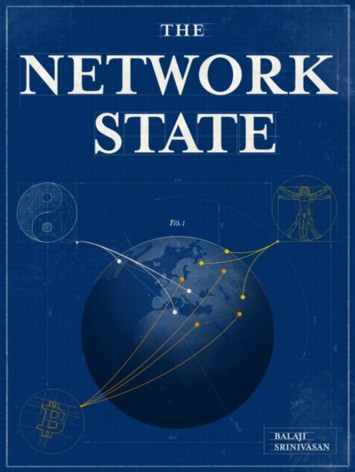
Balaji Srinivasan is a prolific angel investor and technologist who served as a general partner at Andreessen Horowitz and as Coinbase's chief technology officer. Author of The Network State, he now runs The Network School, a residential program for founders in Forest City, Malaysia, while continuing to write seed checks into crypto infrastructure and AI tooling. He has no institutional fund, operating instead as a solo angel and essayist.
Beyond investing
- Founded
- Srinivasan co-founded the genetic testing company Counsyl in 2007. Srinivasan co-founded the Bitcoin mining startup 21e6, later known as 21 Inc and Earn.com. Srinivasan co-founded Teleport, a job search engine, in 2014. In December 2023 Srinivasan launched the Balaji Fund, a venture fund with backers including Brian Armstrong, Naval Ravikant, and Fred Wilson. In 2024 Srinivasan founded Network School, a residential program for founders focused on health, technology, and startup societies; it launched in Forest City, Malaysia, and relocated to Astana, Kazakhstan, in 2026 after Johor authorities revoked its business licence.
- Education
- Studied at Stanford University (BS, Electrical Engineering) Studied at Stanford University (MS, Chemical Engineering)
- Boards
- Srinivasan co-founded Coin Center, a nonprofit research and advocacy group focused on cryptocurrency policy, and serves as a board member.
- Awards
- MIT added Srinivasan to its MIT TR35 list in 2013 for his work on clinical genomics. Srinivasan received the Innovators Under 35 - MENA award. Counsyl: WSJ Innovation Award for Medicine and Scientific American recognition.
- Family
- Srinivasan is the son of physician parents who immigrated from Tamil Nadu, India, and grew up in Plainview, New York, on Long Island.
Mentioned above: the Stanford University mafia → · the Counsyl mafia →
From Balaji's own website — common ground for a warm intro.
Co-founder & CTO at Counsyl
Intro paths
In turn, Balaji can intro founders to Counsyl's investors below.



Co-founder & CEO at Earn.com
Intro paths
In turn, Balaji can intro founders to Earn.com's investors below.



Investments
Investor
0xbow0xPass0xPPLAfropolitanAgnikul CosmosAgoraAIVideo.comAKASAAkido LabsAlchemyAleoAltLayerAnalogAndurilAnja HealthAntimatter SystemsAO LabsArcana NetworkArgus LabsAsporaAugustusAva LabsAvailBenchlingBig Whale LabsBizScoutBlitz Electric MobilityBloom Institute of TechnologyBlueprintBlueprint Bryan Johnsonbuild_BuildshipbuildspaceCalCameoCapsule SocialCatenaCelestiaChaos LabsCitizenXCitreaClearTaxClimate AlphaCliqueClockworkClubhouseCodeCoinbase Token ManagerCoinTrackerCollektrCommonwealth LabsContinuumCreatorOS IncCrossmint, Inc.CrowdPadCryptoKittiesCuldesacCypher WalletDank BankDAOLensDapper LabsDatacurveDatalabDeelDeFi.appDefinedDelphiDenDenormalizedDeworkDigitalOceanDinariDirac LabsDL SoftwareDoNotPayDoppelDot Productego AIEight SleepEllisEmergentEmergent LabsEmpower SleepEnhanced GamesEspresso SystemsEtchedETHSignEvertasExaExtropic AIfalFarcasterFermahFileverseFluent LabsFocusmatefomoForteFoundationGaloyGencoveGitcoinGitPOAPGoldenGoldfinchHashflowHausHelicarrier (prev Buycoins)HeliusHitoHuddle01HumalectHyperbolicImmuneAGE BioInduced AIInstadappIntegral TreasuryInternxtIntmaxInvact MetaversityInversion CapitalInvestaxIron FishIronblocksIXSJudicataJuliusJulius AIJunoKhatabookKoo AppKoopLabdaoLaunch HouseLayer3Leap TransitLens ProtocolLevelLevels HealthLica WorldLight ProtocolLiminalLiminal CustodyLinesLocalsLoreLumaLystoM1X GlobalMadMen AIMagicMagic LabsMagnaMask NetworkMastraMediaKitsMem ProtocolMerkle ManufactorymeshMapMessariMetalinkMIDAOMiraMirrorMito HealthMoHashMoleculeMoneriumMyShellNakamotoNasNas.comNEARNFTPortNoiceNotchNous ResearchNucleusNucleus GenomicsNume CryptoNuonxyzObjection.aiOctaneOmada HealthOn DeckOneImagingOpenGovOpenGradientOpenLedgerOpenseaOpynOrchidOrchid HealthOrd.ioOrigamiOstiumParadigmParallaxPepper ContentPerchPermissionlessPerplexityPetrolPricePhasePhysical SuperintelligencePIP LabsPlanetaryPlaygroundPluralis ResearchPolychain CapitalPolymarket Consumer GrowthPotrero LabsPraxisPrime IntellectProdiaProfoundProject ElevenProof of PlayProperPrósperaProvenPUSH ProtocolPYORQuadrataQuilletteRabbitholeRadicleRainRainmakerRainmaker TechnologyRamp NetworkReclaim ProtocolRenaltaRenegadeRep3ReplitRepublicRitualRiver Platform CompanyRMFGRoamRoiRollRosebud AIRowyRSS3Ryodan SystemsSalsa (prev. Pearl)Samana GroupSamudaiScamGuardian.AIScholarSending NetworkSepanaShardeumShowtimeShuttle LabsSiPhox HealthSkiffSlideSmashingSocketSolveBioSovereign LabsSovrynSoylentSpatialSpatial New York, USASPICYESTSpindlSpiral Geneticsspritz.financeStability AIStackStarkwareStarlightStediStory ProtocolSuperfluidSuperhumanSuperpowerSyndicateSynthesisSynthesis SchoolThe ArenaThe Data FoundationThe JuggernautTimeswapTogetherTrepaTruflationUltrahumanUnstoppable DomainsUtilaValar AtomicsVarda Space IndustriesVibe BioVitaDAOVorfluxWalzayWarpXMTPYO ProtocolZARZcash Open Development LabZeroMarkZodlZoksh PayZora
Protocols
AvalancheBitcoinChainlinkEthereumNEAR ProtocolPolygonSolanaXMTPZcash
Per curated public sources.
Public positions
Balaji believes software and crypto can reorganize institutions, identities, cities, and political communities. He favors exit and competition over reform, direct evidence over centralized authority, and new internet-first institutions over inherited structures. That worldview is a meaningful part of investment fit, not a separate media persona.
2013 · Technology and governance
Software can reorganize political and geographic structures, not just industries.
Foundational to his later Network State work.
2013 · Exit
Technology communities should retain the option to exit poorly governed systems.
One of his most provocative and durable ideas.
2014 · Startup strategy
Full-stack companies can win by owning the whole customer experience.
Influential startup framework.
2015 · Founder finance
Personal runway is strategic leverage for founders.
Shows preference for resilience and independence.
2015 · Network state
Internet communities could eventually coordinate into new political entities.
Early public version of the book thesis.
2017 · Crypto
The blockchain is an internet-native system for money and ownership.
Captures his long-running crypto worldview.
2017 · Regulation
The FDA and other institutions can suppress innovation through centralized approval power.
Explains his deregulatory stance and 2017 FDA controversy.
▶All 37 tracked positions
2017 · Decentralization
Decentralization must be measured, not merely claimed.
A useful diligence principle for crypto founders.
2018 · Identity
Internet citizenship can become a primary affiliation.
Precursor to network-state identity.
2018 · Stablecoins
USDC could make digital dollars composable on crypto networks.
Operational work at Coinbase aligns with investment thesis.
2019 · Bitcoin
Bitcoin is a cultural flag for technological progress.
One of his best-known formulations.
2019 · Pseudonymity
Persistent pseudonyms can support economic activity and reputation.
Anticipated crypto-native work and identity systems.
2019 · Founder governance
Founder control can protect long-term company missions.
Relevant to how he may assess governance.
2020 · COVID-19
A new coronavirus could become a major pandemic.
Widely noted as an unusually early warning.
2020 · Remote society
Borders, offices, media, education, and health behavior would change under pandemic conditions.
Several near-term predictions proved directionally correct.
2020 · Technology
The purpose of technology is to reduce suffering and ultimately confront mortality.
Connects biotech, longevity, and hard-tech interests.
2020 · Media
Citizen journalism and direct evidence can compete with legacy media.
Explains his ongoing conflict with major media institutions.
2020 · Cities
Blockchain-enabled communities can coordinate physical places.
Bridge between crypto and startup cities.
2021 · India
India should legalize crypto and position itself as a technology power.
Shows long-standing India focus.
2021 · Bitcoin reserves
The Indian government should consider buying Bitcoin.
Provocative sovereign-adoption argument.
2021 · Inflation data
Independent, real-time inflation measures should compete with government statistics.
Led to a $100,000 prize and Truflation.
2021 · Startup cities
Cities can be founded and iterated like startups.
Central network-state operating thesis.
2022 · Network state
Online communities can build population, income, territory, and recognition in sequence.
Canonical book framework.
2023 · Banking crisis
Banking stress could trigger rapid fiat debasement and a dramatic Bitcoin repricing.
Motivated the $1 million Bitcoin bet.
2023 · AI
AI can increase output across individuals, organizations, and society.
A more expansionary view than job-displacement-only narratives.
2023 · Political identity
A technology-oriented gray tribe is emerging outside traditional left/right categories.
Political taxonomy used in later writing.
2024 · AI programming
Prompts are a new programming interface.
Explains interest in AI tools and democratized creation.
2024 · Digital commonwealths
Internet communities can develop shared economies, identity, and institutions.
Updated network-state vocabulary.
2024 · California
California's governance and fiscal model is unstable and may force radical alternatives.
Highly political and controversial strand of his writing.
2024 · Debt
U.S. fiscal obligations are much larger than headline federal debt.
Supports his Bitcoin and institutional-fragility thesis.
2025 · AI
AI is polytheistic rather than monotheistic.
Predicts a plural ecosystem of models, agents, and owners.
2025 · Popups
Temporary physical communities are the new startup experiments.
Directly connected to Network School and startup societies.
2025 · Property
As property becomes digital, cryptography becomes a core enforcement layer.
Connects AI, crypto, identity, and ownership.
2025 · Talent
High-capability people are often invisible to conventional credential systems.
Supports alternative talent discovery and proof-of-work credentials.
2026 · Synthetic media
Going direct is no longer enough; public claims must be proven correct.
Current framing for AI-era media and trust.
2026 · Investing
He seeks outlier founders willing to pursue ideas that conventional investors reject.
Useful shorthand for founder fit, but based on a public interview rather than formal mandate.
2026 · Institutional competition
Opt-in systems can create alternatives to inherited institutions.
Current articulation of his governance thesis.
Prediction record
His January 2020 COVID warning was notably prescient. His 2023 prediction that Bitcoin would reach $1 million within 90 days failed decisively. Other long-horizon calls—network states, startup cities, pseudonymous work, plural AI, and cryptographic proof—have partial or early evidence but remain unresolved.
COVID-19 could become a major pandemic
Correct2020 · Weeks to months
The outbreak became a global pandemic within weeks.
One of his strongest documented public calls.
Border closures, remote work, masks, and social isolation would spread
Correct2020 · Weeks to months
All became widespread policy or behavior.
Some specific timing and details varied by country.
Bitcoin would become a flag for global technologists
Open2019 · Long term
Bitcoin became a major political and cultural symbol in technology and finance.
Qualitative thesis; not objectively falsifiable.
A pseudonymous economy would emerge
Correct2019 · Multi-year
Pseudonymous crypto communities, developers, and creators are common; broad mainstream employment remains limited.
Outcome is mixed and sector-specific.
Independent real-time inflation measurement could challenge official statistics
Open2021 · 1–3 years
The prize helped catalyze Truflation and a live alternative index.
Validation of product creation, not necessarily superior accuracy.
Startup cities and network unions would become a meaningful category
Correct2021 · 5–10 years
Multiple popup cities, special zones, conferences, and Network School emerged.
Diplomatic recognition of a network state has not occurred.
India could become a major crypto and technology power by embracing the sector
Open2021 · 5–10 years
India's technology ecosystem strengthened, but crypto policy has remained restrictive and complex.
Requires ongoing policy updates; do not mark fully resolved.
Governments may hold Bitcoin as a reserve asset
Correct2021 · Multi-year
Some governments and public entities adopted or accumulated Bitcoin, but broad sovereign adoption remains limited.
Not a universal trend.
Bitcoin would reach $1 million within 90 days
Missed2023 · 90 days
Bitcoin did not approach the target; Balaji settled the bet early.
He reframed the payment as a costly public alarm about banking risk.
A rapid fiat crisis or hyperinflationary event was imminent
Missed2023 · 90 days
No U.S. hyperinflation occurred in the 90-day period.
Longer-run debt concerns remain separate from the failed short-horizon call.
Prompts would function as programs
Correct2024 · 1–5 years
Natural-language agents and AI workflow tools increasingly behave like programmable systems.
Qualitative and still evolving.
AI would be polytheistic: many models, agents, and owners
Correct2025 · Multi-year
The market features many frontier and open models rather than a single intelligence provider.
Future consolidation could change this.
Popups would become a new startup formation mechanism
Open2025 · 3–10 years
Popup cities and founder communities expanded, including Network School.
Scale, durability, and legal status remain unproven.
Synthetic media would force a shift from direct distribution to cryptographic proof
Open2026 · Multi-year
Provenance and verification products are growing, but no universal standard dominates.
Current thesis rather than a completed prediction.
Network School could become a repeatable operating model for a startup society
Open2024 · Multi-year
The Malaysia campus demonstrated demand but lost its licence; the project then moved to Astana.
The move shows adaptability but also jurisdictional and compliance risk.
Controversies & responses
Where Balaji has drawn public criticism — with what happened, their response, and the criticism itself, side by side.
▶Silicon Valley's Ultimate Exit2013
- What happened
- A talk advocating technological communities with the option to exit legacy political systems was interpreted by critics as secessionist and elitist.
- The response
- Balaji framed exit as peaceful competition and a way to improve governance.
- The criticism
- Critics argued that wealthy technologists could abandon rather than reform public institutions.
- Where it stands
- The thesis evolved into the Network State project.
▶FDA commissioner consideration and anti-FDA views2017
- What happened
- He was reportedly considered for FDA commissioner after criticizing the agency and advocating deregulation.
- The response
- His argument emphasized faster innovation and alternative approval mechanisms.
- The criticism
- Public-health critics warned that aggressive deregulation could weaken safety and evidence standards.
- Where it stands
- He did not become commissioner.
▶Conflict with legacy media2019
- What happened
- He has repeatedly criticized major outlets, journalists, and centralized editorial power.
- The response
- He advocates direct publishing, citizen journalism, and cryptographic evidence.
- The criticism
- Critics describe some of his rhetoric as overly broad, personal, or dismissive of institutional journalism.
- Where it stands
- The conflict remains central to his public persona and 2026 'prove correct' thesis.
▶Network State political model2022
- What happened
- The book proposes internet-first communities that accumulate territory and eventually seek recognition.
- The response
- Balaji presents it as voluntary, peaceful, and opt-in.
- The criticism
- Academic critics raise concerns about plutocracy, colonial dynamics, labor, exclusion, and democratic accountability.
- Where it stands
- No network state has achieved the book's full diplomatic end state.
▶$1 million Bitcoin bet2023
- What happened
- He publicly predicted Bitcoin would reach $1 million in 90 days and committed $1 million to the bet.
- The response
- He said the wager was an alarm about banking and sovereign-currency risk, and settled with $1.5 million in payments and donations.
- The criticism
- The price target failed decisively and was criticized as sensationalistic.
- Where it stands
- Historical failed prediction; still frequently cited in assessments of his forecasting.
▶Network School governance and exclusivity2024
- What happened
- The live-in startup society drew attention for selective admissions, internal norms, and ambitions to build parallel institutions.
- The response
- Supporters describe a high-agency founder community with health, education, and work infrastructure.
- The criticism
- Critics and some reporting raised concerns about secrecy, inequality, ideology, and local integration.
- Where it stands
- The operating model remains experimental.
▶Malaysia licence revocation2026
- What happened
- Johor authorities revoked Network School's business licence and ordered activities to stop after an investigation.
- The response
- Balaji and the school disputed negative reporting; the project rapidly relocated to Kazakhstan.
- The criticism
- The event raised compliance, immigration, local-governance, and community-relations questions.
- Where it stands
- Reuters reported immigration inspectors found valid travel documents; the licence was nevertheless revoked.
▶Response to Wall Street Journal reporting2026
- What happened
- Balaji published a detailed rebuttal to reporting about Network School and the journalist's conduct.
- The response
- He argued the coverage was inaccurate and intrusive and emphasized primary evidence.
- The criticism
- The episode illustrates his adversarial relationship with institutional media; independent readers should compare original reporting and response.
- Where it stands
- Dispute remains contested; present both sides without adopting either narrative.
Books by Balaji Srinivasan
Podcasts & interviews
featuring Balaji SrinivasanBalaji Srinivasan: How to Fix Government, Twitter, Science, and the FDA | Lex Fridman Podcast #331
Lex Fridman
Balaji Srinivasan on The Future of AI | The a16z Show
a16z
Steven Sinofsky & Balaji Srinivasan on the Future of M&A, AI & Tech
a16z
Balaji Srinivasan: How AI Will Change Politics, War, and Money
a16z
Balaji Srinivasan: Investing in the Age of American Anarchy | The Bitcoin Magazine Podcast
Bitcoin Magazine
Prove Correct, Not Just Go Direct
a16z.com · a16z.com
6 more appearances
- How I Invest: Balaji Srinivasan2026-01-01
- 303. The Network State with Balaji Srinivasan2025-12-09
- Balaji Srinivasan - Why America Is Collapsing and What Comes Next2025-10-20
- Balaji Srinivasan Breaking Down Modern Politics and Starting a New Country | Ep. 242025-09-18
- Bitcoin Will Shift The Global World Order | Balaji Srinivasan2025-09-17
- Balaji Srinivasan: The COLLAPSE of the West – Why AI, Bitcoin & China Will Win | Peter McCormack2025-07-30
Writing
All posts ↗Balaji has recently written about migration and the right to exit—framing his own move to Singapore as part of a broader trend—and about the Network State Conference, arguing that online communities can materialize into physical "popup" and permanent societies.
Balaji recounts a Wall Street Journal reporter's questioning about his move to Singapore and argues that mass migration, the right to exit, and emigration from America define the current era.
He recaps the 2025 Network State Conference and argues that temporary in-person 'popup' communities can scale into permanent physical societies as a code-based successor to the rules-based order.', 'published_date': null
He announces the October 3 Network State Conference in Singapore, listing speakers and describing efforts to turn online crypto communities into physical startup societies and economic zones.', 'published_date': null
Network54







▶42 more connections
Amman Bhasin · scoutAndrea Dusi · scoutAndrew Keys · scoutAndrew Steinwold · scoutAnsaf Kareem · scoutAsh Egan · scoutAustin Ogilvie · scoutBalder Bomans · scoutBaris Aksoy · scoutBen Davenport · scoutBoris Wertz · scoutBradley Keywell · scoutBrett deMarrais · scoutBrian Cho · scoutBrian Cho · scoutBrianne Kimmel · scoutBruno Faviero · scoutBryan Johnson · scoutCarter Reum · scoutCasey Caruso · scoutCharlie Feng · scoutChris Burniske · scoutChris Ovitz · scoutChristian Angermayer · scoutClaire Hughes Johnson · scoutCourtney Guertin · scoutDave Morin · scoutDavid Lee · scoutDavid Petersen · scoutDirk Van Quaquebeke · scoutEamon Leonard · scoutEmmett Shear · scoutEric Demuth · scoutErikan Obotetukudo · scoutFiona Kelly · scoutGanesh Rengaswamy · scoutGil Elbaz · scoutKyle Vogt · scoutTekin Salimi · scoutHaseeb QureshiKevin HartzNic Carter
Investors connected to Balaji in public investor directories — a warm-intro map.
Frequently asked questions
- Who is Balaji Srinivasan?
- Balaji Srinivasan is a prolific angel investor and technologist who served as a general partner at Andreessen Horowitz and as Coinbase's chief technology officer. Author of The Network State, he now runs The Network School, a residential program for founders in Forest City, Malaysia, while continuing to write seed checks into crypto infrastructure and AI tooling. He has no institutional fund, operating instead as a solo angel and essayist.
- Where does Balaji Srinivasan work?
- Balaji Srinivasan is Co-founder & CTO of Counsyl and Angel investor at Balaji Srinivasan and Advisor at Pronomos Capital and Advisor at Starkware and at Balaji Rolling and Co-founder & CEO at Earn.com.
- What check size does Balaji Srinivasan write?
- Balaji Srinivasan typically writes checks of $10K – $500K.
- What companies did Balaji Srinivasan found?
- Balaji Srinivasan founded Counsyl, Earn.com.
- What companies has Balaji Srinivasan invested in?
- Investments tracked here include 0xbow, 0xPass, 0xPPL, Afropolitan, Agnikul Cosmos, Agora, AIVideo.com, AKASA, Akido Labs, Alchemy, Aleo, AltLayer, and 307 more.
- What awards has Balaji Srinivasan received?
- MIT added Srinivasan to its MIT TR35 list in 2013 for his work on clinical genomics. Srinivasan received the Innovators Under 35 - MENA award. Counsyl: WSJ Innovation Award for Medicine and Scientific American recognition.
- What has Balaji Srinivasan written?
- Balaji Srinivasan has 3 tracked posts on balajis.com, including "Why did Stu Woo of the Wall Street Journal Follow Me to Singapore?", "Popups are the new startups", "Network State Conference 2025".
- What podcasts and interviews feature Balaji Srinivasan?
- Tracked appearances include "Balaji Srinivasan: How to Fix Government, Twitter, Science, and the FDA | Lex Fridman Podcast #331", "Balaji Srinivasan on The Future of AI | The a16z Show", "Steven Sinofsky & Balaji Srinivasan on the Future of M&A, AI & Tech", and 9 more.
Founder mafias
Stanford University mafia2,297
Also came through, then founded or led a company.




Coinbase mafia122
Also came through, then founded or led a company.




Andreessen Horowitz mafia97
Also came through, then founded or led a company.



Omada Health mafia11
Also came through, then founded or led a company.


Counsyl mafia8
Also came through, then founded or led a company.



About this profile. Compiled from public sources — Pronomos Capital's own website, press coverage and public professional profiles — and summarised by Fundraising Fox; every fact is kept with where it came from. Spotted an error, or would rather not be listed? Email privacy@fundraisingfox.com · How we build profiles · Your rights