 Fundraising Fox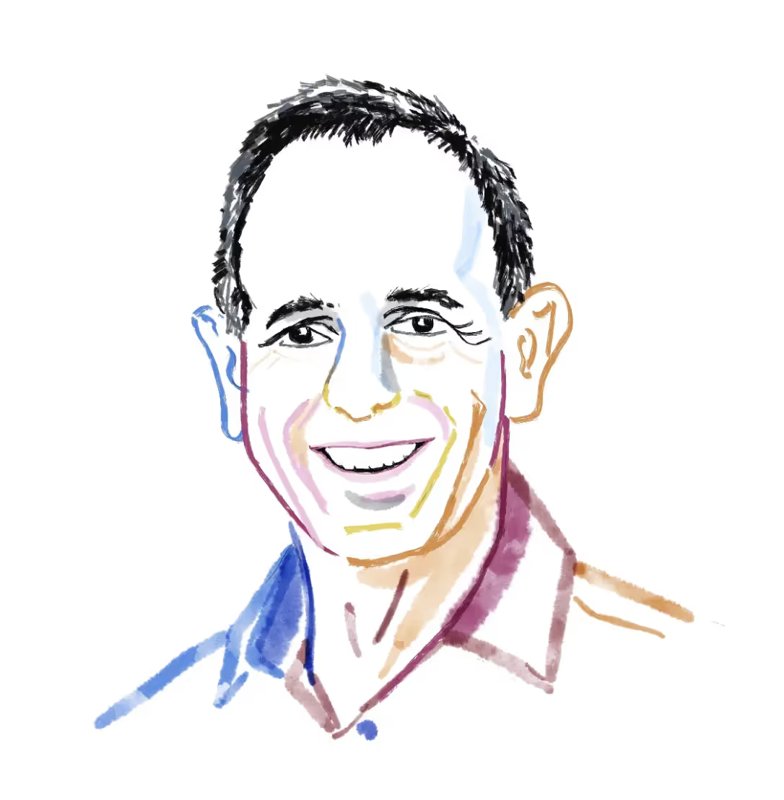
Keith Rabois
InvestorUnicorn founderFounder at Opendoor · Managing Director at Khosla Ventures · Advisor at Stellar Development Foundation
Miami, FL
Writes $500K – $150M checks · typically $25M
FoundedOpendoor$18B

Midas 2021 · #37Midas 2022 · #8Midas 2023 · #33Midas 2024 · #26Midas 2025 · #17Midas 2026 · #66
Find your path to Keith
Sign up to see every warm intro you have to Keith
- Paths you didn't know you had: your email and LinkedIn already hold routes to Keith. We find them for you
- 2nd- and 3rd-degree connections: the friend-of-a-friend routes that take hours to manually find through your inbox or LinkedIn
- Answers now, not in days: momentum is everything in a raise. Skip asking around whether someone knows someone
Days of research, done the moment you sign in, with every route ranked by how warm it is.
About
Keith Rabois held early executive roles at PayPal, LinkedIn, and Square before building an investing record that spans Stripe, Airbnb, DoorDash, and Faire. He co-founded the proptech company Opendoor and has alternated between Khosla Ventures and Founders Fund, returning to Khosla as a managing director in early 2024. He is known for strong opinions on startup talent density and for championing Miami as a tech hub.
Contact· published on Keith's own website
Invests in
AI & Machine LearningBiotechConsumerCybersecurityDefense TechEnterprise SoftwareFintechFuture of WorkHealthtechMarketplacesSector AgnosticSpace Tech
Beyond investing
- Founded
- Co-founded Opendoor.
- Education
- Holds a bachelor's degree in political science from Stanford University. Earned a juris doctor degree with honors from Harvard University.
- Awards
- Consistently recognized on the Forbes Midas list, ranking as high as #4 in the U.S. and #8 globally.
Mentioned above: the Stanford University mafia → · the Opendoor mafia →
From Keith's own website — common ground for a warm intro.
Founder at Opendoor
Intro paths
In turn, Keith can intro founders to Opendoor's investors below.
Opendoor's investors · 49



























Co-founders at Opendoor

Deals · 21
Indie Technologies, Inc.Board seat
via Khosla Ventures · filed Jun 2024 · $46M raise

Ghost LocomotionBoard seat
via Khosla Ventures · filed Nov 2023 · $55M raise

PietraBoard seat
via Khosla Ventures · filed Mar 2023 · $16.1M raise

WorkstreamBoard seat
via Khosla Ventures · filed Oct 2022 · $60M raise
Royal MarketsBoard seat
via Khosla Ventures · filed Dec 2021 · $55M raise
FaireBoard seat
via Founders Fund · filed Nov 2021 · $400.2M raise
Virtual KitchenBoard seat
via Khosla Ventures · filed Oct 2021 · $65M raise
SpotMapBoard seat
via Khosla Ventures · filed Jun 2021 · $15M raise
Virtual KitchenBoard seat
via Founders Fund · filed Sep 2020 · $20M raise
Homevest GPBoard seat
via Khosla Ventures · filed Sep 2019 · $10.3M raise
FaireBoard seat
via Khosla Ventures · filed Dec 2018 · $60M raise
Lightyear CorpBoard seat
via Khosla Ventures · filed Sep 2018

MedisasBoard seat
via Khosla Ventures · filed Dec 2016 · $10.7M raise
ForwardBoard seat
via Khosla Ventures · filed Jul 2016 · $30M raise
Esper TechnologiesBoard seat
via Khosla Ventures · filed Mar 2016 · $3.2M raise
OpenDoor LabsBoard seat
via Khosla Ventures · filed Apr 2015 · $20.6M raise
AvenLed round
via Founders Fund · filed Sep 2025
AvenLed round
via Khosla Ventures · filed Sep 2025

AffirmLed round
via Khosla Ventures
AffirmLed round
via Founders Fund

DoorDashLed round
via Khosla Ventures
Attribution from SEC filings, press coverage, and firm rosters.
Other disclosed investments
Led
OpendoorRampTrade Republic
Board seats
FoundMach IndustriesOpendoorOpenStoreRampRampRampRedditRedditScribdTrade RepublicXoomXoom CorporationYelp
Investor
1000MemoriesAfterHourAirbnbAirGarageAll Day KitchensAlliance of American FootballArtsyAssembledAt-BayAvametricBasisBeautylishBitwiseBreakthrough BehavioralBungalowCausesChainCherryChirplyCircleClearingCompContextLogicCover LockscreenCueDelphiDotBluEarable NeuroscienceEven.comEventbriteEverlaneFactoryFinderyFormative LabsForward Health, Webflow, Olive, Eight Sleep and At-BayFoundFridgeFutureAdvisorGAIN FITNESSGhost AutonomyGobbleGogobotGroovvHandipointsHelloSignHeyHitpostHomebaseHoodlineImprintImprint and WithCoverageinDineroJudicataKiddomLattice, Tile, Ellevest, Anchorage, Checkr and UpstartLavaLeverLockitronLovelyLyftLyftLyft, Udemy and EventbriteMach IndustriesMango HealthMaximusMileWiseMiloMisoMiso MediaMixpanelMovityMyTimeNarrativeNightingaleOhLifeOliveOn DeckOne Inc.OpendoorOpendoor TechnologiesOpenStorePalantir Technologies Inc.Palantir Technologies Inc.Palm Tree CrewParavisionParStreamPathPerchwellPhiaPiazzaPomeloPortola PharmaceuticalsPrimerProfoundProfound, Rogo, Runlayer, Basis, Spellbook and FactoryPropellerPulleyPunchcardQuartzyQuoraQwikiRampRedditRelcyRoamRobinhood and RipplingRogoRoyalRun the WorldRunlayerSavvySchematic LabsScribdSearchlightShadeSoshSpellbookSpringStripeSymphony CommerceTeamraderieTeleportThe Orgtheorg.comThirdLoveThoughtSpotTimefulTopguestTrabaTrade RepublicTrueworkUdemyUdemyUpserveVamoVibrado TechnologiesViseVotizenWanderJauntwish.comwithcoWithCoverageXoom CorporationYammerYelpYouTubeZerocaterZimride
Sources: the firm's website · curated public sources · SEC Form D filings.
Controversies & responses
Where Keith has drawn public criticism — with what happened, their response, and the criticism itself, side by side.
▶1992 Stanford anti-gay harassment incident1992
- What happened
- While a Stanford law student, Rabois shouted anti-gay slurs and a death wish outside lecturer Dennis Matthies's residence. He framed the conduct as an intentionally outrageous challenge to speech rules; Stanford did not apply its Fundamental Standard, but the university and community strongly condemned it and he transferred to Harvard. Describing it only as a free-speech protest would erase the targeted abuse.
▶Square resignation followed disputed harassment allegation2013
- What happened
- An employee with whom Rabois acknowledged a prior and continuing physical relationship threatened litigation alleging non-consensual conduct. Rabois denied the allegation and called the demand a shakedown. Square said it found no supporting evidence but concluded his poor judgment undermined his effectiveness. No reviewed source provides an adjudicated liability finding or final confidential disposition.
▶Opendoor turnaround rhetoric called for extreme cuts2025
- What happened
- Days after becoming chairman, Rabois said a 1,400-person company needed roughly 200 employees, criticized remote work and DEI, and called the culture broken. He presented cuts as necessary for cost structure; critics viewed the public comments as dismissive of workers and premature governance by headline.
▶KV leaders disavowed 2026 comments about federal agents2026
- What happened
- After Rabois defended federal agents following the fatal Minneapolis shooting of Alex Pretti and made categorical claims about innocence and immigrant crime, Ethan Choi and Vinod Khosla publicly rejected his position. The disagreement demonstrates that his political speech is personal and not a unified KV view; his managing-director role continued.
Founder fit — who Keith backs
Best fits are outrageously ambitious, relentlessly resourceful founders with a specific idea they cannot stop pursuing, unusual talent judgment, high agency, intellectual speed, a defensible comparative advantage and willingness to build in person with high standards. He tends to prefer undiscovered or underpriced talent over conventional seniority, operator-founders over professional dealmakers, and leaders who can become 'barrels'—people able to take an initiative from idea to completion. Fintech, marketplaces, consumer products, applied AI and operationally complex platforms fit his record especially well. Founders should want direct, sometimes public, high-pressure advice and should independently evaluate whether his culture, politics and board style fit their employees, customers and stakeholders.
Small or incremental outcomes, consensus imitation, founders seeking prestige capital without direct engagement, teams built mainly from expensive conventional résumés, low-agency managers, unclear ownership, weak unit economics, AI wrappers whose compute costs destroy gross margin, growth rounds purchased only on momentum, and founding teams that disagree on first principles or talent quality. His public style may be a poor fit for founders prioritizing remote-first work, consensus management, psychological safety, extensive consumer interviews or politically neutral board communication. Those are fit differences, not universal evidence of weak companies.
How to pitch
Identify the correct vehicle and explain why Rabois has a comparative advantage for this company. Lead with the world-changing outcome, the specific non-consensus insight, why the founder cannot let the idea go, and evidence of unusual agency. Show the core risk areas and the world-class people assigned to each; name the 'barrels' who own complete outcomes. Use a small number of operational metrics, demonstrate speed and talent density, and explain why the market can support a category-scale result. For fintech, address regulation, loss/fraud, capital and distribution. For marketplaces, show liquidity, frequency, unit economics and which observed behavior—not survey intention—proves demand. For application AI, show positive gross-margin architecture and workflow defensibility. Address OpenStore- and Opendoor-like cyclicality, cost structure and governance directly. Ask what board, recruiting and operating help he will personally provide, and clarify whether a board seat would represent KV, Founders Fund legacy interests or him personally.
Stages: personal angel historically, pre-seed, seed, Series A, select Series B and Series C, occasional late-stage growth, company incubation and co-founding, public and private board turnarounds · Sectors: financial services and fintech, payments, credit and banking infrastructure, marketplaces and network businesses, consumer internet and commerce, application-layer artificial intelligence, AI-enabled professional workflows, enterprise software, future of work and HR software, healthcare services and health technology, insurance and cybersecurity, education technology, real estate and proptech, mobility and local services
Editorial inference from Keith's portfolio, writing and public record — not a published mandate.
Investment themes
11 documented themes from Keith's essays, talks and portfolio, grouped by what they say about founders.
▶Founders & company building2
Find a non-zero chance of changing the world2026
His simplest filter is whether the founder might change an industry or the world, accepting a structurally high failure rate for that upside.
For founders: Demonstrate outlier potential and why your personal trajectory makes it credible.
Discover talent before the market prices it
PayPal's network-driven hiring and his own learning curve led him to favor underrecognized people who are resourceful, contrarian and capable of growing into large scope.
For founders: Provide concrete examples of making things happen against odds, not only elite-company credentials.
▶More themes7
The fixed cost of startup pain justifies a huge outcome
Rabois favors ideas ambitious enough to look ridiculous because building even a modest startup is painful; ambition must still rest on a reasoned exception to normal rules.
For founders: Show why the problem and outcome are enormous, and which conventional rule you can selectively violate.
Do not invest without a specific edge2024
He asks why he or the fund can judge and assist a company better than alternatives; otherwise returns regress toward an unacceptable middle.
For founders: Explain why your company and this investor are uniquely matched, not merely why both are prominent.
Barrels determine organizational throughput2014
A few self-directed people can carry ideas through completion; adding contributors without enough owners creates coordination burden.
For founders: Name each end-to-end owner, show prior agency and expand scope as performance proves out.
The leader edits people, decisions and complexity2014
His operating lecture treats a company as an engine: founders simplify, allocate resources, build dashboards, teach judgment and edit team composition rather than write every answer.
For founders: Bring a concise operating dashboard, decision framework and delegation map.
Transparency and pressure over comfort2014
Rabois advocates broad information access, direct public correction and high performance pressure. Supporters see speed and learning; critics see risks to psychological safety, retention and fair process.
For founders: Define how candor works without humiliation, retaliation, bias or loss of error reporting.
Observed consumer behavior can beat stated feedback2026
He is strongly skeptical of interviews for consumer products because users rationalize subconscious choices; he makes a narrower exception for named enterprise decision-makers. The categorical form conflicts with mainstream discovery practice and can miss accessibility or harm signals.
For founders: Use real behavioral data, but explain where qualitative research is essential and how you avoid selection bias.
Technology, China and business climate drive partisan engagement2022
His public agenda emphasizes China competition, TikTok, low tax/regulation, Israel and cultural politics. Donation threats and inflammatory immigration commentary make the overlap between investor influence and politics unusually visible.
For founders: Evaluate reputational and policy alignment explicitly; a partner's speech is not automatically the firm's or portfolio's position.
▶AI & media1
AI compresses management layers and product roles2026
He predicts AI will merge design and coding, weaken the classic product-manager triad and let executives create more work directly. These are forward-looking claims, not settled labor outcomes.
For founders: Show measurable role compression and workflow gains rather than assuming whole occupations disappear.
▶Governance & network states1
Founder mode still requires independent controls2025
His Opendoor return combines founder urgency, board authority, committee duties and public restructuring rhetoric. Independence, audit, compensation and employee process remain obligations even under a turnaround mandate.
For founders: Specify board authority, decision rights, conflicts, communications and humane restructuring process.
Podcasts & interviews
featuring Keith RaboisKeith Rabois on Rejoining Khosla Ventures | E1102
20VC with Harry Stebbings
Hard truths about building in the AI era | Keith Rabois (Khosla Ventures)
Lenny's Podcast
Hard Truths About Building in the AI Era
Lenny's Podcast · lennysnewsletter.com
Vinod Khosla Publicly Disavows Keith Rabois' Comments on ICE Shooting
TechCrunch · techcrunch.com
From PayPal to Khosla Ventures: The Keith Rabois Tech Investment Story
Entrepreneur's Life English
Khosla Ventures' Keith Rabois on OpenDoor: It's not a meme stock
cnbc.com
6 more appearances
- Opendoor's Keith Rabois: Company Needs to Cut 85% of Its Workforce2025-09-12
- OpenStore Demise Endgame for Once-Booming Ecommerce Aggregator Market2025-08-08
- Modern Meditations: Keith Rabois2025-04-24
- Comparative Advantages | Keith Rabois, Managing Director at Khosla Ventures2025-03-20
- Comparative Advantages | Keith Rabois, Managing Director at Khosla Ventures | Ep. 22025-03-20
- Watch CNBC's full interview with Khosla Ventures' Keith Rabois2024-03-15
Writing
Short official archive on building startups and evaluating and managing executives; some pieces credit chief of staff Matt Lanter and should not be treated as solely Rabois-authored.
Rabois's Medium index preserves the article title and its opening Ramp seed entry, but the canonical story URL was not recoverable and complete historical contents should be independently archived.
First-person investment ledger with stages and collaborator attribution; useful for deal identity, not audited returns.
Books recommended to founders across business, history, politics, management and biography.
Continuously updated first-person profile supplying detailed operating scope and current AI/fintech investment attribution; dates and claims require company corroboration where material.
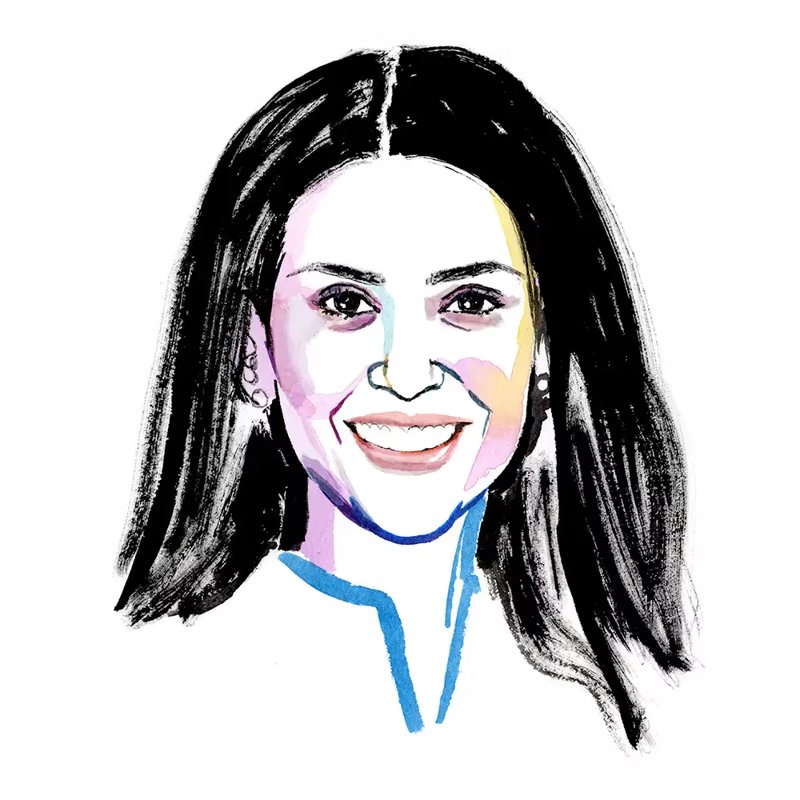
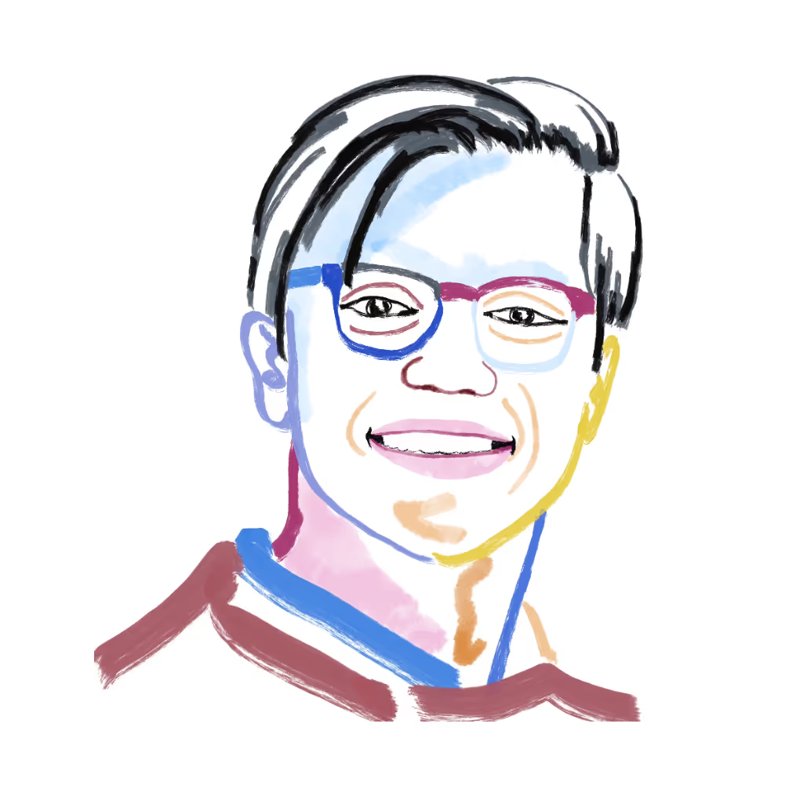
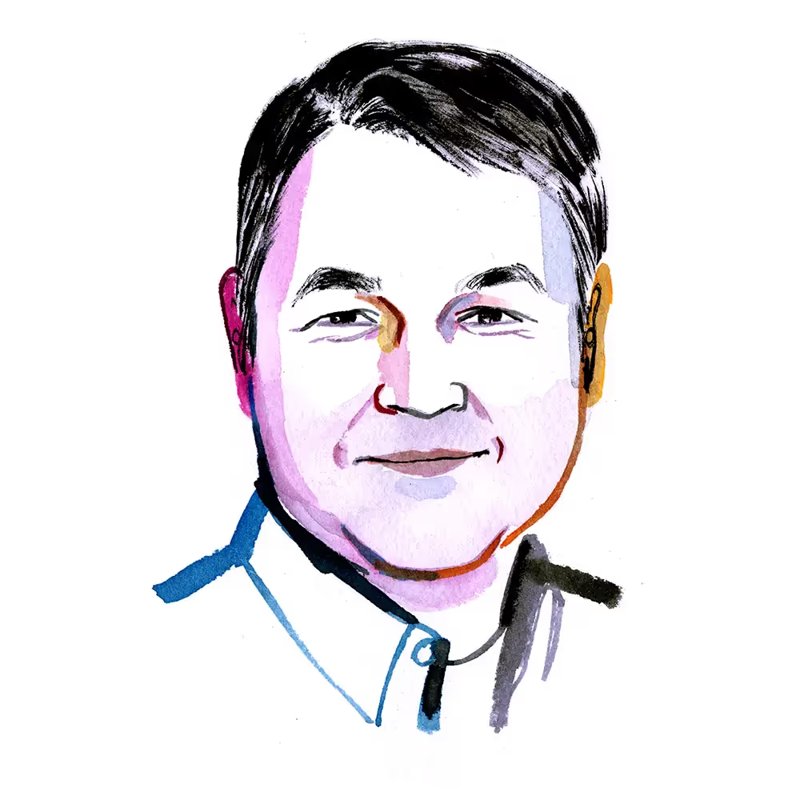
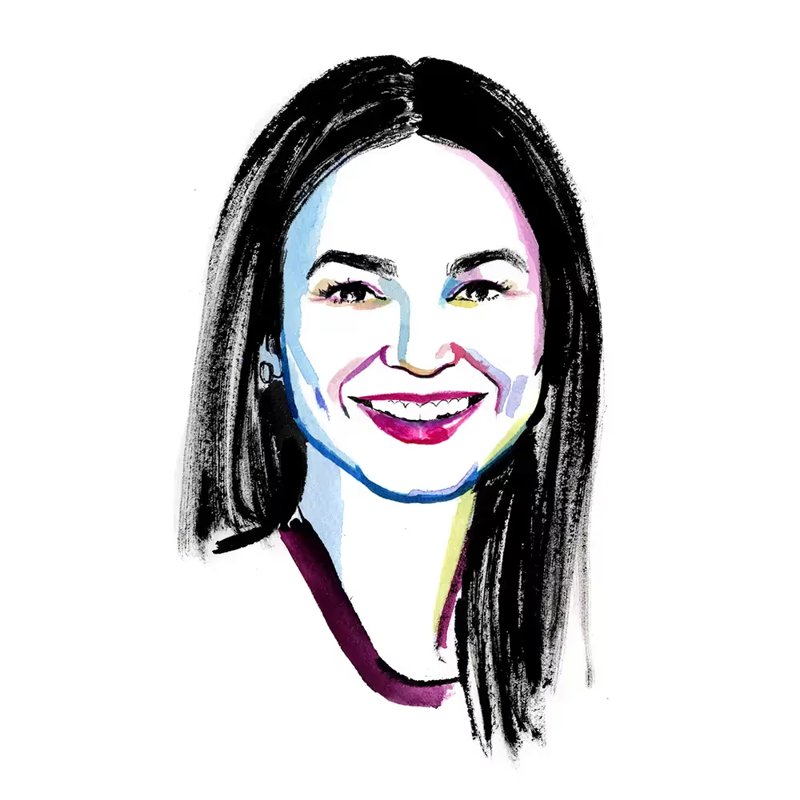
Colleagues at Khosla Ventures
Network21



▶9 more connections
Bryan Gartner · scoutChang Xu · scoutDavid Shen · scoutEce Erdagoz Wyrick · scoutEthan Choi · scoutEvan Moore · scoutFlorian Hagenbuch · scoutGeoff Lewis · scoutTeddy Citrin · scout
Investors connected to Keith in public investor directories — a warm-intro map.
Frequently asked questions
- What is Keith Rabois's current status?
- As of August 26, 2026 he is a managing director at Khosla Ventures and independent chairman of Opendoor, serving on its Audit and Risk and Compensation committees. He is also publicly listed on Ramp and Faire's private-company boards. He left Founders Fund in January 2024 and Affirm's board in June 2025.
- What did he study?
- He earned a Stanford B.A. in political science in 1991 and a Harvard J.D. with honors in 1994 after beginning legal study at Stanford.
- What were his major operating roles?
- PayPal EVP for business development/public affairs/policy; LinkedIn VP for business and corporate development; Slide strategy/business-development executive; and Square general manager/COO. He later became founding CEO of OpenStore.
- Why did he leave Square?
- An employee alleged sexual harassment after a relationship Rabois acknowledged continuing after he helped the man get hired. Rabois denied non-consensual conduct and called the demand a shakedown. Square said it found no evidence supporting the claims but that his poor judgment undermined his leadership, and accepted his resignation. No reviewed source establishes an adjudicated finding.
- What companies did Keith Rabois found?
- Opendoor with Eric Wu, Ian Wong and JD Ross, and OpenStore with Jack Abraham, Jeremy Wood and Matt Lanter. He was a formation investor/strategist rather than Opendoor's operating CEO, while he served as OpenStore's founding CEO.
- Which personal investments are officially attributable to him?
- Khosla Ventures's biography identifies early personal investments in YouTube, Airbnb, Palantir, Lyft, Udemy and Eventbrite. Yelp and Xoom also have investment-plus-board evidence. Exact checks, holdings and realized returns remain mostly private.
- Which Khosla Ventures investments did he lead?
- KV directly credits him with the first institutional investments in DoorDash, Affirm and Faire, an early Stripe investment and Opendoor co-founding. His 2017 ledger additionally names Forward, Webflow, Olive, Eight Sleep, At-Bay, Lattice, Tile, Ellevest, Anchorage, Checkr and Upstart with stage details.
- Which Founders Fund investments did he lead?
- The strongest official attribution is Ramp, Trade Republic and Aven. He may continue board relationships on behalf of Founders Fund after returning to KV, so those positions should not be retrospectively relabeled as KV deals.
- What does he currently invest in?
- His current professional profile emphasizes early AI companies—Profound, Rogo, Runlayer, Basis, Spellbook and Factory—and financial-services companies including Imprint and WithCoverage, alongside continuing Ramp and other relationships. Company-level announcements should be checked before inferring precise rounds or checks.
- What is his founder-selection thesis?
- Back a founder with a non-zero chance of changing an industry or the world: outrageously ambitious, relentlessly resourceful, contrarian for a reason, unusually good at talent and matched to an area where Rabois has comparative advantage.
- How should a founder pitch him?
- Show a huge outcome, non-consensus insight, personal compulsion, execution speed, end-to-end owners, simple operating metrics and why his operator experience gives him an edge in helping. Name the correct KV or legacy Founders Fund vehicle, and address unit economics, governance, labor and cyclicality directly.
- What are 'barrels and ammunition'?
- His metaphor distinguishes people who can take an idea through completion from contributors who execute within a defined scope. Organizational throughput depends on enough end-to-end owners; the framework should not be used to devalue specialist work or bypass fair management.
- What happened to OpenStore?
- The original strategy of acquiring and operating many Shopify brands contracted in 2025. OpenStore closed nearly all of more than forty stores, liquidated inventory, laid off employees and focused on Jack Archer after a reported $15 million round at a $50 million valuation, roughly 95% below its prior peak. Rabois calls this focus rather than failure and reportedly remains a director without daily duties.
- What is his current Opendoor role and controversy?
- He returned in September 2025 as independent chairman during a CEO and financing transition. He then publicly argued headcount should fall from about 1,400 to 200 and attacked remote work and DEI. He framed this as cost and culture repair; critics viewed the rhetoric as extreme and dismissive. The April 2026 proxy confirms his continuing chair and committee roles.
Founder mafias
Stanford University mafia2,290
Also came through, then founded or led a company.




LinkedIn mafia195
Also came through, then founded or led a company.

PayPal mafia131
Also came through, then founded or led a company.

Harvard Law School mafia107
Also came through, then founded or led a company.



Opendoor mafia34
Also came through, then founded or led a company.

About this profile. Compiled from public sources — Khosla Ventures's own website, regulatory filings, press coverage and public professional profiles — and summarised by Fundraising Fox; every fact is kept with where it came from. Spotted an error, or would rather not be listed? Email privacy@fundraisingfox.com · How we build profiles · Your rights