Fundraising Fox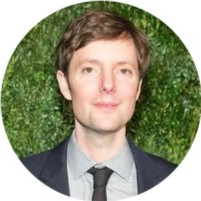
Matt Cohler
InvestorPartner at Benchmark · Investor at Kohlberg Kravis Roberts · Board Member (Benchmark) at Xapo · Board director at Asana · Board Member (Partner, Benchmark Capital) at Edmodo
United States
Writes $2M – $20M checks · typically $4M
Midas 2019 · #77Midas 2018 · #50Midas 2017 · #57Midas 2016 · #46Midas 2015 · #63Midas 2014 · #99Midas 2013 · #46Midas 2012 · #57
Find your path to Matt
660 people in our graph can introduce you to Matt.
Each arrow is one introduction. Sign up to fill in the first one.
Ask Lee Hower to introduce you to Matt
You →Lee · together at LinkedIn (2003–2004) →Matt

Ask Jamie Chen to introduce you to Matt
You →Jamie · 10 people · together at Benchmark →Matt
Ask Sam Okafor to introduce you to Matt
You →Sam · together at Xapo →Matt
Sign up to find every way you can get introduced to Matt
- Your email: the people you already email who know Matt
- 2nd- and 3rd-degree connections: people you know who worked, studied or invested with Matt
- Your LinkedIn: the connections who can make the intro for you
We rank every route by how warm it is, so you raise on warm intros instead of cold emails.
About
Matthew R. “Matt” Cohler is a technology operator, venture investor and public-company director whose career connects the early LinkedIn and Facebook networks to Benchmark's consumer, marketplace and software portfolio. Born in 1977 according to secondary biographies, he graduated from Yale in 2001 with a B.A. in music, cum laude and with distinction, after an early period working at AsiaInfo in Beijing; he then consulted in McKinsey's Silicon Valley office. Reid Hoffman recruited him to LinkedIn's founding team in 2003, where he served as vice president and general manager, and Peter Thiel introduced him to Facebook in early 2005. Facebook and issuer records variously call him one of the first five hires or employee No. 7; both describe him as the first outside executive hire. As vice president of product management he helped guide product, strategy and organizational growth through the network's expansion, then remained a special adviser after leaving in June 2008. At 31 he joined Benchmark's equal partnership. Directly documented Cohler-led or boarded investments include Asana, Quora, Instagram, ResearchGate, Peixe Urbano, Couchsurfing, Domo, 1stDibs, Edmodo, Xapo, Duo Security, Tinder, Greenhouse and DeepL; Axios also directly attributes Dropbox to him. Instagram, Asana, Domo, 1stDibs, Duo and Edmodo produced acquisitions or public listings, while Peixe Urbano later collapsed and Couchsurfing's conversion from nonprofit to venture-backed benefit corporation generated community criticism. Benchmark-wide relationships with Uber, Twitter, Zendesk, Snapchat and HackerOne are separated from sole deal leadership. His stated method is bottom-up and founder-first: identify extraordinary people, clarity of purpose, products users love organically, a narrow wedge capable of reshaping a market, and genuine network or marketplace liquidity. He stepped out of new Benchmark funds in 2018 but retained legacy-board and fund interests. He served on Uber's board from the 2017 governance crisis through July 2019, resigning without disagreement; he left Asana's board in June 2026 in an orderly refresh. Current filing-confirmed boards are KKR and 1stDibs, where he is lead independent director. Public service includes vice-chair roles at Environmental Defense Fund and the San Francisco Symphony and investment-committee service for Yale and the Chan Zuckerberg Initiative. Company announcements identify later personal angel investments in PortalOne and Enode; their vehicles and amounts are undisclosed. No complete personal or Benchmark return record is public.
Likely email· guessed from name + firm domain, not firm-published
- m•••@benchmark.comreveal70% confident
Invests in
ConsumerCybersecurityE-commerceEdTechEnterprise SoftwareFintechMarketplacesSocial
Beyond investing
- Education
- KKR's 2026 proxy confirms a Yale B.A., cum laude and with distinction in music; 1stDibs confirms the field and issuer filings support 2001-era chronology.
- Boards
- Uber's 8-K states Cohler resigned effective July 24, 2019, ending Benchmark's board representation, and expressly says the departure did not result from disagreement with company operations, policies or practices. Cohler resigned at the close of Asana's June 8, 2026 annual meeting after serving since November 2009. The 8-K says the refresh involved no disagreement and was unrelated to operations, policies or practices.
- Communities
- Current official rosters identify Cohler as vice chair of both Environmental Defense Fund's trustees and the San Francisco Symphony's governors. KKR also confirms investment-committee service for Yale and Chan Zuckerberg Initiative.
- Awards
- Forbes historical lists rank Cohler No. 68 in 2012, No. 46 in 2013, No. 99 in 2014 and No. 63 in 2015. These are editorial rankings based on estimated outcomes, not audited performance.
- More
- Secondary biographies report March 27, 1977 in New York City. 1stDibs' March 2026 proxy lists age 48, consistent with that date, but no civil record was reviewed. He worked at AsiaInfo in Beijing and then in McKinsey's Silicon Valley office. Contemporary biographies say AsiaInfo helped build China's Internet infrastructure; exact duties and dates remain incomplete. Cohler says LinkedIn lacked Facebook's bounded campus launch surface, had little early SEO value and therefore relied on privacy-conscious email virality and patient experimentation to reach network liquidity. KKR and New York Times records call him employee No. 7; other contemporary sources call him one of the first five employees hired and Facebook's first external executive. The variation likely reflects founder versus employee counting, so the dossier does not force a single number. Contemporary profiles describe him as overseeing product development and helping drive product direction, strategy, recruiting and organizational growth during Facebook's move beyond campuses. Specific feature-level authorship is not asserted because reviewed primary evidence does not isolate it. Cohler said he and Zuckerberg had discussed venture as his long-term trajectory before Facebook. He compared early-stage investing to his utility-infielder role beside Hoffman and Zuckerberg rather than to leading a large operating organization. Cohler said equal partner economics attracted him because partners collaborate rather than compete internally. That structure supports shared incentives, not automatic personal attribution for every Benchmark deal. Asana says Benchmark led its $9 million 2009 round and Cohler joined the board because the founders already had a close, trusting relationship with him. He served until June 2026; the round total is not a Cohler personal check. Benchmark led Quora's first institutional round and Cohler joined the board after years working with founders Adam D'Angelo and Charlie Cheever. The reported $11 million amount and $86 million valuation were not confirmed by the company or Benchmark. Benchmark led Instagram's $7 million Series A; TechCrunch says Cohler spearheaded it alongside Peter Fenton and took the board seat. Facebook announced a roughly $1 billion acquisition fourteen months later. The funding and sale values are institutional/company figures, not Cohler proceeds. Benchmark supplied Domo's $33 million Series A and Cohler joined its board. Domo went public in 2018 at a sharply reduced valuation after raising more than $700 million; Benchmark held about 12% pre-offering, subject to shared fund control rather than Cohler sole ownership. Benchmark led Duo Security's $12 million Series B after portfolio-company technologists recommended the product and founders. Cohler joined the board and argued mobile, cloud and consumer-grade expectations were remaking security. Cisco acquired Duo for $2.35 billion in 2018. Tinder and Benchmark announced an equity stake and Cohler board seat in 2014. Contemporary reporting says no cash was invested and the small stake compensated time and expertise; Sean Rad called Cohler a long-time mentor. Benchmark and Monashees made a first-round investment and Cohler joined the board in 2010-2011. Baidu bought control in 2014 and sold the company in 2017; later reporting describes 2021 insolvency and shutdown. Exact Benchmark realization or loss is not public. Greylock and Benchmark co-led Edmodo's $15 million Series B and Cohler joined the board. NetDragon acquired Edmodo in 2018 for stated consideration of $137.5 million; in 2022 it closed the free B2C site to cut costs and pursue government deployments. Acquisition value does not establish Benchmark return. Benchmark led Greenhouse's $13.6 million Series B and Cohler became a board observer/representative. TPG became majority investor in 2021; official terms were undisclosed, while Forbes reported about $450 million purchased from existing holders including Benchmark. Fund IX's filing omitted Cohler in 2018, when he was 41. Axios and CNBC described a voluntary step-back with continuing boards and possible investments through older affiliations; current issuer labels remain inconsistent. PortalOne's 2022 Series A and Enode's 2022 Series A name Cohler as an angel/business angel. Neither announcement identifies Benchmark as his investing vehicle or discloses his check; these are treated as personal activity. Archived and secondary records identify Cohler among the 2013 launch supporters/founders of FWD.us, focused on immigration and education policy. A current operating or governance role was not established. Cohler told Time his maternal grandfather invented a ballpoint-pen tip, sold the patent and died poor as an immigrant in East Harlem. The relative was not named and independent patent corroboration was not found, so the anecdote is retained only as his account.
From Matt's own website — common ground for a warm intro.
Board Member (Benchmark) at Xapo
Intro paths
In turn, Matt can intro founders to Xapo's investors below.
Xapo's investors · 10






Co-founders at Xapo
Board director at Asana
Intro paths
In turn, Matt can intro founders to Asana's investors below.
Asana's investors · 19










Co-founders at Asana
Board Member (Partner, Benchmark Capital) at Edmodo
Intro paths
In turn, Matt can intro founders to Edmodo's investors below.
Edmodo's investors · 9




Co-founders at Edmodo
Experience
- Oslo HoldingsOwnercurrent2020 — present
- BenchmarkPartnercurrent2008 — present
- FacebookVice President2005 — 2008
- LinkedInVice President2003 — 2005
- McKinsey & CompanyAnalyst2001 — 2003
- AsiainfoIntern1998 — 1999




Investments
Board seats
1StdibsAsanaDomoDuo SecurityEdmodoGreenhouseInstagramQuoraTinderUber
Investor
1StdibsArtBinderAsanaBaixing.comCouchsurfingDeepLDomoDropboxDuo SecurityEdmodoEnodeEntrepreneurs FirstGreenhouseInstagramLaurel & WolfPandoDailyPathPeixe UrbanoPopshop LivePortalOneQuoraResearchGateSnapchatStardustTinderUberWealthfrontXapoZendesk New York
Per curated public sources.
Controversies & responses
Where Matt has drawn public criticism — with what happened, their response, and the criticism itself, side by side.
▶Instagram advice reflected close Facebook ties2012
- What happened
- House-released 2012 texts show Systrom asking Cohler whether Zuckerberg would enter 'destroy mode' if Instagram rejected Facebook; Cohler replied probably and advised on competitive dynamics. The exchange documents candid board advice and a relationship conflict risk, but reviewed evidence does not establish breach of duty or undisclosed payment.
▶Couchsurfing's venture conversion alienated users2011
- What happened
- Couchsurfing converted from nonprofit status to a for-profit benefit corporation while raising $7.6 million from Benchmark and Omidyar; Cohler joined the board. Users protested commercialization, fees and transparency risks. Management cited its failed tax-exemption path; no reviewed source establishes personal misconduct by Cohler.
▶Delivered the investor demand for Kalanick's resignation2017
- What happened
- Cohler and Peter Fenton hand-delivered a letter from five major Uber investors demanding Travis Kalanick resign in June 2017. This was a Benchmark partnership/governance action, not an investment originated by Cohler.
▶Uber board seat carried lawsuit and oversight constraints2017
- What happened
- Cohler replaced Bill Gurley on Uber's board during the 2017 crisis and reportedly recused from litigation discussions after Benchmark sued Kalanick. Critics noted Benchmark claimed surprise despite years of public controversies. The suit was Benchmark's, and no reviewed evidence establishes Cohler participated in earlier board approvals at issue.
Founder fit — who Matt backs
Best historical fit: visionary, ambitious founders who communicate a compelling story, recruit exceptional operators, inspire intense word-of-mouth and can start with a specific wedge without hard-coding away future expansion. Cohler's operator background suits founders wanting an active product, organization and board adviser. Existing personal trust repeatedly mattered—Hoffman, Zuckerberg, Moskovitz, D'Angelo, Systrom and Rad networks—but relationship adjacency is a sourcing pattern, not proof of favoritism or investment merit.
His stated red flags include primary dependence on direct-response paid acquisition, no meaningful competitors, and attacking a huge incumbent market without a credible leverage point. Poor fits also include top-down 'play in a space' pitches, vague claims of network effects without a path to liquidity, and teams unable to recruit. His 2017 comment that some data/compute-heavy AI opportunities may favor incumbents was time-specific and should not be converted into a permanent anti-AI rule; DeepL soon became a Benchmark investment.
How to pitch
Do not pitch Cohler as an active GP in a current Benchmark fund: he stopped joining new vehicles in 2018. First identify whether the ask is personal angel capital, advice, a legacy-board connection or another vehicle. Lead with the founder's purpose and recruiting ability, then show the product wedge, why users love it without paid demand, the initial bounded market, liquidity mechanics, organic distribution, competitive map and how the wedge expands into durable leadership. For marketplaces, map scarce supply, substitutes and real-time visibility; for enterprise, bring credible customer advocacy and consumer-grade adoption evidence. No reliable public personal check range is available.
Stages: historically pre-Series A, historically Series A, historically Series B, select legacy-fund follow-on, post-2018 personal angel participation · Sectors: consumer internet, social networks, marketplaces, mobile, enterprise SaaS, collaboration software, cybersecurity, education technology, knowledge networks, commerce, financial infrastructure and bitcoin custody, machine translation and AI, gaming platforms, climate and energy software
Editorial inference from Matt's portfolio, writing and public record — not a published mandate.
Investment themes
10 documented themes from Matt's essays, talks and portfolio, grouped by what they say about founders.
▶More themes7
Notice the present before predicting the future
Opportunity sourcing begins by seeing current behavior clearly; portfolio work then requires pattern recognition to see around near-term corners and improve decisions.
For founders: Show present-tense user behavior and structural change before long-range forecasts.
Drive a narrow wedge, then reshape the market2016
A strong opportunity enters through a specific leverage point, expands the market and can command durable leadership; a huge incumbent TAM can be a trap without leverage.
For founders: Explain the initial wedge, why incumbents cannot neutralize it and the sequence of expansion.
Organic demand outranks paid acquisition2016
Heavy direct-response dependence can indicate lower-quality users, rising acquisition competition and insufficient product desire.
For founders: Bring retention, referrals, direct traffic, customer advocacy and cohort quality—not only paid CAC.
Mobile wires both sides of constrained markets2012
Ubiquitous devices reduce the cost of aggregating buyers and sellers and create real-time visibility; the strongest openings have scarce supply and weak substitutes.
For founders: Show control of supply, demand visibility, substitute economics and why mobile changes transaction feasibility.
Consumerization and customer love reveal SaaS opportunities
Zendesk and Duo reached Benchmark through enthusiastic portfolio users; Cohler saw simple, person-centric cloud security as a post-firewall shift.
For founders: Use respected users as evidence and make complex infrastructure feel consumer-grade.
Skeptical optimism2010
Cohler argued technologists should not assume transparency guarantees peace or progress and raised questions about destructive uses, inequality and pandemic preparedness.
For founders: Articulate second-order harms and responsibilities, not only adoption upside.
Strong companies become founder schools2012
He views Silicon Valley as generational: people learn to build inside exceptional companies, then form the next set of startups.
For founders: Demonstrate the operating apprenticeship and relationship network that sharpen this team's judgment.
▶Founders & company building1
Founder, team and purpose before sector plays2015
Benchmark approaches opportunities bottom-up; Cohler rejects filling a thematic portfolio slot and prioritizes exceptional founders and teams.
For founders: Make purpose, talent density and why this exact team can recruit unmistakable.
▶Governance & network states2
Liquidity is the network's first job2016
Networks must move from zero to a state where each additional participant improves the service. LinkedIn engineered email virality; Facebook used bounded campuses.
For founders: Define the smallest surface where density can tip and the distribution mechanism that gets it there.
Operator empathy can become formal escalation2017
Cohler's preferred role resembles an adviser beside founders, but Uber shows the Benchmark partnership could demand CEO removal and litigate when trust and governance broke.
For founders: Expect hands-on support and pattern recognition, alongside fiduciary escalation in a severe control or culture crisis.
Podcasts & interviews
featuring Matt CohlerNetwork Effects and Delivering Value
TechCrunch Disrupt Europe · techcrunch.com
I Hope Silicon Valley Doesn't Become Versailles
TechCrunch Disrupt · techcrunch.com
Benchmark Capital's Matt Cohler at Davos
TechCrunch · techcrunch.com
Reid Hoffman & Matt Cohler — Startup2Startup
Startup2Startup / YouTube
The Matt Cohler Exit Interview
TechCrunch · techcrunch.com
Facebook Loses a Top Executive
Time · time.com
1 more appearances
Writing
Republished Quora answer covering paid acquisition, competition, market wedges, founders and durable leadership.
First-person dialogue explaining Benchmark's bottom-up method, Duo and HackerOne, customer love and consumerized cloud security.
First-person essay on supply, demand, real-time visibility, constrained supply and mobile marketplace formation.
Secondary transcript of Cohler's short Techonomy remarks on information, harm, inequality and pandemic preparedness; original official transcript was not located.
Clarifies sourcing versus board-stage pattern recognition and discusses mobile, capital markets and AI economics at that time.
Republished first-person Quora answer on bounded networks, email virality, privacy and liquidity.
Colleagues at Benchmark





Network1
Investors connected to Matt in public investor directories — a warm-intro map.
Frequently asked questions
- Is Matt Cohler still an active Benchmark general partner?
- Not in the current-new-fund sense. He did not join Benchmark Fund IX in 2018 and stopped ordinary new-fund investing, while retaining older-fund interests and board affiliations. KKR calls him a former GP; 1stDibs still uses Partner, reflecting issuer lag and legacy vehicles.
- What did Cohler do before Benchmark?
- After Yale and work at AsiaInfo in Beijing, he consulted at McKinsey, joined LinkedIn's founding team as VP/GM, then became Facebook's early outside executive and vice president of product management.
- Was Cohler Facebook employee No. 5 or No. 7?
- Sources use both conventions. KKR and the New York Times say employee No. 7; other biographies say one of the first five employees hired and first external executive. The difference appears definitional, so No. 7 is the strongest current filing label while the hiring formulation is also retained.
- Which investments are most directly attributable to Cohler?
- Asana, Quora, Instagram, ResearchGate, Peixe Urbano, Couchsurfing, Domo, 1stDibs, Edmodo, Xapo, Duo, Tinder, Greenhouse and DeepL have financing, board or company evidence tying him to the relationship. Axios also attributes Dropbox leadership. Exact legal vehicle and check often remain private.
- Did Cohler lead Benchmark's Uber investment?
- No. Bill Gurley led Uber's 2011 Series A. Cohler later helped demand Kalanick's resignation and replaced Gurley on Uber's board from June 2017 to July 2019.
- Did Cohler lead Benchmark's Snapchat or Zendesk investments?
- No sole leadership should be inferred. Mitch Lasky led Snapchat, and Peter Fenton took Zendesk's board seat. Cohler worked actively around both and cited Zendesk's customer love, but those are Benchmark-wide relationships.
- What was Cohler's role in Instagram's sale to Facebook?
- He held Benchmark's Instagram board seat and advised Kevin Systrom. Released texts show him interpreting Zuckerberg's competitive response, including likely 'destroy mode.' His Facebook ties created an appearance-of-conflict question, but reviewed sources do not establish a fiduciary breach by Cohler.
- What failures or impaired outcomes are documented?
- Peixe Urbano later became insolvent and shut down; Couchsurfing's venture conversion generated enduring community criticism and no verified exit; Edmodo sold but later closed its free B2C service; Domo's IPO valuation was far below its last private mark. Fund-level gains or losses remain undisclosed.
- What does Cohler look for in founders and products?
- Vision, compelling communication, recruiting ability, clarity of purpose, organic customer love and a product that enters through a sharp wedge, grows the market and becomes a durable leader. Network effects and marketplaces are his deepest expertise, not an exclusive requirement.
- How should a founder pitch Cohler today?
- First clarify the vehicle and ask because he is not deploying a current Benchmark fund. Show the initial wedge, organic demand, liquidity mechanics, competitive leverage, expansion path, founder recruiting strength and the specific board or operating help needed. No reliable public personal check range exists.
- Which boards does Cohler currently hold?
- Current filing-confirmed public-company boards are KKR and 1stDibs; he is 1stDibs' lead independent director and audit member. Asana ended June 8, 2026. Environmental Defense Fund and San Francisco Symphony list him as vice chair.
- What was Cohler's role in Uber's governance crisis?
- He and Peter Fenton delivered the investor letter demanding Kalanick resign, then Cohler succeeded Gurley as Benchmark's director. He reportedly recused from litigation discussions after Benchmark sued Kalanick and resigned after the IPO without disagreement.
- Does Cohler invest personally after Benchmark?
- Yes, at least selectively: PortalOne and Enode company announcements identify him as an angel in 2022 rounds. Public sources do not disclose his checks or whether a personal holding entity made them; they are not attributed to Benchmark.
- What public community roles does he hold?
- He is vice chair of Environmental Defense Fund's trustees and the San Francisco Symphony's governors, and KKR reports investment-committee service for Yale and the Chan Zuckerberg Initiative. An early FWD.us founder/supporter attribution is historical, not evidence of current management.
Same school
Also attended Yale University1,202




+ 1,196 more
Shared employers
Also worked at Facebook831



+ 825 more
Also worked at LinkedIn343
+ 337 more
Also worked at McKinsey & Company2,000

+ 1,994 more