 Fundraising Fox
Wealthfront
NASDAQ: WLTHPalo Alto, US · Founded 2011 · 448 employees on LinkedIn · Public · 22 known investors
Find your way into Wealthfront
Sign up to see every warm intro you have to Wealthfront
- Paths you didn't know you had: your email and LinkedIn already hold routes to the Wealthfront team. We find them for you
- 2nd- and 3rd-degree connections: the friend-of-a-friend routes that take hours to manually find through your inbox or LinkedIn
- Answers now, not in days: momentum is everything in a raise. Skip asking around whether someone knows someone
Days of research, done the moment you sign in, with every route ranked by how warm it is.
Wealthfront offers automated investment management, a high-yield cash account, financial planning tools, and mortgage lending to individual investors. Its services include robo-advisory portfolios with tax-loss harvesting, direct indexing, and an FDIC-insured cash sweep account.
Also known as kaChing · KaChing · Wealthfront Corporation
Founders & leadership
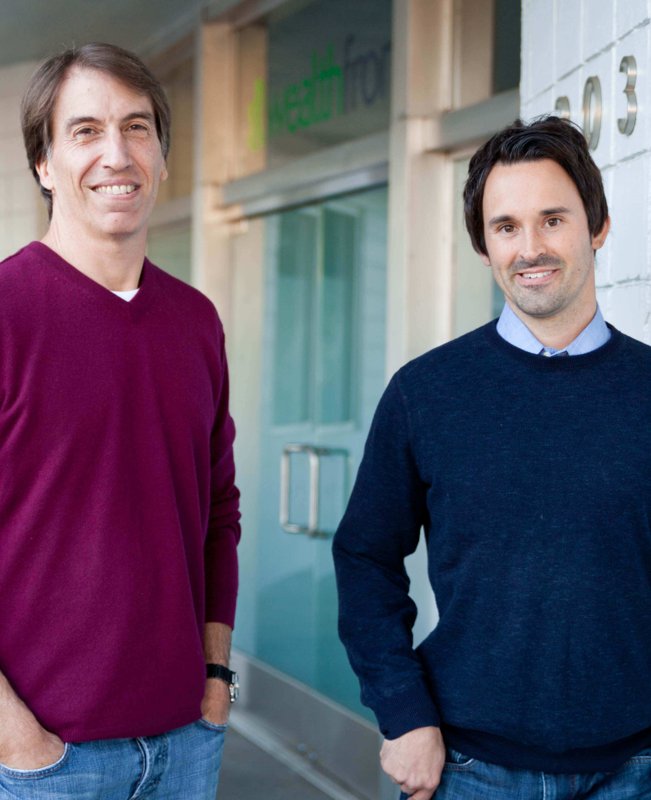
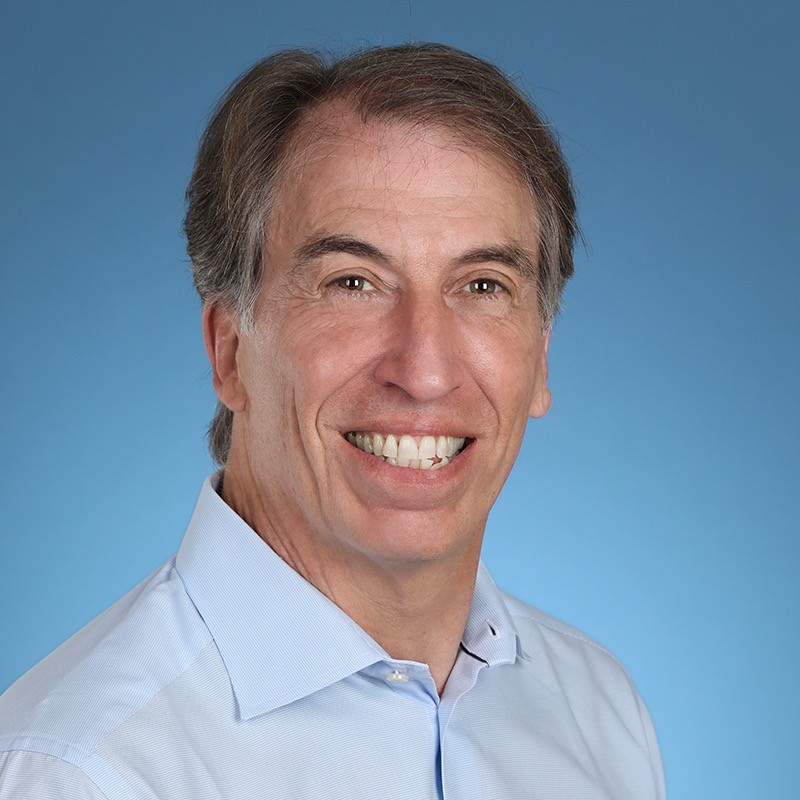
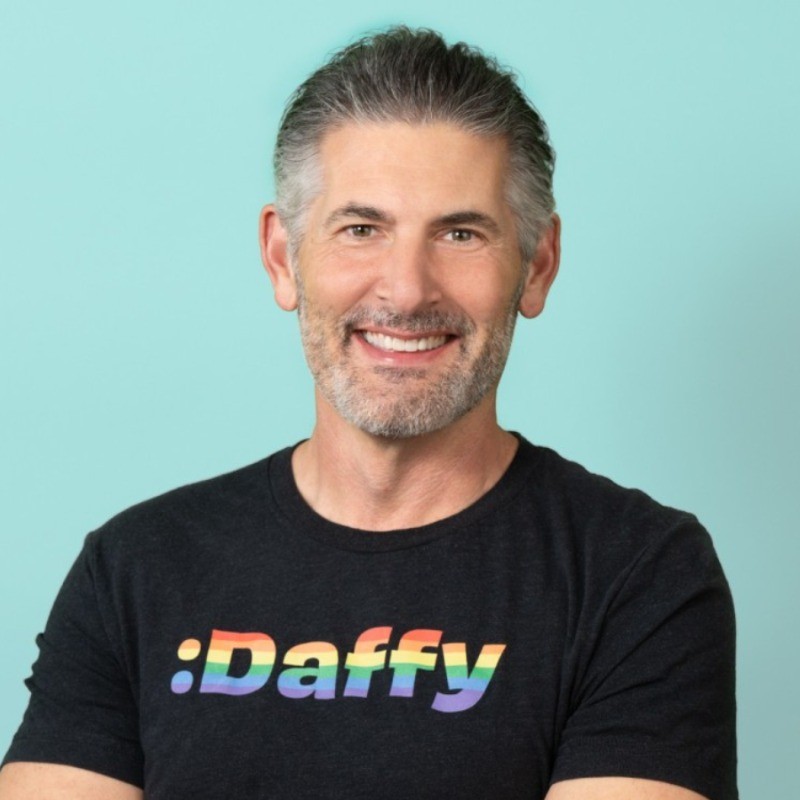
Wealthfront was founded in 2011 by Daniel Carroll and Andy Rachleff.


Board


Investors · 22
How we know: Dag Ventures's portfolio page · the S-1 prospectus · a partner's Signal profile · Not right? Tell us

How we know: Defy Partners's portfolio page · Not right? Tell us
How we know: Divide by Zero's portfolio page · Not right? Tell us

How we know: Forerunner Ventures's portfolio page · Not right? Tell us

How we know: Graph Ventures's portfolio page · the VCSheet dataset · open dataset · 5k.vc investor directory · Not right? Tell us

How we know: wealthfront.com · Not right? Tell us

How we know: Homebrew's portfolio page · Not right? Tell us

How we know: Index Ventures's portfolio page · the S-1 prospectus · research · en.wikipedia.org · open dataset · 5k.vc investor directory · Not right? Tell us
How we know: Maven Ventures's portfolio page · the VCSheet dataset · Not right? Tell us

How we know: plugandplaytechcenter.com · Not right? Tell us
How we know: Savano Capital Partners's portfolio page · Not right? Tell us
How we know: Scalare Partners's portfolio page · Not right? Tell us

How we know: open dataset · 5k.vc investor directory · Not right? Tell us

How we know: a partner's Signal profile · research · en.wikipedia.org · Not right? Tell us

How we know: deep research dossier: jason-calacanis · Not right? Tell us
How we know: the S-1 prospectus · research · en.wikipedia.org · open dataset · 5k.vc investor directory · Not right? Tell us

How we know: the VCSheet dataset · Not right? Tell us

How we know: a partner's Signal profile · the VCSheet dataset · open dataset · 5k.vc investor directory · Not right? Tell us

How we know: the S-1 prospectus · open dataset · 5k.vc investor directory · Not right? Tell us

Reported raises · per SEC filings
Form D private placements$99.2M disclosed across 2 of 9 rounds · 2009–2025
▶$64.2MraisedNov 2014 · 8 investors · Other Banking and Financial ServicesRule 506(b)
- MIKE VOLPIDirector
- BARRY MCCARTHYDirector
- RICK FOREMANExecutive Officer
- ANDREW RACHLEFFDirector
- ADAM NASHExecutive Officer, Director
- DANIEL CARROLLExecutive Officer, Director
- Offering amount
- $64.2M
- Amount sold
- $64.2M
- First sale
- Oct 2014
- Incorporated
- Corporation, Delaware
- Federal exemptions
- 06b
▶$35MraisedApr 2014 · 15 investors · Other Banking and Financial ServicesRule 506(b)
- BARRY MCCARTHYDirector
- ANDREW RACHLEFFDirector
- DANIEL CARROLLExecutive Officer, Director
- ADAM NASHExecutive Officer, Director
- MIKE VOLPIDirector
- RICK FOREMANExecutive Officer
- JEFF JORDANDirector
- Offering amount
- $35M
- Amount sold
- $35M
- First sale
- Apr 2014
- Incorporated
- Corporation, Delaware
- Federal exemptions
- 06b
Source: SEC EDGAR Form D. Amounts as filed; amended filings shown once at their latest values.
Valuation · disclosed
Disclosed eventsSource: SEC prospectus filings, and round valuations the company or its investors disclosed — follow each entry's link for the claim.
Company profile
researched Aug 2026Wealthfront Corporation is an American financial services company headquartered in Palo Alto, California, serving clients in the United States. It operates a digital platform combining automated investment management, banking-style cash accounts, and lending. Its flagship Automated Investing Account builds and manages globally diversified portfolios of index-tracking ETFs according to a client's stated risk tolerance and goals, with automated rebalancing, tax-loss harvesting and direct indexing. Supported account types include taxable personal, joint and trust accounts, Traditional, Roth and SEP IRAs, and 529 education savings accounts.
Alongside the managed offering, Wealthfront provides self-directed products for investors who select their own holdings: a Stock Investing Account for stocks and ETFs with zero commissions and a $1 minimum, S&P 500 Direct and Nasdaq-100 Direct, and an Automated Bond Ladder (introduced May 2024) holding U.S. Treasuries maturing on staggered dates. Portfolios can be customized from hundreds of investments spanning US and global stock ETFs, bond, sector, commodity and investing-strategy ETFs, socially responsible and tech/innovation ETFs, and cryptocurrency trust ETFs. The Wealthfront Cash Account, launched in February 2019, sweeps deposits into a network of partner banks (including Citibank, HSBC and UMB) to provide FDIC insurance through program banks and, since 2020, direct deposit, bill pay and ATM access; UMB Bank was announced in June 2026 as the provider of these features for all users by October 2026. In July 2024 Wealthfront acquired a mortgage company as part of an entry into home lending, and it markets home loan rates described as roughly 0.50% below the national average.
Founding story
Both co-founders came to the idea from personal frustration with investing in 2008. After retiring from Benchmark Capital, Andy Rachleff lectured at the Stanford Graduate School of Business and found he could not recommend investment services to students because of prohibitive minimums; he also observed, as a University of Pennsylvania trustee, that even large endowments lacked good options. Dan Carroll, a former trader, began work on the venture after his parents were hurt by poor advice and high advisory fees during the 2008 financial crisis. Rachleff approached Carroll in 2008 and was initially rebuffed because of Carroll's negative view of venture capitalists, but persisted; the two agreed on a shared goal of democratizing access to investing through automation.
Business model
Wealthfront charges a 0.25% annual advisory fee on managed portfolios and additionally earns interest on client cash deposits held at partner banks and interest from loans it originates, among other lines of business.
Recurring 0.25% advisory fee on assets under management, net interest earned on swept cash deposits at program banks, and interest income from lending (including home loans). Reported revenue of $339 million in 2025 and $289 million in 2024, with 2024 revenue up 46% year over year.
Traction
Company-reported figures cite more than 1.4 million funded clients and over $95 billion in total assets, versus $80 billion in assets and 1.1 million users reported in early 2025 (up from 750,000 users). Revenue rose 46% in 2024 to $289 million and reached $339 million in 2025, with net income of $123 million in 2025 and roughly 330 employees. The company said in September 2022 it expected to be cash flow positive and EBITDA profitable within months.
Latest developments
Wealthfront completed its Nasdaq IPO in December 2025 (ticker WLTH), raising about $485 million at $14 per share for a fully diluted market capitalization of roughly $2.6 billion. In June 2026 it announced UMB Bank would provide cash-account features for all users by October 2026. Reported AUM stood at approximately $95 billion in 2026 across more than 1.4 million clients, and the site promotes home loans and a cash account paying up to 4.20% APY.
▸Full profile — market position, technology, go-to-market, geography, history, risks & controversies
Market position
Wealthfront is one of the largest robo-advisors in the US, reporting approximately $95 billion in assets for more than 1.4 million clients as of 2026 and profitability (net income of $123 million in 2025). It is frequently cited in industry rankings, including Forbes' inaugural Fintech 50 list in 2015 and again in 2024 and 2025, Business Insider's Top 10 Best Robo Advisors (January 2020), Real Simple Smart Money Awards (2024, 2025), and a Wall Street Journal designation as Best Robo Advisor for Multiple Goals. A July 2025 Forbes article stated that Wealthfront beats Fidelity, Schwab and Vanguard on direct indexing and tax-loss harvesting. Coverage frames it, alongside Betterment, as having disrupted traditional investment advisory pricing.
Differentiation rests on algorithm-driven portfolio construction and rebalancing at a low flat 0.25% advisory fee, tax optimization through tax-loss harvesting and direct indexing (purchasing individual securities of an index rather than a fund), and integration of investing with cash management and lending in one app. Extensive portfolio customization is available across hundreds of ETFs, including thematic and cryptocurrency trust ETFs.
Technology
The platform is software-based, using algorithms to generate personalized portfolios from a client questionnaire covering risk tolerance, values and goals, then automating rebalancing and tax-loss harvesting. Direct indexing replicates index exposure with individual securities to increase harvesting opportunities. Cash accounts are delivered as banking-as-a-service through a network of partner banks, and mobile apps are rated 4.8 on the Apple App Store and 4.9 on Google Play according to the company's site.
Go-to-market
Direct-to-consumer, self-service digital onboarding via web and mobile apps with low minimums (stock investing from $1), supported by third-party media rankings and reviews, promotional cash yields, and referral of adjacent products (cash account, bond ladder, home loans) to existing clients. Distribution partnerships include the state of Nevada 529 plan and program banks for cash and card features.
Individual retail investors in the United States, with an emphasis on digitally native millennials and younger professionals seeking low-cost automated investing, as well as savers wanting high-yield cash accounts and clients with more complex needs such as trusts, retirement and 529 accounts.
Geography
Operations are US-focused: headquartered in Palo Alto, California (founded in Redwood City), with the area served described as the United States.
History
Founded in 2008 in Redwood City, California, by Benchmark co-founder Andy Rachleff and Dan Carroll, the company launched as kaChing, a mutual fund analysis business, before pivoting to automated wealth management. Rachleff was founding CEO and president until January 2014; Adam Nash served as CEO from January 2014 to October 2016, after which Rachleff (previously executive chairman) returned as CEO until 2021, when he resumed the executive chairman role. David Fortunato, CTO from 2009 to 2019, became president and then CEO. Tax-loss harvesting launched in December 2012 for accounts above $100,000; direct indexing followed in 2013. AUM grew from $97 million at the start of 2013 to roughly $530 million by the end of that fiscal year. In 2016 Wealthfront partnered with the state of Nevada on a 529 college savings plan. In January 2018 it added a homeownership planning tool to Path; the Cash Account arrived in February 2019. UBS agreed in January 2022 to acquire the company for $1.4 billion, but the deal was mutually terminated in September 2022, with UBS instead buying a $69.7 million convertible note at the same $1.4 billion valuation. Wealthfront acquired a mortgage company in July 2024 and completed a Nasdaq IPO in December 2025.
Risks & controversies
The planned $1.4 billion acquisition by UBS, announced January 2022, was mutually terminated in September 2022 with neither party giving a reason, leaving Wealthfront independent with a $69.7 million UBS convertible note at the same valuation. Post-IPO, commentary questioned whether the stock could face a pullback after its Nasdaq debut. Advertised cash yields (3.30% base APY as of 01/30/2026, up to 4.20% with boosts) are set by program banks and subject to change, and the company notes past performance does not guarantee results.
Compiled by commissioned research from 12 cited public sources — announcements, filings, and press listed under research sources below.
Key figures
latest reportedCompany-reported or press-reported figures, each dated to when it was claimed — not independently audited.
Founder mafia
11 people who came through Wealthfront went on to found or lead other companies.






Related companies · 9






Companies working in the same space as Wealthfront.
Timeline · 30
launches, deals, and filingsWealthfront announced UMB Bank would provide direct deposit, bill pay and ATM access for all users by October 2026.
Priced at $14 per share, raising approximately $485 million at a fully diluted market capitalization of about $2.6 billion.
$485M source ↗
Wealthfront completed an initial public offering on the Nasdaq Global Select Market, pricing shares at $14 and raising approximately $485 million for a fully diluted market capitalization of about $2.6 billion.
$485M source ↗
Wealthfront acquired a mortgage company as part of its entry into home lending.
Portfolio of U.S. Treasuries with staggered maturities, exempt from state income taxes; yielding over 4.1% net of fees as of February 2025.
Both companies gave no reason for termination; the note values Wealthfront at $1.4 billion and it remains independent.
$69.7M source ↗
In place of the acquisition, UBS provided $69.7 million in financing via notes convertible into Wealthfront shares, valuing Wealthfront at $1.4 billion.
$69.7M source ↗
UBS and Wealthfront mutually terminated the acquisition agreement, with no reason publicly provided; Wealthfront remained independent and said it would explore a partnership with UBS.
$1.4B source ↗
Fortunato, CTO from 2009 to 2019 and then president, was promoted to CEO; Julien Wetterwald succeeded him as CTO.
Banking-as-a-service cash account depositing client funds across partner banks including Citibank, HSBC and UMB.
Rachleff stepped down as executive chairman in 2016 to serve as CEO again, then returned to executive chairman in 2021.
Wealthfront partnered with the state of Nevada to launch a 529 tax-advantaged college savings plan.
Andy Rachleff stepped down as CEO; Adam Nash served as CEO from January 2014 to October 2016, with Rachleff as executive chairman.
Tax-loss harvesting platform that purchases the individual securities of an investment portfolio.
Dated company events from announcements, filings, and press; legal rows summarize public dockets and regulator releases.
In the news
▸Research sources · 12
primary sources listed
- Wealthfrontwealthfront.com · web
12 public sources were cited for this profile; the first-party ones are listed here.
Frequently asked questions
- What does Wealthfront do?
- US robo-advisor offering automated index investing, cash accounts and lending; Nasdaq-listed (WLTH) with ~$95B AUM.
- Who founded Wealthfront?
- Wealthfront was founded by Daniel Carroll, Andy Rachleff in 2011.
- Who are Wealthfront's investors?
- Wealthfront's investors include Adam Nash, Dag Ventures, Defy Partners, Divide by Zero, Forerunner Ventures, Graph Ventures, Greylock Partners, Homebrew and 14 more.
- How much funding has Wealthfront raised?
- Wealthfront has disclosed $99.2M raised across 2 of its 9 known rounds.
- Is Wealthfront publicly traded?
- Yes — Wealthfront trades on NASDAQ under the ticker WLTH.
- Where is Wealthfront headquartered?
- Wealthfront is headquartered in Palo Alto, US.