 Fundraising Fox
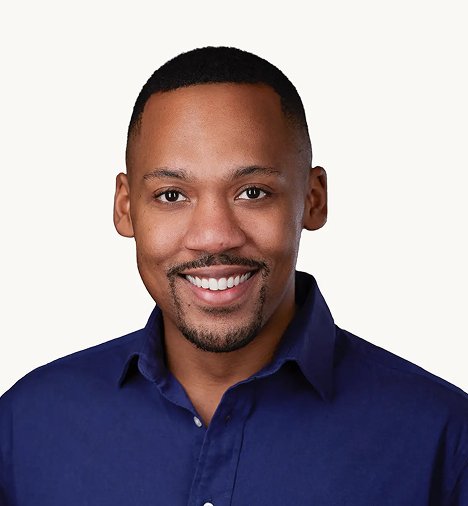
Bruce Dunlevie
InvestorGeneral Partner at Benchmark · Director; Benchmark General Partner at Twin Health · Director; Benchmark co-founder/general partner at Fantex Holdings · Board director at Aquifi
Atherton
Writes $1M – $15M checks · typically $8M
Midas 2014 · #93Midas 2013 · #65Midas 2012 · #41Midas 2005Midas 2004Midas 2003Midas 2002Midas 2001
Find your path to Bruce
139 people in our graph can introduce you to Bruce.
Each arrow is one introduction. Sign up to fill in the first one.
Ask Bill Gurley to introduce you to Bruce
You →Bill · together at Benchmark (1999–2026) →Bruce

Ask Jamie Chen to introduce you to Bruce
You →Jamie · 11 people · together at Benchmark →Bruce
Sign up to find every way you can get introduced to Bruce
- Your email: the people you already email who know Bruce
- 2nd- and 3rd-degree connections: people you know who worked, studied or invested with Bruce
- Your LinkedIn: the connections who can make the intro for you
We rank every route by how warm it is, so you raise on warm intros instead of cold emails.
About
Bruce W. Dunlevie is a technology venture investor, operator, director and institutional trustee. He grew up in Dallas, studied History at Trinity College, Cambridge in 1977 during his 1975-1979 Rice education, earned a Rice B.A. in English/History in 1979 and a Stanford M.B.A. in 1984 as an Arjay Miller Scholar. After systems-design work at Arthur Andersen/Andersen Consulting and three years in Goldman Sachs investment banking, he founded and ran Everex Systems' personal-computer division, then joined Merrill, Pickard, Anderson & Eyre in 1989. His pre-Benchmark/Merrill Pickard record includes Rambus, Approach Software, Palm Computing and other hardware, semiconductor and enterprise companies; those outcomes must not be retroactively assigned to Benchmark. In 1995 he co-founded Benchmark with Bob Kagle, Andy Rachleff, Kevin Harvey and Val Vaden. Kevin Harvey says Kagle originated the equal-economics model, while Dunlevie supplied an existing founder relationship through Approach. Dunlevie later conceived and championed Benchmark Capital Europe, recruited its first partners and moved his family to London; that operation eventually became independent Balderton Capital. His best-supported Benchmark relationships include Accept.com, Handspring/Palm, Good Technology, Matrix Semiconductor, NetXen, RMI, ServiceSource, Tabula, One Medical, Marin Software, Coverity, Bo.lt, Klip, Aquifi, WeWork, Euclid, EnVerv, Jasper and Fantex. One Medical, WeWork and CarbonDrop are especially well documented by filings; Mon Ami is explicitly personal angel activity. Famous firm-wide outcomes such as eBay, Twitter, Instagram, Snapchat, Uber and Zillow are not claimed as his deals. His public method emphasizes asymmetric upside ('What could go right?'), founder character, minority-investor persuasion, trust and board materials designed for strategic discussion. Results include major acquisitions and IPOs, but also Tabula's shutdown, Bo.lt's service closure, Aquifi's apparent wind-down, Fantex's failed retail model, Marin and ServiceSource value destruction, and WeWork's failed 2019 IPO and 2023 bankruptcy. At WeWork, Dunlevie sourced the relationship and served from 2012 to 2023; reporting says he opposed Adam Neumann's super-voting demand, warned that absolute power corrupts, yet ultimately approved the control structure and was at times more deferential than Benchmark colleagues. He later joined the effort that removed Neumann. At ServiceSource, shareholders rejected his 2019 re-election, but the board declined his tendered resignation before he retired in 2020. Public service spans Rice and Stanford trusteeships, Stanford Management Company chairmanship, the Getty board and Trinity fellow-benefactor status. With his wife Elizabeth he has funded Rice humanities and athletics, Trinity student support, Stanford programs and an $80 million maternal-fetal medicine gift. Public political giving appears selective and historically bipartisan; aggregation totals are unreliable and no partisan identity is inferred.
Likely emails· guessed from name + firm domain, not firm-published
- b•••@benchmark.comreveal100% confident
- b•••@benchmark.comreveal75% confident
Invests in
AI & Machine LearningData & InfrastructureDeveloper ToolsDigital HealthEnterprise SoftwareHardwareHealthtechMarketplacesSemiconductorsSocial
Beyond investing
- Founded
- Kevin Harvey's first-person history names Kagle, Dunlevie, Rachleff, Harvey and Vaden and credits Kagle's reaction to hierarchy for the equal economics/equal voice structure. Dunlevie is a co-founder and institution-builder, but sole authorship of the model would be over-attribution.
- Education
- Rice records emphasize the unexpected path from English/history into computing and venture capital. Trinity's roster establishes a 1977 History affiliation during his Rice years; Stanford records establish the 1984 M.B.A. and Arjay Miller distinction.
- Charities
- Elizabeth and Bruce Dunlevie gave $50 million for new labor/delivery and antepartum facilities and $30 million for Stanford's maternal-fetal medicine program. Elizabeth connected the gift to life-saving care received by one of their children; no further private medical detail is retained. The couple endowed Rice chairs in English and history and its head football coach; established Trinity's 2002 extracurricular fund and 2017 King's Hall graduate studentships; and joined two other families in $40 million of Stanford Athletics support, though their individual amount was not disclosed.
- Awards
- Rice awarded its Distinguished Alumni Award in 2001 and alumni Gold Medal in 2018. Forbes/TrueBridge ranked him No. 44 in 2012, No. 65 in 2013 and No. 93 in 2014; these are editorial rankings, not audited performance.
- More
- A historical Benchmark profile says he was a New York native raised in Dallas. WeWork's 2023 proxy lists age 66, consistent with a 1956-1957 birth; no civil record or exact birth date was found. After Andersen and Goldman, Dunlevie founded and ran Everex's PC division. The often-repeated multi-hundred-million-dollar scale is retained as historical biography, not audited personal output. At Merrill Pickard he worked with Palm-era companies and served on Kevin Harvey's Approach Software board before its Lotus sale. Harvey says that relationship helped bring him into Benchmark. Rambus board service also began in 1990, five years before Benchmark. Stanford's case names Dunlevie as the protagonist who conceived and championed Benchmark Europe; Balderton says he recruited the team and relocated his family. The later independent firm is an institutional descendant, not a company he currently controls. Dunlevie joined Rambus at its March 1990 founding under his Merrill Pickard tenure, later chaired it from May 2008 and resigned in June 2011 because Benchmark and portfolio demands increased. Rambus was not originated by Benchmark. SanDisk's 2006 filing identifies Dunlevie as the representative for Matrix Semiconductor stockholders in the completed acquisition. This is direct transaction involvement, but the filing does not disclose his or Benchmark's proceeds. Benchmark invested several million dollars in 2007, its first healthcare-services investment, and Dunlevie joined the board. Founder Tom Lee later credited Dunlevie with backing the vision when venture firms avoided primary-care services. One Medical listed in 2020 and Amazon bought it in 2023. Foundation Capital says Dunlevie took a Benchmark observer seat and provided scaling counsel. Synopsys acquired Coverity for approximately $375 million in 2014. Dunlevie publicly praised Tabula's breakthrough technology, management and $70 billion opportunity during a $108 million round. The FPGA company raised more than $200 million and closed in March 2015. The outcome illustrates both upside orientation and technical/commercial execution risk. Benchmark supplied $5 million to the page-sharing startup. The service closed in April 2013; Houseplans.com acquired its technology/assets six months later for undisclosed terms. This was not a durable operating success and recovery is unknown. Wing's founding investor identifies Dunlevie as a fellow board member whose counsel helped over eleven years. Cisco agreed to acquire Jasper for $1.4 billion in 2016; exact Benchmark ownership and Dunlevie proceeds are private. Benchmark led Euclid's $17.3 million Series B and Dunlevie joined the board. WeWork later acquired Euclid while he sat on both boards; no reviewed evidence establishes that he alone negotiated or approved the transaction. After the 2019 IPO collapse, Dunlevie and other directors urged Neumann to step down. The intervention came after years of board-approved control and related-party practices, so it was a corrective action rather than evidence that prior oversight worked. Benchmark's early investment produced large paper gains and some liquidity, but WeWork's 2019 IPO collapsed, it listed via SPAC in 2021 and filed bankruptcy in 2023. Dunlevie resigned in May 2023 without a stated disagreement, six months before bankruptcy; exact Benchmark net return is not public. SEC marketing materials list Dunlevie on Fantex Holdings' board. The company sold tracking securities linked to athlete income; the Arian Foster offering was withdrawn after contract termination, and the retail platform later closed. No personal misconduct is alleged, but the product, liquidity and governance model failed commercially. The $3.4 million 2019 seed announcement names Dunlevie as an angel alongside institutional leads. It does not identify Benchmark, his check or a holding entity. A 2026 offering filing identifies Dunlevie as CEO and director alongside Peter Fenton, Paul Farmwald and Craig Shapiro. CarbonDrop is an experimental seaweed carbon-removal company; neither technical efficacy nor commercial outcome is yet established. Public contribution directories record donations including Democratic Rep. Anna Eshoo, the NVCA PAC and other state/federal causes across cycles. Directory aggregation may conflate names, committees and ballot measures, so no lifetime total or party identity is asserted.
Mentioned above: the Benchmark mafia →
From Bruce's own website — common ground for a warm intro.
Director; Benchmark General Partner at Twin Health
Intro paths
In turn, Bruce can intro founders to Twin Health's investors below.
Twin Health's investors · 12





Co-founders at Twin Health



Director; Benchmark co-founder/general partner at Fantex Holdings
Intro paths
In turn, Bruce can intro founders to Fantex Holdings's investors below.
Fantex Holdings's investors · 2
Co-founders at Fantex Holdings
Board director at Aquifi
Intro paths
In turn, Bruce can intro founders to Aquifi's investors below.
Aquifi's investors · 2
Co-founders at Aquifi
Experience
- Benchmark CapitalGPcurrent1995 — present
Deals · 5

Twin HealthBoard seat
via Benchmark · filed May 2025 · $55M raise

WeWork CompaniesBoard seat
via Benchmark · filed May 2019 · $103.8M raise

1Life HealthcareBoard seat
via Benchmark · filed Sep 2018 · $250M raise

Fantex HoldingsBoard seat
via Benchmark · filed Aug 2016 · $25M raise

Attribution from SEC filings, press coverage, and firm rosters.
Other disclosed investments
Board seats
HandspringMarin SoftwareMatrix SemiconductorRambusStanford UniversityTrinity College, Cambridge
Investor
Accept.comApproach SoftwareBo.ltCarbonDropCatapulseCoverityeBay, Twitter, Instagram, Snapchat, Uber and ZillowEnVervEuclidGood TechnologyHandspringJasper TechnologiesKlipMarin SoftwareMatrix SemiconductorMon AmiNetXenOne MedicalOrchestriaRambusRMI CorporationServiceSourceTabulaWealthfrontWeWork
Sources: SEC Form D filings · curated public sources.
Controversies & responses
Where Bruce has drawn public criticism — with what happened, their response, and the criticism itself, side by side.
▶WeWork founder support overran governance warnings2012
- What happened
- Dunlevie sourced WeWork after noticing portfolio companies using its spaces and compared its community energy to early eBay. Reporting says he warned against Neumann's super-voting control with Lord Acton's maxim, yet ultimately approved it; colleagues reportedly found him deferential even as he criticized specific conduct. These accounts illuminate oversight failure but do not establish fraud or personal self-dealing by Dunlevie.
▶ServiceSource shareholders rejected his re-election2019
- What happened
- In 2019, Dunlevie received more votes against than for re-election and tendered his resignation under company policy. The board declined it, citing tenure, knowledge, Benchmark ownership and his lead-director role. Governance critics argued this disregarded shareholders amid severe underperformance. He retired at the 2020 meeting.
Founder fit — who Bruce backs
Best historical fit is a resilient, persuasive, unusually driven founder building something category-defining and willing to call the investor first when conditions deteriorate. Dunlevie appears strongest as a patient board counselor who reframes questions, understands technical/operational information gaps and earns influence rather than commands. Founder trust is essential, but WeWork shows that trust without enforceable governance can become deference.
Likely weak fits include conventional managers without founder-level drive, incremental ideas in crowded categories, founders seeking passive capital or command-and-control directors, and pitches that substitute spreadsheets for observed human demand. Historical losses add stronger cautions than his public slogans do: capital-intensive physical expansion without robust unit economics, exotic technology that users cannot adopt, illiquid financial products, and founder-control structures that prevent timely intervention.
How to pitch
Do not assume access to a current Benchmark fund. Clarify whether the ask is for CarbonDrop-related work, personal angel capital, a legacy Benchmark vehicle, board advice or an introduction to the current partnership. Lead with the founder's character, why the behavior is non-standard, present customer devotion and how large upside becomes possible. Then confront—rather than hide—unit economics, financing intensity, adoption friction, governance and control. Use a concise board-quality narrative: key operating facts plus the strategic questions where his pattern recognition matters. No reliable public personal check range exists.
Stages: historically company formation, historically seed, historically Series A, historically Series B, historically follow-on through later private rounds, select personal angel participation, legacy-board and operator activity · Sectors: semiconductors and computing architecture, enterprise software and SaaS, developer tools and software quality, mobile hardware and applications, networking and IoT, technology-enabled healthcare services, digital health and metabolic care, marketplaces and community models, retail analytics, financial products, computer vision, climate and carbon removal
Editorial inference from Bruce's portfolio, writing and public record — not a published mandate.
Investment themes
8 documented themes from Bruce's essays, talks and portfolio, grouped by what they say about founders.
▶More themes6
Ask what could go right2015
Bill Gurley attributes this phrase to Dunlevie as the mental orientation required for power-law venture returns: a missed outlier can cost far more than a failed check.
For founders: Show how high the upside can be and why current evidence leaves that path open, while addressing downside honestly.
Use the founder-board knowledge gap2017
He advised founder Mike Smerklo not to drown directors in operating detail, but to recognize their lower context and use materials for key updates plus open strategic debate.
For founders: Build a concise package that equips strategic discussion instead of trying to recreate management's full operating context.
Equal economics reduce internal politics
Benchmark's equal voice/economics aligns partners and lets the responsible board member represent the firm. Kagle originated the design; Dunlevie co-founded and propagated it, including in Europe.
For founders: The historical model promises direct senior-partner accountability, but founders should verify the specific fund and serving partner today.
Human devotion can reveal the category
One Medical's service quality and WeWork members' attachment attracted Dunlevie before healthcare services or coworking were conventional venture categories.
For founders: Show behavior, retention and advocacy that conventional category labels or market models miss.
Back hard technical discontinuities
Rambus, Matrix, Tabula, Aquifi and CarbonDrop show repeated willingness to fund technically ambitious platforms across chips, vision and biology.
For founders: Explain the breakthrough, defensibility, adoption path and why technical elegance will become usable economics.
Upside orientation needs governance guardrails
Tabula and WeWork demonstrate distinct failure modes: technological complexity without adoption and charismatic expansion without durable governance or economics.
For founders: Pair ambition with adoption evidence, financing discipline, independent oversight and control terms that still permit intervention.
▶Founders & company building1
Character outranks polished credentials2026
A Cambridge Venture Academy account quotes Dunlevie emphasizing drive, resilience and inspirational capacity over ideas or perfect grades, and seeking people several standard deviations from the mean.
For founders: Demonstrate unusual motivation, resilience and earned followership rather than résumé polish alone.
▶Governance & network states1
Venture is a persuasion business
As minority stakeholders, investors must earn the right to influence. Dunlevie's question-led style seeks to reframe founder decisions rather than issue orders.
For founders: Expect probing strategic questions and bring the problems where persuasion and board pattern recognition can help.
Podcasts & interviews
featuring Bruce DunlevieWeek 3: Bruce Dunlevie, Benchmark
Venture Academy Cambridge · linkedin.com
Venture Capital in America
Rice Business Partners · riceconnect.rice.edu
For WeWork Investor Benchmark, a Struggle to Balance Board Duties With Founder Support
The Wall Street Journal · wsj.com
On Board Management: Wise Words from Four Silicon Valley Legends
Next Coast Ventures · nextcoastventures.com
The $16 Billion Brand That Came from a Kibbutz
Vanity Fair · vanityfair.com
Benchmark Capital in Europe
Stanford Graduate School of Business · gsb.stanford.edu
Colleagues at Benchmark




Network13



▶1 more connections
Investors connected to Bruce in public investor directories — a warm-intro map.
Frequently asked questions
- Is Bruce Dunlevie still an active Benchmark general partner?
- Public biographies still say general partner, but he is absent from the listed managing members of Benchmark's 2020 Fund X and 2024 Partners Founders' Fund. The safest description is co-founder and legacy-fund/management-company GP, not presumed current-fund decision maker.
- What is Dunlevie doing in 2026?
- A March 2026 SEC filing identifies him as CarbonDrop's chief executive officer, executive officer and director. Twin Health and Getty also continue to identify board/trustee roles.
- Did Dunlevie create Benchmark's equal-partnership model?
- He co-founded and helped institutionalize it, but Kevin Harvey's first-person account credits Bob Kagle with originating the model. All five founders adopted equal voice and economics.
- Did Dunlevie lead eBay, Uber, Twitter, Instagram, Snapchat or Zillow?
- No such blanket attribution is supported. They are Benchmark-wide successes often listed in his institutional biographies. eBay is associated with Bob Kagle, Uber with Bill Gurley, Instagram with Matt Cohler/Peter Fenton, and other deals with other partners.
- Which investments are most directly attributable to him?
- Filing, board, founder or quoted-deal evidence most strongly supports Rambus and Approach under Merrill Pickard, then One Medical, Matrix, ServiceSource, Marin, Coverity, Tabula, Bo.lt, Aquifi, WeWork, Euclid, EnVerv, Jasper, Fantex, Mon Ami, Twin Health and CarbonDrop. Exact vehicles remain incomplete for many older deals.
- What did he do before Benchmark?
- After Rice and Stanford, he worked in systems design/programming at Andersen, spent three years in Goldman Sachs investment banking, founded and ran Everex's PC division, and served six years as a Merrill Pickard general partner.
- What was his role in Benchmark Europe?
- Stanford says he conceived and championed the practice; Balderton says he recruited the founding team and moved his family to London. The European team later became independent Balderton, whose portfolio should not be assigned wholesale to Dunlevie.
- What was his role in WeWork's governance failure?
- He sourced Benchmark's investment and served on the board for nearly eleven years. Reporting says he opposed but ultimately approved Neumann's super-voting control, sometimes deferred to him, and later urged his resignation. The record supports oversight criticism, not a finding of fraud or self-dealing by Dunlevie.
- What other governance controversy is documented?
- ServiceSource shareholders voted against his 2019 re-election. He tendered a resignation under company policy, but the board kept him despite governance criticism; he retired in 2020.
- What failed or impaired investments are attributable?
- Tabula shut down after raising more than $200 million; Bo.lt closed before an asset sale; Fantex's retail market failed; Aquifi appears wound down; Marin and ServiceSource lost substantial public value; WeWork entered bankruptcy. Exact fund recoveries are private.
- What is his investing philosophy?
- The clearest attributed maxim is 'What could go right?'—an orientation to power-law upside. Public teaching also emphasizes founder character, trust, earned persuasion and board materials focused on strategic questions rather than operating minutiae.
- How should a founder approach him today?
- First clarify the vehicle and role because current Benchmark-fund authority is not established. Then present founder character, observed customer devotion, exceptional upside, adoption and economics, plus the strategic board question where his experience is useful. Address capital intensity and governance directly.
- What public-service roles has he held?
- He served on Rice's board from 2002-2010 and Stanford's from 2006-2016, chaired Stanford Management Company's board, remains Rice trustee emeritus, joined Getty in 2017 and is a Trinity Fellow Benefactor.
- What philanthropy is publicly documented?
- With Elizabeth he made an $80 million Stanford maternal-fetal medicine gift, endowed Rice humanities chairs and football coaching, supported Trinity undergraduate and graduate access, and contributed to Stanford programs and athletics. Several gift amounts remain private.
Founder mafias
Stanford University Graduate School of Business mafia941
Also came through, then founded or led a company.



Rice University mafia131
Also came through, then founded or led a company.


Benchmark mafia26
Also came through, then founded or led a company.

WeWork Companies mafia4
Also came through, then founded or led a company.


1Life Healthcare mafia3
Also came through, then founded or led a company.

Same school
Also attended Stanford University Graduate School of Business2,000




+ 1,994 more
Also attended Rice University276


+ 270 more