 Fundraising Fox
Chamath Palihapitiya
InvestorFounderGeneral Partner at Social Capital Partnership · Co-founder and CEO at 8090 · Board director at Groq Inc · Board director at Hustle
Palo Alto, CA
Writes $2M – $15M checks · typically $6M
Founded8090

Find your path to Chamath
877 people in our graph can introduce you to Chamath.
Each arrow is one introduction. Sign up to fill in the first one.
Ask Tom Espiard-Cignaco to introduce you to Chamath
You →Tom · together at BMO Nesbitt Burns (1999–2000) →Chamath
Ask Jamie Chen to introduce you to Chamath
You →Jamie · 2 people · together at BMO Nesbitt Burns →Chamath
Ask Sam Okafor to introduce you to Chamath
You →Sam · 5 people · together at Mayfield Fund →Chamath
Sign up to find every way you can get introduced to Chamath
- Your email: the people you already email who know Chamath
- 2nd- and 3rd-degree connections: people you know who worked, studied or invested with Chamath
- Your LinkedIn: the connections who can make the intro for you
We rank every route by how warm it is, so you raise on warm intros instead of cold emails.
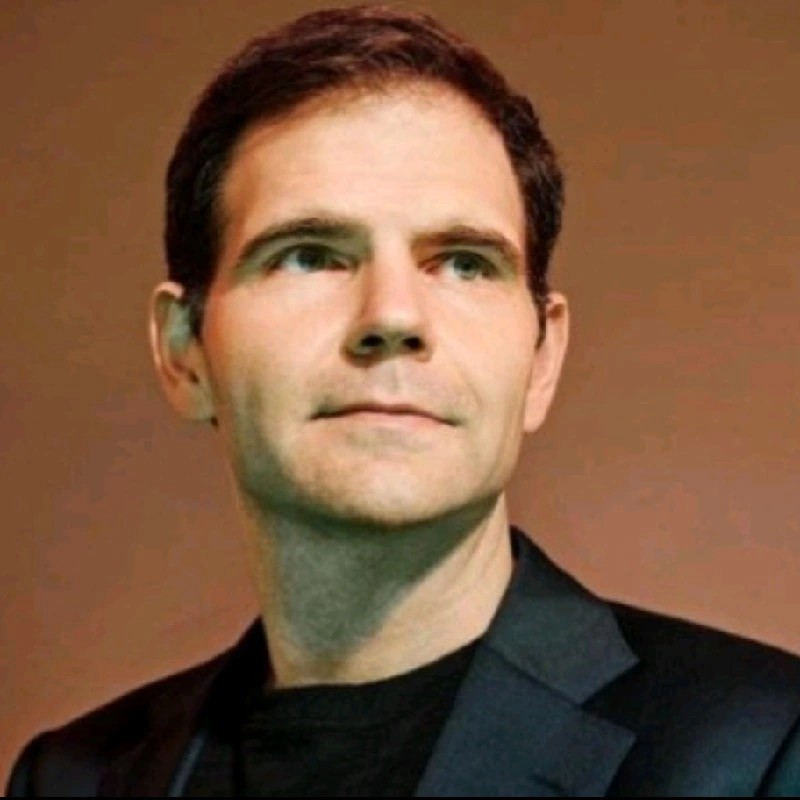
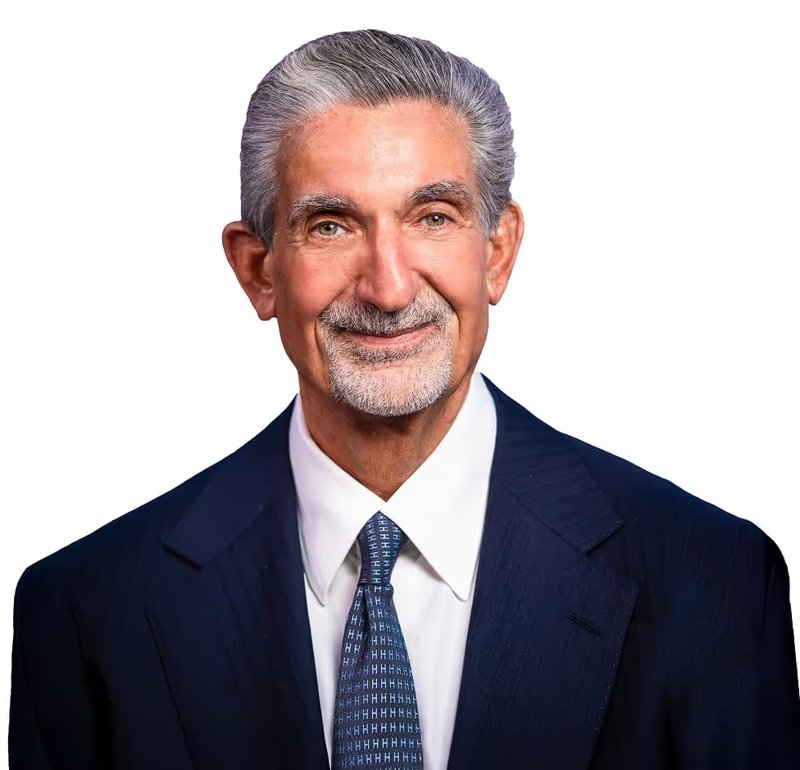
Photo: Cmichel67, CC BY-SA 4.0, via Wikimedia Commons ↗
About
Chamath Palihapitiya led Facebook's growth team before founding Social Capital in 2011, which he later converted into a holding company that no longer takes outside capital. He popularized the SPAC boom of 2020-2021, taking Virgin Galactic and others public, and co-hosts the All-In podcast. He continues to run Social Capital and, more recently, the industrial AI company 8090.
Invests in
Climate TechDeep TechEnterprise SoftwareFintechHardwareHealthtech
Beyond investing
- Founded
- Palihapitiya founded and leads Social Capital, which he launched in 2011. In January 2024 he announced a self-funded incubator called 8090 aimed at rebuilding enterprise software using AI tooling and offshore engineering teams.
- Education
- Studied at University of Waterloo (BASc, Electrical Engineering, 1999) Studied at Lisgar Collegiate Institute
- Communities
- He co-hosts the All-In podcast, launched in 2021 with Jason Calacanis, David Sacks, and David Friedberg. He was listed as one of the founders of the immigration reform lobbying group FWD.us, launched in 2013.
- Family
- He was married to Brigette Lau (divorced 2018) and married Nathalie Dompe in 2023, and has five children.
- More
- He was born in Galle, Sri Lanka, moved to Canada at age five, and took a Burger King job at fourteen to help support his family. Beginning in 2019 he sponsored a series of Social Capital Hedosophia SPACs that took Virgin Galactic, Opendoor, Clover Health, and SoFi public. He is Owner and Director of the NBA's Golden State Warriors. All-In Podcast: Co-host with Jason Calacanis, David Sacks and David Friedberg.
Mentioned above: the University of Waterloo mafia →
From Chamath's own website — common ground for a warm intro.
Co-founder and CEO at 8090
Intro paths
In turn, Chamath can intro founders to 8090's investors below.
8090's investors · 7




Co-founders at 8090
Board director at Groq Inc
Intro paths
In turn, Chamath can intro founders to Groq Inc's investors below.
Groq Inc's investors · 74


























.jpeg)






Co-founders at Groq Inc
Board director at Hustle
Intro paths
In turn, Chamath can intro founders to Hustle's investors below.
Hustle's investors · 7
.jpeg)




Co-founders at Hustle
Experience
- 8090 SolutionsCo-Founder and CEOcurrent2024 — present
- Social CapitalFoundercurrent2011 — presentMenlo Park, California, United States
- FacebookVP, User Growth, Mobile & International2007 — 2011
- FacebookVP, Platform & Monetization2007 — 2008
- Mayfield FundInvestor2006 — 2007
- AOLVice President & General Manager, AIM + ICQ2003 — 2005
- AOLDirector then Executive Director, Product2001 — 2003
- Winamp & Spinner.comProduct & Business Development2000 — 2001
- BMO Nesbitt BurnsAssociate - Interest Rate Derivatives Group1999 — 2000





Investments
Board seats
Golden State Warriors
Investor
8090Africa's TalkingAgnitusAthosBabyBeast IndustriesBerkshire GreyBoxBrilliant.orgCloud9CloudonConfer HealthCrushpathDesktop MetalDOOREcoMomEzetapFeastablesFive StarsFivestarFlockFresno UnlimitedFriend.lyGateGuruGlookoGoinstantGroq IncHipClubHipWayHustleIdentifiedKahunaLemonLotusflareLumaticMast ReforestationMitra ChemMP MaterialsMpharmaNetskopeNeurotrackObjectionOn DeckPalmettoPerimeter Medical ImagingPipePlaydomPorch GroupPremise DataProterraRed Robot LabsRelativity SpaceRemindRepliconrescourSecondmarketshoplySlackSoFiSunlight FinancialSuperRareSwarmSyapseSyndicaTop ProspectTreehouseTykoonVena MedicalVidadoWaveWealthfrontYammer
Per curated public sources.
Public positions
He reasons from incentives and structure rather than sectors — who gets paid, under what constraints, and what survives when the constraint moves. The recurring conclusion is that value settles at whatever cannot be copied, which currently means physical infrastructure rather than software, and that independent judgement is the only durable edge.
2025 · AI infrastructure
The lasting bottlenecks of the AI era are physical — critical minerals, chemical processing, energy storage and actuation — and that is where he believes durable value accrues.
The clearest statement of where his capital is aimed.
2025 · Software valuations
Most software equity value sits in terminal value, and AI's ability to replicate software products puts that terminal value at risk — with leveraged private-equity software buyouts most exposed.
An unusually specific and falsifiable bearish argument about an entire asset class.
2025 · US–China AI
Only two countries can build frontier AI, and each is building its own stack — the US mostly closed, China mostly open-weight.
Frames his geopolitical positioning and supply-chain preferences.
2025 · Portfolio outcome
He describes NVIDIA licensing Groq's technology for $20B as the year's decisive portfolio event, and notes he made the decision to invest about ten years earlier.
His headline claim of vindication for long-duration, non-consensus bets.
2025 · Losses
In the same letter he discloses a $400 million markdown on a portfolio company that ran out of capital and was recapitalised.
Rare voluntary disclosure of a loss at scale.
2026 · AI economics
He argues that soaring spending on AI tokens will start to show up as pressure on corporate earnings.
A near-term, checkable claim about AI's cost side.
2026 · Operating role
Announcing 8090's $135M Series A, he framed AI as a potential equaliser and took the CEO title himself.
Marks his shift from allocator back to operator.
▶All 10 tracked positions
2022 · Human rights
On the All-In podcast he said the treatment of Uyghurs in China was not a priority for him and that he would be lying to claim otherwise.
The most consequential public statement of his career in reputational terms.
2022 · Human rights
In a follow-up he said his remarks came across as cold, that human rights matter everywhere, and cited his own family's refugee history.
His own correction of the record.
2023 · SPACs
He has said his SPAC incentives were fundamentally misaligned because he could get paid on a deal regardless of how it performed, and called the episode a blemish on his record.
An explicit self-assessment of the period he is best known for outside tech.
Prediction record
The Groq bet, made roughly a decade before the outcome, is his strongest documented call. The SPAC thesis was decisively wrong and he has said so. His current positions — SaaS terminal-value compression, a bipolar AI world, physical fulcrum assets, and token spend hitting earnings — are all open and dated, which makes them checkable.
Custom inference silicon would matter enough to justify backing Groq
Correct2015 · Decade
He reports NVIDIA licensing Groq's technology for $20B in 2025, roughly ten years after the investment decision.
The $20B figure comes from his own letter; terms are not independently detailed there.
SPACs would democratise access to high-growth companies and his sponsored vehicles would compound for retail investors
Missed2020 · Years
Five of six de-SPACed companies traded down between roughly 70% and over 98% from their post-merger levels; an investor who bought each at the December 2021 peak faced roughly a 73% loss.
He has since conceded the incentive structure was misaligned.
SaaS multiples compress as AI erodes terminal value, with leveraged software buyouts most at risk
Open2025 · Years
Unresolved; software multiples have been volatile but the credit consequence he describes has not yet materialised broadly.
He is positioned for this outcome, so it is not a disinterested call.
Frontier AI settles into a two-country structure, US closed and China open-weight
Open2025 · Years
The pattern held through 2026 but the structure is not fixed.
Open-weight releases from US labs would weaken it.
Rising AI token spend will visibly pressure corporate earnings
Open2026 · Quarters
Unresolved.
Near-term and checkable against reported margins.
Physical bottlenecks — minerals, chemicals, storage, actuation — become the fulcrum assets of the AI era
Open2025 · Decade
Unresolved.
Directionally consistent with the 2025–2026 energy and materials build-out.
Controversies & responses
Where Chamath has drawn public criticism — with what happened, their response, and the criticism itself, side by side.
▶The SPAC record2019
- What happened
- Palihapitiya sponsored a series of SPACs that took Virgin Galactic, Opendoor, Clover Health and SoFi public. Most of the resulting companies fell dramatically from their post-merger prices, and analyses of the full deal set report an average loss for investors.
- The response
- He has publicly said his incentives were misaligned because sponsor economics paid him for completing deals rather than for their outcomes, and has described the episode as a blemish on his record.
- The criticism
- Critics point to the gap between the growth projections marketed during the SPAC process and what the companies actually delivered, and to the asymmetry between sponsor and retail outcomes.
- Where it stands
- Acknowledged by Palihapitiya; the companies' trading histories are a matter of public record.
▶Uyghur remarks on the All-In podcast2022
- What happened
- In a January 2022 episode he said that abuses against Uyghurs in China were not a priority for him and that claiming otherwise would be a lie. The remarks drew widespread condemnation; the Golden State Warriors, in which he held a minority stake, publicly distanced themselves from him.
- The response
- He said the following day that his phrasing came across as cold, that he believes human rights matter in China, the United States and elsewhere, and referred to his family's own experience as refugees.
- The criticism
- Critics argued the remarks reflected a willingness to subordinate human-rights concerns to commercial interests in China; some US legislators called for him to divest his stake in the team.
- Where it stands
- He clarified his position; the episode remains one of the most cited things about him.
▶Facebook growth and his later criticism of it2017
- What happened
- Having built and led Facebook's growth team, he later spoke critically about the social-feedback mechanisms that social platforms rely on, then partially walked the remarks back.
- The response
- He has continued to distinguish between the value Facebook created and the second-order effects of engagement-optimised products.
- The criticism
- Observers noted the tension between profiting from growth mechanics and criticising them afterwards.
- Where it stands
- Historic; frequently raised when he comments on platform incentives.
Podcasts & interviews
featuring Chamath PalihapitiyaAll-In podcast host Chamath Palihapitiya on the current state of AI
cnbc.com
All-In podcast host Chamath Palihapitiya on the current state of AI
CNBC Television
It was a 'huge mistake' for me to come on CNBC and talk about SPACs, says Chamath Palihapitiya
CNBC Television
Chamath Palihapitiya on rebuilding Social Capital & Silicon Valley ponzi scheme
This Week in Startups
Chamath Palihapitiya talks AI, Trump and Silicon Valley on The Axios Show | Full Interview
Axios
Chamath Palihapitiya on AI: America’s opportunity, Facebook’s fumble, and Trump | The Axios Show
Axios
6 more appearances
- Chamath Palihapitiya says soaring AI token spend will hit companies' earnings2026-01-01
- On misaligned SPAC incentives2023-01-01
- Chamath Palihapitiya Interview | Warren Buffett's Approach and How It Applies to Social Capital2021-06-20
- Chamath Palihapitiya – The Social Capital Flywheel (Capital Allocators, EP.167)2020-12-08
- Episode 208: Social Capital CEO Chamath Palihapitiya is Out to Arm the Rebels2020-11-05
- Watch CNBC's full interview with Social Capital's Chamath Palihapitiya2020-09-15
Writing
All posts ↗Colleagues at Social Capital Partnership

Network9


Investors connected to Chamath in public investor directories — a warm-intro map.
Frequently asked questions
- Who is Chamath Palihapitiya?
- Chamath Palihapitiya led Facebook's growth team before founding Social Capital in 2011, which he later converted into a holding company that no longer takes outside capital. He popularized the SPAC boom of 2020-2021, taking Virgin Galactic and others public, and co-hosts the All-In podcast. He continues to run Social Capital and, more recently, the industrial AI company 8090.
- Where does Chamath Palihapitiya work?
- Chamath Palihapitiya is Co-founder and CEO of 8090 and General Partner at Social Capital Partnership and Board director at Groq Inc and Board director at Hustle.
- What does Chamath Palihapitiya invest in?
- Chamath Palihapitiya invests in Climate Tech, Deep Tech, Enterprise Software, Fintech, Hardware, Healthtech.
- What check size does Chamath Palihapitiya write?
- Chamath Palihapitiya typically writes checks of $2M – $15M.
- What companies did Chamath Palihapitiya found?
- Chamath Palihapitiya founded 8090.
- What boards does Chamath Palihapitiya sit on?
- Chamath Palihapitiya holds tracked board seats at Golden State Warriors.
- What companies has Chamath Palihapitiya invested in?
- Investments tracked here include 8090, Africa's Talking, Agnitus, Athos, Baby, Beast Industries, Berkshire Grey, Box, Brilliant.org, Cloud9, Cloudon, Confer Health, and 60 more.
- Where did Chamath Palihapitiya go to school?
- Chamath Palihapitiya studied at University of Waterloo (B.A.Sc., Electrical Engineering, First Class Honours).
- What has Chamath Palihapitiya written?
- Chamath Palihapitiya has 1 tracked post on chamath.substack.com, including "2025 Annual Letter".
- What podcasts and interviews feature Chamath Palihapitiya?
- Tracked appearances include "All-In podcast host Chamath Palihapitiya on the current state of AI", "All-In podcast host Chamath Palihapitiya on the current state of AI", "It was a 'huge mistake' for me to come on CNBC and talk about SPACs, says Chamath Palihapitiya", and 9 more.
Founder mafias
University of Waterloo mafia419
Also came through, then founded or led a company.




Mayfield Fund mafia7
Also came through, then founded or led a company.

Hustle mafia4
Also came through, then founded or led a company.

Premise mafia4
Also came through, then founded or led a company.


Same school
Also attended University of Waterloo657
+ 651 more
Shared employers
Also worked at 8090 Solutions6

Also worked at Facebook780




+ 774 more
Also worked at Mayfield Fund48

+ 42 more
Also worked at AOL194

+ 188 more