Fundraising Fox
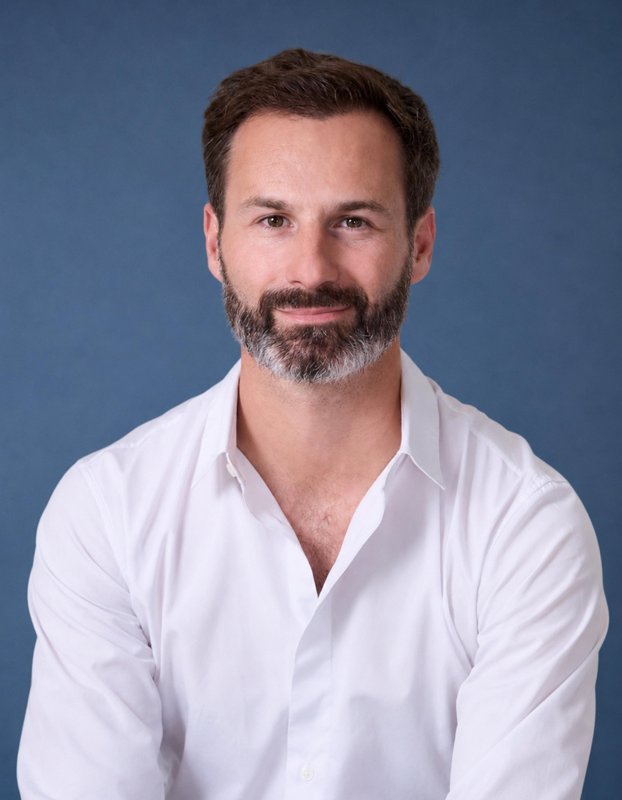
Peter Fenton
InvestorGeneral Partner at Benchmark · Benchmark investor/partner at Sem4ai · Director; Benchmark General Partner at Exa · Director; Benchmark General Partner at Tiger Data
San Francisco, CA
Writes $2M – $20M checks · typically $4M
Midas 2007Midas 2008Midas 2009Midas 2011Midas 2012 · #5Midas 2013 · #6Midas 2014 · #3Midas 2015 · #2Midas 2016 · #4Midas 2017 · #3Midas 2018 · #7Midas 2019 · #2Midas 2020 · #25Midas 2022 · #37Midas 2023 · #24Midas 2024 · #19Midas 2025 · #56Midas 2026 · #44
Find your path to Peter
1,309 people in our graph share verified history with Peter — schools, employers, funds. One of them is your warm intro.

About
Peter Fenton has been a general partner at Benchmark since 2006, following early years at Accel. His investments and board seats have included Twitter, Yelp, New Relic, Elastic, and Zuora, making him one of the longest-tenured recurring names on the Midas List.
Contact· published on Peter's own website
Invests in
AI & Machine LearningCloud ComputingConsumerData & InfrastructureDeveloper ToolsEnterprise SoftwareFintechMarketplacesSocial
Beyond investing
- Education
- Studied at Stanford University (BA, Philosophy) He earned a philosophy B.A.; biographical sources report Phi Beta Kappa. He later earned the Stanford M.B.A. and is reported as an Arjay Miller Scholar, a distinction for the top portion of the class.
- Boards
- Fenton served from February 2008, chaired from November 2008 and left in 2020. He later emphasized trust, psychological safety, written narratives and candid discussion over performative board decks.
- Communities
- Professional and award biographies place him on the San Francisco Opera and California Academy of Sciences boards. IRS-derived nonprofit records list him as an uncompensated Fenton Family Foundation director; family-foundation giving should not be attributed to him alone.
- Awards
- Fenton was awarded the TechCrunch Crunchie for Venture Capitalist of the Year in February 2014. Fenton was elected Phi Beta Kappa and named an Arjay Miller Scholar at Stanford University. TechCrunch named him the 2014 Crunchies VC of the Year. Forbes' archived list ranked him third in 2014 and reporting placed him second in 2015. Rankings are editorial recognition, not audited personal-performance tables.
- Family
- Fenton is married to Kate Fenton. Fenton has described growing up with a father who ran companies and criticized venture investors; Noel Fenton later co-founded Trinity Ventures. This informed Peter's empathy for operators but does not make their investment activity shared.
- More
- Secondary biographies give July 1972 and a Silicon Valley upbringing. Public-company proxies establish ages consistent with 1972, but no civil record or exact day was reviewed. Fenton joined Accel in 1999 from Stanford GSB. He later described his cohort as a post-bubble killing field and credited endurance and relationships, not prescience alone, for surviving. In first-person discussion he contrasted Benchmark's anti-hierarchical, equal structure with conventional firm hierarchy and described joining Kevin Harvey, Bob Kagle and Bill Gurley despite Accel's successful Facebook-era position. JBoss, SpringSource, Zimbra and XenSource produced announced strategic sales while Fenton moved from Accel to Benchmark. Contemporary reporting described four sales totaling about $1.6 billion, but that aggregate is company consideration—not Fenton's proceeds—and vehicle attribution varies by company. Fenton joined Yelp's board in August 2006 and served until March 2019, spanning private growth, the 2012 IPO and public-company maturation. Public records do not resolve whether the earliest investment commitment preceded his formal Benchmark start by weeks. Benchmark and IVP led Twitter's February 2009 Series C; reporting allocated $21 million of the first $35 million to Benchmark and $14 million to IVP, with existing investors adding more. Fenton joined the board. This was a Benchmark VI investment, not his personal check. Hortonworks and New Relic completed IPOs in December 2014 on the same day, an unusual concentration of Fenton-boarded outcomes. Both companies were still loss-making growth businesses; same-day listing is a milestone, not a complete return measure. In later first-person conversation Fenton described Twitter as among his hardest experiences because he believed it could have created far more economic and social value. This is reflective judgment, not an admission of legal fault. Fenton backed dotCloud before it pivoted around Docker. In 2019 Docker sold its enterprise business to Mirantis, replaced leadership and raised recapitalization financing. The open-source project became foundational, but product influence and company-level venture return are different; Benchmark's economics remain undisclosed. Hortonworks went public in 2014 and combined with Cloudera in an all-stock 2019 merger. The merger created a larger public platform but followed substantial operating losses and changing Hadoop demand; it should not be described simply as either failure or clean cash exit.
From Peter's own website — common ground for a warm intro.
Benchmark investor/partner at Sem4ai
Intro paths
In turn, Peter can intro founders to Sem4ai's investors below.
Sem4ai's investors · 10








Co-founders at Sem4ai



Director; Benchmark General Partner at ExaYC S21
Intro paths
Exa went through Y Combinator (Summer 2021) — Peter sits on its board, so any YC alum in your network can reach them through the company's founders.
Exa's group partner at YC was Nicolas Dessaigne, General Partner at Y Combinator — the partner who ran Exa's batch and knows the company first-hand. YC profile ↗
In turn, Peter can intro founders to Exa's investors below.
Exa's investors · 33












Co-founders at Exa



Director; Benchmark General Partner at Tiger Data
Intro paths
In turn, Peter can intro founders to Tiger Data's investors below.
Tiger Data's investors · 6




Co-founders at Tiger Data


Experience
- Benchmark CapitalGeneral Partnercurrent2006 — present
- ExaBoard Membercurrent2025 — present
- MercorBoard Membercurrent2025 — present
- SierraBoard Membercurrent2023 — present
- OllamaBoard Membercurrent2022 — present
- AirtableBoard Membercurrent2018 — present
- ClickHouseBoard Membercurrent2021 — present
- Cockroach LabsBoard Membercurrent2015 — present
- Docker, Inc. (Formerly dotCloud, Inc.)Board Membercurrent2011 — presentSan Francisco Bay Area
- SorareBoard Membercurrent2020 — present
- Wildlife StudiosBoard Membercurrent2019 — present
- Sema4.aiBoard Membercurrent2019 — present
- DigitsBoard Membercurrent2018 — present
- Buoyant, IncBoard Membercurrent2017 — present
- TimescaleDBBoard Membercurrent2018 — present
- Here Not There LabsBoard Membercurrent2020 — present
- San Francisco OperaBoard Membercurrent2013 — present
- ElasticsearchBoard Member2012 — 2021San Francisco Bay Area
- RevinateBoard Member2012 — 2021San Francisco Bay Area
- ZuoraBoard Member2007 — 2021Redwood City, CA
- California Academy of SciencesBoard Member2013 — 2021
- OptimizelyBoard Member2013 — 2020San Francisco Bay Area
- New RelicChairman of the Board2008 — 2020San Francisco Bay Area
- Yelp!Board Member2006 — 2019San Francisco Bay Area
- ClouderaBoard Member2011 — 2019
- ZendeskBoard Member2009 — 2017San Francisco Bay Area
- Lithium TechnologiesBoard Member2008 — 2017
- Zenly, Inc.Board Member2016 — 2017
- QuipBoard Member2012 — 2017San Francisco Bay Area
- Engine YardBoard Member2007 — 2017
- TwitterBoard Member2009 — 2017San Francisco Bay Area
- PolyvoreBoard Member2007 — 2016Mountain View, CA
- PentahoInvestor2008 — 2015
- TerracottaBoard Member2005 — 2011
- SpringSourceBoardMember2007 — 2010
- FriendFeedInvestor2008 — 2009
- Hyperic, Inc.Board Member2006 — 2009
- ZimbraBoard Member2005 — 2007
- CoremetricsBoard Member2000 — 2007
- ReactivityBoard Member2000 — 2007

































Deals · 2
Tiger DataQuoted
via Benchmark · filed Mar 2021
Attribution from SEC filings, press coverage, and firm rosters.
Other disclosed investments
Led
CoremetricsMintedPolyvoreQuipReactivityWily TechnologyXensource
Board seats
AirtableBuoyantClick HouseCockroach LabsDigitsDockerDotCloudHortonworksNew RelicSierraSorareTwitterYelpZendeskZuora
Investor
AirtableBagcheckBuoyantCitymapperClick HouseCockroach LabsCoremetricsDigitsDockerDockerEigenEngine YardExaExaFellowFriendFeedHortonworksHypericJbossKhoros(formerly Lithium Technologies)MercorNew RelicOllamaOptimizelyPentahoPolyvoreProduct ScienceQuipReactivityRebtelRevinateRobocorpSema4.aiSierraSorareSpringSpringSourceTerracottaTiger Data (creators of TimescaleDB)TwitterWildlife StudiosWily TechnologyX (formerly Twitter)XensourceYelpZendeskZenlyZimbraZuora
Sources: curated public sources · SEC Form D filings.
Controversies & responses
Where Peter has drawn public criticism — with what happened, their response, and the criticism itself, side by side.
▶Twitter board tenure covered repeated leadership turmoil2009
- What happened
- Fenton served from February 2009 to May 2017 through Jack Dorsey's return, Dick Costolo's departure, layoffs and slowing user growth. Contemporary criticism blamed the board collectively for strategic drift and CEO selection. Twitter's filing says his non-re-election was by mutual agreement; it identifies no disagreement or misconduct.
Founder fit — who Peter backs
Strong historical fit: founders with a non-consensus but legible purpose, intense authenticity, empathy and a 'learn-it-all' rather than 'know-it-all' posture; technical or product leaders who attract organic adoption; teams willing to build for a decade and use the board as a candid partnership. He responds to a founder's answer to what could go right and what new consumption becomes possible, not merely market-size slides. Long board tenures show patience, but Twitter, Docker and Hortonworks show that patience does not remove governance, timing or capital risk.
Likely weak fits include trend-first narratives without founder purpose; a business-model spreadsheet unsupported by product love or adoption; paid distribution masking weak pull; capital intensity far ahead of market readiness; open source with no credible value-capture boundary; founders performing certainty rather than learning; category claims without a consumption unlock; and a relationship framed as transactional capital rather than long partnership. These are synthesized tendencies, not a published exclusion list.
How to pitch
Lead with why this founder must solve the problem and what becomes newly possible for users now. Demonstrate the product and the adoption signal, then identify the enabling technical, behavioral or market preconditions. Explain what consumption was previously blocked, why distribution can compound, how value will be captured—especially for open source—and what the company could become if it defines the category. Use a concise written narrative with hard evidence, openly state timing and externality risks, and be explicit about board expectations. Do not cite Benchmark-wide wins such as eBay, Uber, Snap or Instagram as Fenton's personal deals. No reliable public current check range exists; ask about the applicable Benchmark fund and distinguish total round size from the requested check.
Stages: seed, Series A, select later early-stage rounds, founding rounds, long-duration follow-on and board stewardship · Sectors: open-source software, developer tools, cloud infrastructure, databases, observability, enterprise software, consumer networks, marketplaces, collaboration and productivity, AI applications, AI infrastructure, fintech software, gaming and digital communities
Editorial inference from Peter's portfolio, writing and public record — not a published mandate.
Investment themes
11 documented themes from Peter's essays, talks and portfolio, grouped by what they say about founders.
▶More themes10
Purpose outranks trends2016
Fenton says trend framing makes him lose interest when it replaces the tactile reality of a founder's purpose.
For founders: Explain the mission in user terms before naming the fashionable market category.
Preconditions determine why now
Mobile ubiquity, cloud architecture, social norms, compute and storage can make a previously impossible purpose timely.
For founders: Name the changed precondition and prove it is present, not merely expected.
Unlock consumption rather than merely sell supply2021
He frames market timing around whether a product releases latent demand with an experience users can adopt.
For founders: Show the constrained behavior, the new product experience and evidence that use expands.
Adoption can substitute for expensive distribution
Open source can direct resources from enterprise persuasion toward engineering, establish consumption and support paid complements.
For founders: Separate community adoption from monetization and specify who pays for which incremental value.
People precede the early business model
At the earliest stage he treats exceptional people, authenticity and purpose as more durable than immature financial models.
For founders: Use the model to show understanding, but expect the decisive discussion to concern founder insight and character.
Invest where adoption rises before risk disappears
His commonly reported adoption-curve/risk-curve framing favors evidence of pull while meaningful uncertainty still permits venture-scale ownership.
For founders: Map the remaining technical and market risks against observed adoption rather than claiming complete de-risking.
Trust and safety enable useful governance
From New Relic he argues that boards need candid vulnerability and shared problem solving, not ritualized reporting.
For founders: Use written narratives, surface bad news early and define where directors advise versus decide.
Equal partnership limits hierarchy and attribution
Benchmark's equal economics and anti-authoritarian culture encourage collaboration without making every firm deal personally sourced by every partner.
For founders: Assess the sponsoring partner and whole partnership separately; ask who will own the board relationship.
Capital abundance can fund premature markets2021
He sees abundant venture capital as potentially productive but dangerous when it accelerates spending before consumption and timing are ready.
For founders: Tie financing to evidence-producing milestones and avoid using cash to manufacture false timing signals.
Love of company does not eliminate hard outcomes
Fenton describes falling in love with mission-driven companies, yet Twitter's governance disappointment and Docker's reset show that attachment must coexist with board accountability.
For founders: Clarify decision rights, succession expectations and financing constraints before difficult moments.
▶Founders & company building1
Learn-it-all beats know-it-all2016
He prefers entrepreneurs who combine conviction with continuous learning over leaders who perform omniscience.
For founders: Bring changed beliefs, experiments and unresolved risks alongside conviction.
Podcasts & interviews
featuring Peter FentonBenchmark's Sarah Tavel on being recruited by Peter Fenton, disrupting VC from inside | Angel S4 E4
This Week in Startups
The Benchmark Partnership: Peter Fenton, Eric Vishria, Chetan Puttagunta, Ev Randle | Ep. 41
Uncapped with Jack Altman
The Craft of Early Stage Venture | Peter Fenton, General Partner at Benchmark
Uncapped with Jack Altman
What VC Investing Is Really Like - Peter Fenton (Benchmark Capital) & Jeff Seibert (Digits)
Startup Grind
Benchmark’s Peter Fenton joins to discuss the most important skill you need to learn as an investor.
The Logan Bartlett Show
Peter Fenton and Logan Bartlett
The Logan Bartlett Show / transcript mirror · aletteraday.substack.com
6 more appearances
- My firstminute with Peter Fenton (General Partner, Benchmark)2021-01-20
- The Single Question That Defines the Art of Early Stage Venture2021-01-01
- Career Lessons from Peter Fenton of Benchmark2020-11-10
- A Fireside Chat with Benchmark General Partner Peter Fenton (Data Driven NYC / FirstMark)2016-03-18
- Great entrepreneurs have a learn-it-all approach2016-01-01
- Benchmark Partner Peter Fenton on Investor Luck, Tech IPOs and More2013-11-03
Writing
First-person Quora answer republished by HuffPost on purpose, preconditions, Docker, Yelp, Twitter, Elastic, mobile, cloud and machine learning.
Self-reported current role, boards and selected investment commentary; used with issuer and filing corroboration where possible.
Colleagues at Benchmark






Network8

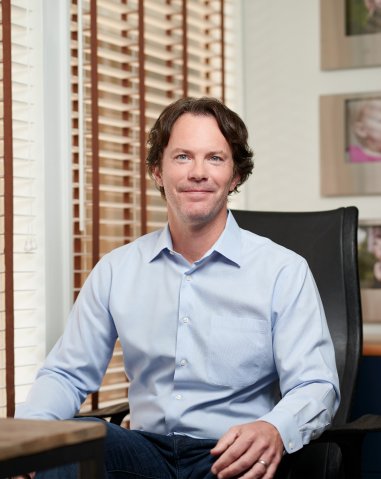
Investors connected to Peter in public investor directories — a warm-intro map.
Frequently asked questions
- Who is Peter Fenton?
- Peter H. Fenton is a Benchmark general partner, former Accel managing partner and Stanford graduate known for Twitter, Yelp and a long open-source/developer-infrastructure record.
- What did he do before Benchmark?
- After a Stanford philosophy B.A., he worked at Bain and Virage, returned for a Stanford M.B.A., and joined Accel in 1999, becoming a managing partner before leaving in 2006.
- Which investments are clearly Accel-era?
- Biographical and contemporary sources attribute JBoss, SpringSource, Zimbra, XenSource, Wily Technology, Reactivity, Coremetrics and Terracotta to his pre-Benchmark record. Exact Accel funds and check sizes remain private.
- Which Benchmark investments are most directly attributable?
- Strong board, filing, company or first-person evidence supports Yelp, Twitter, New Relic, Zendesk, Hortonworks, Elastic, Zuora, Docker/dotCloud, FriendFeed, Polyvore, Quip, Optimizely, Cockroach Labs, Airtable, Timescale, Wildlife, Sorare, ClickHouse, Digits and Sierra, with newer records for Mercor, Exa and Ollama at varying confidence.
- Were eBay, Uber, Snap and Instagram Peter Fenton deals?
- Not on the reviewed evidence. They are Benchmark-wide successes often placed beside his biography, but specific partners led them. They are excluded from personal attribution here.
- Did Fenton personally own 6.6% of Twitter?
- No. Benchmark Capital Partners VI held roughly 31.6 million shares, about 6.6% before the IPO. Fenton was a director and general partner with shared authority; fund ownership is not sole personal ownership.
- What happened during his Twitter board tenure?
- He served from 2009 to 2017 through rapid growth, IPO, CEO changes, Dorsey's return, layoffs and slowing user growth. Critics blamed the board collectively for drift; Twitter says his departure was by mutual agreement and reported no misconduct.
- What are the clearest challenged or failed outcomes?
- Public evidence is incomplete. Docker required a 2019 recapitalization and enterprise-business sale; Hortonworks merged with Cloudera after sustained losses; Zenly's product was later shut by Snap; Polyvore was shut by Yahoo; and several private companies became quiet or redirected. These facts do not establish Benchmark's exact loss or return, so the dossier avoids calling every shutdown a failed investment.
- What is his open-source thesis?
- Developer adoption can reveal demand and reduce expensive top-down distribution. A company still needs a credible economic layer—cloud, support, enterprise features or complementary proprietary value—and timing conditions that permit broad consumption.
- What founder traits does he favor?
- Purpose, authenticity, empathy, learning velocity, organic pull and the capacity to build a category over a decade. He contrasts learn-it-all founders with know-it-all performance.
- How should a founder pitch him?
- Start with founder purpose, demonstrate the product and adoption, explain what consumption is newly unlocked and why now, then show distribution, value capture, timing risks, externalities and board expectations. No authoritative current check range is public.
- Which public IPO boards did he serve on?
- Issuer records support Twitter, Yelp, Zendesk, Hortonworks, New Relic, Elastic and Zuora. Cloudera became a separate public-board relationship through the Hortonworks merger context.
- Which boards appear current?
- Current biographies and self-report support Airtable, ClickHouse, Cockroach Labs, Docker, Sierra, Sorare, Timescale and Wildlife Studios, with additional recent roles including Mercor and Exa. Because these are private companies, legal rosters can change without prompt public notice.
- What awards are verified?
- He won the 2014 Crunchies VC of the Year, ranked third on Forbes' archived 2014 Midas list and was reported second in 2015. These are editorial rankings, not audited return disclosures.
Same school
Also attended Stanford University Graduate School of Business2,000




+ 1,994 more
Also attended Stanford University2,000





+ 1,994 more
Shared employers
Also worked at Sorare15



+ 9 more
Also worked at TimescaleDB2

Also worked at Optimizely40




+ 34 more