 Fundraising Fox
Postmates
Unicorn exit · $1.9BAcquiredSan Francisco, US · Founded 2011 · 97 known investors
Find your way into Postmates
Sign up to see every warm intro you have to Postmates
- Paths you didn't know you had: your email and LinkedIn already hold routes to the Postmates team. We find them for you
- 2nd- and 3rd-degree connections: the friend-of-a-friend routes that take hours to manually find through your inbox or LinkedIn
- Answers now, not in days: momentum is everything in a raise. Skip asking around whether someone knows someone
Days of research, done the moment you sign in, with every route ranked by how warm it is.
<UNKNOWN>
Also known as Postmates Inc.
Founders & leadership
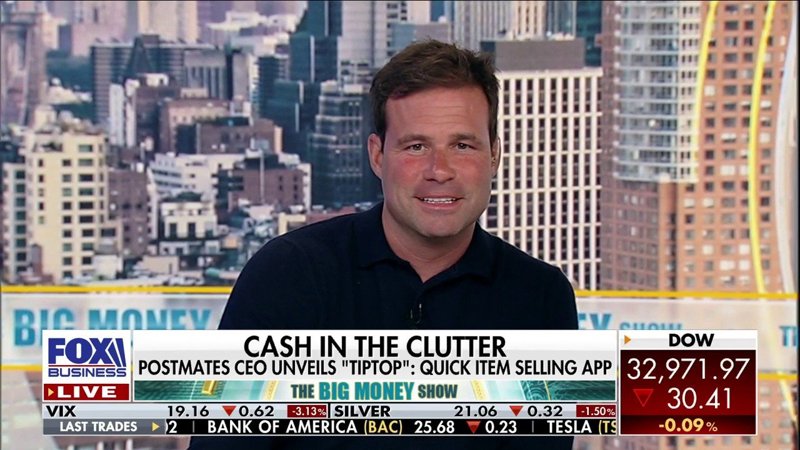
Postmates was founded in 2011 by Bastian Lehman, Sam Street, Sean Plaice, and Bastian Lehmann.


Board


Investors · 97
How we know: AngelPad's portfolio page · research · startupintros.com · open dataset · 5k.vc investor directory · Not right? Tell us
How we know: Brighter Capital's portfolio page · the VCSheet dataset · Not right? Tell us

How we know: craftventures.com · open dataset · 5k.vc investor directory · Not right? Tell us

How we know: Crosslink Capital's portfolio page · a partner's Signal profile · the VCSheet dataset · research · startupintros.com · open dataset · 5k.vc investor directory · Not right? Tell us

How we know: Entrée Capital's portfolio page · the VCSheet dataset · Not right? Tell us


How we know: FirstMark Capital's portfolio page · open dataset · 5k.vc investor directory · Not right? Tell us

How we know: Fontinalis Partners's portfolio page · the VCSheet dataset · Not right? Tell us

How we know: Founders Fund's portfolio page · research · startupintros.com · open dataset · 5k.vc investor directory · Not right? Tell us

How we know: Glynn Capital Management's portfolio page · Not right? Tell us
How we know: the VCSheet dataset · Not right? Tell us

How we know: open dataset · 5k.vc investor directory · Not right? Tell us
How we know: Long Journey Ventures's portfolio page · the VCSheet dataset · Not right? Tell us
How we know: Matrix's portfolio page · open dataset · 5k.vc investor directory · Not right? Tell us

How we know: Olive Tree Capital's portfolio page · the VCSheet dataset · Not right? Tell us


How we know: Rosecliff Ventures's portfolio page · the VCSheet dataset · Not right? Tell us

How we know: Slow Ventures's portfolio page · the VCSheet dataset · research · startupintros.com · Not right? Tell us

How we know: the VCSheet dataset · Not right? Tell us


How we know: Uncork Capital's portfolio page · research · startupintros.com · open dataset · 5k.vc investor directory · Not right? Tell us





How we know: research · startupintros.com · Not right? Tell us
.jpeg)

How we know: funding news · finance.yahoo.com · Not right? Tell us

How we know: research · startupintros.com · Not right? Tell us

How we know: research · startupintros.com · Not right? Tell us



How we know: research · startupintros.com · Not right? Tell us
How we know: open dataset · 5k.vc investor directory · Not right? Tell us

How we know: research · startupintros.com · Not right? Tell us
How we know: funding news · calcalistech.com · Not right? Tell us

How we know: research · startupintros.com · Not right? Tell us

How we know: research · startupintros.com · Not right? Tell us
How we know: research · startupintros.com · Not right? Tell us

How we know: research · startupintros.com · Not right? Tell us

How we know: research · startupintros.com · Not right? Tell us


How we know: research · startupintros.com · Not right? Tell us

How we know: research · startupintros.com · Not right? Tell us

How we know: the VCSheet dataset · Not right? Tell us


How we know: research · startupintros.com · Not right? Tell us


How we know: research · startupintros.com · Not right? Tell us
How we know: research · startupintros.com · Not right? Tell us

How we know: research · startupintros.com · Not right? Tell us

How we know: board seat on SEC Form D · the VCSheet dataset · research · startupintros.com · open dataset · 5k.vc investor directory · Not right? Tell us

How we know: board seat on SEC Form D · research · startupintros.com · Not right? Tell us
How we know: research · startupintros.com · Not right? Tell us



Also in the syndicate · 30
Funding
SEC filings, press & company announcements$79.2M disclosed across 2 of 13 rounds · 2011–2025
- $6MSeed roundOct 2025 · 2 sources
Blumberg Capital (lead), Gradient Ventures (lead)
Source ↗ - Undisclosed amountSeries AJan 2025Source ↗
▶$73.2MraisedJun 2015 · 28 investors · Other TechnologyRule 506(b)
- Sean PlaiceDirector
- Bastian LehmannExecutive Officer, Director
- Lee FixelDirector
- Scott BanisterDirector
- Nabeel HyattDirector
- Offering amount
- $81.3M
- Amount sold
- $73.2M
- First sale
- Jun 2015
- Incorporated
- Corporation, Delaware, 2011
- Federal exemptions
- 06b
Source: SEC EDGAR Form D. Amounts as filed; amended filings shown once at their latest values.
Valuation · disclosed
Disclosed eventsSource: SEC prospectus filings, and round valuations the company or its investors disclosed — follow each entry's link for the claim.
Company profile
researched Aug 2026Postmates Inc. is an American on-demand delivery company headquartered in San Francisco, California. It operates a logistics platform that connects consumers, merchants and a network of independent couriers ("Postmates") through a mobile app and website, delivering restaurant-prepared meals, groceries, alcohol and other retail goods. The company was founded on May 1, 2011 by Bastian Lehmann, Sean Plaice and Sam Street.
The business expanded from a handful of urban markets to broad U.S. coverage: it reported serving 30 cities in 2015, added 134 new U.S. cities in 2018 to reach 550, and as of February 2019 operated in 2,940 U.S. cities. Beyond consumer delivery fees, Postmates monetized through merchant placement and subscription-related products (Postmates Plus Unlimited) and by licensing its delivery API, which it opened to merchants in December 2014 so that smaller businesses could offer same-day delivery. It also pursued autonomous delivery, announcing a delivery rover in December 2018.
Uber acquired Postmates in December 2020 for US$2.65 billion in stock, and Postmates became an Uber subsidiary. In January 2021 the company laid off roughly 15 percent of staff (185 employees) and founder-CEO Bastian Lehmann announced his departure; the Postmates courier app and consumer service were subsequently merged into Uber Eats, with reports indicating Postmates would no longer operate separately after June 2021.
Founding story
Founder Bastian Lehmann dropped out of college and built an early flash-sale ecommerce site that failed after about a year. He later met co-founders Sam Street and Sean Plaice in Europe, and the team joined an early batch of the AngelPad accelerator with a content-curation startup called Curated.by. After investors, including angel Naval Ravikant, rejected that concept, the team pivoted to an idea Lehmann had carried since living in Europe—when he could not affordably ship a snowboard and found local courier quotes opaque—of using people already traveling as couriers. Ravikant led their angel round once Curated.by became Postmates. The initial app targeted merchants shipping bulky goods such as furniture and electronics, but users instead placed food and grocery orders, prompting the company to embrace an "anything from anywhere" model via a #GETITNOW campaign. Lehmann has recounted securing an early $250,000 check from the VC who had funded Uber after roughly six months of work on a prototype.
Business model
Postmates ran a three-sided marketplace linking consumers, merchants and independent couriers, taking orders through its app and website and fulfilling them via a crowdsourced courier fleet. Revenue came from consumer delivery fees, merchant commissions and paid placement (about 6,000 merchants paid for better app placement as of 2016), the Postmates Plus Unlimited subscription program that waived delivery charges in exchange for larger orders, and API integrations sold to corporate partners such as Apple and Starbucks. A 2020 lawsuit cited by Wikipedia alleged that delivery apps including Postmates charged restaurants fees ranging from 13% to 40% of revenue.
Delivery fees charged to consumers, merchant commissions and paid promotional placement within the app, subscription revenue from the Unlimited program, and fees from merchants integrating the Postmates delivery API. Reported revenue was approximately US$1 billion in 2018.
Traction
Reported roughly 14,000 couriers and approaching one million deliveries per month in late 2015, more than 1.5 million deliveries per month by October 2016, and about US$1 billion revenue in 2018 with 5,341 employees in 2019. Valuations rose from about $500 million (2015 reporting) to $600 million post-money (October 2016), $1.2 billion (September 2018) and $1.85 billion (January 2019); Uber acquired the company for $2.65 billion in December 2020.
Latest developments
Uber completed its acquisition of Postmates in December 2020 (reported closing December 1, 2020) for $2.65 billion in Uber stock. In January 2021 Postmates cut about 15 percent of staff (185 employees) and founder-CEO Bastian Lehmann announced his departure. Through 2021 the courier and consumer apps were consolidated into Uber Eats, with Postmates Fleet members required to reapply to Uber Eats; media reports cited by one source indicated Postmates would not operate separately after June 2021. The postmates.com site continues to present a consumer ordering interface for food, groceries and other goods.
▸Full profile — market position, technology, go-to-market, geography, history, risks & controversies
Market position
One of the larger U.S. on-demand delivery platforms, competing with Grubhub, DoorDash, Uber Eats, Instacart, Google Express and Amazon. Management stated in 2016 an intent to defend and grow market leadership; after the Uber acquisition, one industry account estimated the combined Uber Eats/Postmates business would hold about 37 percent of the U.S. food delivery market.
Positioned as a general "anything from anywhere" urban logistics layer rather than a restaurant-only delivery app, covering groceries, alcohol, electronics and convenience-store items. Management emphasized monetization beyond delivery fees—merchant placement, the Unlimited subscription and API licensing—as a source of gross margin, and the company opened its delivery API so third-party merchants could offer same-day delivery.
Technology
A mobile app and web platform coordinating real-time, location-aware dispatch of a crowdsourced courier network for urban delivery. Postmates opened its API to merchants in December 2014 to let third-party sellers offer local delivery, and in December 2018 announced development of an autonomous delivery rover.
Go-to-market
Consumer-facing mobile app and website acquisition in dense urban markets, city-by-city expansion (30 cities in 2015; 550 U.S. cities by 2018; 2,940 U.S. cities by February 2019), courier recruitment for the Postmates Fleet, merchant sign-ups including national retailers and restaurants, and B2B API partnerships with companies such as Apple and Starbucks.
Urban consumers seeking on-demand delivery of restaurant meals, groceries, alcohol and general retail goods, plus local merchants and larger corporate partners that used the Postmates API to offer their own delivery.
Geography
Headquartered in San Francisco with operations concentrated in the United States, including a noted presence in Los Angeles and the Southwest. Coverage grew from roughly 30 cities in 2015 to 550 U.S. cities in 2018 and 2,940 U.S. cities as of February 2019. Mexico City was its first international market, launched in November 2017; Postmates ceased Mexican operations in December 2019, citing lack of growth and a focus on the U.S.
History
Founded May 1, 2011 in San Francisco and incorporated in Delaware. It raised over $800,000 in 2011 in connection with the AngelPad accelerator, followed by multiple venture rounds through 2019 totaling a reported $909.4 million across 13 rounds. It opened its delivery API to merchants in December 2014, launched in Mexico City in November 2017 (exiting in December 2019), added 134 U.S. cities in 2018, announced an autonomous delivery rover in December 2018, and confidentially filed for an IPO in February 2019 per Reuters. Uber acquired the company in December 2020, after which Postmates was integrated into Uber Eats and its founder-CEO departed in 2021.
Risks & controversies
In May 2019 Postmates changed courier pay—removing a $4-per-job minimum guarantee, altering base rates and lowering per-mile rates in some markets—prompting the labor group Working Washington to urge couriers to refuse jobs; the company defended the change and its full-tip policy. In April 2020 New York residents sued DoorDash, Grubhub, Postmates and Uber Eats over alleged monopolistic price-parity clauses in restaurant contracts (Davitashvili v. GrubHub Inc., 20-cv-3000, S.D.N.Y.), seeking triple damages; a motion to dismiss was denied in March 2022 and no trial date had been set. Earlier, the 2016 funding round was raised in a cooled on-demand financing environment in which some investors were reportedly offered warrants and additional incentives. Post-acquisition app consolidation also generated driver complaints, including reports in May 2021 of missed payments.
Compiled by commissioned research from 8 cited public sources — announcements, filings, and press listed under research sources below.
Key figures
latest reportedCompany-reported or press-reported figures, each dated to when it was claimed — not independently audited.
Related companies · 8





Companies working in the same space as Postmates.
▸Research sources · 8
primary sources listed
- Postmatespostmates.com · web
8 public sources were cited for this profile; the first-party ones are listed here.
Frequently asked questions
- What does Postmates do?
- On-demand delivery platform for restaurant meals, groceries and retail goods, acquired by Uber in December 2020.
- Who founded Postmates?
- Postmates was founded by Bastian Lehman, Sam Street, Sean Plaice, Bastian Lehmann in 2011.
- Who are Postmates's investors?
- Postmates's investors include AngelPad, Brighter Capital, Craft Ventures, Crosslink Capital, Entrée Capital, Expansion Venture Capital, FirstMark Capital, FJ Labs and 59 more.
- How much funding has Postmates raised?
- Postmates has disclosed $79.2M raised across 2 of its 13 known rounds.
- Where is Postmates headquartered?
- Postmates is headquartered in San Francisco, US.