 Fundraising Fox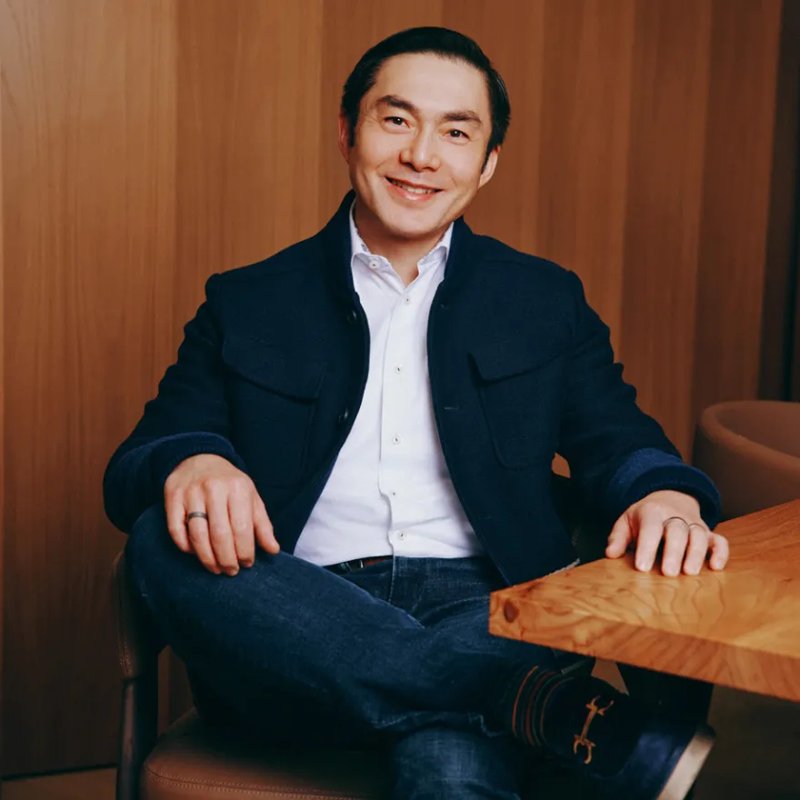
Alfred Lin
InvestorPartner, Seed/Early & Growth at Sequoia Capital
San Francisco, CA
Writes $1M – $200M checks · typically $5M
Midas 2013 · #90Midas 2014 · #26Midas 2015 · #29Midas 2016 · #45Midas 2017 · #22Midas 2018 · #32Midas 2019 · #18Midas 2020 · #32Midas 2021 · #1Midas 2022 · #7Midas 2023 · #3Midas 2024 · #1Midas 2025 · #1Midas 2026 · #11
Find your path to Alfred
Sign up to see every warm intro you have to Alfred
- Paths you didn't know you had: your email and LinkedIn already hold routes to Alfred. We find them for you
- 2nd- and 3rd-degree connections: the friend-of-a-friend routes that take hours to manually find through your inbox or LinkedIn
- Answers now, not in days: momentum is everything in a raise. Skip asking around whether someone knows someone
Days of research, done the moment you sign in, with every route ranked by how warm it is.
About
A partner at Sequoia Capital since 2010, Alfred Lin led the firm's investments in Airbnb, DoorDash, and OpenAI. Before venture he was COO and chairman of Zappos through its sale to Amazon. He topped the Forbes Midas List in 2021, 2024, and 2025.
Contact· published on Alfred's own website
Invests in
AI & Machine LearningConsumerDeep TechE-commerceEnterprise SoftwareFintechHardwareHealthtechLogistics & Supply ChainMarketplacesRoboticsSaaSSector Agnostic
Beyond investing
- Founded
- Lin co-founded Venture Frogs, an incubator and investment firm, with Tony Hsieh. His junior-high lawn-mowing service failed within a summer. At Harvard he bought whole pizzas from Tony Hsieh's Quincy House grill and resold slices, beginning a decades-long friendship and operating partnership. Lin and Hsieh raised a friends-and-family pool after LinkExchange and located investees near their San Francisco residences. Contemporary reporting said $20 million had gone into about a dozen companies in $300,000-$3 million increments; later issuer biographies reliably name Ask Jeeves, OpenTable, Tellme and Zappos.
- Education
- Studied at Harvard University (BA, applied mathematics) Studied at Stanford University (MS, statistics) Studied at Stuyvesant High School
- Charities
- Alfred and his brother Edwin endowed undergraduate scholarships honoring their late mother, Shu-Nuan, whose education sacrifices they describe as central to the family's American dream. Alfred also volunteers with Harvard fundraising. Alfred and Rebecca Lin endowed two Harvard civil-discourse professorships, an AI professorship and generative-AI support, building on financial aid for applied science and engineering. The amount was not disclosed, so no donation value is inferred.
- Communities
- Lin met Tony Hsieh while at Harvard, where Hsieh ran a student-owned pizza parlor. Code.org's leadership roster and 2025 GuideStar data identify Lin as a director. Public sources do not establish a precise start date with primary minutes.
- Awards
- Forbes named Lin one of the '30 Most Influential People in Tech' in 2013. Forbes ranked Lin first in 2021 after the Airbnb and DoorDash IPOs; published list records also rank him first in 2024 and 2025. He was No. 11 in 2026 according to a compiled ranking. Midas is an editorial ranking, not audited personal performance. Gold House included Lin among its 2021 A100 business and finance honorees, an editorial recognition of Asian and Pacific Islander impact.
- Family
- Immigrated to the United States with his family, landing in New York City when he was six years old. Has a son who was finishing his freshman year of high school as of 2026. Lin is married to Rebecca Lin and has one child.
- More
- Lin was born in Taiwan in 1972 and immigrated to New York with his parents at age six. Lin says he emigrated from Taiwan at six and that his parents repeatedly moved him and his brother to stronger school districts. Harvard reports financial strain despite both parents' Taiwanese banking careers. Secondary sources disagree between 1972 and April 1973 for his birth; no primary birth record was located, so no exact date is asserted. Lin found business cases more compelling than doctoral research and first balanced Stanford classes with part-time finance work before committing fully to LinkExchange. Microsoft acquired LinkExchange in November 1998. Lin and Hsieh later treated its deteriorating culture—financial success without enjoyment—as a lesson to make values explicit at Zappos. Lin joined while Tellme was reportedly losing about $60 million annually. His later accounts describe a shift from a costly consumer portal toward enterprise services and recurring revenue; Microsoft announced an acquisition in 2007 after Lin had left. Lin helped build systems, finance inventory and formalize values while Zappos treated itself as a service company that happened to sell products. His accounts include near-payroll and bank-covenant pressure, profitability in 2006 and canceling holiday inventory during the 2008 crisis. The merger filing identifies Lin as chairman, COO, CFO and shareholder representative. Transaction history shows that after Amazon first proposed cash, Lin asked about stock; Zappos' board unanimously approved a structure preserving Zappos as a subsidiary and distinct brand. The announced value was roughly $1.2 billion at then-current Amazon prices, not Lin's personal proceeds. Beyond the conventional founder/product/market/model screen, Lin studies founders' special traits, novel insight, eureka story and lived customer empathy, then asks whether he would want to work for them. Lin describes market landscapes, reading and blue-sky sessions as preparation to answer 'why now?' and 'who cares?' Founders often understand the pain while investors can help imagine how technology, labor or business-model shifts enlarge the opportunity. Sequoia passed on DoorDash's seed round. Lin stayed close to Tony Xu, learned his immigrant restaurant background and merchant empathy, and led Sequoia's $17.3 million Series A with a board seat. The IPO followed in 2020. Lin disclosed a $30,000 personal seed check and reporting describes another $80,000 personal Series A check. He called Sequoia's institutional pass a major failure: the firm saw a black-car service and failed to dream with Travis Kalanick about transforming transportation. Sequoia's current portfolio page says it partnered in 2015, a later institutional relationship. Lin led Sequoia into Romotive's $5 million financing after a Tony Hsieh introduction. The phone-controlled robot had shallow repeat use; the founders shut the product in January 2014, sold inventory and rebuilt around medical logistics as Zipline. This is both a failed product thesis and an enduring team partnership. Lin led Sequoia's FTX deal and remained its point of contact for roughly 18 months, but Sequoia owned under 1% and held no formal board seat. Sequoia wrote approximately $214 million across Global Growth Fund III and SCGE to zero. Lin said financial statements and organizational charts omitted Alameda's true relationship and that failing to detect deception after investment was more troubling than the initial bet. Critics reasonably question unaudited diligence and absent governance; no evidence shows Lin participated in FTX misconduct. In 2026 Lin is an independent director and audit, risk and compliance and people/compensation committee member at Airbnb; he previously chaired audit. At DoorDash he is an independent director, audit financial expert and chair of the people and compensation committee. Both issuers retain founder-influenced multi-class structures that governance advisers have criticized; the structures are issuer-level matters, not proof of personal misconduct. Lin and Pat Grady succeeded Roelof Botha in November 2025. Contemporary reporting presented an internal generational transition following FTX, the regional split and other firm controversies. Lin did not lead the pre-2025 regional separation, and individual partners' speech is not automatically his position. Harvard identifies wife Rebecca Lin, a Harvard physics graduate, artist and nonprofit trustee; public profiles say the couple has a son. Lin lists food, games, math, puzzles, running and travel as interests and describes process, family and infinite-game thinking as central. Private family details are excluded.
From Alfred's own website — common ground for a warm intro.
Deals · 3

KalshiBoard seat
via Sequoia Capital · filed Dec 2025 · $1000M raise
Clay LabsBoard seat
via Sequoia Capital · filed Sep 2025 · $100M raise
Indie Technologies, Inc.Board seat
via Sequoia Capital · filed Jun 2024 · $46M raise
Attribution from SEC filings, press coverage, and firm rosters.
Other disclosed investments
Led
Rowspace
Board seats
Citadel SecuritiesCobalt RoboticsCollaborative RoboticsDolls KillFormation BioFormation BioFutureAdvisorHouzzHumble BundleInstacartNominalNominalShopularSummer HealthTrueworkZapposZipline
Investor
Abby CareAchieversAirbnbAnthropicAnthropicappbistroAppBistro / MMTG LabsAppstores.comAskAthelasBunkerhill HealthCardpoolCatchCitadel SecuritiesClayCobalt AICobalt RoboticsCollaborative RoboticsCollaborative RoboticsCollaborative RoboticsCrosbyCrunchedDiaDia & Co.Dolls KillDoorDashDropboxFaireFilecoinFinchFinchFinch LegalFiretigerFireworks aiFlipboardFormation BioFormation BioFoundFTXFTX FundFutureAdvisorHouzzHouzzHumble BundleIneffable IntelligenceInstacartJelliKiwiMongoMusicMoovitMyAbleNominalOkayOpenAIOpenAIOpenTableOtterPatientKeeperPatientKeeperPhysical IntelligencePrologueRedditRomotiveRomotiveRowspaceSafaraSalesCrunchSchematic LabsShopularStella & DotStyleseatSummer HealthTellme NetworksTourlaneTrueworkTrupoTurnkeyUberUberWebJuiceWhatnotZapposZiplineZipline International
Sources: curated public sources · SEC Form D filings · the firm's website.
Founder fit — who Alfred backs
Best fit: original, self-aware, high-agency founders solving a problem they understand personally; teams able to explain why old assumptions no longer hold, learn after rejection, earn customer love, distinguish drivers from outputs and operate through scarce capital or crises. Lin asks whether he would love to work for them and regards the investor as working for the founder.
Poor fit signals include generic market enthusiasm without a founder-specific insight, vanity GMV without causal input metrics, competitor obsession instead of customer learning, undifferentiated commodity economics, culture treated as slogans, inability to name first-order constraints, and a plan that assumes capital or growth will repair structural problems. FTX demonstrates that articulate logic and apparent mission are not substitutes for independently verified governance and controls.
How to pitch
Explain the lived problem and eureka moment, why this team has an earned insight, why now, who will care, the delightful product proof, the first wedge and the compounding path to a very large market. Show customer references, retention or input metrics rather than topline vanity, a disruptive model and proprietary advantage. Be explicit about culture, capital needs, unit economics and the hardest current constraint. Expect detailed operational and customer diligence. Identify whether you seek Lin personally, a Sequoia seed/early vehicle or another firm team; no public standard check range is verified.
Stages: pre-seed, seed, Series A, early stage, growth, public-company partnership · Sectors: consumer, marketplaces, commerce, logistics and delivery, financial technology, regulated exchanges, robotics, healthcare, artificial intelligence, enterprise software, crypto infrastructure
Editorial inference from Alfred's portfolio, writing and public record — not a published mandate.
Investment themes
10 documented themes from Alfred's essays, talks and portfolio, grouped by what they say about founders.
▶Founders & company building1
Founder-market fit
Special characteristics, novel insight, founding eureka and lived empathy matter more to Lin than a generic founder checklist.
For founders: Lead with why you personally understand this customer and why the insight is difficult to copy.
▶More themes7
Prepared mind: why now and who cares2021
Market maps and reading prepare an investor to connect a founder's pain with technological or behavioral change and tomorrow's opportunity.
For founders: Quantify who benefits and what changed; current market size alone is insufficient.
Dream big while staying grounded
Lin frames his work as connecting a founder's universe-changing ambition to present facts and an executable plan.
For founders: Show both the destination and a milestone path rooted in current evidence.
Culture must be intentionally operationalized
LinkExchange showed that financial success can coexist with a corrosive workplace; Zappos made values explicit through employee input, hiring and daily decisions.
For founders: Define authentic values before scale and use them in hiring, evaluation and tradeoffs rather than as wall copy.
Customer obsessed, competitor aware2021
Lin argues durable companies learn from customers and build causal operating advantages instead of letting rivals dictate strategy.
For founders: Know competitors, but show merchant, user or enterprise evidence that determines your roadmap.
Inputs over vanity outputs2021
GMV and other outputs can reward bad behavior unless founders understand acquisition, retention, frequency, quality and unit-economic drivers.
For founders: Present a metric tree and the controllable inputs that produce durable growth.
Crises reveal operating mettle
Zappos, Airbnb and DoorDash inform Lin's view that downturns force prioritization and allow strong teams to overtake competitors—the rainy-day race-car analogy.
For founders: Explain what you cut, protected and learned under pressure and how the crisis improved the company.
Compounding over trading2021
Sequoia seeks companies whose future remains brighter and can compound beyond IPO rather than optimizing for a quick sale.
For founders: Describe an enduring institution and reinvestment engine, not merely the next funding or exit.
▶Governance & network states1
Trust and verify2023
After FTX, Lin defended beginning founder relationships with trust but acknowledged that verification and the post-investment failure to detect deception required reassessment.
For founders: Expect evidence for legal entities, related parties, financial controls and governance, especially in regulated or crypto businesses.
▶AI & media1
AI spans cognition, software and the physical world
Recent partnerships cover foundation research, inference, healthcare agents, legal workflows, go-to-market software and robotics; Lin treats AI as a platform shift while retaining customer and founder-market-fit tests.
For founders: Tie model advantage to a specific workflow, proprietary feedback loop and measurable customer value.
Podcasts & interviews
featuring Alfred Lin“The top engineers are shipping 3x more” says Alfred Lin of Sequoia Capital #upfrontsummit
Upfront Ventures
Is The World Really Built for Humans? Unlocking AI’s Potential with Alfred Lin
Cobot
#1 Midas List Investor - Alfred Lin, Sequoia Capital
Sourcery with Molly O'Shea
Sequoia’s Alfred Lin: $10T Companies Are Coming
Sourcery with Molly O'Shea
Alfred Lin's Path from Immigrant Child to Silicon Valley Legend
Harvard Innovation Labs · innovationlabs.harvard.edu
CEO Peng Zhao & Sequoia's Alfred Lin Discuss the Future of Markets
Citadel Securities
6 more appearances
- 1:1 with Sequoia's Alfred Lin2025-05-06
- Alfred Lin: How to Think (and Work) Like a World Class Investor2025-01-01
- An Inside Look Into Sequoia's Strategy & Operations, with Alfred Lin2023-10-31
- Sequoia Capital's Alfred Lin in his first public interview since FTX2023-01-13
- StrictlyVC in conversation with Alfred Lin of Sequoia Capital2023-01-13
- ETL Speaker Series: Alfred Lin, Sequoia Capital2022-05-05
Writing
All posts ↗Alfred Lin has recently written personal essays connecting his immigrant background and family life to startup-building lessons, covering American optimism at the country's 250th anniversary, why the 80/20 rule misleads founders, and how to think about time and opportunity cost when building legendary companies.
The author reflects on his immigrant family's move to America and argues the country, at 250 years old, shares the optimism and permission-to-reinvent mindset of outlier founders.summary_placeholder
The author critiques applying the 80/20 rule to startups, arguing that venture outcomes are power-law and founders should pursue the difficult 'last 10%' to build category-defining companies.summary_placeholder
Prompted by his son, the author describes three units of time—the moment, chapter, and book—and argues today's builders must cover far more distance in the same fixed lifespan.summary_placeholder
Colleagues at Sequoia Capital
Network7

Investors connected to Alfred in public investor directories — a warm-intro map.
Frequently asked questions
- What is Alfred Lin's current Sequoia role?
- He is a seed/early partner and, since November 4, 2025, co-steward with Pat Grady. Stewardship is partnership leadership, not sole approval authority over every investment.
- What did he do before venture capital?
- He led finance/administration at LinkExchange, co-founded Venture Frogs, ran finance/business development at Tellme, and served as Zappos chairman, COO and CFO through Amazon's acquisition.
- What is his educational background?
- Harvard B.A. in applied mathematics (1994), Stanford M.S. in statistics, and additional Stanford statistics Ph.D. study that he left for LinkExchange.
- Which investments are clearly Lin-led?
- Strong direct evidence supports DoorDash, Achievers, Cobalt Robotics, Truework, FTX and Citadel Securities board representation; Kalshi, Houzz, Romotive/Zipline, Moovit, Nominal and several recent authored partnerships also have direct Lin involvement. Many other current profile companies indicate partner coverage but not sole leadership.
- Did Alfred Lin make Sequoia's original Airbnb investment?
- No. Sequoia invested $585,000 in April 2009 before he joined. Lin inherited the board seat in November 2012 and became a consequential later-stage board partner.
- Were Venture Frogs investments Sequoia investments?
- No. Venture Frogs was the separate seed fund and incubator Lin co-founded with Tony Hsieh. Its verified companies include Ask Jeeves, OpenTable, Tellme and Zappos; some capital came from LinkExchange friends and family.
- Did Lin invest in Uber?
- Yes, personally: reporting describes a $30,000 seed check and an $80,000 Series A check. Sequoia passed at Series A, which Lin called a major failure, then its portfolio archive dates a later institutional partnership to 2015.
- What happened with FTX?
- Lin led Sequoia's approximately $214 million investment, served as its primary contact but held no board seat, and saw it written to zero in 2022. He said FTX and Alameda were represented as independent and that failing to discover the deception during the relationship forced reassessment. The episode is a serious diligence and governance failure, not evidence that Lin joined the fraud.
- What does he look for in founders?
- Founder-market fit: unusual traits, original insight, a compelling eureka story and lived empathy for customers, plus the ambition and operating ability to build an enduring company. His final test is whether he would want to work for them.
- How should a founder pitch him?
- Explain your lived problem, why now, who cares, product delight, first wedge, proprietary advantage, input metrics, unit economics, culture and capital plan. Show customer evidence and identify the hardest first-order issue. This is editorial synthesis, not a published application checklist.
- Which current public-company boards are filing-confirmed?
- Airbnb and DoorDash. Both re-elected him in 2026 through 2029; he serves on audit-related committees at both and chairs DoorDash's people and compensation committee.
- What philanthropy and community work is public?
- Harvard support includes financial aid, applied science, civil discourse and AI professorships, plus a scholarship Alfred and Edwin Lin established for their mother. Lin also serves on Code.org's board.
- What public family information is appropriate?
- He is married to Rebecca Lin, a fellow Harvard 1994 graduate, artist and nonprofit trustee; reputable profiles say they have one son. He has a brother, Edwin, and their late mother Shu-Nuan inspired a scholarship. Private residence and family details are excluded.
- What awards has he received?
- Forbes ranked him No. 1 on the Midas List in 2021, 2024 and 2025; Gold House named him a 2021 A100 honoree. These are editorial recognitions rather than audited return records.
About this profile. Compiled from public sources — Sequoia Capital's own website, regulatory filings, press coverage and public professional profiles — and summarised by Fundraising Fox; every fact is kept with where it came from. Spotted an error, or would rather not be listed? Email privacy@fundraisingfox.com · How we build profiles · Your rights