 Fundraising Fox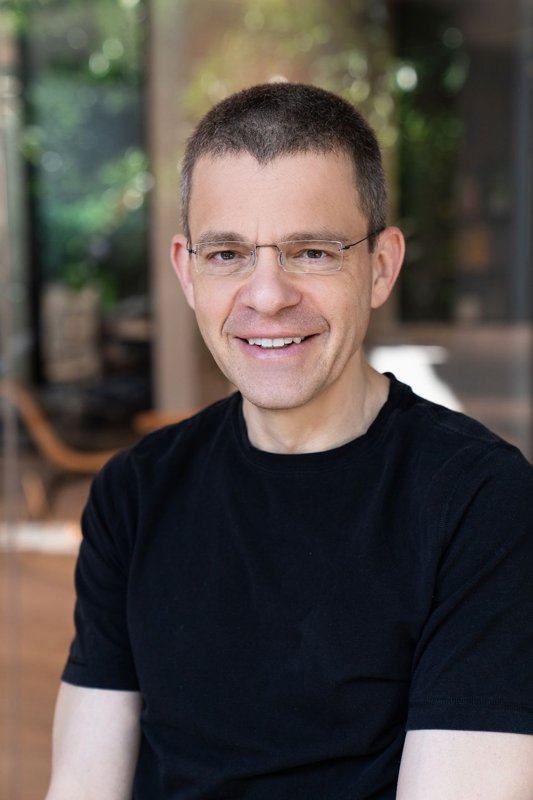


Find your path to Max
1,429 people in our graph share verified history with Max — schools, employers, funds. One of them is your warm intro.
About
Max Levchin arrived in Chicago from Kyiv in 1991 as a refugee, and by 2002 had co-founded PayPal and built the fraud detection that let it survive long enough to reach a Nasdaq listing and an eBay acquisition. He founded Slide, sold it to Google, and in 2012 started Affirm on one constraint: a lender that charges no late fees and no compounding interest only makes money when borrowers repay. Affirm went public in 2021 and served 26.8 million people by 2026. He invests through SciFi VC, the fund he runs with his wife Nellie, funds the Levchin Prize for applied cryptography, and sits on the boards of Unity and The Coca-Cola Company.
Likely email· guessed from name + firm domain, not firm-published
- m•••@scifi.vcreveal75% confident
Invests in
AI & Machine LearningDeep TechFintechHardwareHealthtechMarketplaces
Beyond investing
- Education
- Studied at University of Illinois Urbana-Champaign (BS, Computer Science)
- Communities
- Funds the Levchin Prize for Real-World Cryptography, a $10,000 award presented each year at the IACR's Real World Crypto conference.
- Awards
- MIT Technology Review (2002): Named to the TR100 list of innovators under 35 and Innovator of the Year. EY (2013): Received the first EY Innovation Award. Levchin Prize for Real-World Cryptography (2015): Established and funds the annual $10,000 prize for cryptography with real-world impact, awarded at the IACR's Real World Crypto conference; recipients include Joan Daemen, Moxie Marlinspike and Trevor Perrin, and Whitfield Diffie and Martin Hellman. Carnegie Corporation of New York (2017): Named a Great Immigrant honoree. Forbes (2026): Listed on the Self-Made 250, Forbes' ranking of the greatest living self-made Americans.
- Hobbies
- A long-distance cyclist who logs and analyses his own rides — the same instrumentation habit that produced Glow and Affirm's underwriting.
- Family
- Runs SciFi VC with his wife Nellie Levchin, who is a partner in the fund.
- More
- Chicago, Illinois (1991): Arrived from Kyiv with his family as Jewish refugees, reportedly with about $700 between them. PayPal / eBay (2002): PayPal listed on Nasdaq in February 2002 and was acquired by eBay that year; Levchin's roughly 2.3% stake was worth about $34 million. Slide / Google (2010): Google acquired Slide for $182 million; Levchin, who had put $7 million of his own money in, took about $39 million out. Affirm (2021): IPO on Nasdaq (AFRM) on 13 January 2021, priced at $49 and raising about $1.2 billion; the stock closed its first day at $97.24, a valuation near $23.6 billion.
Mentioned above: the Google mafia → · the University of Illinois Urbana-Champaign mafia → · the PayPal mafia → · the Affirm mafia →
From Max's own website — common ground for a warm intro.
Co-founder at Glow
Intro paths
In turn, Max can intro founders to Glow's investors below.
Glow's investors · 6






Co-founders at Glow
Founder & CEO at Affirm
Intro paths
In turn, Max can intro founders to Affirm's investors below.
Affirm's investors · 23










Co-founders at Affirm
Co-founder & CTO at PayPal
Intro paths
In turn, Max can intro founders to PayPal's investors below.
PayPal's investors · 11






Co-founders at PayPal


Experience
- Affirm, Inc.Founder & CEOcurrent2012 — presentSan Francisco, California
- SciFi VCFounder & General Partnercurrent2017 — presentSan Francisco Bay Area
- HVF LabsFounder & Presidentcurrent2012 — presentSan Francisco Bay Area
- Glow, IncCo-Founder & Chairmancurrent2012 — presentShanghai & San Francisco
- Unity TechnologiesMember Board Of Directorscurrent2017 — presentSan Francisco Bay Area
- MixpanelMember Board Of Directorscurrent2016 — presentSan Francisco Bay Area
- Consumer Financial Protection BureauAdvisory Board Member2015 — 2018Washington D.C. Metro Area
- EvernoteMember Board of Directors2006 — 2016Redwood City, CA
- YahooMember Board of Directors2012 — 2015Sunnyvale, CA
- YelpChairman of the Board of Directors2004 — 2015San Francisco, CA
- GoogleVP of Engineering2010 — 2011
- Slide, IncFounder & CEO2005 — 2010
- PayPalCo-founder and Chief Technology Officer1999 — 2002







Skills & more
Languages English
From Max's professional profile.
Deals · 1

Attribution from SEC filings, press coverage, and firm rosters.
Other disclosed investments
Investor
AgentsyncAnchorage DigitalAndurilAngelListAvenBalanceBeautylishBlack Ore TechnologiesBland AIBlockstreamBreezeworksBrexBrightBunkerhill HealthCapchaseCardpoolcastformCeleryCellular IntelligenceCherryClearTaxClipboardClipboardCoastColorCopilotCover LockscreenDelectableDivvy HomesDummeEarn.comElemental MachinesEllevestEmerald Cloud LabEvernoteGetableGumroadGustoHomejoyHonorIndiegogoIronPort SystemsKaggleKaloKimono LabsKiteLeeoLIFXListiaLoftMarqetaMerge LabsMessage BusMisfit WearablesMixpanelNestmedNextrollNuzzelOfferUpOpenCodeOpendoor TechnologiesOrchard PlatformPacePact FitnessPadiepalPanthalassaPayRangePickwick & WellerPinterestPlanetScalePlaygroundPolyworkPomeloPropellerPSI QuantumRaptrReturnlyReverb.comScalusSentiLinkSiftSlideSmartthingsSolveBioStripeSupergoodSupergoodSyncteraTekton DynamicsTheoremThredhqThriveCashTinycareTrueMLUberUnity SoftwareVamoVery Good SecurityVGSVirta HealthVurbWaviiWePayWhatifiWisewithcoWorkstreamX1XapoYammerZendriveZwift
Sources: SEC Form D filings · curated public sources.
Public positions
He looks for the place where an industry earns money from the customer not understanding something, and then builds the version that works when the customer does understand. Applied to credit it produces Affirm's no-late-fee constraint; applied to cryptography it produces a prize for work that protects real systems; applied to AI it produces the expectation that agents will audit pricing on consumers' behalf.
2013 · Data businesses
Processes that still run on paper and intuition will be captured as data and rebuilt as software businesses with better economics — the opportunity is in instrumenting the analog world.
The thesis behind both Glow and Affirm's underwriting.
2015 · Why Affirm exists
After Slide he found his own credit score had fallen to 764 and realised how little the number explained about him — the gap between a person's real creditworthiness and the score used to price them is what Affirm was built to close.
The most direct statement of Affirm's founding motivation, in his own words.
2015 · Operating principles
Affirm will not charge late fees, compound interest or hidden charges, and will say plainly what a loan costs before anyone takes it.
The constraint the whole business model is built around, published a decade before it was tested at scale.
2016 · Cryptography
Applied cryptography deserves a prize of its own: work that protects real systems should be recognised alongside theory.
Established the Levchin Prize, now a fixture of the Real World Crypto conference.
2018 · Risk and failure
In his UIUC commencement address he argued for taking risks early, recovering from failure deliberately, and choosing to be around people who make you better.
His clearest public statement on career risk, delivered at his own university.
2024 · Company culture
A meritocracy has to be built deliberately: explicit standards, a mission people can argue about, and a practised way of disagreeing that does not depend on rank.
The management model behind Affirm's post-mortem culture.
2026 · Consumer credit
The lending industry largely profits from confusion; Affirm's position is to decline the loan rather than sell one the customer cannot repay. He describes the intended relationship as a smarter older sister who tells you what you would rather not hear.
His current framing of the business, with 96% of transactions coming from repeat users.
Prediction record
His 2013 call that analog processes would be rebuilt as data businesses held. The harder one — that a consumer lender could refuse late fees and compounding interest and still be profitable — took a decade and was answered by Affirm's fiscal 2025 net income. His 2026 call on agentic AI repricing opaque financial products is open.
Analog, un-instrumented processes would be rebuilt as data businesses
Correct2013 · Years
Fertility tracking, continuous glucose monitoring, usage-based insurance and transaction-level credit underwriting all became mainstream businesses in the following decade.
A broad call — many people made a version of it — but he built two companies on it.
A consumer lender can be built without late fees or compounding interest and still make money
Correct2015 · Years
Affirm reported net income of $52.2 million for fiscal 2025 and 26.8 million active consumers by mid-2026, on the same no-late-fee terms.
Profitability arrived roughly a decade after the principles were published, and after a period of heavy losses.
AI agents acting for consumers will surface hidden fees and reprice opaque financial products
Open2026 · Years
Too early to judge; agentic commerce was still in early deployment in 2026.
He is an interested party — Affirm's pricing is designed to survive exactly this scrutiny.
Controversies & responses
Where Max has drawn public criticism — with what happened, their response, and the criticism itself, side by side.
▶Privacy flaws in Glow2016
- What happened
- Consumer Reports found that a flawed account-linking feature and the app's community forums could expose intimate user data, including health details.
- The response
- Glow fixed the vulnerabilities immediately on notification and shipped an update; Levchin said publicly the day after publication that the issues were corrected and there was no evidence any data had been compromised.
- The criticism
- Reviewers noted the company should have found the flaws in its own testing first.
- Where it stands
- Resolved in 2016.
▶Regulatory scrutiny of buy-now-pay-later2024
- What happened
- US regulators spent several years deciding how instalment lending should be supervised, and the CFPB moved to apply credit-card-style rules to pay-in-four products before stepping back from enforcement of the interpretive rule in 2025.
- The response
- Levchin has consistently argued for supervision and served on the CFPB's Consumer Advisory Board from 2015 to 2018 — the first Silicon Valley executive to do so — positioning Affirm's disclosed, no-late-fee terms as already meeting the standard.
- The criticism
- Consumer advocates argue instalment credit still encourages borrowing regardless of the fee structure.
- Where it stands
- Ongoing sector-level debate rather than an action against Affirm.
What founders say
No founder feedback on Max Levchin yet.
Founder fit — who Max backs
A technical founder who can explain the hard part precisely, who has studied their own failures rather than narrated around them, and whose revenue does not depend on customers making mistakes. Regulatory complexity is a feature here, not an objection.
Businesses whose margin comes from penalties, confusion or negative-option billing, and efficient markets where the only available wedge is price. He is also a full-time public-company CEO, so bandwidth is finite and the firm's process matters more than his name.
How to pitch
Bring the incumbent's fee structure and show what a customer actually pays. Be specific about the physics, biology or underwriting that has to work, and about what it costs to find out. Bring the post-mortem of something that failed. And approach SciFi as a firm — it has five partners, and it is not an angel cheque.
As of August 2026 he is chairman and CEO of Affirm, which reported 35% GMV growth and GAAP profitability in its fiscal third quarter, is scaling the Affirm Card, and applied in January 2026 to charter Affirm Bank as an industrial loan company. His stated interest is agentic AI in consumer finance — agents that read the fine print on the customer's behalf.
Editorial inference from Max's portfolio, writing and public record — not a published mandate.
Investment themes
6 documented themes from Max's essays, talks and portfolio, grouped by what they say about founders.
▶Money, markets & macro2
Never build a product that profits from the customer failing2015
Affirm's operating principles rule out late fees, compounding interest and hidden charges, which means the company only makes money when a borrower repays. Levchin's argument is that the constraint is the moat: it forces underwriting to be genuinely good rather than merely collectible.
For founders: If your revenue model has a penalty box in it, expect him to ask what happens to your unit economics without it.
Compete where the customer is confused, not where the price is already right2026
He looks for markets whose incumbents earn on opacity — fee structures people cannot compute — and treats transparency itself as the wedge. Efficient markets are explicitly out of scope.
For founders: Bring the incumbent's fee table and show what a customer actually pays versus what they think they pay.
▶More themes3
Every analog process becomes a data business2013
His DLD 2013 keynote argued that processes still running on paper, intuition or habit would be instrumented, measured and rebuilt as software with better economics. Glow applied it to fertility, Affirm to consumer credit underwriting.
For founders: Show the measurement nobody else has, and why owning it compounds.
Science fiction, financed2017
SciFi VC is an early-stage generalist fund weighted to fintech, artificial intelligence and science — energy, biotech, brain-computer interfaces and quantum computing — and states its mission as bringing science fiction to reality.
For founders: Technical depth is the filter; the fund is comfortable in regulated and hard-science markets that generalists avoid.
Cryptography should be judged by what it protects in production2015
He funded the Levchin Prize to reward cryptographic work with demonstrable real-world impact rather than citation counts — the Signal protocol and OpenSSL are past recipients alongside foundational theory.
For founders: A security story that only exists on a whiteboard will not impress him.
▶AI & media1
Agents will read the fine print consumers never did2026
He expects AI agents acting for consumers to expose hidden fees and inefficiencies at scale, and treats that as a tailwind for anyone whose pricing already survives inspection.
For founders: Build as if a well-informed agent is going to audit your pricing page.
Podcasts & interviews
featuring Max LevchinWriting
All posts ↗His management model in his own words — standards, mission and how to argue.
The 3am PayPal key-reconstruction story, and the best short read on how he thinks about security.
His advice on taking risk early and recovering from failure.
Announces the rename of HVF Investments to SciFi VC and explains the fund's remit.
Why he funds applied cryptography rather than theory alone.
His own credit score after Slide, and the founding motivation for Affirm.
4 more posts
- Affirm's Operating Principles2015-01-01
- DLD13 Keynote2013-01-01
- Strengthen Your Startup Skeleton2012-01-01
- High Leverage Individuals2012-01-01
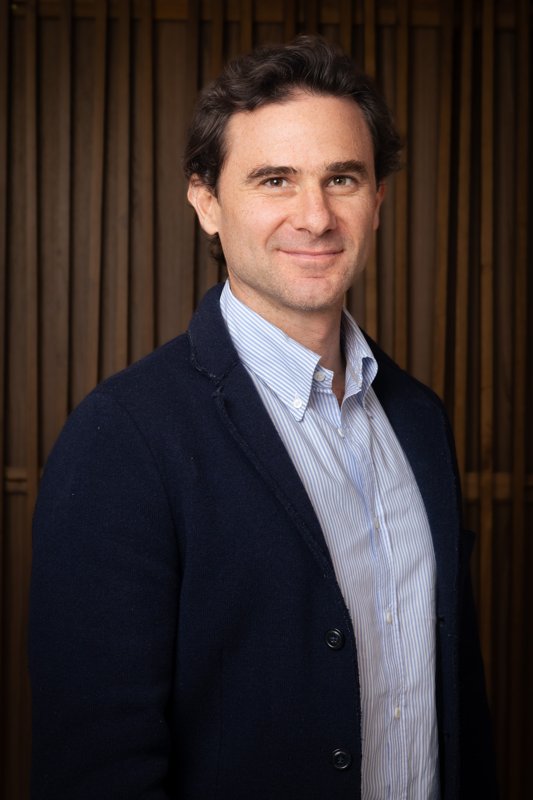
Colleagues at SciFi VC
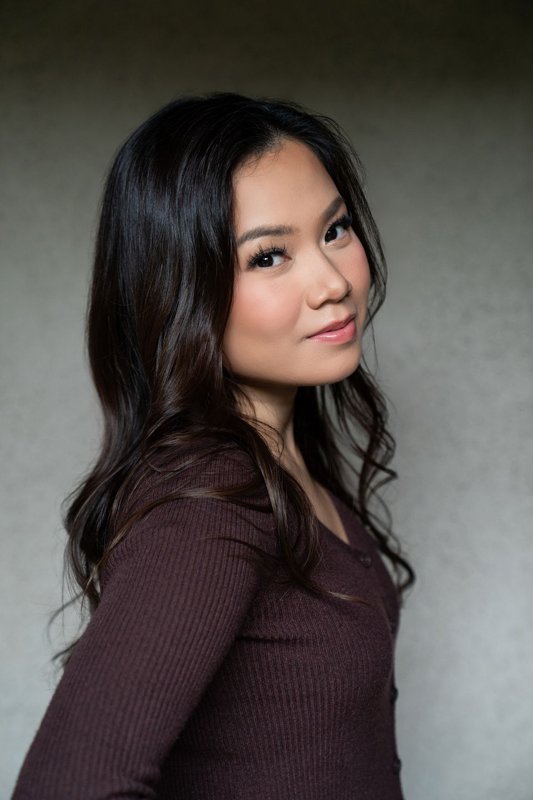
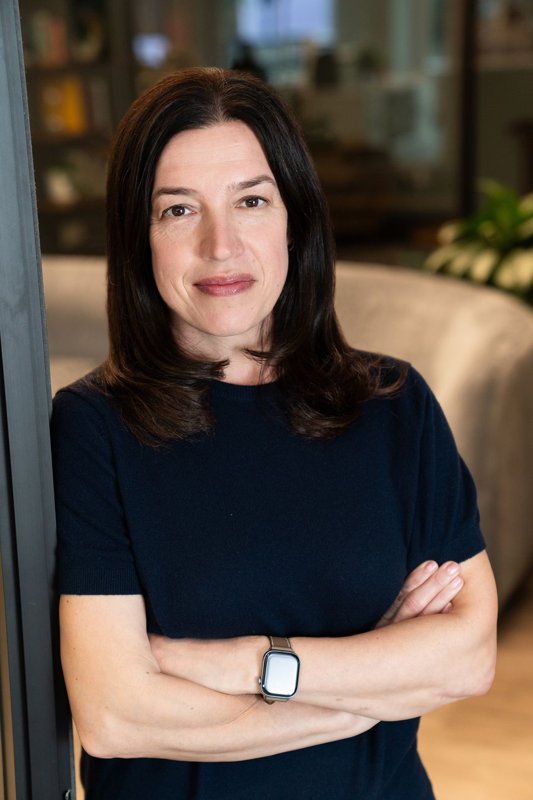
Network6
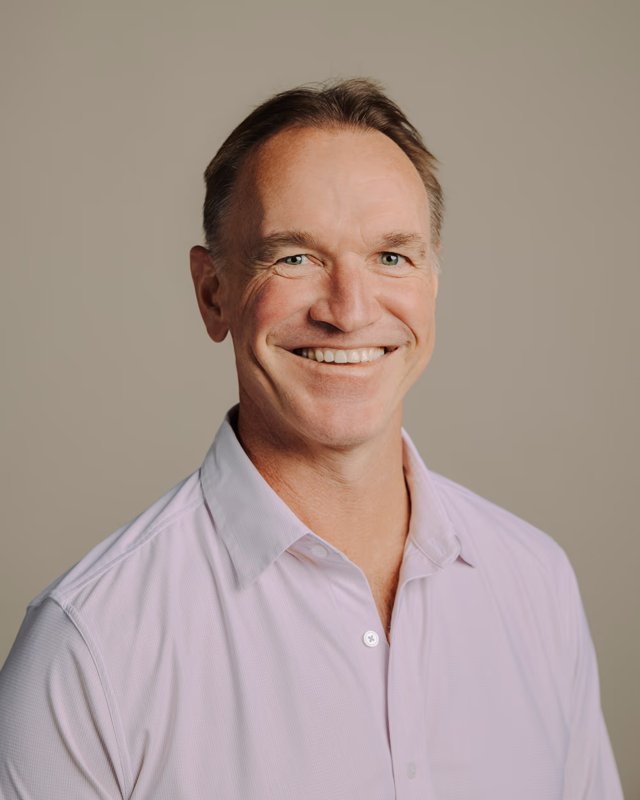
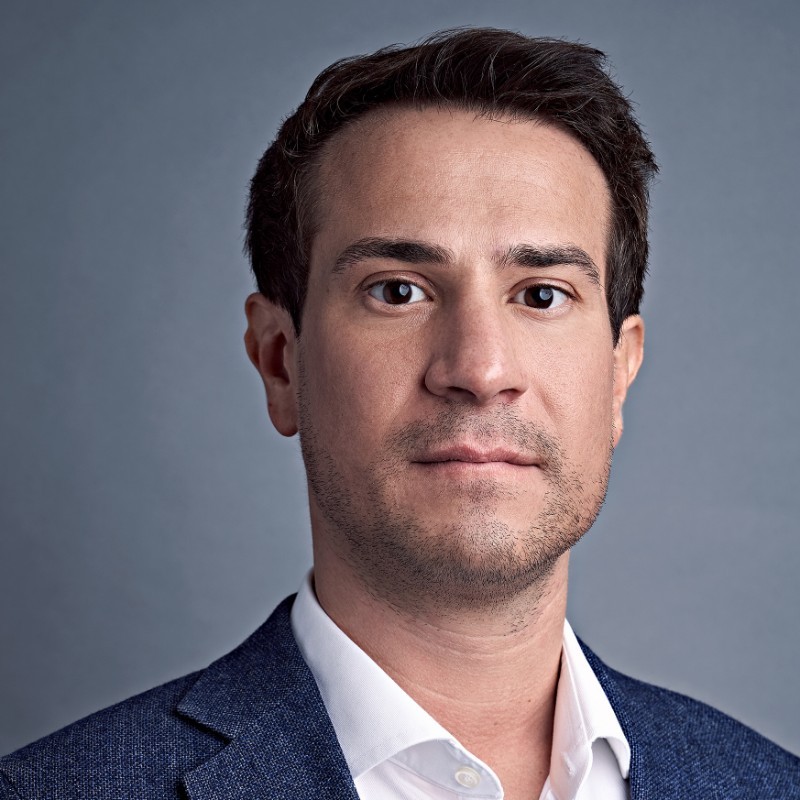
Investors connected to Max in public investor directories — a warm-intro map.
Frequently asked questions
- Who is Max Levchin?
- Max Levchin arrived in Chicago from Kyiv in 1991 as a refugee, and by 2002 had co-founded PayPal and built the fraud detection that let it survive long enough to reach a Nasdaq listing and an eBay acquisition. He founded Slide, sold it to Google, and in 2012 started Affirm on one constraint: a lender that charges no late fees and no compounding interest only makes money when borrowers repay. Affirm went public in 2021 and served 26.8 million people by 2026. He invests through SciFi VC, the fund he runs with his wife Nellie, funds the Levchin Prize for applied cryptography, and sits on the boards of Unity and The Coca-Cola Company.
- Where does Max Levchin work?
- Max Levchin is Founder & CEO of Affirm and Partner at SciFi VC and Co-founder at Glow and Co-founder & CTO at PayPal.
- What does Max Levchin invest in?
- Max Levchin invests in AI & Machine Learning, Deep Tech, Fintech, Hardware, Healthtech, Marketplaces.
- What check size does Max Levchin write?
- Max Levchin typically writes checks of $100K – $1M.
- What companies did Max Levchin found?
- Max Levchin founded Affirm, Glow, PayPal.
- What boards does Max Levchin sit on?
- Max Levchin holds tracked board seats at Yelp.
- What companies has Max Levchin invested in?
- Investments tracked here include Agentsync, Anchorage Digital, Anduril, AngelList, Aven, Balance, Beautylish, Black Ore Technologies, Bland AI, Blockstream, Breezeworks, Brex, and 101 more.
- Where did Max Levchin go to school?
- Max Levchin studied at University of Illinois Urbana-Champaign (BS, Computer Science).
- What awards has Max Levchin received?
- MIT Technology Review (2002): Named to the TR100 list of innovators under 35 and Innovator of the Year. EY (2013): Received the first EY Innovation Award. Levchin Prize for Real-World Cryptography (2015): Established and funds the annual $10,000 prize for cryptography with real-world impact, awarded at the IACR's Real World Crypto conference; recipients include Joan Daemen, Moxie Marlinspike and Trevor Perrin, and Whitfield Diffie and Martin Hellman. Carnegie Corporation of New York (2017): Named a Great Immigrant honoree. Forbes (2026): Listed on the Self-Made 250, Forbes' ranking of the greatest living self-made Americans.
- What has Max Levchin written?
- Max Levchin has 10 tracked posts on max.levch.in, including "To Build a Meritocracy", "Shamir Secret Sharing", "UIUC 2018 Commencement Address", and 7 more.
- What podcasts and interviews feature Max Levchin?
- Tracked appearances include "20VC: Max Levchin on hiring, post-mortems and scaling Affirm", "How I Built This: Affirm".
Founder mafias
Google mafia1,676
Also came through, then founded or led a company.


University of Illinois Urbana-Champaign mafia428
Also came through, then founded or led a company.

PayPal mafia129
Also came through, then founded or led a company.


Affirm mafia19
Also came through, then founded or led a company.


Evernote mafia10
Also came through, then founded or led a company.

Same school
Also attended University of Illinois Urbana-Champaign870
%20(1).png)
+ 864 more
Shared employers
Also worked at Unity Technologies57


+ 51 more
Also worked at Consumer Financial Protection Bureau11
+ 5 more
Also worked at Yahoo517
+ 511 more
Also worked at Google2,000

+ 1,994 more