 Fundraising Fox
Gitcoin
also invests · investor profileLafayette, US · Founded 2021 · Delaware corporation · 15 known investors
Find your way into Gitcoin
Sign up to see every warm intro you have to Gitcoin
- Paths you didn't know you had: your email and LinkedIn already hold routes to the Gitcoin team. We find them for you
- 2nd- and 3rd-degree connections: the friend-of-a-friend routes that take hours to manually find through your inbox or LinkedIn
- Answers now, not in days: momentum is everything in a raise. Skip asking around whether someone knows someone
Days of research, done the moment you sign in, with every route ranked by how warm it is.
Gitcoin operates a directory and knowledge base for funding mechanisms, platforms, and research in decentralized networks, Ethereum, and public goods. The platform documents quadratic funding, retroactive grants, and other onchain coordination mechanisms for distributing capital to open-source contributors and ecosystem projects.
Also known as Gitcoin DAO · Gitcoin Foundation · GTC
Founders & leadership
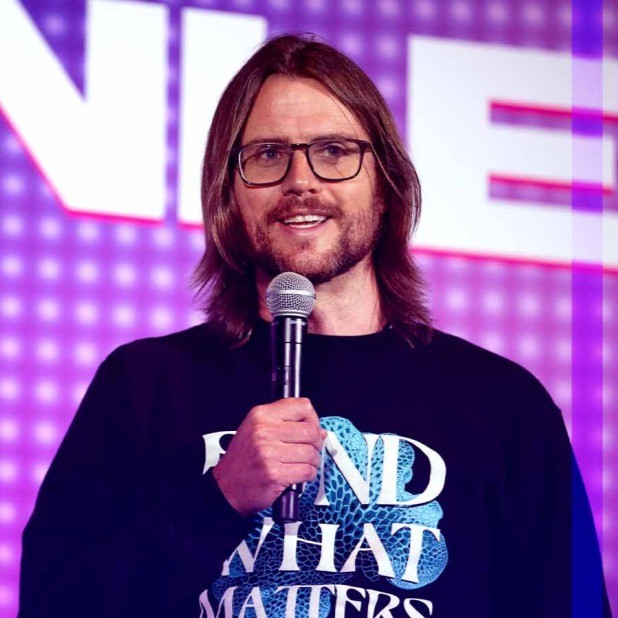
Gitcoin was founded in 2021 by Kevin Owocki and Kevin O..

Board

Investors · 15

How we know: ConsenSys Mesh's portfolio page · open dataset · 5k.vc investor directory · Not right? Tell us
How we know: Divergence's portfolio page · Not right? Tell us
How we know: Fenbushi Capital's portfolio page · Not right? Tell us
How we know: HTX Ventures (ex Huobi Ventures)'s portfolio page · Not right? Tell us

How we know: the VCSheet dataset · research · coincarp.com · open dataset · 5k.vc investor directory · Not right? Tell us
How we know: IOSG Ventures's portfolio page · Not right? Tell us

How we know: OKX Ventures's portfolio page · Not right? Tell us
How we know: Paradigm's portfolio page · the VCSheet dataset · research · coincarp.com · open dataset · 5k.vc investor directory · Not right? Tell us
How we know: deep research dossier: balaji-srinivasan · research · coincarp.com · Not right? Tell us

How we know: the VCSheet dataset · research · coincarp.com · Not right? Tell us
How we know: board seat on SEC Form D · Not right? Tell us
How we know: research · coincarp.com · Not right? Tell us
Also in the syndicate · 1
Reported raises · per SEC filings
Form D private placements$10.4M disclosed across 1 round · 2021
▶$10.4MraisedApr 2021 · 13 investors · Other TechnologyRule 506(b)
- Kyle WeissExecutive Officer, Director
- Michael KriakDirector
- Kevin OwockiExecutive Officer, Director
- Matt HuangDirector
- Offering amount
- $11.3M
- Amount sold
- $10.4M
- First sale
- Mar 2021
- Incorporated
- Corporation, Delaware, 2021
- Federal exemptions
- 06b
Source: SEC EDGAR Form D. Amounts as filed; amended filings shown once at their latest values.
Company profile
researched Aug 2026Gitcoin is a public goods funding organization and, in its current form, a reference library and directory covering funding mechanisms, platforms, case studies, and research relevant to Ethereum, open-source software, AI, stablecoins, crowdfunding, participatory budgeting, and decentralized networks. Its website organizes content into five curated categories — case studies, mechanisms, research, campaigns, and apps — each described as containing 120+ entries, with examples including quadratic funding, retroactive public goods funding, conviction voting, direct grants, streaming, and hybrid allocation models. Featured entries include the Ethereum Foundation ESP grants program and Protocol Guild, and featured campaigns include Protocol Guild and TheDAO Security Fund [0][1].
The Gitcoin Grants Program is a seasonal, quarterly grants initiative that combines crowdfunding with matching grants using quadratic funding. The published process involves raising a matching pool, an application period, a review period against eligibility criteria, a community crowdfunding period during which donations determine matching allocation, and distribution of donations plus matching funds after Sybil checks. Gitcoin states it keeps none of the funds raised. Ecosystems and communities can also run their own Community Rounds to allocate funding to projects in their ecosystem [4]. Gitcoin also maintains GTC, a governance token used for governance participation in the Gitcoin network and for staking in Gitcoin Passport to increase Sybil resistance, with grants staking listed as forthcoming [3].
Gitcoin describes its offering across three pillars: modular permissionless protocols, funding technology and tooling, and ongoing grants programming [2]. Past grantee examples cited by the company include EIP-1559, Optimism, Tornado Cash, Shamba Network, Coin Center, and developer educator Austin Griffith [4]. The organization has also run experiments outside grants software, notably the Public Goods Network (PGN), an L2 network intended to fund public goods via low transaction fees and Contract Secured Revenue, which was wound down [7].
Founding story
Gitcoin's own about page states the company was founded in 2017 with the goal of supporting development of open-source projects and monetizing open-source software through bounties. It cites Vitalik Buterin's 2018 quadratic funding paper as the mechanism basis, and the 2019 launch of Gitcoin Grants as the first implementation of quadratic funding [2]. Kevin Owocki is described in press coverage as Gitcoin's founder [6].
Business model
Gitcoin operates grants programs funded by matching pool contributions from ecosystem organizations and individuals rather than by taking a cut of funds distributed; the company states it keeps none of the funds raised in grants rounds, which flow directly to projects [4]. It has also offered software and tooling (Grants Stack, since wound down), identity infrastructure (Human Passport), an education program (KERNEL), and a governance token, GTC [6][3]. The current website solicits partnerships and community content submissions [0].
Sources do not describe a clear revenue model; coverage of the Grants Lab wind-down cites 'an unclear path towards profitability' as a reason for reducing operations, and notes that instead of requesting an H2 2025 budget from Gitcoin Governance, Grants Labs would spend remaining H1 funds on severance [6]. Grants operations are funded through matching pool contributions from partners and DAO budgets rather than fees on distributed funds [4][6].
Traction
Company-reported cumulative figures: 3,715 projects raised funds and $60,000,000+ distributed toward public goods as of 2024, with 4.2 million unique donations [2]; an earlier program page reports 3.8M unique donations and $50,000,000+ distributed [4]. The GTC token has a 100,000,000 total supply with roughly 1.5 million staked per the token center [3]; market data lists 96,384,728 GTC circulating and an approximately $8.7 million market capitalization [5]. The knowledge base cites 500+ contributing funding mechanism experts and 120+ entries in each of its five content categories [0].
Latest developments
In May 2024 Gitcoin confirmed PGN would shut down by June 2024 and focused on quarterly funding rounds plus software for third-party rounds [7]. Subsequently, Gitcoin announced the wind-down of Grants Lab and Grants Stack while keeping Human Passport, KERNEL, and a more focused Gitcoin Grants program, framed internally as a 'Gitcoin Community Edition' phase emphasizing community involvement, new GTC utilities, and governance-driven activations; GTC rose about 5% in 24 hours and 34% over seven days on the news to roughly a $20 million market cap at the time [6]. The current site features ongoing campaigns including Protocol Guild ($100M+ matching pool, ~190 contributors, May 2022–ongoing) and TheDAO Security Fund ($220M+ matching pool, starting January 2026), and publishes research authored by Kevin Owocki dated February–March 2026 [0][1].
▸Full profile — market position, technology, go-to-market, geography, history, risks & controversies
Market position
Gitcoin describes Gitcoin Grants as the largest and longest-running web3 grants program, running quarterly since 2019 [4]. Its site positions it as a reference library and directory for Ethereum and AI funding, listing peer or adjacent programs such as Ethereum Foundation ESP, Octant, Optimism RPGF, and Protocol Guild in its catalog [0]. Named matching partners include the Ethereum Foundation, Polygon, ENS, Coinbase, Optimism, Protocol Labs, Uniswap, Chainlink, a16z, Kraken, Binance, Celo, Schmidt Futures, The Graph, StarkWare, and Scroll [2][4].
Gitcoin's stated differentiators are combining crowdfunding with matching grants through quadratic funding, which weights breadth of community support over donation size, and using rounds as a discovery and signaling mechanism as well as a capital allocation tool. The company also states it retains none of the funds raised, passing donations and matching allocations directly to projects, and applies Sybil-resistance review before distribution [4]. The current site adds an editorially curated, community-editable directory of funding mechanisms and platforms as a distinct asset [0].
Technology
Gitcoin's approach centers on onchain capital allocation mechanisms: quadratic funding as the core matching algorithm, plus documented mechanisms including retroactive funding, conviction voting, streaming, and direct grants [0][4]. It has built or operated Grants Stack software for running rounds (being wound down), Allo Protocol, Gitcoin Passport / Human Passport for Sybil resistance with GTC staking, and previously the Public Goods Network L2 incorporating Contract Secured Revenue [0][3][6][7]. Distributed funds are checked for Sybil interference before matching payouts [4].
Go-to-market
Gitcoin reaches builders through open, seasonal application rounds for its quarterly Gitcoin Grants program and reaches funders by recruiting matching pool partners and by enabling ecosystems to run their own Community Rounds [4]. Distribution also runs through community contribution to its knowledge base, which invites public submissions and edits and cites a community of 500+ funding mechanism experts [0]. DAO governance forums and token-holder governance provide an additional channel for coordination and decision-making [3][7].
Two sides: early-stage and established builders — startups, solopreneurs, open-source maintainers, and web3 communities seeking funding — and funders such as ecosystem foundations, protocols, DAOs, and individual donors responsible for ecosystem growth who want to allocate capital via community rounds [4]. The directory targets researchers, mechanism designers, and grant program operators studying Ethereum and AI funding [0].
Geography
Market data lists the project's location as the United States [5]. Grantee examples span multiple regions, including a Latin America-based project (Web3 Beach) [4]. Sources do not otherwise detail offices or regional operations.
History
Per the company timeline: founded 2017 around open-source bounties; quadratic funding paper published 2018; Gitcoin Grants Program launched 2019 as the first quadratic funding implementation; and by 2024 the program had distributed over $60 million [2]. Gitcoin launched the Public Goods Network (PGN), an experiment to fund public goods through low transaction fees and Contract Secured Revenue; its shutdown was announced in January 2024 and the network was slated to be shut down by June 2024 after no viable takeover proposals emerged, with the team working with Zora, Base, and Optimism partners to help users bridge assets off the network [7]. In 2025 Gitcoin announced it would wind down its Grants Lab and the Grants Stack technology, citing an unclear path to profitability and a maturing L2 ecosystem, while retaining Human Passport, KERNEL, and a leaner Gitcoin Grants program described as a 'Gitcoin Community Edition' phase [6]. The current site presents Gitcoin primarily as a curated directory and knowledge base for funding mechanisms, with research posts dated into 2026 [0][1].
Risks & controversies
Gitcoin wound down the Public Goods Network in 2024; the post-mortem cites missing critical infrastructure at launch, high costs, expensive bridging fees, absence of a DEX, difficulty integrating Contract Secured Revenue, inability to compete for resources with established networks, and poor communication of the shutdown roadmap, which caused community friction. Gitcoin declined to hand PGN assets to third parties after no qualified takeover proposals emerged [7]. In 2025 the company announced the wind-down of Grants Lab and Grants Stack, citing an unclear path to profitability and a maturing L2 ecosystem, with remaining H1 funds directed to severance for affected employees [6]. GTC trades at a small market capitalization relative to its 100M supply [5].
Compiled by commissioned research from 8 cited public sources — announcements, filings, and press listed under research sources below.
Key figures
latest reportedCompany-reported or press-reported figures, each dated to when it was claimed — not independently audited.
Related companies · 10







Companies working in the same space as Gitcoin.
Timeline · 4
launches, deals, and filingsGitcoin announced it would shut down its Grants Lab and the Grants Stack technology, citing an unclear path to profitability and a maturing L2 ecosystem. Human Passport and KERNEL remain operational; remaining H1 2025 funds were allocated to severance rather than an H2 2025 governance budget, with the organization moving to a leaner, community-focused Gitcoin Grants program.
Gitcoin wound down PGN, its public-goods-funding network, after announcing the shutdown in January 2024 and receiving no viable takeover proposals over four months; users were directed to bridge assets off the network, with support from partners including Zora, Base and Optimism.
Strategic financing of $11.3M with investors including Paradigm, IDEO Colab Ventures, Balaji Srinivasan, The LAO, MetaCartel Ventures, 1kx and Electric Capital; valuation not disclosed.
$11.3M source ↗
Gitcoin Grants launched as the first implementation of quadratic funding; it has run quarterly since 2019.
Dated company events from announcements, filings, and press; legal rows summarize public dockets and regulator releases.
Legal entities · 1
corporate structureIn the news
▸Research sources · 8
primary sources listed
- Gitcoingitcoin.co · web
8 public sources were cited for this profile; the first-party ones are listed here.
Frequently asked questions
- What does Gitcoin do?
- Gitcoin runs quadratic-funding grants rounds and a directory of funding mechanisms for Ethereum and open-source public goods.
- Who founded Gitcoin?
- Gitcoin was founded by Kevin Owocki, Kevin O. in 2021.
- Who are Gitcoin's investors?
- Gitcoin's investors include BootNode, ConsenSys Mesh, Divergence, Fenbushi Capital, HTX Ventures (ex Huobi Ventures), IDEO CoLab Ventures, IOSG Ventures, OKX Ventures and 6 more.
- How much funding has Gitcoin raised?
- Gitcoin has disclosed $10.4M raised across 1 round.
- Where is Gitcoin headquartered?
- Gitcoin is headquartered in Lafayette, US.