 Fundraising Fox
Ollama
YC W21Palo Alto, US · Founded 2023 · 71 employees on LinkedIn · 26 known investors
Find your way into Ollama
Sign up to see every warm intro you have to Ollama
- Paths you didn't know you had: your email and LinkedIn already hold routes to the Ollama team. We find them for you
- 2nd- and 3rd-degree connections: the friend-of-a-friend routes that take hours to manually find through your inbox or LinkedIn
- Answers now, not in days: momentum is everything in a raise. Skip asking around whether someone knows someone
Days of research, done the moment you sign in, with every route ranked by how warm it is.
Ollama provides a platform for building with and running open-source language models locally and in the cloud. It enables developers to quickly deploy and access models like Claude Code and OpenClaw.
Also known as Infra · Name TBD · Name TBD, Infra
Founders & leadership· Y Combinator alumni (W21)
Ollama was founded in 2023 by Jeffrey Morgan and Michael Chiang.

Investors · 26
How we know: 49 Palms Ventures's portfolio page · research · ollama.com · Not right? Tell us
How we know: Y Combinator's founder network · Not right? Tell us

How we know: Essence Venture Capital's portfolio page · the VCSheet dataset · Y Combinator's founder network · Not right? Tell us

How we know: GTMfund's portfolio page · funding news · research · ollama.com · open dataset · 5k.vc investor directory · Y Combinator's founder network · Not right? Tell us
How we know: Leonis Capital's portfolio page · Not right? Tell us

How we know: research · ollama.com · Y Combinator's founder network · Not right? Tell us
How we know: Rogue Capital's portfolio page · Not right? Tell us
How we know: Sunflower Capital Management Fund's portfolio page · Not right? Tell us

How we know: Theory Ventures's portfolio page · funding news · under30ceo.com · research · open dataset · 5k.vc investor directory · Y Combinator's founder network · Not right? Tell us

How we know: Torch Capital's portfolio page · Not right? Tell us

How we know: the Y Combinator directory · funding news · press coverage · research · ollama.com · open dataset · 5k.vc investor directory · Not right? Tell us

How we know: press coverage · research · ollama.com · Y Combinator's founder network · Not right? Tell us

How we know: a partner's Signal profile · funding news · press coverage · open dataset · investor-profiles · research · ollama.com · open dataset · 5k.vc investor directory · Y Combinator's founder network · Not right? Tell us
How we know: Y Combinator's founder network · Not right? Tell us
How we know: Y Combinator's founder network · Not right? Tell us
How we know: research · ollama.com · Y Combinator's founder network · Not right? Tell us

How we know: Y Combinator's founder network · Not right? Tell us

How we know: a partner's Signal profile · Not right? Tell us
Also in the syndicate · 8
Funding
SEC filings, press & company announcements$130M disclosed across 2 of 4 rounds · 2023–2026
- $65MSeries BJul 2026 · 4 sources
Theory Ventures (lead), 49 Palms, 8VC, Aaron Katz, Benchmark, Garage Capital, GTMfund, Marianna Tessel, Michael Montano, Pace Capital, Quinn Slack, Solomon Hykes, Spencer Kimball, Y Combinator
Source ↗ - $65MraisedJul 2026 · 4 sourcesSource ↗
Source: company announcements and press reports — follow each round's link for the claim.
Company profile
researched Aug 2026Jeffrey (Jeff) Morgan and Michael Chiang founded Ollama in 2023 to make running open-weight language models on a laptop feel like using a package manager: `ollama run` downloads a model, applies a Modelfile/runtime configuration and exposes a consistent local API. The MIT-licensed project spread rapidly across macOS, Linux and Windows and became infrastructure behind editors, agent frameworks and tens of thousands of community integrations. Ollama does not train the underlying major models; it packages, quantizes, distributes and executes models from Meta, Google, DeepSeek, Qwen, Mistral, NVIDIA and others, subject to each model's own license. From 2025 it added optional cloud models so users can preserve the same local tools/API while offloading models too large for personal hardware; desktop apps, model sharing and agent launch flows broadened the product. Current individual pricing is Free ($0) and Pro ($20/month or $200/year), with Pro offering larger hosted models, three concurrent cloud models, 50x free usage and private-model upload/sharing; Team/Enterprise offerings are separately described/quoted. Local inference can keep prompts/data on the user's hardware, while cloud use is governed by Ollama's privacy/security terms and the company says cloud does not retain model inputs. In July 2026 Ollama announced a $65m Theory Ventures-led Series B, following a $15m Benchmark-led A; total funding is $88m, implying about $8m of seed/early capital. Investors include Benchmark, Theory, 8VC, YC, Garage, Pace, 49 Palms, GTMfund and prominent infrastructure founders. TechCrunch reported nearly nine million users/developers and a team of roughly 14 around the round. Risks include upstream model license/provenance, insecure exposure of local APIs, malicious model artifacts, resource/driver compatibility, cloud compute economics and competition from LM Studio, llama.cpp, vLLM, Docker Model Runner and hyperscaler/model-provider APIs.
Founding story
Morgan and Chiang saw open models becoming capable but difficult to install, quantize and operate, and created a Docker-like command-line experience that hid hardware/runtime complexity without forcing data into a hosted API.
Business model
Open-source local runtime with freemium hosted open-model cloud and paid individual/team/enterprise services.
Pro annual/monthly subscriptions, cloud compute/usage allocation and private model features; Team/Enterprise subscriptions/contracts, while local runtime and public models remain free.
Traction
July 2026 reporting: nearly 9m users/developers; company says cloud token volume has more than doubled monthly on average. Pricing page cites 40,000+ community integrations. Exact active/paid users, revenue and cloud gross margin are private.
Latest developments
Raised $65m Series B, scaled hosted access to large open models such as GLM, Nemotron, DeepSeek, Kimi and MiniMax, and integrated agent launch workflows while maintaining the free local runtime.
▸Full profile — market position, technology, go-to-market, geography, history, ownership, risks & controversies
Market position
De facto mainstream local-LLM developer runtime, competing with LM Studio, llama.cpp, GPT4All, Jan, vLLM/SGLang, Docker and direct hosted inference APIs.
Exceptionally simple developer experience and one interface spanning private local inference and optional hosted large open models, with a vast integration ecosystem and model-library distribution.
Technology
Cross-platform model runtime built on optimized inference backends, model manifests/Modelfiles and quantized artifacts, local HTTP/OpenAI-compatible APIs, GPU/CPU hardware detection, registry/distribution, cloud routing and desktop/CLI interfaces.
Go-to-market
Open-source GitHub/community and word of mouth, model library/search, easy CLI/desktop onboarding, integrations with IDEs/agent frameworks, free cloud access and paid upgrades.
Developers, researchers, privacy-conscious individuals and teams building agents/apps with open-weight models locally or in hosted cloud.
Individual developers and power users; AI application/agent teams; enterprises needing governed open-model access; educators/researchers and offline/edge users.
Geography
Globally downloaded open-source software and cloud service; headquarters/team in the San Francisco Bay Area with users across all major desktop/server environments.
History
Founded/public project 2023; rapid GitHub adoption and cross-platform releases; ~$8m early capital and $15m Benchmark A; introduced hosted cloud-model preview September 2025; Free/Pro monetization and desktop/agent flows; $65m Theory-led B July 2026, bringing total to $88m.
Ownership
Private; founders/employees and Benchmark, Theory Ventures, 8VC, Y Combinator, Garage Capital, Pace Capital, 49 Palms, GTMfund plus individual infrastructure executives/founders.
Risks & controversies
Third-party model licenses/terms and training-data provenance; untrusted model artifacts and prompt/tool supply-chain risk; local API/network misconfiguration; inconsistent results/hardware compatibility; cloud data/privacy and compute costs; dependence on upstream open-model releases; crowded commoditizing inference ecosystem.
Compiled by commissioned research from 9 cited public sources — announcements, filings, and press listed under research sources below.
Key figures
latest reportedCompany-reported or press-reported figures, each dated to when it was claimed — not independently audited.
Related companies · 10








Companies working in the same space as Ollama.
Pricing
as listed Aug 2026Public list pricing as researched from the company's own pricing pages; negotiated and enterprise terms vary.
Legal entities · 2
corporate structureIn the news
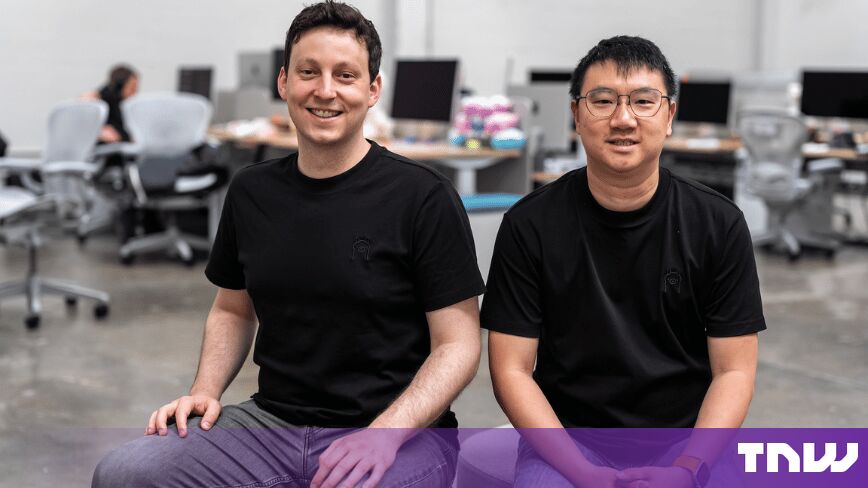 Ollama raises $65M for its open-model AI platformthenextweb.com · Jul 2026
 Popular open source AI developer tool Ollama raises $65M, grows to nearly 9M users | TechCrunchtechcrunch.com · Jul 2026
 Ollama: all aboard open models · Ollama Blogollama.com · Jul 2026
▸Research sources · 9
primary sources listed
- All aboard open modelsOllama · company funding announcement
- Ollama Series B releaseOllama / Business Wire · company press release
- Ollama cloud models previewOllama · company blog
- OllamaOllama · company website
- Ollama pricingOllama · pricing page
- Ollama cloud documentationOllama · documentation
- Ollama YC profileY Combinator · accelerator profile
- Ollama privacy policyOllama · legal policy
9 public sources were cited for this profile; the first-party ones are listed here.
Frequently asked questions
- What does Ollama do?
- Open-source local AI runtime and hosted open-model platform that lets developers download, package and run language/multimodal models through a simple CLI, desktop apps and API.
- Who founded Ollama?
- Ollama was founded by Jeffrey Morgan, Michael Chiang in 2023.
- Who are Ollama's investors?
- Ollama's investors include 49 Palms Ventures, Angel Collective Opportunity Fund, Essence Venture Capital, GTMfund, Leonis Capital, Pace Capital, Rogue Capital, Sunflower Capital Management Fund and 10 more.
- How much funding has Ollama raised?
- Ollama has disclosed $130M raised across 2 of its 4 known rounds.
- Where is Ollama headquartered?
- Ollama is headquartered in Palo Alto, US.