Fundraising Fox
The 100 Most Notable People in Venture
Our editorial selection of the investors who shape venture capital, ranked by public prominence — not by returns. See our methodology.
- 1Marc AndreessenCoinbase VenturesAndreessen Horowitz
Marc Andreessen co-created the Mosaic browser and co-founded Netscape before starting Andreessen Horowitz with Ben Horowitz in 2009. His essay 'Why Software Is Eating the World' became a defining thesis for the last decade of technology investing, and his firm backed Facebook, GitHub, Coinbase, and Databricks. He sits on the board of Meta and remains one of the most-followed voices in venture capital.
Midas ×12 - 2Peter ThielMithril Capital ManagementFounders Fund
Peter Thiel co-founded PayPal, wrote Facebook's first outside check, and started Founders Fund, whose portfolio includes SpaceX, Stripe, Palantir, and Anduril. He chairs Palantir Technologies and is known for contrarian views on competition, progress, and politics. His startup handbook Zero to One remains one of the most widely read books in the field.
Midas ×162 books - 3Ben HorowitzA.Capital VenturesAndreessen Horowitz
Ben Horowitz ran Loudcloud and Opsware through the dot-com crash and sold the company to HP for $1.6 billion before co-founding Andreessen Horowitz in 2009. He led the firm's investments in companies such as Okta, Databricks, and Nicira, and writes about management with a signature habit of opening chapters with rap lyrics. His two books on leadership and company culture are staples of startup reading lists.
Midas ×152 books - 4Reid HoffmanVillage GlobalGreylock Partners
Reid Hoffman co-founded LinkedIn, served on PayPal's founding team, and has been a partner at Greylock since 2009, where his investments included Airbnb and Aurora. A prolific author and podcast host, he has written extensively on networks, scaling, and artificial intelligence, and co-founded the AI startups Inflection AI and Manas AI. In 2026 he announced he would leave Microsoft's board to spend more time on Manas AI's drug-discovery work.
Midas ×124 books - 5Vinod KhoslaKhosla VenturesBreakthrough Energy Ventures
Vinod Khosla co-founded Sun Microsystems, spent 18 years at Kleiner Perkins, and started Khosla Ventures in 2004 to back what he calls high-risk, high-consequence technology bets. His firm was the first venture investor in OpenAI, a position that put him at No. 1 on the 2026 Forbes Midas List. He is a longtime advocate for technology-driven solutions in climate, healthcare, and AI.
Midas ×19 - 6Bill Gurley
Bill Gurley spent over two decades as a general partner at Benchmark, where his board seats included Uber, GrubHub, Zillow, and Stitch Fix. A former Wall Street research analyst, he is known for his long-form blog Above the Crowd and for public warnings about late-stage valuations and market structure. He stepped back from active investing at Benchmark in 2020 and now co-hosts the BG2 podcast with Brad Gerstner.
Midas ×15 - 7Paul GrahamY CombinatorLiquid Ventures
Paul Graham co-founded Viaweb, one of the first web application companies, and sold it to Yahoo before starting Y Combinator in 2005 with Jessica Livingston, Robert Morris, and Trevor Blackwell. YC's batch model reshaped how early-stage startups are funded, producing companies like Airbnb, Stripe, and Dropbox. His essays on startups, programming, and ambition are among the most-read writing in the technology industry.
4 books - 8Sam AltmanOpenAI Startup FundSam Altman
Sam Altman leads OpenAI, the company behind ChatGPT, which closed a $122 billion round in March 2026 at an $852 billion valuation — the largest private round in history. He dropped out of Stanford at 19 to found Loopt in Y Combinator's first batch (sold to Green Dot for $43.4M in 2012), ran Y Combinator as president from 2014 to 2019, and co-founded OpenAI with Elon Musk and others in 2015, becoming CEO in 2019 — surviving a five-day board ouster in November 2023. He also co-founded Hydrazine Capital and Tools for Humanity (World), was Reddit's CEO for eight days, and has made some of tech's boldest personal bets: $375M into fusion startup Helion and the entire $180M seed of longevity company Retro Biosciences.
- 9Masayoshi SonSoftBank GroupSoftBank Vision Fund
Masayoshi Son founded SoftBank in 1981 and turned an early $20 million stake in Alibaba into one of the most profitable investments ever made. Through the $100 billion Vision Fund he rewrote the scale of venture investing, backing hundreds of companies including Arm, DoorDash, and Coupang alongside high-profile losses like WeWork. In recent years he has concentrated SoftBank's firepower on artificial intelligence, including major commitments to OpenAI and the Stargate data-center project.
- 10Chamath PalihapitiyaSocial Capital Partnership
Chamath Palihapitiya led Facebook's growth team before founding Social Capital in 2011, which he later converted into a holding company that no longer takes outside capital. He popularized the SPAC boom of 2020-2021, taking Virgin Galactic and others public, and co-hosts the All-In podcast. He continues to run Social Capital and, more recently, the industrial AI company 8090.
- 11Michael MoritzSequoia Heritage
Michael Moritz began as a Time journalist who wrote an early book on Apple, then joined Sequoia Capital in 1986 and backed Google, Yahoo, PayPal, and Stripe. He served as one of Sequoia's leaders alongside Doug Leone before stepping away from the firm in 2023 after nearly four decades. He now advises Sequoia Heritage, the independent wealth-management office he helped launch, and funds large-scale philanthropy through Crankstart.
Midas ×212 books - 12John DoerrNewSchools Venture FundKleiner Perkins
John Doerr joined Kleiner Perkins in 1980 after selling chips at Intel and went on to back Google, Amazon, Netscape, and Sun Microsystems. He brought Andy Grove's OKR goal-setting system to Google and turned it into the management bestseller Measure What Matters. Now the firm's chairman, he devotes much of his time to climate technology and funded Stanford's school of sustainability.
Midas ×202 books - 13Fred WilsonCoinbase VenturesFREEFLOW
Fred Wilson co-founded Union Square Ventures in 2003 after a decade at Flatiron Partners, anchoring New York's venture scene through investments in Twitter, Etsy, Tumblr, and Coinbase. His daily blog AVC, written for more than two decades, made him one of the most transparent practitioners in the business. USV's thesis-driven approach to networks and, later, crypto has kept him on the Forbes Midas List into 2026.
Midas ×14 - 14Mary MeekerKPCB DigitalBond Capital Management
Mary Meeker was Morgan Stanley's lead internet analyst during the 1990s boom, earning the nickname 'Queen of the Net,' and her annual Internet Trends report became required reading across the industry. She moved into venture capital at Kleiner Perkins in 2010 and founded the growth firm BOND in 2019, backing companies such as Stripe, Canva, and Plaid. Her 2025 report on AI trends extended a research franchise that has run for three decades.
Midas ×15 - 15Doug LeoneSequoia Capital
Doug Leone joined Sequoia Capital in 1988 and ran the firm for more than two decades, first with Michael Moritz and later as sole global managing partner, expanding it into India, China, and Southeast Asia. His own investments included ServiceNow, Aruba Networks, and Nubank. He handed firm leadership to Roelof Botha in 2022 but continues to invest, ranking in the top ten of the Forbes Midas List in 2025 and 2026.
Midas ×16 - 16Roelof Botha
Roelof Botha was PayPal's CFO before joining Sequoia Capital in 2003, where he backed YouTube, Square, MongoDB, and Unity and led the firm as steward from 2022. In November 2025 he passed the steward role to Alfred Lin and Pat Grady, staying on in an advisory capacity, and in June 2026 he joined the board of SpaceX shortly after its IPO. He appeared near the top of the Forbes Midas List throughout the 2020s.
Midas ×17 - 17David SacksCraft Ventures
David Sacks was PayPal's COO, founded Yammer and sold it to Microsoft for $1.2 billion, and co-founded Craft Ventures in 2017 to invest in SaaS and marketplace startups. He served as the White House AI and crypto czar from late 2024 until March 2026, when his special-government-employee term ended, and now co-chairs the President's Council of Advisors on Science and Technology while remaining a Craft partner. He is also a co-host of the All-In podcast.
Midas ×21 book - 18Naval RavikantKamal Ravikant CapitalStellar Development Foundation
Naval Ravikant co-founded AngelList, the platform that turned angel investing into infrastructure through syndicates and rolling funds. His own early checks included Twitter, Uber, and Postmates, and his writing and podcast appearances on wealth, leverage, and happiness have earned him an audience well beyond Silicon Valley. He remains AngelList's chairman and continues to invest personally.
- 19Keith RaboisKhosla VenturesStellar Development Foundation
Keith Rabois held early executive roles at PayPal, LinkedIn, and Square before building an investing record that spans Stripe, Airbnb, DoorDash, and Faire. He co-founded the proptech company Opendoor and has alternated between Khosla Ventures and Founders Fund, returning to Khosla as a managing director in early 2024. He is known for strong opinions on startup talent density and for championing Miami as a tech hub.
Midas ×6 - 20Josh KushnerThrive Capital
Josh Kushner founded Thrive Capital in 2010 and built it into one of the defining growth firms of the era, with concentrated positions in OpenAI, Stripe, and Databricks and an early win in Instagram. He also co-founded the health insurer Oscar Health. Thrive's outsized OpenAI bet helped put him on the 2026 Forbes Midas List at No. 33.
Midas ×1 - 21Jason CalacanisLAUNCH
Jason Calacanis sold Weblogs Inc. to AOL, then became one of the best-known angel investors of his generation with early checks in Uber, Robinhood, and Calm. Through LAUNCH he runs accelerator programs, syndicates, and funds, and his podcast This Week in Startups has run since 2009. He wrote Angel, a how-to guide for new startup investors, and co-hosts the All-In podcast.
1 book - 22Harry StebbingsProject EuropeStride VC
Harry Stebbings started The Twenty Minute VC podcast as a teenager in London and turned its network into 20VC, a venture firm whose limited partners include dozens of unicorn founders. His 2024 fund closed at $400 million, split across seed and Series A investing in Europe and the US. He is one of the most visible advocates for European startups and interviews the industry's leading investors and founders weekly.
- 23Garry TanInitialized AssociatesInitialized Superclass
Garry Tan wrote the first check to Coinbase and backed Instacart and Flexport as co-founder of Initialized Capital, after earlier co-founding Posterous and designing at Palantir. He became Y Combinator's president and CEO in January 2023, winding down the Continuity growth fund and refocusing the accelerator on early-stage AI companies. He ranked No. 6 on the 2023 Forbes Midas List, his last appearance before returning to YC.
Midas ×5 - 24Jessica LivingstonY CombinatorLiquid Ventures
Jessica Livingston co-founded Y Combinator in 2005 and shaped its culture, running operations and famously screening founders for determination and honesty during interviews. Her book Founders at Work, a collection of candid interviews with startup founders, became a classic of the genre. She also created YC's Startup School and co-hosts the Social Radars podcast with fellow YC partner Carolynn Levy.
1 book - 25Ron ConwaySV AngelLiquid Ventures
Ron Conway has been Silicon Valley's archetypal super angel since the 1990s, backing Google, PayPal, Facebook, Twitter, and Airbnb, first through Angel Investors LP and then through SV Angel. He is also a fixture in San Francisco civic life, organizing the tech industry around local politics and philanthropy. In April 2026 he disclosed a cancer diagnosis and stepped back from day-to-day work, with his sons Topher and Ronny leading the firm.
Midas ×11 - 26Alfred LinSequoia Capital
A partner at Sequoia Capital since 2010, Alfred Lin led the firm's investments in Airbnb, DoorDash, and OpenAI. Before venture he was COO and chairman of Zappos through its sale to Amazon. He topped the Forbes Midas List in 2021, 2024, and 2025.
Midas ×14 - 27Brad GerstnerAltimeter HimalayaAltimeter Vesuvius
Brad Gerstner founded Altimeter Capital in 2008 and runs it as a crossover firm spanning public and private technology investing, with signature positions in Snowflake and ByteDance. He also launched Invest America, the initiative behind federally seeded investment accounts for American children, and co-hosts the BG2 podcast with Bill Gurley.
Midas ×3 - 28Chris Dixona16z cryptoAndreessen Horowitz
Chris Dixon co-founded the startups SiteAdvisor and Hunch before joining Andreessen Horowitz in 2013, where he built and leads a16z crypto, the firm's multi-billion-dollar web3 arm. His investments include Coinbase, Uniswap, and OpenSea, and he ranked first on the Midas List in 2022. His book Read Write Own makes the case for blockchain-based networks as the internet's next architecture.
Midas ×81 book - 29Elad GilCosmic 20202Cosmic 20251
Elad Gil is the most prominent of venture's solo general partners, raising billion-dollar funds under his Gil Capital and Cosmic-Aleph vehicles to back companies including Stripe, Airbnb, Coinbase, Anduril, and Perplexity. A former Google and Twitter executive, he co-founded Color Health and wrote the High Growth Handbook. He ranked sixth on the 2026 Midas List.
Midas ×21 book - 30Aileen LeeScreendoorGold House Ventures
Aileen Lee founded the seed-stage firm Cowboy Ventures in 2012 after more than a decade at Kleiner Perkins. She coined the term 'unicorn' for billion-dollar startups in a 2013 essay and co-founded All Raise, the nonprofit working to advance women in venture capital.
Midas ×3 - 31Jim BreyerBreyer CapitalAccel-KKR
Jim Breyer made one of venture capital's defining investments when he led Accel's 2005 Series A in Facebook. He founded Breyer Capital in 2006 and later relocated the firm to Austin, where he invests across AI, healthcare, and fintech.
Midas ×15 - 32Peter FentonBenchmark
Peter Fenton has been a general partner at Benchmark since 2006, following early years at Accel. His investments and board seats have included Twitter, Yelp, New Relic, Elastic, and Zuora, making him one of the longest-tenured recurring names on the Midas List.
Midas ×18 - 33Sarah TavelBenchmark
Sarah Tavel joined Benchmark in 2017 as the firm's first woman general partner, backing Chainalysis, Hipcamp, and 11x, and transitioned to a venture partner role in 2025 to spend more time exploring AI. Earlier she was a product leader at Pinterest and a partner at Greylock. She writes a widely read newsletter on marketplaces, consumer products, and AI.
- 34Danny RimerIndex Ventures
Danny Rimer opened Index Ventures' London office in 2002 and its San Francisco office a decade later, becoming known for consumer and design-led investments including Figma, Discord, Etsy, and Glossier. Figma's 2025 IPO helped propel him back up the Midas List in 2026.
Midas ×19 - 35Hemant TanejaGC VentureGold House Ventures
Hemant Taneja became CEO of General Catalyst in 2021 and has reshaped it into a global investment company focused on AI, healthcare, defense, energy, and financial services. His investments include Stripe, Samsara, Gusto, Ro, and Anduril, and he has co-written several books, most recently The Transformation Principles.
Midas ×104 books - 36Neil ShenHongShan Capital Group
Neil Shen founded Sequoia Capital China in 2005 and now leads HongShan, the independent firm it became in 2023 and one of Asia's largest venture investors. A co-founder of Ctrip and Home Inns before turning to venture, he backed Meituan, Pinduoduo, and ByteDance, and has ranked first on the Forbes Midas List more times than any other investor.
Midas ×15 - 37Yuri MilnerDST Global
Yuri Milner founded DST Global, whose large late-stage checks into Facebook and Twitter, taken without board seats, changed how growth investing works. The firm went on to back Alibaba, WhatsApp, Spotify, and Stripe. Milner also co-founded the Breakthrough Prize and wrote Eureka Manifesto, a short book on humanity's role in the universe.
Midas ×81 book - 38Chase ColemanTiger Global Management
Chase Coleman founded Tiger Global Management in 2001 as a descendant of Julian Robertson's Tiger Management and built it into a technology investor spanning public equities and private companies. Its venture business deployed capital at unprecedented pace into companies including Facebook, JD.com, Stripe, and Databricks.
- 39Philippe LaffontCoatue Management
Philippe Laffont, a Tiger Management alumnus, founded Coatue in 1999 and grew it into a technology-focused crossover firm investing from early venture rounds through public markets. Coatue's portfolio has included Snap, Spotify, ByteDance, and OpenAI, and Laffont has become a visible voice on AI's investment cycle.
- 40Lee FixelAddition
Lee Fixel ran Tiger Global's private investing business for 13 years, where he championed Flipkart, Peloton, and a generation of Indian startups, before founding Addition in 2020. The New York firm raised more than $5 billion across its first four funds to back early and growth-stage companies, while Fixel kept his famously low public profile.
Midas ×14 - 41Katie HaunHaun Ventures
Katie Haun spent over a decade as a federal prosecutor, leading some of the government's first cryptocurrency cases, before becoming a general partner at Andreessen Horowitz. She founded Haun Ventures in 2022 with one of the largest debut fundraises ever led by a woman, and closed another $1 billion in 2026 to invest across crypto, AI agents, and financial infrastructure.
- 42Sarah GuoSarah GuoConviction
Sarah Guo left a general partner role at Greylock to found Conviction in 2022, an early-stage firm built around the thesis of 'software 3.0' and AI-native companies. Her investments include Mistral AI and Harvey, and she co-hosts the AI podcast No Priors. She debuted on the Midas List in 2026.
Midas ×1 - 43Nat FriedmanAI GrantC2 Investments
Nat Friedman co-founded Xamarin and served as CEO of GitHub, where he oversaw the launch of Copilot. With Daniel Gross he ran the venture fund NFDG and the AI Grant program, backing startups including Perplexity and Safe Superintelligence, before Meta recruited the pair in mid-2025 to help lead Meta Superintelligence Labs, where he heads AI products.
- 44Daniel GrossAI GrantC2 Investments
Daniel Gross sold his startup Cue to Apple, became Y Combinator's first AI-focused partner, and founded the talent accelerator Pioneer before co-founding Safe Superintelligence with Ilya Sutskever in 2024. He invested alongside Nat Friedman through their fund NFDG until July 2025, when he left SSI to join Meta Superintelligence Labs.
- 45Joe Lonsdale8VCFormation8 Partners
Joe Lonsdale co-founded Palantir at twenty-one, then Addepar and OpenGov, and has spent the decade since building 8VC into a firm with more than $6 billion under management — its seventh fund closed at $1.5 billion in July 2026 on a thesis he calls the American AI Industrial Revolution. The through-line is markets other investors avoid: intelligence agencies, municipal governments, wealth managers, defence. He runs the firm from Austin, co-founded the University of Austin and the Cicero Institute, and has made the Forbes Midas List six times.
Midas ×6 - 46Alexis OhanianInitialized SuperclassMarathon
Alexis Ohanian co-founded Reddit in 2005 and the venture firm Initialized Capital before launching Seven Seven Six in 2020 to invest at the earliest stages. He has become one of the most prominent backers of women's sports, including as a founding owner of Angel City FC, and wrote Without Their Permission about building on the open internet.
1 book - 47Tim DraperDraper Goren BlockchainDraper Dragon
Tim Draper, a third-generation venture capitalist, co-founded Draper Fisher Jurvetson and now invests through Draper Associates. He is known for early bets on Hotmail, Skype, Tesla, and Twitch, a headline-making 2014 purchase of US Marshals-auctioned bitcoin, and Draper University, his entrepreneurship school in San Mateo.
1 book - 48Steve CaseThe Case FoundationRevolution
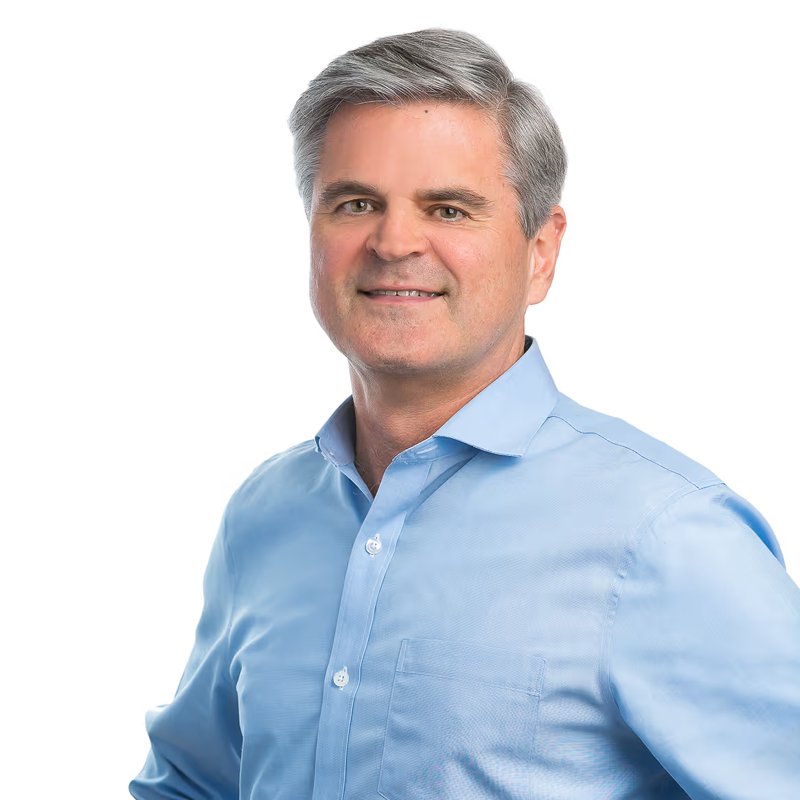
Steve Case co-founded America Online, the company that brought much of the United States online, and led it through the AOL-Time Warner merger. He now chairs Revolution, the Washington, DC investment firm whose Rise of the Rest funds back startups outside the coastal tech hubs, a thesis he has laid out in two books.
2 books - 49Brad FeldTechstarsHigh Alpha
Brad Feld co-founded the Boulder venture firm Foundry and the accelerator Techstars, after earlier partnerships at Mobius Venture Capital and years of angel investing. He is equally known for his writing, including Venture Deals, the standard reference on term sheets, and a long-running blog on startups, community building, and mental health.
2 books - 50Mike Maples JrFloodgate
Mike Maples Jr co-founded Floodgate with Ann Miura-Ko and helped establish seed investing as its own category, writing early checks into Twitter, Twitch, Lyft, and Okta. A former software executive at Tivoli Systems and Motive, he co-wrote Pattern Breakers on why startups that break with the past succeed, and hosts the Pattern Breakers podcast.
Midas ×81 book - 51Ann Miura-KoFloodgate
Ann Miura-Ko co-founded Floodgate with Mike Maples Jr. and helped define the modern seed-stage playbook, backing Lyft and Refactor Capital-era startups before micro-VC was mainstream. A Stanford PhD who lectures at the university, she is a frequent voice on what she calls 'thunder lizard' startups and co-founded the nonprofit All Raise to support women in venture.
Midas ×8 - 52Kirsten GreenForerunner PartnersForerunner JPGT
Kirsten Green founded Forerunner Ventures in 2010 and built it into the definitive consumer-focused venture firm, with early bets on Dollar Shave Club, Warby Parker, Glossier, Chime and Hims & Hers. A former equity analyst covering retail, she pairs consumer-behavior research with early-stage investing and has been a fixture on the Forbes Midas List for seven straight years.
Midas ×10 - 53Mamoon HamidSocial Capital PartnershipKleiner Perkins
Mamoon Hamid joined Kleiner Perkins in 2017 to lead the storied firm's return to early-stage form, after co-founding Social Capital and backing Slack, Box and Intercom in their earliest rounds. His Series A bet on Figma, acquired attention through its 2025 IPO, helped carry him to the top tier of the Forbes Midas List, where he ranked 12th in 2026.
Midas ×11 - 54Jeremy LiewLightspeed Venture Partners
Jeremy Liew wrote the first venture check into Snapchat and backed Affirm and The Honest Company as Lightspeed's original consumer specialist, having joined the firm in 2006. He stepped back from making new investments in 2021 and remains a partner, focused on supporting his existing portfolio and mentoring Lightspeed's next generation of consumer investors.
Midas ×7 - 55Josh KopelmanFirst Round Capital
Josh Kopelman founded First Round Capital in 2004 and turned it into a model for institutional seed investing, with early checks into Uber, Square, Roblox and Notion. A serial entrepreneur who sold Half.com to eBay, he built First Round's community-driven approach to supporting founders and remains a partner at the Philadelphia-based firm.
Midas ×11 - 56Steve JurvetsonThreshold VenturesFuture Ventures
Steve Jurvetson co-founded Future Ventures in 2019 to make long-horizon bets on deep tech, after two decades at Draper Fisher Jurvetson where he backed SpaceX, Tesla and Hotmail. He is one of the longest-serving board members at SpaceX, and his frontier-tech portfolio returned him to the Forbes Midas List in 2026 at number 62.
Midas ×7 - 57Balaji SrinivasanBalaji SrinivasanPronomos Capital
Balaji Srinivasan is a prolific angel investor and technologist who served as a general partner at Andreessen Horowitz and as Coinbase's chief technology officer. Author of The Network State, he now runs The Network School, a residential program for founders in Forest City, Malaysia, while continuing to write seed checks into crypto infrastructure and AI tooling. He has no institutional fund, operating instead as a solo angel and essayist.
1 book - 58Kai-Fu LeeSinovation DisruptSinovation Ventures
Kai-Fu Lee founded Sinovation Ventures in 2009 after leading Google China, and became one of the most influential voices bridging the US and Chinese technology worlds. He remains chairman of the firm while running 01.AI, the large-language-model company he founded in 2023, and has written widely read books on artificial intelligence including AI Superpowers and AI 2041.
2 books - 59Jenny LeeGranite AsiaTemasek
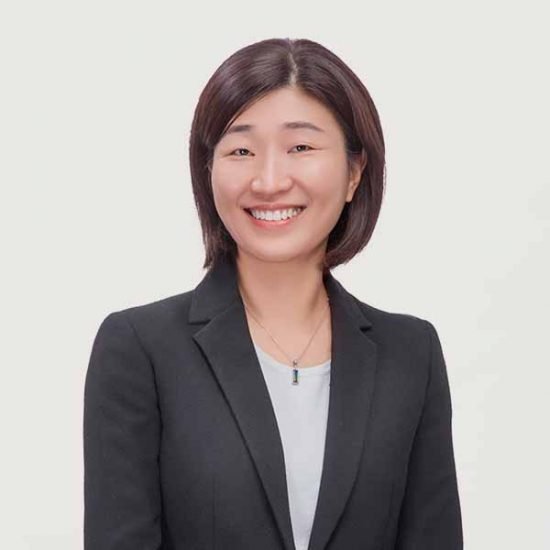
Jenny Lee is a senior managing partner at Granite Asia, the Singapore-based multi-asset investment platform that emerged from GGV Capital's 2024 split. A former jet engineer, she built her reputation on early bets in Chinese and Southeast Asian technology companies and was among the first women to reach the upper ranks of the Forbes Midas List, appearing on it every year from 2020 through 2025.
Midas ×14 - 60Hans TungNotable CapitalGold House Ventures
Hans Tung is a managing partner at Notable Capital, the US-focused firm formed when GGV Capital split its American and Asian operations in 2024. Known for early investments in Xiaomi, Airbnb, StockX and Affirm, he reached as high as number 3 on the Forbes Midas List in 2021 and hosts a popular podcast interviewing founders on company building.
Midas ×14 - 61Niklas ZennströmAtomico
Niklas Zennström co-founded Skype and then built Atomico into one of Europe's largest venture firms, backing companies like Klarna, Supercell and Stripe from its London base. The Swedish entrepreneur remains Atomico's CEO and founding partner, and has spent two decades arguing that Europe can produce technology companies of global scale.
- 62Micky MalkaRibbit Capital
Micky Malka founded Ribbit Capital in 2012 as a fintech-only venture firm and backed Coinbase, Robinhood, Nubank and Revolut before financial technology was fashionable. The Venezuelan-born investor held the number 2 spot on the Forbes Midas List for three consecutive years from 2022 to 2024, one of the most sustained runs near the top of the ranking.
Midas ×6 - 63Fred EhrsamCoinbase VenturesParadigm
Fred Ehrsam co-founded Coinbase and later Paradigm, the crypto investment firm he started with Matt Huang in 2018. He stepped back from Paradigm's day-to-day management in 2023 and now serves as its senior advisor while running Nudge, the neurotechnology startup he founded to build non-invasive brain interfaces using focused ultrasound.
- 64Matt HuangParadigmStarkware
Matt Huang co-founded Paradigm with Fred Ehrsam in 2018 and leads the firm as its sole managing partner, building one of the largest investment platforms dedicated to crypto and frontier technology. A former Sequoia partner who made an early personal investment in ByteDance, he has steered Paradigm's positions in Uniswap, Optimism and other core crypto infrastructure.
- 65Brian Singerman
Brian Singerman spent over 15 years as a general partner at Founders Fund, where he led the firm's investments in Anduril, Oscar Health and The Boring Company, before moving to partner emeritus at the end of 2024. In 2025 he co-founded GPx with Quiet Capital's Lee Linden, closing a $500 million debut fund backed by Peter Thiel that invests in emerging seed managers and doubles down on their breakout companies.
Midas ×11 - 66Trae StephensFounders Fund
Trae Stephens is a partner at Founders Fund and a co-founder and chairman of defense technology company Anduril, whose rise to a $61 billion valuation propelled him to number 7 on the 2026 Forbes Midas List. A former Palantir engineer, he focuses on national security and government-facing startups and has become one of the leading voices for Silicon Valley's return to defense work.
Midas ×3 - 67Delian AsparouhovFounders Fund
Delian Asparouhov is a partner at Founders Fund and the co-founder and chairman of Varda Space Industries, which manufactures pharmaceuticals in orbit and returns them to Earth in reentry capsules. The Bulgarian-born MIT dropout and former Khosla Ventures principal is among the most visible younger investors in venture, known for an unfiltered online presence and a focus on aerospace and hard tech.
- 68Shaun MaguireSequoia Capital
Shaun Maguire is a partner at Sequoia Capital, where he has led or co-led the firm's investments in SpaceX, xAI, The Boring Company and stablecoin platform Bridge, acquired by Stripe in 2025. A Caltech physics PhD who previously worked at DARPA-backed ventures and GV, he jumped to number 22 on the 2026 Forbes Midas List and is one of the most outspoken investors on X.
Midas ×2 - 69Jess LeeSequoia Capital
Jess Lee is a partner and chief product officer at Sequoia Capital, where she focuses on early-stage consumer companies and built the firm's product-minded approach to founder programs like Arc. Previously the CEO of fashion community Polyvore, acquired by Yahoo, she co-founded All Raise to expand the ranks of women in venture capital.
- 70Pat GradySequoia Capital
Pat Grady leads Sequoia Capital's growth investing practice and has backed a run of enterprise software standouts including Snowflake, ServiceNow, HubSpot, Zoom and OpenAI. A seven-year regular on the Forbes Midas List, he climbed to number 25 in 2026 as Sequoia's growth portfolio rode the AI wave.
Midas ×7 - 71Jim GoetzSequoia Capital
Jim Goetz is a partner at Sequoia Capital best known for leading the firm's investment in WhatsApp, where a roughly $60 million position returned $3.5 billion in Facebook's 2014 acquisition. He stepped back from Sequoia's leadership in 2017 but continues to invest and serve on boards, with a long enterprise track record spanning AdMob, GitHub and Palo Alto Networks.
Midas ×10 - 72Luciana LixandruAccelSequoia Capital
Luciana Lixandru became Sequoia Capital's first Europe-based partner in 2020 and anchors the firm's London office, after making her name at Accel with early investments in UiPath, Miro and Deliveroo. The Romanian-born investor has appeared on the Forbes Midas List every year since 2021, reaching the top 20 in 2023 and 2024.
Midas ×6 - 73David SzeNorthern Light Venture CapitalGreylock Partners
David Sze joined Greylock in 2000 and led the firm's defining consumer bets, including Facebook, LinkedIn, Pandora, Roblox and Discord, serving as senior managing partner from 2012 to 2017. He has since transitioned to advisory partner, continuing to sit on boards including Discord and Nextdoor while stepping back from new investing.
Midas ×7 - 74Michael SeibelPi Campus
Michael Seibel spent more than 12 years at Y Combinator, serving as CEO of its accelerator and as a group partner who worked with over a thousand startups, before transitioning to partner emeritus in 2025 with an eye toward public-sector work. He co-founded Justin.tv, which became Twitch, and Socialcam, and became one of the most recognizable startup advisors of his generation through YC's videos and office hours.
- 75Paul BuchheitStandard Capital
Paul Buchheit created Gmail as Google employee number 23 and coined the company's 'Don't be evil' motto before becoming an angel investor in over 200 startups and a longtime Y Combinator partner. In 2025 he left YC to co-found Standard Capital with Dalton Caldwell, a Series A firm that closed a $425 million debut fund and invests on standardized, founder-friendly terms.
- 76Dalton CaldwellStandard Capital
Dalton Caldwell spent more than a decade at Y Combinator as a managing director and group partner, running admissions and advising thousands of founders across 25 batches. A founder himself (imeem, App.net), he stepped back to emeritus status in 2025 to launch Standard Capital, an AI-native Series A firm, with Gmail creator Paul Buchheit and Bryan Berg. His YC office-hours videos on pivots and 'tarpit ideas' have become standard viewing for early-stage founders.
- 77Cyan BanisterLong Journey Ventures
Cyan Banister was an early angel investor in Uber, SpaceX and Postmates, and later became the first female investing partner at Founders Fund. She now invests through Long Journey Ventures, the early-stage firm she runs with Arielle Zuckerberg and Lee Jacobs, which closed its fourth fund in 2025. Largely self-taught after a period of homelessness in her youth, she is known for backing unconventional founders on instinct honed outside traditional networks.
- 78Arlan HamiltonBackstage Capital
Arlan Hamilton founded Backstage Capital in 2015 while she was homeless, building it into a fund that has backed roughly 200 startups led by women, people of color and LGBTQ+ founders. She has become one of venture's most visible advocates for underestimated founders through her podcast and two books on wealth-building. Backstage has deployed close to $30 million across its portfolio since inception.
2 books - 79Ashton KutcherSound Ventures
Ashton Kutcher turned early angel bets on Uber, Airbnb and Spotify into a full venture career, co-founding Sound Ventures with Guy Oseary in 2015 and later raising a dedicated AI fund that backed OpenAI and Anthropic. In July 2026 he announced he was leaving Sound, where he remains an adviser, to start a new firm with former NFX partner Morgan Beller focused on early-stage AI infrastructure, energy and deep tech.
- 80Serena WilliamsSerena Ventures
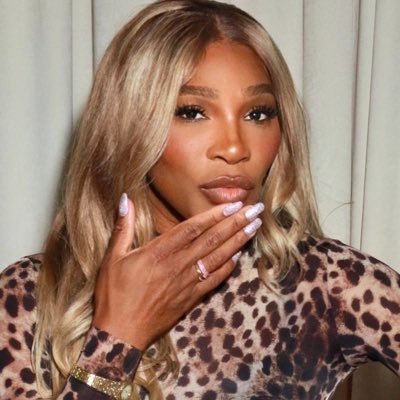
After a tennis career that included 23 Grand Slam singles titles, Serena Williams formalized years of angel investing by raising a $111 million debut fund for Serena Ventures in 2022. The firm, whose day-to-day operations are led alongside partner Beth Ferreira, has backed more than 85 early-stage companies including Esusu and the women's basketball league Unrivaled, with an emphasis on founders overlooked by traditional venture. She has said the majority of her portfolio founders are women or people of color.
1 book - 81Martin CasadoAndreessen Horowitz
Martin Casado co-founded software-defined networking pioneer Nicira, which VMware bought for $1.26 billion in 2012, before joining Andreessen Horowitz in 2016 to lead its infrastructure practice. He has become one of the firm's most prominent voices on AI, backing companies such as Cursor, World Labs, Thinking Machines and Safe Superintelligence. He holds a PhD in computer science from Stanford and began his career at Lawrence Livermore National Laboratory.
Midas ×1 - 82Katherine BoyleAndreessen Horowitz
Katherine Boyle co-founded Andreessen Horowitz's American Dynamism practice, which invests in defense, aerospace, manufacturing, energy and other companies tied to the national interest. A former Washington Post reporter, she previously co-led the seed practice at General Catalyst, where she invested in the earliest rounds of Anduril and Vannevar Labs. Her essays on dynamism and seriousness in American institutions have shaped how a generation of founders talks about building for the state.
- 83Andrew ChenAndrew ChenAndreessen Horowitz
Andrew Chen led Uber's rider growth team before joining Andreessen Horowitz, where he is a general partner investing in consumer startups, games and AI, including through the firm's Speedrun accelerator. He is the author of The Cold Start Problem, a widely read book on network effects, and has published essays on growth and marketplaces at andrewchen.com for two decades. His newsletter and writing made him one of the best-known thinkers on user acquisition before he ever wrote a check.
1 book - 84Erik TorenbergVillage GlobalAndreessen Horowitz
Erik Torenberg has spent a decade building the same thing four different ways: Product Hunt, where he was the first employee; Village Global, the seed firm backed by Bezos, Gates, Hoffman and Schmidt that he co-founded in 2017; On Deck, the cohort-based founder community; and Turpentine, the podcast network he started in 2023. In April 2025 Andreessen Horowitz acquired Turpentine and made him a general partner, where he invests and runs the firm's marketing and ecosystem organisations. His co-investments include Figma, Flexport, Applied Intuition and Replit.
- 85Logan BartlettRedpoint Ventures
Logan Bartlett is a managing director at Redpoint Ventures, where he invests in enterprise software and works with companies across the firm's early and growth funds. He previously invested at Battery Ventures and has become widely known as host of The Logan Bartlett Show, one of the most-listened-to interview podcasts in venture. His conversations with founders and investors double as a public record of how the software industry thinks.
- 86Tomasz TunguzRedpoint OmegaRedpoint Ventures
Tomasz Tunguz spent well over a decade at Redpoint Ventures before founding Theory Ventures in 2022, a research-driven firm focused on data, AI and software infrastructure. His daily blog at tomtunguz.com, full of benchmarks and SaaS metrics analysis, has been required reading for software founders for years. He co-authored Winning with Data with former Looker CEO Frank Bien.
1 book - 87Mark SusterBlizzardUpfront Ventures
Mark Suster sold two startups, the second to Salesforce, before joining Upfront Ventures in 2007 and eventually leading the firm as managing partner. He is one of Los Angeles tech's most active champions, hosting the annual Upfront Summit and writing the long-running blog Both Sides of the Table. His posts on fundraising and board dynamics have been passed between founders for more than fifteen years.
- 88Hunter WalkScreendoorHomebrew
Hunter Walk led consumer product management at YouTube before co-founding the seed firm Homebrew with Satya Patel in 2013, backing companies such as Chime and Plaid. The pair later converted Homebrew to an evergreen, self-funded model and co-founded Screendoor, which invests in new fund managers. His blog on startups and venture has made him one of the most approachable voices in seed investing.
- 89Aydin SenkutFelicis Ventures
Aydin Senkut was Google's first product manager and international sales lead before founding Felicis in 2006, growing it from a solo angel operation into a firm managing over $4 billion. Felicis was an early backer of Adyen, Shopify, Canva and Notion, and roughly 65 of its portfolio companies have crossed $1 billion valuations. The Istanbul-born investor has appeared on the Forbes Midas List thirteen consecutive years.
Midas ×13 - 90Neil MehtaPrint GalleryRaton Pass Investments
Neil Mehta co-founded Greenoaks in 2012 after starting his career at D.E. Shaw, building the firm around concentrated, long-hold positions in companies like Coupang, Stripe, Databricks and Rippling. Greenoaks backed Wiz in every growth round before its $32 billion sale to Google in 2026, and Mehta sat on Coupang's board through its $60 billion IPO. Outside investing, he funds a nonprofit that preserves historic San Francisco storefronts through affordable leases.
Midas ×5 - 91Mike SpeiserSutter Hill Ventures
Mike Speiser practices a rare incubation style of venture at Sutter Hill, where he has co-created companies inside the firm and served as their first CEO — most famously Snowflake, which he ran from 2012 to 2014 before its record-setting 2020 software IPO. His other incubations include Pure Storage, Sigma Computing, Observe and Lacework. The model has made him a fixture near the top of the Midas List, including a No. 5 finish in 2021.
Midas ×5 - 92Jeff HoringInsight Partners
Jeff Horing co-founded Insight Partners in 1995 and helped grow it into one of the world's largest software investors, with roughly $90 billion under management. A former Warburg Pincus and Goldman Sachs investor, his personal deal sheet includes Wix, Qualtrics, monday.com, Shutterstock and Darktrace. He remains one of the quietest major figures in venture, rarely giving interviews despite three decades of top-tier returns.
Midas ×2 - 93Scott SandellNew Enterprise Associates (NEA)
Scott Sandell joined NEA in 1996, became managing general partner in 2016, and now serves as the firm's executive chairman and chief investment officer. His investments span Salesforce, Workday, Tableau and Robinhood, with Cloudflare — where he is lead independent director — standing out as his defining deal. A Dartmouth and Stanford GSB graduate, he is also a public advocate for employing people with disabilities, drawing on his own experience with dyslexia.
Midas ×18 - 94Navin ChaddhaNeythri Futures FundMayfield India
Navin Chaddha leads Mayfield, where he has backed 18 companies that reached the public markets, including Lyft, Poshmark and HashiCorp. A former entrepreneur who co-founded VXtreme (acquired by Microsoft), he has appeared on the Midas List 18 times, ranking in the top five for several consecutive years. He now directs much of Mayfield's energy toward AI through its $250 million AI Start seed program.
Midas ×18 - 95Byron DeeterBessemer Venture Partners
Byron Deeter is Bessemer's best-known cloud investor, with 13 portfolio IPOs including Twilio, DocuSign, HashiCorp and ServiceTitan, plus stakes in Canva and Anthropic. A SaaS founder himself — his company Trigo was acquired by IBM in 2004 — he helped create Bessemer's State of the Cloud reports and the Cloud 100 ranking. He led ServiceTitan's Series A a decade before its roughly $9 billion IPO in late 2024.
Midas ×10 - 96Jeremy LevineBessemer Venture Partners
Jeremy Levine has spent over two decades at Bessemer's New York office, where he led the firm's Series A investment in Pinterest and earlier backed LinkedIn, Yelp, Shopify and MindBody. In recent years he has focused on companies built outside the United States or serving international customers, such as Korean fintech Toss. He is one of the longest-tenured consumer and internet investors on the East Coast.
Midas ×10 - 97Neeraj AgrawalBattery Ventures
Neeraj Agrawal has invested in enterprise software at Battery Ventures since 2000, with exits including AppDynamics' $3.7 billion sale to Cisco, Marketo's acquisition by Adobe, and IPOs for Nutanix and Coupa. He is an eleven-time Midas List honoree and one of Boston's most recognizable SaaS investors. His 'T2D3' framework for how software companies should scale revenue became a standard planning tool across the industry.
Midas ×11 - 98Laela SturdyCapitalG
Laela Sturdy runs CapitalG, Alphabet's independent growth fund, which she took over as managing partner in 2023 — becoming the first woman to lead an Alphabet investing arm. Her portfolio includes Stripe, Duolingo, Gusto, UiPath and Whatnot, and under her leadership the fund has leaned into AI-era growth companies. She joined CapitalG shortly after its founding, following operating roles at Google.
- 99Theresia GouwAspect VenturesWestbound Equity Partners
Theresia Gouw became Accel's first female partner during 15 years at the firm, then co-founded Aspect Ventures in 2014 and Acrew Capital in 2019, which now manages about $1.7 billion. Her early bets included Trulia, Imperva and Forter, and Forbes has recognized her as venture capital's first woman billionaire. She is a seven-time Midas List honoree and chairs the education nonprofit DonorsChoose.
Midas ×9 - 100Fabrice GrindaTriton Liquid FundDN Capital
Fabrice Grinda built and sold three companies — including OLX, one of the world's largest classifieds sites — before co-founding FJ Labs with Jose Marin to invest at high volume in marketplaces. With well over a thousand investments including Alibaba, Coupang and Flexport, he ranks among the most prolific angel-style investors anywhere. He shares his marketplace theses and macro views prolifically on his personal blog and podcast.
- 101Elon Musk
Elon Musk has founded or led five of the defining companies of the modern era — Zip2, PayPal, SpaceX, Tesla and xAI. SpaceX absorbed xAI in February 2026 at a combined $1.25 trillion, the largest merger ever recorded, and listed on Nasdaq that June as SPCX in the largest IPO in history, raising $75 billion and closing its first day at roughly a $2.1 trillion valuation. Born in Pretoria, he emigrated at seventeen, took physics and economics degrees at Penn and left Stanford's PhD programme after two days to start Zip2, which Compaq bought for $307 million. He has been Tesla's chief executive since 2008 and also founded Neuralink and The Boring Company.
- 102Jeff BezosBezos Earth Fund
Jeff Bezos founded Amazon in a Bellevue garage in 1994 and built it into one of the world's most valuable companies, inventing AWS along the way and turning cloud infrastructure into the profit engine that funded everything else. He stepped down as CEO in 2021 to focus on Blue Origin, his space company, and the Bezos Earth Fund, a $10B climate commitment. His personal investing through Bezos Expeditions included an early seed cheque in Google.
- 103Mark Zuckerberg
Mark Zuckerberg started Facebook in a Harvard dorm room in 2004 and still controls the company, now Meta, two decades later through a dual-class structure that survived every governance challenge. He made two of the best acquisitions in technology history — Instagram for about $1B in 2012 and WhatsApp for about $19B in 2014 — and has since committed tens of billions to Reality Labs and to open-weight AI through the Llama models.
- 104Steve Jobs
Steve Jobs co-founded Apple with Steve Wozniak in 1976, was forced out in 1985, founded NeXT and bought Pixar, then returned in 1997 to lead one of the most complete corporate turnarounds ever recorded — shipping the iMac, iPod, iPhone and iPad and taking Apple from near-bankruptcy toward the world's most valuable company. His $5M purchase of Pixar returned about $7.4B when Disney acquired it in 2006. He died in 2011.
- 105Steve Wozniak
Steve Wozniak designed and hand-built the Apple I and Apple II, the machine that turned a hobbyist kit company into the business that defined personal computing and carried Apple to its 1980 IPO. He was the engineering half of the original partnership with Steve Jobs, left day-to-day work at Apple in 1985, and has spent the decades since on education, speaking and occasional ventures including Wheels of Zeus and Efforce.
- 106Bill GatesBreakthrough Energy VenturesBill & Melinda Gates Foundation
Bill Gates co-founded Microsoft with Paul Allen in 1975 and ran it as CEO until 2000, making it the dominant software company of the PC era and himself the world's richest person for much of the 1990s and 2000s. He now chairs the Gates Foundation, the largest private foundation in the world, and founded Breakthrough Energy Ventures to fund deep-decarbonisation technology that conventional venture capital will not touch.
- 107Paul Allen
Paul Allen co-founded Microsoft with Bill Gates in 1975, wrote the Altair BASIC interpreter that started the company, and left in 1983 after a Hodgkin's lymphoma diagnosis while retaining a stake that made him a lifelong billionaire. He founded Vulcan Inc. to manage his investments and philanthropy, funded SpaceShipOne — the first privately built craft to reach space — and the Allen Institute for Brain Science and AI2. He died in 2018.
- 108Larry Page
Larry Page co-founded Google with Sergey Brin at Stanford in 1998, inventing the PageRank algorithm that made web search work and building the advertising business that funded it. He served as CEO twice, most notably from 2011 to 2015, then created the Alphabet holding structure to separate Google from the moonshot bets and stepped back from the CEO role in 2019. He has since funded electric aviation through Kitty Hawk and Opener.
- 109Sergey Brin
Sergey Brin co-founded Google with Larry Page in 1998 out of a Stanford research project on link-based ranking, and served as President of Alphabet until 2019. He ran Google X, the moonshot lab that produced Waymo and Google Glass, and returned to hands-on technical work at Google in the generative-AI era, contributing to the Gemini effort. He funds Parkinson's research and Global Health through Catalyst4.
- 110Jensen Huang
Jensen Huang co-founded NVIDIA in 1993 at a Denny's in San Jose and has been its only CEO, a tenure of more than three decades that took the company from a graphics-chip startup to the most valuable company in the world on the back of the AI buildout. His decision to invest in CUDA a decade before deep learning needed it is the canonical example of a platform bet that looked wasteful until it did not.
- 111Jan Koum
Jan Koum co-founded WhatsApp in 2009 and sold it to Facebook in 2014 for about $19B, still among the largest acquisitions of a venture-backed private company ever. He grew up in Ukraine and emigrated to California on food stamps, worked at Yahoo for nine years alongside co-founder Brian Acton, and famously ran WhatsApp with no advertising and a skeleton engineering team serving hundreds of millions of users. He left Facebook in 2018.
- 112Brian Acton
Brian Acton co-founded WhatsApp with Jan Koum in 2009 and sold it to Facebook in 2014 for about $19B, after both had been rejected for jobs at Facebook and Twitter. He left in 2017, forfeiting a reported $850M in unvested equity, and put $50M into founding the Signal Foundation, which he chairs — making the encrypted messenger a nonprofit rather than a venture-funded company. He publicly urged users to delete Facebook in 2018.
- 113Drew HoustonDropbox VenturesDCM Ventures
Drew Houston co-founded Dropbox in 2007 after forgetting a USB stick on a bus, took it through Y Combinator, and led it to a 2018 IPO and hundreds of millions of users. He famously turned down a nine-figure acquisition approach from Steve Jobs, who called Dropbox a feature rather than a product. He remains CEO and invests through Dropbox Ventures.
- 114Arash Ferdowsi
Arash Ferdowsi co-founded Dropbox with Drew Houston in 2007, dropping out of MIT to do it, and served as CTO through the company's rise to a 2018 IPO. He led engineering during the years when Dropbox's sync reliability was its entire competitive moat against far larger incumbents. He stepped back from the CTO role in 2016 and now invests in early-stage companies.
- 115Jack Dorsey
Jack Dorsey co-founded Twitter in 2006 and Square (now Block) in 2009, and is one of very few founders to have taken two companies public and served as CEO of both simultaneously. He was ousted from Twitter in 2008, returned as CEO in 2015, and left in 2021; he sold Twitter to Elon Musk in 2022. He now runs Block and funds Bitcoin and open-protocol work, including Bluesky and Nostr.
- 116Evan WilliamsObvious Ventures
Evan Williams has founded three companies that shaped online publishing: Blogger, which he sold to Google in 2003; Twitter, which he co-founded in 2006 and led as CEO from 2008 to 2010; and Medium, which he founded in 2012 and ran until 2022. He also founded the podcasting company Odeo, out of which Twitter emerged as a side project. He invests through Obvious Ventures.
- 117Biz Stone
Biz Stone co-founded Twitter in 2006 with Jack Dorsey, Evan Williams and Noah Glass, having worked with Williams at Blogger and Odeo beforehand. He shaped Twitter's early voice and public identity, left in 2011 to co-found the Q&A app Jelly and the search company Super, and returned to Twitter in 2017 in a culture-focused role. He was an early investor in Beyond Meat and Pinterest.
- 118Evan Spiegel
Evan Spiegel co-founded Snapchat at Stanford in 2011 and turned down a reported $3B acquisition offer from Facebook in 2013, a decision vindicated by Snap's 2017 IPO. He has been CEO throughout, defending the company through Instagram's direct cloning of Stories and pivoting Snap toward augmented reality hardware with Spectacles. He remains one of the youngest people ever to lead a company to a multi-billion-dollar public listing.
- 119Bobby Murphy
Bobby Murphy co-founded Snapchat with Evan Spiegel at Stanford in 2011 and wrote the first version of the app, serving as CTO through the 2017 IPO and beyond. He led the engineering organisation during the years Snap defended itself against Instagram's cloning of Stories, and drove the company's push into augmented reality and the Lens developer platform.
- 120Kevin Systrom
Kevin Systrom co-founded Instagram in 2010 and sold it to Facebook eighteen months later for about $1B with thirteen employees — one of the highest per-employee exits in technology. He stayed to run Instagram until 2018, growing it past a billion users, then left over autonomy disputes. He later co-founded the AI news app Artifact with Mike Krieger, which was acquired by Yahoo in 2024.
- 121Mike Krieger
Mike Krieger co-founded Instagram with Kevin Systrom in 2010 and sold it to Facebook for about $1B in 2012, staying on as CTO until 2018. He co-founded the AI news reader Artifact, sold to Yahoo in 2024, and became Chief Product Officer at Anthropic the same year. He is a Brazilian-born Stanford Symbolic Systems graduate.
- 122Garrett CampExpaExpansive Ventures
Garrett Camp founded StumbleUpon, sold it to eBay for $75M in 2007 and bought it back, then conceived Uber in 2008 and co-founded it with Travis Kalanick — a stake worth billions at Uber's 2019 IPO. He founded the startup studio Expa in 2013 to build and fund new companies, and has backed Aero, Reserve and dozens of others.
- 123Travis Kalanick
Travis Kalanick co-founded Uber in 2009 and scaled it to operations in more than 70 countries before being forced out as CEO in 2017 after a series of governance and culture crises. He had previously founded Scour and Red Swoosh, the latter sold to Akamai in 2007. He now runs CloudKitchens, a ghost-kitchen real-estate company, and invests through 10100.
- 124Logan GreenAutotech Ventures
Logan Green co-founded Zimride in 2007 and pivoted it into Lyft in 2012, serving as CEO through the 2019 IPO and stepping down in 2023. He built the company on a ridesharing idea he formed while riding matatus in Zimbabwe, and positioned Lyft as the friendlier alternative to Uber throughout the ride-hailing wars. He sits on eBay's board and is a venture partner at Autotech Ventures.
- 125John Zimmer
John Zimmer co-founded Zimride with Logan Green in 2007 and Lyft in 2012, serving as President through the 2019 IPO and stepping down in 2023. A Cornell hotel-school graduate and former Lehman Brothers analyst, he shaped Lyft's hospitality-led brand — the pink moustache, the front-seat ride — as deliberate differentiation from Uber.
- 126Reed Hastings
Reed Hastings co-founded Netflix in 1997 and led it through two of the hardest pivots any public company has executed: DVD-by-mail to streaming, and licensed content to original production. He had previously founded Pure Software and sold it for about $750M in 1997. He stepped down as co-CEO in 2023 and became Executive Chairman; his book No Rules Rules documented Netflix's culture deck.
- 127Marc Randolph
Marc Randolph co-founded Netflix with Reed Hastings in 1997 and served as its first CEO, running the company through the DVD-by-mail launch before handing the role to Hastings in 1999 and leaving in 2003. He has since become one of the most active startup mentors and authors in technology, writing That Will Never Work about Netflix's founding, and advises and invests in early-stage companies.
- 128Pierre Omidyar
Pierre Omidyar founded eBay in 1995 as a weekend project called AuctionWeb and took it public in 1998, creating one of the first profitable consumer internet businesses and one of the earliest proofs that marketplaces could scale without owning inventory. He founded Omidyar Network in 2004, pioneering the blended philanthropic-and-venture model, and funded First Look Media and The Intercept.
- 129Gordon Moore
Gordon Moore co-founded Intel with Robert Noyce in 1968 and served as CEO from 1975 to 1987, presiding over the shift from memory to microprocessors that made Intel the defining semiconductor company. His 1965 observation that transistor counts would double roughly every two years became Moore's Law, the planning assumption for half a century of computing. He was one of the traitorous eight who left Shockley to found Fairchild Semiconductor. He died in 2023.
- 130Robert Noyce
Robert Noyce co-invented the integrated circuit, co-founded Fairchild Semiconductor in 1957 and Intel in 1968, and was the figure most responsible for Silicon Valley's founding culture of flat hierarchy and equity-for-employees. Known as the Mayor of Silicon Valley, he mentored a generation including Steve Jobs. He died in 1990.
- 131David Packard
David Packard co-founded Hewlett-Packard with Bill Hewlett in a Palo Alto garage in 1939 on $538 of capital, creating both the archetypal Silicon Valley origin story and the management philosophy known as the HP Way. He served as US Deputy Secretary of Defense from 1969 to 1971 and left the bulk of his fortune to the David and Lucile Packard Foundation. He died in 1996.
- 132William Hewlett
Bill Hewlett co-founded Hewlett-Packard with David Packard in 1939; the company's first product, an audio oscillator he designed as a Stanford graduate student, was bought by Walt Disney Studios for Fantasia. He served as HP's president and CEO through the 1960s and 1970s and championed the engineering culture and management-by-walking-around practice that defined the HP Way. He died in 2001.
- 133Larry Ellison
Larry Ellison co-founded Oracle in 1977 on the insight that IBM's relational-database research paper described a commercial product nobody was building, and served as CEO until 2014 — one of the longest tenures in enterprise software. He made Oracle the dominant database company through aggressive sales and a decade of consolidation acquisitions including PeopleSoft, Siebel and Sun. He is Chairman and CTO and a major backer of Tesla.
- 134Bob Miner
Bob Miner co-founded Oracle with Larry Ellison and Ed Oates in 1977 and wrote much of the original Oracle database code, serving as the company's chief technologist through its rise to dominance in relational databases. Colleagues credited him as the technical conscience of the early company. He stepped back from day-to-day work in 1993 and died in 1994.
- 135Ed Oates
Ed Oates co-founded Oracle with Larry Ellison and Bob Miner in 1977, having worked with Miner at Ampex, and spent his career at the company across engineering and management roles through its growth into the largest database vendor in the world. He retired from Oracle in 1996.
- 136Michael Dell
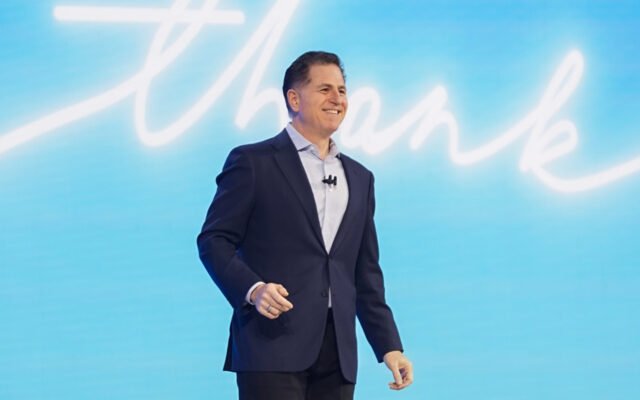
Michael Dell founded Dell from a University of Texas dorm room in 1984 on the build-to-order model that removed the reseller margin from PCs, and took the company public in 1988 at age 23. He took Dell private in a $24.9B buyout in 2013, acquired EMC for $67B in 2016 in the largest technology acquisition ever at the time, and returned it to public markets in 2018. He invests through MSD Capital and Dell Technologies Capital.
- 137Stewart Butterfield
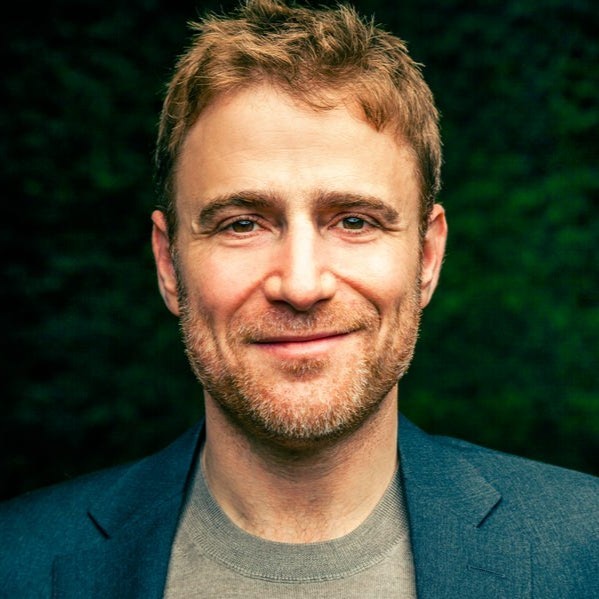
Stewart Butterfield built two companies out of failed games: Flickr, salvaged from the game Game Neverending and sold to Yahoo in 2005, and Slack, salvaged from the game Glitch and sold to Salesforce for $27.7B in 2021. He led Slack from its 2013 launch through a 2019 direct listing and the Salesforce acquisition, leaving in 2022. He is a Cambridge-trained philosopher by education.
- 138Cal Henderson
Cal Henderson co-founded Slack in 2013 and has been its CTO throughout, having previously been an early engineer and architect at Flickr with Stewart Butterfield. He built the real-time messaging infrastructure that carried Slack from launch through a 2019 direct listing and the $27.7B Salesforce acquisition in 2021, and wrote Building Scalable Web Sites.
- 139Mike Cannon-Brookes
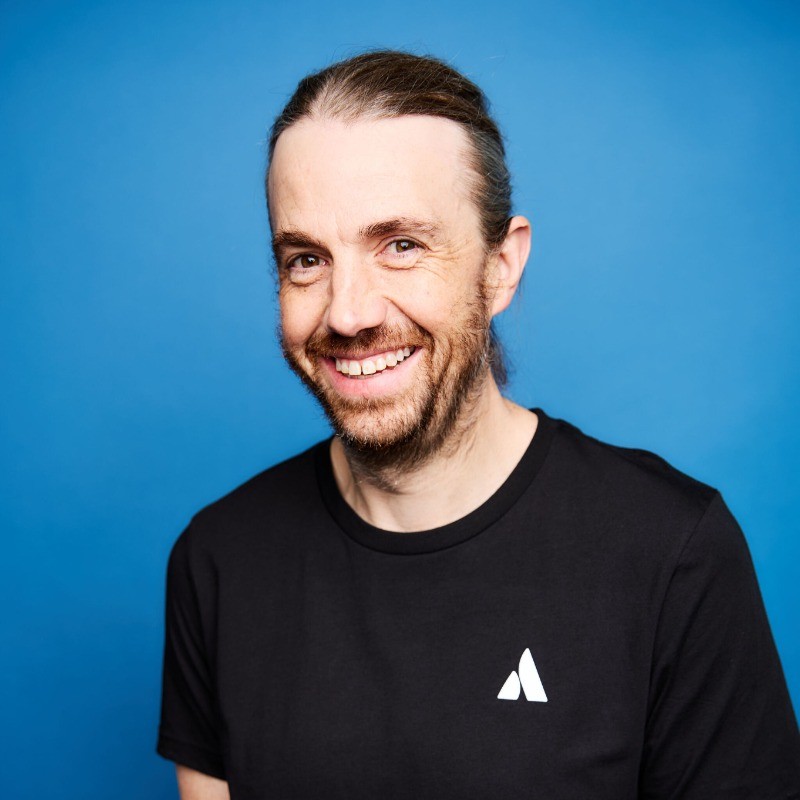
Mike Cannon-Brookes co-founded Atlassian with Scott Farquhar in 2002 on a $10,000 credit card, built it to a 2015 Nasdaq listing without a traditional enterprise sales force, and made it Australia's most valuable technology company. He is one of Australia's largest climate investors through Grok Ventures, funded the Sun Cable solar project, and took a stake in AGL Energy to block its demerger.
- 140Scott FarquharSkip Capital
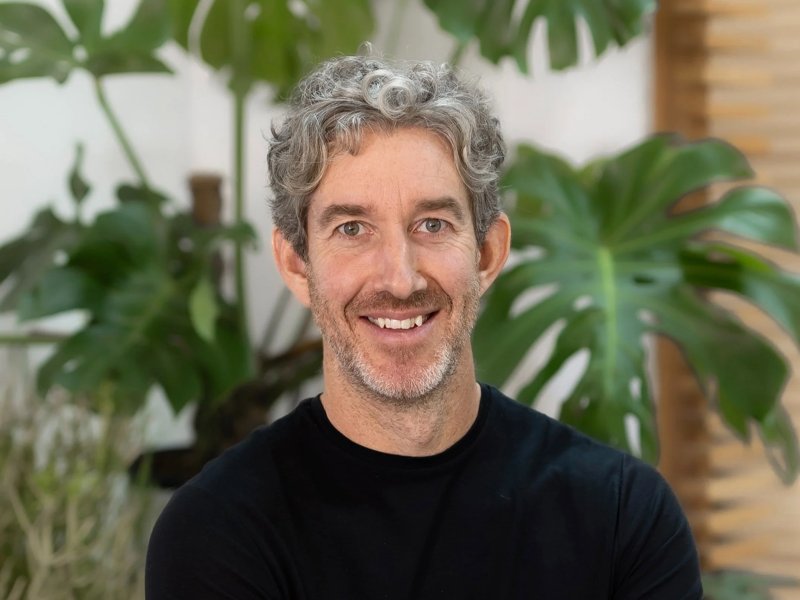
Scott Farquhar co-founded Atlassian with Mike Cannon-Brookes in 2002 straight out of the University of New South Wales, and served as co-CEO until 2024, taking the company to a 2015 Nasdaq listing and a multi-billion-dollar revenue run rate on a self-serve sales model. He invests through Skip Capital, the firm he runs with his wife Kim Jackson.
- 141Melanie Perkins
Melanie Perkins was rejected by about a hundred investors before Canva became one of the most valuable private software companies on earth — $42 billion in an August 2025 employee share sale, roughly $4 billion of annual recurring revenue, 265 million monthly users, and eight consecutive profitable years. She started at 19, teaching design software at the University of Western Australia and realising it was needlessly hard, then built the yearbook publisher Fusion Books with Cliff Obrecht from her mother's living room. Canva launched in 2013 with Obrecht and ex-Google engineer Cameron Adams. She and Obrecht — now married — signed the Giving Pledge and are giving away more than 80% of their fortune.
- 142Cliff Obrecht
Cliff Obrecht co-founded Canva with Melanie Perkins and owns roughly 18% of a company valued at $42 billion in its August 2025 share sale, on about $4 billion of annual recurring revenue. He ran and internationalised Fusion Books — the yearbook business the pair started in 2007 — while Perkins chased the funding for Canva, and has served as COO since the 2013 launch. He and Perkins married in 2021, signed the Giving Pledge, and have committed more than 80% of their fortune to the Canva Foundation. In 2026 he confirmed Canva is 'fully IPO ready' but working toward a 2027 listing, waiting until its shift to an AI-credits business model beds in.
- 143Cameron AdamsWedgetail
Cameron Adams co-founded Canva in 2013 as its third co-founder and Chief Product Officer, bringing design and engineering experience from Google, where he worked on Google Wave. He built the drag-and-drop editor that made professional design accessible to non-designers, the product decision underpinning Canva's growth to a $40B valuation.
- 144Ben Silbermann
Ben Silbermann co-founded Pinterest in 2010 after leaving Google, spending the first year with barely 200 daily users before the visual-bookmarking format found its audience. He led the company to a 2019 IPO and stepped down as CEO in 2022 to become Executive Chairman. Pinterest was famously passed on by many investors who could not see a business model in a mood board.
- 145Evan Sharp
Evan Sharp co-founded Pinterest in 2010 and designed the tiled masonry grid that became the product's defining visual signature and was widely copied across the web. He served as Chief Design and Creative Officer through the 2019 IPO, left in 2022 and joined OpenAI as a design lead. He trained as an architect at Columbia.
- 146Paul Sciarra
Paul Sciarra co-founded Pinterest with Ben Silbermann in 2010 and left in 2012, before the company's growth inflection, retaining a stake worth hundreds of millions at the 2019 IPO. He became an entrepreneur-in-residence at Andreessen Horowitz and is Executive Chairman of Aurora Solar, the solar design software company.
- 147Brian Chesky
Brian Chesky co-founded Airbnb in 2008, funding the early company by selling novelty breakfast cereal at the US political conventions, and took it public in 2020 in one of the strongest debuts of that year — months after the pandemic had cut its revenue by roughly 80%. A Rhode Island School of Design industrial-design graduate, he is known for design-led product leadership and the founder-mode management thesis.
- 148Joe Gebbia
Joe Gebbia co-founded Airbnb in 2008 with his RISD classmate Brian Chesky and Nathan Blecharczyk, and led design and the Samara innovation studio through the 2020 IPO. He stepped back from full-time work in 2022, remains on Airbnb's board, and joined Tesla's board in 2022. He co-founded the backyard-home company Samara.
- 149Nathan Blecharczyk
Nathan Blecharczyk co-founded Airbnb in 2008 as the sole engineer among three founders, writing the original platform and payments system, and serves as Chief Strategy Officer and Chairman of Airbnb China. A Harvard computer science graduate who had built a profitable business before university, he led the data and pricing work that made the marketplace liquid.
- 150Tobias LütkeCoinbase Ventures
Tobias Lütke co-founded Shopify in 2006 after trying to sell snowboards online and finding the available e-commerce software inadequate, and has been CEO throughout, taking the company to a 2015 IPO and a peak valuation above $100B. A German-born self-taught programmer and Ruby on Rails core contributor, he is one of the few technical founders still writing code as a public-company CEO.
- 151Scott LakeRiSC Capital Corp
Scott Lake co-founded Shopify with Tobias Lütke and Daniel Weinand in 2006 and served as its first CEO, having originated the snowboard shop, Snowdevil, that became the company. He left in 2008, before Shopify's growth into a $100B-plus business, and has since founded Source Metrics and worked as an angel investor and advisor.
- 152Daniel DinesCrew Capital
Daniel Dines turned a ten-person Bucharest apartment into one of the largest software listings in American history. He founded UiPath in 2005 as DeskOver, after five years as a software engineer at Microsoft in Seattle, and built it into the company that defined robotic process automation — software robots that do the repetitive clicking office work is made of. UiPath listed on the New York Stock Exchange in April 2021 at $56 a share, closing its first day worth about $35.8 billion, and now reports $1.6 billion of annual revenue and $1.85 billion of annual recurring revenue, having reached full-year GAAP profitability. He handed the chief executive's seat to a co-CEO in 2022 and took it back alone in June 2024, and remains chairman. He takes a nominal salary — about $6,000 a year — and has taken no equity grant since before the listing.
- 153Marc Benioff
Marc Benioff founded Salesforce in 1999 with the No Software slogan, effectively inventing the enterprise SaaS category and the subscription model that replaced perpetual licensing across the industry. He spent thirteen years at Oracle beforehand under Larry Ellison, who was an early Salesforce investor. He pioneered the 1-1-1 philanthropic model and bought Time magazine in 2018.
1 book - 154Parker Harris
Parker Harris co-founded Salesforce with Marc Benioff in 1999 and wrote the original multi-tenant architecture that made cloud CRM economically viable — the technical foundation of the SaaS model. He has held the senior technology role at the company for more than two decades, most recently as Chief Technology Officer of Slack after the acquisition.
- 155Tony Xu
Tony Xu co-founded DoorDash at Stanford in 2013 and led it to a 2020 IPO and market leadership in US food delivery, overtaking better-funded rivals through suburban-first expansion. Born in Nanjing and raised in Illinois where his mother worked three jobs, he joined Meta's board in 2022 and remains CEO.
- 156Andy Fang
Andy Fang co-founded DoorDash at Stanford in 2013 with Tony Xu, Stanley Tang and Evan Moore, building the original logistics platform, and serves as Chief Technology Officer. He led the engineering organisation through the 2020 IPO and the scaling of the Dasher dispatch system that underpins the company's delivery economics.
- 157Stanley Tang
Stanley Tang co-founded DoorDash at Stanford in 2013 and serves as Chief Product Officer for new verticals, leading the expansion beyond restaurants into convenience, grocery and retail. Hong Kong-born, he had written a book on internet entrepreneurship as a teenager before starting the company that would go public in 2020.
- 158Apoorva Mehta
Apoorva Mehta founded Instacart in 2012 after twenty failed startup ideas, got into Y Combinator late by delivering a six-pack of beer to a partner, and built it into the dominant US grocery-delivery platform, which went public in 2023. A former Amazon supply-chain engineer, he stepped down as CEO in 2021 and now runs the healthcare company Cloud Health Systems.
- 159Daniel Ek
Daniel Ek co-founded Spotify in Stockholm in 2006 and built the licensing deals that made legal streaming viable, reversing two decades of revenue decline in recorded music and taking the company public via direct listing in 2018. He had sold his advertising company Advertigo before turning 24. He founded the European defence-technology investor Prima Materia, which led Helsing's rounds.
- 160Martin Lorentzon
Martin Lorentzon co-founded Spotify with Daniel Ek in 2006, having previously co-founded the affiliate-marketing company Tradedoubler, whose 2005 IPO gave him the capital and the credibility to start Spotify. He served as Spotify's chairman until 2016 and remains one of its largest individual shareholders and a board member.
- 161Jack MaAfrica’s Business HeroesBreakthrough Energy Ventures
Jack Ma founded Alibaba in his Hangzhou apartment in 1999 with seventeen colleagues and took it public in New York in 2014 in what was then the largest IPO in history at $25B. A former English teacher rejected from dozens of jobs, he built Taobao and Alipay into the infrastructure of Chinese commerce. He retired as chairman in 2019 and withdrew from public life after a 2020 speech criticising Chinese financial regulators.
- 162Colin Huang
Colin Huang founded Pinduoduo in 2015 and built it into one of China's largest e-commerce platforms in under five years on a group-buying model aimed at lower-tier cities, listing on Nasdaq in 2018. A former Google engineer, he stepped down as CEO in 2020 and as chairman in 2021 to fund food and life-sciences research; PDD's Temu became a global cross-border retail force after his departure.
- 163Richard Liu
Richard Liu, also known as Liu Qiangdong, founded JD.com in 1998 as a magneto-optical shop and pivoted it online during the 2003 SARS epidemic, building China's largest self-operated e-commerce company on its own nationwide logistics network — a costly bet that became its defining advantage over marketplace rivals. He took JD public on Nasdaq in 2014 and stepped down as CEO in 2022.
- 164Byju Raveendran
Byju Raveendran founded BYJU'S in 2011 and grew it into the world's most valuable edtech company at a $22B valuation, backed by Sequoia, Naspers, Tiger Global and the Chan Zuckerberg Initiative. A former teacher whose test-prep classes filled stadiums, he expanded through acquisitions including WhiteHat Jr and Aakash. The company collapsed into insolvency proceedings and a disputed near-total writedown after 2022, one of the most severe reversals in startup history.
- 165Bhavish Aggarwal
Bhavish Aggarwal co-founded Ola in 2010 and built it into India's largest ride-hailing company, fending off Uber's entry, then founded Ola Electric, which became India's leading electric two-wheeler maker and listed in 2024. An IIT Bombay graduate and former Microsoft Research engineer, he has since founded the AI company Krutrim, India's first AI unicorn.
- 166Ritesh Agarwal
Ritesh Agarwal founded OYO in 2013 at nineteen, after a Thiel Fellowship, and built it into one of the world's largest hospitality chains by room count, backed by SoftBank at a $10B valuation. He took the company through an aggressive global expansion, a severe pandemic contraction and a restructuring, and listed OYO's parent in India. He remains among the youngest self-made founders of a company at that scale.
- 167Deepinder Goyal
Deepinder Goyal co-founded Zomato in 2008 as a scanned-menu directory built for his Bain colleagues and grew it into India's largest food-delivery platform, listing in 2021 in one of India's first major consumer-internet IPOs. An IIT Delhi graduate, he led the acquisitions of Uber Eats India and Blinkit, the latter becoming the company's fastest-growing business.
- 168Vijay Shekhar Sharma
Vijay Shekhar Sharma founded Paytm in 2010 and made it India's best-known digital-payments brand, with its usage inflecting sharply after the 2016 demonetisation. Backed by Alibaba, Ant and SoftBank, Paytm listed in 2021 in what was then India's largest IPO; the stock fell steeply afterwards and the payments bank was wound down by the regulator in 2024. He grew up in Aligarh and learned English from tech magazines.
- 169Sachin Bansal
Sachin Bansal co-founded Flipkart in 2007 with Binny Bansal, building India's largest e-commerce company from an online bookstore and selling control to Walmart in 2018 for $16B — the largest exit in Indian startup history. An IIT Delhi graduate and former Amazon engineer, he exited fully in that deal and founded the financial-services company Navi, which he took public in India.
- 170Binny Bansal
Binny Bansal co-founded Flipkart in 2007 and served as CEO and then Group CEO, leading the operations and supply chain that made same-day delivery work in India, through to Walmart's $16B acquisition in 2018. He left the company later that year, has become one of India's most active angel investors through 021 Capital and Three State Capital, and founded the e-commerce services company OppDoor.
- 171Kunal BahlTitan CapitalSixth Sense Ventures
Kunal Bahl co-founded Snapdeal in 2010 and built it into one of India's three largest e-commerce companies at its peak, backed by SoftBank and Alibaba, before rejecting a Flipkart acquisition and steering it through a hard restructuring into profitability. He co-founded Titan Capital with Rohit Bansal, an early-stage firm whose portfolio includes Ola, Urban Company, Mamaearth and Razorpay.
- 172Falguni Nayar
Falguni Nayar founded Nykaa in 2012 at the age of fifty after a long career in investment banking, and took it public in 2021 — a listing that briefly made her India's richest self-made woman. She built the beauty retailer on an inventory-led model with physical stores alongside e-commerce, a deliberate rejection of the pure-marketplace orthodoxy. She previously served as managing director of Kotak Mahindra Capital.
- 173Girish MathruboothamTogether Fund
Girish Mathrubootham founded Freshworks in Chennai in 2010 after a bad customer-service experience, and took it to a 2021 Nasdaq listing — the first Indian SaaS company to go public in the US. He built the company on a low-touch, product-led model selling globally from India, and co-founded Together Fund to back the next generation of Indian B2B software founders.
- 174Patrick CollisonStellar Development Foundation
Patrick Collison co-founded Stripe with his brother John in 2010 and has run it since — a company valued at $159 billion in its February 2026 tender offer, processing $1.9 trillion of payment volume in 2025 and robustly profitable. A Limerick teenager who won Ireland's Young Scientist competition at 16 for a LISP-like programming language, he dropped out of MIT, sold his first company Auctomatic at 19, and became the world's youngest self-made billionaire at 28. Beyond Stripe he co-founded the Arc Institute and Fast Grants, publishes through Stripe Press, and joined Meta's board in 2025.
- 175John Collison
John Collison co-founded Stripe with his brother Patrick in 2010 and, as President, helped build it into a $159 billion company that moved $1.9 trillion in 2025 — while arguing publicly that 'an IPO would be a solution in search of a problem.' He sold his first company, Auctomatic, at 17, took eight A1s in the Irish Leaving Certificate, and dropped out of Harvard a year later to build Stripe. A licensed pilot since 17 who once flew a twin-engine propeller plane across the Atlantic, he co-owns Dublin's Weston Airport and hosts the interview podcast Cheeky Pint.
- 176Alex Karp
Alex Karp co-founded Palantir with Peter Thiel in 2003 and has been CEO ever since, taking the company public by direct listing in 2020 and into the S&P 500 in 2024 on the strength of its government and defence business. He holds a law degree from Stanford and a doctorate in neoclassical social theory from Frankfurt, an unusual profile for a defence-software CEO, and is an outspoken defender of Silicon Valley working with the US military.
- 177Stephen Cohen
Stephen Cohen co-founded Palantir in 2003 while a Stanford undergraduate, writing much of the early prototype, and serves as President. He built the forward-deployed engineering model that defined how Palantir sells and implements software inside government agencies and large enterprises, through to the company's 2020 direct listing.
- 178Max LevchinSciFi VC
Max Levchin arrived in Chicago from Kyiv in 1991 as a refugee, and by 2002 had co-founded PayPal and built the fraud detection that let it survive long enough to reach a Nasdaq listing and an eBay acquisition. He founded Slide, sold it to Google, and in 2012 started Affirm on one constraint: a lender that charges no late fees and no compounding interest only makes money when borrowers repay. Affirm went public in 2021 and served 26.8 million people by 2026. He invests through SciFi VC, the fund he runs with his wife Nellie, funds the Levchin Prize for applied cryptography, and sits on the boards of Unity and The Coca-Cola Company.
- 179Luke NosekGigafund
Luke Nosek co-founded PayPal in 1998 with Peter Thiel and Max Levchin and created its viral referral programme, one of the earliest documented growth loops. He was a partner at Founders Fund, where he led the firm's landmark 2008 investment in SpaceX, and co-founded Gigafund, which concentrates capital in a small number of companies including SpaceX.
Midas ×2 - 180Ken Howery
Ken Howery co-founded PayPal in 1998 as its first CFO and co-founded Founders Fund with Peter Thiel and Luke Nosek in 2005, helping build the firm that backed SpaceX, Facebook, Palantir and Airbnb. He served as US Ambassador to Sweden from 2019 to 2021 and co-founded the investment firm Atomic.
Midas ×3 - 181Vlad Tenev
Vlad Tenev co-founded Robinhood in 2013 on commission-free trading, forcing the entire US brokerage industry to drop commissions within six years, and took the company public in 2021. Bulgarian-born and Stanford-educated, he led the company through the GameStop trading halt of January 2021 and the congressional hearings that followed, and has since expanded Robinhood into retirement accounts, crypto and prediction markets.
- 182Baiju Bhatt
Baiju Bhatt co-founded Robinhood with Vlad Tenev in 2013 after the two had built high-frequency trading software together, and served as co-CEO and then Chief Creative Officer through the 2021 IPO. He left in 2024 to found Aetherflux, a space-based solar power company, returning to the physics he studied at Stanford.
- 183David Vélez
David Vélez founded Nubank in São Paulo in 2013 after being denied a bank account in a branch with armed guards, and built it into the largest digital bank outside Asia, serving more than a hundred million customers across Brazil, Mexico and Colombia. Colombian-born and a former Sequoia investor, he took Nubank public on the NYSE in 2021; Berkshire Hathaway is an investor.
- 184Cristina Junqueira
Cristina Junqueira co-founded Nubank in 2013 after running Itaú's credit-card division, bringing the regulatory and credit expertise that let a startup challenge Brazil's banking oligopoly. She led the credit-card business through the company's growth to more than a hundred million customers and its 2021 NYSE listing, becoming one of the few women to co-found a company of that scale in Latin America.
- 185Nik Storonsky
Nik Storonsky co-founded Revolut in London in 2015 and built it into Europe's most valuable private fintech, valued at $45B, serving tens of millions of retail customers across banking, FX and crypto. A former Credit Suisse and Lehman derivatives trader, he obtained a UK banking licence in 2024 after a long regulatory process. He also founded the venture firm QuantumLight.
- 186Vlad Yatsenko
Vlad Yatsenko co-founded Revolut with Nik Storonsky in 2015 and serves as Chief Technology Officer, having built banking infrastructure at Credit Suisse, Deutsche Bank and UBS beforehand. He architected the platform that scaled to tens of millions of customers and a $45B valuation, and led the engineering work behind Revolut's UK banking licence.
- 187Brian ArmstrongCoinbase Ventures
Brian Armstrong co-founded Coinbase in 2012 out of Y Combinator and took it public by direct listing in 2021, making it the first major US crypto company to list and the industry's principal regulated on-ramp. A former Airbnb engineer, he fought and largely won a landmark SEC enforcement action, published the mission-focused-company memo that reshaped debates on politics at work, and founded NewLimit and ResearchHub.
- 188Ryan Shea
Ryan Shea co-founded Blockstack, now Stacks, with Muneeb Ali in 2013 out of Y Combinator, building a decentralised identity and application layer anchored to Bitcoin. The project ran the first SEC-qualified Reg A+ token offering in 2019, a landmark for regulated token sales. A Princeton engineer, he left day-to-day work on the protocol in 2020.
- 189Muneeb AliMuneeb Ali
Muneeb Ali co-founded Blockstack, now Stacks, with Ryan Shea in 2013 and led it through the first SEC-qualified Reg A+ token offering in 2019 — a regulatory milestone no other token project had cleared. He holds a Princeton computer-science doctorate on decentralised systems, and founded Trust Machines to build Bitcoin applications.
- 190Greg Brockman
Greg Brockman co-founded OpenAI in 2015 and, as its President, is worth an estimated $25.5 billion on the company's $852 billion March 2026 valuation. A math-olympiad kid from Thompson, North Dakota (pop. ~1,000) who won silver at the 2006 International Chemistry Olympiad, he left Harvard, then MIT, to become one of Stripe's first engineers — its first CTO, scaling engineering from 5 to 205 people. At OpenAI he was CTO, then President, personally live-demoing GPT-4 on launch day; when the board fired Sam Altman in November 2023, Brockman quit within hours and returned with him five days later.
- 191Ilya Sutskever
Ilya Sutskever co-authored AlexNet in 2012, the result that opened the deep-learning era, and spent the decade after it turning the same bet into sequence-to-sequence learning at Google Brain and then, as OpenAI's co-founder and chief scientist, into the GPT line. In 2024 he founded Safe Superintelligence, a lab with one objective and deliberately nothing to sell before it: about fifty people, $8 billion raised including up to $5 billion from NVIDIA, and a $32 billion valuation. A Fellow of the Royal Society with three consecutive NeurIPS Test of Time awards, he arrived in Israel from Nizhny Novgorod at five and did his PhD under Geoffrey Hinton.
- 192Demis Hassabis
Demis Hassabis co-founded DeepMind in 2010 and sold it to Google in 2014 for a reported £400M, then built AlphaGo, AlphaFold and Gemini. He shared the 2024 Nobel Prize in Chemistry for AlphaFold's protein-structure predictions, released free for the entire scientific community. A chess prodigy and games designer before his UCL neuroscience doctorate, he was knighted in 2024.
- 193Shane Legg
Shane Legg co-founded DeepMind in 2010 with Demis Hassabis and Mustafa Suleyman and is credited with popularising the term artificial general intelligence, which his doctoral work at IDSIA attempted to define formally. He serves as Chief AGI Scientist at Google DeepMind and has published long-standing public forecasts on AGI timelines.
- 194Mustafa SuleymanGreylock Partners
Mustafa Suleyman has co-founded two of the defining AI companies of the century and now runs a third effort inside the largest software company in the world. He started DeepMind in 2010 with Demis Hassabis and Shane Legg — Google bought it in 2014 for a reported £400 million — and Inflection AI in 2022 with Reid Hoffman, which raised $1.3 billion before Microsoft paid roughly $650 million to license its technology and hire its team. Since March 2024 he has been CEO of Microsoft AI, where he leads the MAI Superintelligence Team and shipped seven in-house frontier models in 2026. He is a CBE, a founding co-chair of the Partnership on AI, and the author of The Coming Wave.
1 book - 195Aravind Srinivas
Aravind Srinivas co-founded Perplexity AI in August 2022 and turned the citation-backed 'answer engine' into a $20 billion Google challenger — its September 2025 round closed at that mark, with Nvidia reported in August 2026 to be leading a new round above $30 billion. Raised in Chennai, he took a dual degree in electrical engineering at IIT Madras and a Berkeley PhD under Pieter Abbeel, with research stops at OpenAI, DeepMind, and Google before returning to OpenAI as a research scientist on work leading toward DALL-E 2. He founded Perplexity with Denis Yarats, Johnny Ho, and Andy Konwinski; at 31 the Hurun list called him India's youngest billionaire, and he once made an unsolicited $34.5 billion bid for Google's Chrome browser.
- 196Denis Yarats
Denis Yarats co-founded Perplexity in 2022 and serves as Chief Technology Officer, having been an AI research scientist at Meta AI and completed a doctorate at NYU on reinforcement learning. He built the retrieval and inference stack behind Perplexity's answer engine as it scaled to a multi-billion-dollar valuation.
- 197Dario Amodei
Dario Amodei co-founded Anthropic in 2021 and built it into one of the world's two leading frontier AI labs: its May 2026 Series H raised $65 billion at a $965 billion valuation, and the company filed confidentially for an IPO days later. A Princeton biophysics PhD (Hertz Fellow) who detoured through Baidu's Deep Speech team and Google Brain, he led research at OpenAI as VP of Research through GPT-2 and GPT-3, co-invented reinforcement learning from human feedback, and wrote the field's defining safety essays — Concrete Problems in AI Safety, Machines of Loving Grace, and The Adolescence of Technology. He runs Anthropic with his sister Daniela, its President.
- 198Daniela Amodei
Daniela Amodei co-founded Anthropic in 2021 with her brother Dario and five other OpenAI colleagues, and as president runs everything at the company that is not research — operations, policy, commercial, and the safety and alignment organisations. Anthropic closed a $65 billion Series H at a $965 billion post-money valuation in May 2026 with annualised revenue at $47 billion, ranked first on CNBC's Disruptor 50, and filed confidentially for a listing that June. An English-literature graduate who started in global health and on a congressional campaign, she built risk and recruiting at Stripe through its hypergrowth years before running people and then safety and policy at OpenAI.
- 199Alexandr Wang
Alexandr Wang co-founded Scale AI at 19 after dropping out of MIT, built it into the data backbone of the AI industry, and in June 2025 Meta paid roughly $14.3 billion for a 49% stake — valuing Scale at ~$29 billion — and hired him as its first Chief AI Officer to run Meta Superintelligence Labs. Born in Los Alamos to two physicist parents at the national lab, he was a USACO finalist and US Physics Team member in high school, coded full-time at Addepar and Quora at 17, and entered Y Combinator's Summer 2016 batch, where Scale was born in a pool house with co-founder Lucy Guo. At 24 he was the world's youngest self-made billionaire; he still sits on Scale's board.
- 200Lucy GuoBackend Capital
Lucy Guo co-founded Scale AI with Alexandr Wang in 2016 and left after about eighteen months, retaining a stake that made her one of the youngest self-made women billionaires when Scale's valuation reached tens of billions. A Thiel Fellow and former Quora and Snapchat designer, she founded the creator-monetisation platform Passes and the early-stage fund Backend Capital.
- 201Arthur Mensch
Arthur Mensch co-founded Mistral AI in May 2023 and built Europe's flagship AI lab, whose September 2025 Series C — €1.7 billion led by ASML — valued it at €11.7 billion (~$13.7B). A product of the French elite-math pipeline (Polytechnique, Télécom Paris, the MVA master at ENS Paris-Saclay, a Paris-Saclay PhD in machine learning for brain imaging), he was a research scientist at DeepMind in Paris, where he co-led the Chinchilla paper that reset the field's scaling laws and contributed to Flamingo. He founded Mistral with Guillaume Lample and Timothée Lacroix, both then at Meta AI, and has become Europe's leading voice for open-weight models and AI sovereignty. TIME named him to its 100 innovators list in 2024; France knighted him in 2025.
- 202Guillaume Lample
Guillaume Lample co-founded Mistral AI in 2023 and serves as Chief Scientist, having led the LLaMA project at Meta AI — the open-weight model release that reshaped the industry's approach to model distribution. He holds a doctorate from Sorbonne and Meta AI, and drives the research behind Mistral's open-weight and frontier models.
- 203Timothée Lacroix
Timothée Lacroix co-founded Mistral AI in 2023 and serves as Chief Technology Officer, having been a research engineer at Meta AI where he worked on the LLaMA models with co-founder Guillaume Lample. He built the training and inference infrastructure that let a young European lab ship competitive frontier models on a fraction of US compute budgets.
- 204Fei-Fei Li
Fei-Fei Li created ImageNet, the dataset that ignited the deep-learning revolution, and now leads World Labs, the spatial-intelligence startup she co-founded in 2024 that raised a $1 billion round in February 2026 at a reported $5 billion valuation. Born in Beijing and raised in Chengdu, she immigrated to New Jersey at 15, helped run her parents' dry-cleaning shop through Princeton (BA Physics, 1999), and took a Caltech PhD in electrical engineering. She directed the Stanford AI Lab, served as Chief Scientist of AI/ML at Google Cloud, co-founded the Stanford Institute for Human-Centered AI and the nonprofit AI4ALL, sat on Twitter's board, and wrote the memoir The Worlds I See. TIME has twice named her to its TIME100 AI list; much of the field calls her the godmother of AI.
- 205Clément Delangue
Clément Delangue turned a teen-focused chatbot app into Hugging Face, the 'GitHub of AI' where the industry shares its models and datasets — valued at $4.5 billion in its 2023 round led by Salesforce with Google and Nvidia, and reported in August 2026 to be exploring a sale at $13 billion or more. From La Bassée in northern France, he was one of France's top eBay sellers at 17, studied management at ESCP with exchanges in Madrid, Bangalore, and Dublin, and cut his teeth at machine-learning startup Moodstocks (later acquired by Google) and social-monitoring startup mention. He co-founded Hugging Face in New York in 2016 with Julien Chaumond and Thomas Wolf — the three met through a Stanford online-course study group — and pivoted it to open machine learning after BERT's 2018 release. He has testified to Congress as open-source AI's leading advocate.
- 206Thomas Wolf
Thomas Wolf co-founded Hugging Face in 2016 with Clément Delangue and Julien Chaumond and created the Transformers library — the open-source backbone through which much of the world runs its AI models. A Polytechnique-trained physicist with a Sorbonne/ESPCI PhD in statistical physics, he turned down an MIT PhD offer, spent five years as a European patent attorney (picking up a Sorbonne law degree along the way), then taught himself modern machine learning and became Chief Science Officer of the platform reportedly exploring a sale at $13 billion or more. He led the thousand-researcher BigScience workshop behind the BLOOM model, co-authored O'Reilly's Natural Language Processing with Transformers, and drives Hugging Face's small-model SmolLM family.
- 207Michael Truell
Michael Truell co-founded Anysphere in 2022 with three MIT classmates and built Cursor, the AI code editor that reached a $4 billion annualized revenue run-rate in under three years — and in August 2026 closed the largest venture-backed startup acquisition ever, SpaceX's $60 billion all-stock purchase, with Truell staying on as CEO inside SpaceXAI. A New Yorker who started coding at 11, he met co-founder Aman Sanger at Horace Mann, co-created the Halite AI programming competition in high school, interned at Google on language models at 18, and left MIT to build the future of programming with Sualeh Asif and Arvid Lunnemark.
- 208Arvid Lunnemark
Arvid Lunnemark co-founded Anysphere, the company behind the AI code editor Cursor, in 2022 with three MIT classmates, and became a billionaire on its $29.3 billion Series D — then left in October 2025, months before SpaceX's record $60 billion acquisition, to found Integrous Research, an AI-safety lab. A Swede from Malmö who won IOI gold for Sweden in 2018, he studied mathematics and computer science at MIT and writes about cryptography and surveillance risk at arvid.xyz.
- 209Scott Wu
Scott Wu co-founded Cognition in November 2023 and leads the lab behind Devin, the autonomous software engineer — one of the fastest companies ever to a ~$26 billion valuation, with a reported $40 billion round in talks by August 2026. A three-time IOI gold medalist who won the competition outright in 2014 and a 2011 MATHCOUNTS national champion from Baton Rouge, he coded at Addepar out of high school, dropped out of Harvard, and co-founded Lunchclub before starting Cognition with fellow olympiad medalists Steven Hao and Walden Yan. In July 2025, 72 hours after Google poached Windsurf's CEO, Cognition acquired Windsurf's product and team — waiving cliffs and accelerating vesting for every employee.
- 210Amjad MasadMasad Capital
Amjad Masad co-founded Replit in 2016 and turned the browser REPL he open-sourced from Amman years earlier into the AI coding platform valued at $9 billion in its March 2026 Series D — with revenue that ran from $2.8M to $150M in under a year as 'vibe coding' took off. A Jordanian of Palestinian heritage who graduated from Princess Sumaya University, he was Codecademy's founding engineer (his jsrepl powered its in-browser tutorials), then ran Facebook's JavaScript infrastructure team through the React Native era. He co-founded Replit with his wife, designer Haya Odeh, and his brother Faris.
- 211Guillermo RauchVercel
Guillermo Rauch created Next.js, the framework that powers much of the modern web, and founded Vercel — the 'AI cloud' that deploys it — worth $9.3 billion after its September 2025 Series F led by Accel and GIC. A self-taught programmer from Lanús, Argentina who joined the MooTools core team at 16 and wrote socket.io and Mongoose, he moved to San Francisco as a teenager, co-founded LearnBoost and Cloudup (acquired by Automattic in 2013), and started ZEIT — renamed Vercel — in 2015. He is one of tech's most prolific angels, with 700+ investments including Supabase, Replit, and Perplexity, and Vercel's v0 won a 2025 Webby.
- 212Jonathan Ross
Jonathan Ross invented Google's TPU as a 20% project, founded Groq in 2016 to break the AI inference bottleneck with the LPU — and in December 2025 Nvidia paid a reported $20 billion to license Groq's technology and hire Ross and his leadership team. A high-school dropout who talked his way into NYU's Courant Institute (taking PhD-level courses under Yann LeCun before dropping out again), he built the TPU from a nights-and-weekends accelerator into the chip behind AlphaGo, worked at Google X's Rapid Evaluation team, and grew Groq to a $6.9 billion valuation with landmark inference deals across Saudi Arabia and Canada before the Nvidia deal.
- 213Harrison Chase
Harrison Chase open-sourced LangChain in October 2022 — an 800-line Python package that caught the ChatGPT wave to become the default way developers wire language models into applications — and built the company behind it to a $1.25 billion valuation in its October 2025 Series B led by IVP. A Harvard statistics-and-CS graduate who wrote quantitative sports analysis as a student, he led entity-linking at Kensho and the ML team at Robust Intelligence, where he met co-founder Ankush Gola. LangSmith and LangGraph turned the library into the orchestration stack for production agents, and Chase's 'context engineering' framing has become industry vocabulary.
- 214Arvind Jain
Arvind Jain founded Glean in 2019 and built the enterprise AI assistant that searches a company's entire knowledge base, reaching a $7.2 billion valuation in its June 2025 Series F led by Wellington. Raised in Jaipur and trained at IIT Delhi and the University of Washington, he spent eleven years as a Google Distinguished Engineer across Search, Maps, and YouTube, then co-founded Rubrik in 2014 — the data-security company that IPO'd in 2024. Glean began with a survey inside Rubrik: employees' single biggest problem was that they couldn't find anything across their 300 cloud apps, so he left to fix it.
- 215Winston Weinberg
Winston Weinberg quit his first-year litigation job at O'Melveny & Myers at 26 to co-found Harvey in 2022, and built the legal-AI platform used by half the Am Law 100 to an $11 billion valuation in its March 2026 round co-led by GIC and Sequoia. A Kenyon College graduate with a USC Gould JD, he was shown GPT-3 by his roommate Gabriel Pereyra — a DeepMind and Meta AI researcher — and their tenant-law prototype convinced Sam Altman: the OpenAI Startup Fund anchored Harvey's seed after a cold email. PwC's global alliance made Harvey the Big Four's legal-AI platform; he preaches 're-earn your role every six months.'
- 216Alex Blania
Alex Blania co-founded Tools for Humanity in 2019 with Sam Altman and Max Novendstern and, as CEO, runs World (formerly Worldcoin) — the iris-scanning Orb network building proof-of-humanity for the AI era, with 26 million users and 12.5 million verified World IDs. A German physicist raised outside Nuremberg, he studied physics and industrial engineering at FAU Erlangen-Nürnberg, researched at the Max Planck Institute for the Science of Light, and was doing deep-learning-for-quantum research at Caltech when Altman and Novendstern recruited him. In 2025 he co-founded Merge Labs, the Altman-backed brain-computer interface startup, and made TIME's 100 Most Influential People in AI.
- 217Max Novendstern
Max Novendstern co-founded Worldcoin — the project that became World — with Sam Altman in 2019 and served as Tools for Humanity's first CEO, leaving in 2021 to found Mana, his attempt at an autonomous on-chain AI venture capitalist pitched as 'BlackRock for the new economy.' A Harvard philosophy graduate, he researched macroeconomics at Bridgewater Associates and worked in finance at Wave, the East-African mobile-money company, before the Orb; he remains a TFH advisor and an active angel.
- 218Gabriel Pereyra
Gabriel Pereyra co-founded Harvey in 2022 with his roommate Winston Weinberg and, as President, supplies the research DNA behind the legal-AI platform valued at $11 billion in March 2026 on roughly $190 million of annual recurring revenue. A machine-learning researcher who published with Geoffrey Hinton at Google Brain, then worked at DeepMind and Meta AI — where he co-authored the OPT-IML instruction-tuned model — he showed Weinberg GPT-3 in their Los Angeles apartment, built a chain-of-thought prompt that answered 100 California tenant-law questions well enough for attorneys to approve 86 of them, and cold-contacted Sam Altman with the results. He now runs Harvey Labs.
- 219Joshua Xu
Joshua Xu co-founded HeyGen in 2020 and scaled the AI avatar-video platform past $200 million in annual recurring revenue by June 2026 — while burning only about $25 million of the $74 million raised and staying cash-flow break-even, roughly $1.5 million of revenue per employee. He spent six years engineering at Snap, the last two on the ads team building AI into the camera, then founded the company in Shenzhen as Surreal with Tongji and Carnegie Mellon classmate Wayne Liang, moved it to Los Angeles, and renamed it HeyGen in 2023 as it pivoted from spokesperson clips to a full video-generation platform.
- 220Victor Riparbelli
Victor Riparbelli co-founded Synthesia in 2017 and built the AI-video platform used by most of the Fortune 100 to a $4 billion valuation in its January 2026 Series E, led by GV with Nvidia's NVentures — roughly $150 million of ARR on the way to $200 million. A Dane who built websites and e-commerce stores for local businesses as a teenager, he studied computer science at the IT University of Copenhagen with an exchange semester at Stanford, ran growth at the Copenhagen startup studio Founders, and moved to London for its VR scene. Synthesia began as an AI dubbing tool for film; enterprise demand for training videos redirected it to corporate avatars around 2021.
- 221Ali Ghodsi
Ali Ghodsi co-founded Databricks in 2013 with six fellow Berkeley researchers and, as CEO since 2016, built it into one of the most valuable private companies in history — $5 billion raised at a $190 billion valuation in August 2026, on a revenue run-rate above $7 billion growing 80% a year. Born in Iran in 1978 and raised in Sweden after his family fled the Iran–Iraq war, he taught himself to program on a broken Commodore 64, took a KTH doctorate in distributed computing, co-founded the Stockholm P2P company Peerialism, and joined Berkeley's AMPLab, where Apache Spark and Mesos were born. He remains an adjunct professor there — and calls parts of the AI funding market a bubble.
- 222Henrique DubugrasBrex
Henrique Dubugras has sold two companies before turning 30: Pagar.me, the Brazilian payments processor he co-founded at 16 with Pedro Franceschi and sold to Stone in 2016, and Brex, the corporate-card company they built out of Y Combinator's W17 batch to a $12.3 billion peak — acquired by Capital One for $5.15 billion in April 2026. He met Franceschi through a Twitter argument as a Brazilian high-schooler, dropped out of Stanford after eight months, served as Brex's co-CEO until 2024 and then board chairman, sits on Expedia Group's board, and is now building a stealth AI-native investment venture.
- 223Pedro Franceschi
Pedro Franceschi took sole control of Brex in June 2024, declared its turnaround over at $700 million of annualized revenue growing 50%, and sold it to Capital One for $5.15 billion in April 2026 — staying on as CEO. A Rio de Janeiro prodigy who taught himself to code at eight, he was among the early iPhone jailbreakers and reverse-engineered Nuance's speech API to make Siri understand Portuguese before Apple did. He met Henrique Dubugras through a Twitter argument in high school, co-founded the payments company Pagar.me with him at 16 and sold it to Stone, dropped out of Stanford after eight months for Y Combinator, and sits on Coupang's board.
- 225Zach PerretMischief
Zach Perret co-founded Plaid in 2013 and built the network that connects fintech apps to bank accounts — used by roughly half of US consumers, at about $546 million of ARR growing 40% a year. He kept the company independent after the Justice Department blocked Visa's $5.3 billion acquisition in 2021, absorbed a 54% valuation reset to $6.1 billion in 2025, and brought it back to an $8 billion tender-offer mark in February 2026 with a US IPO now under discussion. A Duke science major who served on its board of trustees as an undergraduate, he met co-founder William Hockey at Bain's Atlanta office; their bank-connectivity hack won TechCrunch Disrupt in 2013 and became the company. He also co-founded the seed fund Mischief.
- 226William Hockey
William Hockey co-founded Plaid in 2013 and built the API layer that connects fintech apps to bank accounts — then did something no other fintech founder had: he bought a bank. He left Plaid's CTO seat in 2019, spent Plaid shares on Northern California National Bank for roughly $50 million, and turned it into Column, the developer-first nationally chartered bank now powering Brex, Mercury, Ramp, Wise and Bilt. Column has taken no outside capital at all: Hockey owns about 90% of a business doing roughly $200 million of revenue and over $100 million of free cash flow, and says investor offers have valued it near $6 billion. He studied computer science and economics at Emory and met co-founder Zach Perret as a Bain consultant in Atlanta.
- 227Tarek Mansour
Tarek Mansour co-founded Kalshi in 2018 and spent seven years turning event contracts from a regulatory impossibility into a $22 billion company — raising $1 billion led by Coatue in May 2026, double the mark set five months earlier. Born in California and raised in Lebanon, he studied mathematics and computer science at MIT, interned at Goldman Sachs and traded at Citadel Securities, then founded Kalshi with MIT classmate Luana Lopes Lara. Kalshi won a CFTC exchange licence, beat the regulator in court to list election contracts through the 2024 election, and in April 2026 won the first federal appellate ruling that commodities law preempts state gambling law for sports event contracts.
- 228Ryan PetersenFlexport
Ryan Petersen founded Flexport in 2013 and built the digital freight forwarder to a $8 billion valuation — then handed the CEO seat to an Amazon veteran in 2022, watched the company overextend, and took it back twelve months later, rescinding signed offers and cutting office space on day one. He learned trade running his family's China import business as a teenager and co-founded ImportGenius, which sold US customs data. His 2021 Twitter thread on unclogging the Long Beach port backlog drew a response from California's governor. Flexport turned profitable in 2025 and targets organic profitability in 2026; he is also a venture partner at Founders Fund.
- 229Jason Citron
Jason Citron sold his first company to GREE for about $104 million at 26 and turned down Microsoft's reported $12 billion offer for his second at 36, choosing to keep Discord independent — the voice-and-chat platform that became the home of gaming, and then of nearly every online community. A Full Sail game-design graduate, he built Aurora Feint and OpenFeint, then founded Hammer & Chisel, where the voice chat his team built for their own game turned out to be the real product. He handed the CEO seat to Activision veteran Humam Sakhnini in April 2025 — 'hiring myself out of a job' ahead of a public listing — and stayed on the board.
- 230Dylan Field
Dylan Field walked away from Adobe's $20 billion offer — collecting a $1 billion break fee when regulators killed it — and took Figma public instead: the July 2025 NYSE debut priced at $33 and closed its first day at $115.50, a 250% pop that valued the design company near $68 billion. He was a 20-year-old Thiel Fellow when he founded Figma in 2012 with Brown classmate Evan Wallace, betting that design belonged in the browser and that collaboration, not files, was the product. He remains CEO and board chair with about 74% of the voting power; in August 2026, with the stock near $27, he voluntarily forfeited a $46 million share grant.
- 231Palmer Luckey
Palmer Luckey built VR headsets in his parents' garage as a teenager, funded by repairing and reselling iPhones, and sold Oculus to Facebook for about $2 billion at 21 — then founded Anduril Industries to take on the Pentagon's cost-plus contracting model. Anduril raised $5 billion at a $61 billion valuation in May 2026 on revenue that roughly doubled to $2.2 billion, won an Army contract vehicle worth up to $20 billion for its Lattice software, took over the IVAS soldier-headset program, and is building the Fury collaborative combat aircraft. Home-schooled in California and a journalism major who left to build, he collects military vehicles — submarines included.
- 232Samir Menon
Samir Menon founded Dexterity in 2017 to give robots genuine dexterity rather than programmed motion, and reached a $1.65 billion valuation in March 2025 on a $95 million round led by Lightspeed with Sumitomo. In July 2026 FedEx moved his trailer-loading robots past pilot into production at its Hagerstown hub; Maersk, Sagawa Express, and GXO also run them. He holds a Stanford computer-science PhD co-advised by roboticist Oussama Khatib and neuroengineer Kwabena Boahen, where as a Bio-X fellow he used humanoid whole-body control theory to predict how the brain coordinates simultaneous tasks — and staffed Dexterity with fellow Stanford roboticists.
- 233Raquel Urtasun
Raquel Urtasun founded Waabi in 2021 to build self-driving trucks with a single end-to-end model and a closed-loop simulator instead of the hand-engineered stacks the industry had spent a decade on — raising one of Canada's largest Series A rounds, then up to $1 billion in January 2026 at a reported $3 billion valuation, alongside a deal to put 25,000 robotaxis on Uber's platform. Born in Pamplona with an EPFL doctorate, she was a professor at Toronto and TTI-Chicago, co-founded the Vector Institute with Geoffrey Hinton, and served as Chief Scientist of Uber ATG. Waabi runs commercial freight in Texas with safety drivers and targets fully driverless operation across the Southwest.
- 234Suhail Doshi
Suhail Doshi co-founded Mixpanel at 20 with Tim Trefren after dropping out of Arizona State for Y Combinator's Summer 2009 batch, and built the analytics company that taught a generation of startups to measure what their products actually do — worth around $865 million by the time he handed over the CEO seat in 2018. He has kept picking the hardest problems available since: Mighty, which streamed a full browser from cloud servers, and Playground, an AI-first graphics editor that trained its own state-of-the-art diffusion models. He now builds Particle, an AI-infrastructure startup working on post-training, inference optimisation and distributed systems.
- 235Parker Conrad
Parker Conrad built Rippling into a $16.8 billion company past $1 billion of annual recurring revenue, growing 78% a year — and he did it on the second attempt at the same idea. A Harvard chemistry graduate who was managing editor of the Crimson and beat testicular cancer at 24, he co-founded Wikinvest and SigFig with his freshman roommate, then Zenefits, which became the fastest-growing SaaS business in history before a licensing-compliance failure cost him the company in 2016. He started Rippling two months later with Prasanna Sankar, rebuilt the idea properly around an employee system-of-record, and has spent the years since proving the thesis was never the problem.
- 236Prasanna SankarSnow Leopard Technology Ventures
Prasanna Sankar co-founded Rippling with Parker Conrad in 2016 and was its founding CTO through 2020, building the employee system-of-record beneath a company now valued at $16.8 billion — a roughly 9% stake that makes him a billionaire. A computer science graduate of NIT Trichy who ranked among India's top competitive programmers on TopCoder and Google Code Jam, he worked at Microsoft and Google, co- founded the campus social app LikeALittle, and ran engineering at Zenefits before Rippling. He now builds 0xPPL, a decentralised social network for crypto natives, from Singapore.
- 237Olivier Pomel
Olivier Pomel co-founded Datadog in New York in 2010 and took it public on the Nasdaq in September 2019 at $27 a share; it joined the S&P 500 in 2025 and is now worth roughly $84 billion, with revenue running at about $4.5 billion a year and growing 36%. He met co- founder Alexis Lê-Quôc as an undergraduate at École Centrale Paris and worked beside him for nine years at Wireless Generation, where the friction between developers and operations gave them the idea for a monitoring platform that would serve both. He was also an original contributor to the open-source VLC media player.
- 238Alexis Le-Quoc
Alexis Lê-Quôc co-founded Datadog with Olivier Pomel in 2010 and has been its CTO ever since — through the 2019 Nasdaq IPO, entry to the S&P 500 in 2025, and a climb to roughly $84 billion in market value on about $4.5 billion of annual revenue. The two met as undergraduates at École Centrale Paris and spent nine years together at Wireless Generation, where he was director of operations running infrastructure that served more than four million students across 49 states. An original member of the devops movement, he is a fixture at Monitorama, DevOpsDays and AWS re:Invent.
- 239Eoghan McCabe
Eoghan McCabe co-founded Intercom in Dublin in 2011 with three friends, funded by selling his previous startup Exceptional to Rackspace. He stepped back as CEO in 2020, returned in October 2022 just as ChatGPT landed, and bet the company on an AI agent — cannibalising its own SaaS model, renaming the entire company Fin in 2026, and reaching $400 million of recurring revenue. In June 2026 Salesforce agreed to buy it for about $3.6 billion, the largest technology sale in Irish history. His summary: four young lads with a dream and nothing to lose.
- 240Des Traynor
Des Traynor co-founded Intercom in 2011 and, as Chief Strategy Officer, led the refounding that turned it into Fin: within 72 hours of ChatGPT's launch the roadmaps were scrapped and the teams reorganised around an AI support agent, which passed $100 million of recurring revenue growing around 350% a year inside a $400 million business Salesforce agreed to buy for about $3.6 billion in 2026. A Maynooth computer scientist who was lecturing and part-way through a PhD before leaving academia, he met Eoghan McCabe through Ireland's blogging scene and became one of the most widely read writers on product strategy.
- 241Mathilde Collin
Mathilde Collin co-founded Front in Paris in 2013 with Laurent Perrin, moved it to San Francisco through Y Combinator's Summer 2014 batch, and built the customer-communications platform to a $1.7 billion valuation — at the time one of only about eleven billion-dollar software companies founded and led by a woman. An HEC Paris entrepreneurship graduate, she became one of the most candid voices in software leadership, publishing Front's internal metrics and culture experiments and writing openly about the discipline and mental health that sustaining a decade of growth actually requires. She handed the CEO role to Dan O'Connell in 2024 and serves as Executive Chair.
- 242Brad Porter
Brad Porter spent thirteen years at Amazon rising to VP of Robotics, where he led an organisation of roughly 10,000 people and deployed more than 250,000 robots across the fulfilment network — then left to build the robot that works beside people rather than behind a fence. He founded Collaborative Robotics in 2022 with Steph Tryphonas and Jane Mooney, raised more than $140 million including a $100 million Series B led by General Catalyst, and shipped Proxie, now working in hospitals, factories and ports for customers including Mayo Clinic, Maersk and Moderna. An MIT computer scientist who was CTO of Scale AI in between, he traces the whole thing to a Radio Shack robot arm his parents gave him as a child.
- 243Steph Tryphonas
Steph Tryphonas co-founded Collaborative Robotics in 2022 with Brad Porter and Jane Mooney, bringing an unusually complete operating background to a hard robotics problem — Cobot's own launch note calls Tryphonas 'the ultimate all-around executive,' having led teams spanning engineering, design, product and go-to-market. That range was built at Tellme Networks, the voice-technology company Microsoft acquired in 2007, and then at Microsoft as a principal director working on natural human-computer interaction alongside the early Kinect team. Cobot has since raised more than $140 million and put its Proxie robot to work in hospitals, factories and ports.
- 244Colin Webb
Colin Webb has founded two companies and sold one before turning thirty. He and MIT classmate Nenye Anagbogu built Sauce, the restaurant pricing and automation startup that earned them a Forbes 30 Under 30 place in 2022 and was acquired by Virtual Dining Concepts in 2024 — then reunited to found Avatar Robotics, pairing semi-humanoid robots with remote human operators so warehouses can staff shifts they cannot otherwise fill, while every teleoperated hour generates training data for autonomy. Since launching in December 2025 the robots have packed and shipped more than 900,000 products, and in August 2026 the company raised a $6.5 million seed led by AlleyCorp. A Ron Brown Scholar from Lawrenceville, Georgia, he gave his MIT class commencement address.
- 245Dave Johnson
Dave Johnson joined Moderna when it had about 150 employees and left when it had 5,500, having built the data and AI backbone underneath the COVID-19 vaccine, personalised cancer vaccines and high-throughput mRNA synthesis — a roughly 200-person organisation spanning R&D technology, data science and software engineering, latterly as Chief Data and AI Officer. In 2024 he co-founded Dash Bio to do the same for the rest of the industry: a modern contract research organisation whose robotics, automation and software return preclinical bioanalysis results in days rather than months. It has raised $47.5 million, including a $30 million Series A led by Oak HC/FT in 2026.
- 246Gaurav Dhillon
Gaurav Dhillon has built the data-integration category twice. He co-founded Informatica in 1993 and took it public on the Nasdaq in 1999, leading it for twelve years — and watched from the outside in 2025 as Salesforce bought it for $8 billion, two decades after he left. In between he founded SnapLogic in 2006 to rebuild the same idea cloud-native, raised $165 million at a $1 billion valuation in 2021, and scaled it past $100 million of annual recurring revenue before retiring as CEO in August 2025 to become Chairman. Born in northern India, he took an electrical engineering degree at Punjab University before emigrating.
- 247Hristo BorisovBek Ventures
Hristo Borisov built Bulgaria's first unicorn. He co-founded Payhawk in 2018 with his Telerik colleague Boyko Karadzhov, and in 2022 a $100 million Series B extension led by Lightspeed valued the spend-management company at $1 billion — a 75% step-up just three months after its previous round. By July 2026 Payhawk had passed $100 million in annual recurring revenue serving customers in 33 countries. He joined Telerik as a university sophomore and spent more than a decade there and at Progress Software, rising to direct a product division of 180 engineers, and took a double degree in computer science and business at the American University in Bulgaria.
- 248Boyko Karadzhov
Boyko Karadzhov co-founded Payhawk in 2018 with Hristo Borisov and, as CTO, built the platform beneath Bulgaria's first unicorn — a company valued at $1 billion in 2022 and past $100 million of annual recurring revenue by 2026, serving customers in 33 countries. He spent seven years at Telerik as a principal software engineer building enterprise software before leaving to start the company, and has since grown Payhawk's engineering organisation past seventy full-stack engineers, organised around cross-functional autonomy. His stated ambition is a software company whose culture makes it a global leader in fintech.
- 249Konstantin Dzhengozov
Konstantin Dzhengozov backed Payhawk as its first angel investor and was, in his own words, involved 100% from day minus one — then became its third co-founder and CFO, steering the company to a $1 billion valuation in 2022 and past $100 million of annual recurring revenue by 2026 on a lifetime burn multiple of roughly 1.2x. He spent about five years in corporate finance at KPMG and then ran financial planning at Telerik through its acquisition by Progress, choosing to stay in Bulgaria rather than relocate. EY named him CFO of the Year. He is a mountain biker and downhill skier who once dislocated the same shoulder three times on a single ski trip and was back on a snowboard within days.
- 250Jeppe Rindom
Jeppe Rindom was CFO of Tradeshift, and the frustration of managing company expenses there became Pleo. He co-founded it in Copenhagen in 2015 with Niccolo Perra and built Europe's leading spend-management platform: more than 40,000 businesses across sixteen European markets, €164 million of annual recurring revenue at the end of 2025 — a 65% compound growth rate over five years — and a $350 million Series C that valued the company at $4.7 billion in 2021. A Copenhagen Business School finance graduate, he also co-founded &grow Ventures, which backs early-stage technology companies.
- 251Niccolo Perra
Niccolò Perra co-founded Pleo in Copenhagen in 2015 with Jeppe Rindom and built its first product as the technical half of the pair, serving as CTO through the years that took the company from an idea to a $4.7 billion valuation in 2021. The two had been early employees at Tradeshift, where he was a senior software engineer. Pleo now serves more than 40,000 businesses across sixteen European markets on €164 million of annual recurring revenue. He runs the consultancy Nipe Consult and invests in early-stage companies.
- 252Jane Mooney
Jane Mooney came into robotics from accounting, and that is exactly why Collaborative Robotics can prove its robots pay for themselves. She co-founded the company in 2022 with Brad Porter and Steph Tryphonas and is its VP of Strategy and Finance; it has since raised more than $140 million, including a $100 million Series B led by General Catalyst, and put its Proxie robot into production with paying customers rather than pilots — logging over 12,600 operating hours, moving more than 40 million pounds of material and saving some 17 million steps of human walking across hospitals, factories and warehouses. Before Cobot she spent her career at Amazon, most recently as Director of Robotics Strategy and Risk Management, setting the roadmap for the largest robot fleet on earth, and she led the fulfilment supply-chain team through Amazon's pandemic buildout. She studied accounting and business at the University of Washington.
- 253Chris Britt
Chris Britt built America's largest digital consumer bank for the people traditional banks charged the most. He co-founded Chime in 2012 with Ryan King to serve households earning $35,000 to $65,000 who were losing money to overdraft and maintenance fees, and took it public on Nasdaq in June 2025 at $27 a share — a listing that raised $993.6 million and jumped 37% on its first day. Chime now serves 10.4 million active members on $670 million of quarterly revenue and $38 billion of quarterly purchase volume, and has turned profitable. He learned the business from the inside first, as Chief Product Officer and then SVP of corporate development at Green Dot through its IPO, after senior roles at Visa, Comscore and Accenture. He studied history and economics at Tulane, which named him its Distinguished Entrepreneur of the Year in 2024 and elected him to its board.
- 254Ryan King
Ryan King is the engineer who built Chime. He co-founded America's largest digital consumer bank with Chris Britt in 2012 after a recruiter introduced them, served as its founding CTO, and grew the engineering organisation from nothing to a platform now carrying 10.4 million active members and $38 billion of quarterly purchase volume — through a June 2025 Nasdaq listing that priced at $27 and closed its first day 37% higher. He had spent a decade in consumer-internet engineering leadership before that, most notably as VP of Engineering at Plaxo, the address-book pioneer Comcast acquired, where he stayed on as a CTO in Comcast's Silicon Valley Innovation Center. He holds a master's in computer science from Stanford and a bachelor's in computer science and engineering from UCLA, and has sat on Chime's board since 2019.
- 255Sebastian Siemiatkowski
Sebastian Siemiatkowski's idea finished near the bottom of his business school's entrepreneurship competition in 2005. He built it anyway. Twenty years later Klarna serves more than 120 million consumers and a million merchants across 26 countries on $3.5 billion of annual revenue and $127.9 billion of volume, holds a full Swedish banking licence, and listed on the New York Stock Exchange in September 2025 at $40 a share — the largest NYSE listing of the year. He co-founded the company at 23 with two Stockholm School of Economics classmates, having worked out the problem while selling invoice factoring to small businesses; before that he was a telemarketer at 17 and, at 15, flipped burgers alongside his future co-founder Niklas Adalberth. The son of Polish immigrants to Uppsala, he has since run one of the most aggressive AI transformations of any public company and co-founded the listed investment vehicle Flat Capital with his wife Nina.
- 256Victor Jacobsson
Victor Jacobsson co-founded Klarna in 2005 as one of three Stockholm School of Economics students whose pay-after-delivery idea placed last in their school's startup competition — and which listed on the New York Stock Exchange twenty years later at roughly $15 billion. He served as the company's early chief financial officer through its formative decade, leaving day-to-day operations in 2012. Rather than cash out, he bought in, using right-of-first-refusal provisions and special-purpose vehicles to accumulate Klarna stock on the secondary market for years before the IPO; Forbes now puts his net worth at $1.2 billion. He completed his master's in business and economics at the Stockholm School of Economics two years after founding the company, studied philosophy at Stockholm University, and served as a deputy platoon commander in the Swedish Armed Forces. He invests in early-stage companies including Mercanis, Jar and WeTravel.
- 257Nicolas Julia
Nicolas Julia persuaded the world's biggest football leagues to license their players to a blockchain game nobody had built yet. He co-founded Sorare in Paris in 2018 with Adrien Montfort, whom he had met at the blockchain company Stratumn, and grew it from about $50,000 of monthly sales in early 2020 to roughly $6.5 million a year later — a run that drew a $50 million Series A led by Benchmark and then a $680 million round led by SoftBank in 2021 that valued Sorare at $4.3 billion, the largest financing a French startup had ever raised. He signed official licences with LaLiga, Major League Baseball, the NBA and the Premier League, and brought in Lionel Messi and Serena Williams as backers. The collectibles market has since cooled sharply and he restructured the company in late 2025 to reach profitability, with cardholders still growing by a third to 378,000. Before Sorare he co-founded the Paris AI company La Javaness.
- 258Adrien Montfort
Adrien Montfort built the engine behind the first blockchain game to carry official licences from the Premier League, LaLiga, Major League Baseball and the NBA. He co-founded Sorare in 2018 with Nicolas Julia — the pair met at the enterprise blockchain company Stratumn, where Montfort was VP of engineering and Julia VP of operations, and left together to start it — and as chief technology officer he architected the platform through a $680 million SoftBank-led round that valued the company at $4.3 billion in 2021 and past three million registered users. He led its move to a multichain model in 2025, migrating collectibles to Solana and balances to Base. He stepped back from day-to-day operations in November 2025 and remains closely involved as a board member. A telecommunications engineer by training from Télécom SudParis, he wrote backend systems at the crypto broker Paymium before Stratumn.
- 259Alexandre Prot
Alexandre Prot built the business bank he wished he'd had. Running his previous company he hit slow onboarding, poor support and hidden fees, so in 2016 he and his old school friend Steve Anavi founded Qonto, launching the following year. It now serves more than 600,000 businesses across eight European markets with around 1,700 staff, has helped start a quarter of a million companies — and, rare among European fintechs, has been profitable since 2023 while still growing about 30% a year. A €486 million round led by Tiger Global and TCV in January 2022 valued Qonto at $5 billion, the largest sum a French company had then raised, and he has since acquired the German challenger Penta and the accounting platform Regate, and filed for a full banking licence. He read management at HEC Paris, took an INSEAD MBA, consulted at McKinsey and ran Wimdu's French arm. France made him a Chevalier de l'Ordre national du Mérite in 2022.
- 260Steve Anavi
Steve Anavi is the engineer who became an entrepreneur — EPFL, which gave him its alumni award in 2025, built a whole lecture around the idea. He co-founded Qonto in 2016 with Alexandre Prot, a school friend he had reconnected with at a birthday party a decade later, after the two had already built and sold the connected e-cigarette company Smokio; the banking friction they hit running Smokio became the company. As president he has helped grow Qonto to more than 600,000 business customers across eight European markets and around 1,700 employees, profitable since 2023, on €622 million raised — including the €486 million round that valued it at $5 billion in January 2022. He holds a master's in microengineering from EPFL and an INSEAD MBA, studied at the University of Tokyo, and worked in consulting at Deloitte and operations at Groupon before founding anything.
- 261Guilhem Bellion
Guilhem Bellion is the engineer of the trio that built Spendesk into the first profitable spend management platform in Europe. He co-founded it in Paris in 2016 with Rodolphe Ardant and Jordane Giuly inside the eFounders startup studio, where he was already a software engineer, and built the product that now carries more than 200,000 business users and handled some €20 billion of company spend in 2024. Spendesk became a French unicorn in January 2022 when Tiger Global led a $114 million Series C extension at a $1.14 billion valuation, and it broke even in the first quarter of 2025 — a milestone almost no European fintech of its generation has reached. He has stayed with the company through every stage of that climb.
- 262Rodolphe Ardant
Rodolphe Ardant built Spendesk into the first spend management platform in Europe to turn a profit. He founded it in 2016 with Guilhem Bellion and Jordane Giuly out of the eFounders startup studio — after meeting its founder Thibaud Elzière and agreeing that company expenses were a shared misery worth solving — and grew it to more than 200,000 business users handling some €20 billion of spend a year. Tiger Global led a $114 million round in January 2022 that made Spendesk a unicorn at $1.14 billion, the fifth French company to reach that mark in a single month, and the business broke even in the first quarter of 2025. He handed the chief executive's seat to Axel Demazy in late 2024 and stayed on as president, focused on product and direction. It was not his first exit: he founded the advertising company Wozaik, sold to Solocal in 2013, and was chief operating officer of the car-sharing company Drivy.
- 263Javier Suarez
Javier Suarez co-founded a unicorn and then built the company he personally needed. He started Perk — then called TravelPerk — in Barcelona in 2015 with Avi Meir and Ron Levin, all three out of Booking.com, and as chief product officer shaped the product that now carries more than 12,000 companies and over $300 million of annualised revenue. Then he did something rarer than founding a unicorn: he named its cost, speaking openly about the burnout that led him to step down, take a long recovery, and start again. In 2020 he co-founded Oliva with Sançar Sahin, a workplace mental-health platform giving employees real access to therapists and coaches; it launched with what was reported as Europe's largest seed round for a mental-health company and has raised around €13 million, including a round led by Molten Ventures. Before founding anything he was part of Booking.com's global innovation team in Amsterdam.
- 264Avi Meir
Avi Meir has built a $2.7 billion company twice over — once as TravelPerk, and again by rebuilding it as Perk. He founded it in Barcelona in 2015 with Javier Suarez and Ron Levin, all three Booking.com alumni who thought booking a work trip should be as easy as booking a holiday, and grew it past $300 million of annualised revenue, 12,000 customer companies including Wise, Adyen and Revolut, and 1,800 staff across twelve offices. A $200 million Series E co-led by Atomico and EQT Growth in January 2025 doubled its valuation to $2.7 billion, and in November that year he renamed the company Perk as it moved beyond travel into spend. He has bought six companies along the way, including the Swiss expense-AI firm Yokoy. It is his second exit-grade company: he co-founded the hotel software firm Hotel Ninjas in 2012, which Booking.com's parent acquired in 2014. He is an Israeli intelligence veteran with an MBA from IESE.
- 265Ron Gura
Ron Gura took the worst week of a family's life and made it survivable. He co-founded Empathy in 2020 with Yonatan Bergman, his engineering partner since their first company, to guide families through everything that follows a death — the probate, the accounts, the paperwork and the grief — and it now works with eight of the ten largest US life insurers, handles roughly one in five American life insurance claims beyond the payout, serves more than a thousand employers and reaches close to 50 million people. It has raised $162 million, most recently a $72 million round led by Adams Street Partners in 2025. He had already sold a company to eBay: The Gifts Project, founded in 2009, which eBay bought in 2011 and turned into its Israel innovation centre, with Gura invited to lead it. He then spent four years as senior vice-president of product at WeWork, where he founded and ran a 250-person research and development centre.
- 266Yonatan Bergman
Yonatan Bergman builds the systems that carry people through the worst week of their lives. He co-founded Empathy in 2020 with Ron Gura, his collaborator across more than a decade and three companies, and as chief technology officer built the platform that now reaches close to 50 million people, works with eight of the ten largest US life insurers, and handles roughly one in five American life insurance claims beyond the payout — on $162 million raised. He had already done the hardest kind of scaling: at WeWork he was vice-president of engineering, growing a team of three into a 250-person global research and development centre with groups in Tel Aviv, Singapore and New York. He and Gura first worked together at The Gifts Project, where he was a senior engineer and an early advocate of test-driven development, and which eBay acquired in 2011; he went on to lead engineering teams at eBay and mobile engineering at PayPal.
- 267Jack AbrahamAtomic
Jack Abraham sold his first company to eBay for about $75 million at 24, then built a firm that only backs companies it creates itself. He founded the venture studio Atomic in 2012 on a model almost no one else runs: it takes no pitches and no applications, instead supplying the idea, the founding team, the capital and the operating bench, and has since started dozens of companies across four funds holding more than $750 million. The proof is Hims & Hers, conceived inside Atomic in 2017 and co-founded by Abraham with Andrew Dudum and Hilary Coles: it went public in 2021 and did $2.35 billion of revenue in 2025. His own first company was Milo, the local shopping search engine he started after leaving Wharton; after eBay bought it he stayed to lead its local commerce work and built eBay Now. He later ran Peter Thiel's fellowship, and today chairs Exowatt, the solar company he co-founded inside Atomic in 2023.
- 268Eynat Guez
Eynat Guez built the first Israeli unicorn founded and led by a woman. She co-founded Papaya Global in 2016 with Ofer Herman and Ruben Drong on a contrarian premise — that global payroll is a payments problem, not an HR one — and grew it into a platform that runs payroll, hiring and cross-border payments for companies employing people in more than 160 countries. It passed a $1 billion valuation in March 2021 and reached $3.7 billion six months later on a $250 million round, has moved over $7 billion in payroll for more than 2,000 companies including a third of the Fortune 500, and bought the payments firm Azimo in 2022 so it would own its licences rather than rent them. She came to software from the operational trenches, having founded two cross-border employment businesses after seven years running operations at an infrastructure group.
- 269Ruben Daniels
Ruben Daniels shipped a real development environment inside a browser years before that was normal, and sold it to Amazon. Cloud9 grew out of Ajax.org, the Amsterdam open-source group behind the Ace code editor, and was incorporated in 2010; it gave developers a full server-side workspace — terminal, debugger, git, multiple runtimes and real-time collaborative editing — from a browser tab. He raised $5.5 million from Accel and Atlassian in 2011, later added Balderton, and by the time Amazon Web Services acquired the company in July 2016 it served hundreds of thousands of developers from San Francisco and Amsterdam. It became AWS Cloud9. He went on to found Memri, an open-source personal-data project, and now works on regenerative and digital-sovereignty ventures. He is no relation to the esports organisation of the same name.
- 270Gergely Nemeth
Gergely Nemeth turned a Budapest consultancy into one of the most-read engineering blogs in the JavaScript world. He co-founded RisingStack in 2014 with Peter Marton to meet enterprise demand for Node.js expertise, built the microservice-monitoring product Trace, and took the firm into the Node.js Foundation as a silver member in 2015 alongside Apigee and Yahoo. He also founded JSConf Budapest. In 2017 he moved to San Francisco, built GoDaddy's Open Source Center, then led developer-platform teams at Uber behind Base Web, Fusion.js, Styletron and the company-wide continuous-integration system. He is now a senior engineering manager at DoorDash, leading a Client Foundations organisation of more than fifty engineers across iOS, Android, web and AI tooling.
- 271David HelgasonTransition GlobalTransition
David Helgason co-founded the game engine most of the world's mobile games are built with. He started Unity in Copenhagen in 2004 with Joachim Ante and Nicholas Francis, and it was born out of failure: their first game, GooBall, sold poorly, and they realised the tools they had built to make it were the real product. He was chief executive for a decade, handing over in 2014, and took the company to a New York listing in September 2020 that raised $1.3 billion at a $13.7 billion valuation. In 2021 he co-founded Transition, a London climate and deep-tech fund investing where artificial intelligence meets the physical world — power, robotics, materials — which closed a $150 million second fund in 2026 and passed $300 million under management. He left Unity's board in February 2026 after twenty-two years. Icelandic, he moved to Denmark at ten and studied physics and psychology in Copenhagen.
- 272Joachim Ante
Joachim Ante wrote the core of the Unity engine as a teenager, and that code went on to power more than half of the top thousand mobile, PC and console games — Pokémon Go, Among Us, Overcooked among them. He was a high-school student in Berlin in 2002 when he answered Nicholas Francis's forum post asking for help on a shader compiler for Mac developers; two years later the three of them founded Unity in Copenhagen, and he served as chief technology officer for roughly nineteen years, through the 2020 New York listing that valued the company at $13.7 billion. He stepped back from the role in 2023. In 2024 he co-founded Underground Ventures, a $40 million fund he anchors alone, backing fossil-free geothermal drilling and reservoir technology across the United States and Europe, and he directs philanthropy toward environmental work through Founders Pledge.
- 273Nicholas Francis
Nicholas Francis started the chain of events that became Unity with a single forum post. In May 2002 he asked for help building an open-source shader compiler for Mac game developers; a Berlin teenager called Joachim Ante replied, and in 2004 the two founded Unity in Copenhagen with David Helgason. As chief creative officer he spent nearly a decade shaping the engine that made game development accessible to people without a studio behind them. He left in 2013 to make games again, founding the Copenhagen studio Framebunker, and in 2022 became cornerstone investor in an agricultural technology fund with a $10 million commitment, arguing that farming is among the last industries technology has barely touched. He now runs the Francis Family Fund, a perpetual-horizon family office holding positions in Breakthrough Energy Ventures, DCVC and Fifth Wall Climate, which channels profits into education and emergency relief.
- 274Johannes Schildt
Johannes Schildt built Europe's largest digital healthcare provider from nothing. He co-founded Kry in Stockholm in 2014 with Fredrik Jung Abbou, Josefin Landgård and Joachim Hedenius, and it treated its first patient in 2015 as Sweden's first digital health centre; it now runs in four countries — trading as Livi in Britain and France — with more than sixty physical clinics and around four thousand staff. He led the $312 million round in April 2021, co-led by CPP Investments and Fidelity, that made Kry a $2 billion company, then steered it through a hard 2022 of layoffs and a German exit to a 2024 in which every market turned profitable on 2.5 billion kronor of revenue. He handed over as chief executive that December and became chairman. He has since co-founded Elfcare, a preventive-diagnostics company, and the investment firm Always Summer.
- 275Fredrik Jung AbbouNorrsken Launcher
Fredrik Jung Abbou has co-founded eight companies, and the one that went furthest was the one furthest outside his comfort zone. Most of his ventures were online comparison marketplaces — electricity, mobile, invoicing, leasing — including Lendo, the loan marketplace Schibsted acquired in 2010. Then in 2014 he co-founded Kry, a leap into regulated clinical care, and it became Europe's largest digital healthcare provider: four countries, sixty or more physical clinics, around four thousand staff and a $2 billion valuation on a $312 million round in 2021. He is deliberately low-profile, has never taken a chief executive title and rarely gives interviews. In 2022 he co-founded Norrsken Launcher, an early-stage fund built to turn scientific research into fundable companies, and he invests across Swedish technology in Voi, Sana Labs, Trine and others.
- 276Josefin LandgårdbyFounders
Josefin Landgård is one of Scandinavia's very few women to have co-founded a unicorn. She co-founded Kry in Stockholm in 2014 and served as chief operating officer, and for a period interim managing director, through the years it became Europe's largest digital healthcare provider — having two children along the way. She left in 2018, and in 2019 co-founded MANTLE with the brand strategist Stina Lönnkvist: a Scandinavian skincare and wellness brand, named for the skin's acid mantle and formulated in a lab in northern Sweden, which raised €2.8 million led by Venrex in 2024 to expand into Britain, Germany and the United States. Before Kry she built an operator's career across European consumer and media companies including Videoplaza, Glossybox and Faction Skis. A former competitive skier, she is a venture partner at Cherry Ventures and a member of the byFounders collective.
- 277Joachim Hedenius
Joachim Hedenius was the founding engineer behind Sweden's first digital health centre. He co-founded Kry in Stockholm in 2014 with Johannes Schildt, Fredrik Jung Abbou and Josefin Landgård, and as chief technology officer built the engineering organisation and the platform that now handles millions of consultations a year across four European markets, trading as Livi in Britain and France. He came to it from Videoplaza, the Stockholm advertising-technology company where he was vice-president of engineering — and where Landgård had also worked — and he was an early public advocate for running continuous security scanning on a platform holding patient records. In 2021 he co-founded Scapin', an avatar-based virtual-spaces startup, with the former iZettle product chief Leo Nilsson; it raised $3.5 million in pre-seed funding led by Creandum.
- 278Chester NgAtomic
Chester Ng spent seven years as an operator before he ever wrote a cheque. He co-founded SweetLabs in 2008 and, as chief business officer until 2015, raised more than $21 million from Google Ventures, Intel Capital and Bessemer and built its distribution platform to over a million app installs a day, powering software delivery for Lenovo, Amazon and Zynga. In 2016 he joined Atomic as only its second general partner — the venture studio that conceives companies in-house against a running list of hundreds of internal ideas rather than waiting for pitches — and helped close its $320 million fourth fund in 2023, taking it past $750 million under management. He was a founding investor in hims & hers, now a public company, and in OpenStore, Bungalow, Homebound, Replicant, Terminal, Found and Exowatt. He moved from San Francisco to Miami as Atomic relocated, and sits on the Miami Foundation's Venture Miami Council.
- 279Marius Tirca
Marius Tirca built the engineering foundation of one of the largest software listings in American history. He co-founded UiPath with Daniel Dines in Bucharest in 2005, when it was ten people in an apartment called DeskOver, and served as chief technology officer through its growth into the company that defined robotic process automation — software robots that take over the repetitive clicking of office work. The platform he architected went public on the New York Stock Exchange in April 2021, closing its first day worth roughly $35.8 billion, and the business today reports $1.6 billion of annual revenue. A measure of how central he was: a 2020 credit agreement named just two people as the company's “key persons” — Dines and Tirca.
- 280Job van der Voort
Job van der Voort made hiring someone in another country about as hard as hiring one down the corridor. He co-founded Remote in 2019 with Marcelo Lebre after running product at GitLab, where hiring across 67 countries had shown him how badly cross-border employment worked. Remote owns its own legal entities rather than renting partners, so a company can employ someone in a country where it has no subsidiary and still get payroll, benefits, tax and compliance handled; it reached a valuation above $3 billion on a $300 million round led by SoftBank in April 2022, three years after launch, and now serves tens of thousands of companies. It has since bought the equity-management startup Easop and put its employer-of-record product inside Workday's marketplace. He trained as a neuroscientist and left academia in 2012.
- 281Marcelo Lebre
Marcelo Lebre is the engineer behind a global employment platform that reached a $3 billion valuation three years after launch. He co-founded Remote in 2019 with Job van der Voort — their second attempt together, after a startup they began in 2012 ran out of money within three months — and built and led its engineering organisation as chief technology officer before becoming chief operating officer and then president. Remote runs its own legal entities across dozens of countries so that companies can hire abroad without incorporating there, handling payroll, benefits and employment law country by country, and it raised $300 million led by SoftBank in April 2022. He began as a telecommunications and networking researcher in Portugal, publishing eight papers, and was vice-president of engineering at Unbabel before Remote.
- 282Subomi Oluwalana
Subomi Oluwalana built the webhooks infrastructure a lot of the internet's software quietly runs on. He co-founded Frain Technologies in 2021 with Emmanuel Aina and shipped Convoy, an open-source webhooks gateway that handles the delivery, retries, security and observability every engineering team ends up rebuilding badly by hand. The company went through Y Combinator in the winter 2022 batch and raised a $473,000 pre-seed led by Rally Cap Ventures, building out of Nigeria and San Francisco. Before founding it he was an engineer across Nigerian fintech — Tangerine Life, MKOBO Microfinance Bank and the crypto exchange Buycoins — which is where he kept meeting the same unglamorous problem he eventually turned into a product.
- 283Abraham Bachrach
Abraham Bachrach wrote the software that lets a drone fly itself through a forest with no pilot and no GPS. As a doctoral student at MIT he and Adam Bry built a fixed-wing aircraft that navigated autonomously using a laser range finder, years before commercial drones could avoid a tree. He followed that work to Google X's Project Wing in 2012, then co-founded Skydio in 2014 to put the same capability onto cheap smartphone-grade chips and cameras. As chief technology officer he has carried that from the first consumer drone through to the X10 now flown by American public-safety agencies and every branch of the Department of Defense — roughly 22,000 airframes in military use — at a company valued at $4.4 billion in April 2026. He read electrical engineering and computer science at Berkeley and took his doctorate at MIT in 2013.
- 284Adam Bry
Adam Bry has built the largest American drone manufacturer, and the clearest answer the United States has to DJI's dominance — a company DJI itself tried to buy in 2014, when Skydio had raised about $3 million and its three founders flew to Shenzhen and walked away. He was a national champion radio-controlled aerobatics pilot at sixteen, and has essentially spent his career translating what a pilot knows into software that lets aircraft fly themselves: first in MIT's Robust Robotics Group on GPS-denied flight, then as a co-founder of Google X's Project Wing, then at Skydio from 2014. Its drones now fly themselves for utilities, police forces and every branch of the Department of Defense, with about 22,000 in American military service. In April 2026 he raised a deliberately small $110 million at a $4.4 billion valuation, making the point publicly that the business now largely funds itself.
- 285Matt Donahoe
Matt Donahoe is the reason a drone built on robotics-lab autonomy research shipped as something an ordinary person could point at themselves and fly. He is the design-and-experience third of Skydio's founding trio, the counterweight to two robotics doctorates: he met Adam Bry and Abraham Bachrach at the MIT Media Lab, where his work sat on the human side of technology rather than the control-theory side, and joined them in 2014 to turn their research into a product. Before Skydio he was the founding engineer of Episode Interactive, Pocket Gems' story-driven mobile game franchise — consumer product at scale rather than aerospace. That pairing produced drones reviewers described as flying themselves, and a company valued at $4.4 billion in 2026.
- 286Aidan Gomez
At twenty, as a Google Brain intern, Aidan Gomez co-authored “Attention Is All You Need” — the 2017 paper that introduced the transformer and underpins essentially every large language model since. Then he built a company on it. He co-founded Cohere in Toronto in 2019 with Nick Frosst and Ivan Zhang, selling enterprise and sovereign AI to banks, governments, healthcare and defence on a deliberate pitch: customers keep control of their own data rather than routing it through American hyperscalers. Cohere raised about $1.6 billion, reached a $7 billion valuation in 2025 and roughly $240 million of annual recurring revenue, and in April 2026 merged with Germany's Aleph Alpha in a deal valuing the combined transatlantic company at about $20 billion. He finished the Oxford doctorate he had paused to start the company, taking it in 2024.
- 287Nick Frosst
Nick Frosst was Geoffrey Hinton's first hire at Google Brain's Toronto lab, joining in 2016 and spending four years researching neural networks alongside the man who would win the Nobel Prize in Physics. In 2019 he left to co-found Cohere with Aidan Gomez and Ivan Zhang, on the bet that a serious enterprise AI company could be built in Canada rather than Silicon Valley; it reached a $7 billion valuation and about $240 million of annual recurring revenue before merging with Germany's Aleph Alpha in 2026 at a combined value near $20 billion. He has become one of the most audible advocates for sovereign AI — systems governments and enterprises run under their own oversight. He does all this while fronting a rock band: he sings for the Toronto group Good Kid, formed in 2015 with fellow computer science students, nominated for a Juno in 2024 and now heard by millions of listeners a month.
- 288Ivan Zhang
Ivan Zhang left the University of Toronto without finishing his degree to build things, and six years later co-owned an AI company valued at around $20 billion. In 2017 he founded FOR.AI, the independent research collective now known as Cohere Labs, where he worked alongside Geoffrey Hinton and the transformer co-inventors Lukasz Kaiser and Aidan Gomez. Two years later he co-founded Cohere in Toronto with Gomez and Nick Frosst, building large language models for regulated industries and the public sector on a sovereignty pitch: customers keep their data instead of handing it to American tech giants. Cohere raised roughly $1.6 billion, reached a $7 billion valuation in 2025 with about $240 million of annual recurring revenue, counts Royal Bank of Canada and Bell among its customers, and merged with Germany's Aleph Alpha in April 2026.