 Fundraising Fox
Michael Moritz
InvestorSenior Adviser at Sequoia Heritage
San Francisco, CA
Writes $50K – $200M checks · typically $25M
Midas 2001Midas 2002Midas 2003Midas 2004Midas 2005Midas 2006Midas 2007Midas 2008Midas 2009Midas 2011Midas 2012 · #13Midas 2013 · #13Midas 2014 · #13Midas 2015 · #16Midas 2016 · #28Midas 2017 · #94Midas 2019 · #69Midas 2020 · #46Midas 2021 · #49Midas 2022 · #70Midas 2023 · #50
Find your path to Michael
Sign up to see every warm intro you have to Michael
- Paths you didn't know you had: your email and LinkedIn already hold routes to Michael. We find them for you
- 2nd- and 3rd-degree connections: the friend-of-a-friend routes that take hours to manually find through your inbox or LinkedIn
- Answers now, not in days: momentum is everything in a raise. Skip asking around whether someone knows someone
Days of research, done the moment you sign in, with every route ranked by how warm it is.
Photo: TechCrunch, CC BY 2.0, via Wikimedia Commons ↗
About
Michael Moritz began as a Time journalist who wrote an early book on Apple, then joined Sequoia Capital in 1986 and backed Google, Yahoo, PayPal, and Stripe. He served as one of Sequoia's leaders alongside Doug Leone before stepping away from the firm in 2023 after nearly four decades. He now advises Sequoia Heritage, the independent wealth-management office he helped launch, and funds large-scale philanthropy through Crankstart.
Invests in
Climate TechConsumerEnterprise SoftwareFintechMarketplacesMedia & Entertainment
Beyond investing
- Founded
- Co-founded Technologic Partners, a technology newsletter and conference company.
- Education
- Graduated from Christ Church, Oxford in 1976 with an MA in History.
- Awards
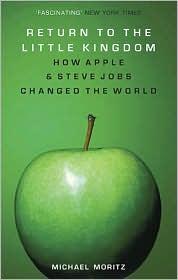
- Authored Return to the Little Kingdom, the first major book about Apple, published in 1984.
- More
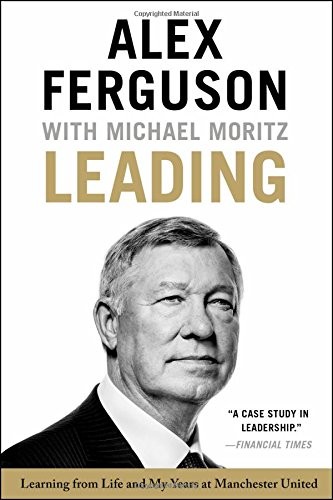
- Co-authored the book LEADING with Sir Alex Ferguson, the longtime Manager of Manchester United. Worked as a correspondent for Time and served as its San Francisco bureau chief.
From Michael's own website — common ground for a warm intro.
Deals · 3
Klarna Group plcBoard seat
via Sequoia Capital · filed Dec 2024 · $4.3M raise

Pocket Outdoor MediaBoard seat
via Sequoia Capital · filed Mar 2021 · $155M raise
Berkeley LightsBoard seat
via Sequoia Capital · filed Nov 2016 · $40M raise
Attribution from SEC filings, press coverage, and firm rosters.
Other disclosed investments
Board seats
24/7 CustomerA123 SystemsAricent GroupAtom EntertainmentCenterRunEarth NetworkseGroupsFlextronicsFormation BioFormation BioGameflyGoogleGreen DotGreen Dot CorporationHealthCentralInstacartInstacartInstacartITA SoftwareKayakKayak.comKlarnaLinkedInLuximPayPalPayPalPhenomeX (formerly Berkeley Lights)PlaxoPopSugarPure DigitalSaba SoftwareStravaStripeStripeWatershedYahooYahoo!Zappos
Investor
[24]7.aiA123 SystemsAgile SoftwareAtom EntertainmentBoom SupersonicBoom SupersonicCalifornia ForeverCenterRunCharlotte Tilbury BeautyCotendoCoupangDuffelEarth NetworksEonseToysFormation BioGameFlyGenevaGetirGoogleGreen DotHealthCentralInstacartITA SoftwareKAYAKKlarnaLinkedInLinkedIn CorporationLinkExchangeMacromediaMonzoOutsidePayPalPayPalPhenomeXPlaxoPopsugarProfessional Triathletes OrganisationPure Digital TechnologiesQuote.comSaba SoftwareSkaiSkyscannerSola SecurityStravaStripeWatershed Informatics Inc.WeatherBugWebvanWhatsAppWireScreenYahooYahoo!YouTubeZappos
Sources: curated public sources · SEC Form D filings · the investor's own website.
Founder fit — who Michael backs
Best fit historically: independent, obsessive founders with original ideas, working products or unmistakable user pull; young or unconventional teams able to explain a large ambition simply; leaders willing to withstand contrary opinion, recruit stronger colleagues and build for decades. He values depth, clarity, hunger, curiosity and an authentic relationship to the problem more than polished credentials.
Historically weak fits include consensus-shaped pitches, jargon replacing understanding, capital-intensive national rollout before local proof, dependence on Wall Street's willingness to fund losses, businesses requiring rapid mass behavior change without evidence, founders pursuing status rather than product, and teams unable to communicate or learn. His Netflix and Uber misses show that unfamiliar initial forms can also cause false negatives.
How to pitch
Explain the problem from first principles, demonstrate unusual knowledge, show the product and real user behavior, and tell a concise story that recruits employees and customers as well as capital. Define the first narrow proof point, capital required before it, why the opportunity can compound for a decade, and what you still do not know. Current outreach should recognize that Moritz left Sequoia's venture practice; this is historical/editorial guidance, not a live submission policy.
Stages: seed, early stage, select growth, public/personal long-term investment · Sectors: internet and search, consumer technology, financial technology and payments, marketplaces, enterprise software, media, climate software, global technology
Editorial inference from Michael's portfolio, writing and public record — not a published mandate.
Investment themes
9 documented themes from Michael's essays, talks and portfolio, grouped by what they say about founders.
▶More themes7
Learn fast without false expertise2016
His Oxford and journalism analogy emphasizes disciplined curiosity and decisions from incomplete information rather than pretending to possess permanent sector expertise.
For founders: Teach the investor something specific while showing how you update beliefs.
Look for the unexpected2016
Airbnb and DJI illustrate opportunities that did not fit conventional category buckets at entry.
For founders: Explain why the odd initial shape contains a much larger future rather than forcing a familiar label.
Narrative is operating infrastructure2025
Moritz argues founders need a clear story to persuade themselves, co-founders, employees, customers, investors and press; it is not cosmetic pitchcraft.
For founders: Build a truthful narrative with a distant summit and credible near missions.
Start infernos with one match1995
His Yahoo-era formulation favored small initial capital and large effects; Webvan later reinforced the danger of financing expansion before proof.
For founders: Show the smallest amount of capital that establishes a repeatable formula.
Renew teams across generations2015
His collaboration with Alex Ferguson highlights selection, standards, delegation, transition and rebuilding before decline becomes obvious.
For founders: Design succession and talent renewal as continuous operating work.
Technology leadership is not permanently American2015
Moritz argued that Chinese and other non-U.S. companies could lead the next technology era and helped Sequoia globalize; later geopolitical controversy requires separating his thesis from every affiliate investment.
For founders: Build from local insight toward global quality without assuming U.S. incumbency.
Talent is distributed; opportunity is not2012
Oxford access giving and Crankstart's mission apply his long-horizon institution-building lens to education and mobility.
For founders: For mission-driven work, connect resource allocation to durable access rather than prestige alone.
▶Founders & company building1
Depth, clarity and hunger2026
He identifies unusual understanding, clear communication and an irrepressible drive to make the product real as core entrepreneurial traits.
For founders: Demonstrate command, explain simply and show sustained action.
▶Governance & network states1
Preserve independence until the reason is compelling2002
PayPal rejected pressure and went public before accepting eBay's later offer; Moritz called Google a justified savior for YouTube because copyright threats were existential.
For founders: Treat acquisition as a strategic decision about mission and survival, not an automatic victory.
Books by Michael Moritz
Podcasts & interviews
featuring Michael MoritzFormer Sequoia Chairman Michael Moritz on Steve Jobs, Elon ...
Invest Like The Best
Former Sequoia Chairman Michael Moritz on Steve Jobs, Elon ...
Invest Like The Best
Former Sequoia Chairman Michael Moritz on Founders
Giant Ideas
Michael Moritz: Steve Jobs, Sequoia, and the Weight of History
James Baer
Journey Through Peril & Possibility - Sir Michael Moritz
Money Maze Podcast
Sir Michael Moritz in conversation with Richard Ovenden
Bodleian Libraries, University of Oxford · visit.bodleian.ox.ac.uk
6 more appearances
- Judgement, Compounding and the Weight of History2026-01-01
- The $1.4 Billion Advice from Michael Moritz, Chairman of Sequoia Capital #shorts #letstokpodcast2023-03-30
- Michael Moritz, Sequoia Capital partner2023-01-31
- Fireside Chat with Michael Moritz: Trends in VC Investment: How did we get here?2021-05-18
- Michael Moritz, Partner, Sequoia Capital2019-02-07
- Michael Moritz: Follow Your Instincts and Find Your Path [Entire Talk]2016-01-27
Writing
Memoir tracing his parents' escape from Nazi Germany, murdered relatives, outsider identity and contemporary warnings about authoritarianism. U.S. edition followed in September 2026.
Opinion urging business leaders to oppose destabilizing Trump administration policies.
Public governance letter defending Green Dot's board and management during an activist proxy contest.
Financial Times argument for global, especially Chinese, technology strength; disclosed Sequoia interests.
Collaboration with Sir Alex Ferguson on leadership, standards, teams, transition, adversity and institutional endurance; U.S. edition metadata uses 2016.
Sequoia essay on data factories, democratized tools and technology-driven disruption.
4 more posts
- The Little Kingdom: The Private Story of Apple Computer1984-01-01
- The Computer Moves In1983-01-03
- The Updated Book of Jobs1983-01-03
- Going for Broke: The Chrysler Story1981-01-01
Network3

Investors connected to Michael in public investor directories — a warm-intro map.
Frequently asked questions
- What is Michael Moritz's current role?
- He is Senior Advisor to HRTG Partners, the independent private-investment partnership formerly called Sequoia Heritage, and chairman of Klarna Group plc. His Instacart board term ended at the 2026 annual meeting.
- When did he lead and leave Sequoia?
- Published sources date his co-leadership with Doug Leone from 1995 or the formal 1996 succession. He relinquished day-to-day management in 2012 for health reasons, remained chairman/partner and left the venture partnership effective July 19, 2023.
- Which investments are most clearly Moritz-led?
- Strong first-person, issuer or Sequoia evidence supports Yahoo, X.com/PayPal, Google, Zappos, Kayak, Klarna, Stripe and Instacart. LinkExchange, [24]7.ai, Green Dot, Watershed and Getir have official partner/board attribution with less deal-level detail.
- Did Michael Moritz lead Sequoia's YouTube investment?
- No. Roelof Botha originated the investment, wrote the memo and served on YouTube's board. Moritz led Sequoia and sat on Google's board, and later defended the acquisition, but those facts do not make the deal his.
- Did he originate LinkedIn's Sequoia investment?
- Sequoia's archive lists Moritz as a partner, but Mark Kvamme held the board seat from the 2003 first outside investment. Moritz replaced Kvamme in January 2011 and served until June 2016, so sole origination is not claimed.
- What failed investments and misses has he acknowledged?
- Webvan is his clearest self-described failure; eToys also lost money. He regretted passing on Netflix and said he underestimated Uber's potential. Exact Sequoia fund losses and his personal economics are not public.
- What does he look for in founders?
- Unusual depth of understanding, clear communication, irrepressible hunger, originality, real product or user evidence, rapid learning and the ability to tell a compelling long-term story.
- How should a founder pitch him?
- Historically: explain the problem simply, show unusual knowledge and real behavior, define the smallest repeatable proof point, address capital intensity and tell a story capable of recruiting a company. He is no longer a Sequoia venture partner, so this is not current submission guidance.
- What happened in the 2024 Klarna board dispute?
- A Sequoia representative requested Moritz's removal as chairman amid internal governance disputes. Sequoia withdrew the request after fuller assessment, apologized, supported him and replaced its representative. Moritz remained chair through Klarna's 2025 IPO and 2026 AGM.
- Why were his comments about women in venture criticized?
- In 2015 he linked Sequoia's all-male investing partnership to a pipeline problem and said it would not lower standards, language critics said falsely framed diversity as a standards trade-off. He then clarified that many remarkable women would flourish in venture and that Sequoia wanted to hire them.
- What are Crankstart's priorities?
- The family foundation focuses on economic mobility, education, housing, democracy and civil rights, environment/climate, basic science and arts, with about 60% of grants in the Bay Area. It is separate from Sequoia, HRTG and Moritz's personal investments.
- What books has he written?
- Going for Broke with Barrett Seaman (1981), The Little Kingdom (1984), its revised Return to the Little Kingdom (2009), Leading with Sir Alex Ferguson (2015; U.S. 2016), and the family memoir Ausländer (2026).
- What is publicly known about his family background?
- He was born in Cardiff in 1954 to German-Jewish refugees Alfred/Ludwig and Doris Moritz, is married to author and sculptor Harriet Heyman, and public sources identify two sons. Ausländer documents the refugee and Holocaust history; unnecessary private details are excluded.
- Who is Michael Moritz?
- Michael Moritz began as a Time journalist who wrote an early book on Apple, then joined Sequoia Capital in 1986 and backed Google, Yahoo, PayPal, and Stripe. He served as one of Sequoia's leaders alongside Doug Leone before stepping away from the firm in 2023 after nearly four decades. He now advises Sequoia Heritage, the independent wealth-management office he helped launch, and funds large-scale philanthropy through Crankstart.
About this profile. Compiled from public sources — Sequoia Heritage's own website, regulatory filings, press coverage and public professional profiles — and summarised by Fundraising Fox; every fact is kept with where it came from. Spotted an error, or would rather not be listed? Email privacy@fundraisingfox.com · How we build profiles · Your rights