 Fundraising Fox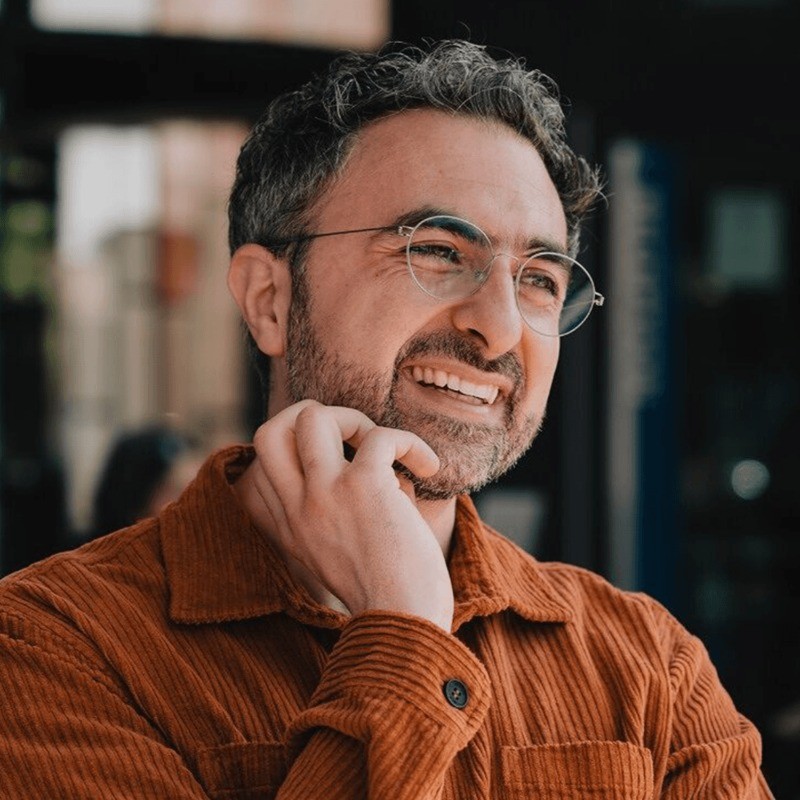
Mustafa Suleyman
InvestorUnicorn founderFounder at Inflection AI · Venture Partner at Greylock Partners · Founder at Google Deepmind
Seattle, WA
Writes $2M – $20M checks · typically $10M


Find your path to Mustafa
1,524 people in our graph can introduce you to Mustafa.
Each arrow is one introduction. Sign up to fill in the first one.
Ask Alex Constantinople to introduce you to Mustafa
You →Alex · together at Inflection AI (2023–2024) →Mustafa
Ask Jamie Chen to introduce you to Mustafa
You →Jamie · 2 people · together at Inflection AI →Mustafa
Ask Sam Okafor to introduce you to Mustafa
You →Sam · together at Google Deepmind →Mustafa
Sign up to find every way you can get introduced to Mustafa
- Your email: the people you already email who know Mustafa
- 2nd- and 3rd-degree connections: people you know who worked, studied or invested with Mustafa
- Your LinkedIn: the connections who can make the intro for you
We rank every route by how warm it is, so you raise on warm intros instead of cold emails.
About
Mustafa Suleyman has co-founded two of the defining AI companies of the century and now runs a third effort inside the largest software company in the world. He started DeepMind in 2010 with Demis Hassabis and Shane Legg — Google bought it in 2014 for a reported £400 million — and Inflection AI in 2022 with Reid Hoffman, which raised $1.3 billion before Microsoft paid roughly $650 million to license its technology and hire its team. Since March 2024 he has been CEO of Microsoft AI, where he leads the MAI Superintelligence Team and shipped seven in-house frontier models in 2026. He is a CBE, a founding co-chair of the Partnership on AI, and the author of The Coming Wave.
Beyond investing
- Founded
- Cofounded Inflection AI and served as its CEO. Cofounded DeepMind, which Google acquired in 2014.
- Boards
- Sits on the board of The Economist.
- Communities
- Is a Senior Fellow at the Belfer Center for Science and International Affairs at the Harvard Kennedy School.
- Awards
- Authored The Coming Wave, which Bill Gates called his favourite book about AI.
- More
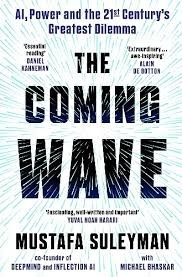
- Wrote the book The Coming Wave: Technology, Power, and the Twenty-first Century's Greatest Dilemma, published in September 2023. Gave a TED talk setting out a vision for the future of artificial intelligence.
Mentioned above: the Google mafia → · the Inflection AI mafia →
From Mustafa's own website — common ground for a warm intro.
Founder at Inflection AI
Intro paths
In turn, Mustafa can intro founders to Inflection AI's investors below.
Inflection AI's investors · 15









Co-founders at Inflection AI

Founder at Google Deepmind
Intro paths
In turn, Mustafa can intro founders to Google Deepmind's investors below.
Google Deepmind's investors · 5


Co-founders at Google Deepmind

Experience
- MicrosoftCEO, Microsoft AIcurrent2024 — presentRedmond, Washington, United States
- The EconomistNon Executive Directorcurrent2019 — presentLondon, England, United Kingdom
- Inflection AICo-founder & CEO2022 — 2024
- GreylockVenture Partner2022 — 2024Palo Alto, California, United States
- GoogleVP, AI Product Management & AI Policy2020 — 2022Mountain View, California, United States
- DeepMindCo-founder & Head of Applied AI2014 — 2020London, United Kingdom
- DeepMindCo-founder & Chief Product Officer2010 — 2014
- Reos PartnersCo-founder & Partner2007 — 2010



Investments
Investor
AforiAnteriorApplied IntuitionBasetenDeepsetDICEEat JustElevenLabsEntrepreneur FirstForwardNetomiPacific FusionPhaidraSeek AIThreadUplimitwefox
Per curated public sources.
Public positions
He treats proliferation as the default and containment as the work — the argument that a technology's danger comes less from any single lab's intentions than from how cheaply and quickly it spreads once it exists. Applied to products it produces an assistant with memory and emotional register rather than a query box; applied to Microsoft it produces a lab that trains its own models rather than renting someone else's.
2016 · AI in healthcare
Launching DeepMind Health, he argued that clinical impact — not benchmark scores — is how applied AI should be judged, and that patient trust has to be earned through transparency about data use.
The first serious attempt by a frontier lab to deploy into a regulated clinical setting.
2023 · Containing the coming wave
AI and synthetic biology will proliferate faster and more cheaply than any technology before them; containment — not acceleration or prohibition — is the defining governance problem, and it needs technical, corporate and state action at once.
The book that made him one of the most-cited voices on AI governance.
2024 · Training data
He described openly published web content as freeware for AI training absent an explicit opt-out — a position that drew immediate and sustained criticism from publishers and rightsholders.
One of the sharpest public disagreements between a frontier-lab executive and the content industry.
2025 · Humanist superintelligence
Superintelligence should be built to be bounded and aligned to human purposes by design — subordinate, controllable and aimed at medical diagnosis, clean energy and education rather than open-ended autonomy.
The stated charter of Microsoft's superintelligence effort.
2026 · Owning the model stack
Microsoft was, in his words, set free by the revised OpenAI agreement to pursue its own frontier models, and long-term self-sufficiency means training from scratch rather than distilling from rivals.
Marks the point Microsoft became a frontier lab in its own right rather than a distribution partner.
Prediction record
The Coming Wave's central call — that capability would proliferate faster than governance could follow — held within two years. His bet that the winning consumer interface would be a persistent companion rather than a search box also held, though Inflection's Pi was not the product that got there. Whether Microsoft's in-house MAI models reach the frontier is open.
AI capability would proliferate far faster and cheaper than governments could regulate it
Correct2023 · Years
Open-weight models at or near frontier capability were widely available within two years of publication, well ahead of any binding international framework.
The book's containment prescriptions remain largely untested.
The dominant consumer AI interface would be a persistent, memory-carrying companion rather than a search box
Correct2023 · Years
Memory, personalisation and long-running assistants became standard across every major consumer assistant by 2026.
Inflection's own Pi was not the product that got there; the thesis outlived the company.
Microsoft can reach the frontier with in-house models rather than licensed ones
Open2025 · Years
Seven MAI models shipped at Build 2026; whether they close the gap to the leading labs is not yet settled.
He is the executive whose mandate depends on the answer.
Controversies & responses
Where Mustafa has drawn public criticism — with what happened, their response, and the criticism itself, side by side.
▶Training data and 'fair use'2024
- What happened
- In a CNBC interview he characterised content published openly on the web as freeware that AI companies may train on, unless a publisher has explicitly opted out.
- The response
- He has since emphasised licensed data as the basis for Microsoft's own MAI models, which were trained without distilling outputs from competing frontier models.
- The criticism
- Publishers, authors and rightsholders rejected the characterisation, and it remains one of the most-quoted statements in the training-data debate.
- Where it stands
- Ongoing industry dispute rather than a resolved matter.
Investment themes
4 documented themes from Mustafa's essays, talks and portfolio, grouped by what they say about founders.
▶AI & media4
Containment is the problem, not capability2023
The Coming Wave argues that AI and synthetic biology are proliferating faster and cheaper than any prior technology, that the historical pattern is for such waves to spread regardless of intent, and that the open question is whether they can be contained without either catastrophe or a surveillance state.
For founders: If you build in a dual-use field, expect him to ask about the containment story, not just the capability story.
Humanist superintelligence — always on humanity's side2025
His framing for the MAI Superintelligence Team is that the goal is not autonomous, unbounded intelligence but systems designed and bounded to serve human ends: medical diagnosis, clean energy, and an AI companion that helps people learn and act.
For founders: Application to a named human problem beats a generic capability pitch.
A frontier lab has to own its own models2026
The seven MAI models were built from scratch on licensed data with no outputs distilled from competing frontier models — his stated argument being that long-term self-sufficiency requires owning the stack rather than renting it.
For founders: Dependency on another lab's models is a strategic position with a shelf life.
AI as a relationship, not a tool2023
From Pi at Inflection to Copilot at Microsoft, his consistent product bet is that the winning interface is a persistent companion with memory and emotional register, rather than a stateless question-answering box.
For founders: Retention and memory are the product, not features bolted onto one.
Books by Mustafa Suleyman
Podcasts & interviews
featuring Mustafa SuleymanColleagues at Greylock Partners

Network1
Investors connected to Mustafa in public investor directories — a warm-intro map.
Frequently asked questions
- Who is Mustafa Suleyman?
- Mustafa Suleyman has co-founded two of the defining AI companies of the century and now runs a third effort inside the largest software company in the world. He started DeepMind in 2010 with Demis Hassabis and Shane Legg — Google bought it in 2014 for a reported £400 million — and Inflection AI in 2022 with Reid Hoffman, which raised $1.3 billion before Microsoft paid roughly $650 million to license its technology and hire its team. Since March 2024 he has been CEO of Microsoft AI, where he leads the MAI Superintelligence Team and shipped seven in-house frontier models in 2026. He is a CBE, a founding co-chair of the Partnership on AI, and the author of The Coming Wave.
- Where does Mustafa Suleyman work?
- Mustafa Suleyman is Founder of Inflection AI and Venture Partner at Greylock Partners and Founder at Google Deepmind.
- What check size does Mustafa Suleyman write?
- Mustafa Suleyman typically writes checks of $2M – $20M.
- What companies did Mustafa Suleyman found?
- Mustafa Suleyman founded Inflection AI, Google Deepmind.
- What companies has Mustafa Suleyman invested in?
- Investments tracked here include Afori, Anterior, Applied Intuition, Baseten, Deepset, DICE, Eat Just, ElevenLabs, Entrepreneur First, Forward, Netomi, Pacific Fusion, and 5 more.
- What awards has Mustafa Suleyman received?
- Authored The Coming Wave, which Bill Gates called his favourite book about AI.
- What podcasts and interviews feature Mustafa Suleyman?
- Tracked appearances include "Microsoft's AI chief on the greatest game of catchup ever played", "Microsoft AI chief says company was 'set free' from OpenAI to pursue superintelligence", "What Is an AI Anyway? | Mustafa Suleyman | TED", and 1 more.
Founder mafias
Google mafia1,682
Also came through, then founded or led a company.


Microsoft mafia1,474
Also came through, then founded or led a company.



Google Deepmind mafia56
Also came through, then founded or led a company.
Greylock Partners mafia19
Also came through, then founded or led a company.

Shared employers
Also worked at Microsoft2,000
+ 1,994 more
Also worked at The Economist28

+ 22 more
Also worked at Greylock102



+ 96 more
Also worked at Google2,000



+ 1,994 more