 Fundraising Fox
Google Deepmind
AcquiredLondon, GB · Founded 2010 · 5 known investors
Find your way into Google Deepmind
Sign up to see every warm intro you have to Google Deepmind
- Paths you didn't know you had: your email and LinkedIn already hold routes to the Google Deepmind team. We find them for you
- 2nd- and 3rd-degree connections: the friend-of-a-friend routes that take hours to manually find through your inbox or LinkedIn
- Answers now, not in days: momentum is everything in a raise. Skip asking around whether someone knows someone
Days of research, done the moment you sign in, with every route ranked by how warm it is.
Google DeepMind is an AI research lab, formed by combining Google Brain and DeepMind, that develops general AI systems and works toward artificial general intelligence. Its research has produced breakthroughs across reinforcement learning, protein structure prediction, language models, robotics, and generative AI.
Also known as DeepMind · DeepMind Technologies Limited · Google DeepMind
Founders & leadership
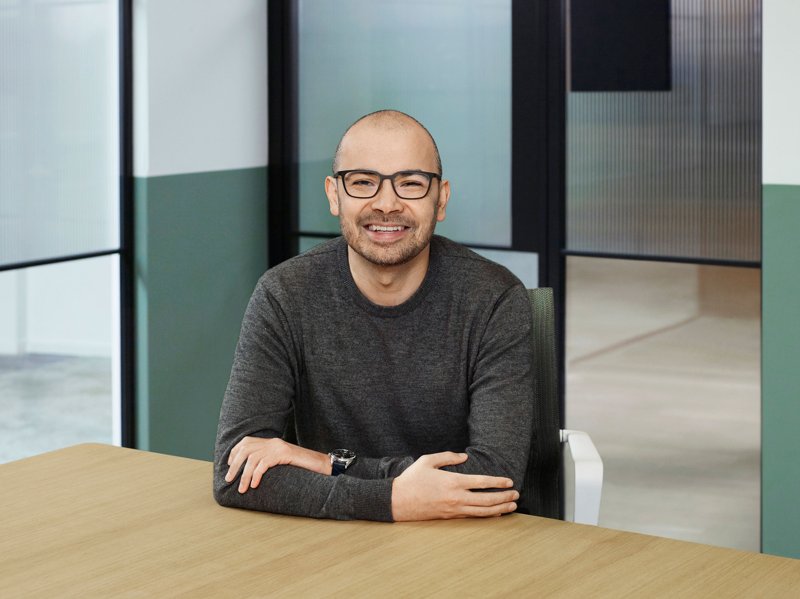
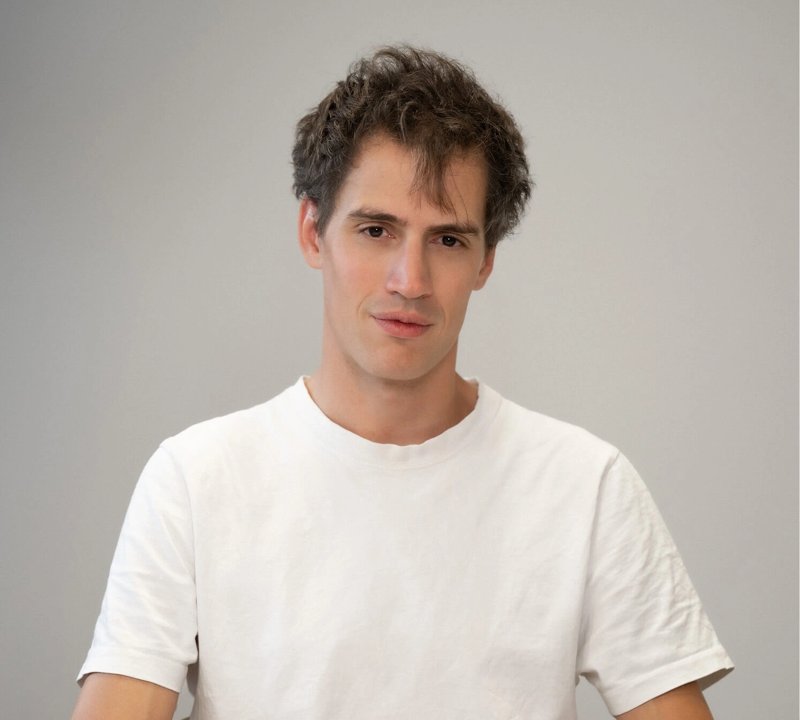
Google Deepmind was founded in 2010 by Shane Legg, Mustafa Suleyman, and Demis Hassabis.



Investors · 5

How we know: Founders Fund's portfolio page · Wikidata · open dataset · 5k.vc investor directory · Not right? Tell us

How we know: Long Journey Ventures's portfolio page · the VCSheet dataset · Not right? Tell us

How we know: Metaplanet's portfolio page · the VCSheet dataset · Not right? Tell us
Company profile
researched Aug 2026Google DeepMind, legally DeepMind Technologies Limited, is an artificial intelligence research laboratory headquartered in London and operating as a subsidiary of Alphabet Inc. It was founded in the UK in 2010, acquired by Google in 2014, and in April 2023 merged with Google AI's Google Brain division to form Google DeepMind under CEO Demis Hassabis. The organization maintains research centres in the United States, Canada, France, Germany and Switzerland, and describes its mission as building AI responsibly to benefit humanity, with artificial general intelligence (AGI) as a long-term objective.
The lab's output spans reinforcement learning and game-playing systems (DQN for Atari, AlphaGo, AlphaZero, MuZero, AlphaStar, SIMA 2), scientific applications (AlphaFold protein structure prediction, AlphaGenome, WeatherNext weather forecasting, plasma control for nuclear fusion, AlphaEarth Foundations), mathematics and algorithm discovery (AlphaGeometry, FunSearch, AlphaCode, AlphaDev, AlphaTensor, AlphaEvolve), and generative AI. Google DeepMind is responsible for two large language model families — the proprietary Gemini line and the open-weight Gemma line — alongside Imagen (text-to-image), Veo and Gemini Omni (video), Nano Banana (image), Lyria (music), Gemini Audio and Gemini Robotics. The Google Brain lineage contributed the Transformer architecture (2017), BERT, LaMDA, the PaLM model family, JAX and TensorFlow, robotics work such as PaLM-SayCan and RT-2, and speech and creative projects including WaveNet, the Universal Speech Model, Project Euphonia and Magenta.
Models are distributed through Google surfaces and developer platforms including the Gemini app, Google AI Studio, the Gemini API and Live API, Google Flow and Flow Music, Google Antigravity and the Gemini Enterprise Agent Platform. The company also publishes research papers, runs a responsibility and safety program, and reported products including Aluminium OS, an AI core for Android PCs.
Founding story
DeepMind was incorporated on 23 September 2010 and officially launched on 15 November 2010 by Demis Hassabis, Shane Legg and Mustafa Suleyman. Hassabis and Legg first met at the Gatsby Computational Neuroscience Unit at University College London. The founders set out to build general-purpose AI useful for almost any task, beginning by teaching systems to play 1970s and 1980s Atari video games such as Breakout, Pong and Space Invaders without any programmed knowledge of the rules. Early venture backers included Horizons Ventures and Founders Fund, along with entrepreneurs Scott Banister, Peter Thiel and Elon Musk; Jaan Tallinn was an early investor and adviser. Needing a well-funded backer for salaries and compute, the company was courted by Facebook, Musk, Google and others before Google confirmed its acquisition in January 2014.
Business model
Google DeepMind operates as a wholly owned research subsidiary of Alphabet Inc., conducting AI research and developing models that are deployed across Google products and developer platforms rather than being sold as an independent standalone business. It reported revenue of £1.33 billion, operating income of £217 million and net income of £174 million for 2024.
As an Alphabet subsidiary, the company reported £1.33 billion of revenue in 2024 with £217 million operating income and £174 million net income; its models are commercialized through Google product and developer platforms including the Gemini API and Gemini Enterprise Agent Platform.
Traction
The AlphaFold database released over 200 million predicted protein structures in July 2022, representing virtually all known proteins. The company reported approximately 6,000 employees in 2025 and 2024 revenue of £1.33 billion. Its models power Google products, and WeatherNext forecasts were used by the U.S. National Hurricane Center in predicting Hurricane Melissa's landfall in Jamaica.
Latest developments
Recent product and research announcements include Gemini 3.7 Flash, Gemini Omni 1.1 Flash, Gemini 3.5 Transcribe, Nano Banana 2 Lite, Gemma 4, Lyria 3.5, Gemini Robotics 2 and Gemini Robotics ER 2, Gemini 3.6 Flash, Gemini 3.5 Flash-Lite and Gemini 3.5 Flash Cyber, DiffusionGemma, Gemini 3.5 Live Translate, computer use in Gemini 3.5 Flash, Co-Scientist and Gemini for Science. The company also announced a research partnership with A24, a $40 million Google commitment to the Genesis Mission for scientific discovery, a pilot of double-blind AI evaluations, and initiatives in multi-agent AI safety, agent security and bioresilience.
▸Full profile — market position, technology, go-to-market, geography, history, risks & controversies
Market position
Google DeepMind is described as one of the world's leading AI research laboratories, formed by combining two labs — Google Brain and DeepMind — that produced many of the research breakthroughs underpinning the modern AI industry, including the Transformer architecture and deep reinforcement learning. It is a frequent source of senior AI talent for new independent labs; former reinforcement learning lead David Silver founded Ineffable Intelligence and former engineer Tim Rocktäschel founded Recursive Superintelligence.
The lab combines interdisciplinary research drawing on machine learning, neuroscience, engineering, mathematics, simulation and computing infrastructure, and pairs frontier model development with scientific applications. It cites access to Google's computing infrastructure, a guiding scientific method, and a dedicated responsibility and safety program covering areas such as double-blind AI evaluations, multi-agent AI safety, agent security and bioresilience.
Technology
Core technical approaches include deep learning combined with reinforcement learning (deep RL), self-play training, world models such as Genie 3, multimodal and generative models, and large-scale transformer-based language models. The technology portfolio covers the Gemini and Gemma model families, Gemini Omni, Gemini Audio, Gemini Robotics and Gemini Robotics ER, Veo, Imagen, Nano Banana, Lyria, AlphaFold, AlphaGenome, AlphaEarth Foundations, WeatherNext, SynthID for identifying AI-generated content, and open-source infrastructure such as JAX and TensorFlow. Research areas extend to agents (SIMA 2, Co-Scientist), robotics, speech recognition and translation, and AI safety and interpretability.
Go-to-market
Research and models are released through Google's consumer and developer surfaces — the Gemini app, Google AI Studio, Gemini API and Live API, Google Flow, Google Antigravity and the Gemini Enterprise Agent Platform — alongside open model releases (Gemma, DiffusionGemma, DolphinGemma), public databases such as AlphaFold's protein structure release, published research papers, a company news blog and a podcast.
Consumers using Google's AI applications, software developers and enterprises building on Gemini models via Google AI Studio, the Gemini API and the Gemini Enterprise Agent Platform, and the scientific and research community using tools such as AlphaFold, WeatherNext, Gemini for Science and Co-Scientist.
Geography
Headquartered in London, England, at Platform 37 in Kings Cross Central, with research centres in the United States, Canada, France, Germany and Switzerland. Programs referenced include work in the United Kingdom (house-building planning), India (ATL Saathi), Sierra Leone (learning impact measurement) and Europe (robotics).
History
DeepMind pioneered deep reinforcement learning, using games as a testbed: DQN learned 49 Atari games from raw pixels, AlphaGo (unveiled 2015) became the first program to defeat a Go world champion — beating Lee Sedol in a five-game match in 2016 — and successors AlphaZero and MuZero generalized across games and real-world problems such as YouTube video compression and algorithm discovery. In 2019 AlphaStar defeated a top professional StarCraft II player. Other milestones include neural Turing machines (2014), WaveNet text-to-speech used as the voice of Google Assistant, and AlphaFold (2020), whose database released over 200 million predicted protein structures in July 2022. Google Brain began in 2011 at X, the moonshot factory, and invented the Transformer architecture in 2017. Following Google's 2014 acquisition, the company established an AI ethics board whose membership was not disclosed, later creating DeepMind Ethics and Society with philosopher Nick Bostrom as adviser and launching a dedicated AI ethics research team in October 2017. In September 2015 DeepMind and the Royal Free NHS Trust signed an information-sharing agreement to co-develop the clinical task management app Streams. Co-founder Mustafa Suleyman announced his departure in December 2019. In April 2023 DeepMind and Google Brain were combined into Google DeepMind.
Risks & controversies
After Google's acquisition, the AI ethics board established by the company was not publicly disclosed, with both Google and DeepMind declining to identify its members. The company's NHS work, including the September 2015 information-sharing agreement with the Royal Free NHS Trust to build the Streams app, is noted in its history. Google DeepMind is also associated with the Google Gemini image generation controversy in coverage of AI controversies. Co-founder Mustafa Suleyman announced his departure in December 2019, and several senior researchers have left to found competing AI labs.
Compiled by commissioned research from 8 cited public sources — announcements, filings, and press listed under research sources below.
Key figures
latest reportedCompany-reported or press-reported figures, each dated to when it was claimed — not independently audited.
Founder mafia
The Google Deepmind mafia →56 people who came through Google Deepmind went on to found or lead other companies.






Timeline · 19
launches, deals, and filingsReleased Gemini 3.5 Transcribe, a speech-to-text model designed for intelligent voice interactions.
Introduced Gemini 3.7 Flash, described as the company's most intelligent workhorse model for coding and agents.
Released Gemini Omni 1.1 Flash, offering greater creative control and production-ready outputs.
Google announced a $40 million commitment to the Genesis Mission to accelerate the frontiers of scientific discovery.
$40M source ↗
Launched Gemini Robotics 2, an intelligence layer for robots with whole body intelligence, and Gemini Robotics ER 2 with video understanding, task orchestration and multi-robot collaboration.
Launched Lyria 3.5 in Google Flow Music with advances across musicality, lyrics, vocals and creative control.
Google DeepMind and A24 announced a first-of-its-kind research partnership.
Google DeepMind received the 2024 MacRobert Award for its AI weather forecasting technology, GraphCast, recognizing engineering innovation in the UK.
The 2024 Nobel Prize in Chemistry was awarded to co-founder Demis Hassabis and researcher John Jumper for their work on AlphaFold.
DeepMind merged with Google AI's Google Brain division to become Google DeepMind, a single team led by CEO Demis Hassabis.
It was announced that over 200 million predicted protein structures, representing virtually all known proteins, would be released on the AlphaFold database.
DeepMind launched AlphaFold, an AI system that predicts 3D models of protein structures and achieved state-of-the-art records on protein folding benchmark tests.
Co-founder Mustafa Suleyman announced he would be leaving DeepMind.
DeepMind demonstrated AlphaStar, the first AI system to defeat a top professional player at StarCraft II.
DeepMind launched a new research team to investigate AI ethics, following the creation of the DeepMind Ethics and Society unit with philosopher Nick Bostrom as adviser.
DeepMind and the Royal Free NHS Trust signed their initial information sharing agreement to co-develop Streams, a clinical task management app, as part of a pilot program to modernize NHS information systems.
DeepMind unveiled AlphaGo, the first computer program to defeat a Go world champion; in 2016 it beat Lee Sedol in a five-game match.
Google confirmed its acquisition of DeepMind for a price reportedly ranging between $400 million and $650 million; the company was afterwards renamed Google DeepMind.
DeepMind received the "Company of the Year" award from the Cambridge Computer Laboratory.
Dated company events from announcements, filings, and press; legal rows summarize public dockets and regulator releases.
▸Research sources · 8
primary sources listed
- Google Deepminddeepmind.google · web
8 public sources were cited for this profile; the first-party ones are listed here.
Frequently asked questions
- What does Google Deepmind do?
- British-American AI research lab and Alphabet subsidiary behind Gemini, AlphaFold and other AI models.
- Who founded Google Deepmind?
- Google Deepmind was founded by Shane Legg, Mustafa Suleyman, Demis Hassabis in 2010.
- Who are Google Deepmind's investors?
- Google Deepmind's investors include Founders Fund, Horizons Ventures, Long Journey Ventures, Metaplanet, Moonfire Ventures.
- Where is Google Deepmind headquartered?
- Google Deepmind is headquartered in London, GB.