Fundraising Fox
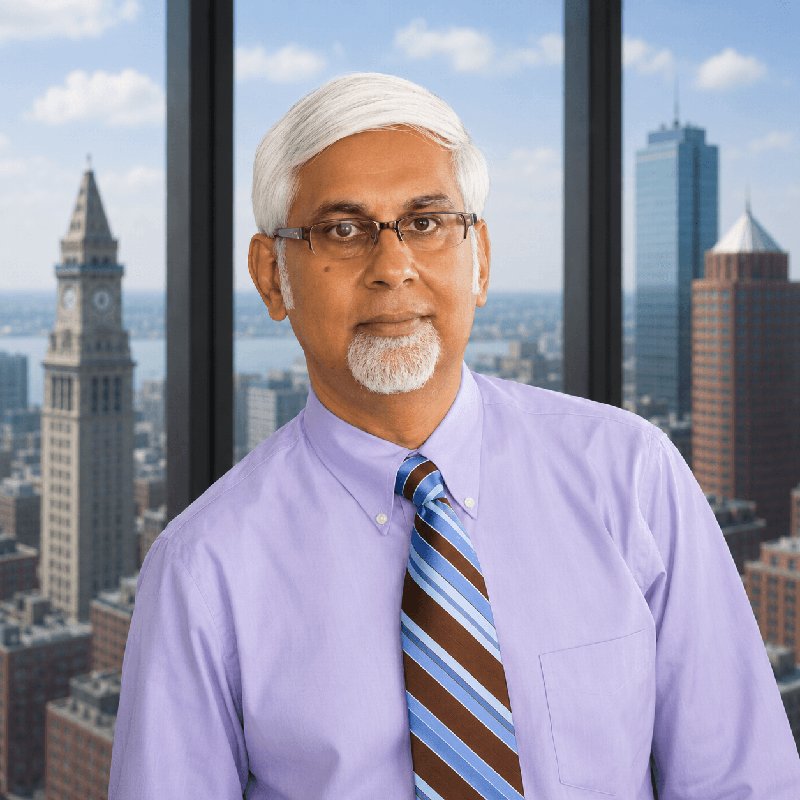
Michael Skok
InvestorPartner at Underscore VC · Board director at TetraScience · Board director at CloudZero · Board director at Acquia
Boston, Massachusetts
Writes $1M – $5M checks · typically $2.5M
Find your path to Michael
1,094 people in our graph can introduce you to Michael.
Each arrow is one introduction. Sign up to fill in the first one.
Ask Michael Kruszynski to introduce you to Michael
You →Michael · together at Salsify (2018–2024) →Michael
Ask Jamie Chen to introduce you to Michael
You →Jamie · together at Demandware →Michael
Ask Sam Okafor to introduce you to Michael
You →Sam · together at Acquia →Michael
Sign up to find every way you can get introduced to Michael
- Your email: the people you already email who know Michael
- 2nd- and 3rd-degree connections: people you know who worked, studied or invested with Michael
- Your LinkedIn: the connections who can make the intro for you
We rank every route by how warm it is, so you raise on warm intros instead of cold emails.
About
Michael Skok is a company founder, investor, and educator who has spent over 40 years working with entrepreneurs, contributing to the creation of six unicorns as a founder, investor, or board member. He built and ran several software businesses starting at age 16, including Skok Systems, European Software Publishing, and Alphablox (acquired by IBM in 2001), before moving into venture capital. In 2002 he developed the "Everything as a Service" thesis and backed companies including Demandware, Acquia, and Revolution Analytics, later founding Underscore VC in 2015 to invest in B2B software startups from Seed to Series A. He is currently an Executive Fellow at Harvard Business School, where his "Startup Secrets" programs have drawn more than 10 million YouTube views. Following a 2019 brain tumor diagnosis, he retired from active management at Underscore and now focuses on mentoring, writing, and volunteer work.
Invests in
AI & Machine LearningCloud ComputingCrypto & Web3CybersecurityData & InfrastructureDeveloper ToolsE-commerceEnterprise SoftwareIoTSaaS
Beyond investing
- Founded
- Founded Underscore VC in 2015 after a year-long listening tour interviewing hundreds of entrepreneurs. Started his first software business at age 16 using the HP 65, the world's first programmable calculator. Founded European Software Publishing, a firm helping US software companies establish themselves in Europe. Co-founded Alphablox, a real-time in-line analytics company acquired by IBM in 2001. Built Skok Systems, a desktop computer-aided design system licensed by Hewlett Packard, with his brother. Founded the Future of Open Source and Future of Cloud Computing industry surveys.
- Communities
- Runs the 'Startup Secrets' programs at the Harvard Innovation Labs and Business School.
- Awards
- His articles on startup strategy have been published in The Wall Street Journal, Forbes, and Harvard Business Review.
- Hobbies
- Amateur photographer who shares his images on Instagram and Unsplash; all his site's background images are his own. Enjoys sports including skiing, kiteboarding, and pickleball. Manages a personal portfolio of public stocks and shares it with family and friends.
- Family
- Married with a daughter and a large extended family.
- More
- Was diagnosed with a brain tumor in 2019 and retired from active management at Underscore VC.
From Michael's own website — common ground for a warm intro.
Board director at TetraScienceYC S15
Intro paths
TetraScience went through Y Combinator (Summer 2015) — Michael sits on its board, so any YC alum in your network can reach them through the company's founders.
In turn, Michael can intro founders to TetraScience's investors below.
TetraScience's investors · 17




.png)




Co-founders at TetraScience


Board director at CloudZero
Intro paths
In turn, Michael can intro founders to CloudZero's investors below.
CloudZero's investors · 5

Co-founders at CloudZero

Board director at Acquia
Intro paths
In turn, Michael can intro founders to Acquia's investors below.
Acquia's investors · 11



Co-founders at Acquia
Experience
- Underscore VCFounding Partner Emerituscurrent2015 — presentGreater Boston Area
- Harvard Business SchoolExecutive Fellowcurrent2022 — presentCambridge, Massachusetts, United States
- Harvard Business SchoolEntrepreneur in Residence2015 — 2022Greater Boston Area
- SalsifyCo-Lead Investor and Board Membercurrent2013 — presentGreater Boston Area
- Startup Secrets | Michael J. SkokPrincipal Ownercurrent2012 — presentBoston, Massachusetts, United States
- MoltinLead Investor, Board Member2017 — 2023Greater Boston Area
- MauticLead Investor and Board Member2016 — 2023
- ZaiusInvestor, Board Member2016 — 2023Greater Boston Area
- AcquiaLead Investor and Board Member2008 — 2023
- Demandware (NYSE:DWRE)Co-Lead Investor and Board Member2004 — 2015Greater Boston Area
- Apperian, Inc.Co-Lead investor and Board Member2011 — 2014Boston
- UnideskBoard Member and Investor2008 — 2014Greater Boston Area
- North Bridge Venture PartnersGeneral Partner2002 — 2014
- AlphaBloxCEO, Founder1996 — 2001
- European Software PublishingChairman and CEO1988 — 1995
- SymantecUK Founder, Managing Director1987 — 1992







Skills & more
+12 more
AnalyticsBusiness IntelligenceMobile ApplicationsEntrepreneurshipMobile TechnologyAmateur PhotographerProduct ManagementExecutive ManagementAgile MethodologiesMobile DevicesTeam BuildingSoftware DevelopmentFrom Michael's professional profile.
Investments
Led
Acquia
Board seats
AcquiaApperianCloudZeroCloudZeroDemandwareMauticMoltinSalsifySaphoTetraScienceTetraScienceZaius
Investor
AcquiaActive Endpoints; rPath; RIFT.IO; Kubi Software; Akiban TechnologiesApperianBroader Underscore portfolioBusRightCazenaCloudZeroCodaDemandwareEMC; Microsoft; Cisco; Apple; Amazon; NvidiaForge.AIFXPFXP and BusRightHelloTeamKubi SoftwareLumigent TechnologiesMauticMoltinProject 44project44Revolution AnalyticsSalsifyTetraScienceUnideskWis.dmZaius
Sources: the investor's own website · the firm's website · curated public sources · SEC Form D filings.
Founder fit — who Michael backs
Best fit is a bold, missionary founder who deeply understands a large, unavoidable problem, is uniquely qualified by experience or insight, can attract an exceptional team, listens and learns, and wants aligned community help. Skok prizes people before narrow themes, founder self-awareness, customer validation, a discontinuous rather than incremental advantage, and willingness to evolve roles as the company grows. Repeat and experienced teams matter, but he also supports academic founders and first-time entrepreneurs when problem insight and mission are strong.
Likely weak fits are idea-first pitches without a consequential problem; incremental feature advantages; latent aspirations presented as urgent necessities; gains too small to overcome switching cost and inertia; diffuse initial markets; teams lacking distinctive qualification or customer evidence; founders attached to title or ego over mission; valuation-led fundraising without company-building substance; and opportunities assigned to Skok merely because they appear in the current Underscore portfolio. These are synthesized from his teaching and are not a formal current exclusion list.
How to pitch
Start with the minimum viable problem and primary beneficiary, test it against the 4Us, quantify the gain/pain ratio, and use customers' words. Define a minimum viable segment before claiming a huge market. Present a compelling story—not a checklist—covering team, problem, value proposition, market, differentiated solution, business model, go-to-market, milestones, finances and funding ask. Explain why the founders are uniquely qualified and how the company can build unfair advantage. Validate with customers and references. For fundraising, distinguish Skok's advisory emeritus role from a current Underscore sponsor and confirm the actual decision partner, fund, check, reserves, governance and Core Partner expectations.
Stages: historical company formation and seed, historical North Bridge seed to growth, Underscore Seed to Series A at founding, current Underscore pre-seed and seed, firm-wide, select follow-ons, exceptional later-stage opportunities · Sectors: B2B software, SaaS and cloud services, open source, commerce and product experience, big data and analytics, cloud data infrastructure, AI and machine learning, IoT and scientific data, mobile and application management, cybersecurity, developer and workplace collaboration, supply-chain software, customer data and marketing automation, virtual and augmented reality, academic spinouts
Editorial inference from Michael's portfolio, writing and public record — not a published mandate.
Investment themes
12 documented themes from Michael's essays, talks and portfolio, grouped by what they say about founders.
▶More themes11
Everything as a Service2002
Companies increasingly outsource non-core capabilities to cloud-delivered services; Skok used this to anticipate SaaS commerce and other category shifts.
For founders: Show why a service model removes non-core work and creates enduring customer value, not merely recurring billing.
Open source as company and community engine2007
Skok backed commercialization around Drupal and R and developed an open-source-inspired venture model emphasizing community, transparency and shared economics.
For founders: Explain how community participation compounds product adoption and how commercial value aligns with contributors.
Cloud Intelligence2016
Connected people, places and things create data requiring filtering, machine learning, actionable analytics and secure scalable infrastructure.
For founders: Locate the company in the data-to-intelligence-to-action chain and prove why its layer is necessary.
Start with a minimum viable problem2012
A minimum viable product is directionless unless the customer problem and beneficiary are first made explicit.
For founders: Define whose problem is being solved, its current consequences and why action is required before demoing features.
The 4Us and gain/pain ratio2012
Test whether a problem is Unworkable, Unavoidable, Urgent or Underserved and whether the gain is roughly an order of magnitude greater than adoption pain.
For founders: Quantify urgency, switching cost, inertia and benefit rather than relying on generic faster-better-cheaper claims.
Minimum viable segment2016
Start with a tightly defined segment that shares acute needs and references, then expand from earned strength.
For founders: Name the first customers precisely and show why winning that niche creates a credible expansion path.
Mission before role and ego2019
Great entrepreneurs are missionaries and should let company needs, not attachment to titles, determine how roles evolve.
For founders: Demonstrate willingness to hire around weaknesses and change role as scale demands.
Story behind the perfect pitch2012
A complete pitch checklist is insufficient; founders must connect team, problem, value and market in a memorable causal narrative.
For founders: Build one coherent investment story with evidence and a clear ask rather than a sequence of disconnected slides.
Customer-led validation2013
Founders should prioritize capabilities around customer needs, identify the primary beneficiary and validate language with real buyers.
For founders: Bring direct customer evidence and describe differentiation in customer terms.
Aligned community as venture infrastructure2015
Capital is increasingly commoditized; curated operators can help source, select and support companies and share investment profit as Core Partners.
For founders: Assess whether the relevant experts are truly available and aligned, and select advisors who fit the company's immediate needs.
Failure must produce learning2013
Skok rejects both fear and romanticization of failure: experiments and early ventures are useful only when lessons alter the next decision.
For founders: Discuss failed tests candidly, specify what changed and avoid repeating unexamined assumptions.
▶Founders & company building1
Uniquely qualified people2012
Skok looks for founders whose experience, passion, insight and ability to recruit make them unusually suited to a significant problem.
For founders: Connect founder history and earned insight directly to the problem and required execution.
Podcasts & interviews
featuring Michael SkokHarvard i-lab | Startup Secrets: Roadmap to Success
Harvard Innovation Labs / YouTube
Brook Colangelo and Michael Skok
CXOTalk · cxotalk.com
The Secrets of Launching a Startup
Boston Business Journal, republished by M J Skok · mjskok.com
Seedcamp Podcast, Episode 15: Michael J Skok, Serial Entrepreneur and Investor
Seedcamp · seedcamp.com
20VC: Why Valuation Is a Stupid Concept, VC Is Ripe for Disruption
The Twenty Minute VC · castro.fm
Interview with Founder of Startup Secrets, Michael Skok
Social Media Today · socialmediatoday.com
Writing
All posts ↗Michael Skok has been writing personal travel and photography posts, covering the Venetian island of Burano, the Namibian Skeleton Coast, and reflections on capturing and sharing photographic moments while recovering from illness.
The author recounts photographing the colorful Venetian island of Burano across multiple visits, describing its declining lace and fishing crafts, a leaning tower, a passing storm, and local community life.
The author shares his favorite photograph from a Deadvlei trip, offers it as a free download, and reflects that photography's real joy lies in experiencing and sharing the moment.
The author describes a GoGravel expedition to Namibia's Skeleton Coast, including wildlife and a challenging early-morning attempt to photograph the Milky Way over the Shawnee shipwreck.
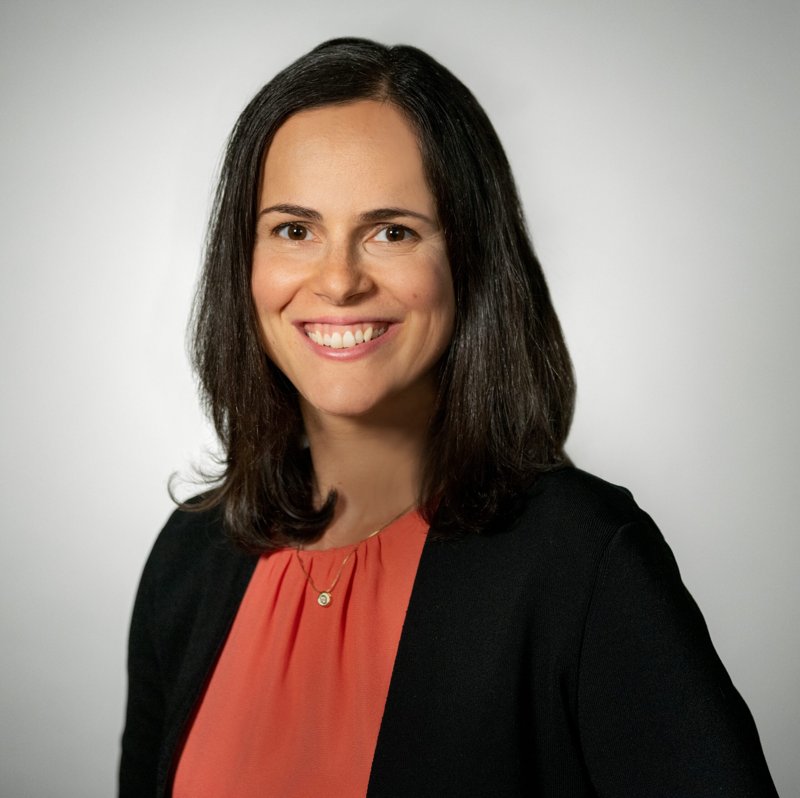
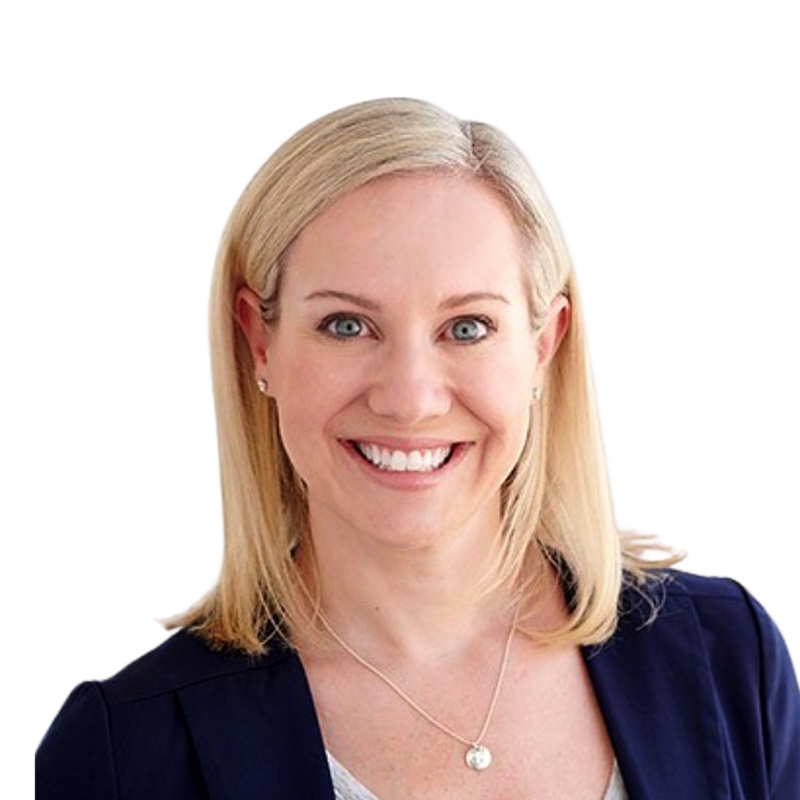
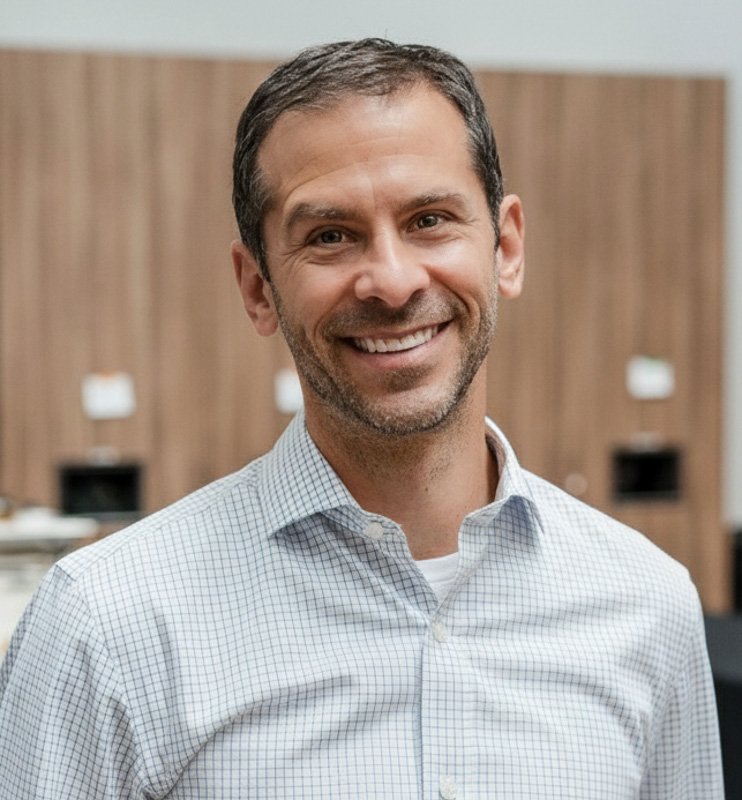
Colleagues at Underscore VC



Frequently asked questions
- Who is Michael J. Skok?
- He is a software entrepreneur turned venture investor and educator: former AlphaBlox CEO and North Bridge general partner, co-founder and current founding partner emeritus of Underscore VC, HBS Executive Fellow and creator of Startup Secrets.
- What did he study?
- Demandware's SEC-filed proxy says he holds a joint honors degree from Nottingham University in management science and engineering; his profile dates study to 1978-1981 and labels it a BS.
- Did he found Symantec?
- No. He describes himself as the UK founder and managing director who built Symantec's UK operation; he did not found the US parent company.
- When was AlphaBlox acquired?
- IBM announced and expected to close the acquisition in July 2004 for undisclosed terms. Skok's current biography says 2001, but that is the year his self-reported CEO tenure ended, not the documented sale year.
- What was his North Bridge record?
- From 2002 to 2014 he invested in early-stage software. Strong direct attribution includes Demandware, Acquia, Revolution Analytics, Apperian and Unidesk; other reported boards are retained as qualified rather than assumed deal leads.
- What happened to Demandware?
- It went public in 2012 and Salesforce agreed to acquire it in 2016 for approximately $2.8 billion cash. Those are company outcomes, not Skok's disclosed proceeds.
- What was his role in Acquia?
- He helped the founders form the company, led early North Bridge investment and served on the board. In 2019 he voted for Vista's majority deal, retained his personal shares and left the board.
- Why did he found Underscore VC?
- After interviewing hundreds of founders in a year-long listening tour, he co-founded Underscore in 2015 to pair early B2B software capital with an aligned operator community and shared economics.
- Does he still manage Underscore?
- No. Health demands following a 2019 brain tumor accelerated a planned succession. He is a founding partner emeritus and advisor; the current general-partner group manages the firm.
- Which Underscore investments are attributable to him?
- Strong first-party or official evidence connects him to Mautic, Moltin, Zaius, Coda, Salsify, TetraScience, CloudZero, Forge.AI and Cazena, with qualified involvement in project44, HelloTeam, FXP and BusRight. This does not make the entire Underscore portfolio his.
- What is his investment thesis?
- Back uniquely qualified people pursuing large B2B software shifts, especially SaaS/cloud, open source, commerce, data/analytics and AI, and support them with experienced operators. His historical Everything as a Service thesis evolved into Cloud Intelligence.
- What does he look for in founders?
- Mission, unusual qualification for the problem, bold ambition, customer insight, self-awareness, recruiting ability, a discontinuous advantage and willingness to learn and evolve.
- What are the 4Us?
- A Startup Secrets test asking whether a customer problem is Unworkable, Unavoidable, Urgent or Underserved. Skok pairs it with a gain/pain test asking whether benefit is roughly ten times adoption cost.
- What is Startup Secrets?
- A practical entrepreneurship curriculum created for Harvard Innovation Labs in 2012, covering value proposition, company formation, business models, go-to-market and pitching; its resources are free online.
Same school
Also attended University of Nottingham276
+ 270 more
Shared employers
Also worked at Salsify5

Also worked at Acquia24

+ 18 more