 Fundraising Fox
WeWork Companies
Unicorn · $47BNew York, US · Founded 2010 · Delaware corporation · 5,586 employees on LinkedIn · 17 known investors
Find your way into WeWork Companies
Each arrow is one introduction. Sign up to fill in the first one.
Ask Liz Fox to introduce you to Jennifer Perrotta
You →Liz · together at Chief →Jennifer
Ask Jamie Chen to introduce you to John Santora
You →Jamie · together at Cushman & Wakefield →John
Ask Sam Okafor to introduce you to Artie Minson
You →Sam · together at Caredge →Artie
- Miguel McKelvey226 people can intro you
- David Tolley163 people can intro you
- Sandeep Mathrani81 people can intro you
Sign up to find every way you can get introduced to WeWork Companies
- Your email: who you already know at WeWork Companies, and who your contacts know
- 2nd- and 3rd-degree connections: people you know who worked, studied or invested with the WeWork Companies team
- Your LinkedIn: the connections who can make the intro for you
We rank every route by how warm it is, so you raise on warm intros instead of cold emails.
Acquired by BowX Acquisition Corp. October 2021 · $9B · source ↗
Global flexible-workspace operator offering furnished private offices, full floors, coworking memberships, meeting rooms, business addresses and enterprise portfolio solutions across a 600-plus-location network.
Also known as WeWork Companies Inc. · The We Company · WE · WeWork Inc. · GreenDesk
Founders & leadership
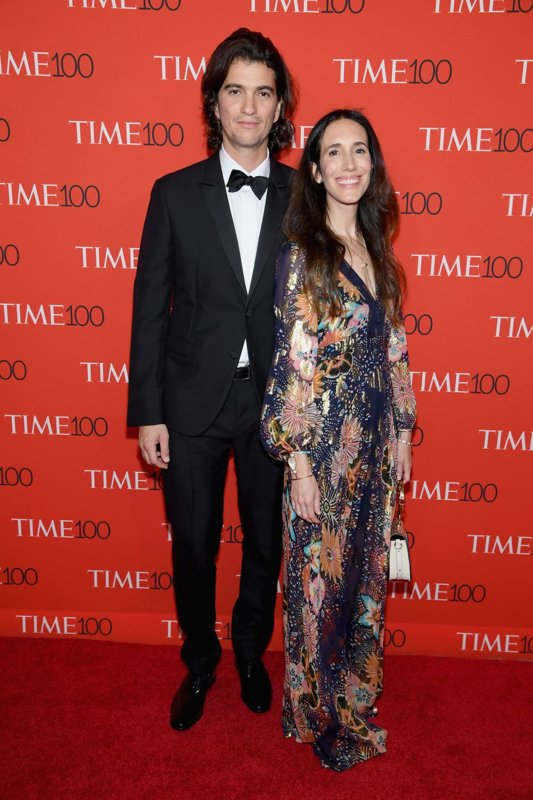
WeWork Companies was founded in 2010 by Adam Neumann and Miguel McKelvey.



Investors · 17
How we know: research · wework.com · Not right? Tell us

How we know: research · wework.com · Not right? Tell us

How we know: research · Not right? Tell us
How we know: research · wework.com · Not right? Tell us
How we know: research · wework.com · Not right? Tell us


Also in the syndicate · 8
Reported raises · per SEC filings
Form D private placements$607.3M disclosed across 8 of 22 rounds · 2011–2019
▶$1.9MraisedSep 2019 · 18 investors · OtherRule 506(b)
- Ronald FisherDirector
- John ZhaoDirector
- Bruce DunlevieDirector
- Jennifer BerrentExecutive Officer
- Arthur T. MinsonExecutive Officer
- Mark SchwartzDirector
- Steven M. LangmanDirector
- Adam NeumannExecutive Officer, Director
- Lewis FrankfortDirector
- Offering amount
- $1.9M
- Amount sold
- $1.9M
- First sale
- Sep 2019
- Incorporated
- Corporation, Delaware
- Federal exemptions
- 06b
▶$19.5MraisedSep 2019 · 18 investors · OtherRule 506(b)
- Ronald FisherDirector
- Bruce DunlevieDirector
- Adam NeumannExecutive Officer, Director
- Lewis FrankfortDirector
- Mark SchwartzDirector
- Steven M. LangmanDirector
- John ZhaoDirector
- Jennifer BerrentExecutive Officer
- Arthur T. MinsonExecutive Officer
- Offering amount
- $19.5M
- Amount sold
- $19.5M
- First sale
- Aug 2019
- Incorporated
- Corporation, Delaware
- Federal exemptions
- 06b
▶$16.8MraisedAug 2019 · 18 investors · OtherRule 506(b)
- Adam NeumannExecutive Officer, Director
- Arthur T. MinsonExecutive Officer
- Mark SchwartzDirector
- Ronald FisherDirector
- John ZhaoDirector
- Lewis FrankfortDirector
- Steven M. LangmanDirector
- Jennifer BerrentExecutive Officer
- Bruce DunlevieDirector
- Offering amount
- $18.3M
- Amount sold
- $16.8M
- First sale
- Aug 2019
- Incorporated
- Corporation, Delaware
- Federal exemptions
- 06b
▶$5.3MraisedJul 2019 · 17 investors · OtherRule 506(b)
- John ZhaoDirector
- Adam NeumannExecutive Officer, Director
- Ronald FisherDirector
- Lewis FrankfortDirector
- Steven M. LangmanDirector
- Mark SchwartzDirector
- Arthur T. MinsonExecutive Officer
- Jennifer BerrentExecutive Officer
- Bruce DunlevieDirector
- Offering amount
- $6.2M
- Amount sold
- $5.3M
- First sale
- Jul 2019
- Incorporated
- Corporation, Delaware
- Federal exemptions
- 06b
▶$19.3MraisedJul 2019 · 103 investors · OtherRule 506(b)
- Ronald FisherDirector
- Adam NeumannExecutive Officer, Director
- Lewis FrankfortDirector
- Steven M. LangmanDirector
- Mark SchwartzDirector
- Arthur T. MinsonExecutive Officer
- Jennifer BerrentExecutive Officer
- Bruce DunlevieDirector
- John ZhaoDirector
- Offering amount
- $19.3M
- Amount sold
- $19.3M
- First sale
- Jul 2019
- Incorporated
- Corporation, Delaware
- Federal exemptions
- 06b
▶$103.8MraisedMay 2019 · 90 investors · OtherRule 506(b)
- Jennifer BerrentExecutive Officer
- David FanoExecutive Officer
- John ZhaoDirector
- Ronald FisherDirector
- Lewis FrankfortDirector
- Steven M. LangmanDirector
- Bruce DunlevieDirector
- Adam NeumannExecutive Officer, Director
- Arthur T. MinsonExecutive Officer
- Mark SchwartzDirector
- Offering amount
- $103.8M
- Amount sold
- $103.8M
- First sale
- May 2019
- Incorporated
- Corporation, Delaware
- Federal exemptions
- 06b
▶Undisclosed amountofferedMay 2018 · OtherRule 506(b)
- John ZhaoDirector
- Steven M. LangmanDirector
- Jennifer BerrentExecutive Officer
- Bruce DunlevieDirector
- Lewis FrankfortDirector
- Adam NeumannExecutive Officer, Director
- Ronald FisherDirector
- Mark SchwartzDirector
- Arthur T. MinsonExecutive Officer
- Incorporated
- Corporation, Delaware
- Federal exemptions
- 06b
▶Undisclosed amountofferedApr 2018 · 66 investors · OtherRule 506(b)
- Ronald FisherDirector
- John ZhaoDirector
- Jennifer BerrentExecutive Officer
- Steven M. LangmanDirector
- Adam NeumannExecutive Officer, Director
- Lewis FrankfortDirector
- Bruce DunlevieDirector
- Arthur T. MinsonExecutive Officer
- Mark SchwartzDirector
- Incorporated
- Corporation, Delaware
- Federal exemptions
- 06b
Source: SEC EDGAR Form D. Amounts as filed; amended filings shown once at their latest values.
Valuation · disclosed
Disclosed eventsSource: SEC prospectus filings, and round valuations the company or its investors disclosed — follow each entry's link for the claim.
Company profile
researched Aug 2026WeWork is the best-known global flexible-office brand and one of venture capital's clearest examples of the difference between rapid revenue growth and durable unit economics. Adam Neumann and Miguel McKelvey met through a mutual friend and in 2008 opened GreenDesk, an environmentally themed coworking operation in a Brooklyn building owned by developer Joel Schreiber. They sold GreenDesk to their landlord and used the experience to found WeWork in 2010; the first WeWork opened at 154 Grand Street in SoHo in April 2011. Neumann, an Israeli-born Baruch College alumnus who had previously tried children's apparel and other concepts, became the charismatic fundraising CEO. McKelvey, an Oregon-raised architect and former Jordan Parnass Digital Architecture employee, led design, culture and physical product. Benchmark led the roughly $17 million Series A in July 2012 at a valuation just under $100 million; partner Bruce Dunlevie joined the board. WeWork then financed an unusually capital-intensive global buildout with successive rounds: about $40 million in 2013; $150 million in 2014 from Benchmark, JPMorgan, Harvard Management and Mortimer Zuckerman; $355 million later in 2014 from investors including T. Rowe Price, Wellington and Goldman Sachs; $434 million in 2015 led by Fidelity; $690 million across 2016 China-linked tranches led by Hony Capital/Legend Holdings and Shanghai Jin Jiang; a $760 million 2017 round; and SoftBank transactions beginning in 2017. SoftBank and its Vision Fund ultimately supplied most of the company's capital through parent-company investments, Asia joint ventures, convertibles, debt facilities and insider tenders. The commonly reported historical financing total is approximately $12.8 billion, but it mixes instruments and does not equal a clean sum of primary equity raised by the same issuer. The database therefore preserves individual disclosed tranches and explicitly separates insider liquidity, joint-venture commitments, 2021 SPAC cash and 2024 restructuring capital. In January 2019 SoftBank invested $2 billion at a $47 billion headline valuation after scaling back a contemplated investment as large as $16 billion. WeWork renamed its parent The We Company and expanded far beyond offices, including WeLive housing, WeGrow education, Rise by We wellness and approximately 20 acquisitions in coworking, education, community, workplace software, analytics and design. Major deals included Spacemob, Naked Hub, Flatiron School, Meetup, Conductor, Teem, Managed by Q and Spacious. Many were quickly divested, bought back, closed or impaired after the 2019 crisis, crystallizing hundreds of millions of dollars of losses and demonstrating weak acquisition discipline. The August 2019 S-1 exposed a structural duration mismatch—approximately $47.2 billion of undiscounted future lease obligations versus roughly $4 billion of committed future revenue—as well as $1.9 billion of 2018 net loss on $1.8 billion of revenue, related-party leases, founder loans and stock sales, family involvement, unusual governance and the non-GAAP 'community adjusted EBITDA' metric. Neumann had trademarked 'We' and caused the company to pay him $5.9 million for it before returning the money; entities he controlled leased buildings to WeWork; and reports said he had obtained approximately $700 million through stock sales and loans. His high-vote stock and initially contemplated succession power amplified the governance concerns. Demand collapsed, the IPO was withdrawn, Neumann stepped down as CEO in September 2019 and SoftBank arranged an October rescue: acceleration of a previously committed $1.5 billion equity purchase, up to $5 billion of new debt financing and a contemplated $3 billion tender offer for shareholders. The tender was later litigated and settled. Artie Minson and Sebastian Gunningham served as co-CEOs, followed by Sandeep Mathrani, David Tolley and, from June 2024, John Santora. Approximately 2,400 employees were laid off in November 2019. The company refocused on offices and sold or closed noncore assets. The COVID-19 shock then hit occupancy and cash flow. A 2021 merger with BowX Acquisition Corp. finally took WeWork public on the NYSE under ticker WE at an approximately $9 billion enterprise value. The transaction supplied about $1.3 billion of gross cash, including roughly $800 million of PIPE capital from investors such as Insight Partners, funds managed by Starwood Capital, Fidelity, Centaurus and BlackRock. Public filings showed that signed undiscounted lease obligations were still $32.8 billion at year-end 2021 and $27.9 billion at year-end 2022. Despite occupancy recovery and a March 2023 debt exchange, WeWork continued to lose money and warned of substantial doubt about going concern. Its stock was reverse-split, delisted and existing equity ultimately canceled. On November 6, 2023 WeWork and affiliates filed Chapter 11 in New Jersey, case 23-19865-JKS, with parallel Canadian recognition; foreign operations and franchisees generally stayed outside the filing. At June 30, 2023 Reuters reported approximately $15.1 billion of assets and $18.7 billion of liabilities, while rent and interest consumed most revenue. The court confirmed the plan May 30, 2024 and WeWork emerged June 11 as a private company. It eliminated more than $4 billion of debt, exited about 160-170 unprofitable locations, amended more than 170 leases and reported about $12 billion of projected lease-liability savings. The reorganized company received approximately $400-$450 million of new equity/exit financing. Yardi Systems affiliate Cupar Grimmond contributed about $337 million for a 60% stake; a lender/hedge-fund group contributed approximately $113 million for 20%; and prepetition lenders including SoftBank received the remaining approximately 20%. Published court reporting put post-reorganization equity value near $750 million. A roughly $650 million proposal from Neumann's Flow was rejected. John Santora, a 47-year Cushman & Wakefield veteran and former Americas CEO/global COO, replaced Tolley at emergence. The private company says it has no debt, substantial liquidity and no plans for another listing, although it retains large lease and property-level obligations. Its current strategy concentrates on high-performing cities, refreshed workspaces, enterprise customers and lower-risk landlord partnerships, including management and revenue-share agreements rather than assuming every long fixed lease. The product spans lockable private offices, suites and custom full floors for teams from one to more than 1,000; dedicated desks; All Access Basic/Plus multi-location monthly memberships; On Demand day passes, meeting rooms and day offices; business-address/mail service; event venues; enterprise hub-and-spoke and managed-office solutions; and WeWork Workplace software for desk/room/visitor and utilization management. Public U.S. starting prices observed in August 2026 were about $25-$39 per day, $187/month on a 12-month All Access Basic plan, $289/month on a 12-month All Access Plus plan, $181/month for some dedicated-desk inventory, $8 per seat-hour for meeting rooms and $129/month for Business Address, while private offices/full floors are location-, capacity- and term-specific quotes. Amenities include furnished turnkey space, connectivity, access control, mail, cleaning, community staff, shared lounges, coffee/tea and building-specific wellness/event facilities. The business earns recurring memberships and office agreements, hourly/day bookings, service and software fees, and enterprise/managed-space revenue. Its core promise is to convert slow, capital-heavy office procurement into flexible operational spending with rapid move-in, global access and hospitality. The central economic risk has not disappeared: WeWork or its property partners must fund and occupy high-quality office space while customers can shorten, shrink or leave. Post-bankruptcy management/revenue-share agreements reduce fixed-rent exposure but shift economics and control to landlords. Hybrid work helps demand for flexibility but suppresses total office use; recession, tenant churn, landlord distress, financing costs, local oversupply and price competition can rapidly reduce contribution margin. Current operating claims are encouraging but unaudited because the company is private. In October 2025 WeWork said global occupancy rose from 70% to 77% during the year and exceeded 90% in multiple markets. In July 2026 it reported more than 600 locations, 45 million square feet and more than 500,000 members; 124 Global Fortune 500 customers used the network as of May 2026, occupying more than 83,000 seats, and 92% of those customers used dedicated offices. These network figures include franchised or partner locations and should not be confused with the 337 shared offices retained by the U.S./Canada debtor at emergence. WeWork sold control of WeWork India to Embassy Group in 2024 but remains brand partner and minority shareholder; the franchisee listed publicly in India in October 2025. Amazon, Klarna and other enterprises have disclosed major location relationships, including a roughly 304,000-square-foot Manhattan lease arranged for Amazon in 2024. The network moat is brand recognition, dense prime-city inventory, enterprise contracting, design/hospitality know-how and the ability to deploy teams rapidly across markets. Competition includes IWG's Regus/Spaces, Industrious/CBRE, Convene, Knotel/Newmark, Serendipity Labs, local coworking operators, direct flex offerings from landlords and digital marketplaces. Physical and digital security are material: locations handle government IDs, badges, visitor logs, access records, mail, video and network traffic, and tenants may discuss or store sensitive information in a multi-company environment. Customers must diligence Wi-Fi segmentation, physical access, incident response, cameras, data retention, vendor/subprocessor controls and business continuity at each location. Other risks include franchise consistency, local real-estate and business-address regulation, accessibility/fire/life-safety compliance, labor and culture, reputational association with the Neumann era, private-company financial opacity and execution across hundreds of buildings. The 2019 governance breakdown, shareholder litigation, SEC scrutiny and 2023 bankruptcy are not incidental footnotes: they are essential to understanding why the current company has different owners, a smaller balance sheet, more conservative lease strategy and a valuation roughly 98% below the 2019 peak.
Founding story
Neumann and McKelvey first created Brooklyn coworking operator GreenDesk in 2008, sold it to their landlord, and used the proceeds and lessons to found WeWork in 2010. The first WeWork location opened in SoHo in April 2011, combining flexible desks with design, hospitality and community programming.
Business model
Flexible-office and real-estate operating platform: WeWork leases, manages, franchises or partners on furnished workplaces, then sells shorter-term offices, coworking access, meetings and enterprise solutions. Post-bankruptcy growth increasingly uses landlord management/revenue-share structures to reduce fixed lease exposure.
Recurring office agreements and monthly memberships; hourly/day bookings; business-address, meeting, event and ancillary services; enterprise custom-space and managed-office contracts; workplace-software/service fees; franchise/licensing economics in selected markets.
Traction
Company-reported: 600+ locations/45m sq ft/500k+ members in 2026; 124 Global Fortune 500 customer companies and >83,000 seats as of May 2026; 92% used dedicated offices. Occupancy rose from 70% to 77% during 2025 and exceeded 90% in several markets. These figures include global/franchise network locations and are unaudited.
Latest developments
As of July-August 2026 WeWork reports 600+ sites, 45m sq ft and 500k+ members. Its Fortune 500 report said 124 Global Fortune 500 companies occupied >83,000 seats in May 2026, up 5.6% YoY; North American seats rose 24.3%. The company continues selective expansion and workspace refresh under CEO John Santora while remaining private and debt-free by its definition.
▸Full profile — market position, technology, go-to-market, geography, history, ownership, risks & controversies
Market position
Restructured global category leader with 600+ company-reported locations and 500,000+ members, but far smaller and more conservatively financed than its 2019 peak and competing against IWG, CBRE-owned Industrious, landlords and local flex operators.
Globally recognized brand, curated design and hospitality, a dense prime-city network, turnkey infrastructure and one contract that can move enterprise teams into dedicated offices across countries much faster than conventional sourcing/buildout.
Technology
Consumer web/mobile discovery and booking; membership, billing and building-access systems; workplace Wi-Fi and guest networks; inventory/yield and sales systems; WeWork Workplace SaaS for desks, rooms, visitors, capacity, analytics and overflow; business-intelligence data across the location network.
Go-to-market
Direct online self-service for day passes, memberships and smaller offices; local sales tours and brokers for private offices; global enterprise sales and account management; landlord partnerships/management agreements; brand/community content, events and referral programs; franchise distribution in selected countries.
Individuals, startups, small and midsize businesses, distributed teams, project teams and multinational enterprises seeking faster and more flexible office capacity than conventional leases.
Freelancers and individuals; 2-100-person startups/SMBs; enterprise teams and Fortune 500 companies; corporate real-estate/HR/operations leaders; landlords seeking a flex-space operator; brokers; franchise partners.
Geography
Headquartered in New York; company reports a curated global network of over 600 locations and 45m sq ft in 37 countries, mixing operated, partner and franchised sites. Post-bankruptcy U.S./Canada operating portfolio was 337 spaces; India and other franchise operations are legally/economically distinct.
History
GreenDesk 2008; WeWork founded 2010/first site 2011; Benchmark Series A 2012; global expansion and $5bn-$20bn valuations 2014-17; SoftBank capital and acquisitions 2017-19; $47bn valuation then failed IPO/Neumann exit and rescue 2019; portfolio retrenchment/COVID 2020; BowX SPAC/NYSE listing 2021; debt exchange and going-concern warning 2023; Chapter 11 November 2023; debt/lease restructuring and Yardi-led private emergence June 2024; occupancy/network recovery and enterprise focus 2025-26.
Ownership
Private after June 2024 reorganization. Yardi Systems affiliate Cupar Grimmond holds approximately 60%; the new-money lender/hedge-fund group approximately 20%; prepetition lenders including SoftBank approximately 20%. Existing public equity was canceled. Exact fully diluted allocations, management incentives and subsequent transfers are not public.
Risks & controversies
Structural duration/occupancy mismatch between property commitments and flexible customer agreements; recession, hybrid work, local office oversupply, member churn and landlord distress; capex and refresh needs; private financial opacity; execution across operated/franchised/partner locations; price competition and landlord direct flex offerings; physical access, tenant segregation, mail/video/ID/privacy and Wi-Fi/cybersecurity risks; local zoning, fire/life-safety, accessibility and business-address regulation; labor/culture and mass-layoff legacy. The 2019 failed IPO exposed founder self-dealing, high-vote control, related-party leases, stock sales/loans, family roles, the 'We' trademark payment and misleadingly permissive non-GAAP framing. SoftBank rescue/tender litigation, shareholder claims, regulator scrutiny, acquisition losses, public-share wipeout and 2023 bankruptcy create enduring governance/reputation risk. Management agreements reduce fixed rent but may lower margins/control. Reported current occupancy and scale are company claims and may include franchise locations.
Compiled by commissioned research from 32 cited public sources — announcements, filings, and press listed under research sources below.
Key figures
latest reportedCompany-reported or press-reported figures, each dated to when it was claimed — not independently audited.
Founder mafia
4 people who came through WeWork Companies went on to found or lead other companies.


Customers & partners
Named customers · 4
Partnerships · 4
Relationships the company or its partners disclosed publicly — case studies, joint announcements, press.
Pricing
as listed Aug 2026Public list pricing as researched from the company's own pricing pages; negotiated and enterprise terms vary.
Timeline · 26
launches, deals, and filingsDistinct franchisee listed in India; WeWork Companies LLC remained minority shareholder/brand partner.
Approximately 304,000 sq ft at 330 W. 34th Street was fully leased for Amazon.
Raised approximately $400m new equity, reduced expenses and appointed John Santora CEO.
Embassy Group acquired control; WeWork remained brand partner and minority shareholder.
Plan eliminated >$4bn debt and transferred ownership to Yardi/new-money lenders and prepetition creditors.
U.S./Canada restructuring targeted debt and unsustainable leases; foreign and franchised entities generally excluded.
Voluntary restructuring after persistent losses, excessive lease obligations, debt and post-pandemic occupancy pressure; parallel Canadian recognition.
U.S. Bankruptcy Court, District of New Jersey · Existing equity canceled; >$4bn debt eliminated; >$12bn projected lease-cost reduction; Yardi/new-money lenders and prepetition creditors received reorganized equity; company emerged private. source ↗
Debt exchange extended maturities and reduced some net debt but did not solve property economics.
Transaction at approximately $9bn enterprise value provided about $1.3bn gross cash including $800m PIPE.
$1.3B source ↗
SoftBank declined to close the contemplated $3bn 2019 shareholder tender; special committee and Adam Neumann challenged the termination.
Delaware Court of Chancery · Parties settled in connection with a revised tender and governance/consideration arrangements; settlement details materially benefited participating shareholders including Neumann. source ↗
Major retrenchment after failed IPO and rescue.
Accelerated $1.5bn equity commitment, up to $5bn debt financing and planned $3bn shareholder tender; implied valuation fell sharply.
Claims variously challenged Neumann self-dealing/control, SoftBank influence, fiduciary duties, disclosure and the rescue/tender process.
Delaware and other U.S. courts · No single consolidated merits finding captures the matters; bankruptcy later canceled predecessor equity. Transaction-by-transaction court records remain necessary. source ↗
Media reported SEC review of the 2019 disclosures/governance and a whistleblower complaint concerning Spacious diligence and financial representations.
U.S. Securities and Exchange Commission · No public WeWork company enforcement disposition found in this review; inquiry/reporting is not a finding of violation. source ↗
IPO demand collapsed and Minson/Gunningham became co-CEOs; offering was withdrawn.
Filing disclosed losses, lease commitments, governance, related-party transactions and non-GAAP metrics.
$2bn investment followed much larger contemplated transaction.
$400M source ↗
Approximately $17m at a valuation just under $100m; Bruce Dunlevie joined the board.
Adam Neumann and Miguel McKelvey created the flexible-workspace company in New York.
Neumann and McKelvey launched GreenDesk in Brooklyn, then sold it to their landlord before founding WeWork.
Dated company events from announcements, filings, and press; legal rows summarize public dockets and regulator releases.
Legal entities · 6
corporate structure▸Research sources · 32
primary sources listed
- WeWorkWeWork · company website
- Office space pricing and membership plansWeWork · product catalog
- On-demand coworking, offices and meeting roomsWeWork · pricing page
- WeWork WorkplaceWeWork · product page
- WeWork Business AddressWeWork · product and legal page
- Global Fortune 500 flex-space reportWeWork · company research and metrics
- WeWork commends franchisee WeWork India on IPOWeWork Companies LLC · company relationship release
- WeWork press highlightsWeWork · company press index
- WeWork successfully emerges from Chapter 11WeWork · company reorganization release
- WeWork opens flagship location in DublinWeWork · company location release
- Yardi comments on plan to support WeWork emergenceYardi Systems · investor release
- WeWork Inc. 2022 Form 10-KU.S. SEC / WeWork · regulatory filing
32 public sources were cited for this profile; the first-party ones are listed here.
Frequently asked questions
- What does WeWork Companies do?
- Global flexible-workspace operator offering furnished private offices, full floors, coworking memberships, meeting rooms, business addresses and enterprise portfolio solutions across a 600-plus-location network.
- Who founded WeWork Companies?
- WeWork Companies was founded by Adam Neumann, Miguel McKelvey in 2010.
- Who are WeWork Companies's investors?
- WeWork Companies's investors include Fidelity Investments, Glade Brook Capital Partners, Goldman Sachs, Harvard Management Company, SoftBank Group, SoftBank Vision Fund, T. Rowe Price, Wellington Management and 1 more.
- How much funding has WeWork Companies raised?
- WeWork Companies has disclosed $607.3M raised across 8 of its 22 known rounds.
- Where is WeWork Companies headquartered?
- WeWork Companies is headquartered in New York, US.