 Fundraising Fox
Twin Health
Mountain View, US · Founded 2018 · Delaware corporation · 763 employees on LinkedIn · 13 known investors
Find your way into Twin Health
Each arrow is one introduction. Sign up to fill in the first one.
Ask Theresa Bui to introduce you to Terry Poon
You →Theresa · together at Jasper →Terry
Ask Jamie Chen to introduce you to Maluk Mohamed
You →Jamie · together at Bharathidasan University →Maluk
Ask Sam Okafor to introduce you to Eric Carlson
You →Sam · together at Arine →Eric
- Jahangir Mohammed13 people can intro you
Sign up to find every way you can get introduced to Twin Health
- Your email: who you already know at Twin Health, and who your contacts know
- 2nd- and 3rd-degree connections: people you know who worked, studied or invested with the Twin Health team
- Your LinkedIn: the connections who can make the intro for you
We rank every route by how warm it is, so you raise on warm intros instead of cold emails.
Uses a Whole Body Digital Twin to help people manage and reverse chronic metabolic disease.
Founders & leadership
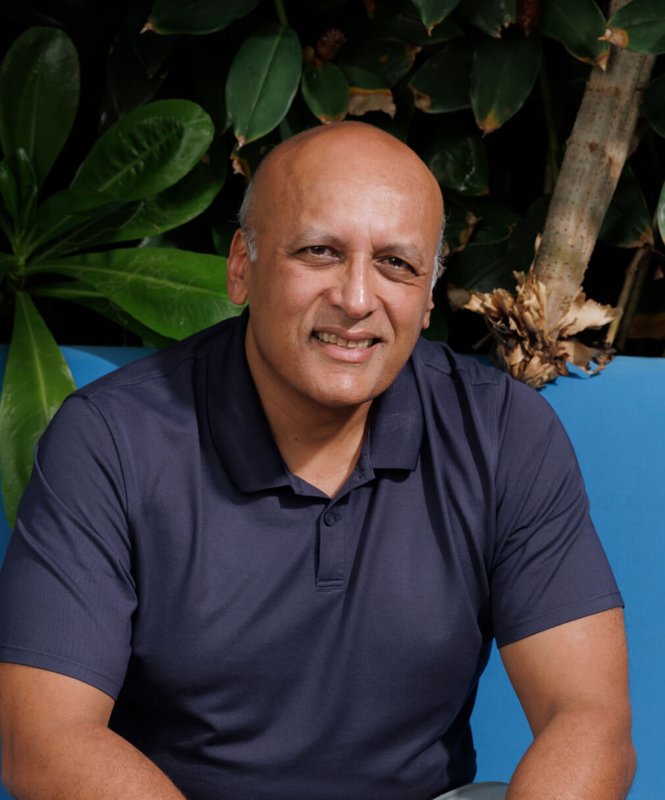
Twin Health was founded in 2018 by Jahangir Mohammed, Terry Poon, and Maluk Mohamed.



Board

Investors · 13

How we know: Able Partners's portfolio page · the VCSheet dataset · research · usa.twinhealth.com · Not right? Tell us
How we know: research · Not right? Tell us
How we know: research · usa.twinhealth.com · Not right? Tell us
How we know: research · usa.twinhealth.com · Not right? Tell us
How we know: research · usa.twinhealth.com · Not right? Tell us
How we know: Next Play Ventures's portfolio page · the VCSheet dataset · research · usa.twinhealth.com · Not right? Tell us
How we know: Peak XV Partners's portfolio page · research · usa.twinhealth.com · Not right? Tell us

How we know: research · usa.twinhealth.com · Not right? Tell us

Also in the syndicate · 1
Reported raises · per SEC filings
Form D private placements$302.2M disclosed across 5 of 9 rounds · 2020–2026
▶$59MraisedSep 2026 · 9 investors · Other TechnologyRule 506(b)
- Jahangir MohammedExecutive Officer, Director
- Jennifer BealerExecutive Officer
- Bruce DunlevieDirector
- Mohit BhatnagarDirector
- Caroline XieDirector
- Delos CosgroveDirector
- Kevin JohnsonDirector
- Ravi LambahDirector
- Tom SamuelsonExecutive Officer
- Offering amount
- $61.5M
- Amount sold
- $59M
- First sale
- Jun 2026
- Incorporated
- Corporation, Delaware
- Federal exemptions
- 06b
▶$48.8MraisedMay 2025 · 7 investors · Other TechnologyRule 506(b)
- Mohit BhatnagarDirector
- Bruce DunlevieDirector
- Jennifer BealerExecutive Officer
- Kevin JohnsonDirector
- Toby CosgroveDirector
- Jahangir MohammedExecutive Officer, Director
- Ravi LambahDirector
- Caroline XieDirector
- Offering amount
- $55M
- Amount sold
- $48.8M
- First sale
- May 2025
- Incorporated
- Corporation, Delaware
- Federal exemptions
- 06b
▶$154.8MraisedDec 2021 · 33 investors · Other TechnologyRule 506(b)
- Mohit BhatnagarDirector
- Bruce DunlevieDirector
- Caroline XieDirector
- Delos CosgroveDirector
- Jahangir MohammedExecutive Officer, Director
- Garrick BernsteinExecutive Officer
- Offering amount
- $154.8M
- Amount sold
- $154.8M
- First sale
- Jul 2021
- Incorporated
- Corporation, Delaware, 2018
- Federal exemptions
- 06b
▶$25.5MraisedOct 2020 · 9 investors · Other TechnologyRule 506(b)
- Jahangir MohammedExecutive Officer, Director
- Eric CarlsonExecutive Officer
- Mohit BhatnagarDirector
- Bruce DunlevieDirector
- Offering amount
- $25.5M
- Amount sold
- $25.5M
- First sale
- Oct 2020
- Incorporated
- Corporation, Delaware, 2018
- Federal exemptions
- 06b
▶$14.1MraisedJul 2020 · 8 investors · Other TechnologyRule 506(b)
- Eric CarlsonExecutive Officer
- Bruce DunlevieDirector
- Mohit BhatnagarDirector
- Jahangir MohammedExecutive Officer, Director
- Offering amount
- $18.1M
- Amount sold
- $14.1M
- First sale
- Jun 2020
- Incorporated
- Corporation, Delaware, 2018
- Federal exemptions
- 06b
Source: SEC EDGAR Form D. Amounts as filed; amended filings shown once at their latest values.
Valuation · disclosed
Disclosed eventsSource: SEC prospectus filings, and round valuations the company or its investors disclosed — follow each entry's link for the claim.
Company profile
researched Aug 2026Twin Health, Inc. was founded in September 2018 by serial IoT entrepreneur Jahangir Mohammed, software/analytics architect Terry Poon and Indian computer-science academic Maluk Mohamed. Mohammed previously founded Kineto Wireless and Jasper Technologies; Cisco bought Jasper's IoT platform for $1.4bn-$1.45bn in 2016. Poon was Jasper's lead architect/VP Engineering after Oracle and holds MIT computer-science/economics degrees. Maluk earned a distributed mobile-computing PhD from IIT Madras, founded the MAM education group and runs Twin's India research/operations. They applied the industrial 'digital twin' concept—continuously modeling a physical system from sensor data—to human metabolism. Twin launched its India service in 2019, then built U.S. employer/health-plan distribution from Mountain View. The product is a virtual-care benefit for adults with obesity, prediabetes, type 2 diabetes and cardiometabolic comorbidities. Members use a mobile app, connected devices such as continuous glucose monitors, activity/sleep sensors and smart scales, laboratory results and meal/behavior logs. Machine-learning models update a representation of the individual's glucose, nutrition, sleep, activity and preference response, while physicians, nurses and health coaches provide continuous guidance. The intended output is not merely a prediction but daily personalized nutrition/activity/sleep/stress recommendations and clinician-governed medication deprescribing. Twin explicitly states medication changes remain the treating physician's independent decision and that the app is not emergency care. U.S. access is primarily sponsored by an employer, health plan, PBM or provider; the public enrollment page asks the member to check benefit eligibility and no direct-consumer cash price is posted. Commercial contracts use performance-based/all-fees-at-risk pricing: Twin says clients pay only when agreed clinical milestones such as A1C reduction, weight loss or medication elimination are achieved. Exact fees, contract lengths, measurement windows and exclusions are not public. Twin reports millions of eligible lives, 90%+ customer retention and under 1% voluntary member churn, but does not disclose enrolled members, clients, revenue, ARR, gross margin or profitability. It claims $8,000+ annualized savings per participant and later employer claims data around $9,047 in first-year savings; these are vendor/customer-analytic claims whose cohort, selection and attribution matter. Clinical evidence is stronger than marketing-only digital health but requires careful qualification. A Cleveland Clinic-led randomized trial registered as NCT05181449 compared Twin Precision Treatment with usual care in roughly a 100:50 allocation over one year. The 2025 NEJM Catalyst report found 71% of intervention participants achieved HbA1c below 6.5% while using fewer glucose-lowering medications versus 2.4% of usual-care participants; company materials report 92% eliminated at least one drug, 85% reduction/elimination in GLP-1 use, 46% insulin elimination and 27-pound average weight loss. The intervention is a bundle—sensors, frequent data, lifestyle changes, coaching and clinical deprescribing—so the results do not isolate the causal contribution of the proprietary 'digital twin' algorithm. Eligibility excluded or limited patients with important comorbidities and required smartphone engagement, and results may not generalize to lower-engagement, more complex or broader populations. Earlier one-year and three-year peer-reviewed studies reported substantial remission/medication changes but many authors were company affiliated and some designs lacked randomized controls. 'Reverse' and 'heal' are used in company marketing; durable remission after program discontinuation and outcomes such as cardiovascular events/mortality are not established. Funding is unusually inconsistent across filings and databases. Public round headlines show approximately $18m Series A in June 2020, $25m-$25.5m Series B in October 2020, $140m Series C in October 2021, $50m Series D led by Temasek in December 2023 and $53m Series E led by Maj Invest in August 2025 at a reported $950m valuation. That announced round series sums to about $286m. SEC filings show $14,079,998, $25.5m, $154.81m and $48,838,180 sold in four offerings, with the Series C filing exceeding the $140m headline and the Series E filing preceding the $53m final close. In November 2025 Twin told Business Insider it had raised $308m total; this is the best current company-reported cumulative figure, but about $22m cannot be allocated from the public headline rounds. It may reflect earlier/extended closes, and must not be fabricated as an extra round. Investors across rounds include Sequoia Capital, Corner Ventures, Perceptive Advisors, ICONIQ Growth, Sofina, Peak XV (formerly Sequoia India/SEA), LTS Investments, Helena, Temasek, Maj Invest, Benchmark and other undisclosed purchasers. Board/director filings identify Mohammed, Benchmark's Bruce Dunlevie, Peak XV's Mohit Bhatnagar, ICONIQ's Caroline Xie, Temasek's Ravi Lambah, former Starbucks CEO Kevin Johnson and former Cleveland Clinic CEO Toby Cosgrove; current service for every historic filing director should be reconfirmed. By 2025-26 Twin employed roughly 763 people on LinkedIn, with substantial clinical, operations and engineering teams in the United States and India; the appropriate range is 501-1,000, not a precise payroll count. Twin partners with Cleveland Clinic investigators and in October 2025 announced a Peloton integration that gives eligible members Peloton App One content and personalized workout recommendations, with optional discounted hardware/membership routes. It competes for employer/plan cardiometabolic budgets with Omada Health, Virta Health, Teladoc/Livongo, Dario, Lark, Vida, Noom, WeightWatchers/Sequence, Hinge Health metabolic offerings and GLP-1-focused providers, as well as conventional primary/endocrinology care. Its differentiation is continuous multi-sensor modeling joined to human clinical care and medication de-escalation with outcomes-based contracting. Risk is high because recommendations and deprescribing affect health. Bad sensor data, model drift, low engagement, restrictive diets, hypoglycemia or delayed escalation can harm members; clinicians remain responsible but automation/scale can influence judgment. The service processes HIPAA-protected data, continuous glucose, medications, labs, diet, sleep, activity and behavioral inferences across devices, clouds and India/U.S. operations, creating breach, authorization, minimum-necessary, cross-border and consumer-health privacy exposure. State telehealth licensure, corporate practice of medicine, prescribing/deprescribing, reimbursement, FDA software-as-medical-device boundaries, marketing-claim substantiation and FTC Health Breach Notification Rule compliance are material. No material Twin-specific filed litigation, regulator action, recall or confirmed breach was found in manual review. Sector controversies affecting Hims, GoodRx and others are risk context, not Twin events. Twin's terms impose individual arbitration, disclaim guaranteed outcomes/accuracy and limit use to U.S. eligible states. Its India business/website separately markets paid diabetes reversal; operational, privacy, clinical and pricing differences between U.S. and India need country-specific diligence. The 2025 Series E funded expansion among plans and Fortune 500 employers. In May 2026 Twin introduced a precision GLP-1 stewardship message emphasizing appropriate initiation and off-ramps, positioning against indefinite expensive drug use. Key unknowns are current clients/member enrollment, financial economics of all-fees-at-risk contracts, actuarial validation and persistence of savings, full $308m funding reconciliation/cap table, Series E dilution, regulatory classification, model architecture/validation across demographics, data retention and provider-entity structure.
Founding story
After Cisco bought Mohammed and Poon's Jasper IoT platform, Mohammed joined Poon and academic Maluk Mohamed to apply real-time digital models used for connected machines to the more complex problem of each person's metabolism and chronic disease.
Business model
B2B2C virtual cardiometabolic care benefit for employers and health plans, combining proprietary AI/digital-twin software, connected devices, labs, physicians and health coaching under outcomes-based contracts.
Performance-based/all-fees-at-risk employer and health-plan contracts tied to clinical milestones; likely per-enrolled/engaged member and care/service economics. Direct prices and contractual measurement details are undisclosed; U.S. members generally access via sponsorship.
Traction
Company reports millions of eligible lives, 90%+ retention, <1% voluntary churn and $8k+ annualized savings/member. RCT: 71% reached A1C <6.5% with fewer glucose-lowering medications vs 2.4% usual care; company also reports 27lb average loss and major drug reductions. 763 LinkedIn employees observed in legacy snapshot. No verified enrolled-member, client, revenue or profitability counts.
Latest developments
Twin's Aug 2025 $53m Series E coincided with Cleveland Clinic-led randomized results; an Oct 2025 Peloton partnership added personalized fitness content. In May 2026 Twin emphasized precision GLP-1 stewardship—appropriate use plus a personalized medication off-ramp—and continues plan/employer expansion.
▸Full profile — market position, technology, go-to-market, geography, history, ownership, risks & controversies
Market position
Late-stage near-unicorn in employer digital cardiometabolic care with millions eligible and high reported retention, competing against public and heavily funded virtual-care/weight-loss platforms while emphasizing non-pharmacologic outcomes.
Individual continuous metabolic model rather than population-average coaching, integrated with a dedicated clinical team and risk-sharing contracts; unusually strong randomized evidence for a bundled digital metabolic intervention and focus on medication reduction/GLP-1 stewardship.
Technology
Continuous glucose monitoring and connected sensors; smart scales and labs; meal/activity/sleep/preference data; streaming IoT and individualized metabolic models; machine learning predictions/recommendations; mobile app and clinician dashboards; telehealth, coaching and protocol-governed medication deprescribing.
Go-to-market
Enterprise benefit sales to employers/plans, outcomes guarantees, benefit-enrollment campaigns, clinical evidence and savings studies; physicians/coaches deliver care after enrollment. India uses a separate consumer/clinical service route.
Self-insured employers, Fortune 500 benefit buyers, commercial health plans, PBMs/providers and eligible adults with obesity, prediabetes, type 2 diabetes and related cardiometabolic risk.
Employer populations; health-plan members; diabetes/prediabetes/obesity cohorts; GLP-1 users needing stewardship/off-ramp; U.S. virtual-care members; Indian self-pay/clinical members through separate operations.
Geography
Headquartered in Mountain View/Silicon Valley with U.S. clinical/employer-plan delivery in eligible states and major technology/research/service operations in Chennai/Tamil Nadu, India, where service launched in 2019.
History
Founded Sep 2018; India service 2019; Series A/B 2020; $140m Series C and U.S. scale 2021; $50m Temasek round 2023; Cleveland Clinic randomized results and $53m Maj Invest Series E 2025; Peloton partnership 2025; precision GLP-1 stewardship positioning expanded in 2026.
Ownership
Privately held by founders/employees and institutional investors including Sequoia, Corner, Perceptive, ICONIQ, Sofina, Peak XV, LTS, Helena, Temasek, Maj Invest and Benchmark. Exact stakes/control are private; reported latest valuation is about $950m.
Risks & controversies
Clinical recommendations and medication deprescribing can cause hypoglycemia, nutritional harm or delayed care if sensors/models/protocols fail; physician oversight does not remove system influence. Evidence supports a bundled intervention, not the isolated proprietary algorithm, and enrolled/engaged trial populations may not generalize. 'Reverse/heal' claims can overstate durable remission. Continuous PHI and behavioral/sensor data create HIPAA, FTC/state consumer-health privacy, security, cross-border, data-rights and vendor risk. Telehealth licensure, corporate-practice, prescribing, FDA SaMD boundaries and claim substantiation vary by state/country. Performance pricing can incentivize selection, metric gaming or narrow endpoints and exposes Twin to utilization/outcome risk. GLP-1 price/coverage shifts and well-funded competitors create commercial risk. No material company-specific litigation, enforcement, recall or confirmed breach found.
Compiled by commissioned research from 20 cited public sources — announcements, filings, and press listed under research sources below.
Key figures
latest reportedCompany-reported or press-reported figures, each dated to when it was claimed — not independently audited.
Founder mafia
3 people who came through Twin Health went on to found or lead other companies.
Related companies · 3


Companies working in the same space as Twin Health.
Customers & partners
Partnerships · 2
Relationships the company or its partners disclosed publicly — case studies, joint announcements, press.
Pricing
as listed Aug 2026Public list pricing as researched from the company's own pricing pages; negotiated and enterprise terms vary.
Timeline · 6
launches, deals, and filingsSearch covered FDA/FTC/HHS, malpractice, privacy/breach, patents, employment, investor disputes and clinical-claim challenges. Adjacent telehealth privacy cases were excluded.
N/A · No material company-specific action found. Telehealth, PHI, device/algorithm and disease-reversal claim risks remain significant. source ↗
Twin emphasized appropriate initiation, shorter duration and personalized off-ramp while sustaining metabolic outcomes.
Connected fitness library became available for personalized Twin recommendations.
NEJM Catalyst published one-year medication de-escalation/glycemic-control results.
Maluk led initial operations in India before U.S. employer/plan scale.
Mohammed, Poon and Maluk Mohamed applied connected-device digital twins to metabolic health.
Dated company events from announcements, filings, and press; legal rows summarize public dockets and regulator releases.
Legal entities · 4
corporate structureIn the news
▸Research sources · 20
primary sources listed
- Twin HealthTwin Health · company website
- About Twin HealthTwin Health · company about
- Twin Health IndiaTwin Health · country company page
- Twin Precision Treatment randomized studyClinicalTrials.gov · clinical trial registry
- Twin Health for employersTwin Health · commercial outcomes page
- Privacy PolicyTwin Health · privacy policy
- Enroll in TwinTwin Health · member enrollment
- Precision GLP-1 stewardshipTwin Health · product release
- Twin Health and Peloton partnerTwin Health / Peloton · partnership release
- Twin Health announces $53m investmentTwin Health · company funding release
- Cleveland Clinic-led Twin researchCleveland Clinic · clinical research release
- Twin Health Form D 2025U.S. SEC · regulatory filing
20 public sources were cited for this profile; the first-party ones are listed here.
Frequently asked questions
- What does Twin Health do?
- Employer- and health-plan-funded virtual cardiometabolic care combining an AI model of each member's metabolism, connected sensors, labs and a clinical/coaching team to improve diabetes, obesity and related conditions.
- Who founded Twin Health?
- Twin Health was founded by Jahangir Mohammed, Terry Poon, Maluk Mohamed in 2018.
- Who are Twin Health's investors?
- Twin Health's investors include Able Partners, Corner Ventures, Dag Ventures, ICONIQ, ICONIQ Growth, LTS Investments, Next Play Ventures, Peak XV Partners and 4 more.
- How much funding has Twin Health raised?
- Twin Health has disclosed $302.2M raised across 5 of its 9 known rounds.
- Where is Twin Health headquartered?
- Twin Health is headquartered in Mountain View, US.