 Fundraising Fox
Grubhub
Unicorn exit · $2BAcquired10 known investors
Find your way into Grubhub
Sign up to see every warm intro you have to Grubhub
- Paths you didn't know you had: your email and LinkedIn already hold routes to the Grubhub team. We find them for you
- 2nd- and 3rd-degree connections: the friend-of-a-friend routes that take hours to manually find through your inbox or LinkedIn
- Answers now, not in days: momentum is everything in a raise. Skip asking around whether someone knows someone
Days of research, done the moment you sign in, with every route ranked by how warm it is.
Chicago-based online food ordering and delivery platform, formerly NYSE-listed, now owned by Marc Lore's Wonder Group.
Also known as GRUB · GrubHub · Grubhub Inc. · GrubHub Seamless Inc.
Founders & leadership
Investors · 10
How we know: Dag Ventures's portfolio page · research · en.wikipedia.org · Not right? Tell us

How we know: Felicis Ventures's portfolio page · Not right? Tell us

How we know: Lightspeed Venture Partners's portfolio page · open dataset · 5k.vc investor directory · Not right? Tell us
How we know: a partner's Signal profile · the VCSheet dataset · research · en.wikipedia.org · Not right? Tell us
How we know: Silver Lake Partners's portfolio page · Not right? Tell us

How we know: Spectrum Equity's portfolio page · open dataset · 5k.vc investor directory · Not right? Tell us
How we know: The 81 Collection's portfolio page · Not right? Tell us

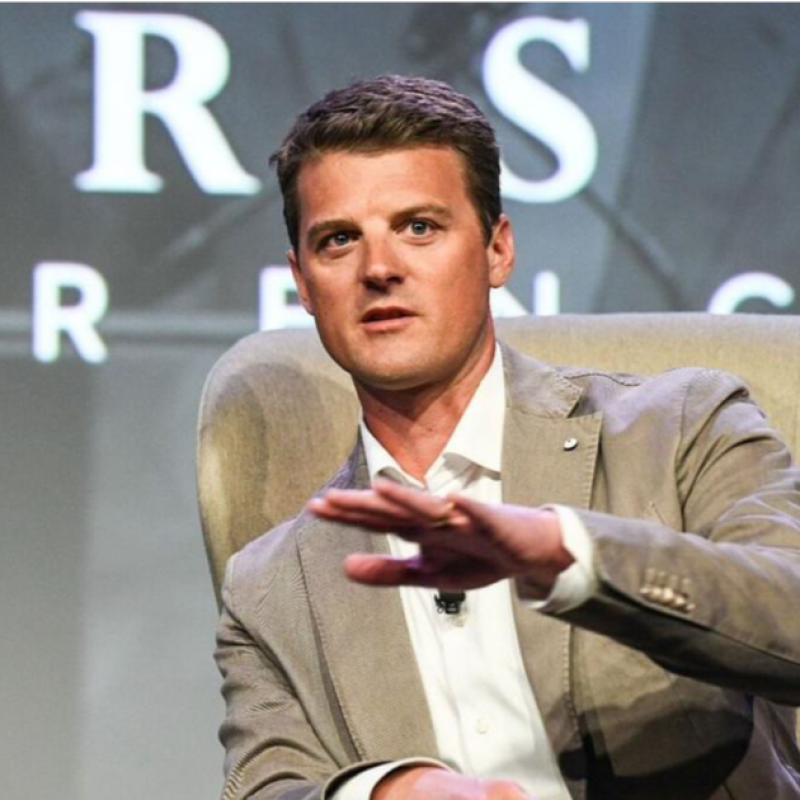
How we know: deep research dossier: bill-gurley · research · en.wikipedia.org · open dataset · 5k.vc investor directory · Not right? Tell us
Company profile
researched Aug 2026Grubhub Inc. is an American online and mobile platform for ordering and delivering prepared food, headquartered in Chicago, Illinois, and serving the United States. Diners browse restaurant listings and menus on Grubhub's website and apps and place orders that are fulfilled either by restaurants themselves or by Grubhub's delivery network. As of 2019 the platform reported 19.9 million active users and about 115,000 associated restaurants across 3,200 cities in all 50 US states.
The company operates a portfolio of consumer and restaurant-facing brands, including Seamless, AllMenus, MenuPages, LevelUp and Tapingo, and has held subsidiaries such as BiteGrabber, Eat24 and OrderUp. Seamless is an online and mobile ordering platform for regional restaurants in the U.S. and London. Grubhub also serves campus dining (functionality absorbed from Tapingo) and offers restaurant-branded ordering through Grubhub Direct, built on LevelUp technology.
Grubhub traded publicly on the NYSE under "GRUB" from 2014 to 2021, then became a subsidiary of Dutch operator Just Eat Takeaway. Since January 2025 it has been owned by Wonder Group Inc., Marc Lore's New York-based virtual food hall and delivery company, which also owns Blue Apron. Under Wonder, Grubhub is being repositioned from a primarily third-party delivery platform into part of a vertically integrated food platform spanning first-party restaurants, third-party delivery, prepared meals and grocery.
Founding story
Mike Evans, a coder in Chicago, began building an online delivery guide in 2002 after a frustrating commute left him unwilling to cook or phone for pizza. He compiled a map of Chicago restaurants with names and phone numbers organized by zip code, scanning menus from restaurants he ordered from. His colleague Matt Maloney joined the effort and sold the first paid listing — $140 for six months of "premium" placement to a Chinese restaurant owner — which the founders treated as the company's first revenue. The pair went door-to-door in Chicago collecting menus and selling advertising before Maloney proposed charging restaurants per order instead. Adding online ordering tripled order volume, and revenue reached $20,000 in a month shortly after. Grubhub was founded in 2004; the founders won the University of Chicago's New Venture Challenge and $50,000 in 2006, which allowed Maloney to join full time. Under the terms of the first institutional round with Origin Ventures, Evans could not be co-CEO; Maloney served as CEO from 2004 to 2021.
Business model
Grubhub operates a two-sided online marketplace connecting diners with restaurants. Restaurants list on the platform and Grubhub takes a commission on each order placed, a model co-founder Matt Maloney summarized as "You don't make a dime unless you make a dollar." Early revenue came from restaurants paying for premium placement on the site (the first sale was a $140 six-month premium listing), before the per-order commission model was adopted. Grubhub later added its own delivery operation (beginning June 2014) alongside order-only listings, and sells restaurant-facing technology such as Grubhub Direct, built on technology acquired with LevelUp.
Commission on restaurant orders placed through the platform, plus paid premium restaurant listings in the company's earliest days, delivery services, and restaurant-facing software and payment products (LevelUp, Grubhub Direct). Reported revenue was $1.82 billion in 2020, with an operating loss of $149 million and a net loss of $156 million.
Traction
19.9 million active users and roughly 115,000 associated restaurants in 3,200 cities across all 50 US states as of 2019; 2020 revenue of $1.82 billion; 2,841 employees as of February 2021. At the time of the Wonder acquisition in January 2025, Grubhub brought approximately 375,000 merchants to its new owner. Grubhub said it achieved positive free cash flow in 2024. Demand for restaurant delivery surged during the 2020 coronavirus pandemic, during which Grubhub introduced contact-free delivery and pickup options.
Latest developments
Wonder Group completed its $650 million acquisition of Grubhub on January 8, 2025, taking on $500 million of Grubhub debt; Just Eat Takeaway expected net proceeds of up to $50 million. In late February 2025 Grubhub cut just under 23% of its workforce — 500 corporate employees across all teams — as it integrated with Wonder, while stating it had achieved positive free cash flow in 2024 and returned to growth. In July 2026, press reports indicated Wonder was arranging hundreds of millions of dollars in new funding at a potential $9 billion valuation, possibly its last round before an IPO, with founder Marc Lore expected to contribute $200 million; Wonder was reported to expect just under $2 billion in net revenue in 2026, $3 billion in 2028 and close to $5.5 billion by 2030.
▸Full profile — market position, technology, go-to-market, geography, history, risks & controversies
Market position
Grubhub was described by its co-founder as the largest and fastest-growing player in US online food ordering during his tenure, before UberEats and DoorDash caught up. Trade coverage in 2025 describes Grubhub as having long lagged behind DoorDash and Uber Eats in US food delivery market share, and characterizes it as a struggling third-party delivery brand that Just Eat Takeaway had sought to divest since April 2022. Earlier competitors cited include Groupon and LivingSocial in online ordering.
Co-founder Mike Evans attributes Grubhub's early lead to customer experience and product quality rather than being first to market, in particular a decision to take responsibility for food quality by sharing best practices and tracking which restaurants drove repeat purchases and satisfaction. Structurally, the company built scale through a broad portfolio of acquired brands (Seamless, AllMenus, MenuPages, Eat24, OrderUp, LevelUp, Tapingo) covering consumer ordering, campus dining and restaurant payment/loyalty technology. Under Wonder ownership the stated differentiator is combining first-party restaurants, third-party delivery, prepared meals and grocery in one vertically integrated platform.
Technology
Web and mobile ordering platforms with restaurant menus organized geographically, an in-house delivery network launched in 2014, campus ordering functionality integrated from Tapingo, and diner engagement and payment technology from LevelUp that was integrated into Grubhub's restaurant-facing products and used to launch Grubhub Direct in 2021. Seamless released an iPad app in February 2012.
Go-to-market
In its early years Grubhub built supply by canvassing restaurants in person to collect menus and sell listings, hiring local staff to sign up restaurants in new cities such as San Francisco, and later using paid search advertising to drive diner traffic. Growth subsequently came heavily through acquisitions of regional and vertical delivery and ordering businesses and, after 2013, from the merger with Seamless, which brought a corporate-ordering customer base originating with SeamlessWeb.
Consumer diners ordering takeout and delivery in US cities, corporate customers via the Seamless/SeamlessWeb corporate ordering heritage, college campuses through Campus Dining (formerly Tapingo), and restaurants seeking order volume, delivery logistics and diner engagement or payment technology.
Geography
Grubhub serves the United States, with headquarters in Chicago, Illinois. As of 2019 it listed restaurants in 3,200 cities across all 50 states. Its Seamless brand is described as active in the U.S. and London. Early expansion moved from Chicago to San Francisco, New York, Boston, Philadelphia and Washington, D.C. Current owner Wonder is based in New York City.
History
Grubhub was founded in Chicago in 2004 by Mike Evans and Matt Maloney, and won the University of Chicago Booth School of Business's Edward L. Kaplan New Venture Challenge in 2006. It raised successive venture rounds from 2007 through 2011 (Amicus Capital, Origin Ventures, Leo Capital, Benchmark Capital, DAG Ventures), expanding from Chicago into San Francisco, New York, Boston, Philadelphia and Washington, D.C. In September 2011 it acquired Dotmenu (Allmenus and Campusfood). Separately, SeamlessWeb was founded in New York in 1999 by Jason Finger for corporate food ordering, added consumer ordering in 2005, was acquired by Aramark in April 2006, and was re-privatized in June 2011 when Spectrum Equity Associates invested $50 million for a minority stake, after which it was renamed Seamless and acquired MenuPages. Grubhub and Seamless announced their merger in May 2013 (Seamless 58% / GrubHub 42% of equity), completing it in August 2013, and the combined company listed on the NYSE in April 2014 at $26 per share under the ticker GRUB. A string of acquisitions followed: DiningIn and Restaurants on the Run (2015), Delivered Dish (2015), LAbite (2016), OrderUp markets (2017-2018), Eat24 from Yelp for $287.5 million (2017), LevelUp for a reported $390 million (2018) and Tapingo for about $150 million (2018). Just Eat Takeaway agreed in June 2020 to buy Grubhub for $7.3 billion in stock and Grubhub became its subsidiary after 2021; Just Eat Takeaway began exploring a sale in April 2022 and sold Grubhub to Wonder Group for $650 million, a transaction completed in January 2025.
Risks & controversies
Grubhub has been criticized for antitrust price manipulation, for listing restaurants on its platform without permission, and for allegedly misclassifying workers. Co-founder Mike Evans has publicly expressed frustration with the company's reliance on gig economy workers. Commercially, the business has trailed DoorDash and Uber Eats in market share, was written down substantially in value between the $7.3 billion Just Eat Takeaway stock deal in 2020 and the $650 million sale to Wonder in 2024-2025, and cut 23% of corporate staff in February 2025. Its current parent, Wonder, is reported to be operating at a loss and forecasting roughly $2.7 billion of cash burn between 2026 and 2029.
Compiled by commissioned research from 6 cited public sources — announcements, filings, and press listed under research sources below.
Key figures
latest reportedCompany-reported or press-reported figures, each dated to when it was claimed — not independently audited.
Founder mafia
The Grubhub mafia →12 people who came through Grubhub went on to found or lead other companies.








Acquisitions · 1
Early investors' stakes continue via these dealsGrubhub is a food ordering and delivery platform connecting consumers with over 400,000 restaurants for delivery or pickup across the United States. It also offers restaurant partners growth and operations tools, and provides flexible gig work for delivery couriers.
Timeline · 19
launches, deals, and filingsLess than two months after Wonder completed its acquisition, Grubhub cut just under 23% of its workforce, or 500 corporate employees, across all teams to remove redundancies and reduce management layers as integration with Wonder began. Delivery drivers were not affected.
Virtual food hall company Wonder, founded by Marc Lore, completed the purchase of Grubhub from Just Eat Takeaway for $650 million, first announced November 13, 2024. Grubhub was transferred with $500 million in debt, and Just Eat Takeaway expected net proceeds of up to $50 million. The deal brought roughly 375,000 merchants to Wonder.
$650M source ↗
Maloney, who served as CEO from 2004, left Grubhub in 2021, seven years after co-founder Mike Evans departed.
Grubhub launched Grubhub Direct, underpinned by technology acquired with LevelUp.
Netherlands-based Just Eat Takeaway announced an agreement to buy Grubhub in an all-stock deal; Grubhub became a Just Eat Takeaway subsidiary after 2021.
$7.3B source ↗
Grubhub assumed SkipTheDishes' United States operations after SkipTheDishes announced its exit from the US market.
Acquired Tapingo, a San Francisco-based campus food ordering platform, for approximately $150 million; its functionality was folded into Grubhub Campus Dining and the Tapingo app was phased out during 2019.
$150M source ↗
Acquired LevelUp, a Boston-based diner engagement and payment solutions platform, for a reported $390 million in cash. LevelUp technology was integrated into Grubhub's restaurant-facing products and later underpinned Grubhub Direct; the LevelUp consumer app was discontinued on September 30, 2021.
$390M source ↗
Agreed in August 2017 to acquire Eat24 from Yelp for $287.5 million subject to regulatory review; completion announced in October 2017. The Eat24 brand was shut down in late 2018.
$287.5M source ↗
Grubhub acquired assets in 27 OrderUp markets and completed the purchase of the remaining 11 franchisee-owned markets on October 30, 2018.
Acquired Delivered Dish, a restaurant delivery service operating in seven markets across the Pacific Northwest and Southwest, including Denver, Las Vegas, San Diego, Portland, El Paso and Albuquerque.
Acquired DiningIn, an online ordering and food delivery company based in Brighton, Massachusetts.
Acquired Restaurants on the Run, a corporate food delivery company based in Aliso Viejo, California.
Grubhub went public at $26 per share, trading on the New York Stock Exchange under the ticker GRUB; Reuters valued the company at $2.04 billion at debut.
$2B source ↗
Grubhub and Seamless announced a merger in which Seamless represented 58% and GrubHub 42% of the equity of the combined business; the merger was finalized in early August 2013.
Grubhub acquired New York-based competitor Dotmenu, parent of Allmenus and Campusfood; the AllMenus acquisition was completed that month.
Maloney and Evans took first place in the University of Chicago Booth School of Business's Edward L. Kaplan New Venture Challenge with the Grubhub business plan; sources describe an associated $50,000 prize.
Dated company events from announcements, filings, and press; legal rows summarize public dockets and regulator releases.
▸Research sources · 6
primary sources listed
- Grubhub - Wikipediaen.wikipedia.org · web
6 public sources were cited for this profile; the first-party ones are listed here.
Frequently asked questions
- What does Grubhub do?
- Chicago-based online food ordering and delivery platform, formerly NYSE-listed, now owned by Marc Lore's Wonder Group.
- Who founded Grubhub?
- Grubhub was founded by Matt Maloney.
- Who are Grubhub's investors?
- Grubhub's investors include Arba LLC, Dag Ventures, Felicis Ventures, Lightspeed Venture Partners, Origin Ventures, Silver Lake Partners, Spectrum Equity, Stripes and 2 more.