 Fundraising Fox

Find your path to Vlad
1,490 people in our graph share verified history with Vlad — schools, employers, funds. One of them is your warm intro.
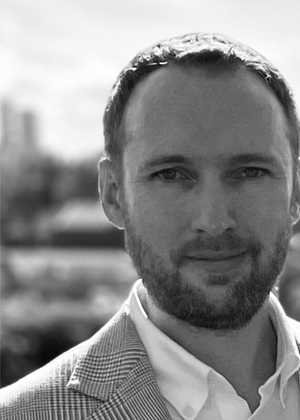
About
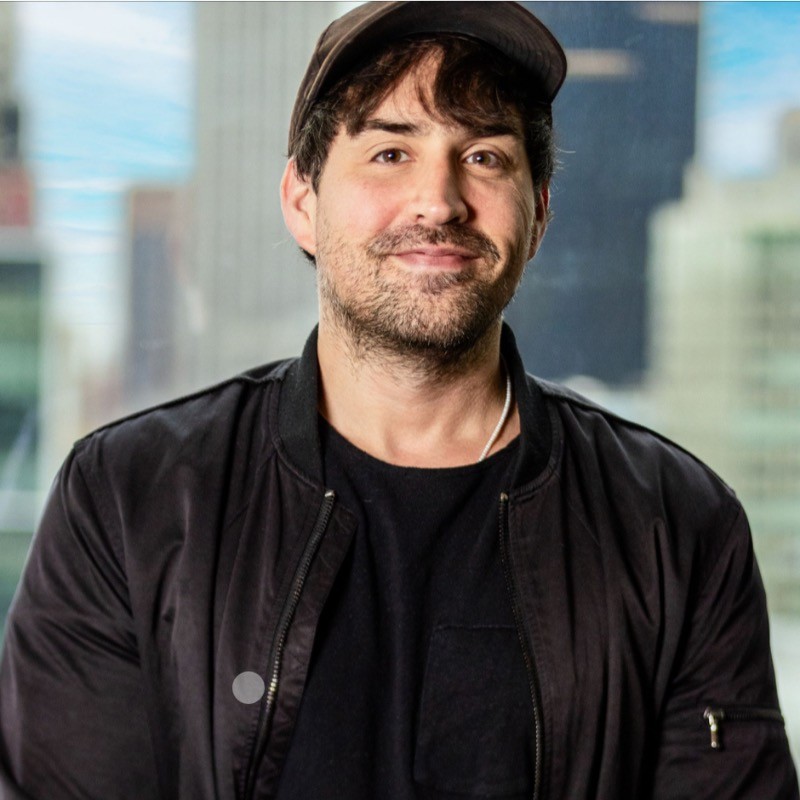
Vlad Yatsenko co-founded Revolut with Nik Storonsky in 2015 and serves as Chief Technology Officer, having built banking infrastructure at Credit Suisse, Deutsche Bank and UBS beforehand. He architected the platform that scaled to tens of millions of customers and a $45B valuation, and led the engineering work behind Revolut's UK banking licence.
Likely emails· guessed from name + firm domain, not firm-published
- v•••@revolut.comreveal90% confident
- v•••@revolut.comreveal75% confident
Invests in
AI & Machine LearningEnergyFintechHardware
Beyond investing
- Founded
- The strongest consistent account is that former trader Nik Storonsky developed and financed the multi-currency-card idea, recruited former Credit Suisse colleague Yatsenko to create the software, and became CEO while Yatsenko became CTO. Their different skills—business/product/fundraising and bank-software engineering—formed the founding split. Revolut's official materials and annual reports have long called Yatsenko a co-founder. The Next Web, summarising a 2026 Storonsky interview with David Rubenstein, reported that Yatsenko joined as the first employee and received the co-founder title partly to recruit engineers. This later account complicates legal/conventional founder semantics but does not negate Yatsenko's pre-launch technical contribution or the company's formal public designation. Forbes Ukraine and later profiles have reported that Yatsenko received roughly 20% for building the technical side while Storonsky supplied about £300,000. No reviewed founder agreement, original cap table or filing confirms those exact terms, so they are not treated as definitive.
- Education
- Forbes Ukraine describes an honours graduation from the Mykolaiv branch of Kyiv-Mohyla Academy, now Petro Mohyla Black Sea National University. LinkedIn uses National University of Kyiv-Mohyla Academy wording; these appear to describe the same Mykolaiv institution and programme, not separate degrees.
- Charities
- Yatsenko responded to the failed donation experience with an initial €100,000 personal gift and a public promise to match up to €1 million of additional weekend donations. RTÉ and its appeal report confirm that he fulfilled the €1.1 million total commitment.
- Communities
- Endeavor Ukraine said he joined its entrepreneur network after serving on a September 2025 international selection panel and wanted to share his operating experience with the next generation. This is network participation, not evidence of an Endeavor investment mandate or external board seat.
- Family
- Forbes Ukraine lists him as married with two children. Names, ages and private household details are omitted. He has publicly discussed his father, who remained in Ukraine and whom Yatsenko described as a Ukrainian patriot.
- More
- Companies House records August 1983, British nationality and residence in England. Forbes identifies him as a dual British-Ukrainian citizen. Secondary profiles report birth in East Germany, but no reviewed civil record establishes an exact day or place. Forbes Ukraine records Germany as his birthplace and says his father was a former Soviet military officer who left the army after the USSR collapsed. Secondary biographical reporting places the family's later home near Odesa. Exact childhood movements remain incompletely documented. In a rare Business Insider interview, Yatsenko said he began coding around age 15 and sometimes practised on paper because computer access was limited. He connected that constraint to startup creativity: limited resources require unconventional solutions. After university he worked at Comarch in Kraków, moved to London for UBS in 2010, and later held engineering roles at Deutsche Bank, Lab49 and Credit Suisse. Titles and exact month boundaries come mostly from professional-profile material rather than employer archives. Yatsenko described the early customer proposition as the ability to exchange, send and spend money anywhere for free. Revolut launched publicly in 2015 around a mobile multi-currency account and card, then broadened into investments, business services, credit and other products. At JUXT's 2024 engineering conference, attendee notes quote Yatsenko recommending a monolith first and splitting only when teams interfere with one another. The same notes describe PostgreSQL, in-house frameworks, a tightly standardised architecture and a Kubernetes migration completed by a small team in days. These are conference notes, not an audited architecture specification. Yatsenko argued for standard processes, clear ownership, reusable frameworks and market-entry playbooks, while warning that excessive standardisation can suppress learning. JUXT material says Revolut limited its technology choices and used platform engineering to support more than 1,000 engineers. In the Flinks interview he said every person, himself included, can become a bottleneck; automation should reduce human weaknesses while organisations focus people on their strengths. He paired automation with adaptable principles rather than rigid hierarchy. Attendee notes from his JUXT talk record his biggest engineering regret as a data-warehouse solution that consumed four years and did not scale. The useful attribution is to his own retrospective; technical details and replacement economics were not published. Discussing bank licensing, Yatsenko said anything vital to the business should be built or controlled internally because a partner can constrain product and regulatory ambition. He still recognised that market entry requires local rules, payment systems and regulator engagement. His operating view is that starting sooner exposes unknowns sooner. Revolut used living playbooks: separate repeatable lessons from country-specific constraints, update the process, and avoid assuming identical regulation or customer behaviour across markets. Yatsenko compared Revolut's desired convenience to Uber removing local taxi friction. In 2023 he described a financial supermarket in one app, with country-specific payment methods hidden behind a simpler interface and a broader set of locally regulated products. Revolut's audited 2024 group report recorded 52.5 million customers, £3.1 billion revenue and £790 million net profit. The 2025 secondary sale valued the company at $75 billion, and transition reporting said the platform served more than 70 million customers in 2026. These are corporate outcomes produced by the wider organisation, not sole personal achievements. During his CTO tenure Revolut built regulated banking operations in Europe and entered UK bank mobilisation in July 2024. The UK bank launched fully in March 2026, shortly before his transition. Licensing was an institutional governance and regulatory outcome, not a technical sign-off attributable to one executive. The 2024 annual report describes machine-learning fraud detection, fraud specialists, data scientists, former law-enforcement personnel, biometric controls and a customer security hub. These are company capabilities under broader management and control functions; the report does not assign each control personally to Yatsenko. Customers reported login, card-payment, transfer, top-up and currency-exchange failures on 26 November 2021. The disruption also affected some Late Late Toy Show donations. Revolut apologised and restored services; public reports did not establish a personal error by Yatsenko or publish a full root-cause analysis. Lithuania's data-protection authority said a breach potentially affected 50,150 customers worldwide, including names, contact details, account information and masked partial card data. Revolut said its security team quickly removed the access and customer funds were not endangered. The regulator investigated the relevant Revolut entities; no reviewed source assigns individual wrongdoing to Yatsenko. Revolut's 2021 accounts were delayed and BDO qualified its opinion over evidence supporting £477 million of revenue; later accounts obtained sufficient evidence. Separate reporting and regulatory actions concerned sanctions/AML monitoring, including a 2025 €3.5 million fine against Revolut Bank UAB. These were corporate and entity-level findings during his CTO tenure, not individual sanctions against him. Forbes Ukraine described his long hours and reported that he called his management style liberal but saw high KPIs and founder ambition as necessary for rapid growth. In interviews he disputed claims that Revolut forced overtime while allowing that manager conflict could produce unfair dismissal. WIRED and former staff reported free work, aggressive targets, long hours and burnout; Revolut said its culture was evolving. Forbes Ukraine preserved a public comment in which he objected to calling people "resources", calling human capital more important than financial capital. That view sits alongside his support for demanding goals and the documented criticism of Revolut's historical performance culture. On 24 February 2022 Yatsenko called Vladimir Putin one of history's most brazen liars and said Ukraine "is and will be free." In a 2023 interview he traced his anger at Putin's regime to 2014 and described anti-Ukrainian propaganda he saw in 2008. Yatsenko said a non-Ukrainian employee proposed the response and the team launched simplified access for Ukrainian refugees within weeks, reaching about 450,000 opened accounts and 100,000 active users by the 2023 interview. He credited team execution rather than claiming sole authorship. Yatsenko told Forbes Ukraine his holding had fallen from about 5% three years earlier to 3%. Forbes later estimated a little under 3%. This is founder equity in Revolut, not a personal angel investment; current fully diluted ownership and secondary-sale proceeds are not public. Yatsenko said he felt content because Revolut had matured from an ambitious startup into a highly impactful global company. Donato Lucia, who joined in 2018 and had become head of technology, succeeded him as vice president of technology. Revolut did not disclose another reason for the transition. In 2023 he said he no longer always worked until 10 p.m., started no earlier than 9:30 and worked better later. He said wealth rankings did not matter, described choosing fintech pragmatically, admired aspects of Google's early organisational culture and viewed Elon Musk as a powerful marketing machine who sometimes gets carried away.
Mentioned above: the Deutsche Bank mafia → · the National University of Kyiv-Mohyla Academy mafia →
From Vlad's own website — common ground for a warm intro.
Co-founder at Revolut
Intro paths
In turn, Vlad can intro founders to Revolut's investors below.
Revolut's investors · 46





.jpeg)


























Co-founders at Revolut

Experience
- RevolutCo-founder & CTOcurrent2014 — presentLondon, UK
- YTEQDirector2013 — 2015London Area, United Kingdom
- Credit SuisseSenior Software Engineer2013 — 2014Greater London, England, United Kingdom
- Lab49Software Engineer in LabCompute2012 — 2013London
- Deutsche BankAVP, Application Developer / Team Lead2011 — 2012London Area, United Kingdom
- UBS Investment BankSenior Java Developer2010 — 2011London Area, United Kingdom
- Sabre Airline SolutionsProgrammer/Analyst2009 — 2010
- ComarchSoftware Designer2008 — 2009
- ComarchSenior Software Developer2007 — 2008
- ComarchSoftware Developer2006 — 2007
- Nibulon Ltd.Software Engineer2005 — 2006






Skills & more
+12 more
JIRAJUnitJMSMavenRepresentational State Transfer (REST)Agile MethodologiesTest Driven DevelopmentScrumOOPDesign PatternsSoftware DevelopmentGroovyLanguages English · Polish · Russian · Ukrainian
- Sun Certified Java Programmer — Sun Microsystems
- Certified Java 5 Programmer (Master) — Brainbench
- Functional Programming Principles in Scala — coursera.org
From Vlad's professional profile.
Investments
Per curated public sources.
Founder fit — who Vlad backs
Best inferred fit is a technical founder building infrastructure or a vertically integrated platform where architecture, automation, security, regulation or hardware/software complexity creates defensibility. His public operating value is strongest in fintech, payments, global scaling, platform engineering, internal tooling, market-entry playbooks and engineering organisation design. This is inference from two deals and his operating record, not an announced solicitation mandate.
['claims based only on scraped investor directories', 'requests for a publicly documented standard check size', 'assumptions that he invests at every stage or in every fintech', 'Revolut fundraising presented as his outbound investment activity', 'his Revolut founder shares presented as an angel check', 'Endeavor participation presented as a fund or board mandate', 'portfolio claims involving other people named Vlad or Vladyslav Yatsenko', 'consumer propositions without meaningful technical or platform differentiation']
How to pitch
Confirm that outreach is for Yatsenko personally and cite issuer-level evidence rather than a directory. Lead with the hard technical system, measurable traction, why core capabilities must be owned, how architecture stays simple and standardised, and where automation removes scaling bottlenecks. For regulated products, explain security, compliance and operational resilience from the start. Do not infer his check from Alpaca's $150 million round, Tewke's £1.5 million round, Revolut's valuation or estimated wealth.
Stages: growth/Series D, observed once, early institutional round, observed once, stage-agnostic inference only · Sectors: fintech infrastructure, brokerage APIs, embedded investing, smart home, energy technology, artificial intelligence, hardware-software platforms
Editorial inference from Vlad's portfolio, writing and public record — not a published mandate.
Investment themes
9 documented themes from Vlad's essays, talks and portfolio, grouped by what they say about founders.
▶More themes8
Start simple, then split systems when scale demands it2024
He recommends proving the product with a monolith and decomposing only when organisational or operational pressure makes the boundary useful.
For founders: Avoid premature distributed-system complexity; make each service boundary earn its operational cost.
Standardised platform engineering creates leverage2019
Defined frameworks, limited technology variation, reusable components and clear ownership allowed teams to replicate proven approaches and make infrastructure changes quickly.
For founders: Standardise common paths enough to increase throughput, while preserving an explicit threshold for justified exceptions.
Automate human bottlenecks without erasing human strengths2019
Yatsenko frames automation as a way to reduce error, workload and dependency on individual gatekeepers, not as a reason to describe people merely as resources.
For founders: Automate repeatable weaknesses and reserve people for judgement, creativity and accountable ownership.
Enter markets to learn, then update living playbooks2019
He favours beginning with incomplete knowledge, separating reusable lessons from local constraints and continuously revising expansion playbooks.
For founders: Treat expansion as controlled learning, with local regulatory and payment differences feeding back into a repeatable core.
Own capabilities that are vital to the business2023
His licensing experience led him to argue that strategically essential product and regulatory capabilities should not depend permanently on a less ambitious partner.
For founders: Use partners deliberately, but internalise the capabilities that determine product speed, compliance or customer trust.
Hide local financial complexity behind one global experience2019
He presents Revolut as a global financial platform that abstracts currencies, payment methods and market-specific rails while retaining local regulatory adaptation.
For founders: A global product should remove customer friction without pretending the underlying local systems are identical.
Ambition and demanding goals require workplace safeguards2020
Yatsenko supports high ambition and KPIs and disputes forced-overwork claims, while reported long hours, free work, burnout and unfair-management risk show the human downside that must qualify this philosophy.
For founders: Aggressive goals need fair process, sustainable workload, psychological safety and independent evidence that performance systems work.
Technically difficult infrastructure and integrated platforms2026
Alpaca and Tewke point toward infrastructure, APIs, automation, AI and vertically integrated technical systems, though two deals do not establish a formal thesis.
For founders: Most plausible fit is a deeply technical platform with measurable product leverage and a credible reason to own core technology.
▶Health, frontier & community1
Pay operating experience forward to founders2026
His Endeavor participation is framed around rigorous founder evaluation and sharing lessons from building Revolut.
For founders: He may be relevant as an experienced technical operator and evaluator even where no investment mandate is established.
Podcasts & interviews
featuring Vlad YatsenkoRevolut Co-Founder, CTO Vlad Yatsenko to Step Down From Role
Bloomberg · bloomberg.com
In Conversation w/ Vlad Yatsenko (Revolut) - Scaling from Idea to Europe’s Top Private Tech Company
Techsylvania
Simplifying all things money: lessons learnt building a bank from scratch
JUXT XT24 conference; attendee recaps · phillbarber.blogspot.com
How does one build a global financial supermarket?
Forbes Ukraine · forbes.ua
Revolut: Fintech Unicorn CTO on Culture, Compliance, and Covid
Business Insider · businessinsider.com
Revolut's Vlad Yatsenko on Doing to Banks What Uber Did to Taxis
Flinks Connect Podcast · flinks.com
4 more appearances
- Interviu Vlad Yatsenko, co-fondator Revolut2019-05-15
- Revolut insiders reveal the human cost of a fintech unicorn's wild rise2019-01-01
- «The Next Record To Break» – Interview Vlad Yatsenko (Revolut) @DiFe182018-09-15
- Tom Reay & Vlad Yatsenko from Revolut at TechStartup Jobs Fair London Feb 20152015-02-24
Writing
Company-wide message, quoted by UKTN, describing the 2022 independence day as heartbreaking and the invasion as personally affecting staff.
First-person social post calling Putin a brazen liar and stating that Ukraine is and will be free; preserved by Forbes and other reporting.
Frequently asked questions
- What is Vlad Yatsenko's current role?
- He is a Revolut co-founder and non-executive director. He left the operating CTO role on 1 July 2026 but remains on the group board for strategic oversight and technical counsel.
- What did he do before Revolut?
- He studied computer science in Mykolaiv, worked at Comarch in Kraków, then built financial software in London at UBS, Deutsche Bank, Lab49 and Credit Suisse.
- Where did he study?
- He graduated with honours in computer science in 2006 from the Mykolaiv institution now known as Petro Mohyla Black Sea National University. Some profiles use the affiliated Kyiv-Mohyla Academy name; no Cambridge degree was verified.
- Did he co-found Revolut?
- Revolut's official materials and filings consistently call him co-founder. A 2026 account attributed to Storonsky says Yatsenko began as the first employee and was given the co-founder title partly to recruit engineers. The safest formulation is technical co-founder/founding CTO, with the later semantic qualification disclosed.
- How were responsibilities split between the founders?
- Storonsky brought the initial multi-currency idea, personal seed capital, trading/product expertise and CEO leadership. Yatsenko brought bank-software engineering, built the early technology and led engineering as CTO. Later product, control and infrastructure outcomes involved many executives and employees.
- What is his public engineering philosophy?
- Start with the simplest architecture that can prove the product; standardise common paths and ownership; automate bottlenecks; split services when team or operational pressure justifies it; and continuously update expansion playbooks.
- Was he personally responsible for Revolut's outages or security breach?
- He was CTO during the 2021 outage and 2022 breach, so they are relevant to his tenure. Public sources attribute both to Revolut and relevant entities, not individual misconduct by Yatsenko, and do not publish a complete individual accountability record.
- What did he do after the 2021 Toy Show outage?
- He personally donated €100,000 and matched a further €1 million of customer donations, producing a verified €1.1 million personal contribution to the children's appeal.
- What has he said about workplace culture?
- He defended high ambition and demanding KPIs, disputed that Revolut forced employees to overwork and said people should not be treated as resources. Reputable reporting and former employees nevertheless documented long hours, free recruitment work, burnout and aggressive performance management, so the record is mixed.
- What is his position on Russia's war against Ukraine?
- He has unequivocally condemned the invasion, called Putin a brazen liar, described himself in an ambassadorial role for Ukraine and supported fast product access for displaced Ukrainians.
- What personal investments are verified?
- Alpaca and Tewke are issuer-confirmed personal angel investments from early 2026. No check amounts, ownership percentages, external board rights or realised exits are public.
- Does he have a public investment fund or standard check size?
- No verified public fund, formal thesis or standard check range was found. His two disclosed deals suggest technical infrastructure and integrated platforms, but that is an inference rather than an announced mandate.
- Are Revolut's investors part of his portfolio?
- No. Institutions and individuals that financed or bought shares in Revolut invested in the company. Yatsenko's founder equity, Revolut's round totals and company valuations are also distinct from his outbound angel portfolio.
- What awards or public recognition are reliably documented?
- The strongest current recognition is selection as an Endeavor Entrepreneur in 2026 and Forbes billionaire-list/profile coverage. Generic online claims about 30 Under 30 or specific finance-influence awards were not retained because primary award pages were not located.
Founder mafias
Deutsche Bank mafia227
Also came through, then founded or led a company.



National University of Kyiv-Mohyla Academy mafia6
Also came through, then founded or led a company.




Comarch mafia3
Also came through, then founded or led a company.

Same school
Also attended National University of Kyiv-Mohyla Academy18




+ 12 more
Shared employers
Also worked at Credit Suisse1,088


+ 1,082 more
Also worked at Lab494

Also worked at Deutsche Bank978

+ 972 more
Also worked at UBS Investment Bank1,085



+ 1,079 more