 Fundraising Fox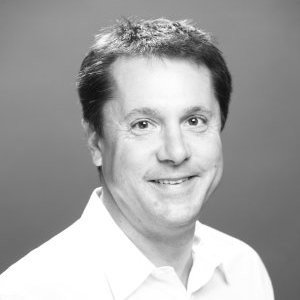
Mitch Lasky
InvestorPartner at Benchmark
Atherton
Writes $1M – $15M checks · typically $8M
Midas 2019 · #68Midas 2018 · #40Midas 2017 · #40Midas 2016 · #59Midas 2015 · #70
Find your path to Mitch
Sign up to see every warm intro you have to Mitch
- Paths you didn't know you had: your email and LinkedIn already hold routes to Mitch. We find them for you
- 2nd- and 3rd-degree connections: the friend-of-a-friend routes that take hours to manually find through your inbox or LinkedIn
- Answers now, not in days: momentum is everything in a raise. Skip asking around whether someone knows someone
Days of research, done the moment you sign in, with every route ranked by how warm it is.
About
Mitchell Harold “Mitch” Lasky is a games and consumer-technology operator, venture investor, director and media host. Born in Los Angeles in 1962, he graduated magna cum laude from Harvard College in History and Literature and earned a J.D. from the University of Virginia School of Law. He practiced technology and intellectual-property law at Irell & Manella, including Atari Games v. Nintendo work, moved to new-media business affairs at Disney, and founded the failed multiplayer-game startup Serum. At Activision he built third-party publishing, culminating in Quake III Arena, and later ran worldwide studios across products including Tony Hawk’s Pro Skater and Spider-Man. He then led JAMDAT Mobile from startup scale through a 2004 Nasdaq IPO and its $680 million cash sale to Electronic Arts, where he became executive vice president for mobile and online gaming. Lasky joined Benchmark in 2007-2008 and stopped making new firm investments in 2018. His directly attributable institutional record includes Vivox, Engine Yard, Grockit, Riot Games, Gaikai, Red Robot Labs, Meteor Entertainment, NaturalMotion, thatgamecompany, Snap, Hammer & Chisel/Discord, Cyanogen, PlayFab, Outpost Games, Manticore Games and Ubiquity6. Major documented exits include Riot’s Tencent transactions, Gaikai’s $380 million sale to Sony, NaturalMotion’s approximately $522 million accounting-value sale to Zynga, PlayFab’s sale to Microsoft and Vivox’s sale to Unity. Discord and thatgamecompany remain long-running board relationships. Snap filings distinguish Lasky’s own shares from shared beneficial ownership attributed through Benchmark VII funds. Instagram, Twitter, Uber and other celebrated Benchmark investments during his tenure are firm-wide results, not claimed here as Lasky-led. Failures and impaired outcomes include Serum, Cyanogen’s commercial-OS shutdown, Meteor’s closure and Hawken asset sale, Ubiquity6’s product abandonment before a team/technology acquisition, and Outpost’s failure to establish a durable product. His thesis treats games as franchise, service, community, distribution and platform businesses rather than isolated content hits; he emphasizes go-to-market, organic audience formation, founder learning, capital efficiency and businesses that can compound beyond one title. Since frontline investing he has co-hosted Gamecraft with Blake Robbins, mentored founders and investors, made disclosed personal angel investments in GFAL and Levellr, and served as an LAFC director and owner. A 2010 California appellate decision revived shareholder fiduciary-duty allegations against JAMDAT’s individual directors over the EA sale process, including Lasky’s negotiation and employment interests; it decided pleading sufficiency, not liability, and the reviewed record does not establish a merits finding against him.
Likely emails· guessed from name + firm domain, not firm-published
- m•••@benchmark.comreveal100% confident
- m•••@benchmark.comreveal75% confident
Invests in
AI & Machine LearningCloud ComputingData & InfrastructureDeveloper ToolsEdTechEnterprise SoftwareGamingSocial
Beyond investing
- Charities
- Harvard credits Mitchell Lasky and Cecilia Barajas with supporting the Lasky-Barajas Dean’s Innovation Fund for original digital-arts and humanities projects. Gift amount and complete grant history are not public in the reviewed source.
- Communities
- Lasky joined the ownership group in 2016 and serves as director. His site highlights the club’s MLS Cup, Supporters’ Shields and international finals; these are club achievements, not individual awards.
- Awards
- Lasky says Forbes named him to its Midas List five times. Reviewed sources support appearances including 2015, 2016, 2017 and 2019, but a complete primary Forbes year/rank set was not reconstructed.
- More
- Nexon shareholder materials record January 18, 1962; secondary biographies place his birth in Los Angeles. No civil birth record was reviewed, so the city remains secondary. Lasky moved from IP litigation and multimedia practice-building to Disney new-media business affairs, then left legal practice to attempt a multiplayer-game company. Lasky calls Serum, his early massively multiplayer online-game startup, a failure. Public financing, product and wind-down records are sparse, so no loss amount is inferred. He says the operation culminated in signing id Software’s Quake III Arena, after which he ran worldwide studios across major franchises. Team and company outcomes are not assigned to him alone. JAMDAT grew 2003 revenue to $13.5 million, turned profitable in early 2004 and priced a 5.55 million-share IPO at $16, raising $88.8 million gross. Contemporary reporting described it as the first pure mobile-game publisher IPO. EA agreed to pay $27 per share, commonly summarized as $680 million cash. Lasky entered an EA employment arrangement and personal/family trusts held JAMDAT shares; transaction value is not his personal proceeds. Benchmark and FirstMark supplied Riot’s $7 million 2008 round and Lasky joined the board. He later described helping founders Brandon Beck and Marc Merrill move League of Legends from concept to enduring online service and negotiate Tencent’s investment; Tencent’s official announcement confirms his board role but did not disclose terms. Lasky’s professional record identifies him as Series A investor and director from 2009 through Sony’s approximately $380 million acquisition. Sony’s announcement establishes aggregate price, not Benchmark or Lasky proceeds. Lasky says he worked with Torsten Reil as NaturalMotion moved from technology tools into mobile publishing. Zynga’s filing records $522.2 million acquisition-date consideration; the often-quoted $527 million and Lasky’s self-reported $630 million should not be conflated. Lasky joined Snap’s board in 2012 after Benchmark’s early investment, advised Evan Spiegel on financing and valuation, and served through the 2017 IPO. He declined 2018 re-election without disagreement. SEC beneficial-ownership reports include both his sole shares and much larger fund shares over which Benchmark managing members had shared power. Lasky invested when Hammer & Chisel was making multiplayer mobile games and says he helped Jason Citron pivot toward voice and messaging. The result illustrates his preference for founder adaptability and communication infrastructure rather than proof that the original game thesis worked. Benchmark led Cyanogen’s $7 million company-forming round and Lasky predicted a large independent Android distribution. After $115 million total funding, layoffs and a strategy retreat, Cyanogen ended OS services and nightly builds in 2016. Community code continued as LineageOS, but the venture-backed full-stack strategy did not. Meteor raised roughly $28.5 million, closed its Seattle office and later dissolved; Hawken assets went to Reloaded Games. A registry-derived record lists Lasky as a governor. Exact Benchmark recovery is unknown. Benchmark and Index co-led a $27 million Series B and Lasky joined the board. The company pivoted away from AR, discontinued Backyard and sold team/product/technology to Discord for undisclosed terms. The acquisition may have recovered value, but the original consumer-AR thesis did not endure. Lasky’s first-person account is explicit that new Benchmark investing ended in 2018. He later called himself retired from active/frontline investing but still involved through a long venture glide path. The show began as an eight-episode thematic history and expanded into multiple seasons on free-to-play, platform publishers, forever games, UGC, financing, failure, global markets, AI and intellectual property. Public secondary records identify Cecilia Barajas as his spouse and report two children, including musician Benjamin “Quadeca” Lasky. The jointly named Harvard fund corroborates the spouse relationship; no private residence or nonpublic family detail is retained.
From Mitch's own website — common ground for a warm intro.
Deals · 7


Manticore GamesBoard seat
via Benchmark · filed Dec 2017 · $18.6M raise

Hound LabsBoard seat
via Benchmark · filed May 2017 · $8.1M raise

Attribution from SEC filings, press coverage, and firm rosters.
Other disclosed investments
Board seats
Engine YardGaikaiNaturalMotionOutpost GamesRiot Gamesthatgamecompany
Investor
CyanogenEngine YardFundamental Research LabsGaikaiGames for a LivingGames for a LivingGood TroubleGrockitHipLogicJAMDAT MobileLevellrMeteor EntertainmentNaturalMotionOdyssey InteractiveOutpostOutpost GamesRascal GamesRed Robot LabsRiot GamesSingularity 6SnapchatthatgamecompanyVivoxWealthfront
Sources: SEC Form D filings · curated public sources.
Controversies & responses
Where Mitch has drawn public criticism — with what happened, their response, and the criticism itself, side by side.
▶JAMDAT sale litigation raised conflict allegations2010
- What happened
- A California appellate court held that a pension fund had pleaded a viable fiduciary-duty claim against individual JAMDAT directors. Allegations focused on sale-process control, Lasky’s continued direct negotiations with EA, voting agreements and his post-sale employment. The ruling reversed dismissal at the pleading stage; it did not find liability, and final disposition was not located.
Founder fit — who Mitch backs
Best historical fit: highly capable creative or technical founders who pair a distinctive product insight with commercial learning, distribution strategy and willingness to pivot. Lasky praises teams that understand how the flagship product fits a larger business, can show a functional prototype, learn unfamiliar business disciplines and ask what could go right without ignoring risk. Long relationships with Riot, Discord, thatgamecompany and Manticore suggest patience when founders compound learning; Cyanogen, Meteor, Outpost and Ubiquity6 show that bold platform narratives still need adoption and capital discipline.
Poor-fit signals include a hit-only studio with no franchise, service, community or distribution thesis; monetization designed mainly around LTV/CPI arbitrage; product brilliance without a credible route to audience; excessive capital before proof; generic esports or platform claims; hand-waving around AI’s cost implications; dependence on a single buyer category in a consolidating market; and founders unwilling to learn the business side. These are synthesized tendencies, not a published exclusion policy.
How to pitch
Do not pitch on the assumption that Lasky is deploying a current Benchmark fund: he stopped new Benchmark investments in 2018. For advice, a board relationship or possible personal angel consideration, start with the founder insight and a working demonstration, then explain why distribution is structurally advantaged, how the title becomes a service/community/franchise or infrastructure layer, and what persists if the initial content misses. Show retention, organic acquisition, creator/player loops, unit economics, capital required to reach proof and a first-principles AI plan. Identify the requested legal vehicle and distinguish company round size from the check requested; no reliable current personal check range is public.
Stages: historically Series A, historically early stage, select Series B and Series C, legacy portfolio follow-on and governance, current disclosed personal angel investing · Sectors: video games, game infrastructure, online communities, consumer social, mobile, user-generated content, cloud game distribution, developer platforms, open source, digital identity and privacy, online education, sports ownership
Editorial inference from Mitch's portfolio, writing and public record — not a published mandate.
Investment themes
11 documented themes from Mitch's essays, talks and portfolio, grouped by what they say about founders.
▶More themes7
Go-to-market is part of the creative work
Lasky argues that quality and design are insufficient without an intentional audience path; distribution can determine which creative work survives.
For founders: Show the initial audience, acquisition mechanism, launch sequencing and why distribution advantage reinforces the product.
Games are franchise-driven, not simply hit-driven
A durable game company turns successful content into recurring IP, service, sequels, communities and adjacent products rather than resetting risk each release.
For founders: Explain what compounds after launch and how one title creates options beyond its initial revenue.
Platform-based publishing compounds audience
Riot’s evolution and Gamecraft’s history emphasize reinvesting a successful live title into distribution, account relationships, new games and durable publishing capability.
For founders: Describe the path from product to owned customer relationship and platform without pretending the platform exists before product-market fit.
Free-to-play is distribution before monetization
His historical analysis treats free-to-play as a way to remove purchase friction, continuously serve users and earn spending through engagement, not as permission for extractive design.
For founders: Separate acquisition and access benefits from monetization mechanics; demonstrate player value, retention and trust.
Enable the ecosystem, not only content
Vivox, Gaikai, PlayFab, Discord and Manticore reflect repeated interest in communications, streaming, backend and UGC systems serving multiple games or communities.
For founders: Quantify the repeated developer/player pain, integration leverage, switching costs and cross-title expansion.
More proof with less cash2026
In a constrained funding and exit environment, Lasky and Robbins advise founders to establish more evidence before financing and study capital-efficient forever games such as Stardew Valley and Sky.
For founders: Present milestone-based burn, low-cost iteration and a credible path to durable engagement before large production spend.
Game IP has become standalone enterprise value2026
Gamecraft distinguishes IP’s older role in marketing/customer acquisition from newer film, television, licensing and training-data value.
For founders: Show ownership, audience proof and extensibility without relying on speculative adaptation value to rescue weak game economics.
▶Founders & company building2
Ask what could go right2015
Lasky credits Peter Fenton with teaching him to balance operator-style downside fixation by examining the magnitude of upside if a founder’s unusual insight works.
For founders: Make the non-consensus upside concrete while acknowledging execution and market risks honestly.
Creative talent must learn the business2015
He praised Outpost’s founders not only for design skill but for digging into the business and connecting a flagship title to a larger opportunity.
For founders: Demonstrate commercial curiosity, not merely delegate all distribution, finance and organizational questions.
▶AI & media1
Answer AI from first principles2026
Investors will assume AI changes game-development costs; founders should not finesse the issue but explain purposeful use, limitations and strategic consequences.
For founders: Map AI to each workflow, cost, speed, data right and differentiation claim with evidence.
▶Governance & network states1
Long support coexists with board accountability
Lasky’s record includes decade-scale founder relationships and transaction help, but also formal director obligations and disputed sale-process conduct at JAMDAT. Founder support should not be confused with absence of fiduciary scrutiny or conflicts.
For founders: Clarify board rights, conflict procedures, financing authority and transaction roles before pressure makes them consequential.
Podcasts & interviews
featuring Mitch LaskyFunding & Founding
Gamecraft · gamecraftpod.com
The Venture Deadpool
Gamecraft · gamecraftpod.com
Choose Your (ad)Venture
Gamecraft · gamecraftpod.com
Benchmark’s Mitch Lasky and Blake Robbins on The Art of Business in Gaming
Acquired · acquired.fm
Venture Capital, Mitch Lasky & Outpost
DFC Intelligence · dfcint.com
Will Consolidation Kill Innovation & Risk
D.I.C.E. Summit · dicesummit.org
2 more appearances
Writing
Archived Benchmark investment announcement and expansive open-Android thesis; later outcome was service shutdown.
First-person chronology and deal narratives for Activision, EA, Riot, Gaikai, NaturalMotion, Discord and other boards; self-reported values are qualified against filings.
Colleagues at Benchmark
Network3

Investors connected to Mitch in public investor directories — a warm-intro map.
Frequently asked questions
- Is Mitch Lasky still making new investments for Benchmark?
- No, not in the ordinary frontline sense. He says he stopped new Benchmark investments in 2018 and his profile ends the general-partner period in 2019, while retaining a Partner label and legacy boards. Post-2018 personal investments should not be assumed to use Benchmark capital.
- Which investments are most directly attributable to Lasky?
- Strong company, filing, first-person or board evidence supports Vivox, Engine Yard, Grockit, Riot, Gaikai, Red Robot Labs, Meteor, NaturalMotion, thatgamecompany, Snap, Discord, Cyanogen, PlayFab, Outpost, Manticore and Ubiquity6. GFAL and Levellr are disclosed personal post-Benchmark investments.
- Were Instagram, Twitter and Uber Mitch Lasky deals?
- Not on the reviewed evidence. Lasky cites them as Benchmark investments made during his tenure and as contributors to firm-wide returns. He separately names Riot Games, Snapchat and Discord as his own early investments, so the dossier preserves that boundary.
- What did Lasky do before venture capital?
- He studied humanities and law, practiced IP and corporate law, founded the failed MMO startup Serum, built Activision’s third-party publishing business, ran worldwide studios, led JAMDAT through IPO and sale, and then ran EA’s mobile and online operations.
- Was Lasky a JAMDAT founder?
- The public record conflicts in emphasis. Contemporary GameSpot reporting calls him a co-founder, while Lasky’s current biography says he became CEO of a small startup. He was unquestionably early chairman/CEO and led the IPO and sale; the dossier uses qualified founder-category language.
- How successful was the JAMDAT exit?
- EA paid $27 per share in cash, commonly described as $680 million. That is the company transaction value, not Lasky’s proceeds. Filings show personal/family trusts and employment interests, but a definitive personal net amount is not calculated here.
- What was the JAMDAT governance controversy?
- Shareholders alleged that directors mishandled the EA sale and that Lasky’s direct negotiations and continuing employment created conflicts. A California appellate court held the allegations sufficient to proceed against individual directors. That was not a merits finding, and the reviewed sources do not establish final liability.
- What failures belong in Lasky’s record?
- Serum failed outright; Cyanogen shut its commercial OS services; Meteor closed and sold Hawken assets; Ubiquity6 abandoned its original AR direction before an undisclosed Discord acquisition; and Outpost did not establish a durable public product. Red Robot Labs is inactive. Exact fund losses are private.
- What does Lasky look for in game companies?
- A product and go-to-market strategy that reinforce one another, plus a path beyond a one-off hit into service, franchise, community, platform, UGC or infrastructure. He values learning founders, prototypes, organic distribution and capital-efficient iteration.
- How should a founder pitch Mitch Lasky now?
- First verify whether the ask is advice, a board role or personal angel capital rather than Benchmark funding. Show a working product, initial audience, distribution advantage, persistent business architecture, retention and economics, capital milestones and a concrete AI plan. No authoritative current check range is public.
- Which boards are clearly current?
- Official or strong current sources support LAFC, Discord, thatgamecompany and Manticore. Nexon is not current after the 2025 election. Several private-board rosters are self-reported, so legal status can change without public filing.
- What does Lasky do publicly beyond investing?
- He co-hosts Gamecraft, mentors founders and younger investors, serves as an LAFC owner/director and maintains legacy company boards. His current site also archives interviews and speaking interests in games, venture and football.
- What awards are verified?
- Lasky reports five Forbes Midas List appearances. The statement is credible and repeated in industry biographies, but this review did not reconstruct an authoritative Forbes page for every year and rank, so it is not presented as an audited performance record.
- What public family and community information is included?
- Only narrow, voluntarily public facts: spouse Cecilia Barajas, two reported children including musician Benjamin Lasky, joint support for Harvard digital humanities and Lasky’s LAFC ownership. Private addresses, property details and wealth estimates are excluded.
About this profile. Compiled from public sources — Benchmark's own website, regulatory filings, press coverage and public professional profiles — and summarised by Fundraising Fox; every fact is kept with where it came from. Spotted an error, or would rather not be listed? Email privacy@fundraisingfox.com · How we build profiles · Your rights