 Fundraising Fox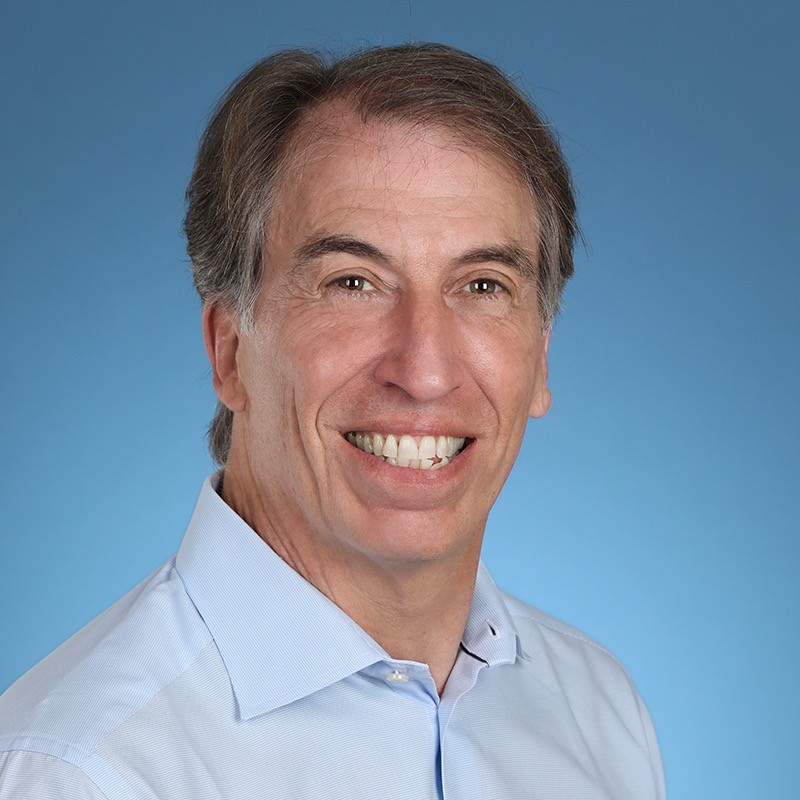
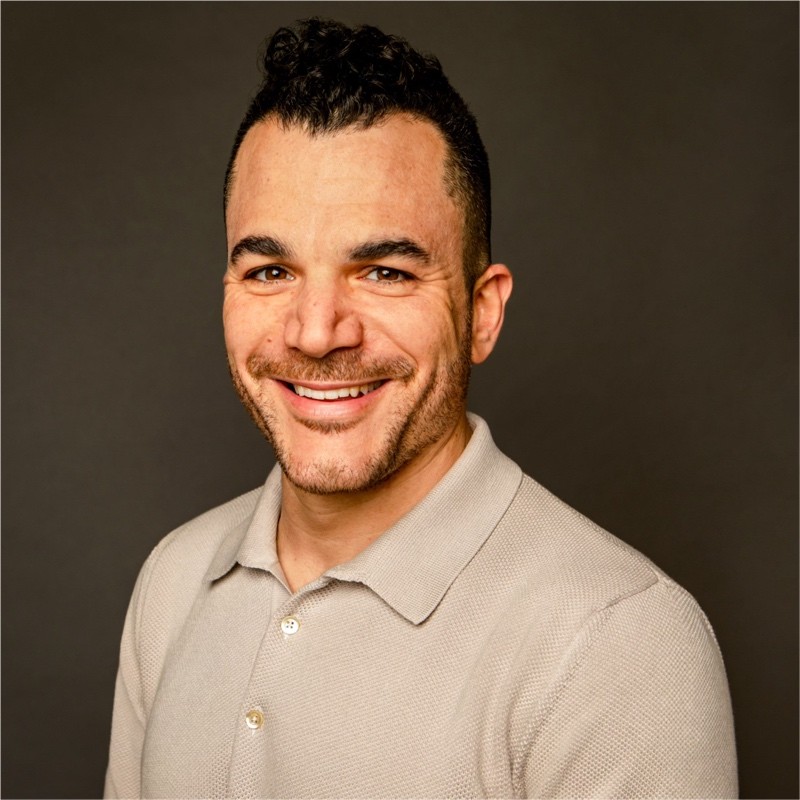
Andy Rachleff
InvestorUnicorn founderFounder at Wealthfront · Senior Advisor at 1984 Ventures Management, Llc
Palo Alto, California, United States
FoundedWealthfront$2.6B

Find your path to Andy
Sign up to see every warm intro you have to Andy
- Paths you didn't know you had: your email and LinkedIn already hold routes to Andy. We find them for you
- 2nd- and 3rd-degree connections: the friend-of-a-friend routes that take hours to manually find through your inbox or LinkedIn
- Answers now, not in days: momentum is everything in a raise. Skip asking around whether someone knows someone
Days of research, done the moment you sign in, with every route ranked by how warm it is.
About
Andrew S. “Andy” Rachleff is a venture investor, fintech founder, director, teacher and institutional philanthropist. He earned a Penn B.S. in Economics in 1980 and a Stanford M.B.A. in 1984. His full public chronology begins as a Blyth Eastman Paine Webber analyst, followed by Lamoreaux, Glynn & Associates, Harvest Ventures and a decade as a Merrill, Pickard, Anderson & Eyre general partner. MPAE-era records directly connect him to Pure Software and historical biographies attribute AOL, Legato, Abrizio, C-Port, Epigram and other infrastructure investments; vehicle-level records remain incomplete. In May 1995 he co-founded Benchmark with Bob Kagle, Bruce Dunlevie, Kevin Harvey and Val Vaden. Benchmark’s equal economics do not make every firm investment his deal. The strongest Rachleff-attributed Benchmark record is Blue Coat/CacheFlow, Equinix, Juniper Networks and Loudcloud/Opsware, plus Blue Lane, Shasta and Silver Peak. He retired from new Benchmark investing at the end of 2004 and finished legacy board work. In 2007-2008 he and Dan Carroll began the company first known as kaChing and later Wealthfront. Its manager marketplace struggled; with 10-11 months of cash left, Rachleff called prospective users, retained the technology insight but changed the audience and business model, and launched automated advice in December 2011. He was president/CEO through 2013, chairman while Adam Nash served as CEO, returned as CEO from November 2016 to March 2021 and is now chairman and a director. Wealthfront’s proposed $1.4 billion UBS sale was mutually terminated in 2022; the company completed a Nasdaq IPO in December 2025 and reported $93.04 billion in platform assets and 1.402 million funded clients at year-end. Rachleff remains a large stockholder, but company equity is distinct from Benchmark or personal angel activity. His teaching system—developed from Don Valentine, Geoffrey Moore, Steve Blank, Eric Ries, Howard Marks, Scott Cook, Mark Leslie and operating cases—defines product-market fit as proving the value hypothesis: what to build, who is desperate for it and how it will be delivered. Consumer proof is exponential organic growth; enterprise proof is sales yield above one. He favors right-and-non-consensus technology inflections, concentrated early-stage portfolios, founders who seek a market rather than manufacture a consensus product, and experiments judged by learning. Failures are integral to the record: he named Ipsilon and PointCast as mistakes; Charitableway closed; Wealthfront’s original marketplace lacked demand; and the SEC’s first robo-adviser enforcement action found false tax-loss-harvesting disclosures and advertising/referral violations, settled without admission or denial for $250,000. Wealthfront also depends materially on interest-rate-sensitive cash-sweep economics, a company-disclosed business risk rather than personal misconduct. With his wife Debbie/Debra, he established cancer-research and Penn faculty, scholarship, research and computing programs. He chaired Damon Runyon, served nearly two decades as a Penn trustee and investment-board chair, and became Trustee Emeritus in 2025. Exact birth date, complete fund economics, every legacy portfolio attribution and private family details remain unresolved.
Invests in
ConsumerCybersecurityData & InfrastructureEdTechEnterprise SoftwareFintechSemiconductors
Beyond investing
- Founded
- Kevin Harvey’s first-person history names Bob Kagle, Bruce Dunlevie, Andy Rachleff, Kevin Harvey and Val Vaden. Rachleff later argued that a small equal partnership preserved speed, risk-taking and focus on entrepreneurs; he did not claim sole authorship of the structure. He says Penn endowment work showed that elite pools had strategies unavailable to ordinary investors; repeated requests from successful portfolio-company recruits made unequal access feel wrong. Dan Carroll brought a complementary family experience with poor advice.
- Education
- He completed Penn’s economics B.S. in 1980, worked in investment roles, came to Silicon Valley for Stanford GSB and earned his M.B.A. in 1984. Rachleff defines fit through what is built, who is desperate for it and the business model. He teaches founders to prove value before a growth hypothesis and to avoid paid acquisition that masks weak word of mouth.
- Charities
- Andy and Debbie founded the Damon Runyon-Rachleff Innovation Award for early-career researchers lacking conventional preliminary data. In 2026 Stage 1 awards were $400,000 over two years with potential continuation to $800,000; award amounts evolved over time. Andy and Debbie endowed professorships, a scholarship and the Rachleff Scholars undergraduate-research program; backed Penn World Scholars and engineering buildings; and supported an advanced research computing fundraising challenge. Individual gift totals are often undisclosed.
- Communities
- Penn’s June 2025 resolution records nearly two decades as trustee, investment-board chair, executive-committee member and adviser across audit, budget, nominations, degrees and strategic initiatives, then designates him Trustee Emeritus.
- Awards
- Forbes’s 2000 peer survey profiled him among leading VCs and the 2003 Midas List includes Andrew Rachleff of Benchmark. Historical pages do not reliably expose every numerical rank, so no invented sequence is supplied.
- More
- Wealthfront’s May 2026 proxy lists Rachleff as 67, supporting a 1958-1959 birth window. Secondary directories commonly say 1958; no civil record or exact date was reviewed. Stanford dates his MPAE general-partner tenure to 1986-1995. Pure Software securities filings identify him as an MPAE V management general partner and director, directly grounding at least one vehicle and board relationship. Wealthfront’s official biography directly says he was responsible for Equinix, Juniper Networks and Opsware; filings add board evidence for Equinix, Opsware and Blue Coat. He calls Juniper and Equinix his favorite personal investments. A 2000 Forbes profile quotes Rachleff saying Ipsilon created the Level III switching market but could not deliver a product that exploited it. Forbes also identifies PointCast as a costly lesson. Ipsilon was sold to Nokia, so product failure does not prove a total fund loss. Rachleff publicly articulated the Benchmark-backed workplace-giving thesis. The company later shut after raising $43 million, citing a smaller market, slow revenue and long nonprofit negotiations. Exact Benchmark recovery is unknown. After the 2004 fund boundary he stopped new Benchmark evaluation and focused on existing portfolio work, then taught at Stanford, joined Penn governance and funded high-risk cancer research. Rachleff calls the original marketplace his dumbest error: the team validated the manager side but assumed buyers would follow. With 10-11 months of cash remaining, he interviewed abandoned-signup users and learned they preferred adequate, inexpensive management of all investable assets. The 2011 service used much of the same software but replaced a manager marketplace with Wealthfront-managed diversified portfolios. It initially targeted young technology workers whose demand for user experience and distrust of sales produced references and organic growth. Rachleff stepped into chairmanship in 2014 because he saw himself as an investor rather than operator. In 2016 he said founder identity and the desire to deliver the product vision changed that conclusion; Nash stayed on the board during transition. UBS agreed to acquire Wealthfront for $1.4 billion in January 2022. The parties terminated without a stated reason in September; UBS instead purchased a $69.7 million convertible note. Speculation about valuation or regulators is not presented as fact. Wealthfront’s 2025 prospectus and 2026 10-K say cash management generated most revenue and depends on negotiated bank spreads, deposit levels and rates. This is a disclosed business-model risk, not proof that cash accounts are unsafe or that Rachleff acted improperly. The company priced 34.6 million IPO shares at $14, including company and selling-stockholder shares, and began Nasdaq trading as WLTH in December 2025. The announcement does not by itself establish Rachleff’s personal sale proceeds. At December 31, 2025 Wealthfront reported $93.04 billion of platform assets and 1.402 million funded clients. These are company metrics, not Rachleff-managed personal assets or investment returns. The 2026 proxy classifies Rachleff as independent and reports chairman/director status, fiscal-year board compensation and equity awards. Stockholders re-elected him through 2029 with 110.3 million votes for and 7.4 million withheld. He says he makes one or two angel investments annually to help strong students and stay involved, not because he expects venture-style returns without Benchmark’s collective judgment. He advises a portfolio of at least 15 and no more than 10% of investable assets; this is general commentary, not individualized advice.
Mentioned above: the Benchmark mafia →
From Andy's own website — common ground for a warm intro.
Founder at Wealthfront
Intro paths
In turn, Andy can intro founders to Wealthfront's investors below.
Wealthfront's investors · 21















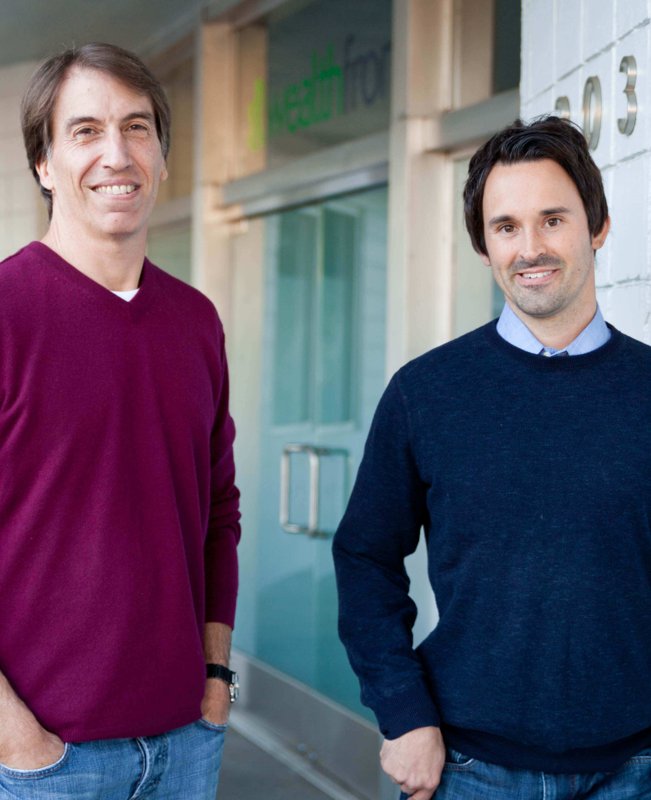
Co-founders at Wealthfront

Investments
Board seats
Blue Coat SystemsEquinixOpswarePure SoftwareSilver Peak SystemsWealthfront
Investor
AbrizioAmerica OnlineBlue Coat SystemsBlue Lane TechnologiesBluecrewC-PortCarlypsoCharitablewayDoorDash, Onfleet, ClearStory Data and FrondeBay, Ariba, Webvan, OpenTable, Twitter, Uber and SnapchatEpigramEquinixIpsilon NetworksJuniper NetworksLegato SystemsOpswarePointCastPure SoftwareShasta NetworksSilver Peak SystemsStairs Financial
Per curated public sources.
Controversies & responses
Where Andy has drawn public criticism — with what happened, their response, and the criticism itself, side by side.
▶SEC brought its first robo-adviser enforcement action2018
- What happened
- The SEC found Wealthfront falsely said it monitored all client accounts for wash sales from October 2012 to mid-May 2016; wash sales occurred in at least 31% of enrolled accounts. It also found prohibited testimonial retweets, inadequately disclosed blogger referrals and compliance failures. Wealthfront accepted censure, cease-and-desist relief and a $250,000 penalty without admitting or denying findings. The order concerns the company during Rachleff’s chair/CEO periods; it does not charge him personally.
Founder fit — who Andy backs
Best historical fit is a technically grounded founder exploiting a genuine discontinuity in networking, infrastructure, enterprise software or fintech who can explain why most people initially reject the idea, identify a small desperate segment and learn rapidly without discarding the core insight. Rachleff values logic over anecdote, customer evidence over promotion and willingness to change audience/business model before buying growth. His own stated Achilles’ heel was excessive negativity toward promotional entrepreneurs, so high-energy storytelling works best when paired with falsifiable evidence.
Weak historical fits include consensus products built by surveying a broad market; pitches aimed immediately at pragmatist enterprise logos without references; paid acquisition presented as proof of love; founders who repeatedly change the product until someone buys; promoter-heavy narratives without customer logic; and angel opportunities presented as reliable personal wealth creation. His company record adds cautions around two-sided marketplaces validated on only one side, regulatory claims that exceed operational controls, and business models whose current profits depend heavily on an external rate environment.
How to pitch
Do not pitch him as a current Benchmark decision maker: he retired from new-fund investing in 2004. Clarify whether the ask is for personal student-oriented angel support, Wealthfront governance, Stanford teaching feedback, philanthropy or an introduction. Lead with the technology discontinuity and non-consensus insight, then name the desperate initial customer, observed organic pull, business model and learning from surprises. For enterprise, show sales-yield logic and why early adopters can buy without famous references. Address compliance, conflicts, unit economics and downside candidly. No reliable public current personal check range exists.
Stages: historically pre-seed/company formation, historically seed, historically Series A, historically follow-on board support, select personal angel investments for students, current public-company governance rather than institutional venture deployment · Sectors: networking equipment, internet infrastructure and data centers, enterprise software, systems management and observability, semiconductors and communications processors, cybersecurity, consumer internet, financial technology, automated investment advice, cash management and brokerage, education and research philanthropy
Editorial inference from Andy's portfolio, writing and public record — not a published mandate.
Investment themes
10 documented themes from Andy's essays, talks and portfolio, grouped by what they say about founders.
▶More themes9
Market wins
His compact law says a great market can carry a weak team, while a great team cannot overcome a bad market; a great team plus great market creates the exceptional outcome. He developed and named product-market fit from Don Valentine’s market-first insight.
For founders: Demonstrate intensity of demand, not merely résumé quality or execution confidence.
Prove what, who and how before growth
The value hypothesis defines product, desperate audience and business model. Spending to acquire customers before proving it can manufacture misleading growth.
For founders: Bring organic retention, referrals and willingness-to-pay evidence before a scaling plan.
Start with the desperate, not pragmatists
Using Geoffrey Moore’s adoption lifecycle, he advises starting with risk-tolerant early adopters and building a whole product plus references before crossing to the early majority.
For founders: Define the narrow beachhead whose pain is strong enough to overcome product and vendor risk.
Right and non-consensus creates outsized returns
Borrowing Howard Marks’s matrix, Rachleff argues right-and-consensus returns are arbitraged away; technology entrepreneurship needs an initially unpopular but correct insight.
For founders: Explain why informed people disagree and what evidence could prove the minority view right.
A good experiment teaches2019
He credits Wealthfront leadership with defining a good experiment by learning rather than success and Scott Cook with 'savor surprises.' No surprise may mean the team did not listen.
For founders: Report the unexpected observation and how it changed audience, model or execution.
Slugging percentage beats batting average
Venture returns concentrate in a small minority of outcomes; avoiding every loss prevents the risk needed for outliers. He extends this logic to focused Benchmark partnership design but not to ordinary personal portfolios.
For founders: Make the magnitude of the possible win legible while accepting that credible risk remains.
Broad employee equity rewards long-term impact2013
Rachleff developed an annual refresh-grant method from portfolio observations to reward future contribution and retention rather than treating initial grants as permanent entitlement.
For founders: Present a repeatable performance and refresh framework, not only founder ownership or hiring grants.
Automate disciplined, low-cost advice
Wealthfront’s founding thesis was to translate endowment/private-wealth practices into software-accessible diversification, rebalancing and tax management while reducing minimums, sales bias and human friction.
For founders: In regulated fintech, pair democratization claims with operational controls, transparent economics and evidence that automation improves client outcomes.
Do not project your preferences onto customers2019
He identifies projecting his own taste and validating only the supply side of kaChing as major errors; direct calls to users changed the plan.
For founders: Separate founder taste from target behavior and validate every side of a marketplace.
▶Governance & network states1
Product truth must include compliance truth
The SEC settlement and later company disclosures show that attractive tax and automation claims need monitoring, advertising controls and fiduciary processes that match public promises.
For founders: Treat disclosure accuracy and compliance instrumentation as product requirements, especially in regulated markets.
Podcasts & interviews
featuring Andy RachleffTwo Questions Every Entrepreneur Should Answer
The Tim Ferriss Show / Starting Greatness · tim.blog
Andy Rachleff on Founding Benchmark & Wealthfront
Mixergy · mixergy.com
Andy Rachleff: Democratizing the Investment Business
Stanford Graduate School of Business · gsb.stanford.edu
Crank It Up
Wired · nehtus.com
The Best VCs
Forbes · forbes.com
Conference Speaker Andy Rachleff on His 35 Years in Silicon Valley
Lean Startup Co. · leanstartup.co
Writing
Rachleff and Ryan Kissick teaching case on innovation by a non-founder CEO.
First-person account of both CEO transitions and changing founder identity.
Portfolio-derived refresh-equity and retention framework adopted at Wealthfront.
Launch chronology, Modern Portfolio Theory implementation and Adam Nash’s arrival.
First-person power-law, diversification and personal-angel caveats.
First-person launch rationale, product architecture, fee/access critique and target users.
Colleagues at 1984 Ventures Management, Llc


Frequently asked questions
- What are Andy Rachleff’s current roles?
- He is Wealthfront’s co-founder, chairman and independent director, elected through the 2029 annual meeting, and a Stanford GSB lecturer. Penn designated him Trustee Emeritus in 2025; he is also listed as Damon Runyon’s chair.
- Is he still Wealthfront’s CEO or Executive Chairman?
- No. Those labels remain on stale biography pages, but public-company filings say his second CEO tenure ended in March 2021 and identify him now as chairman and director; David Fortunato is CEO and president.
- When was Wealthfront founded?
- The chronology has three defensible milestones: Rachleff’s board/CEO service began in February 2007, Stanford calls the co-founding year 2008, and the automated Wealthfront advisor launched December 1, 2011 after the kaChing marketplace era.
- What did he do before Benchmark?
- After Penn and early analyst/portfolio roles, he earned a Stanford M.B.A., worked at Harvest Ventures and spent 1986-1995 as an MPAE general partner. Pure Software is filing-confirmed; AOL, Legato, Abrizio and related companies are historical-biography attributions.
- Which Benchmark investments are most directly attributable to him?
- Primary/company evidence is strongest for Blue Coat/CacheFlow, Equinix, Juniper Networks and Loudcloud/Opsware. Historical biography also attributes Blue Lane, C-Port, Epigram, Shasta and Silver Peak, with incomplete vehicle and lead details.
- Did he lead eBay, Ariba, Webvan, OpenTable, Twitter, Uber or Snapchat?
- No reviewed evidence supports that blanket claim. They are Benchmark-wide examples; eBay and Ariba are associated with Bob Kagle, and many later investments postdate Rachleff’s 2004 retirement from new deals.
- Did he co-found Equinix?
- Not in the ordinary corporate sense: Jay Adelson and Al Avery founded it. Rachleff was a highly involved early investor and director and later said he 'effectively co-founded' it; the dossier treats that as company-building emphasis, not legal founder attribution.
- What is product-market fit in his framework?
- It is proof of the value hypothesis: what the product is, who is desperate for it and how the business model delivers it. Consumer proof is exponential organic growth; enterprise proof is sales yield above one. Only then should a company pursue a growth hypothesis.
- Did he coin product-market fit entirely from scratch?
- He is widely credited with developing and naming the formulation, but he explicitly grounds it in Don Valentine’s market-first insight and combines ideas from Moore, Blank, Ries, Marks, Cook, Leslie and Barnett. Accurate attribution preserves both contributions.
- What failed investments or mistakes does he acknowledge?
- He identified Ipsilon as his biggest mistake and Forbes also names PointCast. Charitableway shut after overestimating workplace giving. Wealthfront’s first manager marketplace failed to create buyer demand before its automated-advice pivot.
- What regulatory criticism has Wealthfront faced?
- In 2018 the SEC found false wash-sale-monitoring disclosures, prohibited testimonial retweets, deficient referral disclosure/documentation and inadequate compliance policies. Wealthfront settled without admitting or denying findings, paying $250,000. Rachleff was not personally charged.
- What happened to the UBS acquisition?
- The parties announced a $1.4 billion sale in January 2022 but mutually terminated it in September without a public reason. UBS instead bought a $69.7 million convertible note; speculation about why is not established fact.
- How should a founder approach him now?
- First clarify the role because he is not a current Benchmark investor. For feedback or a selective personal angel relationship, lead with a non-consensus technical insight, the desperate beachhead, organic pull, business model and what surprising evidence changed your thinking. Address regulation and unit economics directly.
- What philanthropy and community work are public?
- With Debbie/Debra he founded the Damon Runyon-Rachleff Innovation Award and funded Penn professorships, scholarships, undergraduate research, world scholars, engineering buildings and computing. He also led Penn governance and endowment oversight before emeritus status.
Founder mafias
Stanford University Graduate School of Business mafia976
Also came through, then founded or led a company.




Benchmark mafia32
Also came through, then founded or led a company.



1984 Ventures Management, Llc mafia4
Also came through, then founded or led a company.


About this profile. Compiled from public sources — 1984 Ventures Management, Llc's own website, press coverage and public professional profiles — and summarised by Fundraising Fox; every fact is kept with where it came from. Spotted an error, or would rather not be listed? Email privacy@fundraisingfox.com · How we build profiles · Your rights