 Fundraising Fox
Citadel Securities
Miami, US · 2 known investors
Find your way into Citadel Securities
Sign up to see every warm intro you have to Citadel Securities
- Paths you didn't know you had: your email and LinkedIn already hold routes to the Citadel Securities team. We find them for you
- 2nd- and 3rd-degree connections: the friend-of-a-friend routes that take hours to manually find through your inbox or LinkedIn
- Answers now, not in days: momentum is everything in a raise. Skip asking around whether someone knows someone
Days of research, done the moment you sign in, with every route ranked by how warm it is.
Citadel Securities is a Miami-based global market maker providing liquidity and trade execution in equities, options, fixed income and FX.
Also known as Citadel Securities LLC
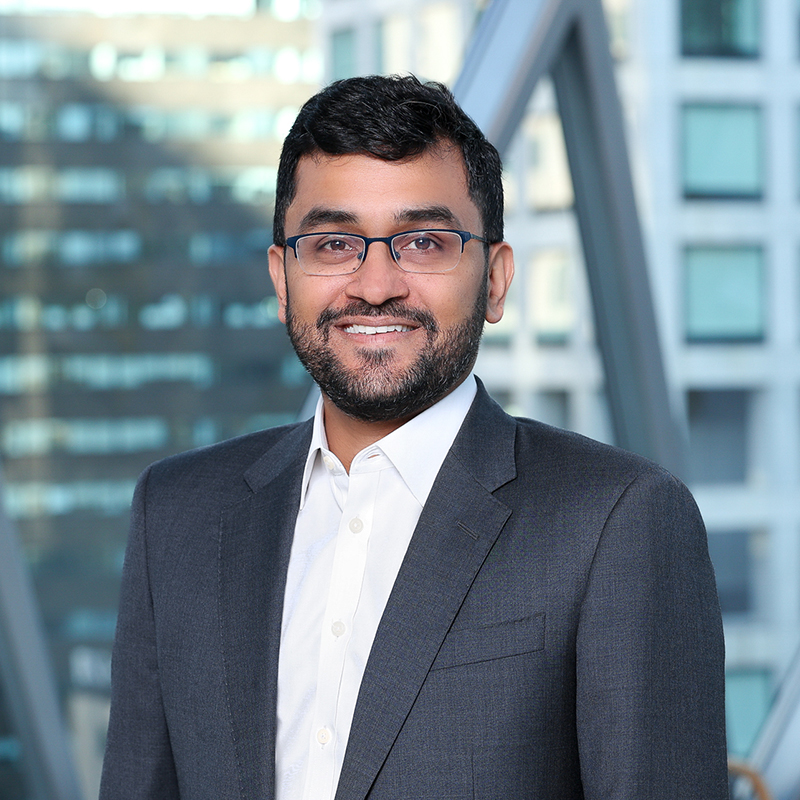
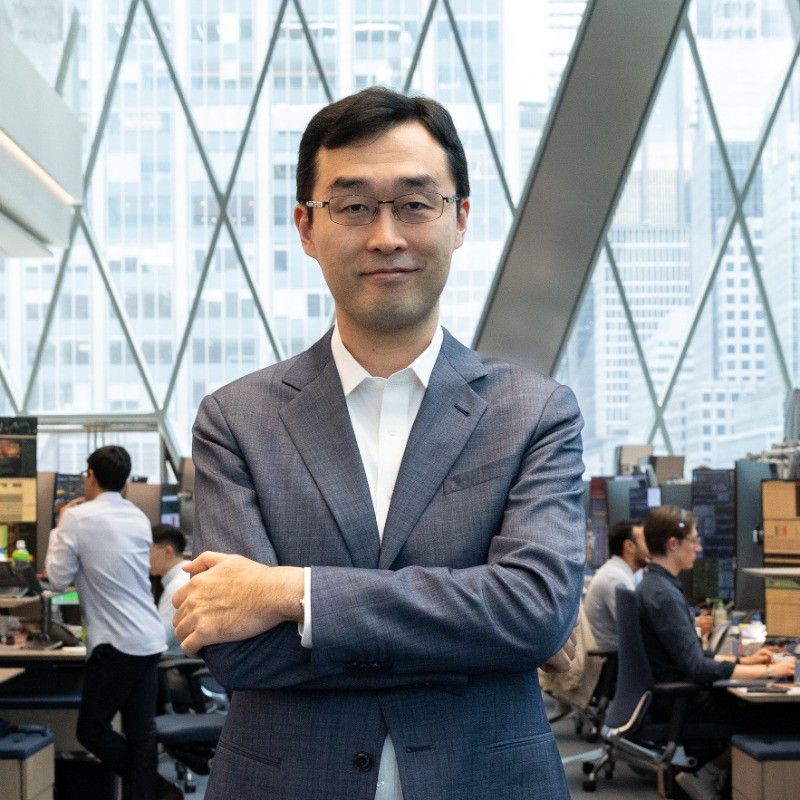
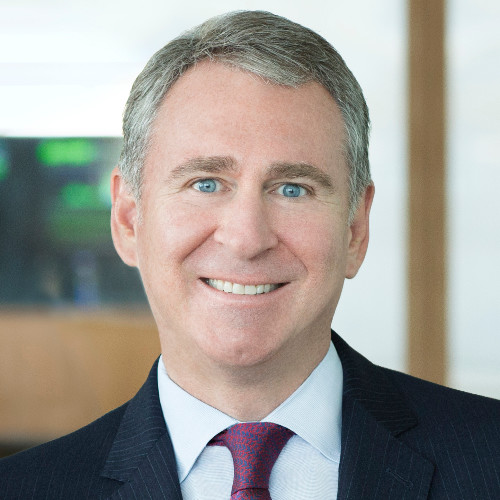
Founders & leadership
Investors · 2

How we know: Paradigm's portfolio page · company funding news (hacker news) · citadelsecurities.com · the VCSheet dataset · open dataset · 5k.vc investor directory · Not right? Tell us

How we know: Sequoia Capital's portfolio page · company funding news (hacker news) · citadelsecurities.com · Not right? Tell us
Reported raises · per SEC filings
Form D private placements▶Undisclosed amountofferedAug 2023 · 1 investors · Other Banking and Financial ServicesRule 506(b)
- MICHAEL STEVEN HENRYExecutive Officer
- SHYAM RAJANExecutive Officer
- MARC RYAN HAROLDExecutive Officer
- Placement agents
- CITADEL SECURITIES SWAP DEALER LLC
- First sale
- Jul 2023
- Incorporated
- Limited Liability Company, Delaware
- Federal exemptions
- 06b, 3C, 3C.1, 3C.2, 3C.7
Source: SEC EDGAR Form D. Amounts as filed; amended filings shown once at their latest values.
Company profile
researched Aug 2026Citadel Securities LLC is a privately held American market making firm headquartered in Miami, Florida, at the Southeast Financial Center. It provides liquidity and trade execution to retail and institutional clients and trades futures, equities, credit, options, currencies and Treasury bonds. It is described as the largest designated market maker on the New York Stock Exchange and, per Forbes, is responsible for roughly one of every four U.S. stock trades.
The firm positions itself as a technology- and research-driven market maker, combining quantitative research, machine learning and large-scale compute to price hundreds of thousands of securities simultaneously across markets and geographies while absorbing risk on behalf of clients. Its stated asset-class coverage spans equities (described by the firm as the largest provider of equities liquidity across global capital markets), options (described as the largest U.S. options market maker across major options classes) and fixed income and FX in over 50 markets. Company materials cite more than 1,800 employees, over $800 billion in notional traded per day across 50+ equity and fixed income markets, and 1,600 institutional clients including central banks and sovereign wealth funds.
Citadel Securities is a separate and distinct entity from Citadel LLC, the multi-strategy alternative investment manager; both were founded and are majority owned by Kenneth C. Griffin, who serves as non-executive chairman of Citadel Securities. Its parent entity is listed as Citadel Enterprise Americas LLC.
Founding story
Citadel Securities was formed in 2002 by Kenneth C. Griffin and his partners as a market maker in the United States capital markets, following Griffin's founding of the hedge fund Citadel in 1990. Griffin began investing in 1986–1987 from his Harvard dorm room and launched a small quantitative hedge fund in 1987 before founding Citadel in 1990, a year after graduating with an A.B. in Economics from Harvard College.
Business model
The firm operates as a principal trading and market making business: it continuously quotes and trades securities, buying from sellers and selling to buyers to provide liquidity across market conditions, and earns from trading and execution activity rather than asset management fees. It reported revenue of $9.7 billion and net income of $4.2 billion in 2024.
Revenue is generated from proprietary market making and trade execution across equities, options, fixed income, FX, credit and futures. Wikipedia notes that Robinhood sold customer orders to firms including Citadel Securities, an arrangement (payment for order flow) that has drawn congressional scrutiny.
Traction
Company figures cite over $800 billion notional traded per day across 50+ equity and fixed income markets, 1,600 institutional clients and more than 1,800 employees. Reported financials include $9.7 billion revenue and $4.2 billion net income in 2024, and about $4 billion of revenue in the first half of 2020 as profit doubled amid pandemic-driven volatility and retail trading. MEMX, the exchange the firm led in founding, reached 6.5% US equities market share excluding TRF and $18.7 billion average daily notional volume in May 2022, up from $6.7 billion in May 2021.
Latest developments
In July 2026 the firm agreed to invest $400 million in Crypto.com in an all-equity deal valuing the exchange at about $20 billion, and opened an Amsterdam options trading office. Its strategists were widely cited in mid-2026 market commentary, including forecasts of more than $500 billion of additional chip-related debt issuance by 2028 and views on Federal Reserve policy and equity positioning. The firm was named Risk Awards Flow Market Maker of the Year for 2026.
▸Full profile — market position, technology, go-to-market, geography, history, risks & controversies
Market position
Citadel Securities describes itself as a next-generation global market maker and cites leading positions in equities liquidity provision and U.S. options market making. External sources describe it as one of the world's largest liquidity providers, the largest designated market maker on the NYSE, and, by 2015, the world's largest interest-rate-swap trader by transaction count. It has received repeated industry recognition, including Risk Awards Flow Market Maker of the Year in eight years between 2017 and 2026, and awards from IFR, FOW, GlobalCapital, FX Markets and Markets Media.
Stated advantages are its talent base in finance, mathematics and technology; proprietary industry-leading predictive analytics that price large numbers of securities simultaneously; and a scalable, resilient trading platform. The firm also cites a network effect from its scale that it says enhances the liquidity solutions delivered to clients, and points to initiatives such as leading the creation of the member-owned MEMX equities exchange.
Technology
The firm builds proprietary predictive models and large-scale trading systems, applying quantitative research, machine learning and AI to price hundreds of thousands of securities simultaneously across markets and geographies. It emphasizes scalable, resilient platform and systems design intended to minimize complexity and adapt to changing market dynamics. Its workforce includes roughly 280 PhDs across 45 fields of study, with more than 45% of team members holding advanced degrees.
Go-to-market
The firm engages clients directly as a liquidity provider and trading counterparty across asset classes, supplements this with published market insight and research content (series such as Global Macro Strategy, Global Market Intelligence and Retail Detail), and participates in market-structure policy advocacy through comment letters to the SEC and CFTC on equities, options, OTC derivatives, Treasuries and commodity futures.
Institutional clients—including public pension programs, central banks, sovereign wealth funds, broker-dealers and other financial institutions—as well as retail investors served indirectly through brokers. The firm cites 1,600 institutional clients.
Geography
Global headquarters in Miami (830 Brickell Plaza; Wikipedia cites the Southeast Financial Center). Americas offices in New York, Chicago and Toronto; European offices in London, Dublin, Amsterdam, Paris and Zurich; Asia-Pacific offices in Hong Kong, Gurugram, Shanghai, Singapore, Sydney and Tokyo. Employees represent more than 90 countries.
History
Formed in 2002 as a market maker serving retail and institutional clients, the firm exited investment banking in August 2011 to focus on electronic trading and market making. In 2014 it extended market making to interest rate swaps, and by 2015 it had become the world's largest interest-rate-swap trader by number of transactions. It opened a Sydney office in 2016 and began offering US Treasury and dollar interest rate swap products in Hong Kong in 2020. Peng Zhao, who joined in 2006, became CEO in 2017. In October 2020 the firm announced the acquisition of IMC's NYSE market making unit, making it the largest designated market maker on the NYSE. It moved its headquarters from Chicago to Miami in 2022, with plans for a new headquarters on Brickell Bay Drive. Recent activity reported in 2026 includes a $400 million all-equity investment in Crypto.com at an approximately $20 billion valuation and the opening of an Amsterdam options trading office.
Risks & controversies
The firm has faced repeated regulatory actions: a June 2014 settlement with four regulators totaling $800,000 over failures to block erroneous orders; a January 2017 SEC fine of $22.6 million relating to representations about retail order pricing; a December 2018 SEC fine of $3.5 million for misreporting nearly 80 million trades; seven censures and just under $1 million in fines in 2020 for conduct including failures to close failure-to-deliver positions, naked short selling, inaccurate short-sale indicator reporting and trading during circuit-breaker halts; a $700,000 FINRA penalty in July 2020 over OTC order handling; a 670 million yuan (about $97 million) settlement with Chinese regulators over trading irregularities dating from 2015; and a March 2021 FINRA censure and $275,000 fine over Treasury transaction reporting. In 2021, lawmakers and regulators including Maxine Waters, Gary Gensler and Elizabeth Warren raised concerns about the firm's dominant market position, payment-for-order-flow arrangements and potential conflicts of interest, and an investors' suit alleged the firm conspired with Robinhood to restrict trading in certain meme stocks during the January 2021 GameStop short squeeze. The firm was also exempted from Reg SCI in 2014, a decision criticized by market analysts, and it sued the SEC in October 2020 over an IEX order type approval, losing on appeal two years later.
Compiled by commissioned research from 8 cited public sources — announcements, filings, and press listed under research sources below.
Key figures
latest reportedCompany-reported or press-reported figures, each dated to when it was claimed — not independently audited.
Founder mafia
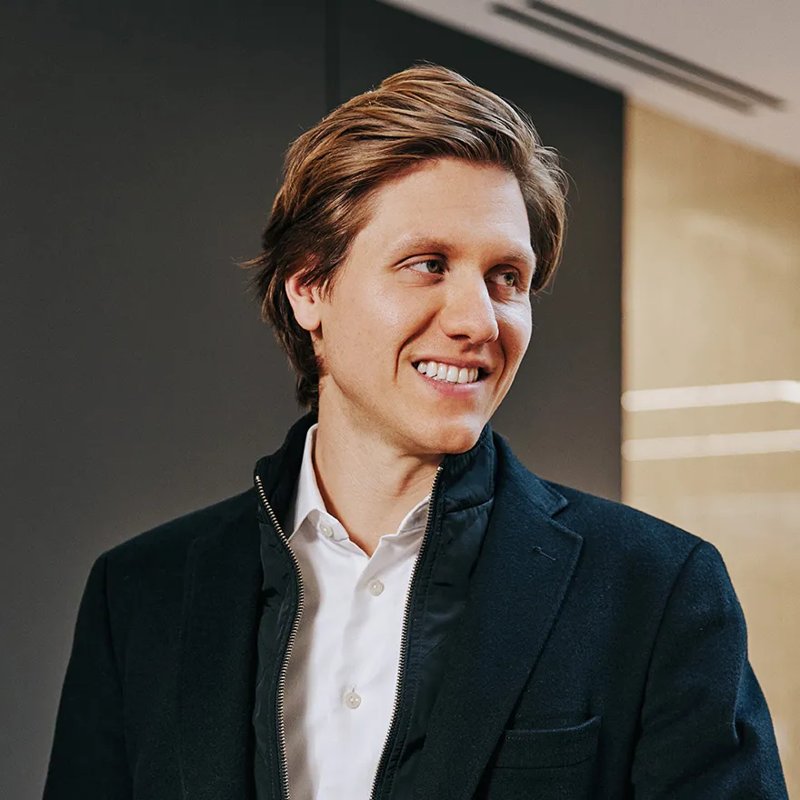
The Citadel Securities mafia →21 people who came through Citadel Securities went on to found or lead other companies.











Timeline · 19
launches, deals, and filingsAll-equity investment in the crypto exchange Crypto.com, valuing it at about $20 billion.
$400M source ↗
Eighth year receiving the Risk Awards Flow Market Maker of the Year designation across 2017 to 2026.
2025 recognitions also included FX Markets eFX Best Liquidity Provider for Spot, GlobalCapital Specialist Liquidity Provider of the Year (Europe & Asia; Americas) and Markets Media Best Liquidity Provider.
The firm moved its headquarters to Miami, Florida, with plans to build a new headquarters on Brickell Bay Drive.
Improper reporting of nearly 500,000 Treasury transactions between 2017 and 2019.
$275K source ↗
Citadel Securities announced it would acquire IMC's NYSE designated market maker business, making it the largest designated market maker on the New York Stock Exchange.
Citadel Securities sued the SEC over its approval of a new IEX order type; the D.C. Court of Appeals ruled in the SEC's favor two years later.
FINRA penalties of $700,000 for conduct from November 2011 to mid-June 2020 in which OTC orders were removed from automated processing and the firm traded for its own account on the same side of the market without immediately filling those orders.
$700K source ↗
Settlement paid to Chinese regulators for trading irregularities dating from 2015.
$97M source ↗
The SEC fined the firm $3.5 million for incorrectly reporting nearly 80 million trades from 2012 to 2016 and willfully violating broker-dealer books, records and reporting provisions; the firm admitted the findings.
$3.5M source ↗
Peng Zhao, who joined the company in 2006, has served as CEO since 2017.
The SEC fined the firm $22.6 million, finding two algorithms did not internalize retail orders at the best observed price despite claims to provide best prices; the firm neither admitted nor denied the findings.
$22.6M source ↗
Regulators asserted the firm's automated trading programs failed to block erroneous orders in incidents occurring between 2010 and 2013; fines totaled $800,000.
$800K source ↗
The company ended its investment banking effort to focus on electronic trading and market making.
Dated company events from announcements, filings, and press; legal rows summarize public dockets and regulator releases.
In the news
▸Research sources · 8
primary sources listed
- Citadel Securities - Forging the future of global capital marketscitadelsecurities.com · web
8 public sources were cited for this profile; the first-party ones are listed here.
Frequently asked questions
- What does Citadel Securities do?
- Citadel Securities is a Miami-based global market maker providing liquidity and trade execution in equities, options, fixed income and FX.
- Who are Citadel Securities's investors?
- Citadel Securities's investors include Paradigm, Sequoia Capital.
- Where is Citadel Securities headquartered?
- Citadel Securities is headquartered in Miami, US.