 Fundraising Fox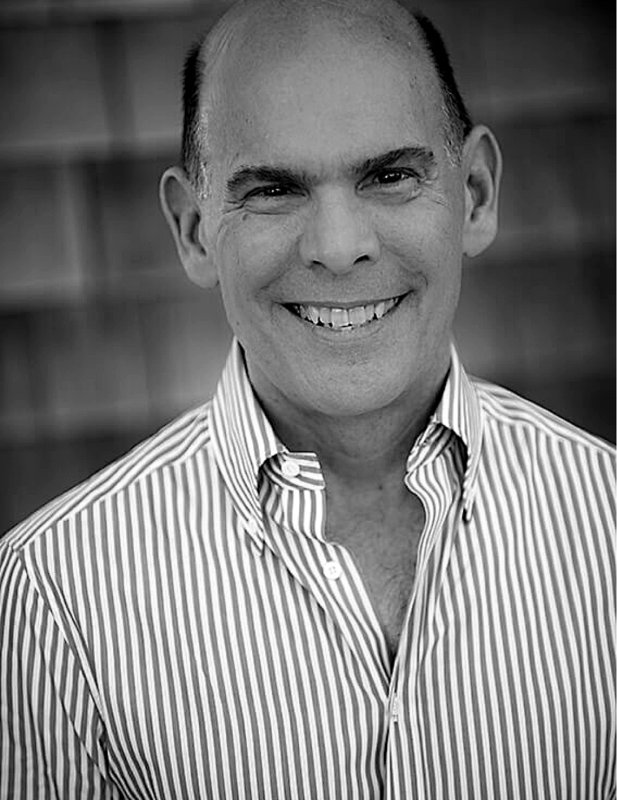
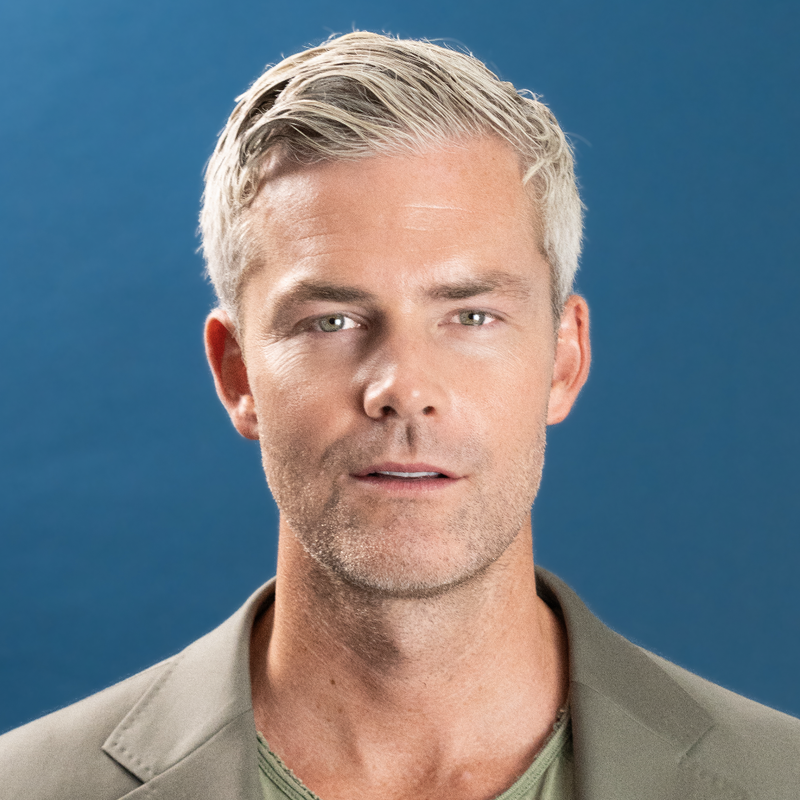
Joel Cutler
InvestorFounderCo-Founder & Managing Director at General Catalyst
Cambridge
Writes $500K – $100M checks · typically $1M
FoundedGeneral Catalyst
Midas 2021 · #62Midas 2019 · #75Midas 2018 · #69Midas 2017 · #49Midas 2016 · #37Midas 2015 · #55Midas 2014 · #47Midas 2013 · #38Midas 2011
Find your path to Joel
Sign up to see every warm intro you have to Joel
- Paths you didn't know you had: your email and LinkedIn already hold routes to Joel. We find them for you
- 2nd- and 3rd-degree connections: the friend-of-a-friend routes that take hours to manually find through your inbox or LinkedIn
- Answers now, not in days: momentum is everything in a raise. Skip asking around whether someone knows someone
Days of research, done the moment you sign in, with every route ranked by how warm it is.
About
Joel Cutler built businesses in travel, targeted consumer-direct commerce, and consumer fintech before co-founding General Catalyst with David Fialkow. In the firm's early days he helped launch KAYAK alongside Paul English and Steve Hafner. As an investor he focuses on next-generation consumer products and services, backing companies where new technology platforms and disruptive business models create inflection points in consumer experience. His portfolio spans companies such as Warby Parker, Airbnb, Lemonade, Venmo, and Blank Street Coffee. He is a graduate of Colby College and Boston College Law School.
Contact· published on Joel's own website
Invests in
AI & Machine LearningCloud ComputingConsumerDirect to ConsumerE-commerceEdTechEnterprise SoftwareFintechHealthtechInsurTechMarketplacesTravel & Hospitality
Beyond investing
- Founded
- Co-founded General Catalyst with his friend David Fialkow. Helped start KAYAK in General Catalyst's offices alongside Paul English and Steve Hafner.
- Education
- Graduated from Colby College. Graduated from Boston College Law School.
- Boards
- Serves on the board of Beth Israel Deaconess Medical Center. Serves on the board of Boston Children's Hospital Trust. Serves on the NYU Stern Tech MBA Advisory Board.
Mentioned above: the General Catalyst mafia → · the Colby College mafia →
From Joel's own website — common ground for a warm intro.
Co-founder at General Catalyst
Intro paths
In turn, Joel can intro founders to General Catalyst's investors below.
General Catalyst's investors · 10






Co-founders at General Catalyst
Investments
Led
KAYAK
Board seats
BloomscapeEmpathyHandy TechnologiesITA SoftwareMultiverse GroupOLXOscar HealthWarby ParkerZego
Investor
AirbnbBeauty PieBiltBILTBlank StreetBlank Street CoffeeBloomscapeCadreChloe + IsabelCouchsurfingEmpathyEvolv TechnologyFanSnapGameLogicGreen Bullion Financial Services / Cash4GoldGroupMeHandyITA SoftwareJetJet.comJoyJumptapKAYAKLemonadeM.GemiMultiverseNirvana InsuranceOLXOscar HealthParibusPerkPerk (formerly TravelPerk)PobtsReveal Imaging TechnologiesRockets of AwesomeRoom 77RoostSesameSesame HealthThe Honest CompanyTroverVenmoViajanetWarby ParkerWellWellDotWildcardZegoZego, Sesame Health, WellDot, Blank Street Coffee and Perk
Sources: the firm's website · curated public sources · the investor's own website.
Controversies & responses
Where Joel has drawn public criticism — with what happened, their response, and the criticism itself, side by side.
▶KAYAK and ITA dual directorship drew conflict criticism2010
- What happened
- During Google's proposed $700 million ITA acquisition, KAYAK opposed the transaction through FairSearch while Cutler sat on both boards and GC held stakes in both. Fortune argued he could not fully honor both fiduciary duties, particularly while chairing KAYAK audit and compensation committees. KAYAK responded that common ownership was not itself a conflict and that Cutler retained independent duties. Reviewed filings disclose KAYAK's reliance on ITA but no enforcement finding, adjudicated breach or public recusal record.
Founder fit — who Joel backs
Best fit is a first-principles founder with an original market map, exceptional engineering or product craft, a business-model insight that changes consumer behavior, and the humility and resilience to build for years. Cutler has said a great team with a good idea beats a good team with a great idea; he values complementary business and technical founders, as illustrated by KAYAK and Freebird, and treats the investor as an invited guest rather than the company owner. Strong founder relationships often develop before a competitive financing, through repeated substantive interaction rather than a transactional pitch. Weak fits include me-too geographic clones, incremental products in saturated categories, trend-only decks, modest outcomes that cannot support venture economics, and founders who expect brand-name capital to substitute for product or distribution. He may invest outside consumer when the team and first-principles insight are exceptional, but a generic GC portfolio reference does not prove personal fit.
['A local clone of a known winner', 'Incremental improvement in a saturated category', 'Trend vocabulary without a first-principles insight', 'Consumer novelty without durable unit economics', 'Outcome ceiling too small for institutional venture returns', 'Technology looking for a customer problem', 'Weak engineering in a technically decisive market', 'No explanation of why incumbents cannot copy the model', 'Founder unwilling to share hard questions or bad news', 'Pitch assumes a firm-wide GC holding was Cutler-led', 'Personal-check request unsupported by a documented personal strategy', 'Governance plan that ignores conflicts across adjacent portfolio companies']
How to pitch
Start with the unfamiliar or contrarian truth and explain why the category either does not exist yet or is ready for a discontinuity. Show the technology shift and business-model shift together. If incumbents or close analogues exist, quantify why the product is at least ten times better in speed, transparency, cost, trust, choice or convenience. Make the founder case concrete: first-principles insight, technical excellence, complementary leadership and evidence of relentless customer focus. Demonstrate why the outcome can exceed the mid-sized exits Cutler says do not make institutional venture math work. For travel, address platform dependency, distribution power, Google and incumbent response, and whether the infrastructure is defensible. For insurance and health, explain regulation, loss or care economics, trust, adverse selection and governance. Name the exact GC relationship sought and do not present portfolio-page attribution as proof that Cutler led every round. If proposing a conflict-adjacent company, address information barriers and board recusal at the outset.
Stages: company creation / incubation, seed, Series A, Series B, growth and follow-on, pre-IPO governance · Sectors: consumer internet and marketplaces, travel and travel infrastructure, direct-to-consumer commerce, fintech and payments, insurance technology, consumer healthcare and health access, enterprise services with consumer impact, education and workforce, bereavement and family services, specialty retail
Editorial inference from Joel's portfolio, writing and public record — not a published mandate.
Investment themes
10 documented themes from Joel's essays, talks and portfolio, grouped by what they say about founders.
▶More themes8
Define a field instead of joining a flock
Cutler prefers unsaturated markets where a company can define the category and its leadership position.
For founders: Explain the new category's boundaries, why it can exist now and how your company becomes its reference point.
Be ten times better when others arrived first
Incremental advantage is inadequate in an existing market; the experience or economics must change dramatically.
For founders: Bring measurable before-and-after evidence, not adjectives.
Back people who see the future differently2017
His ITA lesson is that exceptional founders reason from first principles and build what should exist, not an incremental version of what does.
For founders: Show the proprietary model of the market and the technical choices it forces.
Interest begins where easy understanding ends2017
Cutler says unfamiliar pitches can be attractive because obvious ideas are often crowded, while still testing whether absence reflects hidden failure modes.
For founders: Teach the non-obvious insight clearly and preempt the reason reasonable people rejected it.
Technology and business models must converge
He looks for platform changes and business-model innovation that jointly create a new consumer experience.
For founders: Connect the technical breakthrough to distribution, pricing, trust and changed user behavior.
Institutional venture requires outlier outcomes2014
Cutler distinguishes respectable $40 million-$70 million exits from the $500 million-plus outcomes needed to drive a large venture portfolio.
For founders: Show why the market and ownership path can produce an outlier without relying on fantasy assumptions.
Support the entire startup journey
His profile frames investing as founder support from formation through growth, public listing and beyond.
For founders: Discuss likely inflection points, governance needs and follow-on capital over years, not only the next round.
Culture beats strategy in partnerships2025
In hospital philanthropy, Cutler emphasizes culture and aligned leadership as prerequisites for a successful institutional collaboration.
For founders: Treat partnership compatibility, decision rights and shared operating norms as diligence topics.
▶Founders & company building1
Great team over superficially great idea2017
Cutler says a great team with a good idea beats a good team with a great idea because ideas evolve while exceptional builders compound.
For founders: Demonstrate complementary talent, learning speed, recruiting and resilience rather than treating the initial deck as fixed.
▶Governance & network states1
Investors are invited guests2011
Cutler's board philosophy, quoted by a co-investor, is that founders and teams live the company while investors assist by invitation.
For founders: Define where board help is valuable and where operating authority remains with management.
Podcasts & interviews
featuring Joel CutlerThe Role of Reinvention
HubSpot INBOUND / UNBOUND · unbound.hubspot.com
Joel Cutler — Tech Power Players 2022
The Boston Globe · bostonglobe.com
Global Fintech 2021 fireside chat
NYU Stern · stern.nyu.edu
Pitch me something I don't understand, says investor supremo Joel Cutler
Web in Travel · webintravel.com
Joel Cutler interview transcript
Phocuswright / A Letter a Day · aletteraday.substack.com
General Catalyst's Joel Cutler on the State of Startup Innovation in Travel
Skift · skift.com
1 more appearances
Writing
Cutler and Team GC on early backing, human-centered insurance, health assurance, grit and the IPO as a milestone rather than endpoint.
Cutler's IPO reflection on founder resilience, adaptability, community impact, integrity and category transformation.
Cutler and Team GC's IPO-era reflection on consumer-centered insurance and long-duration company building.
Team-authored investment announcement signed by Cutler and colleagues, documenting his board appointment and a direct-to-consumer category thesis.
Colleagues at General Catalyst
Frequently asked questions
- Who is Joel Cutler?
- Joel E. Cutler is a General Catalyst co-founder and managing director, former travel, loyalty, payments and specialty-retail operator, KAYAK co-creator, investor and public/nonprofit director. Historical sources also call him Joel Benard-Cutler.
- Who founded General Catalyst?
- Contemporary reporting identifies John Simon, Joel Cutler, David Fialkow and David Orfao as the 2000 founders. Current GC biographies most visibly describe Cutler and Fialkow as co-founders.
- What did Cutler do before venture capital?
- He built National Leisure Group, Alliance Development Group, Retail Growth ATM Systems and Starboard Cruise Services with David Fialkow across travel, loyalty, direct commerce, payments and specialty retail.
- Did Joel Cutler found KAYAK?
- He is properly described as a co-creator, founding investor and director: Cutler and GC developed the concept, brought Paul English and Steve Hafner together and incubated KAYAK in GC's offices. English and Hafner were the operating founders.
- What does he invest in?
- His durable focus is category-defining consumer experiences across travel, marketplaces, direct commerce, fintech, insurance and consumer health, with selected enterprise, workforce and family-service companies.
- Which investments are most directly attributable to him?
- ITA Software, KAYAK, Airbnb, OLX, Warby Parker, Handy, Oscar, Lemonade, Jet.com, Venmo, GroupMe, Bloomscape, Multiverse, Empathy and several current consumer companies have official-profile, authored, board, first-person or financing support. Attribution strength and lead status differ by company.
- Are these Cutler's personal investments?
- Usually not. They are primarily General Catalyst fund or incubation investments. KAYAK filings explicitly separate GC fund entities from Cutler's personal beneficial ownership. Publicly documented exceptions or adjacent activity include family-trust Warby Parker shares, a family foundation and a disputed-size seed commitment to Thrive that sources describe inconsistently as personal and/or GC capital.
- What is Cutler's investment thesis?
- Prefer new categories and first-principles founders; if a market already exists, require a product at least ten times better. He looks for great teams, exceptional engineering, new technology platforms plus disruptive business models and genuine consumer-experience inflections.
- How should a founder pitch him?
- Teach the non-obvious insight, show why now, prove technical and team quality, connect product and business-model shifts, quantify a ten-times-better experience and show outlier-scale economics. Address platform dependency, regulation and conflicts directly where relevant.
- What are his biggest documented outcomes?
- KAYAK's IPO and $1.8 billion Priceline sale, ITA's $700 million Google sale, Airbnb's IPO, Warby Parker's direct listing, Lemonade and Oscar IPOs, and acquisitions of OLX, Jet, Handy, GroupMe and Venmo. Enterprise values are not Cutler's proceeds.
- Which failed investments are documented?
- Cutler says his first two investments lost money. His travel portfolio included Room 77, which liquidated with an expected 53% preferred recovery and no common return. GC's Cash4Gold parent investment was written down nearly to zero before the business's insolvency; personal lead responsibility was not established.
- What governance controversy is most material?
- His simultaneous KAYAK and ITA board service during Google's proposed ITA acquisition drew criticism because KAYAK opposed the deal while depending on ITA technology. KAYAK rejected the premise that common VC ownership itself was a conflict; no reviewed source established an enforcement finding or fiduciary-breach judgment against Cutler.
- Why did he leave the Lemonade and Oscar boards?
- Both resignations became effective May 9, 2022 during a serious health issue. Oscar said the resignation was unrelated to disagreement, and Lemonade's CEO said Cutler was preparing for major surgery.
- What is his education?
- He earned a B.A. in Government and Economics from Colby College and a J.D. from Boston College Law School. Public records reviewed do not give graduation years.
Founder mafias
General Catalyst mafia41
Also came through, then founded or led a company.

Colby College mafia31
Also came through, then founded or led a company.


Boston College Law School mafia5
Also came through, then founded or led a company.


Blank Street mafia4
Also came through, then founded or led a company.
About this profile. Compiled from public sources — General Catalyst's own website, press coverage and public professional profiles — and summarised by Fundraising Fox; every fact is kept with where it came from. Spotted an error, or would rather not be listed? Email privacy@fundraisingfox.com · How we build profiles · Your rights