 Fundraising Fox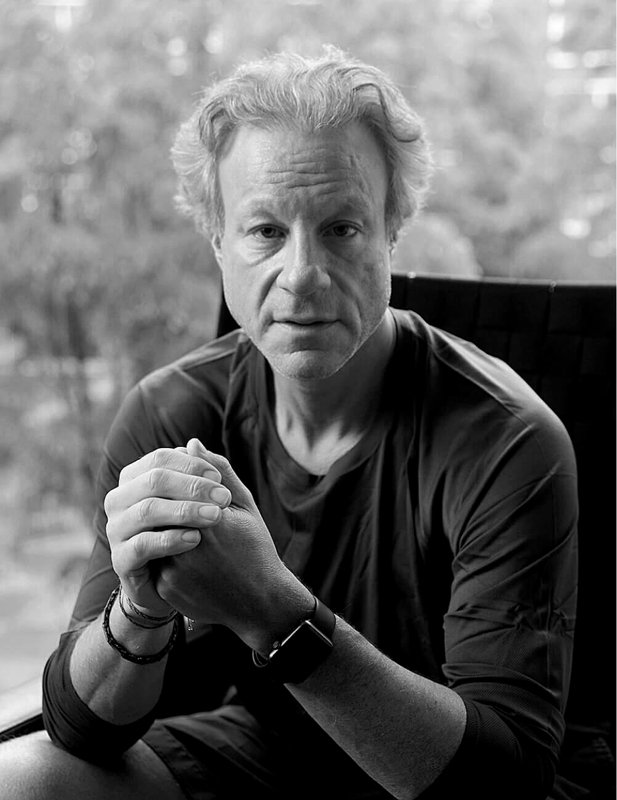
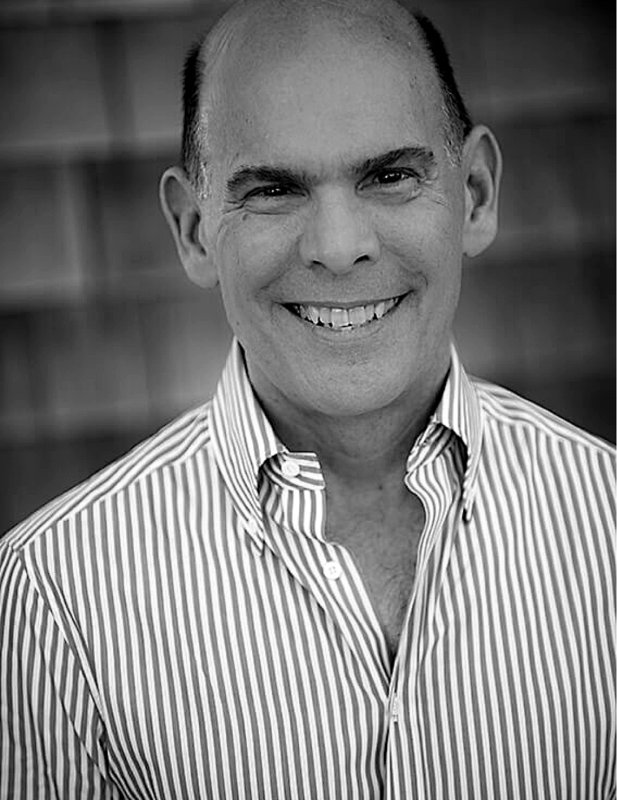
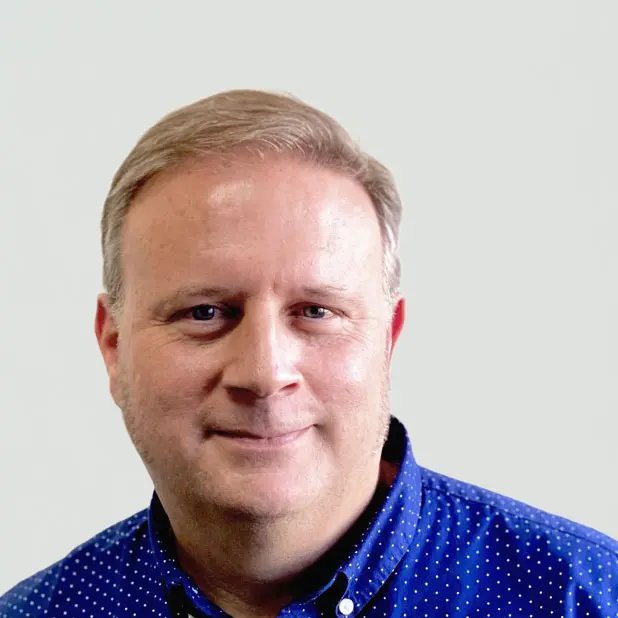
David Fialkow
InvestorFounderCo-Founder & Managing Director at General Catalyst
Cambridge
Writes $500K – $100M checks · typically $1M
FoundedGeneral Catalyst
Find your path to David
Sign up to see every warm intro you have to David
- Paths you didn't know you had: your email and LinkedIn already hold routes to David. We find them for you
- 2nd- and 3rd-degree connections: the friend-of-a-friend routes that take hours to manually find through your inbox or LinkedIn
- Answers now, not in days: momentum is everything in a raise. Skip asking around whether someone knows someone
Days of research, done the moment you sign in, with every route ranked by how warm it is.
About
David Fialkow is a co-founder of the venture capital firm General Catalyst, which he started with Joel Cutler. Before venturing into investing, he built and sold four companies, including National Leisure Group, Alliance Development Group, Retail Growth ATM Systems, and Starboard Cruise Services (sold to LVMH). His investing focus spans financial services, digital health, AI, and data analytics. Alongside his business career, he is a documentary filmmaker who, with his wife Nina, produces films on healthcare and social justice, two of which have won Academy Awards. He is also active in nonprofit and civic institutions, serving on boards including Facing History and Ourselves, the Council on Foreign Relations, and The MIT Corporation.
Contact· published on David's own website
Invests in
AI & Machine LearningConsumerCybersecurityData & InfrastructureDigital HealthEnterprise SoftwareFintechHealthtechTravel & Hospitality
Beyond investing
- Founded
- Co-founded General Catalyst with Joel Cutler. Built and sold National Leisure Group, Alliance Development Group, Retail Growth ATM Systems, and Starboard Cruise Services (sold to LVMH).
- Education
- Studied film at Colgate University. Earned a law degree from Boston College.
- Boards
- Serves on the board of Facing History and Ourselves. Serves on the Dean's Advisory Council at the MIT School of Engineering. Serves on the Council on Foreign Relations. Former chairman of the Pan-Mass Challenge board. Chairs the Investment Advisory Committee of The Engine at MIT. Is a member of The MIT Corporation, the Institute's board of trustees.
- Charities
- Has raised millions of dollars for kids' programs through biking, running, climbing, and rowing.
- Awards
- Two of the documentary films he produced have won Academy Awards.
- Hobbies
- Makes documentary films focused on healthcare and social justice with his wife Nina.
- Family
- His wife Nina is his filmmaking partner.
Mentioned above: the Boston College mafia → · the Colgate University mafia → · the General Catalyst mafia →
From David's own website — common ground for a warm intro.
Co-founder at General Catalyst
Intro paths
In turn, David can intro founders to General Catalyst's investors below.
General Catalyst's investors · 10




Co-founders at General Catalyst
Investments
Board seats
BBN TechnologiesCambridge Mobile TelematicsSuperpedestrianVitrue
Investor
AaruAaru and PodqiBBNBBN TechnologiesCambridge Mobile TelematicsCasanaCatalantClearesultCoachUpCrossfitDatalogixDattoDuckbillElysiumElysium HealthEnvoy GlobalFlashfoodHighwindsHunterbrook MediaIndexLAUNCHNotCoOgsystemsOutdoor Voices and NatureBoxPath AiPodqiResilienceRetail Convergence / Rue La LaSnagfilmsSpecial ProjectSuperpedestrianTrueMotion and Cambridge Mobile TelematicsUaláVerne GlobalVitrueWonder
Sources: curated public sources · the investor's own website.
Controversies & responses
Where David has drawn public criticism — with what happened, their response, and the criticism itself, side by side.
▶Elysium combined scientific ambition with evidentiary and litigation risk2016
- What happened
- GC led Elysium's $20 million Series B and Fialkow later appeared on its board. Reuters quoted him acknowledging that subjective feelings and possible placebo effects made anti-aging benefits hard to assess. In later supplier litigation, a jury rejected ChromaDex's trade-secret and fiduciary claims but required Elysium to pay nearly $3 million for an unpaid order while awarding Elysium roughly $2 million on counterclaims. The mixed verdict did not establish wrongdoing by Fialkow.
▶CrossFit attribution spans a founder crisis and ownership change2017
- What happened
- GC's official portfolio attributes CrossFit to Fialkow from 2017. Founder Greg Glassman resigned and sold the company in 2020 after racist remarks, affiliate departures and reports of sexism; buyer Eric Roza had worked with GC. Public sources do not establish Fialkow's ownership, board role, response or role in the Berkshire-backed purchase, so this is portfolio-governance context rather than personal conduct.
Founder fit — who David backs
Best-supported fit is a high-conviction, creative and ethical founder who can tell a large future clearly, recruit people into it, listen without surrendering independent judgment, empower stronger operators, accept mentorship, and persist through uncomfortable iteration. He appears especially receptive when success can have social or human impact in health, financial access, data, AI or services, and when the founder has a credible path from proof to revenue to strategic scarcity. Founders need not be conventional, academically elite or already polished; his own learning disabilities and operator history create empathy for unconventional trajectories. Female founders receive an explicitly favorable structural lens, but this is a preference, not an exclusive mandate. Weaker fits include transactional pitches, jargon without narrative, founders who cannot name why he is relevant, teams that resist sharing dilemmas or stronger talent, short-term projects with no enduring mission, and claims that GC's marquee portfolio or $40B-plus platform means Fialkow personally led a given deal.
['Generic one-size-fits-all pitch', 'Metrics or jargon with no memorable future story', 'Transactional relationship with no trust', 'Founder unwilling to listen or share dilemmas', 'Ego that prevents hiring stronger people', 'Product micromanagement expected from the investor', 'Short-term flip without enduring category ambition', 'No path from concept to revenue or strategic value', 'Overclaiming personal ownership of GC-wide investments', "Treating GC institutional capital as Fialkow's personal check", 'Health claims unsupported by credible evidence', 'Impact branding with no measurable operating consequence']
How to pitch
Research his specific 'hot buttons' before contact. Open with a short, vivid account of the future you want to create, who wins if it exists, and why you are the person who cannot stop building it. Show proof of concept, customer behavior, route to revenue, recruiting ability and what could make the company strategically singular; use numbers as evidence inside the story, not as a substitute for it. Explain the highest-upside case and why capped downside is worth the shot. Be explicit about what you do not know, which mentor or operator could close the gap, and where you need help with team, revenue or financing. If the company affects health, safety or society, show evidence standards, stakeholder outcomes and governance before making impact claims. A female or unconventional founder should make the earned insight and obstacles concrete without reducing the pitch to biography. Name whether you seek a GC institutional round, company-building relationship or advice; do not imply that his co-founder role gives personal ownership of Airbnb, Stripe, Anduril or the entire GC portfolio.
Stages: company creation / incubation, seed, Series A, growth, select later-stage and follow-on · Sectors: financial services and fintech, digital health and healthcare, artificial intelligence, data and analytics, enterprise software and services, consumer services and commerce, travel and hospitality, security, defense and resilience, food, fitness and wellness
Editorial inference from David's portfolio, writing and public record — not a published mandate.
Investment themes
9 documented themes from David's essays, talks and portfolio, grouped by what they say about founders.
▶More themes8
Narrative is operating infrastructure
Filmmaking taught him that founders must align employees, customers and investors around a clear mission; storytelling is not presentation polish but a core recruiting, sales and financing capability.
For founders: Make the future and the listener's role in it memorable before adding detail.
Find the listener's hot button2026
He advises tailoring a pitch to what makes the specific listener feel relevant and useful; his own emotional trigger is helping other people succeed.
For founders: Research his interests and state how his contribution could unlock someone else's success.
What if we are right?2026
He frames venture as asymmetric: a loss is bounded but a great founder can return many multiples, so conviction should often produce immediate commitment rather than false analytical precision.
For founders: Show the plausible exceptional outcome and why present uncertainty creates the opportunity.
Create relevance to recruit mentors2026
People respond when asked for distinctive insight and offered a chance to learn, help a younger person and become meaningfully relevant—not merely because they are rich or famous.
For founders: Ask a precise question that makes the mentor's unique experience necessary.
Surround yourself with people who know more
His operator and GC history repeatedly uses stronger domain experts, XIRs and empowered young leaders; inclusion improves insight, ownership and buy-in.
For founders: Identify the missing expert and demonstrate willingness to share ownership and decision authority.
A stated bias toward backing women2026
He says he prefers to back women when possible because ambitious women remain overlooked and often had to overcome more to reach the same stage. The statement describes his lens, not audited portfolio allocation.
For founders: Connect structural obstacles to earned insight, resilience and market advantage.
Institutions should outlast founders2018
He compares stewardship to holding a watch for the next generation: founders should transfer control before thinking calcifies and build enduring value for portfolio founders and investors.
For founders: Show leadership succession, distributed ownership and a mission larger than the current CEO.
Capital and stories should complete an impact loop
He values returns that fund institutions and films that change policy, protect whistleblowers or generate donations; impact is strongest when an output produces measurable downstream action.
For founders: Define the financial outcome and the concrete human or institutional consequence together.
▶Founders & company building1
Mentor founders, do not seize their product2001
GC's founding model focused on helping founders build teams, revenue and financing while respecting that founders know their products better than investors.
For founders: Ask for specific building support while preserving founder ownership of product judgment.
Podcasts & interviews
featuring David FialkowOscar-Winner, Billionaire, Venture Capitalist: Inside David Fialkow's Mind
Harvard Business School Foundry / The Founder Mindset · hbs.edu
Episode 422: David Fialkow – Co-Founder & Managing Director, General Catalyst
VentureFizz · venturefizz.com
General Catalyst Co-Founder David Fialkow on Pitching VCs Through Hot Buttons
Aleph Invested · aleph.vc
The Founding of General Catalyst
20VC · thetwentyminutevc.com
The Creative Genius of David Fialkow
Boston College Law School Magazine · lawmagazine.bc.edu
Colleagues at General Catalyst
Network6
Investors connected to David in public investor directories — a warm-intro map.
Frequently asked questions
- What is David Fialkow's current role at General Catalyst?
- He remains co-founder and managing director. He stepped off the private firm's board in 2026 after a reported 24 years, while Hemant Taneja continues to run GC as CEO and sole managing partner.
- What did he do before General Catalyst?
- He studied film, earned a JD, learned investing under Thomas H. Lee, worked at U.S. Venture Partners, and with Joel Cutler built and sold businesses in discount travel, loyalty programs, ATM/payment networks and cruise-ship retail.
- When was General Catalyst founded?
- The firm consistently uses 2000 as its founding year. Fialkow's first-person chronology places the approximately $70 million first fund and operating launch across the 2000-2001 post-dot-com venture winter.
- Which investments are most directly attributable to him?
- Datalogix is the signature result. Official GC or direct board evidence also supports BBN, Vitrue, Index, Elysium, Catalant, PathAI, Cambridge Mobile Telematics, Casana, CrossFit, CoachUp, LAUNCH, Wonder, Duckbill, Resilience, Aaru and Podqi. Datto, CLEAResult, Highwinds, OGSystems, Outdoor Voices, NatureBox and others are credible but often shared with another GC partner or XIR.
- Were those personal investments?
- The reviewed evidence overwhelmingly describes General Catalyst fund or company-creation investments. No comprehensive personal angel portfolio or personal check range was verified.
- What does he look for in founders?
- Creative conviction, trust, storytelling, customer empathy, recruiting ability, openness to mentors, long-term commitment and the capacity to turn proof into revenue and strategic scarcity. He says he prefers backing women when possible because they remain structurally underfunded.
- How should a founder pitch him?
- Tell a specific, memorable future story tailored to his interests, show why the people are worth immediate trust, support it with proof and revenue logic, state what you do not know, and ask for concrete help with team, customers, mentorship or capital.
- What failures or controversies qualify the record?
- Outdoor Voices ended in a distressed asset sale; Superpedestrian shut U.S. operations while he was a filing-listed director; Elysium faced questions about supplement evidence and mixed supplier-litigation outcomes; and CrossFit's founder sold after racist remarks and culture allegations. No reviewed source found personal misconduct by Fialkow, and attribution varies from direct board service to a broader GC portfolio association.
- What is his education and how did learning disability shape him?
- He graduated from BB&N in 1977, earned a Colgate BA in 1981 after sociology and film study, and a Boston College JD in 1985. He says weak reading and writing skills pushed him toward visual storytelling while sports preserved confidence.
- Which documentaries and awards are most notable?
- He produced Icarus and served as a social-impact executive producer of Navalny; both films won the Academy Award for Best Documentary Feature. New Lane also describes him as BAFTA- and Emmy-winning and lists a broad social-justice filmography.
- What community and philanthropic work is public?
- His public roles include The MIT Corporation, The Engine, MIT Engineering, Facing History, Pan-Mass Challenge, MVYouth, Story Syndicate and Council on Foreign Relations. He and Nina gave $1.1 million to launch MIT's Transmedia Storytelling Initiative, and he has used endurance challenges and film screenings to raise money for children's health, cancer research and Partners In Health.
- Is every major General Catalyst company his investment?
- No. Fialkow is a co-founder and participates in partnership decisions, but direct evidence credits other partners for companies including Circle, Stripe, KAYAK, many defense investments and much of GC's current transformation strategy. Firm-wide portfolio names are not person-level attributions without specific evidence.
- Who is David Fialkow?
- David Fialkow is a co-founder of the venture capital firm General Catalyst, which he started with Joel Cutler. Before venturing into investing, he built and sold four companies, including National Leisure Group, Alliance Development Group, Retail Growth ATM Systems, and Starboard Cruise Services (sold to LVMH). His investing focus spans financial services, digital health, AI, and data analytics. Alongside his business career, he is a documentary filmmaker who, with his wife Nina, produces films on healthcare and social justice, two of which have won Academy Awards. He is also active in nonprofit and civic institutions, serving on boards including Facing History and Ourselves, the Council on Foreign Relations, and The MIT Corporation.
- Where does David Fialkow work?
- David Fialkow is Co-founder of General Catalyst and Co-Founder & Managing Director at General Catalyst.
Founder mafias
Boston College mafia126
Also came through, then founded or led a company.
Colgate University mafia41
Also came through, then founded or led a company.

General Catalyst mafia41
Also came through, then founded or led a company.

About this profile. Compiled from public sources — General Catalyst's own website, press coverage and public professional profiles — and summarised by Fundraising Fox; every fact is kept with where it came from. Spotted an error, or would rather not be listed? Email privacy@fundraisingfox.com · How we build profiles · Your rights