 Fundraising Fox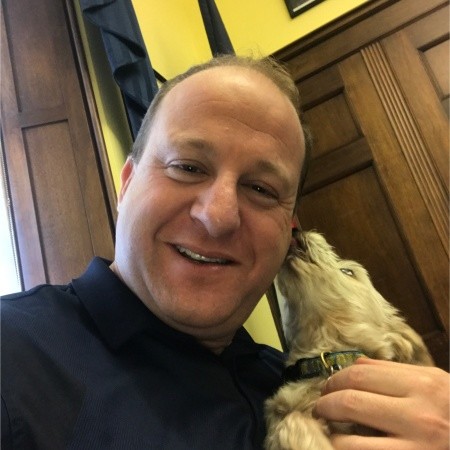

Find your path to Jared
Sign up to see every warm intro you have to Jared
- Paths you didn't know you had: your email and LinkedIn already hold routes to Jared. We find them for you
- 2nd- and 3rd-degree connections: the friend-of-a-friend routes that take hours to manually find through your inbox or LinkedIn
- Answers now, not in days: momentum is everything in a raise. Skip asking around whether someone knows someone
Days of research, done the moment you sign in, with every route ranked by how warm it is.
About
Jared Schutz Polis is Colorado's 43rd governor and a former internet entrepreneur, angel investor, education leader, and five-term U.S. representative. At Princeton he co-founded American Information Systems, an internet-services company acquired by Exodus Communications. He then served as executive director of his family's BlueMountain.com, acquired by Excite@Home in a $350 million cash-plus-stock transaction, and founded ProFlowers, renamed Provide Commerce, which went public and was acquired by Liberty Media for $33.75 per share. He was one of four Techstars founders in 2006 and later helped found Patriot Boot Camp. His education philanthropy included the Jared Polis Foundation, New America School, and Academy of Urban Learning. His political chronology runs from the Colorado State Board of Education through Congress and two terms as governor, with an intervening record on education, immigration, LGBTQ rights, cannabis, technology, health costs, taxes, housing, energy, and workforce preparation. This dossier separates founder-company interests, direct or disclosed personal investments, Jovian family-office entities, Techstars founder and accelerator exposure, and public-policy activity. It also records self-financing, financial-disclosure and blind-trust criticism, a dismissed state complaint, a unanimously dismissed House ethics referral, tax-structure reporting, pandemic criticism, the flawed Amendment 41 drafting, and Proposition HH's defeat without converting allegations or political disagreement into findings.
Invests in
Cloud ComputingConsumerEdTechEnergyHealthtechMarketplacesMobility & Transportation
Beyond investing
- Founded
- Polis says three founders started AIS with a server and modems, later raised approximately $1.5 million, and agreed to sell for about $23 million. Exodus's SEC filing confirms AIS was a regional colocation, hosting, and professional-services provider acquired in February 1999, one year later than the shorthand 1998 exit date often repeated. Polis describes launching the online operation from his parents' greeting-card business, moving into it full time in 1997, and monetizing a very large free audience through advertising. He acknowledged it was not profitable at sale, placing the exceptional price in dot-com market context. Techstars dates David Cohen's concept email to February 18, 2006 and incorporation with David Brown, Brad Feld, and Polis to November 14, 2006. In a 2026 interview, Polis described backing the people and the early mentorship model; no evidence supports crediting him with Cohen's operating concept or every later Techstars deal.
- Education
- Polis majored in politics, wrote a senior thesis about the internet's impact on politics, and says he never took a Princeton computer-science course. At the same time, he and two friends operated American Information Systems from dorm rooms and sought venture capital. The New America School served immigrants and family members needing English instruction and flexible schedules. Academy of Urban Learning, founded by the Polis foundation and Urban Peak in 2005, paired a small charter high school with wraparound services for students experiencing homelessness or unstable living conditions.
- Family
- Polis and Reis met in 2002, married in 2021, and have two children. Polis has publicly discussed cooking, video and board games, pets, and bringing family into ceremonial governor duties. No private schooling, medical, financial, or custody details are included.
- More
- Congressional records identify Polis as born in Boulder on May 12, 1975. Princeton reports that he used Jared Polis Schutz in college and legally changed his name in 2000 to Jared Schutz Polis, incorporating his mother's surname and honoring his grandmother. This explains variant SEC, alumni, and political records. At Home's filing says the December 13, 1999 merger paid Blue Mountain stockholders $350 million in cash and preferred stock convertible into approximately 10.7 million common shares; contemporary reporting valued the stock near $430 million with contingent upside. The total company consideration should not be represented as Polis's personal proceeds. Polis founded ProFlowers to shorten the flower supply chain and ship from growers to customers. SEC filings say the company incorporated in February 1998, later broadened its perishable-goods platform, and changed its name to Provide Commerce in September 2003. A Schedule 13G identifies Polis as sole member and manager of JPS International, general partner of Internet Floral Concepts, and chairman of wholly owned investment adviser Jovian Holdings. The IPO prospectus says Polis, family members, and affiliates retained significant influence; these entity holdings are not all direct personal shares. Polis co-founded Patriot Boot Camp in 2012 with Taylor McLemore, David Cohen, and David Calone. DAV reported that the program had served more than 1,000 veteran and military-spouse entrepreneurs before DAV acquired it in 2022. Polis was the first openly gay non-incumbent man elected to Congress and, in 2018, the first openly gay man elected governor of a U.S. state. His public record also includes advocacy against Don't Ask, Don't Tell and for student nondiscrimination and marriage equality. Nonpartisan campaign-finance analysis counted approximately $23.37 million in self-financing in 2018, about 96% of fundraising. OpenSecrets categorized approximately $11.9 million as candidate self-finance in 2022. Supporters say this limits donor dependence; critics argue wealth creates unequal access to office. 2018 reporting found investments across health care, renewable energy, technology, real estate, and private funds and identified 26 entities in which disclosures described Polis as manager, partner, limited partner, or director. Polis said he was generally passive, promised to leave outside company roles as governor, and maintained that a blind trust existed; public reporting found much of the portfolio remained outside that trust. The Office of Congressional Ethics referred questions about a Riot Games video and Ninox clothing event. After further review, the bipartisan House Ethics Committee concluded that Polis violated no law or House rule governing official endorsements or official resources, unanimously dismissed the matter, and closed it. The administration helped design the complex 2023 property-tax, TABOR-refund, and school-funding package, which voters rejected by approximately 18 percentage points. Polis later said it was too long and confusing and might have worked better as separate questions.
Mentioned above: the Techstars mafia →
From Jared's own website — common ground for a warm intro.
Co-founder at Techstars
Intro paths
In turn, Jared can intro founders to Techstars's investors below.
Techstars's investors · 12



Co-founders at Techstars



Investments
Board seats
ProFlowersTechstars
Per curated public sources.
Controversies & responses
Where Jared has drawn public criticism — with what happened, their response, and the criticism itself, side by side.
▶State dismissed the 2018 BridgeHealth disclosure complaint2018
- What happened
- A partisan complainant alleged that Polis omitted a large BridgeHealth interest. The Colorado Secretary of State's final decision dismissed the matter because it failed to allege a campaign-finance-law violation and found the required disclosure timely. The decision was not a merits finding on every conflict allegation; BridgeHealth appeared in federal disclosures and under Jovian on the less-detailed state form.
▶Family-office tax strategy drew investigative scrutiny2000
- What happened
- ProPublica-partner reporting described Jovian as a family office whose deductions, investment losses, depreciation, and deferral strategies reduced Polis's taxable income. The strategies reported were not characterized as unlawful. Polis's earlier response was that high-growth companies were managed for growth and that he paid tax when he made taxable money.
▶COVID response drew criticism from opposing directions2020
- What happened
- Polis imposed shutdown, business, movement, and mask restrictions to protect hospital capacity, prompting objections over emergency power, economic harm, communication, and local autonomy. During later surges, public-health officials and some Democrats instead argued that his administration waited too long to restore restrictions. The record reflects difficult tradeoffs, not a single uncontested failure finding.
▶Amendment 41 created ethics infrastructure but had drafting problems2006
- What happened
- Polis co-chaired the successful 2006 campaign to restrict gifts, impose a lobbying cooling-off period, and create an ethics commission. Broad language produced concerns about scholarships and ordinary gifts to public employees' families. Polis later acknowledged that wording could have been better while defending the new ethics-enforcement process.
Founder fit — who Jared backs
Historically strongest fit would be a resourceful team capable of executing an internet-enabled model that removes intermediaries or structural cost, demonstrates a large user or customer need, learns rapidly, complements one another, and uses mentors for more than introductions. Education, veteran entrepreneurship, marketplaces, e-commerce, technology infrastructure, health-cost innovation, and civic or workforce access recur in his record. Current fit is fundamentally policy and ecosystem fit, not investor fit: founders should not assume the governor, his office, Techstars, Jovian, or old disclosed holdings constitute an available personal funding channel.
['Assumption that Techstars co-founder status means Polis invests personally today', 'Pitch relying only on political access or public subsidy', 'Opaque ownership, conflicts, or undisclosed affiliated entities', 'Founder rigidity about implementation despite contrary evidence', 'Capital request without a capable complementary team', 'Marketplace with no supply-chain advantage or customer proof', 'Attributing every Techstars company to Polis', 'Treating disclosure value ranges as exact check sizes', "Expecting the governor's office to discuss private investment opportunities"]
How to pitch
There is no verified current route to pitch Polis as an angel investor, and founders should not use public office for private fundraising. As historical guidance, lead with the team, the structural inefficiency being removed, direct customer benefit, evidence of demand, execution speed, lessons from failed assumptions, and the specific value of mentorship or ecosystem access. Explain how the company expands opportunity or lowers a meaningful cost. Keep private investment attribution separate from Techstars accelerator vehicles and from government programs. For public-policy engagement, use formal transparent channels and disclose any financial interest.
Stages: historical angel, seed, founder capital, accelerator, private-company and fund interests, no verified current personal mandate · Sectors: internet infrastructure and hosting, consumer internet and digital media, e-commerce and direct-to-consumer, marketplaces and disintermediation, transportation and mobility, health-cost and benefits services, education and workforce technology, startup accelerators and founder support, renewable energy and diversified private assets
Editorial inference from Jared's portfolio, writing and public record — not a published mandate.
Investment themes
9 documented themes from Jared's essays, talks and portfolio, grouped by what they say about founders.
▶More themes6
Disintermediation and lower-cost access
AIS, BlueMountain, and ProFlowers each used the internet to bypass or reconfigure an intermediary: network infrastructure, greeting-card distribution, or floral wholesale and retail layers.
For founders: Show which costly layer disappears, who captures the value, and why technology makes the change durable.
Accelerators provide more than capital
Techstars and Patriot Boot Camp reflect the belief that concentrated mentorship, peer community, networks, and deliberate support can materially alter founder outcomes.
For founders: State the advice, network, customer, hiring, or accountability gaps an accelerator can actually fill.
Wealth is an imperfect proxy for investor sophistication
Polis argues that accredited-investor rules should allow demonstrated knowledge rather than relying only on wealth thresholds, consistent with his broader interest in widening entrepreneurial opportunity.
For founders: Understand securities-law constraints while supporting transparent paths for knowledgeable non-wealthy investors.
Market-oriented economics with progressive civil liberties
Polis combines tax reduction, occupational-licensing reform, school choice, cannabis reform, and skepticism of prolonged mandates with abortion and LGBTQ rights, clean-energy policy, and public investment. Admirers call this libertarian-leaning; critics find the label inconsistent with regulation and spending.
For founders: Expect policy judgments to mix market mechanisms, personal autonomy, and public goals rather than follow one ideological template.
Transparency must accompany wealth and public power
Polis helped create Colorado's ethics commission through Amendment 41 and regularly filed required disclosures, yet the breadth and entity structure of his own holdings generated legitimate transparency and conflict questions. Complaint dismissals resolve specific legal allegations, not every appearance concern.
For founders: Use explicit entity, vehicle, role, and control labels; disclose conflicts before seeking public action.
Keep the goal, change the implementation
After Proposition HH's defeat, Polis acknowledged complexity and drafting problems while retaining the property-tax-relief goal. His founder analogy similarly distinguishes conviction about outcomes from willingness to pivot methods.
For founders: Own design failures directly, preserve the validated problem, and simplify the next iteration.
▶Founders & company building1
Trust the team, then learn by doing2006
Polis describes the Techstars commitment as confidence in the people before complete program certainty and portrays entrepreneurship as entering the deep end, learning, and adapting.
For founders: Make complementary execution capacity and learning speed visible, not just the idea.
▶Health, frontier & community1
Access, choice, and outcome measurement
From charter schools and the State Board of Education to universal preschool, full-day kindergarten, and the NGA readiness roadmap, Polis emphasizes varied educational routes, measurable results, workforce preparation, civic readiness, and lifelong well-being.
For founders: Education ventures should measure real learner outcomes and access, not only enrollment or institutional activity.
▶Governance & network states1
Founder systems thinking in public administration
Polis describes moving from legislative coalition building to executive management with measurable outcomes, recruiting leaders, iteration, and implementation discipline, while acknowledging that government differs from a company.
For founders: Separate vision from implementation and build accountable systems rather than relying on founder charisma.
Podcasts & interviews
featuring Jared PolisSerial Entrepreneur and Public Servant
Outsider Inc. · outsiderinc.substack.com
The Unpredictable Politician
Princeton Alumni Weekly · paw.princeton.edu
Colorado Gov. Jared Polis Wants to Leave You Alone
Reason · reason.com
Blue Mountain Arts' Polis of Web 1.0 and His First Year as a Congressman
AllThingsD · allthingsd.com
The Dot-Com Congressman
Inc. · inc.com
Jared Polis on Being a Dad, Husband, and America's First Out Gay Governor
The Advocate · advocate.com
1 more appearances
Writing
NGA chair initiative roadmap produced under Polis's leadership on academic foundations, workforce readiness, civic preparation, lifelong well-being, measurement, and accountability.
Co-authored public argument with Pete Maysmith for lobbyist gift limits, a cooling-off period, and an independent Colorado ethics commission.
Princeton senior thesis on the internet's effect on politics; full institutional repository record was not located in this review.
Public speeches, bill statements, executive communications, and policy releases issued through the governor's office; not all language is necessarily personally drafted.
Frequently asked questions
- Which Jared Polis is this?
- Jared Schutz Polis, born Jared Schutz in Boulder in 1975: the Princeton politics graduate, internet entrepreneur, Techstars co-founder, former Colorado education-board member and congressman, and current governor. Jared Polis Schutz and Jared S. Polis are the same person under name variants.
- Did Polis found BlueMountain.com?
- He founded and led the online operation using content from Blue Mountain Arts, the print publishing company founded by his parents. Describing him as sole founder of the entire family publishing business would be inaccurate.
- When was American Information Systems sold?
- Polis recalls a 1998 deal at about $23 million, while Exodus's SEC filing records the completed AIS asset acquisition in February 1999. The dossier uses 1999 for closing and preserves 1998 as his deal shorthand.
- What was ProFlowers' corporate outcome?
- It incorporated in 1998, became Provide Commerce in 2003, completed a public offering, and was acquired by Liberty Media on February 9, 2006 for $33.75 per share.
- What exactly was Polis's Techstars role?
- He was one of four legal co-founders and an early financial backer. David Cohen originated and operated the accelerator concept. Reviewed sources do not establish that Polis currently runs Techstars, sits on its board, or personally owns every portfolio investment.
- Is Polis currently an active angel investor?
- No current personal venture mandate was verified. His public role is governor, and reporting says he stopped active outside business work. Historical disclosures and interviews establish prior angel, fund, family-office, and Techstars-related interests only.
- Can founders pitch Polis for investment?
- No verified public channel exists to pitch him as an investor, and public office should not be used for private deal access. The dossier's founder guidance is historical inference, not an invitation or current check-size claim.
- Are all Techstars companies Jared Polis investments?
- No. Techstars accelerator and venture entities hold company positions. Founder or disclosed program-vehicle interests may create indirect economics, but company-level Polis attribution requires a direct disclosure, board, filing, or sourced investment record.
- What conflict-of-interest criticism is documented?
- His extensive health care, energy, technology, real-estate, private-fund, and LLC holdings generated questions about regulatory overlap, control, blind-trust scope, and state disclosure detail. Polis said he was generally passive and focused solely on public service as governor. No reviewed source established a general adjudicated finding that he used office for personal gain.
- Was Polis found to have hidden BridgeHealth?
- No. A 2018 complaint alleged omission, but the Secretary of State dismissed it for failure to allege a campaign-finance-law violation and found the state filing timely. BridgeHealth was in federal disclosures and represented through Jovian on the state form. The dismissal did not independently audit every potential policy conflict.
- Did House ethics investigators find misconduct?
- The OCE referred endorsement questions involving Riot Games and Ninox, but the bipartisan House Ethics Committee unanimously found no violation, dismissed the allegations, and closed the matter in December 2015.
- Why is Polis criticized for campaign self-financing?
- He supplied the overwhelming majority of funds for his 2018 and 2022 gubernatorial campaigns. He argues self-funding reduces donor influence; critics argue very wealthy candidates can buy visibility and access unavailable to ordinary candidates. The funding itself was disclosed and legal.
- What major failed initiatives belong in his record?
- Amendment 41 passed but its broad drafting produced unintended gift and scholarship concerns. Proposition HH was decisively rejected in 2023, and Polis acknowledged it was too long and confusing. His pandemic response also drew criticism both for restrictions and for later reluctance to restore them.
- What are Polis's principal public-policy themes?
- Education access and outcomes, workforce readiness, lower health and housing costs, tax reduction, renewable energy, technology and entrepreneurship, cannabis reform, immigration, and civil liberties including LGBTQ and abortion rights. His market-oriented and progressive combination is often called libertarian-leaning, though the label is contested.
Founder mafias
Techstars mafia2,500
Also came through, then founded or led a company.





About this profile. Compiled from public sources — Techstars's own website, press coverage and public professional profiles — and summarised by Fundraising Fox; every fact is kept with where it came from. Spotted an error, or would rather not be listed? Email privacy@fundraisingfox.com · How we build profiles · Your rights