 Fundraising Fox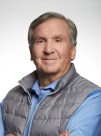
Brook Byers
InvestorFounderFounder at Kleiner Perkins · Fund Advisor at Define Ventures · Board Member at NewSchools Venture Fund · Partner, Kleiner Perkins Caufield & Byers (Investment Advisory Committee) at Mission Bay Capital · Co-founder at Insite Vision · +1 more
San Francisco Bay Area
Writes $100K – $25M checks · typically $8M
FoundedInsite VisionLigand

Find your path to Brook
Sign up to see every warm intro you have to Brook
- Paths you didn't know you had: your email and LinkedIn already hold routes to Brook. We find them for you
- 2nd- and 3rd-degree connections: the friend-of-a-friend routes that take hours to manually find through your inbox or LinkedIn
- Answers now, not in days: momentum is everything in a raise. Skip asking around whether someone knows someone
Days of research, done the moment you sign in, with every route ranked by how warm it is.
About
Brook Byers has worked as a venture capital investor since 1972, spending his career at Kleiner Perkins, where he is a founder. In 1984 he created the first life sciences practice group in the venture capital profession, steering the firm into healthcare and biotechnology. He has helped build more than 60 technology-based companies and served as founding president or chairman of four biotech companies incubated in Kleiner Perkins' offices that went public with an aggregate market value exceeding $8 billion. His current board work spans companies including Arsenal Bio, Octave Bio, Newsela and Verana Health, and he was a founder of TechNet.
Likely emails· guessed from name + firm domain, not firm-published
- b•••@kleinerperkins.comreveal100% confident
- b•••@kleinerperkins.comreveal90% confident
- b•••@kleinerperkins.comreveal80% confident
Invests in
BiotechDeep TechDigital HealthEdTechHealthtechSector Agnostic
Beyond investing
- Founded
- Was a founder of TechNet. Was founding president and then chairman of four biotechnology companies incubated in Kleiner Perkins' offices that became public companies with an aggregate market value of more than US$8 billion. Byers cofounded Kleiner Perkins Caufield and Byers (KPCB) in 1977.
- Education
- Earned a bachelor's degree in electrical engineering from Georgia Tech. Received an M.B.A. from Stanford University. Studied at Georgia Tech (bachelor's degree, electrical engineering, 1968) Studied at Stanford University (MBA) Studied at Georgia Institute of Technology (Honorary PhD, 2010) Completed Georgia Tech's five-year cooperative program, alternating study and paid electrical-engineering work and covering his educational expenses.
- Boards
- Serves on the board of the Stanford Center for BioDesign. Is a Lifetime Board Member of the University of California San Francisco Medical Center. Served on the Board of Trustees of Stanford University. Served on the board of the Asian Art Museum in San Francisco. Served on the Georgia Tech Advisory Board. Byers has been active with the UCSF Foundation since 1987 and served as co-chair of the Campaign for UCSF from 1998 to 2005. He was formerly a director of the Entrepreneurs Foundation, the California Healthcare Institute, the Asian Art Museum of San Francisco, the Stanford University Graduate School of Business Advisory Council, UCSF's That Man May See Vision Research Foundation (chairman), and the Georgia Tech Advisory B He is on the Board of Overseers of the University of California San Francisco medical campus and hospitals.
- Charities
- In 2015, Byers and his family established the Byers Family Distinguished Professorship at UCSF. Byers and his family founded the Byers Award in Basic Science through UCSF's Sandler Program for Breakthrough Biomedical Research. Supported basic and translational science, Byers Hall, Mission Bay Capital and a Byers Family Distinguished Professorship; served in UCSF fundraising and foundation leadership. Brook and Shawn Byers supported the Brook Byers Institute for Sustainable Systems, scholarships, graduate fellowships and energy/environmental policy programs; a 2023 family gift funded 18 Pathways to Policy fellowships over three years.
- Awards
- Received an Honorary PhD from Georgia Tech. In 2007, Byers received the UCSF Medal, the university's highest award. In 2008, he was elected a Fellow of the American Academy of Arts and Sciences. In 2009, he received the Lifetime Achievement Award from the National Venture Capital Association. Received the Georgia Tech College of Engineering Distinguished Alumnus award. Received UCSF's highest institutional honor, described as its honorary-degree equivalent. Elected to the American Academy of Arts and Sciences in Leadership, Policy, and Communications. Inducted with John Doerr in the Bay Area Business Hall of Fame.
- Family
- His sons are venture capitalists and entrepreneurs Blake Byers and Chad Byers, and he is the brother of Stanford University Professor Tom Byers. He was raised in Atlanta, Georgia. Byers said his mother's death from cancer in the 1970s contributed to his motivation to enter biotechnology.
- More
- Was raised in Atlanta, Georgia. He served as founding president and then chairman of four biotechnology companies incubated in KPCB's offices that became public companies with an aggregate market value over $8 billion. Born August 2, 1945 at Scott Air Force Base in Belleville, Illinois; after World War II the family lived in North Carolina and Georgia as his father advanced at Southern Bell, and Byers was raised principally in Atlanta. A spring 1970 Stanford brown-bag panel with Pitch Johnson, Bill Draper and Reid Dennis convinced him to pursue venture capital as a career joining science, products, markets and company formation. Kleiner Perkins describes the group Byers formed in 1984 as the first life-sciences practice group in venture capital. Kleiner says he was founding president and then chairman of four office-incubated biotechnology companies that became public and together exceeded $8 billion in aggregate market value; reviewed sources support Hybritech and several other incubation roles but do not conclusively identify the exact four behind the aggregate claim. His own eye problems and surgeries led him to volunteer at UCSF, chair That Man May See, spend time with researchers and clinicians, and make unmet clinical needs central to his investing. Byers was among Kleiner managing members during Ellen Pao's disputed employment period. A jury rejected the discrimination and retaliation claims. Trial reporting also said Trae Vassallo reported Ajit Nazre's harassment to Byers, John Doerr and Ted Schlein, after which the firm investigated and Nazre departed.
Mentioned above: the Kleiner Perkins mafia →
From Brook's own website — common ground for a warm intro.
Co-founder at Insite Vision
Co-founder at Ligand
Intro paths
In turn, Brook can intro founders to Ligand's investors below.


Deals · 8
Octave Bioscience IncBoard seat
via Kleiner Perkins · filed Mar 2025 · $53.7M raise
Arsenal BiosciencesBoard seat
via Kleiner Perkins · filed Sep 2022 · $33M raise

GrailBoard seat
via Kleiner Perkins · filed May 2018

EpiodyneBoard seat
via Kleiner Perkins · filed Nov 2017 · $10.1M raise
Cell Design LabsBoard seat
via Kleiner Perkins · filed Jun 2016 · $22.9M raise
Zephyr HealthBoard seat
via Kleiner Perkins · filed Aug 2015 · $20M raise
Enjoy TechnologyBoard seat
via Kleiner Perkins · filed Aug 2015 · $50M raise
Elcelyx TherapeuticsBoard seat
via Kleiner Perkins · filed Feb 2015 · $9M raise
Attribution from SEC filings, press coverage, and firm rosters.
Other disclosed investments
Led
Electronic ArtsGenentechTandem Computing
Board seats
Arris PharmaceuticalsAthena NeurosciencesCardioDXCareDxCrescendo Bioscience, Inc.Electronic ArtsFive Prime TherapeuticsFoundation MedicineGenomic HealthGenomic Health IncorporatedGenprobeHX DiagnosticsHybritechIDEC PharmaceuticalsLigandNanogenNewselaOctave BioOptiMedicaPacific Biosciences of CaliforniaPacific Biosciences, Inc.PharmacopeiaSignal PharmaceuticalsStanford UniversityTethysVeracyteVeracyte, Inc.Verana HealthXDx, Inc.
Investor
Athena NeurosciencesBiosurface TechnologyCardiodxCareDxCareDxCrescendo BioscienceDrugstore.comElectronic ArtsFive Prime TherapeuticsFoundation MedicineGen-ProbeGenentechGenomic HealthGensia PharmaceuticalsHealtheonHealthRhythmsHybritechIDEC PharmaceuticalsInsite VisionLeyden LabsLigandLightshipMammoth BiosciencesNanogenNewselaOculeveOpenWaterOptiMedicaPacBioPacific Biosciences of CaliforniaRadiusxrRegardSpinLaunchTandem ComputersToucanVeracyteVerana Health
Sources: curated public sources · SEC Form D filings · the investor's own website.
Founder fit — who Brook backs
Scientist, physician and engineer founders with intellectual honesty, passion, urgency and a clear route from novel science to a clinically meaningful product; small starting teams that welcome an active, technically curious board partner, staged risk reduction, recruiting help and strategic partnerships.
Fast followers, crowded categories, science looking for a market, target-generation platforms with no clear product path, fully staffed teams assembled before technical risk is understood, founders unwilling to accept partner scrutiny, or proposals that ignore clinical adoption, reimbursement, distribution and capital intensity.
How to pitch
Lead with the patient and the unmet decision or treatment need. Quantify present outcomes and economics; identify the non-obvious scientific breakthrough and why incumbents have not solved it; propose the cheapest decisive proof-of-principle; show intellectual-property and regulatory paths, independent pipeline shots, clinical-validation and reimbursement plans, and the essential—not ornamental—initial team. Explain what should be learned before each financing milestone and where an active board, recruiting network or strategic partner changes the odds.
Stages: company formation, incubation, seed, early stage, select follow-on and growth support, personal/angel activity in later career · Sectors: biotechnology, therapeutics, molecular diagnostics, personalized and precision medicine, genomics and sequencing, cell therapy, medical devices, ophthalmology, oncology, neuroscience, cardiovascular health, digital health, education technology, select deep technology
Editorial inference from Brook's portfolio, writing and public record — not a published mandate.
Investment themes
11 documented themes from Brook's essays, talks and portfolio, grouped by what they say about founders.
▶More themes9
Proof of principle before organization scale
Put initial dollars behind the experiment that removes the largest technical risk, then hire broader management after evidence improves the candidate pool.
For founders: Propose a learning sequence, not a premature full organization.
Work backward from unmet medical needs1985
Byers shifted from technology-centric biotech investing to disease, clinical-decision and market needs, then assembled technologies to address them.
For founders: Start with the patient, clinician and care pathway before describing the platform.
Essential people first
The ideal startup team contains the people essential to attack immediate risks, not every executive function from day one.
For founders: Explain why each initial hire is necessary now and what evidence triggers later hiring.
Bold category creation over fast following
Byers says experience should be spent on bold, different ventures and that willingness to take reputation, product, market and team risk is essential.
For founders: Show why the proposal can create a field and why a large incumbent or fast follower cannot simply copy it.
Trusted non-competing network
Kleiner convened portfolio executives and shared recruiting and alliance knowledge while promising not to back direct competitors.
For founders: Value the network, but ask clearly how information boundaries and conflicts are managed.
Stage financing at risk-reduction milestones
Capital should fund responsible speed and be released as technical, clinical, market and team risks fall.
For founders: Tie budget and round size to explicit evidence gates rather than generic runway.
Bet on impact after informed failure
The IDEC board vote became Byers's exemplar for pursuing a better project after an initial clinical failure rather than reflexively returning capital.
For founders: Failure can be fundable when it creates learning, preserves resources and reveals an independent next shot.
Academic science and commercialization can reinforce each other
Byers acknowledges early suspicion and conflict-of-interest challenges but argues that licensing, company formation and academic relationships accelerated patient-facing innovation.
For founders: Address publication, IP, consulting, equity, recusal and university-conflict rules explicitly.
Innovation ecosystems beyond investment returns
His university, medical-center, education and sustainability giving extends the company-building model into research infrastructure, clinical training and public policy.
For founders: Mission alignment matters, but commercial capital, nonprofit grants and family philanthropy should remain separately attributed.
▶Founders & company building1
Entrepreneurs are the creative force
Venture capitalists provide judgment, networks and service, but cannot predict or substitute for the entrepreneur who creates the non-obvious future.
For founders: Demonstrate independent insight and ownership rather than waiting for the investor to invent the company.
▶Governance & network states1
Partnership peer review
Even senior sponsors submit deals to cross-domain partner scrutiny, which tests customer economics and counters emotional attachment to science.
For founders: Be ready for channel, adoption, reimbursement and one-customer ROI questions from non-specialists.
Podcasts & interviews
featuring Brook Byers21st Annual Fogarty Lecture
Kleiner Perkins / Stanford Biodesign · kleinerperkins.com
CardioDx, maker of heart disease test, shutting down
San Francisco Chronicle · sfchronicle.com
Grail adds Kleiner Perkins co-founder Brook Byers to board
CNBC · cnbc.com
Ellen Pao Trial Witnesses Expose Kleiner Perkins' Thorny Gender Politics
WIRED · wired.com
The Role of Entrepreneurship in Solving World Problems
Stanford Technology Ventures Program · stvp.stanford.edu
Brook Byers: Biotechnology Venture Capitalist, 1970-2006
The Bancroft Library, University of California, Berkeley · digitalassets.lib.berkeley.edu
2 more appearances
- The Ideal Team2005-04-20
- Getting Funding2005-04-20
Writing
First-person statement connecting technical policy education to leverage in energy and sustainability regulation and legislation.
Archived transcript/excerpt discusses Shawn, sons Blake and Chad, brothers Ken and Tom, Georgia Tech and NewSchools; this is a secondary-hosted copy rather than an official university transcript.
First-person oral history reviewed and approved by Byers; interviewer Thomas D. Kiley and Bancroft editors are essential co-creators, so it is not represented as a sole-authored book.
Institutional biography identifies Byers as a contributing author; edition, publisher, chapter and publication year were not established.
Colleagues at Kleiner Perkins


Network14


▶2 more connections
Investors connected to Brook in public investor directories — a warm-intro map.
Frequently asked questions
- Did Brook Byers found Kleiner Perkins in 1972?
- No. Eugene Kleiner and Tom Perkins founded the original firm in 1972. Byers and Frank Caufield joined in 1977, when it became Kleiner Perkins Caufield & Byers. The current firm title 'Founder' and common phrase 'founding partner' refer to his foundational KPCB role, not a 1972 start.
- What did Brook Byers do before Kleiner Perkins?
- After Stanford he was a junior consultant at Management Analysis Corporation, a publishing general manager at Behavioral Research Laboratories, and a trainee at Advanced Memory Systems. From December 1972 through 1977 he worked for Pitch Johnson at Asset Management Company.
- What field did Brook Byers pioneer in venture capital?
- A dedicated life-sciences venture practice. He formed Kleiner's group in 1984 after deciding to specialize in biotechnology and medicine.
- Did Brook Byers found Genentech?
- No. Kleiner's history credits Herb Boyer and Bob Swanson as founders, with Tom Perkins and Eugene Kleiner on the board. Byers, who joined Kleiner after Genentech's 1976 formation, assisted product planning and market analysis.
- What was Brook Byers's breakthrough company?
- Hybritech. He helped form it in 1978, redirected the plan toward clinical diagnostics, served as founding president and later chairman, and remained through the 1986 Lilly acquisition.
- How does Brook Byers evaluate biotech opportunities?
- He starts with unmet medical need, works backward to science and product, isolates the largest technical risk, funds proof of principle, tests clinical adoption and customer economics, and stages later financing at risk-reduction milestones.
- What founder traits does Brook Byers value?
- Scientific depth, passion, urgency, a nose for opportunity, clarity, persistence and willingness to build a lean team and accept active board help.
- What should a founder pitch to Brook Byers?
- A consequential patient need, non-obvious science, decisive proof-of-principle, protectability, clinical and regulatory path, reimbursement and distribution economics, essential initial team, independent pipeline shots and staged financing plan.
- What is Brook Byers's disclosed check size?
- No reliable standard personal or Kleiner check range is public. The oral history gives historical examples—$300,000 for Hybritech and the Stanford Oculeve account gives a $100,000 Kleiner seed—but these are company-specific firm checks, not a current policy or personal range.
- Which current corporate boards does Brook Byers hold?
- Kleiner's current profile lists Arsenal Bio, Octave Bioscience, Newsela and Verana Health. Older directory pages contain stale roles and should not override the current official profile or SEC departure filings.
- Does every Kleiner life-sciences investment belong to Brook Byers?
- No. His practice leadership and official profile support substantial attribution, but Kleiner decisions were partnership decisions. Entries distinguish direct Byers formation or board evidence, shared deals, official-profile attribution and firm-wide activity.
- Does Brook Byers invest personally?
- Yes, selected disclosures identify personal or angel activity, but vehicles require care. GRAIL said his board role was personal; Verana reporting called him a private investor; and Leyden Labs used the combined label Byers Capital/Brook Byers. His sons' vehicles and deals are not automatically his.
- What failed investments are associated with Brook Byers?
- Nanogen entered Chapter 11, Tethys closed, and CardioDx shut after Medicare coverage loss. Byers had historical direct or board involvement, but he was no longer on Nanogen's or CardioDx's board at failure, and exact investor losses are undisclosed.
- What was Brook Byers's role in the Ellen Pao controversy?
- He was one of Kleiner's managing members during the relevant period, so the case is material to his governance record, although the firm—not Byers personally—was the defendant and the jury rejected Pao's claims. Trial reporting also says he was among partners notified of Trae Vassallo's harassment complaint, which the firm investigated before Ajit Nazre left.
Founder mafias
Kleiner Perkins mafia87
Also came through, then founded or led a company.




Define Ventures mafia14
Also came through, then founded or led a company.
NewSchools Venture Fund mafia7
Also came through, then founded or led a company.


Newsela mafia4
Also came through, then founded or led a company.

Veracyte mafia4
Also came through, then founded or led a company.
About this profile. Compiled from public sources — Kleiner Perkins's own website, regulatory filings, press coverage and public professional profiles — and summarised by Fundraising Fox; every fact is kept with where it came from. Spotted an error, or would rather not be listed? Email privacy@fundraisingfox.com · How we build profiles · Your rights