 Fundraising Fox
Seaport Therapeutics
NASDAQ: SPTXBoston, US · Founded 2024 · Delaware corporation · 75 employees on LinkedIn · Public · 14 known investors
Find your way into Seaport Therapeutics
Sign up to see every warm intro you have to Seaport Therapeutics
- Paths you didn't know you had: your email and LinkedIn already hold routes to the Seaport Therapeutics team. We find them for you
- 2nd- and 3rd-degree connections: the friend-of-a-friend routes that take hours to manually find through your inbox or LinkedIn
- Answers now, not in days: momentum is everything in a raise. Skip asking around whether someone knows someone
Days of research, done the moment you sign in, with every route ranked by how warm it is.
Seaport Therapeutics develops therapeutics and medicines. The company is led by a founder with extensive experience building biotech platforms and advancing novel drug development programs.
Also known as Seaport
Founders & leadership
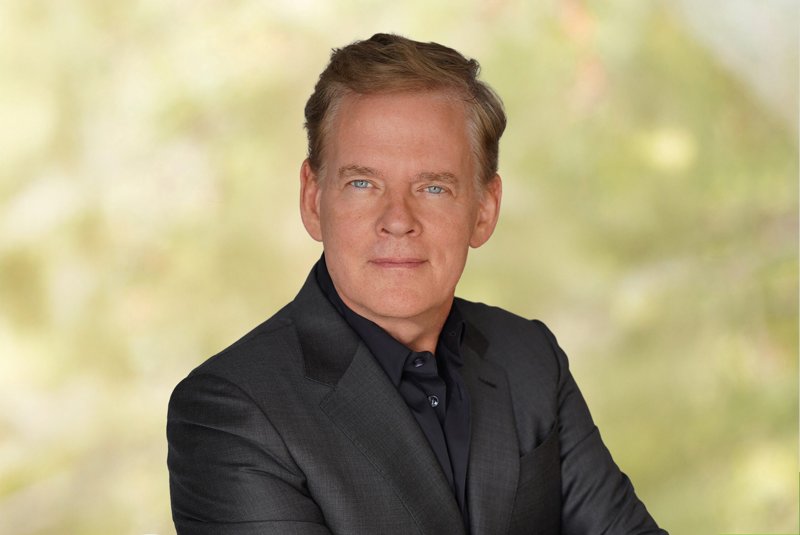
Seaport Therapeutics was founded in 2024 by Daphne Zohar, Steven Paul, M.D., and Michael Chen, Ph.D..






Board


Investors · 14

How we know: ARCH Venture Partners's portfolio page · the S-1 prospectus · the VCSheet dataset · research · seaporttx.com · open dataset · 5k.vc investor directory · Not right? Tell us

How we know: Foresite Capital's portfolio page · research · startupintros.com · open dataset · 5k.vc investor directory · Not right? Tell us

How we know: a partner's Signal profile · research · startupintros.com · generalatlantic.com · Not right? Tell us

How we know: PureTech Health's portfolio page · research · seaporttx.com · Not right? Tell us

How we know: Sofinnova Ventures's portfolio page · the S-1 prospectus · a partner's Signal profile · the VCSheet dataset · open dataset · 5k.vc investor directory · Not right? Tell us

How we know: the S-1 prospectus · research · seaporttx.com · open dataset · 5k.vc investor directory · Not right? Tell us

Also in the syndicate · 4
Funding
SEC filings, press & company announcements$767.8M disclosed across 4 of 6 rounds · 2024–2026
▶$225.9MraisedOct 2024 · 33 investors · BiotechnologyRule 506(b)
- James I. HealyDirector
- Michael ChenExecutive Officer
- Lana GladsteinExecutive Officer
- Daphne ZoharExecutive Officer, Director
- Antony LoebelExecutive Officer
- David WheadonDirector
- Eric GreenExecutive Officer
- Robert NelsenDirector
- Steven PaulDirector
- Bharatt ChowriraDirector
- Denice TorresDirector
- Eric ElenkoDirector
- Jason PittsDirector
- Offering amount
- $226M
- Amount sold
- $225.9M
- First sale
- Oct 2024
- Incorporated
- Corporation, Delaware, 2024
- Federal exemptions
- 06b
Source: SEC EDGAR Form D. Amounts as filed; amended filings shown once at their latest values.
Company profile
researched Aug 2026Seaport Therapeutics is a Boston-based clinical-stage biopharmaceutical company developing oral medicines for depression, anxiety and other neuropsychiatric disorders. Its programs are built on the proprietary Glyph technology platform, which uses lymphatic transport to enhance oral bioavailability, bypass first-pass liver metabolism, and reduce hepatotoxicity, liver enzyme elevations and other side effects, with the aim of advancing drugs with clinically validated activity that were previously constrained by these pharmacokinetic limitations. The company states that the Glyph platform has demonstrated clinical proof-of-concept.
The pipeline comprises three disclosed lead candidates. GlyphAllo (SPT-300) is an oral prodrug of the endogenous neurosteroid allopregnanolone, targeted at major depressive disorder (with or without anxious distress); the company reports the candidate showed proof-of-concept in a validated clinical model of anxiety in healthy volunteers in a Phase 2a trial and has been advanced into a potentially registration-enabling Phase 2b study. GlyphAgo (SPT-320) is an oral prodrug of agomelatine for generalized anxiety disorder, designed to bypass first-pass metabolism so that efficacious systemic exposure can be achieved at a lower dose, reducing liver exposure and potentially removing the need for liver function monitoring; agomelatine is approved for GAD in Australia and for MDD in Australia and the EU but is not available in the U.S. Glyph2BLSD (SPT-348) is an oral prodrug of 2-bromo-LSD, a non-hallucinogenic neuroplastogen with reported 5-HT2A agonism and antidepressant-like preclinical effects, in development for multiple neuropsychiatric and headache indications. Additional discovery and preclinical programs are underway.
The company was launched in April 2024 by Daphne Zohar (Founder, CEO and board member; founder and former CEO of PureTech Health and co-founder of Karuna Therapeutics) and Steven M. Paul, M.D. (Founder and Board Chair; former CEO and Chair of Karuna Therapeutics and former President of Lilly Research Laboratories). Antony Loebel, M.D., formerly President and CEO of Sunovion Pharmaceuticals, serves as Chief Medical Officer and President of Clinical Development. Website news listings indicate the company priced an upsized initial public offering on 2026-04-30 and now reports quarterly financial results.
Founding story
The company was founded by Daphne Zohar and Steven M. Paul, M.D. Zohar founded PureTech Health and co-founded Karuna Therapeutics, where the team invented and advanced KarXT (later approved as Cobenfy); Paul previously led Karuna and Lilly Research Laboratories, where xanomeline's antipsychotic and procognitive properties were first demonstrated. Seaport applies a comparable strategy—identifying drugs with proven efficacy whose development was limited by delivery or tolerability problems and resolving those limitations—using the Glyph platform licensed from Monash University.
Business model
Seaport is a research and development-stage biopharmaceutical company; it does not report commercial products. It funds operations through equity financing (a $100M Series A, a $225M Series B, and a 2026 initial public offering per company and third-party sources) and, per one aggregator, a government grant, and develops proprietary drug candidates intended for regulatory approval and commercialization.
No revenue from marketed products is described in the sources; all disclosed candidates are in preclinical or clinical development.
Traction
Per the company website, GlyphAgo reported positive topline proof-of-concept results from an ongoing Phase 1 trial in healthy volunteers (announced 2026-04-02) and positive multiple-ascending dose data from that Phase 1 proof-of-concept trial (announced 2026-06-08). SPT-300/GlyphAllo previously demonstrated proof-of-concept in a validated clinical model of anxiety in healthy volunteers in a Phase 2a trial and, as of the Series B announcement, was being advanced into a potentially registration-enabling Phase 2b study in major depressive disorder. Total capital raised was reported at $325 million following the Series B; one aggregator reports $345 million across three rounds including a $15 million grant.
Latest developments
Website news entries dated 2026 report positive Phase 1 proof-of-concept topline results for GlyphAgo (2026-04-02), the addition of Dr. Sharon Mates to the board (2026-04-27), pricing of an upsized initial public offering (2026-04-30), positive multiple-ascending dose Phase 1 data for GlyphAgo and Q1 2026 financial results (both 2026-06-08), and Q2 2026 financial results (2026-08-03).
▸Full profile — market position, technology, go-to-market, geography, history, risks & controversies
Market position
Seaport positions itself in neuropsychiatric drug development, an area it describes as having historically low development success rates, by re-engineering molecules with previously demonstrated clinical efficacy rather than pursuing novel mechanisms. The company draws an explicit analogy to Karuna Therapeutics, where members of its team advanced KarXT/Cobenfy, and cites its Glyph platform, pipeline breadth and composition-of-matter intellectual property as distinctions from that prior effort. It cites World Health Organization figures of over one billion people living with mental illness as the addressable need.
Differentiation claimed in the sources: a lymphatic-targeting prodrug platform exclusively licensed from Monash University; selection of drug candidates whose active moieties already have clinical efficacy data (allopregnanolone, agomelatine, 2-bromo-LSD), which the company argues raises probability of success; novel composition-of-matter intellectual property; and a leadership team previously involved in developing xanomeline/KarXT (Cobenfy) and other CNS drugs.
Technology
The Glyph technology platform creates "Glyphed" oral prodrugs (triglyceride-style conjugates) that leverage the lymphatic system so that more drug reaches the bloodstream and brain, enabling and enhancing oral bioavailability, avoiding hepatic first-pass metabolism, and reducing liver enzyme elevations, hepatotoxicity and other side effects. Glyph derives from research by the Porter Research Group at Monash University in Melbourne; Seaport holds a worldwide exclusive license, with the right to sublicense, under Monash University intellectual property covering the platform for all of its product candidates and discovery programs. Co-inventors including Christopher Porter, Ph.D. (Monash Institute of Pharmaceutical Sciences), Jamie Simpson, Ph.D. (Head of Chemistry) and Dan Bonner, Ph.D. (co-founder, SVP Platform) are associated with the company, and supporting research has been published in journals including Science Translational Medicine, Molecular Pharmaceutics and Nature Metabolism.
Go-to-market
Development-stage; activity described in sources consists of clinical trial execution, scientific publication and conference presentations (e.g., ASCP 2026, SOBP 2026), investor conference presentations (RBC Capital Markets Healthcare Private Company Conference in December 2025, Stifel 2025 Healthcare Conference, Oppenheimer Private Life Sciences Company Showcase 2025), and capital markets activity culminating in an IPO.
Patients with major depressive disorder, generalized anxiety disorder and other neuropsychiatric and headache disorders with significant unmet need, and the prescribing clinicians treating them.
Geography
Headquarters at 101 Seaport Blvd, Boston, MA 02210, United States. Platform technology originates from Monash University in Melbourne, Australia. Regulatory references note agomelatine approvals in Australia and the European Union, though these relate to the parent drug rather than Seaport products.
History
Seaport launched publicly on April 9, 2024 with the closing of a $100 million oversubscribed Series A co-led by ARCH Venture Partners and Sofinnova Investments, with Third Rock Ventures and founding entity PureTech Health participating, and simultaneously announced Daphne Zohar as Founder/CEO and Steven M. Paul as Founder and Board Chair. In October 2024 the company closed an oversubscribed $225 million Series B led by General Atlantic, bringing total capital raised to $325 million. An aggregator source reports a $15 million grant from the Advanced Research Projects Agency for Health dated March 4, 2026. In April 2026 the company added Sharon Mates, founder and CEO of Intra-Cellular Therapies, to its board and announced the pricing of an upsized initial public offering, subsequently reporting first- and second-quarter 2026 financial results.
Risks & controversies
The company's pipeline page carries a disclaimer that no regulatory agency has determined its investigational therapies to be safe or effective for any indication. Program-specific risks noted in the sources include allopregnanolone's very low oral bioavailability, agomelatine's dose-dependent liver enzyme elevations and associated liver function monitoring burden, and the general historically low success rates in neuropsychiatric drug development. Source data are inconsistent on total funding ($325M per the Series B announcement versus $345M across three rounds per an aggregator) and on company status (aggregator lists the company as private while the company website reports an IPO pricing).
Compiled by commissioned research from 8 cited public sources — announcements, filings, and press listed under research sources below.
Key figures
latest reportedCompany-reported or press-reported figures, each dated to when it was claimed — not independently audited.
Founder mafia
3 people who came through Seaport Therapeutics went on to found or lead other companies.
Related companies · 1

Companies working in the same space as Seaport Therapeutics.
Timeline · 9
launches, deals, and filingsCompany reported second quarter 2026 financial results and recent corporate and clinical progress.
Company reported positive multiple-ascending dose data from the Phase 1 proof-of-concept trial of GlyphAgo in healthy volunteers, alongside first quarter 2026 financial results.
Seaport announced the pricing of an upsized initial public offering; no offering size or price was disclosed in the available sources.
Intra-Cellular Therapies founder and CEO Dr. Sharon Mates was added to Seaport's board of directors.
Company announced positive proof-of-concept topline results from an ongoing Phase 1 trial of GlyphAgo (SPT-320) in healthy volunteers.
$15M source ↗
Seaport closed a $225 million Series B led by General Atlantic with T. Rowe Price Associates, Foresite Capital, Invus, Goldman Sachs Alternatives, CPP Investments and founding investors, bringing total capital raised to $325 million.
$225M source ↗
Seaport Therapeutics launched publicly and closed a $100 million oversubscribed Series A co-led by ARCH Venture Partners and Sofinnova Investments, with Third Rock Ventures and founder PureTech Health participating.
$100M source ↗
At launch, Seaport appointed Daphne Zohar as Founder, CEO and board member and Steven M. Paul, M.D. as Founder and Chair of the Board. Robert Nelsen, James Healy, Eric Elenko and Bharatt Chowrira joined the board; Courtney Wallace joined as board observer.
Dated company events from announcements, filings, and press; legal rows summarize public dockets and regulator releases.
Legal entities · 1
corporate structure▸Research sources · 8
primary sources listed
- Seaport Therapeuticsseaporttx.com · web
8 public sources were cited for this profile; the first-party ones are listed here.
Frequently asked questions
- What does Seaport Therapeutics do?
- Clinical-stage biopharmaceutical company using its Glyph prodrug platform to develop oral neuropsychiatric medicines.
- Who founded Seaport Therapeutics?
- Seaport Therapeutics was founded by Daphne Zohar, Steven Paul, M.D., Michael Chen, Ph.D. in 2024.
- Who are Seaport Therapeutics's investors?
- Seaport Therapeutics's investors include ARCH Venture Partners, Foresite Capital, General Atlantic, HAWKTAIL, PureTech Health, Sofinnova Ventures, CPP Investments, Invus and 2 more.
- How much funding has Seaport Therapeutics raised?
- Seaport Therapeutics has disclosed $767.8M raised across 4 of its 6 known rounds.
- Is Seaport Therapeutics publicly traded?
- Yes — Seaport Therapeutics trades on NASDAQ under the ticker SPTX.
- Where is Seaport Therapeutics headquartered?
- Seaport Therapeutics is headquartered in Boston, US.