 Fundraising Fox
GoFundMe
Redwood City, US · Founded 2010 · 1,298 employees on LinkedIn · 13 known investors
Find your way into GoFundMe
Sign up to see every warm intro you have to GoFundMe
- Paths you didn't know you had: your email and LinkedIn already hold routes to the GoFundMe team. We find them for you
- 2nd- and 3rd-degree connections: the friend-of-a-friend routes that take hours to manually find through your inbox or LinkedIn
- Answers now, not in days: momentum is everything in a raise. Skip asking around whether someone knows someone
Days of research, done the moment you sign in, with every route ranked by how warm it is.
GoFundMe is an online fundraising platform, launched in 2010, that lets individuals and organizations raise money and support each other. Through its 2022 acquisition of Classy, now GoFundMe Pro, it also provides fundraising software for nonprofit organizations.
Founders & leadership
GoFundMe was founded in 2010 by Brad Damphousse and Andrew Ballester.


Board
Investors · 13

How we know: research · en.wikipedia.org · open dataset · 5k.vc investor directory · Not right? Tell us

How we know: collabfund.com · Not right? Tell us

How we know: a partner's Signal profile · the VCSheet dataset · open dataset · 5k.vc investor directory · Not right? Tell us
How we know: open dataset · 5k.vc investor directory · Not right? Tell us


How we know: open dataset · 5k.vc investor directory · Not right? Tell us
How we know: open dataset · 5k.vc investor directory · Not right? Tell us
How we know: a partner's Signal profile · Not right? Tell us
How we know: a partner's Signal profile · open dataset · 5k.vc investor directory · Not right? Tell us
Also in the syndicate · 2
Valuation · disclosed
Disclosed eventsSource: SEC prospectus filings, and round valuations the company or its investors disclosed — follow each entry's link for the claim.
Company profile
researched Aug 2026GoFundMe was founded in San Diego, California in May 2010 by Brad Damphousse and Andrew Ballester, who had previously built Paygr, a platform for buying and selling personal services. The pair had also experimented with an earlier fundraising concept called 'CreateAFund' around 2008 before rebranding and relaunching as GoFundMe, built on top of PayPal's payment API. The platform grew into the dominant player in personal/social crowdfunding, distinguishing itself from reward-based platforms like Kickstarter and Indiegogo by focusing on donation-based giving for medical expenses, emergencies, memorials, education, and community causes, with no obligation to deliver a product or reward to donors.
In its early years GoFundMe raised a Series A round led by Greylock Partners, with Greylock partner James Slavet as the lead investor; Slavet subsequently joined GoFundMe's board of directors, a seat he still holds. Greylock's own portfolio pages continue to list GoFundMe as an active portfolio company. Public reporting on the specific date and amount of this Series A round is sparse and largely paywalled on data aggregators, so those details are marked unconfirmed here, but the Series A / Greylock relationship itself is corroborated by two independent sources (Greylock's own site and Crunchbase's investor-level data on James Slavet).
The most heavily documented financing event in GoFundMe's history is the June 2015 transaction in which founders Damphousse and Ballester sold a majority stake in the company to growth-equity investors Technology Crossover Ventures (TCV) and Accel Partners, in a deal that valued GoFundMe at approximately $600 million. As part of the deal, both founders stepped back from day-to-day operations; Ballester continued to sit on the board with an undisclosed remaining stake, while Rob Solomon (previously of Groupon and Yahoo) was installed as CEO to professionalize and scale the company. TCV's Woody Marshall and other TCV/Accel-affiliated board members (including Ken Fox and, more recently, TCV's Scott Wagner and Max Motschwiller) joined the board around this period.
Business model
Two-sided online marketplace/platform connecting fundraisers with donors; monetizes primarily through voluntary donor 'tips' on personal campaigns and via SaaS/platform fees on the enterprise nonprofit side (GoFundMe Pro / Classy, formerly Classy's subscription + transaction fee model). Third-party payment processing (2.9% + $0.30 per transaction) is passed through to cover processing costs.
Optional donor tips (personal campaigns, no mandatory platform fee since Nov 2017), transaction/processing fees, and SaaS subscription + platform fees for nonprofit/enterprise customers via GoFundMe Pro (formerly Classy).
▸Full profile — profile (continued), go-to-market, ownership
Profile (continued)
Under Solomon's leadership, GoFundMe pursued an acquisitive growth strategy in the charitable-giving space. In January 2017, GoFundMe acquired CrowdRise, a for-profit charitable crowdfunding platform co-founded by actor Edward Norton, producer Shauna Robertson, and Moosejaw founders Robert and Jeffrey Wolfe; the deal both consolidated the charity-fundraising market and brought Norton onto GoFundMe's board, where he remains. Later in 2017, GoFundMe eliminated its mandatory 5% platform fee on personal campaigns, moving to an optional donor-tip model — a major strategic and PR shift that cemented its lead over rivals like YouCaring and Fundly. In March 2018, GoFundMe acquired YouCaring, a competing donation-based crowdfunding platform (itself having previously acquired GiveForward in 2017), further consolidating the medical/personal-cause crowdfunding category.
In January 2020, Tim Cadogan — a former Yahoo advertising executive and co-founder/CEO of ad-tech company OpenX, with degrees from the London School of Economics, Oxford, and Stanford's MBA program — succeeded Rob Solomon as CEO of GoFundMe (Solomon moved to a board/executive chairman role and remains a board member). Cadogan has led the company through the COVID-19 pandemic era, during which GoFundMe saw enormous surges in fundraising activity (e.g., the George Floyd family fund raising $7 million in its first week in 2020) and was named by Time in 2025 as one of the magazine's 100 most influential people.
GoFundMe's most significant recent acquisition came in May 2022, when it acquired Classy, a San Diego-based nonprofit fundraising SaaS company founded in 2006 by Scot Chisholm, Pat Walsh, and Marshall Peden (the name a nod to the 'Stay classy, San Diego' line from Anchorman). Classy had raised roughly $166 million across Series B (2015, $18M, led by Mithril Capital and Salesforce Ventures), Series C (2016, $30M), and Series D (2021, $118M, at which point it became a Public Benefit Corporation) rounds, and served 2,500+ nonprofit clients including Teach for America, Girls Who Code, Malala Fund, and the World Food Programme. Classy's platform was folded into GoFundMe's offering and rebranded GoFundMe Pro, giving the combined company both a large consumer/personal fundraising business and an enterprise nonprofit SaaS business. Around the same period, GoFundMe.org was established/operated as a separate, affiliated 501(c)(3) nonprofit that runs programs like the Hardship Relief Fund and donation-matching initiatives, distinct from the for-profit GoFundMe, Inc. corporate entity.
GoFundMe has also weathered a number of controversies typical of an open donation platform at scale: content-moderation disputes (e.g., a 2015 suspension of a legal-defense fund for a bakery that refused to serve a same-sex couple, later reversed as policy in Nov 2017; a 2019 ban on anti-vaccine fundraisers that press found was imperfectly enforced; freezing donations to controversial campaigns such as The Grayzone's 2023 fund and the 2024 Luigi Mangione legal-defense campaigns); high-profile fraud cases (the 2017 Johnny Bobbitt 'homeless veteran' hoax, and the 2020-21 'We Build the Wall' fraud involving Brian Kolfage); and, most recently, an October 2025 controversy in which GoFundMe was reported (by KGO-TV/ABC7 and covered by the National Council of Nonprofits) to have auto-generated roughly 1.4 million nonprofit donation pages without the nonprofits' consent, prompting a public apology and policy changes.
As of the mid-2020s, GoFundMe reports (per its own past public statements, cited in Wikipedia and elsewhere) that its platform has facilitated over $30 billion in total donations since founding (through early 2024) from more than 150 million donors, though these are platform gross-fundraising figures, not company revenue. Estimated company revenue and headcount figures from third-party data providers (e.g., Growjo) put GoFundMe at roughly 966 employees and approximately $180 million in estimated annual revenue as of the mid-2020s, though these third-party estimates are not officially disclosed by the company and should be treated as approximate. GoFundMe remains a private company; there is no confirmed IPO, and no dollar-verified valuation more recent than the 2015 $600 million figure could be located.
Go-to-market
Individuals raising money for personal causes (medical, memorial, emergency, community); nonprofits and charities (via GoFundMe Charity/GoFundMe.org and GoFundMe Pro/Classy); event- and cause-based fundraisers; corporate giving/CSR partners.
Ownership
private
Compiled by commissioned research from 13 cited public sources — announcements, filings, and press listed under research sources below.
Key figures
latest reportedCompany-reported or press-reported figures, each dated to when it was claimed — not independently audited.
Founder mafia
The GoFundMe mafia →10 people who came through GoFundMe went on to found or lead other companies.





Acquisitions · 2
Early investors' stakes continue via these dealsCrowdRise is an online fundraising platform that enables individuals and organizations to raise money for charitable causes and personal needs. The platform was acquired by GoFundMe and now operates as part of its fundraising ecosystem.
Classy, acquired by GoFundMe, provides fundraising software for nonprofits that combines donation management tools with the GoFundMe platform to help organizations reach donors and increase charitable giving.
Timeline · 9
launches, deals, and filingsGoFundMe is reported to have created roughly 1.4 million nonprofit donation pages without consent; the company apologizes and changes policy following criticism from the National Council of Nonprofits.
GoFundMe acquires Classy, a San Diego-based nonprofit fundraising SaaS company; Classy's platform is later rebranded GoFundMe Pro.
Tim Cadogan, former OpenX co-founder/CEO and Yahoo executive, succeeds Rob Solomon as CEO of GoFundMe.
GoFundMe acquires competing donation-based crowdfunding platform YouCaring.
GoFundMe removes its 5% platform fee on personal campaigns, shifting to an optional donor-tip model.
GoFundMe acquires charity crowdfunding platform CrowdRise, co-founded by Edward Norton, bringing Norton onto GoFundMe's board.
Founders Damphousse and Ballester sell a majority stake in GoFundMe to Accel Partners and Technology Crossover Ventures at an approximate $600 million valuation; Rob Solomon becomes CEO.
Brad Damphousse and Andrew Ballester found GoFundMe in San Diego, California, building on PayPal's API, evolving from an earlier 2008 project called CreateAFund.
Dated company events from announcements, filings, and press; legal rows summarize public dockets and regulator releases.
In the news
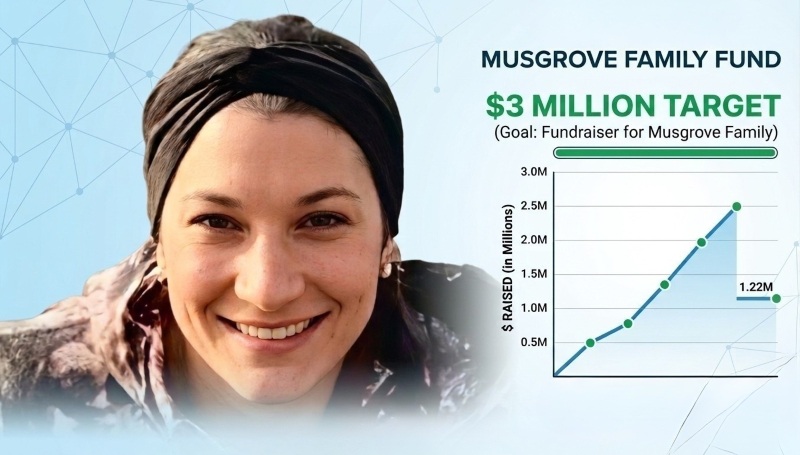 Lindsay Clancy Fundraiser Tops $1.22M As GoFundMe Reviews Campaigns - Soap Opera Spysoapoperaspy.com · Sep 2026
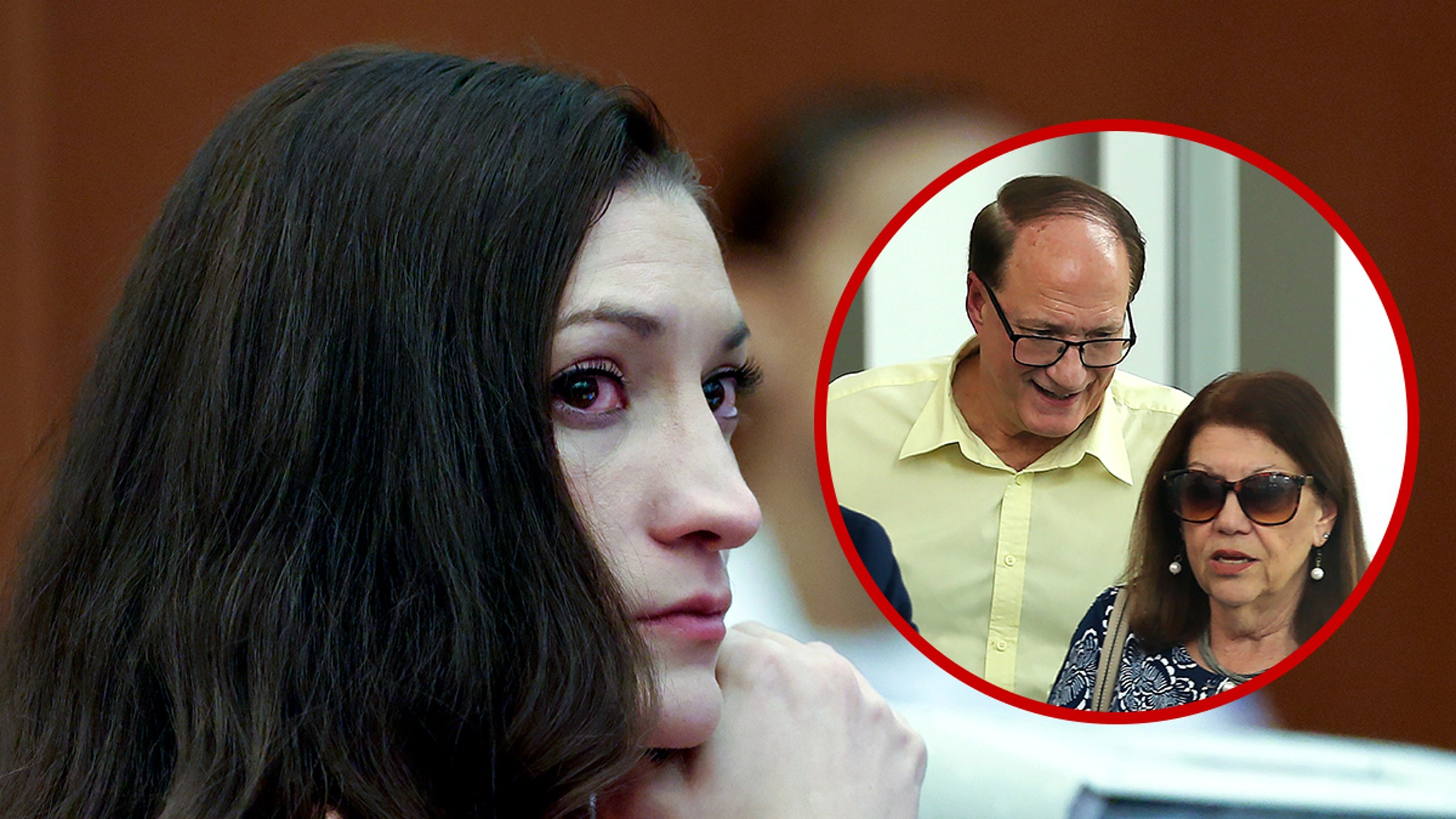 Lindsay Clancy's Parents' GoFundMe Raises Over $1 Million After Mistrialtmz.com · Sep 2026
 Fundraiser for Lindsay Clancy’s Parents Raises Over $1.1 Million After Mistrialrollingstone.com · Sep 2026
▸Research sources · 13
primary sources listed
- Greylock PortfolioGreylock Partners · company site
13 public sources were cited for this profile; the first-party ones are listed here.
Frequently asked questions
- What does GoFundMe do?
- The most trusted leader in online fundraising
- Who founded GoFundMe?
- GoFundMe was founded by Brad Damphousse, Andrew Ballester in 2010.
- Who are GoFundMe's investors?
- GoFundMe's investors include Accel, Collaborative Fund, Greylock Partners, Hinge Capital, ICONIQ, Norwest Venture Partners, Stripes, ICONIQ Capital and 3 more.
- Where is GoFundMe headquartered?
- GoFundMe is headquartered in Redwood City, US.