
Agentic infrastructure
Unicorn · $9.3BSan Francisco, US · Founded 2015 · Delaware corporation · 33 known investors
Vercel is an infrastructure platform for building and deploying applications, with emerging support for agentic capabilities that allow AI agents and humans to collaborate in software development. The platform serves developers and agents building web applications and software.
Also known as Vercel Inc.
Founders & leadership
Agentic infrastructure was founded in 2015 by Guillermo Rauch.
Board



Investors · 33




.png)






Also in the syndicate · 2
Funding
SEC filings, press & company announcements$150M disclosed across 1 of 6 rounds · 2021–2025
- Undisclosed amountSeries FSep 2025
Accel (lead), GIC (lead), Adams Street Partners, BlackRock, General Catalyst, GV, Khosla Ventures, Notable Capital, Salesforce Ventures, Schroders, StepStone, Tiger Global
Source ↗
▶$150MraisedDec 2021 · 29 investors · Other TechnologyRule 506(b)
- Geoff LewisDirector
- Daniel LevineDirector
- Guillermo Federico RauchExecutive Officer, Director
- Reid ChristianDirector
- Offering amount
- $150M
- Amount sold
- $150M
- First sale
- Oct 2021
- Incorporated
- Corporation, Delaware
- Federal exemptions
- 06b
Source: SEC EDGAR Form D. Amounts as filed; amended filings shown once at their latest values.
Valuation · disclosed
Disclosed eventsSource: SEC prospectus filings, and round valuations the company or its investors disclosed — follow each entry's link for the claim.
Company profile
researched Aug 2026Vercel is a cloud platform that lets developers build, deploy and scale web applications and, increasingly, AI agents. Customers connect a Git repository and deploy on every push, with automatic preview environments for testing changes before production. The platform bundles a globally distributed delivery network, serverless functions running on Fluid compute, routing middleware, incremental static regeneration, image optimization, and multiple deployment environments (local, preview, production and custom).
The company positions its current offering as "agentic infrastructure" and an "AI Cloud": a unified platform intended for coding agents that ship applications and for applications that are themselves agents. AI-specific components include the AI Gateway (a single endpoint to hundreds of models with budgets, fallbacks and monitoring), the AI SDK for integrating language models with streaming and tool calling, eve (a filesystem-first framework for durable backend AI agents), Sandbox for running untrusted code in ephemeral environments, MCP server support, agent-claimable deployments, and v0, an AI-powered development assistant with a web and iOS app. Vercel Agent, in public beta as of September 2025, performs AI code reviews that validate proposed fixes by executing the patched application inside Vercel Sandboxes.
Security, collaboration and operations features round out the platform: deployment protection, RBAC, a configurable web application firewall, bot management and BotID, platform DDoS mitigation, a browser toolbar with comments and draft mode, rolling releases, instant rollback, and an observability suite. Vercel also maintains widely used open-source software, notably the Next.js framework and the AI SDK, and ships an open-source CLI available both as an npm package and as native platform binaries.
Founding story
Vercel was founded in 2015 by Guillermo Rauch, a developer from Lanús, Argentina, whose background was in open-source projects. The stated founding premise was that companies such as Amazon, Google and Facebook possessed internal infrastructure, protocols and frameworks enabling rapid shipping that were unavailable to everyone else, and that Vercel would democratize that advantage. Early traction came from adoption of the Next.js framework and from the platform's automation of complex infrastructure tasks.
Business model
Vercel sells cloud infrastructure as a freemium software-as-a-service. A free Hobby tier targets personal projects, a Pro tier is priced at $20 per month, and an Enterprise tier is custom-priced and adds security, performance, observability, platform SLAs and support. Beyond seat/plan fees, the platform charges metered usage across networking (edge requests, fast data transfer), firewall (rate-limit requests, BotID deep analysis checks), content and caching (ISR reads/writes, Blob storage and operations, image optimization, global config, microfrontends) and compute (Fluid active CPU, provisioned memory, function invocations), each with monthly included allowances per plan. Open-source projects such as Next.js and the AI SDK act as a distribution channel feeding the commercial platform.
Subscription plan fees (Hobby free, Pro $20/month, Enterprise custom) plus consumption-based charges for network, compute, storage, caching and security usage above included monthly allowances, for example $2 per 1M edge requests, $0.15 per GB fast data transfer, $0.128 per hour of Fluid active CPU, $0.60 per 1M function invocations, $0.023 per GB of Blob storage and $1 per 1,000 BotID deep analysis checks on the Pro plan.
Traction
Reported metrics include over $863 million raised across six rounds and a $9.3 billion valuation as of the September 2025 Series F; more than 800 employees; AI SDK weekly downloads growing from 446,012 to 3,209,817 in one year; Next.js downloaded more than 500 million times in the twelve months to September 2025, exceeding total downloads from 2016 to 2024 combined; over 10,000 people on the v0 iOS waitlist; and the vercel/vercel GitHub repository at roughly 16.1k stars and 3.8k forks. Customer-scale claims on the company site include Notion powering millions of agent conversations daily, Zapier serving over 100 million monthly website visits, and Mintlify powering documentation for over 20,000 companies.
Latest developments
In September 2025 Vercel announced a $300 million Series F at a $9.3 billion valuation co-led by Accel and GIC, together with a roughly $300 million tender offer, and introduced Vercel Agent in public beta with AI-powered code reviews. It open-sourced a ChatGPT Enterprise-like template and a v0-based vibe coding platform, and reported that the v0 iOS app was in public beta with general availability upcoming. Recently shipped products listed on the company site include eve (a framework for durable agents), Passport (securing internal agents, apps and deployments with an identity provider) and Containers (running production workloads in isolated containers). Vercel also began distributing native CLI binaries alongside its Node.js-based npm CLI.
▸Full profile — market position, technology, go-to-market, geography, history
Market position
Vercel is described by a third-party profile as a leading frontend cloud platform and the primary maintainer of Next.js, riding the shift toward serverless deployment, edge computing and AI-native web applications. It reports customers ranging from startups to large enterprises, cites Next.js as powering the frontends of AI products including Grok, Claude and Cursor, and reported Next.js downloads exceeding 500 million in the twelve months to September 2025. It has made venture investments in other companies (Raindrop, Unikraft, Human Behavior per a third-party database).
Third-party analysis attributes Vercel's differentiation to framework-defined infrastructure that provisions and manages cloud resources automatically from application code rather than manual configuration; a developer experience oriented around one-step deployment and tight integration with Next.js; fluid compute with active CPU pricing aimed at cost efficiency for high-concurrency, low-latency AI and web workloads; and an open-source community ecosystem centred on Next.js. Vercel itself frames the platform as infrastructure that participates in application development, for example by validating agent-generated fixes in real execution environments.
Technology
Framework-defined infrastructure that provisions cloud resources from application code, a global delivery network with automatic routing and failover, serverless functions on Fluid compute with active CPU and provisioned memory, routing middleware, incremental static regeneration, image optimization, Blob object storage, global config, microfrontends routing, and isolated containers. AI-oriented components include the AI Gateway, AI SDK, eve agent framework, Sandbox ephemeral execution environments, MCP servers, durable orchestration and the v0 assistant. Security technology includes a configurable WAF, bot management, BotID invisible CAPTCHA, DDoS mitigation, deployment protection, RBAC and Passport identity-provider integration. The open-source CLI monorepo is managed with pnpm and includes Rust crates and Python packaging alongside Node.js packages.
Go-to-market
Self-serve product-led adoption via a free Hobby tier, template gallery and Git repository import, combined with an enterprise motion using a "Talk to sales" contact path and custom Enterprise contracts. Open-source distribution of Next.js, the AI SDK and the Vercel CLI, plus documentation, knowledge-base guides and developer events (Next.js Conf, Ship AI, Ship 26), serve as primary demand channels. A third-party profile notes dedicated startup advocacy roles for onboarding new users.
Software developers, engineering teams and, increasingly, autonomous coding agents. Users span individual developers and personal projects on the free tier through startups to large enterprises requiring security, compliance, traffic management and SLAs; named customers or users include Notion, Zapier, Mintlify, PayPal and Under Armour.
Geography
Headquartered in San Francisco, California, United States. The platform itself operates globally, with global points of presence, multiple Vercel regions, automatic routing, a private inter-region network and automatic region failover. Company events referenced include Ship 26 in San Francisco.
History
Vercel was founded in 2015. According to its founder, the founding insight was that the largest technology companies had internal infrastructure, protocols and frameworks that let them ship quickly, and that this advantage should be democratized. The company became the primary maintainer of the open-source Next.js framework and built a commercial cloud around it. It raised a Series C approximately four years before September 2025, raised $250 million in May 2024 at a $3.25 billion valuation with lead investors including Accel, CRV and GV, and celebrated its 10th anniversary in 2025. In September 2025 it announced a $300 million Series F at a $9.3 billion valuation and repositioned around what it calls the AI Cloud and agentic infrastructure.
Compiled by commissioned research from 8 cited public sources — announcements, filings, and press listed under research sources below.
Key figures
latest reportedCompany-reported or press-reported figures, each dated to when it was claimed — not independently audited.
Founder mafia
The Vercel mafia →14 people who came through Vercel went on to found or lead other companies.











+ 2 more
Competitors · 4
by search overlap

Companies competing with Agentic infrastructure for the same Google search keywords, organic and paid, via search-intersection analysis.
Acquisitions · 3
Early investors' stakes continue via these dealsBetter Auth is an open-source authentication framework for TypeScript applications that provides composable, plugin-based authentication with support for multiple methods including credential auth, social sign-on, passkeys, and enterprise features. It serves developers building consumer and enterprise applications across various frameworks including Next.js, Nuxt, and SvelteKit.
Stakpak is an open-source autonomous agent that runs on machines 24/7 to monitor, maintain, and automate operational tasks for software applications in production environments. It handles tasks like health checks, resource optimization, certificate renewal, and incident response with built-in security controls and full auditability.
Tremor provides 35+ open-source React components for building dashboards and data visualization interfaces. The product includes both component libraries and production-ready templates designed for developers building analytical applications.
Timeline · 9
launches, deals, and filingsVercel announced a Series F funding round of $300M co-led by Accel and GIC, valuing the company at $9.3 billion, alongside a roughly $300M tender offer for certain early investors, employees, and former employees.
$300M source ↗
Alongside the Series F, Vercel launched a tender offer of approximately $300M for certain early investors, employees, and former employees.
$300M source ↗
Vercel introduced Vercel Agent in public beta, whose first skill is AI-powered code review that scans the codebase, generates and validates fixes by running the app with the patch in Vercel Sandboxes, and surfaces them in pull requests.
A Vercel blog post titled 'gartner-mq-visionary-2025' is cited as a source in a third-party profile of the company.
Vercel celebrated its 10th anniversary, referenced in the Series F announcement of September 2025.
Vercel lists as recently shipped: eve, a filesystem-first framework for building durable backend AI agents; Passport, for securing internal agents, apps and deployments with an identity provider; and Containers for running production workloads in isolated containers.
Vercel shipped an open source vibe coding platform with v0 and open-sourced a ChatGPT Enterprise-like template.
The v0 iOS app entered public beta with more than 10,000 people on the waitlist; general availability was said to be coming in the following weeks.
Vercel raised $250 million at a $3.25 billion valuation, with lead investors including Accel, CRV, and GV.
$250M source ↗
Dated company events from announcements, filings, and press; legal rows summarize public dockets and regulator releases.
Legal entities · 1
corporate structureIn the news
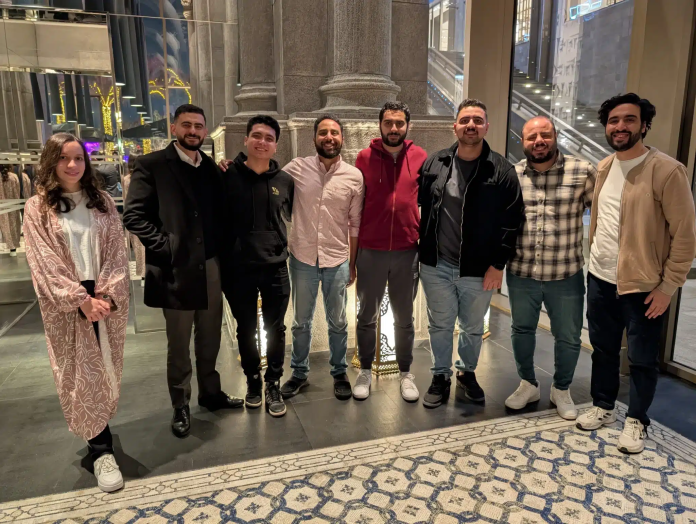 Egypt's Stakpak Acquired By Vercel After USD 500 K Pre-Seed Fundingweetracker.com · Jul 2026
▸Research sources · 8
primary sources listed
- Vercelvercel.com · web
8 public sources were cited for this profile; the first-party ones are listed here.
Frequently asked questions
- What does Agentic infrastructure do?
- Vercel is a cloud platform for deploying web applications and AI agents, and the maintainer of the Next.js framework.
- Who founded Agentic infrastructure?
- Agentic infrastructure was founded by Guillermo Rauch in 2015.
- Who are Agentic infrastructure's investors?
- Agentic infrastructure's investors include 8VC, Accel, Bedrock, Beyond Capital, Cold Start Ventures, CRV (Charles River Ventures), Everybody Ventures, Firebolt Ventures Management Company, Llc and 23 more.
- How much funding has Agentic infrastructure raised?
- Agentic infrastructure has disclosed $150M raised across 1 of its 6 known rounds.
- Where is Agentic infrastructure headquartered?
- Agentic infrastructure is headquartered in San Francisco, US.