 Fundraising Fox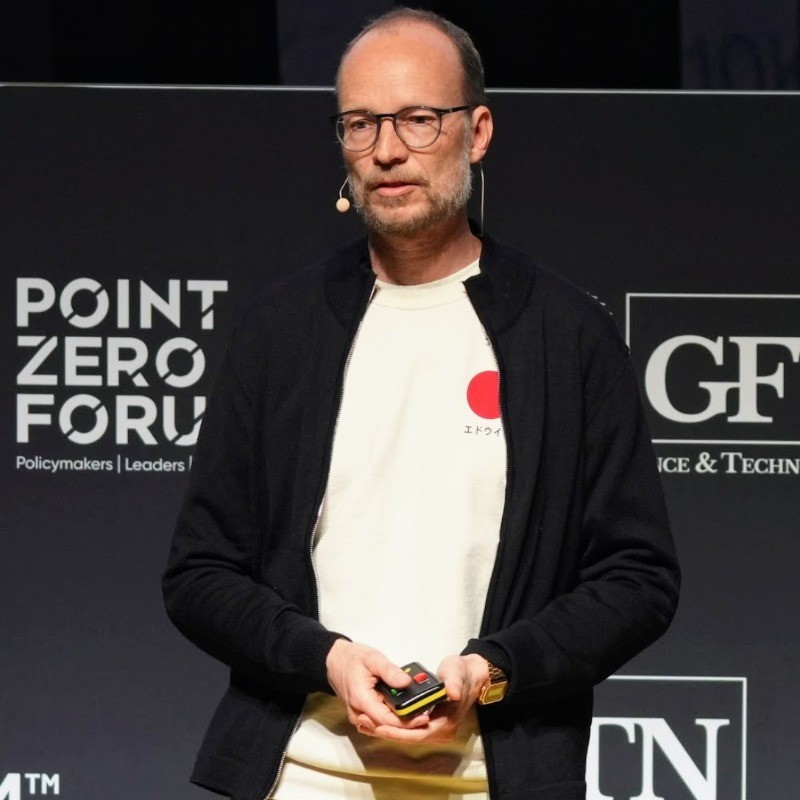
Gert Sylvest
InvestorFounderChief Executive Officer at Remgro / Invenfin ecosystem · Co-founder at Tradeshift
Copenhagen, Capital Region of Denmark, Denmark
FoundedTradeshift
Find your path to Gert
314 people in our graph share verified history with Gert — schools, employers, funds. One of them is your warm intro.
About
Gert Sylvest moved from music into distributed collaboration systems, then from Accenture and Avanade digital-government consulting into the architecture of Denmark's open NemHandel/EasyTrade e-invoicing network and the first PEPPOL transport infrastructure. Original PEPPOL documents name him as author or editor of service-discovery specifications, giving unusually concrete support to his technical-leadership claims. With Christian Lanng and Mikkel Hippe Brun he turned that public-infrastructure experience into Tradeshift. As founding CTO he established the platform and engineering organization; later roles covered global network strategy and China, the Frontiers blockchain/AI/IoT incubator, network products, small-business and fintech products, interim product leadership and the HSBC-linked SemFi venture. Publicly attributable product themes include an API-first UBL platform, CloudScan machine learning, supplier-first network economics, collective-data AI, programmable invoices and embedded finance. His current work through Polyfolio focuses on agentic AI, sovereign cloud infrastructure and strategic advice, alongside IT University appointment governance and a European cloud-research advisory role. He served ten years on LanguageWire boards and two years on Hyperledger's governing board. Tradeshift's delayed IPO, repeated restructurings, losses, late Danish filing and 2026 exit from SemFi are retained as company context, not personalized findings. No major Tradeshift customer-data breach or security misconduct by Sylvest was found; the company reported patching Log4Shell without evidence of exploitation. No named personal angel deal, personal Tradeshift liquidity event, LanguageWire transaction proceeds or realized return was verified. ETHERWARE is his disclosed holding and consulting company, but its underlying assets and any relationship to the Polyfolio brand are not public.
Invests in
AI & Machine LearningCloud ComputingMarketplaces
Co-founder at Tradeshift
Intro paths
In turn, Gert can intro founders to Tradeshift's investors below.
Tradeshift's investors · 15


.png)








Co-founders at Tradeshift


Experience
- IT-Universitetet i KøbenhavnMember of the Appointment Committeecurrent2026 — presentCopenhagen, Capital Region of Denmark, Denmark
- InnomastersAdvisory Board, EUCLORA, the European Cloud Computing Research Alliance (Innomasters)current2026 — presentCopenhagen, Capital Region of Denmark, Denmark
- PolyfolioPrincipal & Strategic Advisorcurrent2025 — presentCopenhagen, Capital Region of Denmark, Denmark
- Semfi by HSBCHead of Strategy and Venues, Semfi2024 — 2026Copenhagen, Capital Region of Denmark, Denmark
- IT-Universitetet i KøbenhavnChair of the Executive Level Employers Panel2024 — 2026Copenhagen, Capital Region of Denmark, Denmark
- IT-Universitetet i KøbenhavnMember of the Executive Level Employers Panel2022 — 2024Copenhagen, Capital Region of Denmark, Denmark
- LanguageWireMember of the Board of Directors2015 — 2025Copenhagen Metropolitan Area
- TradeshiftCo-founder, SVP of Fintech Products, Tradeshift2024Copenhagen Metropolitan Area
- TradeshiftCo-Founder, SVP & Interim Head of Product2023 — 2024Copenhagen Metropolitan Area
- TradeshiftCo-founder, GM of Small Business and Fintech2022 — 2024Copenhagen, Capital Region of Denmark, Denmark
- TradeshiftCo-founder, VP of Network Products2020 — 2022Copenhagen, Capital Region of Denmark, Denmark
- TradeshiftPublic Speaker2009 — 2020Copenhagen, Capital Region of Denmark, Denmark
- TradeshiftCo-founder Tradeshift, GM Tradeshift Frontiers2017 — 2020Copenhagen Metropolitan Area
- TradeshiftCo-founder, SVP of Global Network Strategy2016 — 2017Copenhagen, Capital Region of Denmark, Denmark
- TradeshiftCo-founder, CTO2009 — 2016Copenhagen, Capital Region of Denmark, Denmark
- LF Decentralized TrustBoard member, Hyperledger governance board2017 — 2019Copenhagen Metropolitan Area
- AvanadeManager, SOA and Integrations2005 — 2009Copenhagen, Capital Region of Denmark, Denmark
- AvanadeManager, SOA and Integration2005 — 2009Copenhagen, Capital Region of Denmark, Denmark
- AccentureAnalyst programmer2002 — 2005



Skills & more
+11 more
Machine LearningCloud ComputingArchitectureSOAAgile MethodologiesScrumIntegrationSoftware DevelopmentJava.NETDistributed SystemsFrom Gert's professional profile.
Investments
Board seats
Hyperledger
Per curated public sources.
What founders say
No founder feedback on Gert Sylvest yet.
Founder fit — who Gert backs
Technical founders building complex European infrastructure, B2B networks, e-invoicing, fintech, AI-agent or sovereign-cloud systems who seek architecture, product, standards, partnership, governance or scaling advice. Capital fit is unproven and should not be presumed.
["Requests that treat Tradeshift's institutional investors as Sylvest's portfolio", 'Requests that treat Tradeshift Frontiers pilots or investments as personal checks', 'Claims that LanguageWire board service proves personal ownership or acquisition proceeds', "Claims that ETHERWARE's balance sheet reveals a named startup portfolio", 'Pitches relying on a published personal check size, stage mandate or active angel program', 'Closed systems whose economics depend on preventable lock-in', 'Blockchain or AI projects led by technology novelty without adoption incentives', 'Buyer-only digitization that leaves suppliers and external partners behind']
How to pitch
Lead with the architecture, interoperability boundary, participant incentives, network data, workflow evidence and the exact strategic or technical problem. Explain why all sides adopt, how governance works and how the system remains resilient across companies or jurisdictions. Ask whether the fit is advisory, Polyfolio R&D, ETHERWARE, an institutional board or personal capital; do not assume these are interchangeable. No public check range, stage mandate or named personal portfolio exists.
Sectors: B2B networks and marketplaces, E-invoicing and source-to-pay infrastructure, Embedded finance and supply-chain finance, Enterprise AI and agentic systems, Sovereign cloud and European digital infrastructure, Open standards and interoperability, Distributed ledgers and programmable money, Language technology
Editorial inference from Gert's portfolio, writing and public record — not a published mandate.
Investment themes
11 documented themes from Gert's essays, talks and portfolio, grouped by what they say about founders.
▶More themes11
Open, decentralized and interoperable public infrastructure
API-first platforms built on shared business-document standards
Supplier-first network economics and reusable connections
Collective network data as the foundation for enterprise AI
Technology paired with governance, incentives and adoption
Programmable invoices, licensed digital cash and tokenized receivables
Embedded finance inside transaction venues
End-to-end digitization beyond enterprise silos
Agentic AI frameworks and human-AI teams
European sovereign cloud and shared stewardship
Music technology and creative-technical practice
Podcasts & interviews
featuring Gert SylvestHow Do You Connect Every Company in the World?
nordicapis.com · nordicapis.com
Everything Floats: A Look into the Chinese Mirror
gotocon.com · gotocon.com
Hyperledger Interviews Gert Sylvest, Co-founder of Tradeshift
lfdecentralizedtrust.org · lfdecentralizedtrust.org
Five Questions with Tradeshift Cofounder Gert Sylvest
techmonitor.ai · techmonitor.ai
Tradeshift: Digital by default
fintechstrategy.com · fintechstrategy.com
KYC, treasury and future solutions
theglobaltreasurer.com · theglobaltreasurer.com
Writing
Colleagues at Remgro / Invenfin ecosystem

Frequently asked questions
- Who is Gert Sylvest?
- He is a Danish technologist who architected parts of NemHandel/EasyTrade and early PEPPOL infrastructure, co-founded Tradeshift, served as its founding CTO and later network, R&D, product and fintech leader, and now runs Polyfolio.
- What did he study?
- He reports a 1993-1996 University of Copenhagen BA in Music History, Literature and Theory and a 1999-2001 IT University Master of Information Technology focused in official biographies on real-time distributed collaboration systems.
- What did he do before Tradeshift?
- He worked at Accenture and Avanade in programming, .NET, SOA, integration and digital-government architecture, leading technical work on Danish and European e-business infrastructure.
- What exactly did he contribute to EasyTrade and PEPPOL?
- He describes himself as NemHandel/EasyTrade lead architect and first-version PEPPOL implementation and protocol lead. Original PEPPOL SML and SMP documents name him as author or editor, directly supporting service-discovery and registry-specification contributions. The wider systems were collaborative public projects, not his sole work.
- Who founded Tradeshift and how were roles divided?
- Sylvest founded it with Christian Lanng and Mikkel Hippe Brun after shared e-government work. Sylvest was founding CTO and built the platform and engineering organization; Lanng led as CEO; Hippe Brun held strategy, network, APAC and business-unit responsibilities. Milestones belong to the team.
- What architecture and product milestones are attributable to him?
- His direct public record covers an API-first UBL platform, platform and engineering establishment, global cloud and China strategy, Frontiers incubation, blockchain governance, network products, supplier-first marketplace economics and fintech products. CloudScan and smart-invoice work were team products discussed or led by him, not sole inventions.
- What was Tradeshift Frontiers?
- It was Tradeshift's 2017-2020 R&D and incubation arm for blockchain, AI/ML, industrial IoT, physical supply chains and future financial services. Sylvest was general manager and argued that emerging technology needed the right business, governance and incentive model to achieve adoption.
- What are his public fintech views?
- He favors finance embedded where B2B transactions occur, using network history to price or deliver early payments, supply-chain finance, cards and other products. His programmable-invoice work explored tokenized receivables and licensed digital cash.
- Is he still a Tradeshift executive?
- No. His chronology ends Tradeshift executive work in December 2024. Tradeshift still identifies him as a co-founder, which is a continuing founder identity rather than a current operating title.
- What did he do at SemFi?
- From December 2024 through March 2026 he led strategy and venue or technology partnerships at the HSBC-majority embedded-finance venture. Tradeshift exited the venture in July 2026, after his role ended.
- What is he doing now?
- He runs Polyfolio as a personal AI, sovereign-cloud and strategic-advisory practice, advises Innomasters/EUCLORA and serves on IT University's Appointment Committee.
- What setbacks affected Tradeshift during or after his tenure?
- The company delayed an IPO, cut more than 100 roles in 2020, later reported recurring losses and restructuring, had a Danish entity enter temporary involuntary dissolution after late 2025 accounts, and exited SemFi in 2026. These are company events; reviewed evidence does not make them personal findings against Sylvest.
- Was he associated with a Tradeshift security breach?
- No reliable reviewed source documents a major customer-data breach or misconduct by Sylvest. Tradeshift reported quickly patching Log4Shell and finding no exploitation. That limited evidence should not be generalized into an absolute claim that no incident ever occurred.
- Does Gert Sylvest invest personally?
- No named personal angel deal was verified. ETHERWARE can hold shares and Polyfolio manages a 'portfolio of interests,' but no investees, checks or returns are disclosed. Tradeshift investors, Frontiers pilots, SemFi financing and LanguageWire transactions are institutional or corporate activity.
Founder mafias
Københavns Universitet - University of Copenhagen mafia84
Also came through, then founded or led a company.



IT-Universitetet i København mafia11
Also came through, then founded or led a company.






Remgro / Invenfin ecosystem mafia2
Also came through, then founded or led a company.

Same school
Also attended IT-Universitetet i København15

+ 9 more
Also attended Københavns Universitet - University of Copenhagen211



+ 205 more
Shared employers
Also worked at LF Decentralized Trust5


Also worked at Avanade17





+ 11 more
Also worked at Accenture1,345




+ 1,339 more