 Fundraising Fox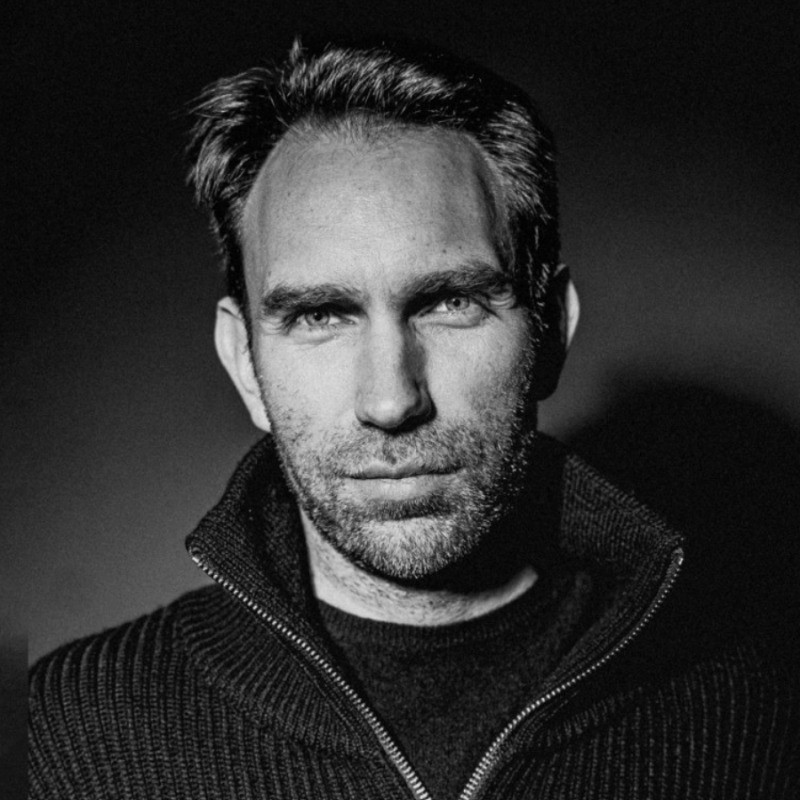
Find your path to Chris
Sign up to see every warm intro you have to Chris
- Paths you didn't know you had: your email and LinkedIn already hold routes to Chris. We find them for you
- 2nd- and 3rd-degree connections: the friend-of-a-friend routes that take hours to manually find through your inbox or LinkedIn
- Answers now, not in days: momentum is everything in a raise. Skip asking around whether someone knows someone
Days of research, done the moment you sign in, with every route ranked by how warm it is.
About
Chris Sheldrick is co-founder and CEO of what3words, a global address system that assigns a unique three-word identifier to every 3-metre square worldwide. He developed the concept with two others after encountering difficulties with international addresses and postcodes while working in the music industry. The company is headquartered in London with a team of more than 100, and its backers include Intel, Mercedes, Ikea, Sony, Deutsche Bahn, and Horizons Ventures.
Invests in
Cloud ComputingEnterprise SoftwareMarketplaces
Founder at what3words
Intro paths
In turn, Chris can intro founders to what3words's investors below.
what3words's investors · 17







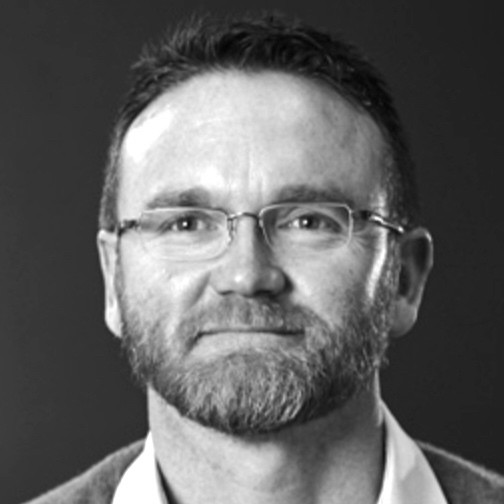
Co-founders at what3words
Investments
Investor
Per curated public sources.
Founder fit — who Chris backs
Potential fit is strongest for mission-driven UK founders simplifying a difficult technical or infrastructure problem and seeking help with category creation, network-effect adoption, strategic partnerships, localization, B2B2C distribution, voice interfaces or enterprise licensing. His willingness to invest personally, current activity and capital availability are unproven.
["Pitches assuming Intel, Mercedes-Benz, Sony, Ingka, Subaru, ITV, Channel 4 or other what3words backers are Sheldrick's personal investments", 'Pitches relying on a disclosed personal check size, stage mandate or active angel program', 'Claims that what3words partnerships or Swiftcomplete acquisition are personal deals', 'Claims that directorships in family-linked investment companies reveal a startup portfolio', 'Safety-critical products without independent testing, fallback methods and error handling', 'Products whose adoption story lacks a credible distribution or behavior-change plan', 'Requests to treat company valuation or fundraising as a personal exit']
How to pitch
Lead with the concrete user failure, why existing tools are hard to communicate or adopt, and a product simple enough to become habitual. Show the enterprise payer, consumer utility, distribution partner, localization plan, error model and independent validation. Ask whether he is open to personal angel investing rather than presuming it. Do not imply that what3words investors are available through him or that one 2017 Picfair check establishes a repeatable fund strategy.
Stages: early stage, inferred from Picfair participation only · Sectors: Location technology and geocoding, Marketplaces and creator tools, Logistics and delivery infrastructure, Automotive and voice navigation, Enterprise API and B2B2C software, Humanitarian and emergency location tools
Editorial inference from Chris's portfolio, writing and public record — not a published mandate.
Investment themes
10 documented themes from Chris's essays, talks and portfolio, grouped by what they say about founders.
▶More themes10
Human-friendly precision layered onto coordinates and conventional addresses
Addressing as economic, civic and humanitarian infrastructure
Voice-ready navigation and error-aware location input
Strategic capital as distribution, credibility and integration
Social validation and niche-community adoption
Localization through native-language teams and word lists
Open, egalitarian internal idea culture with mission belief
Proprietary commercial stewardship as a route to global adoption
Complementary emergency tools rather than single-method dependence
Music, resilience and reinvention after injury
Podcasts & interviews
featuring Chris SheldrickA precise, three-word address for every place on earth
ted.com · ted.com
Location.location.location: What3Words co-founder wants to transform mapping
campaignlive.co.uk · campaignlive.co.uk
Digital Innovators: Q&A with Chris Sheldrick
cityam.com · cityam.com
What3Words: Why an injury can be the best thing to happen to you
secretleaders.com · secretleaders.com
#42: Chris Sheldrick CEO & Co-Founder of what3words
alcottglobal.com · alcottglobal.com
How What3Words is helping people to navigate the world
independent.co.uk · independent.co.uk
Writing
Frequently asked questions
- Who is Chris Sheldrick?
- Christopher John Ralph Sheldrick is a British former musician and live-events entrepreneur who co-founded what3words and has led it as CEO and director since March 2013.
- What did he study?
- He studied music from 2000 to 2003 through King's College London and the Royal Academy of Music, earning a BMus and preparing for a classical performing career.
- Why did he leave music performance?
- A 2003 sleepwalking accident sent his left arm through a window, damaged nerves and tendons and left two fingers without full use, ending his intended bassoon-performance career.
- What did he do before what3words?
- He worked at IMG Artists, founded CS Music and co-founded Live Music International/LMI Live, booking, managing and producing music for international events.
- Why did he start what3words?
- Poor and absent addresses repeatedly sent musicians, suppliers and equipment to wrong event locations, while long GPS coordinates proved difficult to communicate without transposition or omission errors.
- Who founded what3words and how were roles divided?
- Sheldrick originated the problem and became CEO; Mohan Ganesalingam designed the algorithm and AutoSuggest; Jack Waley-Cohen brought language and operations expertise; Michael Dent says he was the fourth co-founder and first CTO who built early infrastructure. Many official narratives shorten the roster to the first three.
- Did Chris Sheldrick invent what3words alone?
- No. He is a named co-inventor with Ganesalingam and Waley-Cohen on the core patent, and the system was a collaborative company build. Dent's early infrastructure role is separately documented.
- Does what3words replace normal addresses or GPS?
- No. Sheldrick describes it as a human-friendly label for coordinates and a precision layer alongside street addresses, maps and place names. GPS or another location source still determines the device's position.
- How does what3words make money?
- The app and website are free for individuals; businesses license APIs, SDKs or enterprise software to convert between three-word addresses and coordinates at commercial volume.
- What are the strongest adoption examples?
- Documented integrations include Mercedes-Benz and Subaru vehicles, DHL and DPD delivery flows, Mongol Post and several other national postal operators, UN-ASIGN disaster reporting, Mongolia's emergency services and LAFD dispatch.
- Why is what3words criticized for emergency use?
- Researchers and rescuers have documented misheard, misspelled, pluralized or nearby-confusable three-word combinations and real responses sent toward wrong locations. They recommend verification and alternative references, especially over noisy voice or radio channels.
- How has the company answered precision criticism?
- It says the algorithm deliberately separates similar combinations where possible, puts harder words in lower-use areas and uses AutoSuggest to intercept likely errors. Sheldrick acknowledges nearby similar combinations remain, characterizes them as rare and notes that every location system can suffer communication error.
- Is what3words an open or ISO standard?
- No. It is a proprietary, patented geocode owned by what3words Limited. ISO 19160 covers interoperable address concepts and governance, while OGC DGGS standards define open structured grid frameworks; neither is a certification of what3words.
- Why did what3words threaten an open-source researcher?
- The company alleged that WhatFreeWords distributed unauthorized proprietary software, word data and binary resources. Critics said the legal demand chilled interoperability and security research. Sheldrick said the action targeted software distribution, not criticism; no court infringement ruling was cited in the reviewed report.
Founder mafias
King's College London mafia158
Also came through, then founded or led a company.


About this profile. Compiled from public sources — what3words's own website, press coverage and public professional profiles — and summarised by Fundraising Fox; every fact is kept with where it came from. Spotted an error, or would rather not be listed? Email privacy@fundraisingfox.com · How we build profiles · Your rights