 Fundraising Fox
Starcloud
Unicorn · $2.3BYC S24Redmond, US · Founded 2024 · 12 employees · 97 known investors
Find your way into Starcloud
Sign up to see every warm intro you have to Starcloud
- Paths you didn't know you had: your email and LinkedIn already hold routes to the Starcloud team. We find them for you
- 2nd- and 3rd-degree connections: the friend-of-a-friend routes that take hours to manually find through your inbox or LinkedIn
- Answers now, not in days: momentum is everything in a raise. Skip asking around whether someone knows someone
Days of research, done the moment you sign in, with every route ranked by how warm it is.
Starcloud is a deep-tech company building large-scale data center infrastructure designed to operate in space. Its team comes from aerospace and cloud-hardware backgrounds including SpaceX, Amazon's Leo satellite constellation, Microsoft Azure, and fusion energy programs.
Also known as Lumen Orbit · Lumen Orbit, Inc. · Lumen Orbit, Inc., Lumen Orbit, Star Cloud · Star Cloud · Starcloud · Starcloud, Inc.
Founders & leadership· Y Combinator alumni (S24)
Starcloud was founded in 2024 by Philip Johnston, Ezra Feilden, Adi Oltean, and Paul Adrian Oltean.



Board

Investors · 97
How we know: Ab Capital Holding BV's portfolio page · Y Combinator's founder network · Not right? Tell us

How we know: Y Combinator's founder network · Not right? Tell us
How we know: Cisco Investments's portfolio page · research · en.wikipedia.org · Not right? Tell us
How we know: research · geekwire.com · Y Combinator's founder network · Not right? Tell us
How we know: Dragon Capital's portfolio page · Not right? Tell us
How we know: the VCSheet dataset · research · geekwire.com · open dataset · 5k.vc investor directory · Y Combinator's founder network · Not right? Tell us
__Twitter.png)

How we know: the VCSheet dataset · research · geekwire.com · open dataset · 5k.vc investor directory · Y Combinator's founder network · Not right? Tell us

How we know: Harpoon Ventures's portfolio page · Not right? Tell us

How we know: Y Combinator's founder network · Not right? Tell us

How we know: In-Q-Tel's portfolio page · Wikidata · the VCSheet dataset · research · open dataset · 5k.vc investor directory · Not right? Tell us


How we know: spacenews.com · research · geekwire.com · Y Combinator's founder network · Not right? Tell us
How we know: research · geekwire.com · Y Combinator's founder network · Not right? Tell us

How we know: Monte Carlo Capital's portfolio page · Not right? Tell us
How we know: press coverage · research · research · techcrunch.com · Y Combinator's founder network · Not right? Tell us

How we know: NFX's portfolio page · board seat on SEC Form D · offering press articles · press coverage · funding news · research · geekwire.com · open dataset · 5k.vc investor directory · Y Combinator's founder network · Not right? Tell us
How we know: research · research · en.wikipedia.org · open dataset · 5k.vc investor directory · Not right? Tell us
How we know: Orange Collective's portfolio page · research · geekwire.com · Y Combinator's founder network · Not right? Tell us

How we know: plugandplaytechcenter.com · Not right? Tell us

How we know: research · geekwire.com · open dataset · 5k.vc investor directory · Y Combinator's founder network · Not right? Tell us
How we know: Soma Capital's portfolio page · offering press articles · funding news · research · geekwire.com · open dataset · 5k.vc investor directory · Y Combinator's founder network · Not right? Tell us
How we know: Starbridge Venture Capital Llc's portfolio page · open dataset · 5k.vc investor directory · Y Combinator's founder network · Not right? Tell us
How we know: Sterling Road's portfolio page · the VCSheet dataset · research · research · techcrunch.com · Y Combinator's founder network · Not right? Tell us

How we know: Taurus Ventures's portfolio page · Y Combinator's founder network · Not right? Tell us
How we know: Y Combinator's founder network · Not right? Tell us
How we know: TRAC (Third Round Analytics Capital)'s portfolio page · Y Combinator's founder network · Not right? Tell us
How we know: Ventioneers Capital's portfolio page · Y Combinator's founder network · Not right? Tell us

How we know: the Y Combinator directory · press coverage · research · geekwire.com · open dataset · 5k.vc investor directory · Not right? Tell us
How we know: the VCSheet dataset · research · geekwire.com · Y Combinator's founder network · Not right? Tell us

How we know: Y Combinator's founder network · Not right? Tell us

How we know: Wikidata · offering press articles · Y Combinator's founder network · research · geekwire.com · Not right? Tell us

How we know: a partner's Signal profile · funding news · techcrunch.com · research · geekwire.com · research · en.wikipedia.org · open dataset · 5k.vc investor directory · Y Combinator's founder network · Not right? Tell us

How we know: Y Combinator's founder network · Not right? Tell us

How we know: research · techcrunch.com · Not right? Tell us

How we know: Y Combinator's founder network · Not right? Tell us
How we know: Y Combinator's founder network · Not right? Tell us
How we know: Y Combinator's founder network · Not right? Tell us
How we know: Y Combinator's founder network · Not right? Tell us
How we know: Y Combinator's founder network · Not right? Tell us
How we know: Y Combinator's founder network · Not right? Tell us
How we know: funding news · techcrunch.com · research · geekwire.com · research · en.wikipedia.org · open dataset · 5k.vc investor directory · Y Combinator's founder network · Not right? Tell us
How we know: press coverage · research · techcrunch.com · Not right? Tell us
How we know: Y Combinator's founder network · Not right? Tell us
How we know: open dataset · 5k.vc investor directory · Not right? Tell us

How we know: open dataset · 5k.vc investor directory · Not right? Tell us
How we know: Y Combinator's founder network · Not right? Tell us
How we know: Y Combinator's founder network · Not right? Tell us
How we know: Y Combinator's founder network · Not right? Tell us

How we know: open dataset · 5k.vc investor directory · Not right? Tell us
How we know: Y Combinator's founder network · Not right? Tell us
How we know: Y Combinator's founder network · Not right? Tell us

How we know: Y Combinator's founder network · Not right? Tell us

How we know: Y Combinator's founder network · Not right? Tell us

How we know: the VCSheet dataset · Not right? Tell us
How we know: Y Combinator's founder network · Not right? Tell us
How we know: Y Combinator's founder network · Not right? Tell us
How we know: Y Combinator's founder network · Not right? Tell us

How we know: Wikidata · offering press articles · funding news · research · techcrunch.com · Y Combinator's founder network · Not right? Tell us

How we know: Y Combinator's founder network · Not right? Tell us
How we know: Y Combinator's founder network · Not right? Tell us
How we know: Y Combinator's founder network · Not right? Tell us
How we know: Y Combinator's founder network · Not right? Tell us
How we know: Y Combinator's founder network · Not right? Tell us
How we know: Y Combinator's founder network · Not right? Tell us
Also in the syndicate · 30
Funding
SEC filings, press & company announcements$354.1M disclosed across 3 of 16 rounds · 2024–2026
- $170MSeries AMar 2026 · 3 sources
Benchmark (lead), EQT Ventures (lead), 776 Ventures, Adjacent, Fuse Ventures, Manhattan West, Monolith Power Systems, Nebular, NFX, Y Combinator
Source ↗ - $170MraisedMar 2026 · 3 sourcesSource ↗
▶$14.1MraisedJan 2025 · 65 investors · Other TechnologyRule 506(b)
- Morgan BellerDirector
- Ezra FeildenExecutive Officer, Director
- Paul Adrian OlteanExecutive Officer, Director
- Philip JohnstonExecutive Officer, Director
- Offering amount
- $14.1M
- Amount sold
- $14.1M
- Minimum investment
- $500
- First sale
- Dec 2024
- Incorporated
- Corporation, Delaware, 2023
- Federal exemptions
- 06b
Source: SEC EDGAR Form D. Amounts as filed; amended filings shown once at their latest values.
Valuation · disclosed
Disclosed eventsSource: SEC prospectus filings, and round valuations the company or its investors disclosed — follow each entry's link for the claim.
The YC application· Summer 2024 batch
Company profile
researched Aug 2026Philip Johnston, Ezra Feilden and Adi Oltean founded the company in January 2024 as Lumen Orbit, initially in El Segundo before relocating to the Seattle-area space/cloud cluster in Redmond. Johnston brought satellite consulting and startup/finance experience; Feilden had a decade designing satellite structures and deployable solar arrays at Airbus/SSTL and Oxford Space Systems; Oltean had led Starlink-to-spacecraft tracking-beam software at SpaceX after two decades engineering Microsoft's large GPU systems. The founders argued that launch-cost declines could make orbit attractive for AI compute: near-continuous solar generation without batteries, no terrestrial grid/land/water permit constraint, and radiator-based heat rejection. The first near-term market is edge processing for Earth-observation and other spacecraft, which avoids downlinking raw data; later stages would uplink terrestrial workloads, address data-sovereignty/security cases and ultimately compete with Earth data centers. The company completed YC S24, raised a $2.4m pre-seed, an $11m NFX-led seed at a $40m valuation and a $10m SAFE extension, then added unitemized strategic capital including In-Q-Tel. It changed its name to Starcloud in February 2025 after Lumen Technologies asserted rights in 'Lumen' for data centers. Starcloud-1, a roughly 60kg satellite launched on SpaceX Bandwagon-4 on November 2, 2025, carried a liquid-cooled NVIDIA H100, solar array, radiative thermal system and software error mitigation. In December it ran Google's Gemma and trained/inferenced a small NanoGPT model on Shakespeare—the first publicly reported in-orbit LLM training. This is a meaningful flight demonstration, not a hyperscale data center. In March 2026 Starcloud filed an FCC application for as many as 88,000 satellites and raised a $170m Series A at a $1.1b valuation. Benchmark led the initial tranche; Benchmark and EQT Ventures co-led the extension, with Macquarie-administered funds, NFX, Nebular, YC, Adjacent, Seven Seven Six, Fuse, Manhattan West, Monolith Power Systems and angels. Public sources round cumulative funding to $200m, although separately disclosed rounds total $193.4m and reporting conflicts on whether pre-Series A capital was $30m or $34m. Starcloud-2 is planned for October 2026 with 100x Starcloud-1's power, a large deployable radiator, NVIDIA Blackwell B200, AWS Outposts/server hardware and bitcoin-mining ASICs, running workloads for partners including Crusoe, AWS, Google Cloud and NVIDIA. Starcloud-3 is intended for Starship-class deployment around 2028 and scale-up manufacturing. The commercial thesis depends heavily on Starship or equivalent launch economics for terrestrial workloads; current Falcon 9 costs support only narrower in-space processing. Large-scale risks include launch slips/failures, radiation, thermal rejection, communications bandwidth/latency, hardware obsolescence and repair, collision/debris and deorbit performance, spectrum and environmental approval, rocket/re-entry emissions, light pollution, manufacturing capital intensity and competition from SpaceX, Blue Origin, Google Project Suncatcher, Axiom, Aetherflux and other orbital-compute projects.
Founding story
The founders combined a finance/space-strategy thesis with practical experience in satellite solar structures, Starlink links and Azure-scale GPU systems. They incorporated in January 2024, moved to Redmond for aerospace/cloud talent and published an orbital-data-center white paper during YC S24.
Business model
Owns/deploys orbital compute spacecraft and sells edge/hyperscale compute, hosting and potentially energy/compute capacity under long-term contracts.
Prospective reserved compute, satellite edge-processing and cloud/energy offtake contracts; no public price card and no verified material commercial revenue disclosed.
Traction
Starcloud-1 successfully reached orbit in November 2025 and ran Gemma plus trained/inferenced NanoGPT in December. Company reported committed contracts for processing data from other spacecraft, with identities/amounts undisclosed. Partner workload plans include Crusoe, AWS, Google Cloud and NVIDIA. Team was 13 in March 2026.
Latest developments
Raised $170m at $1.1b on March 30, 2026 and grew manufacturing plans. FCC review of the 88,000-satellite system is pending. Starcloud-2 is scheduled for October 2026 with NVIDIA Blackwell, AWS server hardware, bitcoin ASICs and partner/customer workloads; no launch or commercial completion should be inferred as of August 17.
▸Full profile — market position, technology, go-to-market, geography, history, ownership, risks & controversies
Market position
Highly capitalized orbital-compute pioneer with the first modern data-center GPU flight, but still before commercially scaled compute; now competes with far larger vertically integrated space/cloud entrants.
First mover with flight telemetry from an H100-class data-center GPU and an in-orbit training experiment, plus founders spanning hyperscale GPU clusters, Starlink connectivity and deployable space structures.
Technology
Solar-powered LEO spacecraft with data-center GPUs, liquid/thermal loops and deployable radiators; radiation shielding and software error correction; large deployable solar structures; optical/RF networking; spacecraft edge compute; planned AWS Outposts/Blackwell integration; in-house satellite manufacturing.
Go-to-market
Technology demonstrations and flight heritage, strategic co-development with NVIDIA/AWS/Google Cloud/Crusoe, government/intelligence relationships through In-Q-Tel, direct capacity/offtake contracts and staged spacecraft scaling.
Earth-observation, defense and other satellite operators needing low-latency in-orbit processing; hyperscalers, AI labs and enterprises seeking power-constrained or sovereign compute.
Spacecraft operators; cloud platforms; AI model developers; national-security agencies; data-sovereignty buyers; eventually general-purpose data-center customers.
Geography
Founded in El Segundo and headquartered/manufacturing in Redmond, Washington; spacecraft operate in low Earth orbit and planned customers/partners are global.
History
January 2024 formation as Lumen Orbit; $2.4m pre-seed and YC S24; $11m NFX seed at $40m in December 2024; renamed Starcloud and added $10m SAFE in February 2025; built/launched Starcloud-1 in November and demonstrated in-orbit AI in December 2025; filed 88,000-satellite FCC plan in February/March 2026; raised $170m Series A at $1.1b March 30; preparing Starcloud-2 for October 2026 and manufacturing toward Starcloud-3/Starship deployments.
Ownership
Privately held by founders, employees and a wide investor base led by Benchmark, EQT Ventures and NFX; strategic/earlier backers include In-Q-Tel, YC, Fuse, Soma, a16z/Sequoia scout vehicles, 468 Capital, Nebular and others. Exact ownership is undisclosed.
Risks & controversies
The 88,000-satellite application drew space-sustainability and environmental scrutiny. Secure World Foundation argued that apparently acceptable per-satellite post-mission disposal/collision/casualty probabilities could become material at constellation scale and requested system-level analysis. Broader critics cite astronomy/light pollution, atmospheric launch/re-entry pollutants, strategic-material loss and debris. Technical/economic risks include launch dependency, no physical maintenance, radiation faults, radiator size and heat rejection, downlink bottlenecks, GPU obsolescence, collision avoidance, FCC/spectrum/NEPA review and a business case that CEO acknowledges requires substantially cheaper launch for terrestrial workloads.
Compiled by commissioned research from 18 cited public sources — announcements, filings, and press listed under research sources below.
Key figures
latest reportedCompany-reported or press-reported figures, each dated to when it was claimed — not independently audited.
Images
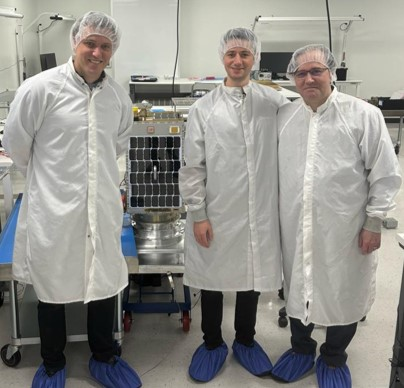
Founder mafia
4 people who came through Starcloud went on to found or lead other companies.


Related companies · 7



Companies working in the same space as Starcloud.
Customers & partners
Named customers · 5
Relationships the company or its partners disclosed publicly — case studies, joint announcements, press.
Timeline · 21
launches, deals, and filingsStarcloud raised an additional $250M at a $2.3bn valuation, with NVIDIA investing $25M and Cisco and Benchmark participating; Payload described it as an extension of the March 2026 Series A.
$250M source ↗
Starcloud signed a contract with SpaceX to integrate Starlink mini-lasers onto its next 25 satellites for high-bandwidth, low-latency connectivity.
Series A led by Benchmark and EQT Ventures made Starcloud the fastest company to reach unicorn status in Y Combinator history, 17 months after completing the program.
$170M source ↗
Application entered review; acceptance is not authorization to deploy.
Starcloud seeks authority for up to 88,000 LEO data-center satellites. Secure World Foundation comments request system-level collision, disposal, casualty, interference and sustainable-access analysis rather than reliance on per-satellite thresholds.
U.S. Federal Communications Commission · Accepted for filing, not granted as of August 17, 2026; public/environmental and technical review remains outstanding. source ↗
The company said it intended to be the first to mine Bitcoin in space, flying bitcoin mining ASICs on its second satellite, Starcloud-2.
Starcloud submitted a proposal to the FCC for a constellation of as many as 88,000 satellites for orbital data centers.
Starcloud-1 trained/inferenced NanoGPT on Shakespeare and ran a Gemma model; demonstration was small-scale.
Starcloud reported being the first company to operate a large language model (Google DeepMind's Gemma) on a high-powered GPU aboard a spacecraft, and the first to perform in-orbit training of a large language model (nanoGPT).
SpaceX Bandwagon-4 deployed the 60kg H100-equipped demonstration satellite into LEO.
The 60 kg Starcloud-1 (Lumen-1) satellite, built on Astro Digital's Corvus-Micro bus, was deployed from a Falcon 9 into a 325 km low Earth orbit carrying an Nvidia H100 GPU to test training, inference and edge compute workloads; expected mission life was 11 months. Iridium worked with the company on the project.
Crusoe will deploy its Crusoe Cloud platform on a Starcloud satellite planned for late 2026, with orbital GPU capacity expected to be offered from early 2027.
The company changed its name to Starcloud following a legal challenge from Lumen Technologies, which holds rights to 'Lumen' for data centers, and announced $10M of additional seed funding taking the seed total to $21M.
Changed name after Lumen Technologies asserted Lumen rights in data-center context.
Closed an oversubscribed $11M seed round at a $40M valuation; NFX general partner Morgan Beller joined the board. More than 200 VCs reached out to the company, prompting an additional SAFE at a higher valuation.
$11M source ↗
Co-founders Feilden, Oltean and Johnston released a white paper arguing for training AI in orbit and outlining candidate architectures.
Released orbital-data-center thesis/white paper and attracted unusually high investor interest.
The company came out of stealth with $2.4M in funding from eight firms plus more than a dozen angel investors, to build in-orbit edge processing that speeds up downlink for satellite operators.
$2.4M source ↗
Lumen Orbit went through Y Combinator's Summer 2024 program in San Francisco, where it was selected by Tom Blomfield and raised one of the largest seed rounds at demo day.
The company was selected as a member of the Nvidia Inception program, the Google Cloud Accelerator and the Defense Innovation Unit Accelerator; its demonstrator satellite plan was pursued in partnership with Nvidia's Inception program.
Dated company events from announcements, filings, and press; legal rows summarize public dockets and regulator releases.
Legal entities · 4
corporate structureIn the news
 Starcloud raises $250 million for orbital data centers as launch options dry uptechcrunch.com · Aug 2026
▸Research sources · 18
primary sources listed
- StarcloudStarcloud, Inc. · company website
- Starcloud company profileY Combinator · accelerator profile
- Starcloud-1Starcloud · mission page
- How Starcloud is bringing data centers to spaceNVIDIA · technology partner announcement
- NFX seed announcementPete Flint / LinkedIn · investor announcement
- Lumen Orbitlumenorbit.com · web
18 public sources were cited for this profile; the first-party ones are listed here.
Frequently asked questions
- What does Starcloud do?
- Redmond space-infrastructure company developing solar-powered orbital data centers; flew the first NVIDIA H100 in orbit and trained NanoGPT there, but gigawatt-scale commercial economics and an 88,000-satellite constellation remain prospective.
- Who founded Starcloud?
- Starcloud was founded by Philip Johnston, Ezra Feilden, Adi Oltean, Paul Adrian Oltean in 2024.
- Who are Starcloud's investors?
- Starcloud's investors include Ab Capital Holding BV, Ambush Capital, Cisco Investments, Dnx Ventures, Dragon Capital, FUSE, Gaingels, Ground Up Ventures and 59 more.
- How much funding has Starcloud raised?
- Starcloud has disclosed $354.1M raised across 3 of its 16 known rounds.
- Where is Starcloud headquartered?
- Starcloud is headquartered in Redmond, US.