 Fundraising Fox
Kavak
Unicorn · $8.7BMexico City, MX · Founded 2014 · 32 known investors
Find your way into Kavak
Sign up to see every warm intro you have to Kavak
- Paths you didn't know you had: your email and LinkedIn already hold routes to the Kavak team. We find them for you
- 2nd- and 3rd-degree connections: the friend-of-a-friend routes that take hours to manually find through your inbox or LinkedIn
- Answers now, not in days: momentum is everything in a raise. Skip asking around whether someone knows someone
Days of research, done the moment you sign in, with every route ranked by how warm it is.
Kavak is an e-commerce platform and marketplace that buys, finances, and sells certified pre-owned cars through digital and physical channels across Latin America and Turkey. The company serves individual car buyers and sellers seeking transparent transactions and financing options in the used car market.
Also known as KAVAK · Kavak.com
Founders & leadership
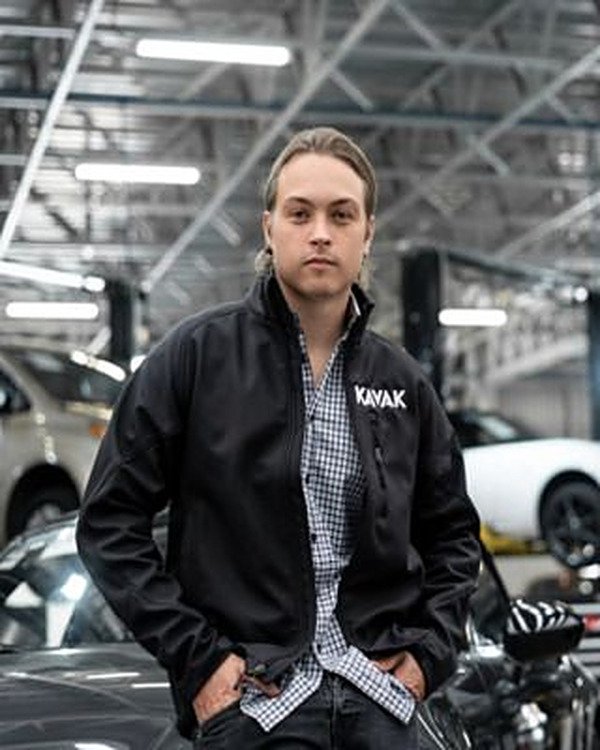
Kavak was founded in 2014 by Carlos Garcia Ottati and Roger Laughlin C.
Investors · 32

How we know: A*'s portfolio page · the VCSheet dataset · open dataset · 5k.vc investor directory · Not right? Tell us

How we know: a16z's portfolio · a partner's Signal profile · funding news · latamlist.com · Not right? Tell us

How we know: bondcap.com · open dataset · 5k.vc investor directory · Not right? Tell us

How we know: Bridge Latam's portfolio page · Not right? Tell us

How we know: Founders Fund's portfolio page · a partner's Signal profile · funding news · techcrunch.com · open dataset · 5k.vc investor directory · Not right? Tell us

How we know: generalatlantic.com · Not right? Tell us
.png)
How we know: funding news · techcrunch.com · open dataset · 5k.vc investor directory · Not right? Tell us
How we know: Kaszek Ventures's portfolio page · open dataset · 5k.vc investor directory · Not right? Tell us
How we know: Murchison Ventures's portfolio page · Not right? Tell us
How we know: Nazca's portfolio page · a partner's Signal profile · open dataset · 5k.vc investor directory · Not right? Tell us

How we know: QED Investors's portfolio page · a partner's Signal profile · the VCSheet dataset · open dataset · 5k.vc investor directory · Not right? Tell us

How we know: a partner's Signal profile · Not right? Tell us
How we know: research · grokipedia.com · Not right? Tell us


How we know: open dataset · 5k.vc investor directory · Not right? Tell us
How we know: funding news · techcrunch.com · open dataset · 5k.vc investor directory · Not right? Tell us
How we know: techcrunch.com · Not right? Tell us
How we know: press coverage · research · grokipedia.com · Not right? Tell us

How we know: funding news · techcrunch.com · Not right? Tell us
How we know: a partner's Signal profile · Not right? Tell us
Also in the syndicate · 9
Funding
SEC filings, press & company announcements$600M disclosed across 2 of 7 rounds · 2017–2026
- $300MraisedFeb 2026 · 2 sources
Andreessen Horowitz (lead), WCM Investment Management (lead), Foxhaven, Galdana Ventures, Lingotto Innovation, Stelac
Source ↗ - $300MSeries FFeb 2026 · 3 sources
Andreessen Horowitz (lead), WCM Investment Management (lead), Allen & Company LLC, Foxhaven, Galdana Ventures, Lingotto Innovation, Stelac
Source ↗ - Undisclosed amountSeries ESep 2021
General Catalyst (lead), D1, Founders Fund, Ribbit Capital, SEA, SoftBank, Spruce House, Tiger Global
Source ↗
Source: company announcements and press reports — follow each round's link for the claim.
Valuation · disclosed
Disclosed eventsSource: SEC prospectus filings, and round valuations the company or its investors disclosed — follow each entry's link for the claim.
Company profile
researched Aug 2026Kavak operates an e-commerce platform and physical store network for buying, selling, financing and managing pre-owned vehicles. The company purchases cars directly from individuals and dealers, subjects them to a multi-point inspection and reconditioning process at dedicated facilities, and resells them as certified vehicles with warranties, trial periods and return policies. Alongside vehicle sales it provides after-sales services, maintenance and consumer credit, and describes its purpose as formalizing a fragmented, informal used-car market characterized by information asymmetry, fraud risk and limited access to financing.
The model is full-stack: Kavak owns its inventory, controls reconditioning and logistics, and underwrites its own loans. Reported inspection standards vary by source (140-point, 240-point and 360-point inspections are cited), as do buyer protections (a seven-day or 7-day/300 km trial and a three-month warranty). Physical experience centers stock roughly 100 to 900 cars each. Financial services have grown from the original Kavak Capital arm into the Kuna and Kavak Crédito brands, the latter launched in November 2025, offering loans that use the vehicle as collateral and target first-time and underbanked buyers.
As of 2026 the company reports operations in Mexico, Brazil, Argentina, Chile, Turkey, the United Arab Emirates, Oman and Saudi Arabia, with approximately 4,000 employees. Reconditioning infrastructure includes a facility in the State of Mexico with capacity above 3,500 vehicles per month and a São Paulo center opened in 2021 that the company calls the largest in Latin America.
Founding story
Sources conflict on the founding date: the company website and internal records date the idea to 2014, while Wikipedia, Grokipedia and a business data vendor list the company's founding as 2016, when it opened in Mexico City. Grokipedia states Carlos García Ottati, a Venezuelan entrepreneur previously Chief Marketplace Officer at Linio and an Oxford Saïd MBA, conceived the idea after fraudulent used-car transactions, and launched the company in October 2016 with his sister Loreanne García (Chief People Officer) and Roger Laughlin. Press coverage says operations began with three vehicles and a team of about 15.
Business model
Kavak buys used vehicles into its own inventory, reconditions and certifies them, and resells them to consumers through its website, app and physical stores, capturing the spread on each transaction. It layers on attached services including financing, warranties, maintenance and after-sales support. Its in-house fintech arm originates vehicle loans in markets with low consumer credit penetration, generating additional revenue from financial services and supporting customer acquisition; during Q4 2025 that division extended an annualized average of US$600 million in loans.
Revenue derives from margins on the sale of reconditioned used and new vehicles plus fees and interest from financing, warranties, maintenance and other after-sales services. One third-party data vendor estimates annual revenue in the $1B-$10B range (with a separate $12B figure cited on the same page); these estimates are unverified and mutually inconsistent.
Traction
Kavak completed nearly 120,000 transactions in 2025, roughly 40% more than the prior year, and reported December 2025 as its first month of consolidated global profitability. It says it has served more than 300,000 customers in Mexico and moves thousands of cars monthly across eight countries with about 4,000 employees. Headcount grew from around 300 in 2019 to over 2,500 by April 2021 and more than 5,000 across Latin America by late 2021.
Latest developments
In February 2026 Kavak announced a US$300 million Series F led by Andreessen Horowitz, which committed US$200 million in what the company called the firm's largest single investment in a Latin American company; WCM Investment Management co-led, with Lingotto Innovation, Foxhaven, Galdana Ventures, Stelac and Allen & Company participating. Post-money valuation was not disclosed. Proceeds are earmarked for strengthening the balance sheet, expanding financing capabilities and applying AI to pricing, inventory management and credit risk. The raise followed 40% transaction growth in 2025 and the company's first month of consolidated global profitability in December 2025. Kavak was also announced as an official NFL commercial partner in December 2025.
▸Full profile — market position, technology, go-to-market, geography, history, risks & controversies
Market position
Kavak describes itself, and is described by third parties, as the leading e-commerce platform for pre-owned vehicles in Latin America and the first Mexican unicorn. At its 2021 peak valuation of $8.7 billion it was reported as Latin America's second-most valuable startup. Despite that scale, it accounted for roughly 1.1% of the approximately 5 million annual used-car transactions in Mexico as of 2024. Comparable companies cited by a data vendor include Carvana, Vroom, Shift, Beepi, Kelley Blue Book and Edmunds.
Ownership of the full stack — inventory, inspection, reconditioning, logistics, retail and lending — distinguishes Kavak from broker or classifieds-style marketplaces, allowing it to certify vehicles, guarantee returns and control costs. Its integrated credit arm serves customers who lack access to bank financing, and its AI-based pricing aims to reduce information asymmetry in markets historically dominated by informal dealers.
Technology
Kavak uses data and AI to price vehicles, projecting market trends and assessing users' ability to pay in order to generate personalized financing offers and vehicle recommendations. Announced uses of new capital include automating pricing models, inventory management and credit risk evaluation. A third-party profile lists a tech stack including Microsoft SQL Server, Hadoop, Talend, Angular, Google Analytics and Facebook Pixel.
Go-to-market
Kavak combines a digital-first funnel (e-commerce site, mobile app, instant online valuations for sellers) with physical experience centers, logistics hubs and reconditioning plants in each market. It has used high-visibility sponsorships to build brand trust, including deals with the Mexican Football Federation, the Argentine Football Association, the CONCACAF Champions Cup from February 2024 and the NFL announced in December 2025, plus partnerships with Uber for self-financing services and with Creditaria on credit access.
Individual consumers buying or selling used cars in emerging markets, including first-time buyers and unbanked or underbanked customers with limited access to formal financing, as well as businesses purchasing new and used cars and commercial vehicles.
Geography
Headquartered in Mexico City, with operations in Mexico, Brazil, Argentina, Chile, Turkey, the United Arab Emirates, Saudi Arabia and Oman. Mexican presence includes Mexico City, Querétaro, Monterrey, Puebla and Guadalajara, with reconditioning centers in the State of Mexico (Lerma) and Jalisco. An Argentine base in Buenos Aires came via the Checkars merger, and Latin America's largest reconditioning center was built in São Paulo, Brazil in 2021. Colombia and Peru operations were discontinued.
History
Initial fundraising began in 2016 via the Mountain Nazca fund, with a first round of MXN 3 million described at the time as the largest seed-stage investment completed in the market; Grokipedia separately describes a $1.5 million seed round in 2017 led by 500 Startups Mexico. A reconditioning center in Lerma, State of Mexico opened in 2017. Roughly $400 million was raised across three rounds between 2016 and 2020 with Kaszek Ventures, Mountain Nazca and SoftBank leading, culminating in unicorn status in late 2020. Expansion followed to Argentina in 2020 (via a merger with Checkars), Brazil and Turkey in 2021, and Chile, Colombia and Peru plus Gulf markets in 2022. A $700 million Series E in September 2021 valued the company at $8.7 billion. Colombia and Peru operations were subsequently halted, and an April 2025 round of $127 million equity and $400 million debt cut the valuation to $2.2 billion. Kavak Crédito launched in November 2025, and a $300 million Series F led by Andreessen Horowitz was announced in February 2026.
Risks & controversies
Kavak's valuation fell sharply from its $8.7 billion 2021 peak to $2.2 billion in an April 2025 down round, a decline Bloomberg characterized as $6.5 billion. The company withdrew from Colombia and Peru to refocus on core markets. Regional venture funding has moderated since 2021, pressuring startups toward efficiency. Third-party data sources contain inconsistent figures for the company (revenue estimates ranging from $1B-$10B to $12B, and industry classification as motor vehicle manufacturing), and sources disagree on founding year and inspection-point counts. Kavak has been recognized by Mexico's consumer protection agency PROFECO for its conciliation processes, implying consumer complaint handling activity.
Compiled by commissioned research from 8 cited public sources — announcements, filings, and press listed under research sources below.
Key figures
latest reportedCompany-reported or press-reported figures, each dated to when it was claimed — not independently audited.
Related companies · 6


Companies working in the same space as Kavak.
Timeline · 15
launches, deals, and filingsFunds earmarked for balance sheet strengthening, expansion of financing capabilities and AI adoption across pricing, inventory management and credit risk evaluation.
$300M source ↗
Kavak reported December 2025 as its first month of consolidated profitability at the global level, attributed to cost discipline and operational optimization.
Kavak launched Kavak Crédito, marking its entry into the financial services industry, adding to its Kavak Capital and Kuna financial brands.
An April 2025 round of $127 million in equity led by SoftBank plus $400 million in debt valued Kavak at $2.2 billion, a roughly 75% decline from its 2021 peak; Bloomberg reported the valuation was slashed by $6.5 billion.
$127M source ↗
Kavak halted operations in Colombia and Peru indefinitely to focus on core markets; Wikipedia's notes cite a 2025 withdrawal date while the body text and Grokipedia cite 2024.
In July 2022 Kavak announced plans to enter Chile, Colombia, Peru and Turkey, and later the same year announced plans for the United Arab Emirates, Saudi Arabia and Oman.
Kavak opened operations in Turkey and Brazil in 2021; in Brazil it built what it describes as the largest reconditioning center in Latin America, in São Paulo.
Kavak reached a valuation above US$1 billion (reported as $1.1-1.15 billion) following its September/October 2020 funding round, becoming the first Mexican startup to achieve unicorn status.
Kavak expanded to Argentina in 2020 after merging with local startup Checkars; its Buenos Aires headquarters resulted from that merger.
Kavak opened what was described as the largest vehicle reconditioning center in Mexico, in Lerma, State of Mexico, one year after launching operations.
After being conceived in 2014, Kavak opened its doors in Mexico City in 2016, beginning operations with three vehicles according to press coverage.
Dated company events from announcements, filings, and press; legal rows summarize public dockets and regulator releases.
In the news
▸Research sources · 8
primary sources listed
- Kavakkavak.com · web
8 public sources were cited for this profile; the first-party ones are listed here.
Frequently asked questions
- What does Kavak do?
- Kavak is a Mexico-based online platform that buys, reconditions, finances and sells certified used cars in eight countries.
- Who founded Kavak?
- Kavak was founded by Carlos Garcia Ottati, Roger Laughlin C in 2014.
- Who are Kavak's investors?
- Kavak's investors include A*, Andreessen Horowitz, Bond Capital Management, Bridge Latam, Founders Fund, General Atlantic, General Catalyst, Kaszek Ventures and 15 more.
- How much funding has Kavak raised?
- Kavak has disclosed $600M raised across 2 of its 7 known rounds.
- Where is Kavak headquartered?
- Kavak is headquartered in Mexico City, MX.