 Fundraising Fox
K2 Space
Unicorn · $6.8BWest Hollywood, US · Founded 2022 · Delaware corporation · 34 known investors
Find your way into K2 Space
Sign up to see every warm intro you have to K2 Space
- Paths you didn't know you had: your email and LinkedIn already hold routes to the K2 Space team. We find them for you
- 2nd- and 3rd-degree connections: the friend-of-a-friend routes that take hours to manually find through your inbox or LinkedIn
- Answers now, not in days: momentum is everything in a raise. Skip asking around whether someone knows someone
Days of research, done the moment you sign in, with every route ranked by how warm it is.
The page is an online gambling/betting operator ("OK9") targeting Vietnamese players, offering sports betting, online casino, slots, fish-shooting games, lottery, and card games. The content does not describe the company at the domain's apparent brand; it appears to be unrelated gambling content hosted on the domain.
Also known as K2 · K2 Space · K2 Space, Inc.
Founders & leadership
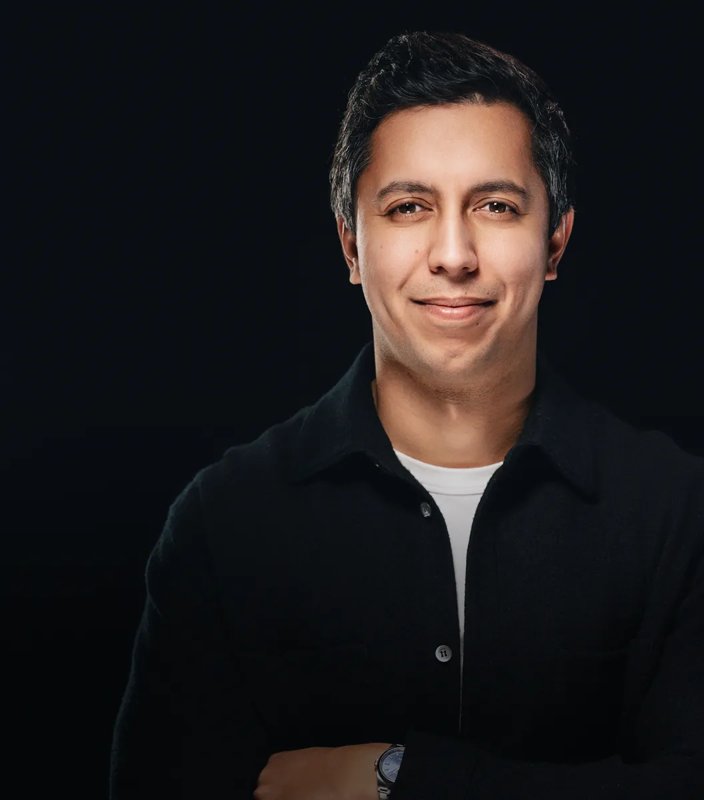
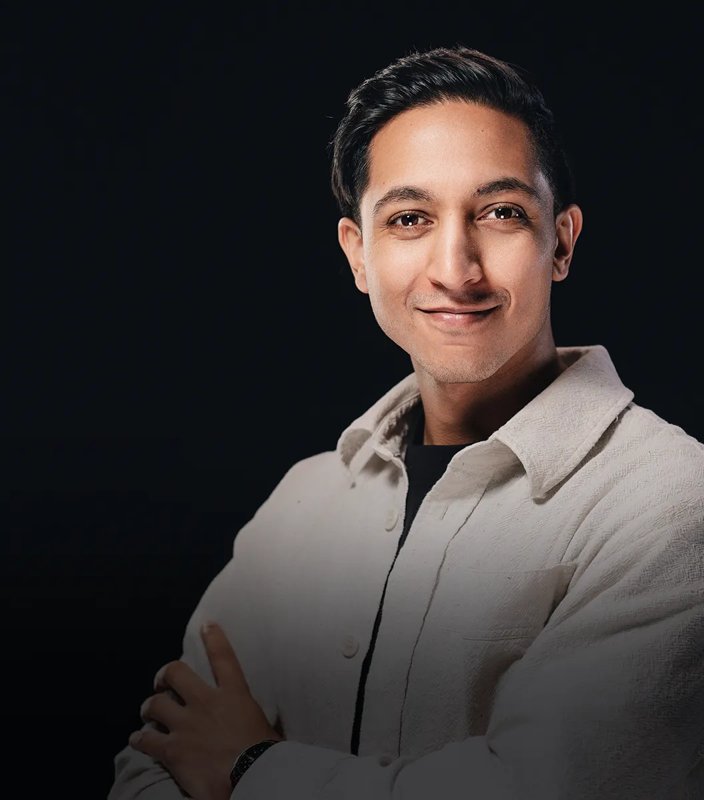
K2 Space was founded in 2022 by Neeldev Kunjur, Karandev Kunjur, and Karan Kunjur.
Investors · 34

How we know: Alpine Space Ventures's portfolio page · funding news · the VCSheet dataset · research · research · spacenews.com · Not right? Tell us
_imresizer.png)
How we know: Also Capital's portfolio page · the VCSheet dataset · Not right? Tell us

How we know: Asymmetric Capital Partners's portfolio page · Not right? Tell us

How we know: CapitalG's portfolio page · funding news · research · research · prnewswire.com · Not right? Tell us
How we know: Earthrise Ventures's portfolio page · open dataset · 5k.vc investor directory · Not right? Tell us

How we know: First Round Capital's portfolio page · a partner's Signal profile · the VCSheet dataset · research · spacenews.com · open dataset · 5k.vc investor directory · Not right? Tell us
__Twitter.png)

How we know: ICONIQ's portfolio page · funding news · research · research · prnewswire.com · Not right? Tell us

How we know: funding news · research · research · prnewswire.com · open dataset · 5k.vc investor directory · Not right? Tell us

How we know: Lightspeed Venture Partners's portfolio page · a partner's Signal profile · funding news · research · research · spacenews.com · open dataset · 5k.vc investor directory · Not right? Tell us

How we know: the VCSheet dataset · open dataset · 5k.vc investor directory · manaventures.vc · Not right? Tell us

How we know: Pathbreaker Ventures's portfolio page · the VCSheet dataset · open dataset · 5k.vc investor directory · Not right? Tell us

How we know: Redpoint Ventures's portfolio page · a partner's Signal profile · funding news · research · research · spacenews.com · open dataset · 5k.vc investor directory · Not right? Tell us

How we know: Republic Capital (ex Republic Labs)'s portfolio page · Not right? Tell us

How we know: the VCSheet dataset · Not right? Tell us

How we know: Valhalla Ventures's portfolio page · a partner's Signal profile · the VCSheet dataset · Not right? Tell us
How we know: Valor Equity Partners's portfolio page · open dataset · 5k.vc investor directory · Not right? Tell us

How we know: funding news · research · research · spacenews.com · Not right? Tell us

How we know: open dataset · 5k.vc investor directory · Not right? Tell us

How we know: a partner's Signal profile · Not right? Tell us

How we know: research · research · spacenews.com · Not right? Tell us
How we know: open dataset · 5k.vc investor directory · Not right? Tell us

How we know: a partner's Signal profile · Not right? Tell us

How we know: press coverage · Not right? Tell us
How we know: funding news · Not right? Tell us

How we know: the VCSheet dataset · open dataset · 5k.vc investor directory · Not right? Tell us

How we know: funding news · research · research · prnewswire.com · Not right? Tell us
How we know: funding news · Not right? Tell us
Also in the syndicate · 5
Funding
SEC filings, press & company announcements$258.5M disclosed across 2 of 10 rounds · 2022–2026
▶$8.5MraisedMar 2023 · 48 investors · Other TechnologyRule 506(b)
- Neeldev KunjurExecutive Officer, Director
- Karandev KunjurExecutive Officer, Director
- Offering amount
- $8.5M
- Amount sold
- $8.5M
- First sale
- Feb 2023
- Incorporated
- Corporation, Delaware, 2022
- Federal exemptions
- 06b
Source: SEC EDGAR Form D. Amounts as filed; amended filings shown once at their latest values.
Valuation · disclosed
Disclosed eventsSource: SEC prospectus filings, and round valuations the company or its investors disclosed — follow each entry's link for the claim.
Company profile
researched Aug 2026K2 Space is a Torrance, California-based satellite manufacturer that builds large, high-power spacecraft platforms, running counter to the industry's long-running trend toward smaller satellites. The company's thesis is that heavy-lift and super-heavy-lift launch vehicles such as Falcon 9, Vulcan, Ariane 6, Starship and New Glenn make mass less of a constraint, so satellites can be built larger to deliver more electrical power and payload mass per spacecraft at lower cost per unit of capability.
Its current product is the "Mega Class" platform, designed to carry up to roughly 3,000 kg of payload and generate about 20 kW of power — described by the company as roughly 10x the power of comparable constellation-class satellites (typically ~2 kW and ~200 kg payload). Mega is built for multi-orbit operation (LEO, MEO and GEO out to 36,000 km), with radiation-tolerant avionics, redundant systems, high-voltage power, large twin 10 kW solar arrays, high-power Hall-effect electric propulsion and high-delta-v capability. K2 states that stacking 10 Mega Class satellites per launch vehicle yields 200 kW of power to orbit per launch. A follow-on "Giga" class platform delivering roughly 100 kW per satellite, sized for Starship and New Glenn, is planned for introduction in the second half of 2028 and is positioned as a foundation for on-orbit AI-scale compute, cross-orbit high-throughput networks and large space telescopes.
K2 says it produces more than 85% of each satellite platform in-house (the company website cites 80%), a vertical integration strategy intended to control cost, reliability and production rate. Manufacturing is centered on a 180,000 sq ft Torrance factory sized for up to 100 satellites per year, supplemented by an engineering office opened in the Seattle region in 2026.
Founding story
K2 was founded in 2022 by brothers Karan Kunjur (CEO) and Neel Kunjur (CTO) on the thesis that new heavy-lift launch vehicles would enable an entirely new category of larger, higher-power, more reliable satellites; the company emerged from stealth in 2023. Neel Kunjur previously developed and integrated avionics systems for Dragon spacecraft at SpaceX and served as a Mission Director; Karan Kunjur helped lead an AI startup from seed to a nine-figure exit after a decade at BCG. The company describes itself as founded by former SpaceX engineers.
Business model
K2 Space manufactures and sells complete high-power satellite platforms (buses) and integrated spacecraft under commercial constellation contracts and U.S. government/defense programs, including as a bus supplier to prime-led teams. Development has also been partly supported by government funding mechanisms; the roughly $60 million Gravitas project received support through a U.S. Space Force Strategic Funding Increase (STRATFI) agreement combining government funding with private capital and small-business research awards.
Revenue derives from contracted satellite builds and deliveries for commercial operators and government programs; the company reported over $1 billion in signed commercial and government contracts as of July 2026, up from $500 million in December 2025.
Traction
K2 flew a smaller hosted-payload demonstration mission in January 2025 that validated its flight computer, reaction wheel and avionics stack. Its first Mega Class satellite, Gravitas — roughly 2 metric tons and carrying 12 payloads — launched in March 2026 and is operating on orbit, testing a 20 kW Hall-effect propulsion system and an orbit-raising maneuver from LEO toward MEO. Signed contracts exceed $1 billion, including an initial tranche of 30 satellites for SES's planned "meoSphere" MEO network. Total capital raised exceeds $1 billion. Headcount was reported at nearly 300 as of July 2026. The next mission, Trinity, is scheduled for Q2 2027 with multiple satellites deployed to different orbits and a long-range optical communications test; operational commercial and national security constellations are targeted to begin deployment in 2028.
Latest developments
In July 2026 K2 raised a $500 million Series D at a $6.8 billion valuation led by Kleiner Perkins and ICONIQ, bringing cumulative capital above $1 billion, and opened an engineering office in the Seattle region. Recent program wins include SES's meoSphere MEO network (initial tranche of 30 satellites), a bus-provider role on the U.S. Space Force Protected Tactical Satcom-Global program, satellites supplied to Anduril for the Golden Dome for America space-based interceptor program, and a Space Force effort to test laser communications for missile defense. The company plans to introduce its 100 kW Giga-class satellite in the second half of 2028 and to launch its Trinity mission in Q2 2027.
▸Full profile — market position, technology, go-to-market, geography, history, risks & controversies
Market position
K2 positions itself as the leading manufacturer of large, high-power satellites, contrasting its approach with the small-satellite trend that dominated the prior decade. It has moved from orbital demonstration to production-scale commercial and defense orders, and won its first Pentagon program-of-record role as a bus provider on Protected Tactical Satcom-Global, a program in which Rocket Lab also secured a supplier role.
Differentiation rests on scale (payload mass up to ~3,000 kg and ~20 kW power versus ~200 kg and ~2 kW for typical constellation-class satellites), multi-orbit capability from a single platform, radiation-tolerant and redundant design for harsh environments, and vertical integration of more than 85% of the platform, which the company says enables production at speed and low cost.
Technology
Core technologies are developed in-house: a 20 kW dual-channel Hall-effect thruster described as roughly 4x more powerful than anything previously flown and the most powerful electric thruster currently operating in space; large twin 10 kW solar arrays; high-voltage power systems; radiation-tolerant avionics and redundant flight computers; large reaction wheels; guidance, navigation and control software; and structures and mechanisms. Reliability techniques are described as comparable to those used on human-rated vehicles.
Go-to-market
K2 sells directly into large multi-year commercial constellation programs and into U.S. defense programs, both as a direct supplier and as a bus provider on teams led by other companies (Anduril for Golden Dome; SES Space & Defense for Protected Tactical Satcom-Global). It de-risks and markets its platform through orbital demonstration missions and publicized on-orbit performance milestones.
Commercial satellite operators (e.g., SES), U.S. national security and defense customers (U.S. Space Force, missile-defense programs), defense primes and integrators such as Anduril, and prospective operators of space-based computing, communications, sensing and scientific payloads.
Geography
Headquarters, 180,000 sq ft manufacturing factory and engineering operations at 1355 Sepulveda Blvd, Torrance, California; an engineering expansion office established in the Seattle region in 2026.
History
Founded in 2022 and out of stealth in 2023, K2 spent its first two years developing subsystems the commercial supply chain did not offer for large, high-power spacecraft. Funding progressed from an $8.5 million seed led by First Round Capital and Republic Capital, a further $7 million in 2023, a $50 million Series A in February 2024, a $110 million Series B in February 2025, a $250 million Series C at a $3 billion valuation in December 2025, and a $500 million Series D at a $6.8 billion valuation in July 2026. A demonstration mission flew in January 2025 and the first Mega Class satellite, Gravitas, launched in March 2026.
Risks & controversies
SpaceNews notes that K2 must still demonstrate it can manufacture complex spacecraft repeatedly, control costs and meet delivery schedules for multiyear customer programs — a different challenge from raising capital and flying demonstrations. Its strategy depends on continued declines in launch prices and availability of larger rockets, and a significant share of demand is tied to U.S. government spending and defense programs. Note also a name-twin risk: the k2space.io domain currently hosts unrelated Vietnamese-language online gambling content, and a UK office-interiors firm founded in 2004 also trades as "K2 Space" (k2space.co.uk); neither is this company.
Compiled by commissioned research from 12 cited public sources — announcements, filings, and press listed under research sources below.
Key figures
latest reportedCompany-reported or press-reported figures, each dated to when it was claimed — not independently audited.
Non-dilutive funding · 7 SBIR/STTR awards
Federal grants — no equity taken| Agency | Phase | Year | Amount |
|---|---|---|---|
| U.S. Air ForceAir Force | Phase II | 2023 | $1.2M |
| U.S. Air ForceAir Force | Phase IISTTR | 2023 | $1.2M |
| Department of Defense | Phase II | 2023 | $1.2M |
| U.S. Air ForceAir Force | Phase I | 2023 | $74.9K |
| U.S. Air ForceAir Force | Phase ISTTR | 2023 | $74.7K |
| U.S. Air ForceAir Force | Phase I | 2023 | $74.5K |
| U.S. Air ForceAir Force | Phase I | 2023 | $74.5K |
Source: SBIR.gov award data (U.S. Small Business Administration). SBIR/STTR awards are competitive federal R&D grants and contracts — non-dilutive capital alongside any venture rounds above.
Timeline · 19
launches, deals, and filingsKleiner Perkins and ICONIQ led a $500 million Series D at a $6.8 billion valuation, with participation from CapitalG, Lightspeed, Altimeter, Spark Capital, Sands Capital, ARK Invest, T. Rowe Price Associates and existing investors. Cumulative capital raised passed $1 billion.
$500M source ↗
K2 Space announced a $500 million Series D led by Kleiner Perkins and ICONIQ, bringing cumulative capital raised to more than $1 billion.
$500M source ↗
K2 Space announced an expansion engineering office in the Seattle area to support its large-satellite programs.
K2 Space established an expansion engineering office in the Seattle area to support its satellite programs.
K2 Space and Rocket Lab won supplier roles in the U.S. Space Force Protected Tactical Satcom-Global program; K2 will provide the satellite bus to an SES Space & Defense-led team, its first selection for a Pentagon program of record.
K2 Space and Rocket Lab won key supplier roles in the U.S. Space Force's Protected Tactical Satcom-Global program; K2 is the bus provider, marking its first selection for a Pentagon program of record.
K2 supplies Mega-class satellite platforms to an Anduril-led team building space-based interceptors for the Golden Dome for America missile-defense program; contract value not disclosed.
K2 is providing satellites to program partner Anduril for the Golden Dome for America space-based interceptor missile defense program.
Headline listed in K2 Space's news feed; no further detail provided in the source.
K2 will provide an initial tranche of 30 satellites for SES's planned meoSphere medium-Earth-orbit network.
Commercial satellite operator SES partnered with K2 Space for its planned 'meoSphere' MEO network; K2 is to provide an initial tranche of 30 satellites.
Roughly 2-metric-ton Mega Class spacecraft carrying 12 payloads; first spaceflight of K2's fully integrated in-house system, testing a 20 kW Hall-effect thruster, twin 10 kW solar arrays, high-voltage power with radiation-tolerant avionics, and an orbit-raising maneuver from LEO toward MEO.
K2 launched GRAVITAS, its first production Mega Class satellite, on a SpaceX Falcon 9. The roughly two-ton, 20 kW spacecraft carried 12 undisclosed payload modules for multiple customers including the U.S. Department of Defense, and performed a LEO-to-MEO orbit raise. It was the first spaceflight of K2's fully integrated in-house system, including the first in-space firing of a 20 kW Hall-effect thruster, first deployment of twin 10 kW solar arrays, and first on-orbit use of its high-voltage power system with radiation-tolerant avionics. K2's site lists the mission as operational on orbit.
Series C led by Redpoint with participation from accounts advised by T. Rowe Price Associates, Hedosophia, Altimeter, Lightspeed and Alpine Space Ventures.
$250M source ↗
K2 Space announced a $250 million Series C led by Redpoint at a $3 billion valuation.
$250M source ↗
A smaller hosted-payload demonstration mission tested K2-developed flight computers, reaction wheels, avionics and software ahead of full-size spacecraft integration.
K2's first spaceflight, a hosted-payload mission in low Earth orbit that validated critical subsystems including the flight computer, reaction wheel and avionics stack. Listed on K2's site with a January 2025 launch date and 'Success' status.
Dated company events from announcements, filings, and press; legal rows summarize public dockets and regulator releases.
Legal entities · 1
corporate structureIn the news
Frequently asked questions
- What does K2 Space do?
- K2 Space designs and manufactures large, high-power satellite platforms for commercial and defense missions across LEO, MEO and GEO.
- Who founded K2 Space?
- K2 Space was founded by Neeldev Kunjur, Karandev Kunjur, Karan Kunjur in 2022.
- Who are K2 Space's investors?
- K2 Space's investors include Alpine Space Ventures, Also Capital, Asymmetric Capital Partners, CapitalG, Earthrise Ventures, First Round Capital, Gaingels, ICONIQ and 21 more.
- How much funding has K2 Space raised?
- K2 Space has disclosed $258.5M raised across 2 of its 10 known rounds.
- Where is K2 Space headquartered?
- K2 Space is headquartered in West Hollywood, US.