 Fundraising Fox
Deepgram
also invests · investor profileYC W16San Francisco, US · Founded 2015 · Delaware corporation · 115 employees · Hiring · 47 known investors
Find your way into Deepgram
Sign up to see every warm intro you have to Deepgram
- Paths you didn't know you had: your email and LinkedIn already hold routes to the Deepgram team. We find them for you
- 2nd- and 3rd-degree connections: the friend-of-a-friend routes that take hours to manually find through your inbox or LinkedIn
- Answers now, not in days: momentum is everything in a raise. Skip asking around whether someone knows someone
Days of research, done the moment you sign in, with every route ranked by how warm it is.
Deepgram builds foundational voice AI technology that enables speech-to-text, audio intelligence, text-to-speech, and voice agent APIs for businesses to create natural voice interactions. The company serves enterprises and developers across multiple industries seeking to integrate advanced voice capabilities into their applications and customer experiences.
Also known as LEXIKA, INC. · Deepgram, Inc.
Founders & leadership· Y Combinator alumni (W16)
Deepgram was founded in 2015 by Scott Stephenson.


Board


Investors · 47
How we know: Alkeon Innovation's portfolio page · open dataset · 5k.vc investor directory · Y Combinator's founder network · Not right? Tell us

How we know: offering press articles · techcrunch.com · av.vc · Not right? Tell us

How we know: Bascom Ventures's portfolio page · Not right? Tell us

How we know: Compound's portfolio page · the VCSheet dataset · Y Combinator's founder network · Not right? Tell us

How we know: Connetic Ventures's portfolio page · Not right? Tell us
How we know: Four Cities's portfolio page · Y Combinator's founder network · Not right? Tell us


How we know: GFT Ventures's portfolio page · Not right? Tell us

How we know: In-Q-Tel's portfolio page · a partner's Signal profile · funding news · offering press articles · techcrunch.com · Y Combinator's founder network · Not right? Tell us

How we know: the VCSheet dataset · Y Combinator's founder network · Not right? Tell us
How we know: Madrona Venture Group's portfolio page · a partner's Signal profile · the VCSheet dataset · open dataset · 5k.vc investor directory · Y Combinator's founder network · Not right? Tell us
How we know: Madrona Venture Labs's portfolio page · Not right? Tell us
How we know: NKM Capital's portfolio page · Y Combinator's founder network · Not right? Tell us


How we know: Princeville Capital's portfolio page · techcrunch.com · Not right? Tell us

How we know: R136 Ventures's portfolio page · the VCSheet dataset · open dataset · 5k.vc investor directory · Not right? Tell us
How we know: Strawberry Creek Ventures's portfolio page · Not right? Tell us

How we know: Wing's portfolio page · a partner's Signal profile · funding news · offering press articles · techcrunch.com · the VCSheet dataset · open dataset · 5k.vc investor directory · Y Combinator's founder network · Not right? Tell us

How we know: the Y Combinator directory · funding news · offering press articles · techcrunch.com · Not right? Tell us
How we know: Zillionize's portfolio page · Y Combinator's founder network · Not right? Tell us

How we know: the VCSheet dataset · Y Combinator's founder network · Not right? Tell us
How we know: open dataset · 5k.vc investor directory · Not right? Tell us
How we know: a partner's Signal profile · Not right? Tell us

How we know: open dataset · 5k.vc investor directory · Not right? Tell us

How we know: Y Combinator's founder network · open dataset · 5k.vc investor directory · Not right? Tell us
How we know: open dataset · 5k.vc investor directory · Not right? Tell us
How we know: Y Combinator's founder network · Not right? Tell us

How we know: Y Combinator's founder network · Not right? Tell us

How we know: Y Combinator's founder network · open dataset · 5k.vc investor directory · Not right? Tell us

How we know: the VCSheet dataset · Not right? Tell us

How we know: Y Combinator's founder network · open dataset · 5k.vc investor directory · Not right? Tell us
How we know: a partner's Signal profile · company funding news (hacker news) · press coverage · Not right? Tell us

How we know: Y Combinator's founder network · Not right? Tell us
How we know: techcrunch.com · Y Combinator's founder network · Not right? Tell us
How we know: Y Combinator's founder network · Not right? Tell us

How we know: Y Combinator's founder network · Not right? Tell us
How we know: Y Combinator's founder network · Not right? Tell us

How we know: Y Combinator's founder network · Not right? Tell us

How we know: techcrunch.com · Y Combinator's founder network · Not right? Tell us
Also in the syndicate · 5
Reported raises · per SEC filings
Form D private placements$215.1M disclosed across 4 of 5 rounds · 2016–2025
▶$143.2MraisedJan 2026 · 27 investors · OtherRule 506(b)
- Dave WilnerDirector
- Scott StephensonExecutive Officer, Director
- Elizabeth de Saint-AignanDirector
- Adam SypniewskiExecutive Officer, Director
- Zach DeWittDirector
- Offering amount
- $148M
- Amount sold
- $143.2M
- First sale
- Dec 2025
- Incorporated
- Corporation, Delaware
- Federal exemptions
- 06b
▶$30MraisedDec 2022 · 9 investors · OtherRule 506(b)
- Zach DeWittDirector
- Adam SypniewskiExecutive Officer, Director
- Scott StephensonExecutive Officer, Director
- Dave WilnerDirector
- Offering amount
- $30M
- Amount sold
- $30M
- First sale
- Nov 2022
- Incorporated
- Corporation, Delaware
- Federal exemptions
- 06b
▶$17.4MraisedNov 2021 · 8 investors · OtherRule 506(b)
- Zach DeWittDirector
- Adam SypniewskiDirector
- Scott StephensonExecutive Officer, Director
- Offering amount
- $17.4M
- Amount sold
- $17.4M
- First sale
- Oct 2021
- Incorporated
- Corporation, Delaware
- Federal exemptions
- 06b
▶$24.5MraisedFeb 2021 · 12 investors · OtherRule 506(b)
- Scott StephensonExecutive Officer, Director
- Adam SypniewskiDirector
- Zach DeWittDirector
- Offering amount
- $25M
- Amount sold
- $24.5M
- First sale
- Dec 2020
- Incorporated
- Corporation, Delaware
- Federal exemptions
- 06b
Source: SEC EDGAR Form D. Amounts as filed; amended filings shown once at their latest values.
The YC application· Winter 2016 batch
Alumni Q&A
- How did your company get started? (i.e., How did the founders meet? How did you come up with the idea? How did you decide to be a founder?)
- Deepgram was started in 2015 by Scott Stephenson, Adam Sypniewski, and Noah Shutty, all former physicists at the University of Michigan. While recording hundreds of hours of daily audio on wearable devices, Scott adapted deep learning methods from his dark matter research to build a model that could search through voice data, and the three founders left academia and moved to the Bay Area to found the company.
- What is the core problem you are solving? Why is this a big problem? What made you decide to work on it?
- The founders aim to make voice data searchable by people and usable by computers through end-to-end deep learning models, treating enterprise speech as a largely untapped source of insight and business value.
Summarized from the founders' answers on their Y Combinator profile.
Company profile
researched Aug 2026Deepgram develops voice AI infrastructure delivered as APIs, covering four main product areas: speech-to-text for real-time and batch transcription, text-to-speech with expressive voices and latency as low as 80ms, a Voice Agent API for real-time conversation, and audio intelligence for extracting insight from conversations. Its stated positioning is enterprise-grade voice AI that can be deployed in the cloud or self-hosted.
A central element of the current offering is Flux, described as a conversation-aware speech platform combining Flux STT (listening) and Flux TTS (speaking) and built to natively handle turn-taking, interruptions and conversational context for voice agents. The Voice Agent API unifies speech-to-text, LLM orchestration and text-to-speech behind a single API call, with the stated aim of reducing the complexity, latency and cost associated with assembling separate components; the architecture also connects to customer business logic and external systems.
Business model
Deepgram sells access to its voice AI models through APIs, with self-service sign-up and a free tier alongside enterprise engagements. It presents three routes to adoption: building directly with APIs, integrating or embedding Deepgram as a platform partner, and custom models for enterprises with specific workflow and compliance requirements. Deployment options include cloud and self-hosted.
Latest developments
Deepgram released Flux TTS, a text-to-speech model aimed at live conversation, complementing Flux STT to form what the company describes as the first conversation-aware speech platform. The launch included a free build period through September 12th with capped concurrent streaming connections by region.
▸Full profile — market position, technology, go-to-market, geography
Market position
Deepgram positions itself as a voice AI platform leader serving both startups and enterprises, differentiating on a unified voice agent stack rather than separately assembled speech components.
Deepgram emphasizes two differentiators: a single unified Voice Agent API that bundles speech-to-text, LLM orchestration and text-to-speech to cut latency, cost and integration complexity; and conversation-aware Flux models that handle turn-taking, interruptions and context natively rather than as post-processing.
Technology
Deepgram builds speech models for real-time and batch transcription, text-to-speech voices with low-latency streaming, and audio intelligence. The Flux models are described as conversation-aware, natively modelling turn-taking, interruption handling and conversational context, while the Voice Agent API orchestrates STT, an LLM and TTS within one interface. Models are available in real time or batch and can run in the cloud or self-hosted.
Go-to-market
The company combines developer-led self-service acquisition (free sign-up, a playground, and public APIs) with enterprise sales ("Talk to Sales", demo requests, enterprise solutions) and a partner track for platforms embedding its voice AI.
Developers and product teams building voice applications, platforms and partners embedding voice AI into their own products, and enterprises requiring custom models, security and compliance. The site references both startups and large enterprises as users.
Geography
Deepgram references service availability across US, EU and AU regions for Flux TTS streaming capacity.
Compiled by commissioned research from 1 cited public sources — announcements, filings, and press listed under research sources below.
Key figures
latest reportedCompany-reported or press-reported figures, each dated to when it was claimed — not independently audited.
Images
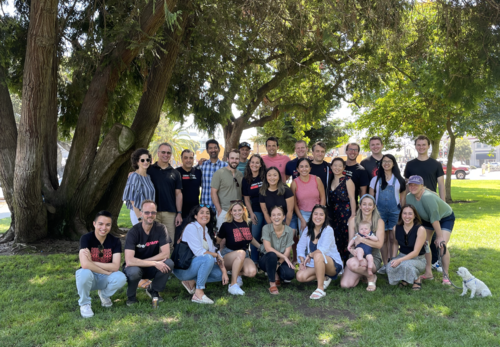
Founder mafia
5 people who came through Deepgram went on to found or lead other companies.




Related companies · 10










Companies working in the same space as Deepgram.
Timeline · 1
launches, deals, and filingsDeepgram introduced Flux TTS, presented as a text-to-speech model designed for live conversations that maintains tone, expression and continuity across a conversation. It was offered free to build with through September 12th, with up to 45 concurrent streaming connections in the US and 5 in the EU and AU. Flux TTS is paired with Flux STT as part of a conversation-aware speech platform built to handle turn-taking, interruptions and conversational context.
Dated company events from announcements, filings, and press; legal rows summarize public dockets and regulator releases.
Legal entities · 3
corporate structureIn the news
 Deepgram raises $130M at $1.3B valuation and buys a YC AI startup | TechCrunchtechcrunch.com · Jan 2026
▸Research sources · 1
primary sources listed
- Deepgramdeepgram.com · web
1 public sources were cited for this profile; the first-party ones are listed here.
Frequently asked questions
- What does Deepgram do?
- Deepgram provides enterprise voice AI APIs spanning speech-to-text, text-to-speech, audio intelligence and voice agents.
- Who founded Deepgram?
- Deepgram was founded by Scott Stephenson in 2015.
- Who are Deepgram's investors?
- Deepgram's investors include Alkeon Innovation, Alumni Ventures, B Capital, Bascom Ventures, Compound, Connetic Ventures, Four Cities, Gaia Ventures and 34 more.
- How much funding has Deepgram raised?
- Deepgram has disclosed $215.1M raised across 4 of its 5 known rounds.
- Where is Deepgram headquartered?
- Deepgram is headquartered in San Francisco, US.