 Fundraising Fox
AMI Labs
Unicorn · $4.5BParis, FR · 73 known investors
Find your way into AMI Labs
Sign up to see every warm intro you have to AMI Labs
- Paths you didn't know you had: your email and LinkedIn already hold routes to the AMI Labs team. We find them for you
- 2nd- and 3rd-degree connections: the friend-of-a-friend routes that take hours to manually find through your inbox or LinkedIn
- Answers now, not in days: momentum is everything in a raise. Skip asking around whether someone knows someone
Days of research, done the moment you sign in, with every route ranked by how warm it is.
AMI Labs develops advanced AI systems that understand the real world through world models and action-conditioned architectures, enabling intelligent agents with persistent memory, reasoning, and safety controls for industrial automation, robotics, and healthcare applications.
Also known as Advanced Machine Intelligence · Advanced Machine Intelligence Labs · Advanced Machine Intelligence SASU · AMI · AMI Labs
Founders & leadership



Investors · 73

How we know: 20vc.fund · open dataset · 5k.vc investor directory · Not right? Tell us
How we know: Aglae Ventures's portfolio page · the VCSheet dataset · open dataset · 5k.vc investor directory · Not right? Tell us

How we know: Alpha Intelligence Capital's portfolio page · research · amilabs.xyz · open dataset · 5k.vc investor directory · Not right? Tell us
How we know: Alpha Square Group's portfolio page · Not right? Tell us
How we know: Avenir Growth Capital's portfolio page · open dataset · 5k.vc investor directory · Not right? Tell us

How we know: Berliner Volksbank Ventures's portfolio page · Not right? Tell us
How we know: Better Angle's portfolio page · Not right? Tell us

How we know: open dataset · 5k.vc investor directory · Not right? Tell us

How we know: C4 Ventures's portfolio page · Not right? Tell us

How we know: Cathay Innovation's portfolio page · research · amilabs.xyz · open dataset · 5k.vc investor directory · Not right? Tell us

How we know: collabfund.com · Not right? Tell us

How we know: Daphni's portfolio page · Not right? Tell us
How we know: Eval Ventures Fund's portfolio page · Not right? Tell us

How we know: Expeditions's portfolio page · the VCSheet dataset · Not right? Tell us
.jpeg)
How we know: firstminute capital's portfolio page · Not right? Tell us

How we know: Founders Future's portfolio page · open dataset · 5k.vc investor directory · Not right? Tell us

How we know: Greycroft's portfolio page · research · amilabs.xyz · Not right? Tell us

How we know: Hiro Capital's portfolio page · research · amilabs.xyz · Not right? Tell us
How we know: HV Capital's portfolio page · research · amilabs.xyz · open dataset · 5k.vc investor directory · Not right? Tell us
How we know: Inception Fund's portfolio page · open dataset · 5k.vc investor directory · Not right? Tell us

How we know: LG Technology Ventures's portfolio page · the VCSheet dataset · Not right? Tell us

How we know: Motier Ventures's portfolio page · Not right? Tell us
How we know: NextGen Venture Partners's portfolio page · open dataset · 5k.vc investor directory · Not right? Tell us

How we know: Obvious Ventures's portfolio page · Not right? Tell us
How we know: Opera Tech Ventures's portfolio page · open dataset · 5k.vc investor directory · Not right? Tell us
How we know: OVNI Capital's portfolio page · Not right? Tell us

How we know: partechpartners.com · Not right? Tell us

How we know: Redstone's portfolio page · Not right? Tell us
How we know: Relics Venture's portfolio page · Not right? Tell us
How we know: open dataset · 5k.vc investor directory · Not right? Tell us
How we know: samsungnext.com · Not right? Tell us
How we know: Scrum Ventures's portfolio page · Not right? Tell us

How we know: Shorooq Partners's portfolio page · open dataset · 5k.vc investor directory · Not right? Tell us
How we know: SquareOne Capital's portfolio page · Not right? Tell us


How we know: The Venture Reality Fund's portfolio page · Not right? Tell us


How we know: United Founders's portfolio page · Not right? Tell us

How we know: open dataset · 5k.vc investor directory · Not right? Tell us

How we know: Wing's portfolio page · open dataset · 5k.vc investor directory · Not right? Tell us

How we know: research · amilabs.xyz · Not right? Tell us
How we know: research · amilabs.xyz · open dataset · 5k.vc investor directory · Not right? Tell us
How we know: research · amilabs.xyz · Not right? Tell us

How we know: open dataset · 5k.vc investor directory · Not right? Tell us

How we know: open dataset · 5k.vc investor directory · Not right? Tell us
How we know: research · amilabs.xyz · Not right? Tell us
How we know: funding news · research · amilabs.xyz · Not right? Tell us
How we know: research · amilabs.xyz · Not right? Tell us
How we know: research · amilabs.xyz · Not right? Tell us

How we know: research · amilabs.xyz · Not right? Tell us
Also in the syndicate · 13
Funding
SEC filings, press & company announcements$1B disclosed across 1 of 7 rounds · 2026
- Undisclosed amountSeedJul 2026Source ↗
- Undisclosed amountSeed RoundMay 2026Source ↗
- $1BSeed RoundMar 2026 · 2 sourcesSource ↗
Source: company announcements and press reports — follow each round's link for the claim.
Valuation · disclosed
Disclosed eventsSource: SEC prospectus filings, and round valuations the company or its investors disclosed — follow each entry's link for the claim.
Company profile
researched Aug 2026AMI Labs (Advanced Machine Intelligence) is a frontier AI research lab headquartered in Paris with additional sites in New York, Montreal and Singapore. It develops "world models": AI systems trained on continuous, high-dimensional sensor data such as images, video, audio and LiDAR rather than on text, with the stated aim of building systems that understand the real world, retain persistent memory, reason and plan, and remain controllable and safe. The company's technical program centers on the Joint Embedding Predictive Architecture (JEPA) proposed by Yann LeCun in 2022, in which models predict abstract latent representations of the world instead of reconstructing pixels or generating tokens, on the argument that much real-world sensor data is unpredictable at surface level and that generative next-token or next-pixel prediction is poorly suited to it.
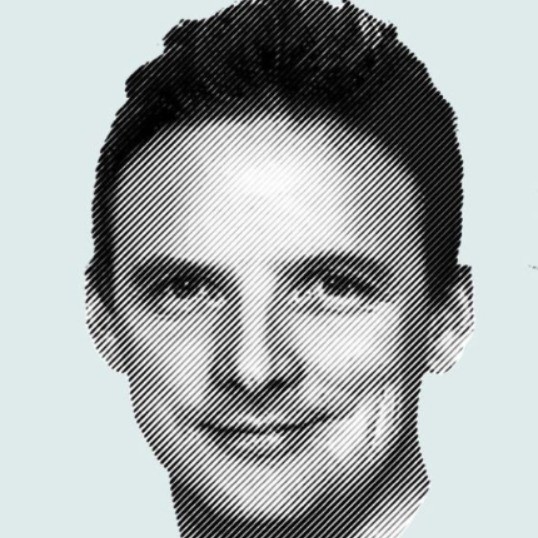
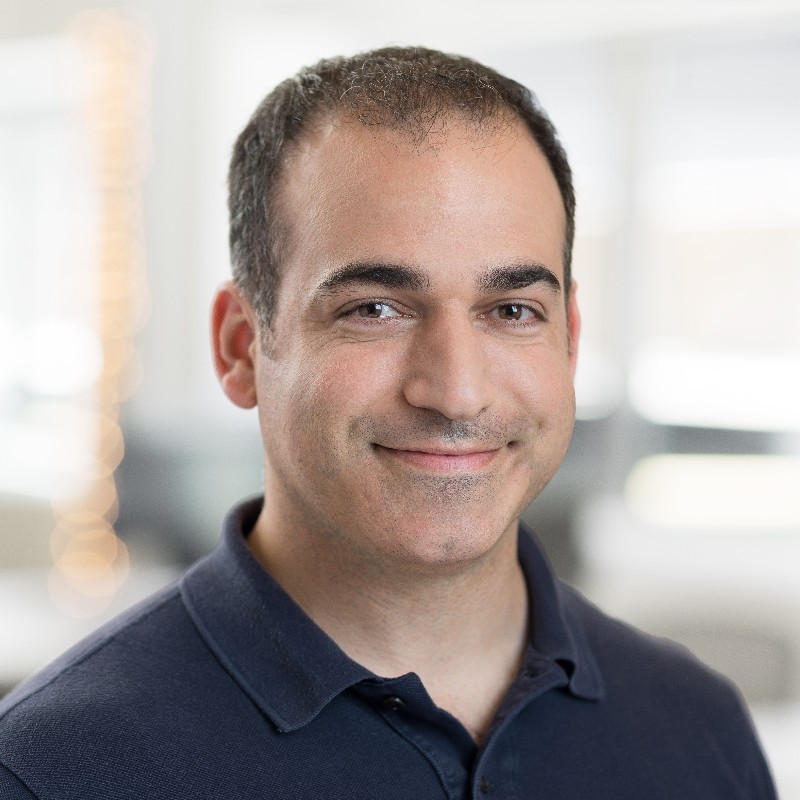
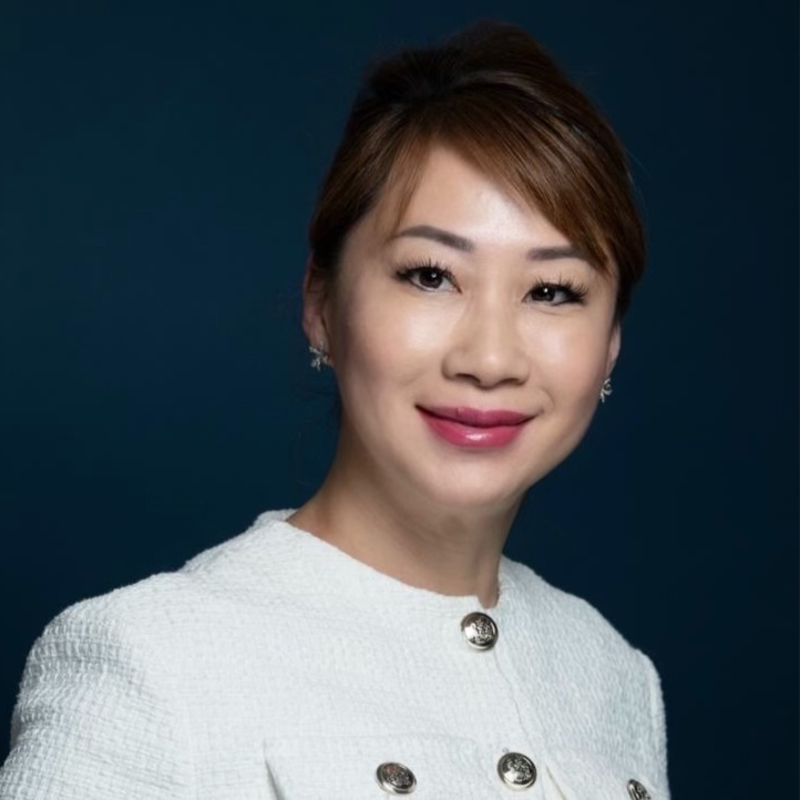
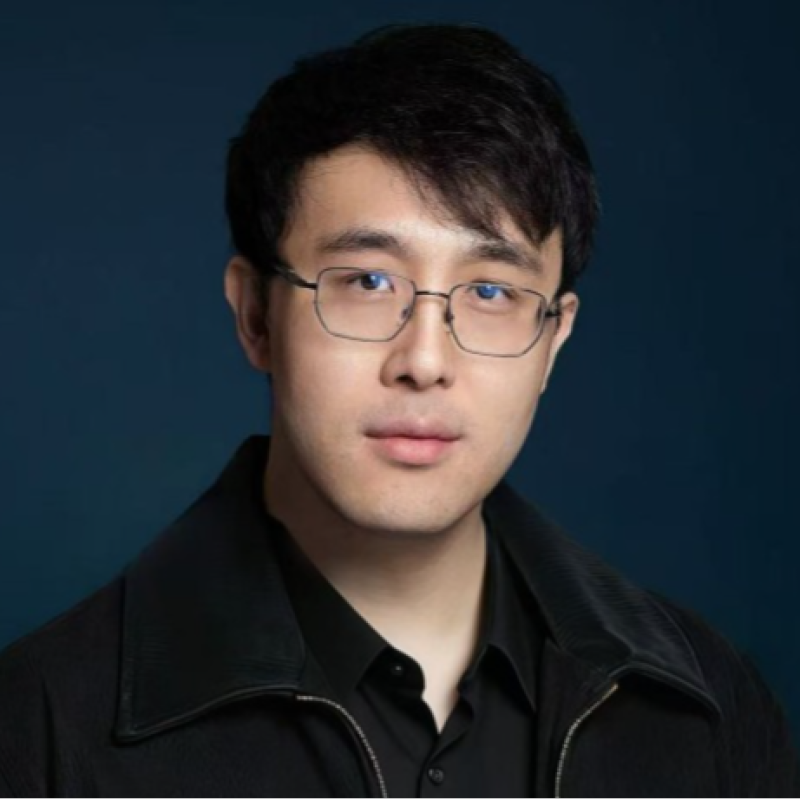
Action-conditioned world models are intended to let agentic systems predict the consequences of their actions and plan action sequences under safety guardrails. Targeted application domains where reliability and controllability matter include industrial process control and automation, wearable devices, robotics and healthcare; press coverage also cites autonomous machines such as drones and robotaxis. The company was founded in late 2025 by Yann LeCun after his departure from Meta, where he had led the Fundamental AI Research (FAIR) group since 2013, and it publicly launched in March 2026. LeCun serves as executive chairman while continuing his professorship at New York University; Alexandre (Alex) LeBrun is CEO, Laurent Solly is COO, Saining Xie is chief science officer, Pascale Fung is chief research and innovation officer, and Michael Rabbat is VP of world models. The website also lists Min Lin among the founding group.
AMI describes a dual-track approach of advancing fundamental research through open publications and open-source code while developing commercially licensable products, and positions itself as a European alternative to predominantly American and Chinese frontier labs. The company had roughly a dozen employees at the time of its seed round and no shipped product, with LeBrun stating the first phase is research-led and commercial applications are years rather than quarters away.
Founding story
LeCun has stated he created AMI Labs to continue the Advanced Machine Intelligence research program he had pursued with colleagues at Meta and New York University, after concluding that large language models are not a path to human-level intelligence and that Meta's priorities had diverged from world-model research. CEO Alexandre LeBrun, whose earlier startup Wit.ai was acquired by Meta and who later founded the health-tech company Nabla, had reached similar conclusions about LLM limitations in settings such as healthcare where hallucinations carry severe consequences; his move to AMI was facilitated by an arrangement giving Nabla preferential access to AMI's future technology. The name is pronounced "ah-mee," a reference to the French word for friend.
Business model
AMI Labs operates a dual-track model: it publishes research and releases open-source code while intending to develop commercially licensable products built on its world models. It has no revenue plans in the near term and expects a multi-year path from fundamental research to commercial deployment, with capital directed primarily at compute and talent.
No revenue is planned for the near term; the intended long-term model combines open research and open-source releases with commercially licensable products and partner deployments.
Traction
At the time of its March 2026 seed round the company had roughly a dozen employees and no shipped product, and was recruiting across its four locations. Traction to date consists of the financing, a research partnership arrangement with Meta enabling continued JEPA collaboration, and Nabla as first disclosed application partner.
Latest developments
AMI Labs announced its $1.03 billion seed round on March 9, 2026 at a $3.5 billion pre-money valuation and made its official public launch on March 10, 2026. V-JEPA 2.1, described as offering sharper temporally consistent dense features, shipped in March 2026 alongside the funding close.
▸Full profile — market position, technology, go-to-market, geography, history, risks & controversies
Market position
AMI Labs is one of a small set of labs pursuing world models, a category with fewer participants than generative AI; comparisons cited include Fei-Fei Li's World Labs and SpAItial. Coverage describes its seed round as the largest on record for a European company and the largest prelaunch AI funding in European history, surpassing Mistral AI's 2023 seed round. LeCun has said AMI does not aim to compete directly with OpenAI, Anthropic or Meta's Superintelligence Labs, and has suggested Meta could become an early customer.
Rather than autoregressive generation over text or pixel-level reconstruction, AMI's JEPA-based models predict in abstract representation space, filtering out unpredictable detail, which the company argues suits domains requiring reliability, controllability and safety. Its positioning also differs from other frontier labs through a commitment to open publications and open-source releases and an explicitly European, non-US/non-Chinese base, with a research-first horizon rather than near-term product revenue.
Technology
Self-supervised world models based on the Joint Embedding Predictive Architecture (JEPA), which learns abstract representations of real-world sensor data and predicts in representation space rather than reconstructing high-dimensional detail. Action-conditioned variants allow agents to predict action consequences and plan under safety guardrails. The lineage includes Meta FAIR's Image-JEPA (2022), Video-JEPA (2024) and V-JEPA 2 (June 2025), a 1.2-billion-parameter model trained on more than one million hours of internet video and one million images and fine-tuned on a small set of robot trajectory data, with reported results of 77.3% top-1 accuracy on Something-Something v2, 39.7 recall-at-5 on Epic-Kitchens-100 action anticipation, and an 80% success rate on a robotic cup-moving task using an action-conditioned variant. V-JEPA 2.1 followed in March 2026.
Go-to-market
The company plans to engage prospective customers early to test models on real data and real evaluations, working through partners for deployments; Nabla is the first disclosed partner expecting access to early models. Several industrial investors are described as potential partners. Recruiting is conducted through a public jobs portal, and the company also seeks engagement with industry partners, product developers and the academic community via open publications and open source.
Industrial and enterprise users in process control and automation, robotics, wearable devices and healthcare, plus industry partners and product developers; Nabla, a digital health company, is the first disclosed partner.
Geography
Headquartered in Paris, with offices in New York (where LeCun teaches at NYU), Montreal (where Michael Rabbat is based) and Singapore, the last chosen both to recruit AI talent and to be near prospective customers in Asia. The company describes itself as operating across three continents from day one.
History
Yann LeCun joined Facebook (later Meta) in 2013 and built the Fundamental AI Research (FAIR) lab, originating the JEPA research program; Meta FAIR published Image-JEPA in 2022 and Video-JEPA in 2024, with V-JEPA 2 released on arXiv in June 2025. LeCun's departure from Meta was confirmed on November 19, 2025, following divergence over the company's LLM- and Llama-centered strategy. AMI Labs was founded in late 2025, disclosed a $1.03 billion seed round on March 9, 2026, and formally launched publicly on March 10, 2026. V-JEPA 2.1 shipped in March 2026 alongside the funding close.
Risks & controversies
Analyst commentary notes that the company had roughly a dozen employees, no product and a research agenda measured in years at a $3.5 billion pre-money valuation, creating execution pressure to show progress before the next financing. It also notes that world models carry their own generalization challenges in novel environments and that the path from laboratory JEPA demonstrations to reliable deployment in healthcare or robotics is non-trivial, a gap where well-funded research labs have historically struggled.
Compiled by commissioned research from 12 cited public sources — announcements, filings, and press listed under research sources below.
Key figures
latest reportedCompany-reported or press-reported figures, each dated to when it was claimed — not independently audited.
Related companies · 3

Companies working in the same space as AMI Labs.
Timeline · 12
launches, deals, and filingsAMI Labs formally announced itself publicly, describing its mission to build AI systems that understand the world, have persistent memory, can reason and plan, and are controllable and safe, with teams in Paris, New York, Montreal and Singapore.
AMI Labs formally announced itself publicly on 10 March 2026, a day after the funding round was reported.
AMI Labs disclosed a $1.03 billion (~€890 million) seed round at a $3.5 billion pre-money valuation, co-led by Cathay Innovation, Greycroft, Hiro Capital, HV Capital and Bezos Expeditions, with strategic and individual backers including NVIDIA, Samsung, Temasek, Toyota Ventures, Sea, Bpifrance Digital Venture, Jeff Bezos, Mark Cuban, Eric Schmidt, Xavier Niel and Tim and Rosemary Berners-Lee. Coverage describes it as the largest seed round on record for a European company.
$1B source ↗
Digital health company Nabla, chaired by AMI CEO Alexandre LeBrun, is the first disclosed partner expecting access to AMI's early world models; Nabla secured preferential access to AMI's future technology in exchange for supporting LeBrun's move.
AMI Labs raised $1.03 billion (approximately €890 million) at a $3.5 billion pre-money valuation, reported as the largest seed round raised by a European company, co-led by Cathay Innovation, Greycroft, Hiro Capital, HV Capital and Bezos Expeditions.
$1B source ↗
V-JEPA 2.1, offering sharper temporally consistent dense features, shipped alongside the close of the seed round.
The startup launched its website, disclosing plans to develop world models for industrial process control, automation, wearable devices, robotics and healthcare, and stating it will license technology to industry partners while publishing openly.
Meta will not invest in AMI Labs, but the two organisations plan to maintain a research partnership allowing LeCun to continue JEPA-related collaboration with former FAIR colleagues.
Yann LeCun serves as executive chairman, Alexandre LeBrun as CEO, Laurent Solly (former Meta VP for Europe) as COO, Saining Xie as chief science officer, Pascale Fung as chief research and innovation officer, and Michael Rabbat as VP of world models.
The company was founded in Paris on 15 December 2025 by Yann LeCun.
Nabla announced a partnership giving it privileged access to AMI Labs' world models; Nabla's board supported Alexandre LeBrun's move from CEO to chief AI scientist and chairman so he could become AMI Labs' CEO. Nabla is AMI Labs' first disclosed partner.
LeCun's exit from Meta, where he had served as chief AI scientist and built the FAIR lab since 2013, was confirmed on November 19, 2025; he subsequently founded AMI Labs and serves as executive chairman while remaining a professor at NYU.
Dated company events from announcements, filings, and press; legal rows summarize public dockets and regulator releases.
In the news
▸Research sources · 12
primary sources listed
- AMI Labsamilabs.xyz · web
12 public sources were cited for this profile; the first-party ones are listed here.
Frequently asked questions
- What does AMI Labs do?
- Paris-based frontier AI lab building world models for real-world perception, reasoning, planning and safe agentic control.
- Who founded AMI Labs?
- AMI Labs was founded by Yann LeCun, Alex LeBrun, Laurent Solly, Michael Rabbat, Pascale Fung, Saining Xie, Min Lin.
- Who are AMI Labs's investors?
- AMI Labs's investors include 20VC, Aglae Ventures, Alpha Intelligence Capital, Alpha Square Group, Avenir Growth Capital, Berliner Volksbank Ventures, Better Angle, Bitkraft Esports Ventures and 52 more.
- How much funding has AMI Labs raised?
- AMI Labs has disclosed $1B raised across 1 of its 7 known rounds.
- Where is AMI Labs headquartered?
- AMI Labs is headquartered in Paris, FR.