 Fundraising Fox
Sunday Robotics
Unicorn · $1.1BSilicon Valley, US · 16 known investors
Find your way into Sunday Robotics
Each arrow is one introduction. Sign up to fill in the first one.
You →Sarah · together at Sunday →Cheng

Ask Jamie Chen to introduce you to Tony Zhao
You →Jamie · together at Sunday →Tony
Sign up to find every way you can get introduced to Sunday Robotics
- Your email: who you already know at Sunday Robotics, and who your contacts know
- 2nd- and 3rd-degree connections: people you know who worked, studied or invested with the Sunday Robotics team
- Your LinkedIn: the connections who can make the intro for you
We rank every route by how warm it is, so you raise on warm intros instead of cold emails.
Sunday builds household robots that learn from human demonstration to automate everyday tasks in real homes. The company develops robotics hardware and software platforms designed to give people back time for meaningful activities.
Also known as Sunday · Sunday Robotics · sunday.ai
Founders & leadership


Investors · 16

How we know: Bain Capital Ventures's portfolio page · research · newsgpt.ai · open dataset · 5k.vc investor directory · Not right? Tell us

How we know: Bullish's portfolio page · Not right? Tell us

How we know: research · newsgpt.ai · open dataset · 5k.vc investor directory · Not right? Tell us
.jpeg)
How we know: Conviction's portfolio page · the VCSheet dataset · open dataset · 5k.vc investor directory · Not right? Tell us

How we know: Scribble Ventures's portfolio page · Not right? Tell us
How we know: Sunflower Capital Management Fund's portfolio page · Not right? Tell us

How we know: Tactile Ventures's portfolio page · Not right? Tell us
How we know: Transpose Platform Management's portfolio page · Not right? Tell us
How we know: open dataset · 5k.vc investor directory · Not right? Tell us

How we know: research · caplight.com · open dataset · 5k.vc investor directory · Not right? Tell us

How we know: open dataset · 5k.vc investor directory · Not right? Tell us
How we know: open dataset · 5k.vc investor directory · Not right? Tell us

How we know: open dataset · 5k.vc investor directory · Not right? Tell us


Also in the syndicate · 1
Funding
SEC filings, press & company announcements$165M disclosed across 1 of 2 rounds · 2025–2026
- $165MSeries BMar 2026 · 2 sources
Coatue Management (lead), Bain Capital Ventures, Benchmark Capital, Conviction Investment Partners, Fidelity Management & Research Company, Tiger Global Management, Xtal Ventures
Source ↗
Source: company announcements and press reports — follow each round's link for the claim.
Valuation · disclosed
Disclosed eventsSource: SEC prospectus filings, and round valuations the company or its investors disclosed — follow each entry's link for the claim.
Company profile
researched Aug 2026Sunday Robotics (operating as Sunday, sunday.ai) develops Memo, a wheeled autonomous household robot intended to perform domestic chores. Publicly demonstrated capabilities include clearing tables of plates, cups and wine glasses, disposing of napkins and food scraps, loading and running a dishwasher, pulling an espresso shot, and folding piles of socks and laundry. The company frames its work as two parallel efforts: building a robot with a set of working skills, and building the machinery for acquiring new skills quickly through what it calls an expanding Skill Library.
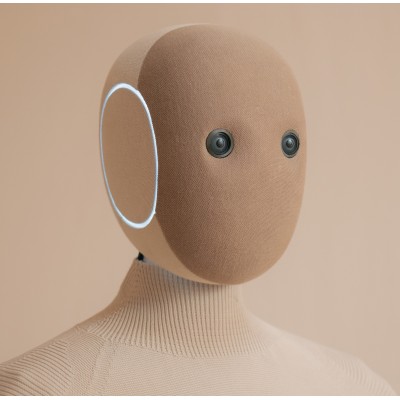
The robot is deliberately non-humanoid: it uses a wheeled base with a low center of gravity, a lightweight body with a soft silicone shell and no sharp corners, and can lower to the floor or extend to roughly seven feet, resting near four feet for most tasks. Sunday cites two safety properties — compliant control (limbs can be pushed aside mid-task without resistance) and passive stability (cutting power does not cause the robot to fall). Software caps motion speed, typically around 50% of a human's natural pace. Sunday states Memo operates autonomously and does not rely on in-home teleoperation for training data; a remote operator is described as intervening only when a customer asks for help, and the company says it does not use those interventions to collect customer-home training data.
As of mid-2026 Memo is not for sale. Sunday's site advertises a beta launching late 2026 with a 'Founding Families' application program, while Business Insider reports plans to place Memo in homes through a beta in the fall of 2026 with an undisclosed number of participants.
Founding story
Business Insider reports that Tony Zhao, who left a computer science PhD program at Stanford, and cofounder Cheng Chi started the company with a small team in a Silicon Valley hacker house in 2024. They chose the home rather than the factory as the target environment on the reasoning that messy, unpredictable domestic settings are the clearest path toward physical artificial general intelligence. Conviction's Sarah Guo, who wrote the company's first check, described the founders as strongly research-oriented with a focus on shipping a mass-consumer product.
Business model
Sunday is a business-to-consumer hardware company: it designs and builds the Memo robot and the AI models that run on it, and plans to sell to households. Caplight characterizes the model as B2C with hardware sales and hardware-plus-subscription customer profiles. Access is currently gated through an application-based beta ('Founding Families'); the company says Memo will not be purchasable until beta testing concludes in 2026. Training data is sourced not from customers' homes but from a paid/contracted network of 'Memory Developers' who wear the company's Skill Capture Glove, a role Sunday also posts as a remote and in-house job.
No revenue is documented in the sources. Memo is not yet purchasable; Sunday says pricing will be announced closer to launch and that a hand-built unit currently costs roughly $20,000 to produce, with large-scale manufacturing expected to reduce that by at least 50%. Caplight categorizes the customer profile as hardware sales and hardware plus subscription.
Traction
Sunday reports a 1,000-person waitlist around the time it exited stealth, thousands of Skill Capture Gloves shipped to Memory Developers, hundreds of homes contributing daily demonstration data, and more than 100 employees with 29 open roles. Product traction is pre-revenue: Memo is not for sale, with an in-home beta planned for late 2026 / fall 2026. Investor traction is the strongest signal — $200M total raised across a November 2025 Series A and a $165M March 2026 Series B at a $1.15B valuation, with Coatue, Tiger Global, Benchmark, Bain Capital Ventures, Conviction, Fidelity and Xtal Ventures named.
Latest developments
On 2026-07-16 Sunday unveiled ACT-2, the AI model powering Memo, and reported that Memo folded laundry successfully more than 99% of the time in unfamiliar homes and on garments it had not been trained on; laundry folding is described as Memo's first 'Solve' capability under a measurement standard the company proposed the same day. Sunday said it had spent the preceding months testing in employees' homes and Airbnbs, and that Memo is also learning to vacuum, organize toys, fasten zippers and make coffee, none of which are yet considered reliable. An in-home beta is planned for fall 2026. The company had more than 100 employees at that point, following the March 2026 Series B.
▸Full profile — market position, technology, go-to-market, geography, history, risks & controversies
Market position
Sunday is positioned in the emerging consumer home-robot segment, valued at $1.15 billion after its March 2026 Series B and described by Caplight as in the top 5% of tracked companies by momentum. Business Insider situates it alongside Y Combinator-backed Weave Robotics (Isaac 1, a $7,999 wheeled laundry-folding robot slated to ship in California in fall 2026), 1X (a $20,000 NEO humanoid targeting a similar timeframe), and Tesla's Optimus home effort. Caplight lists Collaborative Robotics, Hyundai Motor Company and Apptronik as embedding-similarity comparables. No revenue or shipped-unit figures appear in the sources.
Sunday's stated differentiators are (a) a glove-based human demonstration pipeline that avoids in-home teleoperation and the associated privacy exposure, (b) a wheeled, passively stable, compliant-control form factor that contrasts with balancing humanoids, and (c) claimed cross-environment generalization: ACT-2 is reported to fold laundry with greater than 99% success in unfamiliar homes on garments it was not specifically trained on, with performance in the office said to transfer to the wild. The company has also proposed a 'Solve' reporting standard intended to make robot capability claims comparable by specifying task, test environment, and the amount of additional training or human assistance required.
Technology
Memo is powered by in-house AI models: ACT-1, demonstrated earlier for table clearing, dishwasher loading and espresso making, and ACT-2, announced July 2026. Training uses a two-stage process: basic physical skills are learned from people performing everyday tasks while wearing Sunday's Skill Capture Glove — sensor-equipped gloves costing about $200 to make that mirror the shape and sensor layout of Memo's hands so human motion maps directly onto the robot — and then an in-house robot fleet lets the model learn from its own mistakes, with new skills reportedly acquired within minutes. Thousands of gloves have been shipped to 'Memory Developers' who collect demonstration data in their own homes; the company says hundreds of people in distinct homes contribute daily. Onboard inference, a growing Skill Library, compliant control, passive stability and software-enforced speed limits are the other described technical elements. Job listings indicate work in SLAM, GPU and accelerated compute, ML infrastructure, embedded software, motor-control firmware and mechanical/electrical hardware.
Go-to-market
Direct-to-consumer, staged through a beta. The website solicits applications for a 'Founding Families' beta program launching late 2026, promising insider access, perks and design input, with fuller program details said to be coming in early 2026. Community-building elements include a newsletter, an X account (@sundayrobotics), public voting on robot accessories, and recruitment of 'Memory Developers' (MemDevs) who supply demonstration data. Business Insider reports the in-home beta is planned for fall 2026 with an undisclosed number of households.
Households, described on the company site as busy families; the beta targets 'Founding Families' with small children explicitly considered in safety design. Caplight classifies the business as B2C.
Geography
United States. Caplight lists headquarters in Mountain View, California; Business Insider describes Sunday as a Bay Area startup; and nearly all of the company's 29 open roles are located in Redwood City, California, with one Memory Developer position listed as remote. Weave Robotics' competing product is described as shipping in California; no international operations are described in the sources.
History
Per Business Insider, Tony Zhao and Cheng Chi started the company with a small team in a Silicon Valley hacker house in 2024; Caplight lists a 2024 founding year. The company's own site dates Memo's first learned task (arranging shoes, with a single arm) to December 2024, and reports parallel multi-skill training with sock folding, glassware handling and espresso pulling added by October 2025. Sunday operated in stealth until late 2025, when it emerged with a reported 1,000-person waitlist. Caplight records a Series A on 2025-11-24 and a Series B on 2026-03-12. In July 2026 the company published the ACT-2 model and a proposed 'Solve' reporting standard, and headcount had passed 100.
Risks & controversies
Sunday itself states that current skills are not yet reliable or general enough for out-of-the-box home use and that vacuuming, toy organization, zipper fastening and coffee making are not yet reliable. Unit economics are unproven: a hand-built Memo costs about $20,000 and the promised cost reduction depends on scale manufacturing that has not occurred. Retail pricing, beta size and revenue are undisclosed. Capability claims such as the 99%-plus laundry folding rate are company-reported and were the motivation for Sunday's own proposed measurement standard. Competitors including Weave Robotics and 1X are targeting the same fall 2026 delivery window. Source [5] applies industrial-robotics, warehouse-automation and logistics tags to the company that are not corroborated by other material.
Compiled by commissioned research from 8 cited public sources — announcements, filings, and press listed under research sources below.
Key figures
latest reportedCompany-reported or press-reported figures, each dated to when it was claimed — not independently audited.
Related companies · 5




Companies working in the same space as Sunday Robotics.
Timeline · 6
launches, deals, and filingsSunday unveiled ACT-2, the AI model powering Memo, reporting laundry folding success above 99% in unfamiliar homes with unseen garments, and proposed a 'Solve' standard for reporting robot capability.
Series B led by Coatue Management valuing the company at $1.15 billion, taking it to unicorn status.
$165M source ↗
Series A listed by Caplight; investors associated with the round include Benchmark Capital and Conviction Investment Partners. Amount not disclosed in source.
Company states Memo learned to fold piles of socks, handle glassware and pull a shot of espresso, trained on multiple skills in parallel.
Sunday ended its stealth period late in the year preceding the March 2026 Series B, with a reported 1,000-person waitlist.
Memo, then a single-arm robot, learned its first task: arranging shoes.
Dated company events from announcements, filings, and press; legal rows summarize public dockets and regulator releases.
▸Research sources · 8
primary sources listed
- Sunday Roboticssunday.ai · web
8 public sources were cited for this profile; the first-party ones are listed here.
Frequently asked questions
- What does Sunday Robotics do?
- Sunday Robotics builds Memo, an autonomous wheeled home robot that learns chores from human glove demonstrations.
- Who founded Sunday Robotics?
- Sunday Robotics was founded by Tony Zhao, Cheng Chi.
- Who are Sunday Robotics's investors?
- Sunday Robotics's investors include Bain Capital Ventures, Bullish, Coatue Management, Conviction, Scribble Ventures, Sunflower Capital Management Fund, Tactile Ventures, Transpose Platform Management and 7 more.
- How much funding has Sunday Robotics raised?
- Sunday Robotics has disclosed $165M raised across 1 of its 2 known rounds.
- Where is Sunday Robotics headquartered?
- Sunday Robotics is headquartered in Silicon Valley, US.