 Fundraising Fox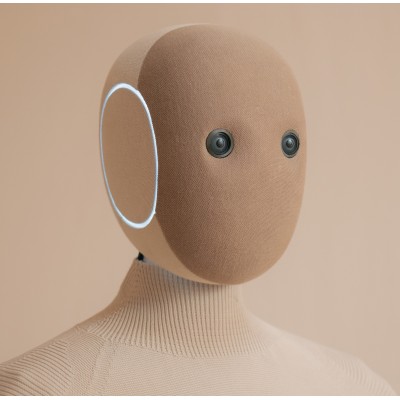
1X Technologies
Palo Alto, US · Founded 2015 · 1,104 employees on LinkedIn · 23 known investors
Find your way into 1X Technologies
Sign up to see every warm intro you have to 1X Technologies
- Paths you didn't know you had: your email and LinkedIn already hold routes to the 1X Technologies team. We find them for you
- 2nd- and 3rd-degree connections: the friend-of-a-friend routes that take hours to manually find through your inbox or LinkedIn
- Answers now, not in days: momentum is everything in a raise. Skip asking around whether someone knows someone
Days of research, done the moment you sign in, with every route ranked by how warm it is.
1X is an AI and robotics company developing general-purpose humanoid robots for home and industrial use. Its flagship product NEO is designed as a home robot that autonomously handles household chores and learns alongside residents.
Also known as 1X · 1X Technologies AS · Halodi Robotics
Founders & leadership
1X Technologies was founded in 2015 by Bernt Øyvind Børnich and Bernt Børnich.

Investors · 23
How we know: AF WPartners's portfolio page · Not right? Tell us

How we know: Alliance VC's portfolio page · the VCSheet dataset · open dataset · 5k.vc investor directory · Not right? Tell us
How we know: Alliance Venture's portfolio page · open dataset · 5k.vc investor directory · Not right? Tell us
How we know: EQT Ventures's portfolio page · Wikidata · funding news · press coverage · research · en.wikipedia.org · open dataset · 5k.vc investor directory · Not right? Tell us

How we know: NVIDIA's portfolio page · open dataset · 5k.vc investor directory · Not right? Tell us
How we know: Samsung Next's portfolio page · press coverage · the VCSheet dataset · research · en.wikipedia.org · open dataset · 5k.vc investor directory · Not right? Tell us

How we know: Sandwater's portfolio page · press coverage · research · en.wikipedia.org · Not right? Tell us

How we know: press coverage · research · en.wikipedia.org · open dataset · 5k.vc investor directory · Not right? Tell us

How we know: Starbridge Venture Capital Llc's portfolio page · open dataset · 5k.vc investor directory · Not right? Tell us

How we know: Thursday Ventures's portfolio page · the VCSheet dataset · Not right? Tell us

How we know: the VCSheet dataset · Not right? Tell us
How we know: techstartups.com · Not right? Tell us

How we know: the VCSheet dataset · Not right? Tell us

How we know: press coverage · research · en.wikipedia.org · open dataset · 5k.vc investor directory · Not right? Tell us
How we know: open dataset · 5k.vc investor directory · Not right? Tell us

How we know: funding news · press coverage · research · en.wikipedia.org · open dataset · 5k.vc investor directory · Not right? Tell us

How we know: the VCSheet dataset · Not right? Tell us
Also in the syndicate · 2
Funding
SEC filings, press & company announcements- Undisclosed amountseries BJan 2024
EQT Ventures (lead), OpenAI, Samsung NEXT, Sandwater, Skagerak Capital, Tiger Global
Source ↗
Source: company announcements and press reports — follow each round's link for the claim.
Company profile
researched Aug 20261X Technologies is a Norwegian-American robotics and artificial intelligence company that develops general-purpose humanoid robots, with a stated focus on home environments. It was founded in May 2014 in Moss, Norway as Halodi Robotics and rebranded to 1X Technologies in 2022. The company is headquartered in Palo Alto, California, with manufacturing in Hayward, California and Moss, Norway; Sacra reports the global headquarters was relocated from Norway to Palo Alto in July 2025.
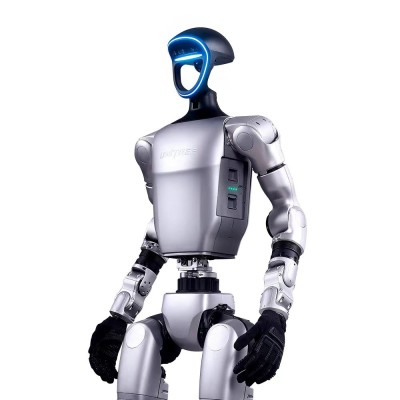
The company builds two robot platforms. EVE is a wheeled humanoid, described as roughly 6 feet tall and 183 pounds with a self-balancing two-wheel base and 25 degrees of freedom across arms and neck, aimed at logistics, security and healthcare/institutional tasks; multiple units can be supervised through a browser dashboard with 360-degree video and direct control. NEO is a bipedal home robot, introduced as NEO Beta on 2024-08-30 and updated as NEO Gamma on 2025-02-21, described as 5 feet 7 inches tall and 66 pounds with a soft 3D-knit exterior, five-fingered hands, LED ear rings and an onboard speaker array. Pre-orders for the NEO Home Robot opened on 2025-10-28 at $20,000 for early adopters or $499 per month by subscription, with delivery scheduled for 2026 (Sacra states late 2026). In July 2026, the company detailed NEO hands with 25 degrees of freedom.
Coverage notes that, as of October 2025, most NEO tasks were performed by remote human teleoperators using VR headsets, with an app for scheduling operator sessions; CEO Bernt Børnich said data from early adopters is needed to improve autonomy. This arrangement has drawn privacy concerns in press reporting.
Founding story
Sources state that 1X was founded in May 2014 in Moss, Norway as Halodi Robotics by Bernt Øivind Børnich (CEO), Phuong Nguyen (former CTO), Jørgen Sundell (machinist) and Pål Løken (board member), after Løken approached the group seeking to invest in a robotics company. Børnich learned to program on an Intel i486 computer as a child, decided at age 11 that he wanted to build humanoid robots, studied robotics and nano-electronics at Oslo University, and worked as an engineer at embedded systems firm Data Respons. Nguyen holds a Ph.D. in robotics from the University of Ulsan and did postdoctoral work in Norway, including at Oslo University Hospital.
Business model
Sacra describes 1X as a vertically integrated robotics company that combines proprietary hardware with in-house AI software, manufacturing robots itself with custom actuators. It pursues both a B2B channel for enterprise customers and a B2C channel for home robots. Teleoperation is characterized as a data-collection bootstrap rather than a permanent dependency, with expert demonstrations feeding the company's world model so that additional deployments generate training data intended to increase autonomy and reduce per-unit human oversight costs.
Revenue is generated from hardware sales and rental subscriptions: NEO is sold at $20,000 or offered on a $499 per month rental plan with a six-month minimum, with over-the-air software updates. Enterprise deployment agreements, such as the EQT arrangement, provide an additional channel.
Traction
Contrary lists 663 employees and total funding of $136.5 million at Series B stage as of September 2025, noting scaling manufacturing and initial consumer deployments. NEO pre-orders opened October 2025 for 2026 delivery, and an enterprise agreement contemplates up to 10,000 NEO units across EQT portfolio companies from 2026 to 2030. Reported task speeds for NEO Gamma are about 2 minutes to fold a sweater and 5 minutes to load three dishes.
Latest developments
In September 2025 it was reported that 1X was in talks with investors and employees about raising up to $1 billion at a targeted valuation of at least $10 billion, more than 12x its January 2024 valuation. NEO pre-orders opened 2025-10-28 at $20,000 or $499 per month, with 2026 delivery. In July 2026 the company detailed NEO's hands, which have 25 degrees of freedom and are described as approaching human hand capability.
▸Full profile — market position, technology, go-to-market, geography, history, risks & controversies
Market position
1X is positioned as a consumer/home-first humanoid developer, in contrast with competitors concentrating on industrial deployments. Sacra reports Figure AI as the most commercially advanced US humanoid company, having raised over $2.5 billion at a reported $39 billion valuation with 40 Figure 03 robots at BMW's Spartanburg plant, while Tesla has deployed over 1,000 Optimus units in its own factories; OpenAI has also entered the space with a robotics division. Contrary describes 1X as potentially able to build a strong position in the emerging consumer humanoid market if its strategy succeeds.
Differentiators cited include vertical integration across hardware, AI and manufacturing; in-house Revo1 cable-driven motors built rather than sourced from Chinese suppliers, which management views as a cost and safety advantage and a hedge against Chinese component pricing; a soft, knit-covered bipedal design intended for safe operation around people in unstructured homes; and a home-first data strategy premised on households providing richer training diversity than industrial settings.
Technology
Both robots run Redwood, 1X's proprietary vision-language transformer, which processes stereo depth camera, microphone array and tactile joint sensor input and converts high-level decisions into joint movements via a 100Hz whole-body controller. The 1XWM world model is a 14-billion-parameter video-pretrained system that maps text plus a starting frame into predicted future video frames, with an inverse dynamics model trained on roughly 400 hours of robot data converting those predictions into action trajectories, allowing simulation and evaluation of alternative action sequences. Hardware uses proprietary Revo1 quasi-direct-drive brushless motors with cable transmissions instead of gears for low friction and safer human contact. Operators train new behaviors using VR headsets and haptic gloves, and those demonstrations fine-tune the models.
Go-to-market
Dual go-to-market: direct consumer sales and subscription rentals of NEO, with early-adopter pre-orders opened in late 2025 and an app through which users schedule remote-operator sessions; and an enterprise channel, including a deal with EQT to deploy up to 10,000 NEO robots across EQT's 300-plus portfolio companies between 2026 and 2030, in which EQT acts as both investor and commercial channel.
Consumers and private households for NEO; enterprise and institutional buyers for EVE and enterprise NEO deployments, including logistics, security patrol, hospital supply and portfolio-company operations. Contrary frames the underlying demand as labor shortages in physically demanding work and rising elder-care needs.
Geography
Headquarters in Palo Alto, California (relocated from Norway in July 2025), with main manufacturing in Hayward, California and additional manufacturing in Moss, Norway, where the company was originally founded.
History
Founded in 2014 as Halodi Robotics, the company initially focused on safe actuators and full-body control systems for industrial and healthcare robotics, rejecting high-ratio harmonic gears in favor of the Revo1 cable-driven differential transmission with low-friction motors. It publicly previewed its first Eve prototype in July 2017 and released the EVE humanoid in 2018 for logistics, security and medical environments. In 2022 it rebranded as 1X Technologies and shifted toward domestic robotics. It raised a $23.5 million Series A2 in March 2023 led by the OpenAI Startup Fund and a $100 million Series B in January 2024 led by EQT Ventures. In January 2025 it acquired Kind Humanoid, and in July 2025 it moved its global headquarters from Norway to Palo Alto. NEO Beta was unveiled in August 2024, NEO Gamma in February 2025, and consumer pre-orders opened in October 2025.
Risks & controversies
Reporting by The Wall Street Journal found that as of October 2025 most NEO tasks were teleoperated by a human wearing a VR headset, raising privacy concerns about remote operators accessing users' homes. Contrary identifies key challenges as scaling production from thousands to millions of units, improving AI reasoning and reliability, achieving sustainable unit economics, and navigating safety and consumer trust. Sacra notes the capital-intensive nature of robotics requires substantial upfront investment to reach scale.
Compiled by commissioned research from 8 cited public sources — announcements, filings, and press listed under research sources below.
Key figures
latest reportedCompany-reported or press-reported figures, each dated to when it was claimed — not independently audited.
Related companies · 4



Companies working in the same space as 1X Technologies.
Timeline · 12
launches, deals, and filingsCompany detailed NEO's hands, reported as approaching the capabilities of a human hand.
Pre-orders opened at $20,000 for early adopters or $499/month subscription, available in tan, gray and dark brown, with delivery scheduled for 2026.
Reported discussions with investors and employees about new funding at a targeted valuation of at least $10 billion.
$1B source ↗
Move cited as intended to access Silicon Valley talent and investor networks while retaining manufacturing in Norway.
Updated bipedal home robot with a sleeker design and soft 3D-knit exterior.
Reported by The Robot Report as an acquisition to accelerate work toward household robots.
Enterprise channel deal to deploy up to 10,000 NEO units across EQT's 300+ portfolio companies between 2026 and 2030.
Series B with Samsung NEXT, Nistad Group, OpenAI Startup Fund and Tiger Global.
$100M source ↗
Series A2 with participation from Tiger Global, Sandwater, Alliance Ventures and Skagerak Capital; described as OpenAI's first robotics investment.
$23.5M source ↗
The company rebranded as 1X Technologies and shifted focus to domestic robotics for private homes.
Released EVE, a wheeled humanoid robot for logistics, security and medical environments; a prototype was publicly previewed in July 2017.
Dated company events from announcements, filings, and press; legal rows summarize public dockets and regulator releases.
▸Research sources · 8
primary sources listed
- 1X Technologies - Wikipediaen.wikipedia.org · web
8 public sources were cited for this profile; the first-party ones are listed here.
Frequently asked questions
- What does 1X Technologies do?
- Norwegian-American developer of general-purpose humanoid robots, including the NEO home robot and EVE enterprise robot.
- Who founded 1X Technologies?
- 1X Technologies was founded by Bernt Øyvind Børnich, Bernt Børnich in 2015.
- Who are 1X Technologies's investors?
- 1X Technologies's investors include Access Ventures (New York), AF WPartners, Alliance VC, Alliance Venture, avra, EQT Ventures, NVIDIA, Samsung Next and 13 more.
- Where is 1X Technologies headquartered?
- 1X Technologies is headquartered in Palo Alto, US.