Starship
Founded 2014 · 472 employees on LinkedIn · 19 known investors
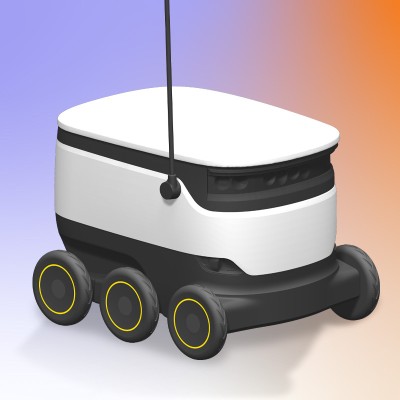
Starship operates a fleet of autonomous sidewalk delivery robots that transport hot food, groceries and industrial supplies using radar, cameras, sensors and machine learning to navigate. It partners with grocery retailers, delivery apps and industrial sites to provide last-mile delivery.
Also known as Starship Technologies · Starship Technologies OÜ · Starship Technologies, Inc.
Founders & leadership
Starship was founded in 2014 by Ahti Heinla.

Investors · 19



Also in the syndicate · 8
Funding
SEC filings, press & company announcements$250M disclosed across 1 of 3 rounds · 2021–2026
- $250MSeries A extensionAug 2026 · 3 sources
Manhattan West (lead), Manhattan West Ventures (lead), 776, Benchmark, Cedar Capital, Cisco, Cisco Investments, EQT, Goanna Capital, NFX, Nvidia, Soma, Soma Capital, Standard Capital
Source ↗
Source: company announcements and press reports — follow each round's link for the claim.
Company profile
researched Sep 2026Starship Technologies is an autonomous delivery vehicle company that develops and operates electrically powered last-mile delivery robots. The robots travel on sidewalks at a maximum speed of about 6 km/h (3.7 mph), weigh roughly 25 kg (55 lb) unloaded and carry up to about 9 kg (20 lb) of goods. They deliver hot food, groceries and industrial supplies, and can be remotely controlled if autonomous operation fails. Customers order via Starship's own app or through retail and delivery-platform partners and unlock the robot on arrival using biometric identity verification.
The company sells into three main segments — grocery retailers, delivery apps and industrial sites — and additionally offers advertising formats such as robot wrapping, digital messaging and product sampling. It reports operations in more than 300 cities and industrial sites, over 10 million completed deliveries, 14 million miles (more than 23 million kilometres) driven, roughly 125,000 daily road crossings and an average global delivery time of 15 minutes. Wikipedia records a fleet of more than 2,000 robots and 7 million deliveries as of October 2024, growing to about 2,700 robots and 9 million deliveries by October 2025.
Starship is headquartered in San Francisco, with engineering operations in Tallinn, Estonia and Helsinki, Finland, and additional offices in London and Milton Keynes in the UK and Hamburg, Germany. Between 2018 and 2021 it worked with Milton Keynes Council on a study that reported its robots prevented 280,000 car journeys and more than 500,000 car miles, saving 137 tonnes of CO2 and 22 kg of NOx over the study period.
Founding story
Starship was founded in 2014 by Skype co-founders Ahti Heinla and Janus Friis, and Starship Technologies OÜ was registered in Tallinn, Estonia on 11 June 2014. The two had taken part in NASA's Centennial Challenge competition to design and build autonomous robots for retrieving geological samples; their team, 'Kuukulgur' (Moon Rover), did not win, but after a meeting in London they began applying the technology they had developed to last-mile delivery. Heinla has described the rover work as suited to rough extraterrestrial terrain and therefore also to uneven urban paving, using radars, cameras and ultrasound sensors together with a system that learned from experience.
Business model
Starship provides autonomous last-mile delivery as a service to partner businesses rather than selling robots outright, integrating with grocery chains, food-delivery apps and industrial sites. Deliveries are ordered through Starship's app or partner platforms. The company also monetises its fleet through advertising products including robot wrapping, digital messaging and product sampling. Management states the business operates with positive gross margins and that autonomous deliveries are more cost-efficient than traditional delivery methods.
Revenue derives from delivery services performed for grocery retailers, delivery platforms and industrial site operators, supplemented by advertising placements on and around the robot fleet. The company states it operates at positive gross margins and that its delivery costs are lower than the human equivalent.
Traction
Company figures cite 300+ cities and industrial sites, 14 million miles (over 23 million km) driven, more than 10 million completed deliveries, 125,000 daily road crossings and a 15-minute average global delivery time. Wikipedia records more than 2,000 robots, 7 million deliveries, 8.5 million miles and 150,000 daily road crossings as of October 2024, and about 2,700 robots, 9 million deliveries, 19 million km driven and 270 locations across seven countries as of October 2025. Other milestones include one million grocery deliveries in Finland with S Group (December 2025), roughly 1 million deliveries a year in Finland, 30+ European cities, 60+ US university campuses, and over 650 tonnes of CO2 emissions avoided in European operations. The company reported around 200 employees in October 2025 and plans to grow its fleet to over 12,000 robots by 2027.
Latest developments
In October 2025 Starship announced a $50 million Series C led by Plural to scale autonomous delivery in US cities, bringing total funding to more than $280 million and setting a target of over 12,000 robots by 2027. Subsequent announcements included an autonomous delivery partnership with Uber Eats (November 2025), one million grocery deliveries in Finland with S Group (December 2025), a partnership with Just Eat (February 2026) followed by a launch in Barnsley described as the UK's first 'Tech Town' (April 2026), passing 10 million deliveries (April 2026), and an expansion of grocery delivery in EU and US markets (June 2026).
▸Full profile — market position, technology, go-to-market, geography, history, risks & controversies
Market position
Starship describes itself as the leading autonomous sidewalk delivery company, citing over 10 million completed deliveries and, at the time of its 2025 Series C, more than five times the volume of all US competitors combined. It states it holds regulatory approvals across seven countries and operates at commercial scale while competitors run pilots. Reported rivals include Serve Robotics, Nuro and Saudi-backed Noon in sidewalk robotics, drone operators such as Manna Aero, Amazon and Wing, and autonomous-vehicle developers including Tesla and Baidu.
Starship points to its scale and operating history — deliveries completed, autonomous miles driven and road crossings — as an accumulated dataset that improves safety, routing and reliability, and cites Level 4 autonomy with 99% autonomous operation. It also claims to have resolved safety validation, multi-country regulatory approval, all-weather reliability and profitability at scale, and says delivery costs are below the human equivalent.
Technology
The robots are battery-powered, operate at what the company describes as Level 4 autonomy and 99% autonomous operation, and use radars, cameras, sensors and machine learning to identify objects and navigate. The sensor suite includes ten stereo and time-of-flight cameras, GPS, ultrasonic sensors, radar and inertial measurement, with feature detection of edges and mapping techniques used to assess navigable terrain. Average battery life is about 18 hours and a typical robot travels around 40 km per day. Loudspeakers allow the robots to communicate with passers-by. Remote human control is available if autonomy fails, and the company says its accumulated delivery dataset is used to improve safety, routing and reliability.
Go-to-market
Starship goes to market through partnerships with retailers and delivery platforms rather than direct consumer acquisition alone, integrating its robots into partner apps to add order volume and lower acquisition costs. Named partners and customers include Co-op, Tesco, Sodexo (George Mason University), Bolt, Grubhub, DoorDash's Wolt, Delivery Hero's foodora, Uber Eats, Just Eat, S Group in Finland and Merck KGaA on the industrial side, plus more than 60 US university campuses. Expansion in the UK requires negotiation with individual local councils, which the company says slows rollout relative to Finland, where national legislation governs pavement robots.
Grocery retail chains, food-delivery apps and marketplaces, industrial and manufacturing sites needing internal transport of spare parts, mail and samples, and university campuses; end users are consumers, students and staff receiving groceries, hot food and supplies.
Geography
Headquarters in San Francisco, with engineering in Tallinn, Estonia and Helsinki, Finland, and offices in London, Milton Keynes and Hamburg. Services are offered across the United States, United Kingdom, Germany, Estonia and Finland; as of October 2025 the company reported 270+ locations across seven countries, including 30+ European cities and 60+ US university campuses. UK locations include Manchester, Leeds, Cambridge, Milton Keynes, Northampton and Barnsley.
History
Starship Technologies OÜ was registered in Tallinn in June 2014, and Starship Technologies, Inc., a Delaware corporation, was registered in San Francisco in September 2016. Pilot services launched in 2016 in markets including the US and UK, with commercial services from 2017; by 2017 robots were driving in Estonia without an accompanying safety walker. In April 2018 Starship launched autonomous delivery in Milton Keynes with Co-op and Tesco, and in January 2019 it partnered with Sodexo to deploy 25 robots at George Mason University, expanding to six further US universities in 2019 and two more in 2020. In March 2020 it became the first robot delivery service to operate in a British town centre in Central Milton Keynes, and by November 2020 described Milton Keynes as hosting the world's largest autonomous robot fleet. Following the onset of the COVID-19 pandemic in March 2020 the company laid off an undisclosed number of employees and rehired many of them roughly six months later. Finland services launched in 2022, and by March 2023 the company was delivering in seven British cities. Leadership changed several times: Allan Martinson was COO from 2014 to 2018; in 2018 Heinla moved from CEO to CTO and former Airbnb executive Lex Bayer became CEO; Alastair Westgarth, former CEO of Google X's Loon, was hired as CEO in June 2021; Westgarth left and Heinla returned as CEO in December 2023. The original London headquarters moved to San Francisco in 2018.
Risks & controversies
In June 2026 the British pedestrian charity Living Streets raised concerns with the government about the use of delivery robots on congested pavements in response to Starship's expansion plans. The company also cites inconsistent regulation as a constraint, noting it must negotiate with individual UK councils, which has limited its UK fleet relative to Finland, where national pavement-robot legislation exists. In March 2020, after the start of the COVID-19 pandemic, Starship laid off an undisclosed number of employees, later rehiring many. Wikipedia's article on the company carries a maintenance notice flagging promotional content.
Compiled by commissioned research from 8 cited public sources — announcements, filings, and press listed under research sources below.
Key figures
latest reportedCompany-reported or press-reported figures, each dated to when it was claimed — not independently audited.
Timeline · 19
launches, deals, and filingsStarship announced completion of a $50 million round led by Plural, with participation from Karma.vc, Latitude, Coefficient Capital, SmartCap and Skaala, to expand into US urban markets and grow its fleet.
$50M source ↗
Dated company events from announcements, filings, and press; legal rows summarize public dockets and regulator releases.
In the news
 Earth Observation Essentials: August 24, 2026newsletter.terrawatchspace.com · Aug 2026
 Starcloud Raises $250M at $2.3B Valuation to Put More NVIDIA GPUs in Orbit - WOWTALEen.wowtale.net · Aug 2026
 Starcloud Raises $250M For Orbital AI Data Centers, Secures Launch Capacity Amid SpaceX Transitionbitcoinworld.co.in · Aug 2026
 Starcloud raises $250 million for orbital data centers as launch options dry up | TechCrunchtechcrunch.com · Aug 2026
 Muon Space raises $250 million to ramp up satellite production - SpaceNewsspacenews.com · Aug 2026
▸Research sources · 8
primary sources listed
- Starshipstarship.co · web
8 public sources were cited for this profile; the first-party ones are listed here.
Frequently asked questions
- What does Starship do?
- Starship Technologies operates autonomous sidewalk delivery robots carrying groceries, hot food and industrial supplies.
- Who founded Starship?
- Starship was founded by Ahti Heinla in 2014.
- Who are Starship's investors?
- Starship's investors include Morpheus Ventures, Benchmark, Cedar Capital, Cisco, Cisco Investments, EQT, Manhattan West, NFX and 3 more.
- How much funding has Starship raised?
- Starship has disclosed $250M raised across 1 of its 3 known rounds.