 Fundraising Fox
PayPal
NASDAQ: PYPLSan Jose, US · Founded 1998 · 38,780 employees on LinkedIn · Public · 13 known investors
Find your way into PayPal
Sign up to see every warm intro you have to PayPal
- Paths you didn't know you had: your email and LinkedIn already hold routes to the PayPal team. We find them for you
- 2nd- and 3rd-degree connections: the friend-of-a-friend routes that take hours to manually find through your inbox or LinkedIn
- Answers now, not in days: momentum is everything in a raise. Skip asking around whether someone knows someone
Days of research, done the moment you sign in, with every route ranked by how warm it is.
PayPal Ads is an advertising business that uses transaction data from PayPal's payment network to offer targeted onsite, offsite, and offer-based ads for businesses. It provides cross-merchant insights and audience reach across PayPal and Venmo for advertisers seeking to grow sales.
Also known as Confinity · Fieldlink · PayPal · PayPal Holdings, Inc. · X.com
Founders & leadership
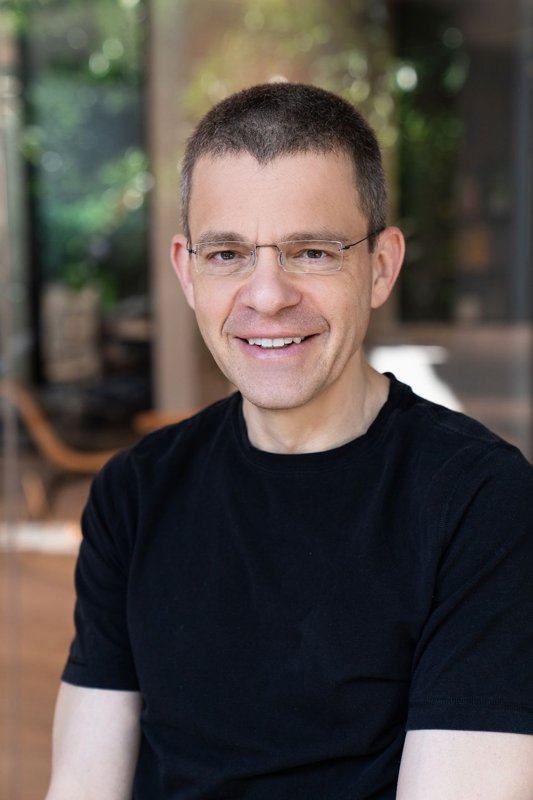
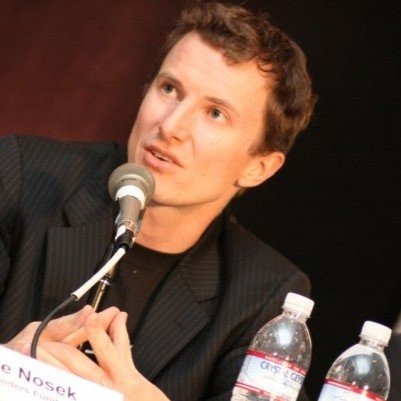
PayPal was founded in 1998 by Max Levchin, Peter Thiel, Luke Nosek, Ken Howery, and Elon Musk.






Investors · 13

How we know: a-star.co · open dataset · 5k.vc investor directory · Not right? Tell us
How we know: BlueRun Ventures's portfolio page · Not right? Tell us
How we know: Clearstone Venture Partners's portfolio page · a partner's Signal profile · open dataset · 5k.vc investor directory · Not right? Tell us
How we know: DG Daiwa Ventures's portfolio page · Not right? Tell us


How we know: plugandplaytechcenter.com · Not right? Tell us


How we know: open dataset · 5k.vc investor directory · Not right? Tell us

How we know: press coverage · Not right? Tell us

How we know: press coverage · Not right? Tell us

How we know: press coverage · Not right? Tell us
How we know: press coverage · Not right? Tell us

How we know: press coverage · Not right? Tell us
Company profile
researched Aug 2026PayPal Holdings, Inc. is an American multinational financial technology company headquartered in San Jose, California, that operates an online payments system available in the majority of countries supporting online money transfers. Founded in 1998 as Confinity, it pioneered sending money digitally using an email address rather than checks or money orders, and today processes payments for online vendors, auction sites and other merchants for a fee. It trades on Nasdaq under the ticker PYPL and is a component of the Nasdaq-100 and S&P 500.
The company's subsidiaries and brands include Braintree, PayPal Honey, Paydiant, PayPal Credit, Venmo, Xoom and Zettle, alongside a Buy Now, Pay Later consumer installment product. Reported 2025 financials include revenue of $33.2 billion, operating income of $6.07 billion, net income of $5.23 billion, total assets of $80.2 billion and total equity of $20.3 billion, with about 23,800 employees.
Since March 2026, when Enrique Lores became president and CEO (with John Donahoe as chairman), PayPal has pursued a turnaround centered on cost reduction and AI adoption. The plan includes reorganizing into three business segments, removing three organizational layers, migrating from its data center to the cloud, targeting at least $1.5 billion in gross run-rate savings over two to three years, and, according to a May 2026 Bloomberg report, eliminating about 20% of the workforce, roughly 4,500 jobs. In July 2026 the company became a reported takeover target of a joint Stripe and Advent International bid.
Founding story
Max Levchin, Peter Thiel and Luke Nosek founded the company in December 1998 as Fieldlink, subsequently renamed Confinity, initially to develop security software for hand-held devices. After that business model failed to gain traction, the team pivoted to a digital wallet and launched the first version of the PayPal electronic payments system in 1999. In March 2000 Confinity merged with Elon Musk's X.com; Musk was optimistic about the money transfer business Confinity was building, and after leadership changes in 2000 the combined company concentrated exclusively on payments and adopted the PayPal name in June 2001.
Business model
PayPal operates an online payments system that acts as an electronic alternative to paper instruments such as checks and money orders, and serves as a payment processor for online vendors, auction sites and other commercial users, charging fees on transactions. Its portfolio spans branded checkout, the Venmo peer-to-peer payments platform, a Buy Now, Pay Later consumer credit service, merchant payment services and crypto. Following a 2026 restructuring, operations are organized into three segments: Checkout Solutions & PayPal; Consumer Financial Services & Venmo; and Payment Services & Crypto.
Revenue is generated primarily from fees charged on payment transactions processed for online vendors, auction sites and other commercial users, supplemented by consumer credit products such as Buy Now, Pay Later and PayPal Credit. Reported 2025 revenue was $33.2 billion, with Q2 2026 revenue of $8.68 billion, up 5% year-over-year.
Traction
By 2010, PayPal had over 100 million active user accounts across 190 markets and 25 currencies. Total payment volume processed reached $145 billion in 2012, when PayPal accounted for 40% of eBay's revenue ($1.37 billion in Q3 2012). Revenue was $1.8 billion in 2007 and $33.2 billion in 2025, with Q2 2026 revenue of $8.68 billion and branded checkout total payment volume up 2%.
Latest developments
On 28 July 2026, PayPal reported second-quarter results that exceeded Wall Street expectations: adjusted EPS of $1.38 versus $1.28 estimated, revenue up 5% year-over-year to $8.68 billion versus $8.47 billion estimated, adjusted free cash flow of $1.8 billion, and net income of $1.1 billion, down 12% year-over-year; shares rose 4% to $58.32. Separately, news reports said Stripe and private equity firm Advent International made a joint offer to acquire PayPal at $60.50 per share, valuing it at roughly $53 billion (reported as $53.4 billion by TechCrunch). Reuters reported the board is evaluating the bid but views it as undervaluing the company; PayPal, Stripe and Advent declined to comment. CEO Enrique Lores declined to address the offer directly but said the company would carefully consider paths creating superior shareholder value, and reported progress on the turnaround including $1.5 billion in targeted gross run-rate savings, removal of three organizational layers and cloud migration. Cantor valued PayPal closer to $70 per share.
▸Full profile — market position, technology, go-to-market, geography, history, risks & controversies
Market position
PayPal is described as a digital payments giant and pioneer, ranked 143rd on the 2022 Fortune 500 by revenue. It faces intense competition in a highly competitive digital payments market, including from Apple and Google payment services and from Stripe. Growth in its branded checkout has slowed and its stock fell more than 25% over a year to mid-2026, prompting a turnaround program and takeover interest.
PayPal was an early mover in digital payments, enabling users to send money securely using an email address instead of checks or money orders. It combines a widely recognized consumer checkout button with Venmo, Buy Now Pay Later credit, merchant processing and crypto services. Its founders and early employees, the so-called "PayPal mafia" including Elon Musk and Peter Thiel, went on to build or fund other Silicon Valley companies.
Technology
PayPal runs an online payments platform and payment processing infrastructure, including gateway technology from Braintree and risk/fraud tooling acquired with Fraud Sciences and VeriSign's payment solution. Its 2026 modernization program involves migrating from its own data center to the cloud, building a more modular and scalable architecture, reducing platform complexity, and adopting AI in coding, customer service, support operations and risk management. Management expects digital identity and agent payments to become increasingly meaningful contributors.
Go-to-market
PayPal reaches consumers through its branded checkout button on merchant websites and through consumer apps and services such as Venmo and Buy Now, Pay Later, while serving merchants via payment processing, gateway (Braintree) and in-store point-of-sale products. Historically it grew through distribution on eBay, where it became the default payment method for most users, and through partnerships with card networks including MasterCard and Discover.
Consumers making online and in-store purchases and peer-to-peer transfers, and merchants including online vendors, auction sellers and retailers that accept digital payments; the Venmo platform is described as especially popular among young people.
Geography
Headquartered in San Jose, California, PayPal operates almost worldwide, supporting online money transfers in the majority of countries. By 2010 it had over 100 million active accounts across 190 markets and 25 currencies. It employs about 23,800 people globally, including many in California.
History
The company was established in December 1998 as Fieldlink by Max Levchin, Peter Thiel and Luke Nosek, and renamed Confinity. The first PayPal electronic payments system launched in 1999. In March 2000, Confinity merged with X.com, an online financial services company founded in March 1999 by Elon Musk, Harris Fricker, Christopher Payne and Ed Ho. Bill Harris left as president and CEO in May 2000; in October 2000 Musk was replaced as CEO by Peter Thiel and the company narrowed its focus to payments. Renamed PayPal in June 2001, it listed on NASDAQ in 2002 at $13 per share, raising over $61 million, and was acquired by eBay on 3 October 2002 for $1.5 billion in stock. As an eBay subsidiary it acquired VeriSign's payment solution (2005), Fraud Sciences ($169 million, January 2008), Bill Me Later (November 2008), and IronPearl and Braintree (2013), and formed partnerships with MasterCard (2007) and Discover (2012). eBay spun PayPal off to shareholders in 2015, restoring its independence.
Risks & controversies
PayPal faces slowing growth in branded checkout, a stock decline of more than 25% over a year to mid-2026, and intensifying competition from Apple, Google and other payment providers. An unsolicited takeover approach from Stripe and Advent International that the board reportedly considers undervalued introduces strategic uncertainty, and analysts note the deal could face regulatory and financing hurdles. The turnaround entails large-scale job cuts of about 4,500 positions. Historically, the company was the target of denial-of-service attacks by alleged Anonymous members in December 2010 after it stopped processing donations to WikiLeaks, leading to charges against fourteen individuals and guilty pleas by thirteen in 2013.
Compiled by commissioned research from 3 cited public sources — announcements, filings, and press listed under research sources below.
Key figures
latest reportedCompany-reported or press-reported figures, each dated to when it was claimed — not independently audited.
Founder mafia
The PayPal mafia →131 people who came through PayPal went on to found or lead other companies.






Acquisitions · 1
Early investors' stakes continue via these dealsZettle (a PayPal service) provides a point-of-sale system combining card readers and terminals with a free POS app for accepting in-person and contactless payments. It targets small businesses and enterprises with tools for inventory management, sales reporting, payment processing, and working capital loans.
Timeline · 24
launches, deals, and filingsAdjusted EPS of $1.38 vs. estimates of $1.28; revenue up 5% year-over-year to $8.68 billion vs. estimates of $8.47 billion; net income of $1.1 billion, down 12% year-over-year. Shares rose 4% to $58.32.
According to news reports citing anonymous sources, the joint bid values PayPal at roughly $53 billion ($53.4 billion per TechCrunch). PayPal's board is reported to be evaluating the bid but considers it to undervalue the company; the offer could face regulatory and financing hurdles. PayPal, Stripe and Advent declined to comment.
$53B source ↗
Bloomberg reported PayPal plans to eliminate roughly 4,500 jobs over the next two to three years.
The business was restructured into Checkout Solutions & PayPal; Consumer Financial Services & Venmo; and Payment Services & Crypto, alongside an AI-focused cost-savings program targeting at least $1.5 billion in gross run-rate savings over two to three years.
Ranked 143rd on the 2022 Fortune 500 list of largest U.S. corporations by revenue.
IronPearl was a Palo Alto startup offering engagement software; Braintree was a Chicago-based payment gateway.
Allowed PayPal payments at any of the seven million stores in the Discover network.
The December 2010 attacks followed PayPal halting donations to WikiLeaks; on 5 December 2013, 13 of the 'PayPal 14' pleaded guilty to misdemeanor and felony charges.
Fraud Sciences was a privately held Israeli start-up that developed online risk tools.
$169M source ↗
The partnership led to development and launch of the PayPal Secure Card service, software allowing customers to pay on websites that do not accept PayPal directly.
PayPal became a wholly owned subsidiary of eBay, valued at $1.5 billion in eBay stock.
$1.5B source ↗
PayPal listed on NASDAQ at $13 per share, generating over $61 million.
$61M source ↗
In the same month, Musk decided X.com would terminate its other internet banking operations and focus on payments.
Harris and Musk disagreed about the potential of the money transfer business; Harris departed in May 2000.
Confinity merged with X.com, an online financial services company founded in March 1999 by Elon Musk, Harris Fricker, Christopher Payne and Ed Ho.
Max Levchin, Peter Thiel and Luke Nosek established the company in December 1998 as Fieldlink, later renamed Confinity; it initially developed security software for hand-held devices before switching focus to a digital wallet.
Dated company events from announcements, filings, and press; legal rows summarize public dockets and regulator releases.
▸Research sources · 3
primary sources listed
- Once high-flying PayPal becomes a takeover target as it attempts a turnaround - Los Angeles Timeslatimes.com · web
3 public sources were cited for this profile; the first-party ones are listed here.
Frequently asked questions
- What does PayPal do?
- PayPal Holdings is a Nasdaq-listed digital payments company operating online checkout, Venmo, BNPL and merchant services worldwide.
- Who founded PayPal?
- PayPal was founded by Max Levchin, Peter Thiel, Luke Nosek, Ken Howery, Elon Musk in 1998.
- Who are PayPal's investors?
- PayPal's investors include A*, BlueRun Ventures, Clearstone Venture Partners, DG Daiwa Ventures, Mercury Fund, Plug and Play Ventures, Sequoia Capital, Upfront Ventures and 5 more.
- Is PayPal publicly traded?
- Yes — PayPal trades on NASDAQ under the ticker PYPL.
- Where is PayPal headquartered?
- PayPal is headquartered in San Jose, US.