 Fundraising Fox
Harness
Unicorn · $5.5BSan Francisco, US · Founded 2017 · 25 known investors
Find your way into Harness
Sign up to see every warm intro you have to Harness
- Paths you didn't know you had: your email and LinkedIn already hold routes to the Harness team. We find them for you
- 2nd- and 3rd-degree connections: the friend-of-a-friend routes that take hours to manually find through your inbox or LinkedIn
- Answers now, not in days: momentum is everything in a raise. Skip asking around whether someone knows someone
Days of research, done the moment you sign in, with every route ranked by how warm it is.
Harness provides software delivery automation and infrastructure for engineering teams to deploy code reliably and efficiently. The platform serves the global software development market.
Also known as Harness Inc. · Harness.io
Founders & leadership
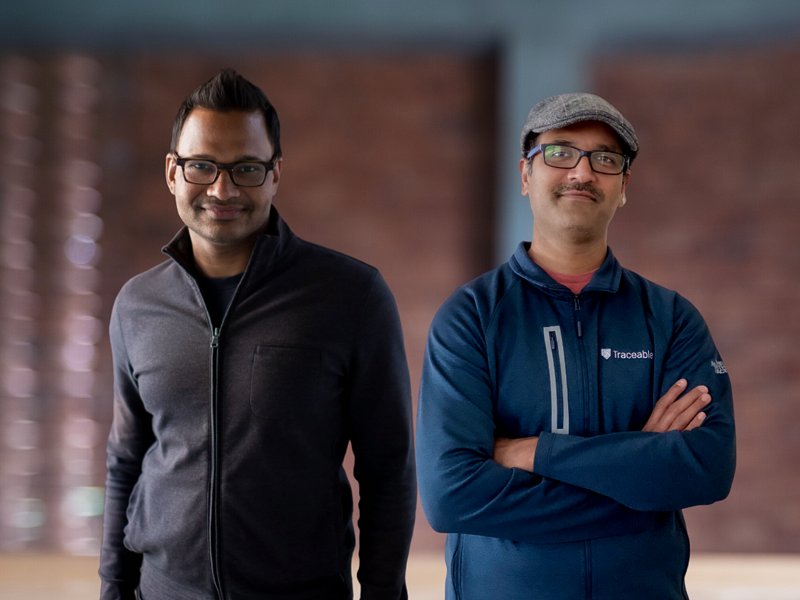
Harness was founded in 2017 by Jyoti Bansal and Rishi Singh.
Investors · 25
How we know: Alkeon Innovation's portfolio page · Not right? Tell us
How we know: Artisanal Ventures's portfolio page · Not right? Tell us

How we know: Battery Ventures's portfolio page · open dataset · 5k.vc investor directory · Not right? Tell us
How we know: Collective Liquidity's portfolio page · Not right? Tell us

How we know: Crosslink Capital's portfolio page · the VCSheet dataset · open dataset · 5k.vc investor directory · Not right? Tell us

How we know: the VCSheet dataset · Not right? Tell us

__Twitter.png)

How we know: Geodesic Capital's portfolio page · Not right? Tell us
How we know: GV (Google Ventures)'s portfolio page · open dataset · 5k.vc investor directory · Not right? Tell us

How we know: Harmonic Growth Partners's portfolio page · Not right? Tell us

How we know: IVP (Institutional Venture Partners)'s portfolio page · open dataset · 5k.vc investor directory · Not right? Tell us

How we know: the VCSheet dataset · manaventures.vc · Not right? Tell us
How we know: Menlo Ventures's portfolio page · the VCSheet dataset · research · harness.io · open dataset · 5k.vc investor directory · Not right? Tell us
How we know: open dataset · 5k.vc investor directory · Not right? Tell us
How we know: Rally Ventures Management, Llc's portfolio page · the VCSheet dataset · open dataset · 5k.vc investor directory · Not right? Tell us

How we know: Sorenson Ventures's portfolio page · the VCSheet dataset · Not right? Tell us

How we know: U First Capital's portfolio page · Not right? Tell us
How we know: Unusual Ventures's portfolio page · the VCSheet dataset · research · harness.io · open dataset · 5k.vc investor directory · Not right? Tell us

How we know: funding news · finance.yahoo.com · Not right? Tell us
How we know: open dataset · 5k.vc investor directory · Not right? Tell us
How we know: open dataset · 5k.vc investor directory · Not right? Tell us

How we know: funding news · calcalistech.com · Not right? Tell us

Funding
SEC filings, press & company announcements$6M disclosed across 1 of 2 rounds · 2025
- $6MSeed roundOct 2025 · 2 sources
Blumberg Capital (lead), Gradient Ventures (lead)
Source ↗
Source: company announcements and press reports — follow each round's link for the claim.
Valuation · disclosed
Disclosed eventsSource: SEC prospectus filings, and round valuations the company or its investors disclosed — follow each entry's link for the claim.
Company profile
researched Aug 2026Harness operates a software delivery platform that automates the stages of the software development lifecycle that follow code authoring. Its modules span continuous delivery and GitOps, continuous integration, an internal developer portal built on Backstage, infrastructure-as-code management, database DevOps and an artifact registry. A testing and reliability group covers AI test automation with self-healing tests, resilience/chaos testing with more than 225 pre-built experiments, feature management and experimentation via feature flags, and AI-assisted incident triage (AI SRE). Security modules include application security testing, web application and API protection, and discovery and protection of AI assets. A cost group provides cloud and AI cost management plus engineering-effectiveness analytics using DORA and SPACE frameworks. The platform advertises more than 100 integrations and can be adopted whole or module by module.
Third-party description characterizes Harness as a platform combining CI and CD with cloud-native deployment automation, progressive deployment strategies such as canary and blue/green, real-time deployment analytics, service reliability management tracking SLIs, chaos engineering, IaC integration, security testing orchestration including SAST and software composition analysis, and GitOps workflows tied to version control for auditability. Harness also maintains Harness Open Source, an open source developer platform on GitHub with source code management, CI/CD pipelines, hosted developer environments (Gitspaces) and artifact registries; the project is positioned as the next generation of Drone, with Drone preserved as a feature branch.
The company states 1,200+ employees, 1,000+ customers and $570M in funding, and reported being on track to exceed $250M ARR in 2025 with growth above 50%.
Founding story
Jyoti Bansal co-founded Harness in October 2017 after selling AppDynamics to Cisco for $3.7 billion, motivated by his view that the principal engineering bottleneck lies not in writing code but in the testing, verification, security, deployment and governance steps that follow. Harness was developed within BIG Labs (Bansal Innovation Group), the startup studio Bansal launched in October 2017, and was its first company.
Business model
Harness sells access to its software delivery platform on a subscription basis, with customers able to deploy the full platform or individual modules alongside existing tooling.
Harness offers three subscription tiers: an Open Source plan at no cost including code repository, continuous integration, continuous delivery, cloud development environments and artifact registry; a Free plan at $0 adding feature management and experimentation, infrastructure as code management, cloud cost management, chaos engineering and 2,000 monthly cloud credits; and an Enterprise plan without public pricing that adds service reliability management, software engineering insights and internal developer portals. A third-party source cites Vendr.com estimating annual Enterprise cost of $23K–$41K for a 200-employee organization.
Traction
Harness reports more than 1,000 customers, 1,200+ employees, over 100 integrations and being on track to exceed $250 million in ARR in 2025 with growth of more than 50%. Its open source repository has roughly 38,100 GitHub stars and 3,400 forks. Customer-reported outcomes include United Airlines accelerating deployment times by 75% and migrating 80% of workloads to cloud, Morningstar achieving 5x faster builds and consolidating 36,000 pipelines to 50 templates, Keller Williams increasing deployment frequency 6x, National Australia Bank reducing build failures by 67%, Citibank cutting deployment times to 7 minutes across 20,000 engineers, and Ancestry reporting an 80-to-1 reduction in developer effort.
Latest developments
In December 2025 Harness announced a $240 million Series E financing valuing the company at $5.5 billion, consisting of a $200 million investment led by Goldman Sachs and a planned $40 million tender offer with participation from IVP, Menlo Ventures and Unusual Ventures. Alongside the raise the company described expanding its platform into agentic AI workflows grounded in its knowledge graph and orchestration engine. Bill Koefoed, previously CFO of OneStream, became Harness CFO in April 2026. Platform updates in 2026 included native AWS CDK support in infrastructure as code, the introduction of SAST and software composition analysis, OPA-based GitOps governance, expanded chaos fault libraries for Linux and Windows, disaster recovery management entities and APIs, and authentication and permission hardening.
▸Full profile — market position, technology, go-to-market, geography, history, risks & controversies
Market position
Harness reports 1,000+ customers and 1,200+ employees, with named enterprise users including Citi, United Airlines, Ancestry, Ulta Beauty, Morningstar, Keller Williams and National Australia Bank. It competes in continuous delivery with Armory, which it agreed to acquire in December 2023, and is compared with Octopus Deploy.
Harness positions its AI capabilities around three components: a knowledge graph and context model of an organization's architecture, pipelines, policies, services and history; a set of AI agents that evaluate, prioritize and automate post-code steps including testing, verification, security, governance and delivery; and an orchestration engine intended to make AI-driven actions consistent and repeatable. The company presents itself as a unified platform spanning delivery, testing, security and cost rather than a single-purpose DevOps tool, a framing echoed by customers.
Technology
The platform is built on an orchestration engine for pipelines together with a knowledge graph and context model of an organization's systems, on top of which AI agents automate post-code workflows. Harness Open Source is written primarily in Go with a Node/Yarn-built web front end, distributed as a Docker image, running pipelines in Docker containers and exposing a Swagger-generated API client.
Go-to-market
Harness sells to enterprise engineering organizations through a direct sales and go-to-market organization led by a President of Go To Market and a Chief Revenue Officer, supported by customer case studies from large enterprises. It offers a free tier and an open source distribution as entry points, with 2,000 monthly cloud credits on the free plan, and lists its cloud cost management product on the AWS Marketplace.
DevOps, platform engineering and software engineering teams, ranging from individuals and small teams using the open source and free tiers to large enterprises in banking, airlines, retail, media and consumer internet.
Geography
Harness launched in San Francisco in 2017 and serves customers including large global enterprises.
History
Harness was co-founded in October 2017 by Jyoti Bansal, who previously founded AppDynamics, and was launched in San Francisco as the first startup produced by his startup studio BIG Labs. Jyoti Bansal serves as CEO and co-founder Rishi Singh is a co-founder and board member. The company agreed in December 2023 to acquire competitor Armory for $7 million in an all-cash deal, and previously acquired CI vendor Drone.io. In February 2025 Harness merged with Traceable, an API security company also co-founded by Bansal, integrating Traceable's technology into the Harness platform; the merger was completed in March 2025. In December 2025 the company announced a $240 million Series E financing at a $5.5 billion valuation.
Risks & controversies
Enterprise pricing is not publicly disclosed, and third-party cost figures are estimates. The company's acquisition of Armory was reported at $7 million, far below Armory's prior valuation of more than $200 million, in a market environment described as forcing distressed sales among competing startups; both companies declined to comment on the deal at the time.
Compiled by commissioned research from 8 cited public sources — announcements, filings, and press listed under research sources below.
Key figures
latest reportedCompany-reported or press-reported figures, each dated to when it was claimed — not independently audited.
Related companies · 7





Companies working in the same space as Harness.
Timeline · 6
launches, deals, and filingsBill Koefoed, previously CFO of OneStream from November 2019 to December 2025 and earlier CFO of Blue Nile, BCG Digital Ventures and Puppet, became CFO of Harness in April 2026.
Harness announced a $240 million Series E financing comprising a $200 million investment led by Goldman Sachs and a planned $40 million tender offer with participation from IVP, Menlo Ventures and Unusual Ventures, valuing the company at $5.5 billion.
$240M source ↗
Harness merged with API security company Traceable and integrated Traceable's technology into the Harness platform; the merger was completed in March 2025.
Harness acquired continuous integration project Drone.io and committed to open source; Harness Open Source is positioned as the next generation of Drone, with Drone retained as a feature branch.
Harness agreed to buy continuous delivery competitor Armory in an all-cash deal reported at $7 million; Armory had previously been valued at more than $200 million and raised over $80 million. Both companies declined to comment.
$7M source ↗
Harness was co-founded in October 2017 by Jyoti Bansal and launched in San Francisco as the first company out of the BIG Labs startup studio.
Dated company events from announcements, filings, and press; legal rows summarize public dockets and regulator releases.
▸Research sources · 8
primary sources listed
- Harnessharness.io · web
8 public sources were cited for this profile; the first-party ones are listed here.
Frequently asked questions
- What does Harness do?
- Harness builds an AI-driven software delivery platform covering CI/CD, testing, security and cloud cost management.
- Who founded Harness?
- Harness was founded by Jyoti Bansal, Rishi Singh in 2017.
- Who are Harness's investors?
- Harness's investors include Alkeon Innovation, Artisanal Ventures, Battery Ventures, Collective Liquidity, Crosslink Capital, Eniac Ventures, Fika, Gaingels and 17 more.
- How much funding has Harness raised?
- Harness has disclosed $6M raised across 1 of its 2 known rounds.
- Where is Harness headquartered?
- Harness is headquartered in San Francisco, US.