 Fundraising Fox
Clever
AcquiredYC S12YC Top CompanySan Francisco, US · Founded 2012 · 210 employees · 18 known investors
Find your way into Clever
Sign up to see every warm intro you have to Clever
- Paths you didn't know you had: your email and LinkedIn already hold routes to the Clever team. We find them for you
- 2nd- and 3rd-degree connections: the friend-of-a-friend routes that take hours to manually find through your inbox or LinkedIn
- Answers now, not in days: momentum is everything in a raise. Skip asking around whether someone knows someone
Days of research, done the moment you sign in, with every route ranked by how warm it is.
Clever provides a data integration platform for schools that connects student information systems with educational applications and tools. The company serves K-12 schools and districts seeking to streamline data access and interoperability across their technology ecosystems.
Also known as Clever Inc. · getclever.com
Founders & leadership· Y Combinator alumni (S12)
Clever was founded in 2012 by Dan Carroll, Rafael Garcia, and Tyler Bosmeny.




Investors · 18

How we know: Floodgate's portfolio page · the VCSheet dataset · open dataset · 5k.vc investor directory · Y Combinator's founder network · Not right? Tell us

How we know: GSV Ventures's portfolio page · the VCSheet dataset · Not right? Tell us

How we know: Homebrew's portfolio page · Y Combinator's founder network · Not right? Tell us

How we know: Y Combinator's founder network · initialized.com · open dataset · 5k.vc investor directory · Not right? Tell us

How we know: Kapor Capital's portfolio page · Y Combinator's founder network · Not right? Tell us

How we know: Lightspeed Venture Partners's portfolio page · open dataset · 5k.vc investor directory · Y Combinator's founder network · Not right? Tell us

How we know: Y Combinator's founder network · sequoiacap.com · Not right? Tell us

How we know: Streamlined Ventures's portfolio page · the VCSheet dataset · Y Combinator's founder network · Not right? Tell us

How we know: Ulu Ventures's portfolio page · Not right? Tell us

How we know: Uncork Capital's portfolio page · open dataset · 5k.vc investor directory · Y Combinator's founder network · Not right? Tell us

How we know: the Y Combinator directory · research · ycombinator.com · open dataset · 5k.vc investor directory · Not right? Tell us

How we know: funding news · Y Combinator's founder network · Not right? Tell us

How we know: Y Combinator's founder network · Not right? Tell us
How we know: Y Combinator's founder network · open dataset · 5k.vc investor directory · Not right? Tell us

How we know: Y Combinator's founder network · Not right? Tell us
How we know: funding news · Y Combinator's founder network · Not right? Tell us
Company profile
researched Aug 2026Clever is an American educational technology company headquartered in San Francisco that operates an identity and data-integration platform for K-12 education. The platform stores and syncs student information from school databases, notably student information systems (SIS), and provides single sign-on access to learning applications. Students can log in with a password or a Clever Badge and are then automatically signed in to connected apps from a personalized homepage that shows only the resources relevant to them.
The current product line is organized around three areas: data and access (Secure Sync rostering, single sign-on, Clever Badges), identity and security (identity management, secure password management, multi-factor authentication and a described layered security approach), and a digital classroom layer consisting of the Clever Portal and Clever Analytics. Clever Portal gives students, teachers and staff one login for digital resources, lets teachers build shareable Teacher Pages organizing apps, links and PDFs for specific classes, and includes troubleshooting tools so teachers can resolve student login issues without district support calls. Clever Analytics reports login frequency and engagement, including active minutes per student across edtech resources, down to school and individual student level. The company also sells services including Clever Training, consulting and premium support, and publishes research such as the Cybersecure 2026 Report and the Classroom of the Future Report.
On the supply side, Clever runs a partner program (Clever Complete for Application Partners, Clever LMS Connect, SSO, an app store and developer documentation) so that education software vendors integrate once and reach connected districts. Sources describe the underlying approach as a standardized API that replaced bespoke per-application integrations with district SIS platforms.
Founding story
Clever was founded in 2012 in San Francisco by three Harvard graduates: Tyler Bosmeny, Dan Carroll and Rafael Garcia. Carroll, a former Teach For America teacher who later served as Director of Data & Technology at STRIVE Prep in Denver, Colorado, originated the idea after repeatedly encountering the need for a custom data integration between each new education application and a district's student information system. He brought the problem to Bosmeny, who had a sales and business background, and Garcia, an engineer; according to one account Bosmeny said they quit their jobs to build a platform to solve the problem for Carroll's schools. The team was accepted into Y Combinator's Summer 2012 batch and positioned the product as a 'Twilio for education' — a standardized REST API abstracting integration with many different SIS platforms. The company launched publicly in late June 2012; one source reports Paul Graham challenged the team to sign 40 schools before Demo Day and they reached 1,000. Bosmeny became CEO, Garcia CTO and Carroll chief product officer.
Business model
Clever operates a two-sided platform between school districts and education application vendors. Multiple core district-facing products — including Secure Sync rostering, single sign-on, Clever Badges, the classroom portal, the help center and Clever Academy — are marketed as free, while identity and security modules, analytics, training, consulting and premium support are additional offerings with published pricing pages for both schools and partners. One source characterizes the model as free for districts to maximize adoption, with monetization concentrated on the developer/application-partner side, and notes this capped revenue at roughly $44 million in projected 2021 revenues despite reaching 65% of the addressable district market.
Revenue is described as coming primarily from the application-partner (developer-pays) side of the marketplace rather than from districts, which access core rostering and SSO products for free; Clever also lists paid services such as consulting, training and premium support, and separate pricing pages for schools and for application partners.
Traction
Reported traction includes approximately half of US public schools using the platform by 2017, 89,000 schools and 65% of US K-12 districts with about 20 million monthly users by 2021, projected 2021 revenue of about $44 million on a cash-flow-neutral basis, and an exit valued at up to $500 million. Employee figures reported by sources range from 'more than 100' in the YC profile text to 140 (Built In San Francisco) and a listed team size of 210 (Y Combinator). The company also cites customer proof points such as a California district (Riverside) case study and teachers saving 200,000 hours in a school year through Clever Badges.
Latest developments
Clever's site markets an identity-platform positioning with layered security, identity management, secure password management and multi-factor authentication, and promotes a Cybersecure 2026 Report drawing on more than 500 technology leaders. Recent published content covers classroom MFA, student data privacy and back-to-school security. Leadership has been under CEO Trish Sparks since 2022, while co-founder Tyler Bosmeny is listed in internal records as a board member and strategic advisor and co-founder Rafael Garcia has moved on to found Kernel.
▸Full profile — market position, technology, go-to-market, geography, history, risks & controversies
Market position
Sources describe Clever as the dominant infrastructure layer in US K-12 edtech during the 2010s: about half of US public schools by 2017 and 65% of US K-12 districts with roughly 20 million monthly active students and 89,000 schools by 2021. One source frames the company's central tension as a mismatch between market dominance and financial capture, since the free-for-districts model limited revenue relative to its market share. Since 2021 it has operated as an independently branded unit of Kahoot!.
Clever positions its single sign-on as education-specific: access is personalized from SIS data so each student sees only relevant resources, and young students can log in with Clever Badges instead of passwords. A single integration is said to connect all needed data and accounts across thousands of applications, benefiting both districts and app vendors. Historically its differentiator was replacing many one-off SIS integrations with one standardized API, achieving broad district coverage by making core products free.
Technology
The platform provides a standardized integration layer between school student information systems and third-party learning applications, replacing bespoke per-app integrations. Components include Secure Sync rostering, single sign-on across thousands of resources, Clever Badges for young learners, LMS Connect, identity management, secure password management and multi-factor authentication, and analytics that measure logins and active minutes per student. Personalization of each user's portal is driven directly by SIS data. Historically the product was described as a standardized REST API positioned as a 'Twilio for education'.
Go-to-market
Clever sells to districts through free core rostering and single sign-on products that drive adoption, supported by resource hubs segmented for district admins, teachers and school tech leads, case studies, a resource library, free Clever Academy training and blog/report content marketing (e.g., the Cybersecure and Classroom of the Future reports). On the supply side it recruits application partners through a sign-up flow, developer documentation, an app store, partner pricing and partner events (NEXT@ Clever), and highlights co-marketed integrations with Google, HMH, McGraw Hill and Prodigy.
K-12 school districts, individual schools, district administrators, school technology leads, teachers and students in the United States, plus education software vendors and companies entering the education market that want to integrate with district data. The site also lists regional offerings for Canada, the UK and Ireland, and Australia and New Zealand.
Geography
Headquartered in San Francisco, California, with the bulk of usage in United States K-12 districts. The website advertises Clever Global offerings for Canada, the UK and Ireland, and Australia and New Zealand, plus global partners; the Kahoot! acquisition agreement contemplated expanding Clever outside the United States into markets where Kahoot! operates.
History
Founded in 2012 and launched out of Y Combinator's Summer 2012 batch, Clever had raised roughly $60 million in total funding by 2016 (another source cites $43 million raised in total prior to exit). By 2017 The Washington Post reported the platform was used by about half of US public schools and the company was valued at over $250 million; that year it was ranked fourth on The Wall Street Journal's Top 25 Tech Companies to Watch. One source notes the company migrated from getclever.com to clever.com in early 2014. By 2021 Clever was operating on a cash-flow-neutral basis, was used in 65% of US K-12 districts with about 20 million monthly users and approximately 89,000 schools, and had projected 2021 revenue of roughly $44 million. In May 2021 Kahoot!, an Oslo-based education technology company, announced its acquisition of Clever for up to $500 million (one source cites completion on 2 September 2021 at an enterprise value of $435–500 million), with Clever to continue operating as an independent brand within the Kahoot! Group while integrating Kahoot! apps and expanding internationally. In 2022 Trish Sparks, a former Wake County middle school teacher and previously a Clever vice president of customer success, became CEO. Co-founder Rafael Garcia subsequently became co-founder and CTO of Kernel, and co-founder Tyler Bosmeny later joined Y Combinator as a general partner.
Risks & controversies
Sources identify a structural monetization risk rather than a controversy: by giving districts free access to maximize adoption, Clever concentrated revenue on the application-vendor side, producing only about $44 million of projected 2021 revenue despite serving 65% of US K-12 districts. As a platform holding student information transferred from school databases, the company also operates in a sensitive student-data-privacy and cybersecurity environment, a theme reflected in its own security reporting and district-facing privacy guidance. No litigation, regulatory action or public controversy is described in the provided sources.
Compiled by commissioned research from 8 cited public sources — announcements, filings, and press listed under research sources below.
Key figures
latest reportedCompany-reported or press-reported figures, each dated to when it was claimed — not independently audited.
Images
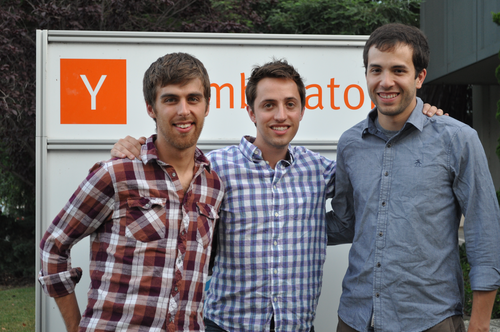
Founder mafia
The Clever mafia →7 people who came through Clever went on to found or lead other companies.





Related companies · 10






Companies working in the same space as Clever.
Timeline · 5
launches, deals, and filingsClever published a Cybersecure 2026 Report based on input from more than 500 technology leaders on identity-first security practices in schools.
Trish Sparks, a former Wake County middle school teacher who previously served as a vice president of customer success in Clever's San Francisco Bay Area office, became CEO of Clever in 2022.
Oslo-based education technology company Kahoot! announced the acquisition of Clever in May 2021 for up to $500 million. Under the agreement Clever would remain an independent company while integrating Kahoot! apps onto its platform and expanding outside the United States to other countries where Kahoot! operates. One source dates deal completion to 2021-09-02 and gives an enterprise value range of $435-500M, described as roughly a 10x return on $43M raised.
$500M source ↗
Clever was ranked number four in The Wall Street Journal's Top 25 Tech Companies to Watch list.
Clever was accepted into Y Combinator's Summer 2012 batch; Tyler Bosmeny is listed as the primary YC partner. One source states the company launched publicly in late June 2012, weeks into the program, and reached 1,000 schools by Demo Day against a 40-school challenge.
Dated company events from announcements, filings, and press; legal rows summarize public dockets and regulator releases.
Legal entities · 1
corporate structureIn the news
▸Research sources · 8
primary sources listed
- Cleverclever.com · web
8 public sources were cited for this profile; the first-party ones are listed here.
Frequently asked questions
- What does Clever do?
- Clever is a US education identity and rostering platform linking K-12 school data systems to learning apps; acquired by Kahoot! in 2021.
- Who founded Clever?
- Clever was founded by Dan Carroll, Rafael Garcia, Tyler Bosmeny in 2012.
- Who are Clever's investors?
- Clever's investors include Floodgate, GSV Ventures, Homebrew, Imagine K12, Initialized Capital, Kapor Capital, Lightspeed Venture Partners, Sequoia Capital and 10 more.
- Where is Clever headquartered?
- Clever is headquartered in San Francisco, US.