 Fundraising Fox
Wish
Unicorn exit · $20BAcquiredSan Francisco, US · 33 known investors
Find your way into Wish
Sign up to see every warm intro you have to Wish
- Paths you didn't know you had: your email and LinkedIn already hold routes to the Wish team. We find them for you
- 2nd- and 3rd-degree connections: the friend-of-a-friend routes that take hours to manually find through your inbox or LinkedIn
- Answers now, not in days: momentum is everything in a raise. Skip asking around whether someone knows someone
Days of research, done the moment you sign in, with every route ranked by how warm it is.
Wish is a mobile-first, low-price e-commerce marketplace connecting mainly Chinese merchants with bargain shoppers worldwide.
Also known as ContextLogic · ContextLogic Inc. · Wish US Holdings LLC · Wish.com
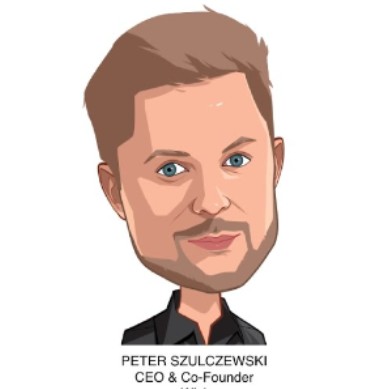
Founders & leadership
Investors · 33

How we know: open dataset · 5k.vc investor directory · Not right? Tell us

How we know: 8VC's portfolio page · the VCSheet dataset · open dataset · 5k.vc investor directory · Not right? Tell us
How we know: the VCSheet dataset · open dataset · 5k.vc investor directory · Not right? Tell us

How we know: Carbide Ventures's portfolio page · Not right? Tell us
How we know: China Growth Capital's portfolio page · Not right? Tell us


How we know: CRV (Charles River Ventures)'s portfolio page · open dataset · 5k.vc investor directory · Not right? Tell us

How we know: EQUIAM's portfolio page · Not right? Tell us

How we know: Felicis Ventures's portfolio page · Not right? Tell us


How we know: Founders Fund's portfolio page · Wikidata · funding news · techcrunch.com · open dataset · 5k.vc investor directory · Not right? Tell us

How we know: research · en.wikipedia.org · generalatlantic.com · Not right? Tell us

How we know: J-Ventures's portfolio page · the VCSheet dataset · Not right? Tell us

How we know: Manhattan Venture Partners's portfolio page · Not right? Tell us
How we know: Olima Ventures's portfolio page · Not right? Tell us
How we know: OVO Fund's portfolio page · Not right? Tell us
How we know: SLVC's portfolio page · Not right? Tell us

How we know: Third Point Ventures's portfolio page · Not right? Tell us
How we know: Transmedia Capital's portfolio page · Not right? Tell us



How we know: westerntech.com · Not right? Tell us
How we know: XG Ventures's portfolio page · Not right? Tell us

How we know: open dataset · 5k.vc investor directory · Not right? Tell us
How we know: funding news · techcrunch.com · Not right? Tell us

How we know: funding news · techcrunch.com · Not right? Tell us

How we know: open dataset · 5k.vc investor directory · Not right? Tell us
How we know: the VCSheet dataset · Not right? Tell us
Also in the syndicate · 2
Valuation · disclosed
Disclosed eventsSource: SEC prospectus filings, and round valuations the company or its investors disclosed — follow each entry's link for the claim.
Company profile
researched Aug 2026Wish is an online e-commerce marketplace operated by ContextLogic Inc. that lets third-party merchants list goods and sell directly to consumers. Rather than relying primarily on a search bar, the platform personalizes an infinite, visual product feed for each shopper based on browsing and purchase behavior, an approach sources compare to Instagram's or Pinterest's feeds. Wish does not stock inventory or manage returns itself, and works with payment service providers to handle transactions. Merchandise skews toward inexpensive, often unbranded items — clothing, electronics, accessories, home goods, toys — with the bulk of U.S.-available goods sourced from China and other non-U.S. distributors.
The service is available through the wish.com website and iOS/Android apps, plus subsidiary offerings including Wish Outlet, Wish Express and Wish Local for Partner Stores. Standard delivery historically took roughly two to four weeks with an express option of about five to eight days, a trade-off shoppers accepted for very low prices. Gamified mechanics such as the "Wheel of Fortune"-style Blitz Buy discount game, daily login stamps, rewards points and flat-rate shipping thresholds are used to drive engagement and repeat purchases. Buyer Protection and a 24/7 "Wish Assistant" support tool are offered on orders.
Wish reported revenue of $571 million in 2022 against an operating loss of $398 million and a net loss of $384 million, with 886 employees and total assets of $799 million. After a December 2020 Nasdaq IPO, the business contracted sharply, and in 2024 the Wish platform and brand were sold to Qoo10 for $173 million.
Founding story
Wish traces to ContextLogic, founded July 4, 2010 by former Google engineer Peter (Piotr) Szulczewski, who had spent about 6.5 years at Google working on large-scale matching and ad-ranking problems. ContextLogic was initially conceived as a next-generation mobile ad network to compete with AdSense; it received $1.7 million in investment in September 2010, with involvement from Yelp CEO Jeremy Stoppelman. In May 2011 Szulczewski brought in University of Waterloo classmate Danny (Sheng) Zhang to relaunch the company as Wish, an app that let shoppers build wish lists which were then matched to merchants. Finding they were, in Szulczewski's words, "pretty bad at business development" for ad tech, the founders pivoted, and by 2013 Wish had become a direct-to-consumer marketplace with merchants hosting products on the platform and Wish taking a cut of each sale.
Business model
Wish operates an asset-light third-party marketplace: merchants host and ship their own products, while Wish supplies demand generation, personalization, payments handling and cross-border customer reach. Sources state Wish charges merchants a take rate of about 15% of each sale. The company does not hold inventory or manage returns. Founder Peter Szulczewski described the value proposition to merchants — typically manufacturers in hubs such as Shenzhen — as access to a global audience of smartphone buyers plus handling of international selling and customer communication that those merchants could not do alone.
Commission on marketplace transactions, described as a roughly 15% take rate on merchant sales; the company also runs advertising and promotional programs and, in its early wishlist phase, earned revenue via a pay-per-click advertising model on Facebook. Merchant-ranking programs such as "Wish Standards" used reduced fees and better visibility as incentives.
Traction
Sources report over 500 million Google Play downloads and a 4.5-star rating across roughly 14.4 million reviews. Wish claimed more than 1 million merchants on its platform (an earlier source cites over 200,000, another 500,000 sellers, ~94% China-based). Usage peaked at 107 million monthly active users in 2020 before falling to about 23 million; Forbes reported around 90 million monthly users in 2019. Revenue rose from roughly $1.1 billion in 2017 to $1.9 billion in 2018 and above $2 billion in 2020, then fell to $571 million in 2022 and under $300 million in 2023.
Latest developments
Wikipedia notes Wish was operated by ContextLogic Inc. pending completion of a sale to Qoo10 initiated in February 2024, and that Wish was sold to Qoo10 in 2024 for $173 million — about 1% of its IPO-era value. One source states the buyer went bankrupt roughly nine months after the deal. Wish returned to French app stores and search engines in March 2023 after being relisted. The Wish consumer app remains listed on Google Play under Wish US Holdings LLC with an update noted July 2026.
▸Full profile — market position, technology, go-to-market, geography, history, risks & controversies
Market position
At its peak Wish was the most-downloaded shopping app in the U.S. (2017) and worldwide (2018) and the third-largest U.S. e-commerce marketplace by sales as of 2019, positioned as a bargain-focused alternative to Amazon and AliExpress rather than a convenience-first retailer. It targeted price-sensitive shoppers who would accept multi-week delivery in exchange for very low prices. From 2022 onward its position deteriorated as Temu (backed by PDD Holdings/Pinduoduo) and Shein expanded aggressively with lower prices and better service, and revenue fell from a 2020 peak of roughly $2.5 billion to under $300 million in 2023 per one source.
Wish differentiated on price and discovery rather than speed or brand: an algorithmic, search-less personalized feed; direct-from-factory sourcing that bypassed domestic warehousing; and exploitation of low cross-border postal rates (a China Post/USPS arrangement for parcels under 2 kg, ePacket tracking, and duty-free treatment of low-value imports) that made shipping from China to U.S. customers competitive with domestic shipping. Gamified mechanics such as Blitz Buy and login rewards further distinguished the shopping experience from conventional marketplaces.
Technology
Wish's central technology is a behavioral machine-learning recommendation and discovery engine that personalizes each user's product feed instead of relying on keyword search, an approach rooted in Szulczewski's work on large-scale matching problems at Google. Supporting elements described in sources include mobile-first, swipe-oriented product discovery, data-driven merchandising and assortment decisions, and gamified discount mechanics (Blitz Buy). Payments are processed through third-party payment service providers, with checkout options including credit/debit cards, PayPal and Klarna.
Go-to-market
Growth was driven almost entirely by paid performance marketing, particularly deliberately odd, high-shareability creative on Facebook and Instagram, supplemented by campaigns on Pandora and Snapchat; one source reports Wish spent $1.7 billion on advertising and marketing in 2020, about two-thirds of revenue. Brand marketing included the Los Angeles Lakers jersey sponsorship and a 2018 World Cup athlete campaign. On the supply side, Wish recruited merchants directly and used referral, rewards, daily-login and flat-rate-shipping incentives to drive repeat consumer purchases.
Two-sided: price-sensitive consumers — described by Forbes as typically working-class Americans in places such as the Florida Panhandle or East Texas who find Amazon Prime membership too expensive, and by other sources as bargain hunters skewing toward Millennials and Gen Z — and third-party merchants, overwhelmingly small manufacturers and sellers based in China and other Asian markets seeking international demand.
Geography
Wish serves customers worldwide, with sources citing users across more than 120 countries; the U.S. is a core market and Europe was reported to account for a substantial share of revenue, with France and Italy named as significant markets. Headquarters are reported variously as San Francisco and Oakland, California; the Google Play developer listing for Wish US Holdings LLC gives an address in San Jose, California. The company expanded offices to Shanghai and Toronto, and cofounder Danny Zhang was based in Shanghai. Most merchants are in China and other Asian countries.
History
After the 2013 pivot to a marketplace, Wish grew rapidly on the back of heavy social-media performance marketing, becoming one of the largest advertisers on Facebook and Instagram. It signed a multi-year sponsorship with the NBA's Los Angeles Lakers in 2017 (reported by Forbes as a three-year, $30 million deal; another source cites $36 million) and ran a 2018 World Cup campaign featuring footballers including Neymar, Paul Pogba, Tim Howard, Gareth Bale, Robin van Persie, Claudio Bravo and Gianluigi Buffon. Wish was the most-downloaded e-commerce app in the U.S. in 2017 and worldwide in 2018, and by 2019 was the third-largest U.S. e-commerce marketplace by sales. Reports say the founders rejected an approximately $10 billion acquisition approach. ContextLogic went public on Nasdaq in December 2020. The company then declined sharply: Szulczewski departed in 2022, Vijay Talwar was appointed CEO in January 2022, Joe Yan became interim CEO in September 2022 and permanent CEO in February 2023, French regulators forced delisting from Google search and the French app store in November 2021 (relisted March 2023), and competition from Temu and Shein eroded share. In 2024 the Wish platform and brand were sold to Qoo10 for $173 million.
Risks & controversies
Wish has been repeatedly criticized for poor-quality, counterfeit and unsafe goods, unresponsive customer service, undelivered orders and long shipping times. In November 2021 French authorities had the site and apps delisted from Google search and the French Play store over non-compliance with European regulations and counterfeit allegations; one source reports regulator sampling found 95% of toys failing EU safety standards, 90% of electrical products posing fire or shock hazards and 62% of jewelry containing toxic chemicals. A 2020 Which? investigation bought a child's car seat from Wish resembling unsafe models sold elsewhere. Items illegal in the buyer's country have been purchasable; a UK man was sentenced to 11 months in prison in January 2020 for buying a stun gun via Wish. Structural risks included dependence on cheap Facebook advertising — undermined by Apple's iOS 14.5 App Tracking Transparency in April 2021, which sources say raised customer acquisition costs 30–50% — very low customer retention, sustained operating losses, and exposure to changes in international postal and de minimis customs treatment.
Compiled by commissioned research from 8 cited public sources — announcements, filings, and press listed under research sources below.
Key figures
latest reportedCompany-reported or press-reported figures, each dated to when it was claimed — not independently audited.
Timeline · 18
launches, deals, and filingsSale initiated in February 2024; price was roughly 1% of the company's value at its IPO just over three years earlier. Deal intended to leverage Qoo10's Quiver logistics network.
$173M source ↗
Previously a managing director and Country Head, Greater China at Stripe.
One source states Szulczewski was forced out of the company in February 2022.
French authorities had the Wish site and apps delisted after claiming many items did not comply with European regulations and alleging counterfeit sales.
Program rewarding higher-quality, compliant merchants with better visibility and reduced fees.
Raised $1.1 billion at a $14 billion valuation; shares fell 16% on the opening day.
Wish launched a $2 million initiative to support independent, Black-owned businesses in the U.S.
$2M source ↗
Campaign featuring footballers Neymar, Paul Pogba, Tim Howard, Gareth Bale, Robin van Persie, Claudio Bravo and Gianluigi Buffon.
Multi-year NBA sponsorship of the Los Angeles Lakers; Forbes reports a three-year, $30 million deal (another source cites $36 million).
$30M source ↗
Wish asked merchants to host products directly on the app and took a portion of each sale, shifting from wishlist app to e-commerce marketplace.
Szulczewski invited Danny Zhang to relaunch ContextLogic as Wish, an app for creating wish lists matched to merchants; platform launched May 2011.
Company founded as ContextLogic, initially an ad-tech effort to build a mobile ad network competing with Google AdSense.
Dated company events from announcements, filings, and press; legal rows summarize public dockets and regulator releases.
In the news
▸Research sources · 8
primary sources listed
- Wish: Shop and Save - Apps on Google Playplay.google.com · web
8 public sources were cited for this profile; the first-party ones are listed here.
Frequently asked questions
- What does Wish do?
- Wish is a mobile-first, low-price e-commerce marketplace connecting mainly Chinese merchants with bargain shoppers worldwide.
- Who founded Wish?
- Wish was founded by Peter Szulczewski.
- Who are Wish's investors?
- Wish's investors include 137 Ventures, 8VC, Acequia Capital (AceCap), Carbide Ventures, China Growth Capital, Coatue Management, CRV (Charles River Ventures), Dirlango and 23 more.
- Where is Wish headquartered?
- Wish is headquartered in San Francisco, US.