 Fundraising Fox
Webflow
Unicorn · $4BYC S13YC Top CompanySan Francisco, US · Founded 2013 · 600 employees · Hiring · 48 known investors
Find your way into Webflow
Sign up to see every warm intro you have to Webflow
- Paths you didn't know you had: your email and LinkedIn already hold routes to the Webflow team. We find them for you
- 2nd- and 3rd-degree connections: the friend-of-a-friend routes that take hours to manually find through your inbox or LinkedIn
- Answers now, not in days: momentum is everything in a raise. Skip asking around whether someone knows someone
Days of research, done the moment you sign in, with every route ranked by how warm it is.
Webflow is a visual content management system and web design platform that enables creative teams to build, design, and publish brand-forward websites without heavy reliance on developers. The platform serves creative agencies, marketing teams, and enterprises seeking to maintain brand consistency while executing complex web experiences at scale.
Also known as Webflow, Inc.
Founders & leadership· Y Combinator alumni (S13)
Webflow was founded in 2013 by Sergie Magdalin, Vlad Magdalin, and Bryant Chou.







Investors · 48

How we know: Accel's portfolio page · Wikidata · funding news · research · webflow.com · open dataset · 5k.vc investor directory · Y Combinator's founder network · Not right? Tell us


-2.png)
How we know: Amino Capital's portfolio page · the VCSheet dataset · Y Combinator's founder network · Not right? Tell us



How we know: Beyond Capital's portfolio page · Not right? Tell us

How we know: Bling Capital's portfolio page · the VCSheet dataset · open dataset · 5k.vc investor directory · Not right? Tell us

How we know: Bread And Butter Ventures, Llc's portfolio page · Not right? Tell us

How we know: CapitalG's portfolio page · research · webflow.com · Y Combinator's founder network · Not right? Tell us

How we know: Draper Associates's portfolio page · research · webflow.com · research · forbes.com · Y Combinator's founder network · Not right? Tell us

How we know: Eniac Ventures's portfolio page · Not right? Tell us

How we know: Felicis Ventures's portfolio page · Not right? Tell us

How we know: Foothill Ventures's portfolio page · Not right? Tell us

How we know: FundersClub's portfolio page · research · webflow.com · research · forbes.com · Y Combinator's founder network · Not right? Tell us
.jpeg)

How we know: Homebrew's portfolio page · Not right? Tell us



How we know: Pointguard Ventures's portfolio page · Not right? Tell us


How we know: Rainfall Ventures's portfolio page · the VCSheet dataset · research · webflow.com · open dataset · 5k.vc investor directory · Y Combinator's founder network · Not right? Tell us

How we know: Wikidata · research · webflow.com · research · forbes.com · open dataset · 5k.vc investor directory · Y Combinator's founder network · Not right? Tell us

How we know: open dataset · 5k.vc investor directory · Not right? Tell us

How we know: Unusual Ventures's portfolio page · the VCSheet dataset · open dataset · 5k.vc investor directory · Y Combinator's founder network · Not right? Tell us

How we know: Wonder Ventures's portfolio page · Not right? Tell us

How we know: Worklife Ventures's portfolio page · the VCSheet dataset · Not right? Tell us

How we know: the Y Combinator directory · techtimes.com · research · forbes.com · open dataset · 5k.vc investor directory · Not right? Tell us

How we know: funding news · techtimes.com · Not right? Tell us
How we know: Wikidata · techcrunch.com · research · en.wikipedia.org · research · forbes.com · Y Combinator's founder network · Not right? Tell us
How we know: the VCSheet dataset · Not right? Tell us
Also in the syndicate · 4
Funding
SEC filings, press & company announcements$140M disclosed across 1 of 10 rounds · 2013–2026
- Undisclosed amountseed fundingJul 2026
First Round Capital (lead), Y Combinator
Source ↗ - Undisclosed amountSeries DOct 2025Source ↗
- $140MraisedJan 2021 · 2 sourcesSource ↗
- Undisclosed amountseed fundingMar 2014
Draper Assoicates, Khosla Ventures, Y Combinator
Source ↗
Source: company announcements and press reports — follow each round's link for the claim.
Valuation · disclosed
Disclosed eventsSource: SEC prospectus filings, and round valuations the company or its investors disclosed — follow each entry's link for the claim.
Company profile
researched Aug 2026Webflow, Inc. is an American software-as-a-service company headquartered in San Francisco that provides a browser-based visual editor for designing, building, hosting and publishing websites. Users assemble pages from unstyled HTML elements, control CSS properties through a cascading class system and variables, and build reusable components; Webflow generates the underlying HTML, CSS and JavaScript, which can also be exported as clean, semantic code. The platform includes a visual, composable CMS with headless APIs, interactions and animation tooling (including support for Spline, 3D, Lottie and dotLottie assets), SEO controls, localization, forms and logic, e-commerce and user accounts, collaboration features such as roles and permissions, page branching and comments, and staging plus production publishing environments.
Beyond the site builder, Webflow markets adjacent products: Analyze for site-wide and page-level analytics, Optimize for experimentation and A/B testing, Localize for multilingual experiences, an Apps marketplace and Designer integrations, and Webflow Enterprise for large teams needing scale, dedicated support, security and compliance. More recently the company positions itself as an "agentic web marketing platform," adding an AI site builder that generates and customizes sites from verbal descriptions, AI-assisted optimization, and answer-engine optimization (AEO) features intended to make sites discoverable to AI search as well as human visitors. Supporting resources include Webflow University courses, a help center, developer documentation and a Certified Partner program.
Webflow was used by 1.2% of the top 10 million websites in 2025 according to W3Techs, and the company reports more than 300,000 brands on the platform.
Founding story
Webflow was founded in 2013 by brothers Vlad and Sergie Magdalin together with Bryant Chou, and launched publicly on 5 August 2013. Before gaining traction the founders endured a failed Kickstarter campaign, a rejection from Y Combinator and significant personal credit-card and medical debt, and were about a month from abandoning the effort with no product, users or revenue; the company subsequently graduated from Y Combinator's accelerator in 2013. Vlad Magdalin has described arriving in the United States as a refugee from the Soviet Union 30 years before the 2021 Series B.
Business model
Webflow sells subscription software: a free Starter tier for building, with paid site plans required to publish and host and to unlock additional features, plus workspace/team plans and a higher-touch Webflow Enterprise offering sold through a sales team. Hosting and content management are bundled with the platform, and an Apps/Marketplace ecosystem and Certified Partner network surround the core product.
Recurring subscription revenue from site and workspace plans and from Enterprise contracts. At the time of the 2021 Series B, the company said larger accounts carried average contract values several orders of magnitude above SMB agreements, while enterprise customers represented roughly 5% of the business.
Traction
By the end of 2020 Webflow reported over 2 million users and more than 100,000 customers across 190 countries, a team of 225, tens of thousands of projects launched monthly, and cash-flow-positive operations for the year, with the business and customer base roughly doubling in 2020. Marketing materials later cited 200,000+ organizations and, more recently, 300,000+ brands using the platform. Wikipedia lists employee headcount in the 501–1,000 band.
Latest developments
Webflow has repositioned around AI, describing itself as an "agentic web marketing platform" with shared workspaces for human team members and AI agents, AI-driven optimization, and answer-engine optimization features ("Machine Mode") aimed at visibility in AI search. Product areas Analyze, Optimize and Localize have dedicated documentation, and in March 2026 the company acquired AI content-generation startup Vidoso.ai to strengthen its marketing suite. Webflow Conf '26 has been announced with Seth Meyers among the participants.
▸Full profile — market position, technology, go-to-market, geography, history, risks & controversies
Market position
Webflow is one of the widely used commercial website builders, listed alongside Wix, Squarespace, Weebly, WordPress.com, Shopify, Jimdo, GoDaddy and Google Sites, and was covered as a leading company in the no-code/low-code development category. W3Techs measured it on 1.2% of the top 10 million websites in 2025.
Webflow's positioning rests on visual design that ships to production without a developer handoff — designers work directly in the browser and the platform outputs clean, semantic HTML, CSS and JavaScript with code export and no proprietary markup lock-in — while giving developers control of components and structure and marketers autonomy to iterate. Customer-cited outcomes include reduced developer tickets and cost savings versus prior CMS stacks. The bundling of CMS, hosting, analytics, experimentation, localization and AEO in one platform, plus ownership of the GSAP animation library, further distinguish it from template-based builders.
Technology
Browser-based visual design canvas that emits HTML, CSS and JavaScript rather than requiring hand-coding, with a component canvas, class/variable-driven styling, breakpoint editing and interaction/animation authoring. A visual CMS is paired with headless APIs, webhooks and logic for integrations; code export is supported. Infrastructure served billions of requests per month as of early 2021. Webflow also owns GSAP, the JavaScript animation library, following its 2024 acquisition of GreenSock, and has added AI capabilities including an AI site builder and AEO tooling.
Go-to-market
A product-led free tier and self-serve site plans combined with a "Contact Sales" motion for Enterprise. Demand generation leans on educational and community assets — Webflow University, Webflow 101, the Made in Webflow showcase, templates and Experts in the Marketplace, research such as the 2024 State of the Website report, and the Webflow Conf event series (online, San Francisco and London editions).
Marketers, designers, developers, digital agencies and enterprises. Referenced customers include Verifone, Lattice, Orangetheory Fitness, Dropbox, Dropbox Sign, Petal, Vanta, 21.co, Spin Master, Grubhub, NCR, Attentive, Refokus, Discord, Ramp, Gumroad and IDEO.
Geography
Headquartered in San Francisco, California, serving customers worldwide; as of early 2021 the company had customers in 190 countries and a globally distributed team, and it runs Webflow Conf editions in San Francisco and London alongside an online program.
History
Founded and launched in 2013 and a 2013 Y Combinator graduate, Webflow raised $1.5 million in 2014 from Khosla Ventures, Tim Draper and other technology investors, then bootstrapped for more than half a decade before taking a $72 million Series A led by Accel in August 2019, at which point Arun Mathew (Accel) and Sri Rao (Silversmith) joined the board. In January 2021 it raised a $140 million Series B led by returning investors Accel and Silversmith at a valuation above $2.1 billion, with CapitalG's Laela Sturdy joining the board and early seed backers Rainfall, Draper Associates and FundersClub participating. Webflow Enterprise launched in 2020. The company acquired GreenSock, maker of the GSAP animation library, in October 2024, and acquired Vidoso.ai, a four-person AI content-marketing generation startup, in March 2026 on undisclosed terms.
Risks & controversies
At the time of the 2021 Series B, external observers noted that Webflow's revenue scale was not disclosed, making its reported roughly 100% growth rate difficult to assess, and that enterprise sales — then about 5% of the business and targeted only from the prior year — were an unproven expansion area. Company statements also acknowledge that market uncertainty in 2020 caused it to slow hiring out of concern about running out of cash.
Compiled by commissioned research from 13 cited public sources — announcements, filings, and press listed under research sources below.
Key figures
latest reportedCompany-reported or press-reported figures, each dated to when it was claimed — not independently audited.
Images
Founder mafia
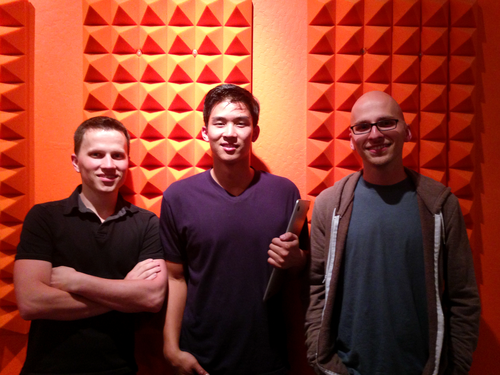
The Webflow mafia →13 people who came through Webflow went on to found or lead other companies.







Related companies · 9







Companies working in the same space as Webflow.
Timeline · 21
launches, deals, and filingsWebflow acquired Vidoso.ai, a four-person startup using AI for content marketing generation, to bolster its marketing suite. Financial terms were not disclosed.
Webflow acquired Vidoso.ai, a multi-modal AI asset generation startup (described as a four-person AI content marketing generation startup) whose technology produces brand-aligned visual and video assets; financial terms were not disclosed. Vidoso's existing customers retain product access.
The March 2026 Vidoso acquisition post is authored by Linda Tong, identified as Webflow's Chief Executive Officer; earlier sources identify co-founder Vlad Magdalin as CEO.
Press release listing on PR Newswire notes Webflow opened its first Buenos Aires office; date not stated in the source.
Press release listing notes a Webflow-Google Ads integration for campaign performance; date not stated in the source.
Webflow acquired GreenSock, the company behind the GSAP JavaScript animation library.
Reported by Axios on 15 October 2024.
Reporting indicated Webflow would let users build websites using AI; the company offers an AI site builder that creates and customizes websites from verbal descriptions.
Series C with participation from CapitalG, Accel, Silversmith and Draper Associates, bringing total funding above $330M.
$120M source ↗
Alongside the Series C, Webflow committed $10 million in grants and reimbursements to support community-led events and learning resources.
$10M source ↗
Webflow announced a $140 million Series B led by returning investors Accel and Silversmith, valuing the company north of $2.1 billion. CapitalG joined the round and its investor Laela Sturdy joined the board; early seed investors Rainfall, Draper Associates and FundersClub also participated. The CEO described the raise as opportunistic "courage capital," noting the company was cash-flow positive in 2020.
$140M source ↗
As part of the Series B, CapitalG investor Laela Sturdy joined Webflow's board of directors, alongside existing board members Arun Mathew of Accel and Sri Rao of Silversmith.
Series B co-led by returning investors Accel and Silversmith, with CapitalG joining; Laela Sturdy of CapitalG joined the board.
$140M source ↗
Webflow introduced Webflow Enterprise, aimed at enabling design and marketing teams at large organizations.
Company launched an enterprise offering aimed at design and marketing teams at larger organizations.
Series A round led by Accel with participation from Silversmith Capital, Rainfall Capital, Draper Associates and FundersClub; company had raised only $2.9M previously.
$72M source ↗
$1.5M source ↗
The company completed Y Combinator's startup accelerator program in 2013, after an earlier rejection from the accelerator.
Webflow was admitted to and graduated from Y Combinator's accelerator in 2013, in the Summer 2013 batch.
Dated company events from announcements, filings, and press; legal rows summarize public dockets and regulator releases.
Legal entities · 1
corporate structureIn the news
▸Research sources · 13
primary sources listed
- Webflowwebflow.com · web
13 public sources were cited for this profile; the first-party ones are listed here.
Frequently asked questions
- What does Webflow do?
- Webflow is a SaaS visual website builder, CMS and hosting platform used by marketing, design and agency teams.
- Who founded Webflow?
- Webflow was founded by Sergie Magdalin, Vlad Magdalin, Bryant Chou in 2013.
- Who are Webflow's investors?
- Webflow's investors include 007 Venture Partners, Accel, ADQ, Altra Venture, Amino Capital, Archetype, Astella, Banyan Ventures and 36 more.
- How much funding has Webflow raised?
- Webflow has disclosed $140M raised across 1 of its 10 known rounds.
- Where is Webflow headquartered?
- Webflow is headquartered in San Francisco, US.