 Fundraising Fox
Waymo
Unicorn · $126BSan Francisco, US · Founded 2016 · 4,698 employees on LinkedIn · 20 known investors
Find your way into Waymo
1,115 people in our graph share verified history with the Waymo team — schools, employers, funds. One of them is your warm intro.

Waymo develops autonomous ride-hailing and delivery services using self-driving vehicle technology. The company operates commercial robotaxi services in Phoenix, San Francisco, and Los Angeles, with fleet partnerships for expanded deployment in other cities.
Also known as Google self-driving car project · Waymo One
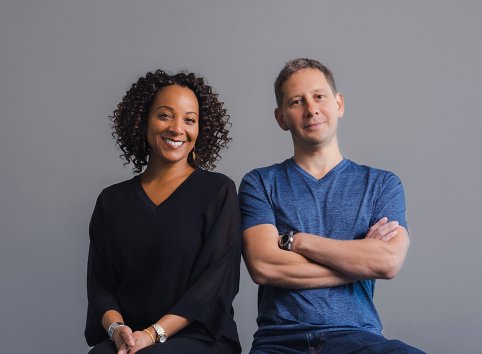
Founders & leadership

Investors · 20

How we know: a16z's portfolio · funding news · press coverage · research · waymo.com · Not right? Tell us

How we know: Bessemer Venture Partners's portfolio page · a partner's Signal profile · research · waymo.com · Not right? Tell us

How we know: CapitalG's portfolio page · research · waymo.com · Not right? Tell us

How we know: GV (Google Ventures)'s portfolio page · research · waymo.com · Not right? Tell us

How we know: Kleiner Perkins's portfolio page · research · waymo.com · Not right? Tell us

How we know: Operator Collective's portfolio page · Not right? Tell us

How we know: Prime Ventures's portfolio page · Not right? Tell us
How we know: press coverage · research · cnbc.com · Not right? Tell us

How we know: a partner's Signal profile · research · waymo.com · Not right? Tell us
How we know: a partner's Signal profile · research · waymo.com · Not right? Tell us

How we know: research · waymo.com · Not right? Tell us

How we know: research · waymo.com · Not right? Tell us
How we know: press coverage · research · waymo.com · Not right? Tell us
How we know: research · waymo.com · Not right? Tell us

How we know: funding news · press coverage · research · waymo.com · Not right? Tell us
Also in the syndicate · 4
Funding
SEC filings, press & company announcements$16B disclosed across 1 of 5 rounds · 2024–2026
- $16BraisedFeb 2026 · 4 sourcesSource ↗
Source: company announcements and press reports — follow each round's link for the claim.
Valuation · disclosed
Disclosed eventsSource: SEC prospectus filings, and round valuations the company or its investors disclosed — follow each entry's link for the claim.
Company profile
researched Aug 2026Waymo develops the "Waymo Driver," a fully autonomous driving system, and operates Waymo One, a public autonomous ride-hailing service available 24/7 via a mobile app. The system combines lidar, cameras (29 on the Jaguar I-PACE platform), radar and an onboard computer built on server-grade CPUs and GPUs, together with pre-built high-definition maps of each operating territory, AI-based perception, behavior prediction and route planning. Riders hail vehicles through the Waymo app, with up to four passengers per trip and in-car controls for temperature, music and stop changes; the fleet is fully electric and described as powered by renewable energy.
The company traces its work to the Google self-driving car project begun in 2009 and became an independent company under Alphabet in 2016. It ran an Early Rider program in Metro Phoenix in 2017, launched the commercial Waymo One service there in 2018, opened rider-only service to the public in Phoenix in 2020, began service in San Francisco (Trusted Tester program in 2021, public rider-only service from 2022) and started rides in Los Angeles in 2023, later removing waitlists in San Francisco and Los Angeles in 2024. It also became the first autonomous ride-hailing service to serve an airport, at Phoenix Sky Harbor, in 2022, and transitioned to an all-electric Jaguar I-PACE fleet in 2023.
As of the February 2026 funding announcement, Waymo operated in Austin, the San Francisco Bay Area, Phoenix, Atlanta, Los Angeles and Miami, providing more than 400,000 rides per week, and listed additional U.S. and international markets as upcoming, including Tokyo and London.
Founding story
Waymo originated as the Google self-driving car project launched in 2009, which set out to complete ten uninterrupted 100-mile autonomous routes in Toyota Prius vehicles, and was spun out as an independent Alphabet company in 2016.
Business model
Waymo builds and operates its own autonomous driving technology and runs a consumer ride-hailing service on it, deploying vehicles either through its own Waymo app or through third-party networks. In Austin and Atlanta, rides are offered via Uber; in Phoenix, DoorDash uses Waymo for deliveries. Fleet operations and depot services are handled with partners such as Flexdrive by Lyft and Moove.io in the U.S., and Nihon Kotsu and GO in Tokyo.
Paid, per-trip autonomous ride-hailing service sold directly to consumers through the Waymo app and through partner platforms; the company reported 15 million rides in 2025 and more than 400,000 paid rides per week as of early 2026.
Traction
More than 20 million lifetime rides served with a stated 93% rider satisfaction rate; 15 million rides in 2025, more than triple the prior year; more than 400,000 rides per week across six U.S. metros as of February 2026; over 200 million autonomous miles driven on public roads.
Latest developments
On February 2, 2026, Waymo announced a $16 billion investment round at a $126 billion post-money valuation, led by Dragoneer Investment Group, DST Global and Sequoia Capital, with Alphabet as majority investor. The company said it plans ride-hailing operations in more than 20 additional cities in 2026, including Tokyo and London, following a January 2026 launch in Miami. Company materials also reference a forthcoming vehicle, the Ojai, and a Waymo Premier rider tier.
▸Full profile — market position, technology, go-to-market, geography, history, risks & controversies
Market position
Describes itself as operating the world's first commercial autonomous ride-hailing service; investors in the 2026 round characterized it as a technology leader in the transportation market that has tripled weekly paid rides in a year. CNBC frames it as Alphabet's self-driving car unit valued at $126 billion post-money.
Positions fully autonomous (no human safety driver) operation against driver-assist systems that require an attentive human driver, and cites accumulated real-world and simulated driving data plus published safety comparisons — including a stated 94% reduction in serious injury or worse crashes and a 90% reduction in serious injury crashes across 127 million fully autonomous miles — as a compounding advantage.
Technology
The Waymo Driver integrates lidar, 360-degree camera arrays, radar and an onboard compute stack of server-grade CPUs and GPUs. Detailed prior mapping of each service area is combined with real-time sensor data and AI for localization, object perception, behavior prediction and trajectory planning. Validation spans closed-course testing (over 40,000 unique scenarios), public-road driving (over 200 million real-world miles cited on the site; 127 million miles of fully autonomous operation cited in February 2026) and more than 20 billion simulated miles.
Go-to-market
City-by-city launches beginning with limited research programs (Early Rider, Trusted Tester) and waitlists, followed by fully public app-based access; distribution is supplemented by third-party ride-hailing and delivery networks (Uber, DoorDash) in selected markets and by fleet-management partners in new geographies such as Tokyo.
Urban consumers seeking point-to-point rides, including riders who cannot drive (the company highlights blind riders and commuters), plus delivery customers through the DoorDash partnership in Phoenix.
Geography
Serving riders in Atlanta, Austin, Dallas, Houston, Los Angeles, Miami, Nashville, Orlando, Phoenix, San Antonio and the San Francisco Bay Area, with additional U.S. markets listed as upcoming (Baltimore, Boston, Charlotte, Chicago, Detroit, Denver, Las Vegas, Minneapolis, New Orleans, New York, Philadelphia, Pittsburgh, Portland, Sacramento, San Diego, Seattle, St. Louis, Tampa, Washington DC) plus international markets Tokyo and London.
History
The Google self-driving car project began in 2009 with autonomous drives in Toyota Prius vehicles. In 2015 the company ran the first fully autonomous ride on public roads in Austin, Texas, using the purpose-built Firefly vehicle, with legally blind passenger Steven Mahan. Waymo was established as an independent company under Alphabet in 2016. Key milestones followed: Early Rider program (2017), Waymo One commercial launch in Metro Phoenix with the Chrysler Pacifica Hybrid (2018), public rider-only service in Phoenix (2020), Trusted Tester program in San Francisco (2021), public rider-only service in San Francisco and the first fully autonomous airport service at Phoenix Sky Harbor (2022), first rider-only rides in Los Angeles, the shift to an all-electric Jaguar I-PACE fleet, and the doubling of the Phoenix service area to 180 square miles with the addition of Scottsdale (2023), and the removal of waitlists in San Francisco and Los Angeles (2024).
Risks & controversies
In December 2025 Waymo issued a software recall after Texas officials said its robotaxis illegally passed school buses at least 19 times since the start of the school year. In January 2026 a Waymo vehicle struck a child near an elementary school in Santa Monica, California; the incident is under investigation by the National Highway Traffic Safety Administration. Rapid multi-city expansion adds operational and regulatory exposure.
Compiled by commissioned research from 8 cited public sources — announcements, filings, and press listed under research sources below.
Key figures
latest reportedCompany-reported or press-reported figures, each dated to when it was claimed — not independently audited.
Founder mafia
The Waymo mafia →33 people who came through Waymo went on to found or lead other companies.










Competitors · 4
by search overlap

Companies competing with Waymo for the same Google search keywords, organic and paid, via search-intersection analysis.
Timeline · 13
launches, deals, and filingsWaymo announced a $16 billion investment round valuing the company at $126 billion post-money, led by Dragoneer Investment Group, DST Global and Sequoia Capital, with Alphabet as majority investor.
$16B source ↗
Waymo said it is laying the groundwork for ride-hailing operations in over 20 additional cities in 2026, including Tokyo and London; CNBC lists planned U.S. openings in Dallas, Denver, Detroit, Houston, Las Vegas, Nashville, Orlando, San Antonio, San Diego and Washington.
Riders can hail Waymo vehicles through Uber in Austin and Atlanta, and DoorDash users in Phoenix receive autonomous deliveries.
In Tokyo, Nihon Kotsu and GO help manage Waymo's fleet and drive manually to map the city as Waymo evaluates adapting to international roads.
A Waymo vehicle struck a child near an elementary school in Santa Monica, California; the National Highway Traffic Safety Administration opened an investigation.
Waymo issued a software recall for its vehicles after Texas officials said the robotaxis illegally passed school buses at least 19 times since the start of the school year.
Waymo removed waitlists and opened its San Francisco and Los Angeles service areas to anyone who downloads the app.
Waymo connected its Downtown Phoenix and East Valley service territories and added Scottsdale, creating a 180-square-mile service area.
Waymo retired the Chrysler Pacifica Hybrid and committed to the all-electric Jaguar I-PACE across the Waymo One fleet.
Waymo began paid, fully autonomous 24/7 rides to and from Phoenix Sky Harbor International Airport.
Waymo launched a commercial autonomous ride-hailing service using the Chrysler Pacifica Hybrid minivan.
Waymo was established under Alphabet as a self-driving technology company, following the Google self-driving car project that began in 2009.
Dated company events from announcements, filings, and press; legal rows summarize public dockets and regulator releases.
▸Research sources · 8
primary sources listed
- Waymowaymo.com · web
8 public sources were cited for this profile; the first-party ones are listed here.
Frequently asked questions
- What does Waymo do?
- Alphabet's autonomous driving unit operating the Waymo One robotaxi service across several U.S. metros.
- Who are Waymo's investors?
- Waymo's investors include Andreessen Horowitz, Bessemer Venture Partners, CapitalG, GV (Google Ventures), Kleiner Perkins, Operator Collective, Prime Ventures, SV Angel and 8 more.
- How much funding has Waymo raised?
- Waymo has disclosed $16B raised across 1 of its 5 known rounds.
- Where is Waymo headquartered?
- Waymo is headquartered in San Francisco, US.